标签: South America

南美洲

  • Archaeological digs in Amazon provide clues about Indigenous inhabitants before colonization

    Archaeological digs in Amazon provide clues about Indigenous inhabitants before colonization

    Deep in the northern Brazilian state of Amapa, a decades-old paradox of Amazon development has come into sharp focus: the same infrastructure projects that drive destructive deforestation of the world’s largest rainforest are also opening unprecedented windows into the complex history of human habitation in the region, long hidden beneath the forest canopy. Road paving projects, which legally require pre-construction archaeological surveys to protect cultural heritage, have recently yielded a trove of new discoveries along the BR-156 highway that are reshaping mainstream understandings of ancient Indigenous life in the Amazon.

    Across nine excavation sites along the highway, archaeologists have uncovered a collection of well-preserved artifacts, including large clay vessels likely used as funerary urns and small carved figurines modeled after human faces. The findings span the full timeline of human interaction in the region: upper soil layers held European colonial-era relics such as Portuguese porcelain and iron nails, while deeper stratigraphy revealed ceramic and pottery fragments from Indigenous communities that occupied the land centuries before the arrival of colonizers. “Each soil layer we excavate acts as a natural historical timeline, marking the clear transition between pre-colonial and post-colonial occupation of the site,” explained Manoel Fabiano da Silva Santos, an archaeologist on the infrastructure department’s research team.

    Lúcio Flávio Costa Leite, who directs the Archaeological Research Center at Amapa’s Institute for Scientific and Technological Research, describes the relationship between infrastructure development and archaeological discovery as inherently complicated. “What we know of this region’s history is only possible because of the access these projects create, which gives our dynamic with road construction an ambivalent character,” he noted. “Yet the knowledge we gain from these sites also pushes us to implement stronger, permanent protections for these landscapes — turning a destructive process into an opportunity for preservation.”

    Costa Leite, who oversees Amapa’s state archaeological collection holding more than 530,000 artifacts, added that the oldest piece in the collection dates back roughly 6,140 years, confirming continuous human settlement across Amapa far longer than many early models suggested. Beyond confirming ancient habitation, the new artifacts offer tangible insight into how Indigenous communities engaged with the rainforest, adapted to its ecosystems, and developed sophisticated technologies tailored to their environment. “We often define technology as modern innovations like microchips and computers,” Costa Leite explained. “But creating these pottery works required deep knowledge of the local landscape and intentional, informed selection of raw materials — that is just as much technology as any modern invention.”

    The pottery styles recovered from BR-156 also reveal a surprising range of outside cultural influences, with techniques and design traits linking the Amapa communities to groups as far as Brazil’s Pará state and the Caribbean islands. This evidence adds to a growing body of research that rejects the long-held myth of the pre-colonial Amazon as an untamed “human desert” sparsely populated by isolated groups. Instead, scholars now confirm the region was a dynamic landscape shaped by large, interconnected societies that actively modified their environment for thousands of years before European arrival.

    One of Amapa’s most extraordinary archaeological sites underscores this complexity: the Archaeological Park of the Solstice, located near the city of Calçoene, often nicknamed the “Stonehenge of the Amazon.” Discovered in 2005, the site features 127 carved granite monoliths arranged in a perfect 30-meter diameter circle, set in an open clearing bordered by a slow-moving river, surrounded by rainforest. Radiocarbon dating places the origins of the site around 1,100 years ago, with continuous occupation spanning centuries.

    Archaeologists have confirmed the ancient builders aligned the stones to mark the winter solstice sunrise in the Northern Hemisphere, and confirmed the stones were quarried and transported to the site from distant locations, rather than being carved from local rock. Subsequent excavations also revealed the site was used as a burial ground, adding to evidence of complex ceremonial and social practices among the communities that built it. “We don’t yet know the exact purpose of every stone, but the level of planning and coordination required to create this monument is undeniable,” said Mariana Petry Cabral, a professor at the Federal University of Minas Gerais who has worked on the site since excavations began two decades ago.

    Today, the site is open to visitors who secure prior approval from Amapa’s scientific institute, and it is currently undergoing designation as a national park, which will expand public access while strengthening legal protections. Under Brazilian law, all archaeological sites are protected from alteration, a regulation that automatically extends protective status to the surrounding rainforest, creating an unexpected conservation benefit from the research.

    Modern technological advances are further expanding understanding of ancient Amazonian societies, confirming the widespread interconnectedness that the BR-156 artifacts hint at. Eduardo Neves, an archaeology professor at the University of São Paulo who has studied the Amazon for more than 30 years, has led the Amazon Revealed project since 2023, which uses high-resolution satellite scanning to map archaeological features hidden beneath the dense forest canopy.

    The scans have revealed extensive networks of ancient roads connecting large clusters of settlements across the forest, with particularly clear evidence in southern Amazonas and Acre states. The road networks and patterned landscape modifications confirm repeated, long-term occupation and point to the existence of large, organized settlements, challenging common stereotypes of small, isolated Indigenous villages. “Archaeologists have suspected these connections for generations, but modern technology has allowed us to see the full geographic scale of these networks for the first time,” Neves explained. “When most people imagine pre-colonial Indigenous groups, they picture small, isolated communities cut off from the outside world. But the evidence clearly shows a high degree of interconnectivity across different settlements spanning thousands of kilometers.”

    Cabral notes that the recent discoveries in Amapa fill a critical gap in the historical record of the Amazon. “Amapa is a key piece of the puzzle that helps us understand just how dynamic and active these ancient populations were, and how they maintained trade and cultural exchange networks that have existed for millennia,” she said.

    All artifacts recovered from the BR-156 excavations will eventually be added to Amapa’s state archaeological collection for further research and future public display.

  • Trump likes a naval blockade. But Iran presents big differences from Venezuela and Cuba

    Trump likes a naval blockade. But Iran presents big differences from Venezuela and Cuba

    U.S. President Donald Trump has increasingly leaned on naval blockades as a core coercive tool to force policy changes from adversarial governments, first targeting Venezuela and Cuba, and now bringing the tactic to the Middle East against Iran. However, national security experts warn that the Iran confrontation carries vastly different strategic and economic risks that set it apart from the administration’s previous blockade efforts in the Caribbean.

    Unlike the Western Hemisphere targets Cuba and Venezuela, Iran controls direct access to the Strait of Hormuz, one of the world’s most critical energy chokepoints through which roughly 20% of global oil shipments pass on a normal basis. A prolonged standoff over the waterway creates immediate, far-reaching spillover effects that threaten to drag down the entire global economy, a risk that did not exist in the Caribbean blockades. Additionally, Iran maintains a far more capable conventional military force than either Venezuela or Cuba, and any sustained naval pressure requires a large, permanent U.S. military deployment thousands of miles from American shores, a far costlier and more complex commitment.

    Security analysts note that Iran’s geographic leverage gives it significant upper hand during the current shaky ceasefire. With the United States facing an upcoming midterm election cycle, rising domestic gasoline prices and broader economic disruption from blocked shipments could create enough political pressure to force the Trump administration to roll back its port and coastal blockade of Iran before Tehran meets its demands. “It’s really a question now of which country, the U.S. or Iran, has a greater pain tolerance,” explained Max Boot, a military historian and senior fellow for national security studies at the Council on Foreign Relations.

    The overall effectiveness of Trump’s pressure-by-blockade strategy remains a hotly debated topic among experts. Many argue that the perceived success of pressure efforts in Venezuela had far less to do with naval interdiction of sanctioned oil tankers and far more to do with a direct U.S. military raid that led to the ousting of former president Nicolás Maduro. For Cuba, meanwhile, a years-long U.S. oil embargo has gutted the island nation’s economy, pushing it into its most severe financial crisis in decades. Despite this extreme economic pressure, the tactic has failed to deliver the Trump administration’s stated goal of forcing a leadership change in Havana, even after recent rare bilateral talks between U.S. and Cuban officials on the island.

    Todd Huntley, director of Georgetown University’s National Security Law Program and a retired U.S. Navy captain and judge advocate general, notes that the visible outcome in Venezuela likely emboldened Trump to expand the blockade tactic. But he stresses that the two scenarios are fundamentally unalike across geographic, military, and political lines.

    While the U.S. blockade has certainly dealt a major blow to Iran’s economy, restricting imports of critical goods and limiting oil export revenue, ship tracking and maritime intelligence firms confirm that Tehran has still managed to move a substantial amount of sanctioned oil through the region despite the naval presence. Iran has rejected U.S. demands to reopen full transit through the Strait of Hormuz, and has resumed firing on commercial shipping in the area this week. Prolonged disruptions to Hormuz traffic have driven global gasoline prices sharply higher, pushed up costs for food and a vast range of other consumer goods worldwide, and created a major domestic political vulnerability for Trump ahead of November’s midterm elections.

    “Blockades are usually just one tool of a mechanism used in a conflict,” said Salvatore Mercogliano, a maritime history professor at Campbell University in North Carolina. “They can be important. But it’s only one element. And I don’t think it’s going to be enough to convince the Iranians.”

    U.S. Central Command head Adm. Brad Cooper claimed last week that “no ship has evaded U.S. forces,” noting that as of the prior Wednesday, the command had ordered 31 vessels to turn around or return to port. But global merchant shipping groups and intelligence firms contradict that assessment. Lloyd’s List Intelligence reports that a “steady flow of shadow fleet traffic” has continued moving in and out of the Persian Gulf, with 11 tankers carrying Iranian cargo departing the Gulf of Oman outside the strait since April 13. Another maritime analytics firm, Windward, confirmed this week that Iranian shipping traffic continues to move “via deception.”

    Mercogliano explains that Iranian vessels use multiple tactics to evade the blockade, including spoofing their automatic identification system location data and routing through Pakistani territorial waters. He adds that the sheer volume of commercial traffic passing through the region makes full screening an enormous logistical challenge for U.S. naval forces.

    The last comparable U.S. naval blockade of an adversary took place in the early 1960s, when the Kennedy administration implemented a quarantine of Soviet shipments to Cuba during the Cuban Missile Crisis — a measure deliberately not labeled a blockade for political and legal reasons, Huntley notes.

    History shows that blockades can produce strategic effects: Britain’s World War I blockade of Germany is a prominent example of a successful large-scale maritime interdiction campaign. But Boot points out that successful historical blockades generate results over years or decades, while the Trump administration is seeking quick, short-term policy changes ahead of elections.

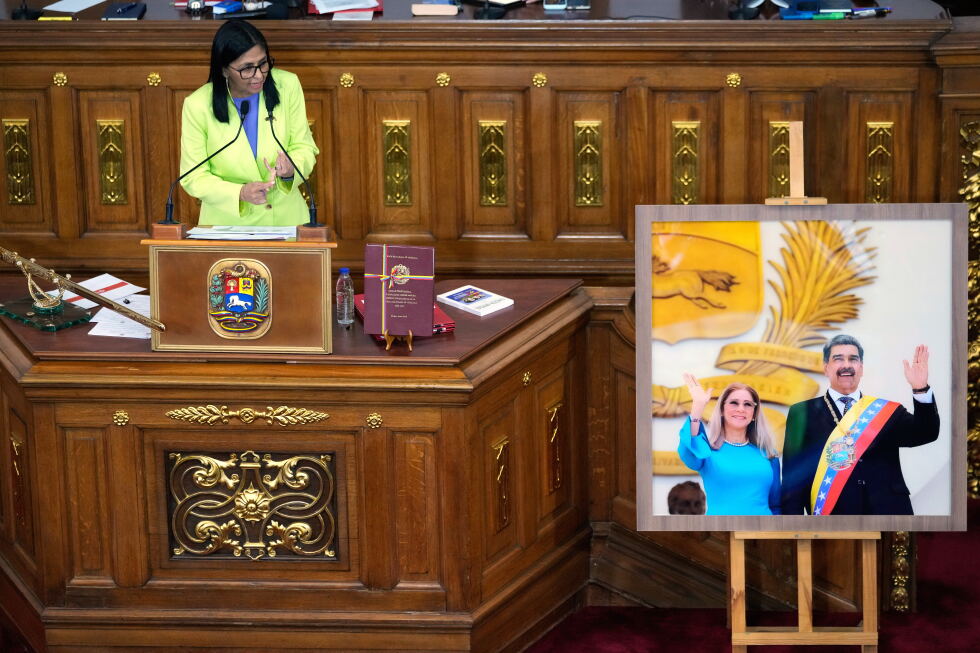
    Boot argues that Trump misattributed the outcome in Venezuela to the blockade, when the successful leadership change actually stemmed from the direct military ousting of Maduro and subsequent cooperation from his former vice president Delcy Rodríguez. “There is no Delcy Rodríguez in Cuba or Iran,” Boot explained. “I think his success in Venezuela led him astray, thinking that this was a template that could be replicated elsewhere. He sees it as a huge success at little cost. And, in fact, it turns out to be a unique set of circumstances.”

  • Peru’s defense and foreign ministers resign after the president stalls US military planes deal

    Peru’s defense and foreign ministers resign after the president stalls US military planes deal

    Political turbulence has erupted in Peru this week, as the nation’s defense and foreign ministers stepped down from their posts Wednesday following interim President José María Balcázar’s decision to push a $3.5 billion U.S.-built F-16 fighter jet purchase decision to the next elected administration. The abrupt resignations have thrown a fresh spotlight on Peru’s ongoing political instability and its delicate diplomatic and defense ties with Washington.

    Balcázar, who was sworn in as Peru’s eighth president in just 10 years after his predecessor was ousted over corruption allegations just four months into office, announced last week that he would forgo finalizing the purchase of 24 Lockheed Martin F-16 jets. He argued that as a temporary transitional leader, he lacked the democratic mandate to commit the country to such a massive long-term financial obligation. “For us to commit such a large sum of money to the incoming government would be a poor practice for a transitional government,” Balcázer stated at the time.

    The U.S. ambassador to Peru, Bernie Navarro, quickly issued a sharp public warning on social media platform X after the announcement. Navarro threatened unspecified measures against Peru if the country was found to be “negotiating in bad faith” or acted to undermine U.S. interests, though he offered no additional details on what actions he might pursue.

    Just days after the interim president’s announcement, Defense Minister Carlos Díaz and Foreign Minister Hugo de Zela resigned. Speaking at a joint press conference Wednesday, the pair confirmed they had made multiple unsuccessful attempts to convince Balcázar to move forward with the deal as planned. Díaz’s resignation letter, obtained by the Associated Press, warned that postponing the procurement could cause serious harm to Peru’s long-term national defense interests.

    In a revealing twist, Díaz disclosed that senior Defense Ministry officials had already formally signed the purchase contract on Monday, in line with the agreed timeline of the procurement process, even without Balcázar’s formal approval. De Zela, speaking to a local Peruvian radio outlet, accused Balcázar of misleading the Peruvian public about the status of the contract. Both officials have confirmed that core details of the deal remain classified and cannot be released publicly, a standard procedure for major defense procurement agreements.

    The $3.5 billion procurement plan was first launched under the administration of former President Dina Boluarte in 2024. The procurement program outlines that Peru will cover the cost through $2 billion in domestic borrowing in 2025, followed by an additional $1.5 billion in 2026. Three major global defense firms submitted bids for the contract: U.S. defense giant Lockheed Martin with its F-16 platform, Sweden’s Saab, and France’s Dassault Aviation.

    Peru is currently in a period of political transition ahead of a presidential runoff election scheduled for June 7. The first round of voting was held on April 12, and election officials are still processing ballots from remote Andean regions and overseas Peruvian consulates. The political upheaval over the fighter jet deal is the latest in a decade-long streak of leadership instability that has shaken the South American nation, with Balcázar becoming the eighth person to hold the presidency since 2014.

    This development comes as unrelated political friction has already roiled Peru’s election process: the nation’s top election official resigned earlier this year over widespread logistical failures in the hotly contested presidential race, and a Peruvian court has set a May 15 deadline for officials to complete the full counting of first-round ballots.

  • Buenos Aires bans stadium confetti after fire sparks panic at River vs Boca

    Buenos Aires bans stadium confetti after fire sparks panic at River vs Boca

    For nearly half a century, the colorful cascade of confetti raining down from stadium stands has been one of the most recognizable and beloved traditions in Argentine soccer culture, copied by fan groups across the world. But that longstanding custom is now illegal in Argentina’s capital, after a recent blaze at one of the country’s most high-profile matches prompted city officials to implement a permanent ban.

    The Buenos Aires Sports Security Committee announced the “preventive” prohibition on confetti use at all Buenos Aires district stadiums this Wednesday. The policy change comes in direct response to a fire that broke out last Sunday during the fiercely contested matchup between Argentine soccer giants River Plate and Boca Juniors at Buenos Aires’ Monumental Stadium.

    The flames, which ignited amid thrown confetti, damaged multiple stadium seats and triggered a panicked evacuation of nearby spectators before firefighters could arrive and fully extinguish the blaze. No serious injuries were reported in the incident, but the event exposed significant safety hazards that officials say could not be ignored.

    In an official statement following the ban, city authorities noted that even when host clubs pre-approve safety contingency plans and allocate the full resources required to implement those protocols, the incident last weekend proves that lightweight paper confetti carries an inherent flammability risk that cannot be mitigated in large, crowded event venues. “This incident clearly demonstrates the potential ignition risk that these materials pose in contexts with high concentrations of people,” the committee’s statement read.

    In the lead-up to last Sunday’s match, River Plate’s official supporters’ subcommittee had urged fans to cut thousands of confetti pieces ahead of time to create a vibrant, colorful welcome for the team, nicknamed the “Millionaires.” The match ultimately ended in a 1-0 victory for Boca Juniors, secured by a first-half penalty kick from player Leandro Paredes.

    The tradition of fan-thrown confetti at Argentine soccer matches first rose to mainstream popularity during the 1978 FIFA World Cup, which was hosted by Argentina. The eye-catching, celebratory practice quickly became a staple of domestic match culture, and spread to fan bases in soccer leagues around the world in the decades after its debut.

  • Brazil’s 80-year-old Lula hits the treadmill to ease voter concerns about age

    Brazil’s 80-year-old Lula hits the treadmill to ease voter concerns about age

    SAO PAULO, Brazil – As Brazil prepares for its 2026 presidential election, the race has taken an unusual turn centered not on policy platforms or economic plans, but on physical fitness and age. At 80 years old, incumbent President Luiz Inácio Lula da Silva has made his rigorous daily workout regimen a centerpiece of his campaign for a fourth non-consecutive term, turning gym sessions into a political statement that has resonated – and sparked debate – across the nation.

    Even as Brazilian voters remain deeply divided over whether Lula should seek another term in October’s election, there is widespread cross-partisan agreement on one point: the president’s relentless commitment to his daily treadmill runs and strength training routines. Marcela Peres, a 63-year-old Brasília resident working out at a local hotel gym this week, summed up the mixed view many hold. “He is a bit too old to campaign again. We’d better have someone else running,” Peres said. “But his workouts are indeed a good example for people like me.”

    Lula’s push to project vitality and good health comes as concerns over advanced age and presidential fitness have dominated global political discourse, most prominently following U.S. President Joe Biden’s decision to drop out of the 2024 race over health and age-related questions. Lula’s campaign has leaned into his fitness to directly counter those same concerns dogging his own candidacy, even drawing a playful response from the president after a conspiracy theory spread claiming his workout videos featured a body double. “One of these idiots said it was not me, that it was a clone,” Lula said in March, just days after his wife Rosângela da Silva posted a clip of his gym routine online. “Go to the gym. Get ready. Drink less and work to see what happens. I want to live 120 years.”

    The focus on fitness has prompted a response from Lula’s main challenger: Sen. Flávio Bolsonaro, 45-year-old son of former Brazilian President Jair Bolsonaro, who is nearly half Lula’s age. The younger Bolsonaro, who was anointed as the opposition’s candidate by his father from prison last December, has followed Lula’s lead by highlighting his own physical fitness, sharing clips of himself sprinting to campaign events and dancing at rallies. The former president is currently serving a 27-year sentence for leading a post-election coup attempt and has recently been transferred to house arrest.

    Flávio Bolsonaro has leaned into age-based attacks on Lula, recently mocking the incumbent as an aging Chevrolet Opala that is “all backward” and “drinks a lot (of fuel).” Lula quickly brushed off the jab, rebranding himself as a “turbo car” in response. Political analysts say the entire back-and-forth over fitness and age is a calculated image battle, with both sides seeking to capitalize on voter perceptions of vitality.

    “He is doing this to steer away from the Joe Biden effect,” explained Carlos Melo, a political science professor at São Paulo’s Insper University. “Flávio Bolsonaro is trying to say he is actually the young one. This is a game of image.”

    Felipe Soutello, a political consultant who has managed dozens of Brazilian legislative and executive campaigns, notes that modern political campaigns now require candidates to showcase physical activity regardless of their age. “The opposition will use a certain ageism, a little prejudice against older generations, as a tool to hurt the president’s performance,” Soutello said. What the younger Bolsonaro’s campaign has not fully accounted for, he added, is a dramatic demographic shift that has reshaped Brazil’s electorate: voters over the age of 60 now wield more electoral power than younger age groups.

    According to data from Brazil’s Supreme Electoral Court compiled by research group Nexus, the number of eligible voters over 60 has surged from 20.8 million in 2010 to 36.2 million as of March 2026, making up one-quarter of the entire electorate. This growing bloc of older voters is widely expected to be a decisive factor in the upcoming election, which follows Lula’s 2022 victory by the narrowest margin in Brazilian history – just 50.9% of the vote.

    For undecided voters, the fitness focus offers both upside and downside. Antonio Moreira, a 50-year-old musician who works out regularly on Rio de Janeiro’s beaches and remains uncommitted to either candidate, acknowledged that no voter wants to support a leader struggling with declining health. He added that Lula’s workout routine also serves as a positive example for older Brazilians looking to stay active. While Flávio Bolsonaro’s campaign dance videos have drawn attention, Moreira argued that showmanship is not enough to win over undecided voters. “It is okay to do it as they do to seek for votes, but to reach a different kind of voter there needs to be more real proposals, right?”

    Lula’s commitment to fitness is not a new campaign gimmick: the president played frequent soccer during his first two terms in office, maintained his workout routine throughout 580 days he spent in prison on now-overturned corruption convictions, and centered his health as a campaign talking point during his successful 2022 run against the elder Bolsonaro, a former Army captain who has long struggled with chronic health issues. If Lula wins October’s election, he will extend his own record as the oldest person ever elected to the Brazilian presidency.

    AP journalist Lucas Dumphreys contributed reporting from Rio de Janeiro.

  • No cartels involved – but Mexico’s pyramid attack prompts new concerns

    No cartels involved – but Mexico’s pyramid attack prompts new concerns

    On a seemingly ordinary Monday morning at Teotihuacán, Mexico’s most iconic pre-Hispanic archaeological site and top international tourist destination, a routine day of exploration collapsed into sudden, horrifying gun violence that authorities are still working to fully unpack.

    Disturbing eyewitness footage captured the attacker, 27-year-old Mexico City native Julio César Jasso Ramírez, opening fire on unsuspecting visitors from the upper terrace of the site’s famous Pyramid of the Moon. Panicked tourists scrambled for shelter behind ancient stone structures as shots rang out, beginning the attack around 11:00 a.m. local time.

    When the violence ended, a 32-year-old Canadian woman was dead, and the gunman had taken his own life via a self-inflicted gunshot wound. Multiple injured tourists from countries including Russia, Colombia, and Brazil were admitted to local hospitals for treatment of their wounds. Security forces, including the National Guard, were rapidly deployed to secure the historic site.

    Initial investigations have drawn a clear line between this attack and the cartel-linked violence that has plagued Mexico for decades. Just two months prior, the killing of Jalisco New Generation Cartel leader “El Mencho” sparked a wave of coordinated violence across the country that left widespread fear in its wake. But Mexican officials confirm Jasso Ramírez acted entirely alone, with no connections to organized criminal groups.

    Searching the attacker’s belongings, investigators recovered a handgun, a supply of ammunition, and a tactical knife. They also found written materials, images, and manuscripts referencing a notorious 1999 mass shooting in the United States: the Columbine High School attack that left 13 dead. One witness told Reuters the gunman explicitly referenced Columbine, which took place 27 years to the day before the Teotihuacán attack.

    Mexico State Attorney-General José Luis Cervantes Martínez confirmed that no evidence of co-conspirators has emerged, noting, “The aggressor planned and carried out the attack on his own and there is absolutely no indication at this point that he had any external help or that any other individuals were involved in this incident.” He described the attacker as fitting a psychopathic profile driven by copycat behavior, saying “the evidence collected so far pointed to a tendency to imitate situations that occurred in other places, at other times, and involving other individuals.”

    The attack marks the second high-profile lone mass shooting in Mexico in less than a month, following a school shooting in Michoacán where a teen killed two teachers with an assault rifle. Both incidents mark a disturbing shift for Mexico, where nearly all large-scale violence has historically been tied to cartel turf wars. Mexican family therapist Valeria Villa, who has worked in mental health for decades, called the trend “a moment of transition, a very unfortunate, lamentable and worrying one, towards imitation of the phenomenon of mass killings we see every day in the United States.”

    Experts note the trend does not stem solely from the importation of U.S. societal violence, however. Long-standing cartel violence in Mexico has desensitized segments of the population, particularly young people, to bloodshed. While Mexico does not have the same widespread legal access to guns as the United States, illegal firearms are easily obtainable on the black market, with most smuggled across the border from the U.S.

    The shooting comes at a politically and socially sensitive moment for the Mexican government, just three weeks before Mexico co-hosts the 2026 men’s FIFA World Cup, set to kick off in Mexico City on June 11. President Claudia Sheinbaum, who has recently touted her administration’s security progress, claiming the daily homicide rate in February 2026 was 44% lower than at the end of her predecessor’s term in September 2024, was quick to offer condolences and solidarity to the victims’ families.

    Sheinbaum’s critics argue that falling homicide rates mask ongoing security crises, most notably the tens of thousands of unresolved missing person cases that disproportionately affect young Mexicans. The administration has moved quickly to reassure visiting football fans that security will be guaranteed during the tournament, but viral footage of a gunman opening fire on foreign tourists at one of the country’s most famous landmarks has done little to ease pre-tournament anxiety.

  • Peru’s election chief resigns over logistical problems in hotly disputed presidential contest

    Peru’s election chief resigns over logistical problems in hotly disputed presidential contest

    LIMA, Peru — More than a week after Peruvians cast ballots in one of the nation’s most contentious presidential elections in recent memory, the top leader of the country’s national election agency has stepped down, taking responsibility for widespread logistical failures that have thrown the vote count into chaos and deepened public uncertainty over the outcome.

    Piero Corvetto, who led Peru’s national election institution, announced his resignation in an official letter delivered to Peruvian government authorities on Tuesday. While Corvetto explicitly denied any personal wrongdoing tied to the election mismanagement, he argued his departure was a necessary step to shore up public trust ahead of the June 7 presidential runoff, which is already scheduled to take place after no candidate secured an absolute majority in the first round.

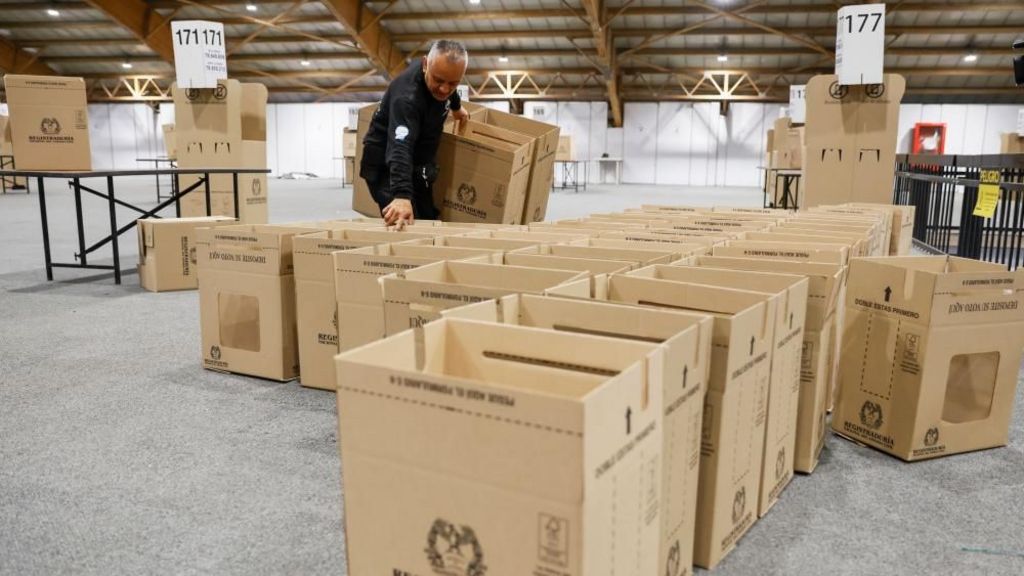
    The April 12 first-round vote brought more than 30 presidential candidates into the race, alongside hundreds of contenders vying for seats in Peru’s national congress. But the process quickly unraveled when election officials failed to deliver critical voting materials to more than 12 polling centers across the capital city of Lima. The logistical breakdown blocked more than 52,000 eligible voters from casting their ballots on the originally scheduled election day, forcing authorities to extend voting for an extra 24 hours.

    As of this week, official vote counting remains ongoing, with election workers still processing tally sheets arriving from remote Andean regions and Peruvian consulates operating across the globe. Peruvian electoral law requires a runoff between the two top-finishing candidates if no contender wins more than 50% of valid votes, a threshold that no candidate came close to meeting in this crowded field.

    With 93.8% of all ballots now counted, preliminary results place conservative leader Keiko Fujimori firmly in the lead with 17.04% of the vote, a standing that all but guarantees her a spot on the June runoff ballot. In second place, holding 12.01% of counted votes, is nationalist congressman Roberto Sánchez, a former minister under imprisoned ex-President Pedro Castillo who has campaigned on a pledge to partially nationalize Peru’s vast natural resource sector. Sánchez holds only a razor-thin lead over ultraconservative former Lima mayor Rafael López Aliaga, who has captured 11.91% of the vote so far.

    López Aliaga has already pushed back against the partial preliminary results, leveling unsubstantiated claims of a “gigantic fraud” orchestrated by election officials. He has publicly called for a “complementary election” that would allow hundreds of thousands of Peruvians who were unable to vote on April 12 to cast their ballots after the fact.

    These fraud allegations have been rejected by independent international observers. An electoral observation mission deployed by the European Union noted last week that while the first round faced significant logistical disruptions, it found no credible evidence of systemic fraud in the vote counting process.

    On Monday, Peru’s top electoral tribunal set a firm May 15 deadline for officials to complete the full vote count and officially confirm which two candidates will advance to the June runoff. The winner of this election will make history as Peru’s ninth president in just 10 years, taking office amid a prolonged period of political instability that has already seen multiple interim leaders rise and fall. The current interim president, José María Balcázar, was appointed to the role in February, replacing another interim head of state who was removed from office over corruption allegations just four months after taking power.

  • Mass trial for 486 alleged gang members begins in El Salvador

    Mass trial for 486 alleged gang members begins in El Salvador

    El Salvador has launched one of the largest mass criminal trials in the country’s modern history, with proceedings against 486 people alleged to be members of transnational criminal gangs getting underway this week. The unprecedented legal proceeding has drawn global attention as the Central American nation continues its aggressive crackdown on organized gang violence that has plagued communities for decades.

    Newly released surveillance footage from the country’s attorney general’s office offers a rare public look at the opening of the trial: hundreds of incarcerated men, grouped together in secured prison facilities, are participating in the court proceedings remotely via live video link. This remote format was chosen to address massive logistical challenges, as security officials warned that moving all 486 defendants to a single physical courtroom would create unacceptable public safety risks.

    Organized criminal gangs have long been a destabilizing force in El Salvador, driving high rates of homicide, extortion, and drug trafficking across the country. In recent years, the Salvadoran government has implemented sweeping anti-gang policies designed to dismantle these criminal networks, and this mass trial marks a major milestone in that ongoing campaign. Legal observers have noted that the scale of the proceeding is almost unmatched globally, and it will test the capacity of the country’s judicial system to process hundreds of cases while upholding due process standards.

    The defendants in the case face a wide range of criminal charges related to their alleged involvement in gang activities, including conspiracy to commit murder, extortion, drug trafficking, and organized criminal association. Authorities say the majority of the accused are linked to two of El Salvador’s most powerful and violent gangs, Mara Salvatrucha (MS-13) and Barrio 18. As the trial proceeds, national and international watchdogs will be monitoring to ensure that procedural rights are protected for all defendants, even as the government maintains its tough stance against gang-related crime.

  • Mass trial for 486 alleged MS-13 gang leaders begins in El Salvador

    Mass trial for 486 alleged MS-13 gang leaders begins in El Salvador

    A landmark mass trial that marks one of the largest gang prosecutions in modern history has commenced in El Salvador, targeting 486 top leaders and key associates of the notorious transnational criminal organization MS-13, the country’s attorney general’s office has confirmed. The sprawling case comes nearly three years after President Nayib Bukele launched a hardline, widely debated nationwide crackdown on gang activity that has reshaped the Central American nation’s security landscape.

    According to official prosecutors, the 486 defendants are collectively linked to more than 47,000 separate criminal offenses carried out between 2012 and 2022. The long list of charges includes murder, extortion, drug trafficking, arms smuggling, femicide, forced disappearances, and an unprecedented charge of rebellion. Prosecutors allege the group sought to consolidate territorial control across El Salvador to build a parallel state that could challenge the authority of the elected government. A number of the accused are also tied to a devastating 2022 outbreak of gang violence that left 87 people dead over a single weekend in March of that year—a bloodbath that directly prompted Bukele to declare a formal “war on gangs” and roll out sweeping emergency security measures.

    Prosecutors have stated they hold compelling evidence that will support the pursuit of maximum criminal penalties for all defendants convicted in the case. As of the trial’s opening, 413 of the accused are already in custody, while 73 remaining suspects are being tried in absentia, with active arrest warrants still in effect for the fugitives. El Salvador’s National Civil Police says its years of targeted intelligence gathering, research and covert monitoring operations made it possible to map out the gang’s hierarchical structure, locate suspects, and document the full scope of their criminal activity ahead of trial.

    MS-13, the transnational gang at the center of the case, traces its origins back to 1980s Los Angeles, where it was formed by Salvadoran refugees fleeing the country’s brutal civil war. In recent decades, the organization has expanded its footprint dramatically across Central America, where it now maintains a larger and more powerful presence than it does in the United States. Last year, the U.S. government formally designated MS-13 as a terrorist organization, acknowledging its cross-border reach and violent impact. In a statement ahead of trial, El Salvador’s attorney general’s office emphasized that the gang’s decades of systematic criminal activity have not only spread fear and immeasurable grief across Salvadoran households, but also held back the country’s broader economic and social progress.

    The trial is taking place against the backdrop of a controversial ongoing state of emergency that Bukele first implemented in March 2022, shortly after the deadly wave of violence. The emergency measure vastly expanded law enforcement’s power to detain individuals suspected of gang ties or collaboration, and temporarily suspended a number of constitutional rights protections. Since the policy was implemented, tens of thousands of suspected gang members and affiliates have been arrested across the country, but the approach has drawn sharp criticism from international human rights organizations, which have documented widespread allegations of arbitrary detentions of innocent civilians and other human rights abuses. Legal reforms enacted by the Bukele administration in recent years also explicitly paved the way for mass gang trials like the proceeding that opened this week.

  • Peruvian court sets May 15 deadline for counting votes in presidential race

    Peruvian court sets May 15 deadline for counting votes in presidential race

    LIMA, Peru — Peru’s national electoral tribunal has moved to formalize the timeline of the country’s tightly contested presidential election, issuing an official mandate on Monday requiring the nation’s electoral oversight body to wrap up all vote counting and name the two candidates advancing to the June runoff by mid-May.

    The order establishes a firm May 15 deadline for the Oficina Nacional de Procesos Electorales (ONPE), Peru’s national elections agency, to release the final, official vote tally and confirm which contenders will move forward to the second round of voting, scheduled for June 7. The runoff became a necessary step after the April 12 first round, which drew more than 30 presidential candidates, failed to produce any candidate who captured an outright majority of the popular vote. Peruvian electoral law requires a runoff between the top two finishers when no candidate secures more than 50% of ballots cast.

    What has turned this process into a nail-biting, delayed count is the razor-thin gap separating the candidates vying for the second spot in the runoff. The first round was also marred by widespread procedural irregularities that forced election officials to extend voting at dozens of polling stations across the capital city of Lima for an extra day to accommodate voters who faced long delays and broken voting equipment.

    As of the latest partial count, which includes 93.5% of all ballots cast, conservative leader Keiko Fujimori holds a clear lead with 17.05% of the vote, a position that makes her all but certain to advance to the June 7 runoff. The race for the second spot remains too close to call, however: nationalist congressman and former cabinet minister Roberto Sánchez — who served in the administration of imprisoned ex-President Pedro Castillo — currently holds second place with 12% of the vote, while ultraconservative former Lima mayor Rafael López Aliaiga trails him by less than 0.1 percentage points, sitting at 11.91% of the vote.

    Counting efforts are still ongoing because election officials are still processing hundreds of tally sheets arriving from remote, hard-to-reach rural regions across Peru, as well as ballots cast by Peruvian citizens living overseas at the nation’s consular missions. Hundreds of these tally sheets have also been formally challenged by independent electoral observers, triggering a mandatory review process that ONPE officials must complete before the final tally can be certified.

    The winner of this election will become Peru’s ninth president in just 10 years, capping a period of unprecedented political instability in the Andean nation. The incoming president will succeed interim President José María Balcázar, who was appointed to the role in February after his predecessor, another interim leader, was removed from office over sweeping corruption allegations just four months into his temporary term.