标签: South America

南美洲

  • Argentina’s leader bars journalists from government HQ, raising concerns about press freedom

    Argentina’s leader bars journalists from government HQ, raising concerns about press freedom

    BUENOS AIRES, Argentina — In a move that has sent shockwaves through Argentina’s democratic landscape, President Javier Milei has barred the entire corps of accredited reporters from entering the Casa Rosada, the country’s iconic presidential headquarters, capping off a months-long pattern of aggressive hostility toward independent journalism that mirrors the anti-media rhetoric of his ideological ally, former U.S. President Donald Trump.

    The unprecedented ban, implemented last week, followed a dispute over unauthorized footage filmed inside the presidential complex by reporters from Argentina’s Todo Noticias network. According to presidential spokesperson Javier Lanari, the move was implemented as a “preventative measure” after the outlet aired footage captured with hidden smart glasses, which the government frames as illegal espionage. But the network’s journalists push back against this characterization, noting they notified administration press officials of their filming plans in advance, and the footage only captured publicly accessible areas of the building that have been featured on national television before.

    Rather than limiting criticism of his administration, the ban has sparked unified condemnation from across Argentina’s political spectrum, press freedom organizations, and watchdog groups. For a nation that has celebrated a vibrant, independent press since the end of its military dictatorship in 1983, observers say the full exclusion of the press from the presidential seat marks the most severe attack on press freedom in four decades.

    “It’s the culmination of the government’s contempt for journalism and its value in a democracy,” explained Fernando Stanich, president of the Argentine Journalism Forum, a leading professional press association.

    Cristina Zahar, Latin America coordinator for the New York-based Committee to Protect Journalists, framed the administration’s actions as a clear sign of authoritarian drift, even as Argentina remains formally democratic. “An autocrat who tries to curtail press freedoms, who tries to prevent journalists from reporting and keeping society informed about public interest matters,” Zahar said.

    Milei, a radical libertarian outsider who rose to the presidency in 2023 on a platform of slashing government spending and upending Argentina’s established political order, has never moderated his provocative, anti-establishment rhetoric since taking office. An avid daily user of the social platform X, the president has leaned increasingly heavily into anti-media attacks in recent months. An analysis of Milei’s X feed conducted by leading Argentine daily *La Nación* between April 2 and 5 found that Milei published 86 original posts taunting and insulting journalists over just four days, and reshared an additional 874 similar attacks. Many of these posts repeated his signature slogan, “We don’t hate journalists enough,” repeated his false claim that 95% of Argentine journalists are active criminals, and included crude sexual innuendo or targeted insults directed at individual reporters critical of his administration.

    Hours after the press ban was implemented, Milei published an angry all-caps post attacking reporters as “disgusting scum,” adding “how about you try stopping the lies? Oh I forgot, you lot are corrupt junkies hooked on advertising bucks and bribes.” He also shared an AI-generated deepfake image that depicted a prominent Argentine television reporter wearing an orange prison jumpsuit, a clear threat of political prosecution against critical journalists.

    Long before the full ban on press access, Milei had restructured how his administration communicates with the public, sidelining traditional journalistic institutions in favor of unmediated social media outreach, a strategy also honed by Trump. Milei has never held a formal presidential press conference in his tenure, rarely grants interviews to established national outlets, and instead pushes his messaging through viral slogans and AI-generated memes. He frequently appears on right-wing influencer radio programs, and has hired prominent social media provocateurs for senior administration roles, a move that has emboldened his base to adopt stigmatizing, hostile language toward working journalists.

    Following Trump’s playbook of using legal action to harass critical outlets, Milei has filed defamation lawsuits against at least eight independent journalists over the past 12 months, and encouraged his political allies to do the same. Alejandro Alfie, a media reporter for Argentina’s largest newspaper *Clarin* who has investigated networks of anonymous pro-Milei troll accounts, currently faces four defamation lawsuits from Milei’s close allies that seek millions of pesos in damages. Alfie says he has faced ongoing threats of violence, doxxing, and harassment from Milei’s supporters, demonstrating that the president’s rhetoric carries tangible, dangerous real-world consequences.

    “People say, ‘Oh, it’s not real. It’s just social media.’ But when you have someone telling you on Instagram every day that they will kill your children, it is something else entirely,” Alfie said.

    Milei has also taken systemic steps to weaken press access beyond personal attacks and lawsuits. In 2024, he shut down Telam, Argentina’s long-running state news agency, which he accused of operating as a propaganda outlet for left-wing opposition parties — a move echoing Trump’s push to cut federal funding for U.S. public media outlets PBS and NPR over claims of biased coverage. Telam has since been restructured into a state-run advertising agency. Milei also signed changes to Argentina’s open records law that drastically reduced the volume of government information available to the public and reporters.

    Many correspondents who were barred from the Casa Rosada last week say the full ban did not come as a surprise. Over the past year, the administration has incrementally restricted press movement inside the building, closing off entire wings to reporters and capping attendance at official press briefings. Earlier this month, six accredited outlets were already barred from both the Casa Rosada and Argentina’s lower congressional chamber over unsubstantiated claims that their reporters were involved in Kremlin-backed disinformation, claims the outlets have emphatically denied.

    The Todo Noticias smart glasses incident, observers say, was merely a convenient pretext to extend existing restrictions to the entire press corps. “It was the perfect excuse to extend the punishment to the entire press corps,” said Jaime Rosemberg, a political correspondent for *La Nación* who was among the 60 blocked reporters.

    The backlash to the ban has been swift: an opposition lawmaker has already filed a lawsuit against the administration over the order, and a cross-party group of a dozen legislators has called for an urgent meeting with senior government officials to address what they call an “institutional undermining of freedom of expression.”

    The anti-press campaign comes as Milei faces growing political and economic headwinds: recent polling from AtlasIntel shows the president’s public approval rating has fallen to the lowest point of his presidency. His signature campaign promise to eliminate Argentina’s decades-long chronic inflation has stalled, unemployment has risen, and the national economy has contracted. Adding to his troubles, close ally and chief of staff Manuel Adorni is currently under investigation for misuse of public funds, a corruption scandal that echoes the elite misconduct Milei campaigned against.

    Many political analysts and journalists draw a direct line between the administration’s mounting challenges and its escalating attacks on the media, which have long served as a convenient scapegoat for unpopular outcomes. “It’s a very bad moment for the president,” Rosemberg said. “And often the easiest thing to do in that moment, what you have closest at hand, is to blame the press for everything.”

  • Colombia offers record $1.4m-reward for rebel it blames for deadly bomb attack

    Colombia offers record $1.4m-reward for rebel it blames for deadly bomb attack

    A wave of brutal coordinated attacks that left 20 civilians dead in southwestern Colombia has triggered a massive manhunt, with national authorities offering the largest reward in the country’s history for information leading to the capture of the suspected mastermind. Colombian Defence Minister Pedro Sánchez announced the 5 billion peso ($1.4 million) bounty for Iván Jacob Idrobo Arredondo, the dissident rebel commander more widely known by his alias “Marlon”.

    Sánchez has formally accused Marlon of ordering Saturday’s deadliest attack—a roadside bomb detonation on the Pan-American Highway linking the cities of Cali and Popayán—along with a string of other violent incidents over the same weekend across Cauca and Valle del Cauca provinces. To date, government officials have not released public evidence or additional operational details supporting the accusation. Local authorities confirmed that the highway blast, which tore a massive crater in the road and destroyed multiple passenger buses and civilian vehicles, killed 15 women and five men, marking one of the deadliest attacks on innocent civilians in recent Colombian history.

    The targeted attack comes just over one month before Colombia’s national presidential election scheduled for May 31, injecting new volatility into an already tense political campaign. Marlon is a senior commander in an armed faction led by Iván Mordisco, the country’s most-wanted dissident rebel leader. Mordisco was originally a member of the Revolutionary Armed Forces of Colombia (Farc), but split from the group shortly before it signed a landmark 2016 peace deal with the Colombian government. Today, Mordisco’s faction is widely recognized as Colombia’s most powerful dissident rebel organization, with documented involvement in illegal mining, extortion, and large-scale drug trafficking operations across the country’s southwestern regions.

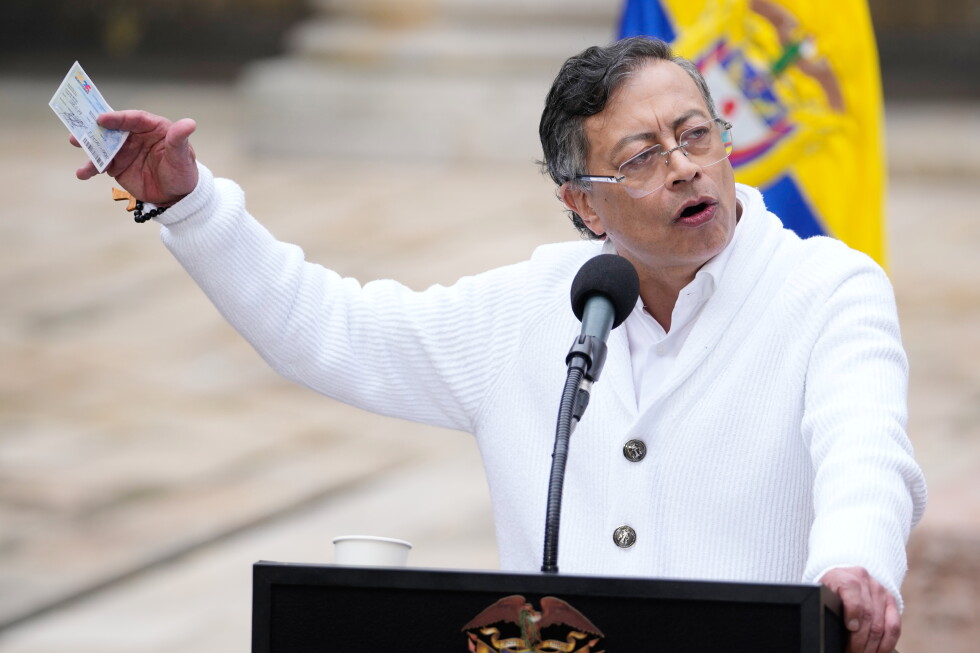
    Cauca Governor Octavio Guzmán called Saturday’s highway bombing “the most brutal and ruthless attack against the civilian population in decades”, echoing widespread public outrage over the violence. Colombian President Gustavo Petro, whose current term ends in August this year, labeled those responsible for the attacks “terrorists, fascists and drug traffickers” and immediately deployed additional military troops to the unrest-plagued region to step up security operations.

    Per Colombia’s constitution, Petro is barred from running for a second consecutive term, and he has thrown his support behind left-wing candidate Iván Cepeda in the upcoming election. Cepeda has campaigned on a platform of renewing negotiation efforts with rebel dissident groups, and recent opinion polling shows him holding a slim lead over a field of right-wing opposition candidates who have advocated for a far harder military-first approach to counter insurgency. If no candidate wins an outright majority in the May 31 vote, a run-off election will be held on June 21 to determine the country’s next president.

  • Making history and facing Neymar – Lingard on life in Brazil

    Making history and facing Neymar – Lingard on life in Brazil

    Veteran English forward Jesse Lingard is making history as the first English player to compete in Brazil’s top-tier football league, and he is opening up about his new chapter with Corinthians, his reflections on former club Manchester United, and his outlook ahead of the 2026 World Cup.

    The 33-year-old, who joined Corinthians after a spell at FC Seoul following his exit from Manchester United in 2022, has already notched his first goal for the Brazilian club in the Copa do Brasil, just weeks after his arrival. When the transfer was first announced, it raised eyebrows across Brazilian football — local pundit Mauro Cezar Pereira even labeled the move a “strange signing”. But Lingard has quickly settled into his new surroundings, saying the challenge of playing for a massive club in one of the world’s most competitive leagues drew him to the opportunity.

    “I had other offers on the table, but I came here to push myself,” Lingard told BBC Sport in his first major interview since relocating to Sao Paulo. “This is still high-level football, and I know I can perform at this standard. My goal here is simple: I’ve come to lift a trophy.”

    Lingard credits former Manchester United teammate Memphis Depay for convincing him to make the move to Corinthians, with the Dutch winger helping him navigate the early days of adapting to life in Brazil. The Englishman made his debut for the club earlier this month at Rio de Janeiro’s iconic Maracana Stadium, facing off against Fluminense. After months of limited game time and periods of solo training, Lingard described stepping out onto the famous pitch as an “amazing” experience.

    Turbulence hit the club just a week after his debut, however: manager Dorival Junior was sacked following an eight-match winless streak that left Corinthians lingering in the relegation zone. Since former Brazil interim manager Fernando Diniz took charge, the club has notched back-to-back wins in Copa Libertadores matches, turning early momentum around.

    One of the most striking adjustments for Lingard has been the raw intensity of Corinthians’ global fanbase, with supporters regularly turning up at the club’s training ground to interact with players. “I’ve never experienced anything like this before,” he said. “Fans coming into the training ground to talk to us, you can feel just how passionate they are about the club. That passion pushes us harder to get results on matchday, even when it means extra scrutiny when we don’t perform.”

    Language has been another key challenge for Lingard. Unlike his time at FC Seoul, where he relied on a full-time translator, the forward is adjusting to life in Brazil without dedicated translation support. While a handful of his teammates speak basic English to help him communicate, he says he is determined to learn Portuguese — a goal he finds more attainable than mastering Korean. He has already picked up basic phrases, including how to greet people and order coffee.

    Lingard, who spent 20 years at boyhood club Manchester United before leaving in 2022, continues to follow the club’s fortunes closely, describing his two decades at Old Trafford as an “amazing chapter” of his career. After departing United, he briefly played for Nottingham Forest before moving to FC Seoul, a move that surprised many but one Lingard says he needed to reset his focus on football.

    Manchester United has endured a turbulent 2025-26 season, but has seen a dramatic upturn in form since Michael Carrick — another former Red Devils teammate of Lingard’s — took over as interim manager in January. The club is now on track to secure a return to the UEFA Champions League, and Lingard has thrown his full weight behind Carrick getting the job on a permanent basis.

    “United have come on leaps and bounds under Michael, and he absolutely deserves to keep the role long-term,” Lingard said. “I know him from our time playing together at the club. He has Manchester United DNA running through him, he knows every part of this club, and the squad is thriving under his direction. Constant managerial turnover brings challenges with new ideas and new personnel, but right now United are definitely on the right track with Michael in charge.”

    Lingard remains in close contact with current United captain Bruno Fernandes, who is having a career-best season in the Premier League, notching 18 assists with five matches remaining — just two short of the league’s all-time single-season assist record. When former teammate Paul Pogba recently claimed Fernandes would be a serious Ballon d’Or contender if he played for a club like Manchester City, Lingard says Fernandes deserves a spot in the running regardless of his club.

    “100% he should be up there,” Lingard said. “His performances this season for United have been extraordinary. He has to be considered among the best players in the race for the award.”

    Asked about his favorite Brazilian footballers, Lingard named global superstars Neymar and 2005 Ballon d’Or winner Ronaldinho. He says he occasionally stays in touch with Neymar, who currently plays for Santos, and he is excited by the prospect of facing the world-class forward if the two clubs meet later in the season. “It’s always a great test to play against the best players in the world,” he said.

    Lingard previously went viral for teasing former United teammate Marcus Rashford over a viral moment where Rashford was spotted only talking about the weather with Neymar in a match tunnel. When asked what he would say in the same situation, he laughed: “There would be too many memes about it anyway, to be honest. I might actually mention the Brazilian weather — it is always sunny here!”

    Looking ahead to the 2026 FIFA World Cup this summer hosted in North America, Lingard named Brazil, England and France as the tournament’s top contenders, and he is backing his home nation England to go all the way and lift the trophy. “We’ve always had a very strong chance in big tournaments, and we always perform well when it matters,” he said. “I believe in the lads, I know how good they are, so there’s no reason we can’t win it this time around.”

    Lingard is currently signed to Corinthians on a short-term contract running through the end of 2025.

  • Death toll from bus bombing in southwest Colombia rises to 20 during a wave of violence

    Death toll from bus bombing in southwest Colombia rises to 20 during a wave of violence

    On a quiet Saturday along Colombia’s critical Pan-American Highway, a hidden explosive device ripped through a civilian passenger bus traveling through the municipality of Cajibio, leaving a trail of death and devastation that has shaken the South American nation. Regional authorities confirmed Sunday that the death toll from the attack has climbed to 20, with 15 women and five men counted among the fatal victims.

    Octavio Guzmán, governor of the hard-hit Cauca department, shared updated details on the social platform X, noting that 36 additional people were wounded in the blast. Three of those injured remain in intensive care, while five child victims are expected to make a full recovery, according to Guzmán’s update. Forensic teams have launched a full identification effort to confirm the identities of all those killed: Colombia’s Institute of Legal Medicine has deployed a multi-disciplinary team of specialists, including forensic dentists, anthropologists, and medical examiners, to process remains and notify next of kin.

    This deadly bombing is not an isolated incident. Over the past 72 hours alone, more than two dozen violent attacks have been recorded across southwestern Colombia, a long-troubled region marked by power struggles between illegal armed factions. These groups have long fought to control lucrative coca growing territories and strategic river and coastal smuggling routes that feed multi-billion dollar drug trafficking networks supplying Central American and European illicit drug markets.

    Top Colombian military leaders have labeled the attack a clear act of terrorism. Gen. Hugo López, commander of Colombia’s national Armed Forces, pinned responsibility for the bombing on two dissident factions originating from the now-disbanded Revolutionary Armed Forces of Colombia (FARC): the network of Iván Mordisco, one of the country’s most-wanted fugitive leaders, and the Jaime Martínez faction, both of which maintain a heavy armed presence in Cauca.

    International bodies have joined in condemning the violence against civilian communities. The United Nations High Commissioner for Human Rights issued a formal statement rejecting the attacks, calling on Colombian law enforcement and judicial authorities to launch a full, transparent investigation into the incident and ensure accountability and justice for all those affected. In response to the tragedy, Governor Guzmán announced a three-day period of national mourning across Cauca on Sunday to honor the lives lost in the attack.

  • Sickness, cold killed nearly 30 sloths at a Florida import warehouse in 2024 and 2025

    Sickness, cold killed nearly 30 sloths at a Florida import warehouse in 2024 and 2025

    A disturbing new report from Florida’s state wildlife regulators has uncovered the deaths of nearly three dozen sloths over a 14-month period at a central Florida animal import facility, caused by inadequate temperature control and substandard living conditions that violated basic wildlife care standards.

    The Florida Fish and Wildlife Conservation Commission’s August 2025 inspection report details the first mass mortality event that unfolded in December 2024, when 21 three-fingered sloths imported from the South American nation of Guyana arrived at Sanctuary World Imports, an Orlando-based licensed animal import facility. At the time, unexpected cold snaps pushed indoor temperatures at the facility down to between 40 and 55 degrees Fahrenheit, a range far too cold for the temperature-sensitive tropical animals.

    Unlike most mammal species, sloths lack the ability to effectively self-regulate their internal body temperature, according to guidance from the U.S. Department of Agriculture’s Animal and Plant Health Inspection Service. The agency notes that sloths require consistent environmental temperatures between 68 and 85 degrees Fahrenheit to maintain healthy bodily function. Temperatures below this range trigger a life-threatening state of hypothermia, commonly referred to as cold stunning in aquatic and tropical species.

    Peter Bandre, the individual listed as the facility’s licensed operator in state documents, acknowledged the lethal conditions to inspectors. He admitted that the warehouse facility where the sloths were housed was not prepared to receive the shipment: it had no running water, no active electrical service, and no insulation to retain heat. Even so, Bandre told regulators that canceling the import shipment was not an option once the animals were en route. The facility purchased portable space heaters to warm the space, but the units overwhelmed the building’s outdated electrical system, tripping a circuit breaker that cut off power and left the sloths without any source of heat for at least one full night. All 21 sloths subsequently died from cold-related hypothermia.

    The fatal incident was not an isolated failure, inspection records show. Just two months later, in February 2025, the facility accepted a second shipment of 10 sloths sourced from Peru. Two of the animals were already dead upon arrival at the facility. The remaining eight, visibly underweight and malnourished to the point of emaciation, succumbed to untreated chronic poor health in the weeks following their arrival, bringing the total death toll to 29 sloths over 14 months. State records also note that the facility had already cycled through two prior veterinary consultants, and Bandre told inspectors he was in the process of hiring a third to address the facility’s ongoing animal health issues.

    The Associated Press attempted to reach both Bandre and Sanctuary World Imports for comment multiple times following the release of the inspection report, but has not received a response.

    In follow-up inspections conducted in March 2026, state regulators documented significant changes to the facility’s operations and ownership. Benjamin Agresta, president of the original Sanctuary World organization, told inspectors that the business had been renamed Sloth World Inc., and that Bandre was no longer associated with the company in any capacity. The AP also attempted to contact Agresta and Sloth World Inc. for comment, and has not received a response as of publication.

    Inspectors noted during the March 2026 check that the facility where the 2024 mass mortality event occurred has since been upgraded with independent, dedicated heating and air conditioning systems that maintain a constant 82 degrees Fahrenheit, well within the optimal temperature range for sloth care. Regulators also reported observing no signs of neglect or health issues among the sloths currently held at the updated facility.

  • The threat of light pollution puts the world’s darkest skies in the Atacama Desert at risk

    The threat of light pollution puts the world’s darkest skies in the Atacama Desert at risk

    Tucked into northern Chile, the Atacama Desert — widely recognized as the driest terrestrial landscape on the planet — offers one of the clearest unobstructed views of the cosmos available anywhere on Earth. For first-time visitors, the experience of gazing up at its night sky is transformative: eyes adjust slowly to the profound darkness, first picking out faint pinpricks of light, then brighter stars, until entire galaxies stretch out in full view, visible to the naked human eye.

    This extraordinary stargazing environment is the product of a rare confluence of natural conditions: extreme aridity, high elevation, and, most critically, geographic isolation far from the glow of urban light pollution. This combination has turned Atacama into the global gold standard for ground-based astronomy, hosting more of the world’s largest and most advanced astronomical observatories than any other region on Earth.

    “The conditions in the Atacama Desert are unique in the world,” explained Chiara Mazzucchelli, president of the Chilean Astronomical Society. “There are more than 300 clear nights per year, meaning no clouds and no rain.”

    Today, the desert’s nearly 41,000 square miles of open, high-altitude terrain are home to nearly 30 separate astronomical research sites, most run by international scientific collaborations. Dubbed “Photon Valley,” this concentrated corridor of cutting-edge observation facilities draws thousands of scientists from across the globe annually, all pursuing answers to fundamental questions about the origins of the universe. Even with the region’s popularity, access is highly competitive: Julia Bodensteiner, an assistant professor at the University of Amsterdam and a visiting researcher at the European Southern Observatory’s (ESO) Paranal Observatory, the flagship facility in Atacama, notes that only 20 to 30 percent of competing research proposals win observation time.

    While the harsh desert terrain — with altitudes pushing past 10,000 feet, where oxygen is scarce, scorching daytime heat gives way to freezing nighttime temperatures, and rocky ground makes travel difficult — poses challenges for human researchers, it is perfectly suited for astronomical observation. The region is currently host to the most ambitious ground-based telescope project in history: ESO’s $1.5 billion Extremely Large Telescope (ELT), scheduled for completion in 2028 at Paranal. With 798 individual mirrors and a total light-collecting area of nearly 1,000 square meters, the ELT will be 20 times more powerful than any existing leading optical telescope, and capable of producing images 15 times sharper than NASA’s iconic Hubble Space Telescope.

    For astronomers, the ELT promises to unlock breakthroughs that were previously unthinkable. “We should be able to see Earth-like planets in what we call the habitable zone, so basically the planets which are candidates towards life,” explained ESO astronomer Lucas Bordone. Data collected from Atacama’s observatories does not only advance our understanding of deep space; it also delivers critical insights for life on Earth, and research into the future of human exploration beyond our home planet. That makes protecting these sites a global scientific priority.

    But the world’s most valuable window into space is under growing threat. Last year, a proposed green energy complex just 6 miles from Paranal Observatory ignited a global dispute between the energy company developing the project and the international astronomical community. The proposal exposed a critical gap: Chile’s existing regulations designed to protect dark skies for astronomical research are lax, outdated, and unclear, leaving the region’s unique scientific assets vulnerable to unregulated industrial development.

    After widespread outcry from astronomers, physicists, and even Nobel laureates, the energy company canceled the project in January. But the risk of future development remains. The incident sparked a review of Chile’s environmental regulations governing protected astronomical zones, but scientists warn that no meaningful regulatory update has been enacted to prevent similar proposals from moving forward in the future.

    “We are working to ensure the new criteria are strict enough to guarantee that there will be no impact on astronomical areas,” said Daniela González, director of the Cielos de Chile Foundation, a non-profit founded in 2019 dedicated to preserving the quality of Chile’s night skies for research.

    Eduardo Unda-Sanzana, director of the Astronomy Center at the University of Antofagasta and a member of the ministerial advisory commission that delivered regulatory recommendations to the Chilean government after the energy project controversy, recalled how dramatically the Atacama has changed over the past two decades. “Twenty years ago, the Atacama Desert was ‘an ocean of darkness,’” he said. “It was just you and the universe.”

    Today, urban expansion, industrial growth, mining operations, and renewable energy development have turned the remote desert into a highly coveted territory, and balancing competing interests has grown increasingly difficult. Even small amounts of human activity can derail cutting-edge astronomical observation: at Paranal, researchers live in an underground residential facility designed to minimize their impact, with all windows covered, hallways kept dark, and outside movement limited to red-filtered flashlights to avoid even the faintest light pollution interfering with telescope data.

    The proposed energy project near Paranal posed multiple threats beyond light pollution: project construction and operation would have generated constant micro-vibrations, increased dust pollution, and disrupted atmospheric stability, all of which would have rendered high-precision astronomical observation impossible. As Itziar de Gregorio-Monsalvo, ESO’s Chile representative, put it: “If you place the ELT next to a city, it doesn’t matter that its diameter is 40 meters long. It’s just the same as having a tiny telescope.”

    History offers a stark warning of what is at stake. In the early 20th century, the first international heliophysics observatory in Chile — a major solar research station operated by the U.S. Smithsonian Institution — was forced to permanently close in 1955 after expanding mining operations in the area created irreversible pollution that made research impossible.

    “We’ve had 70 years to learn from history and avoid repeating those same mistakes,” Unda-Sanzana said. Despite the high-profile cancellation of last year’s energy project, he warned that without updated, enforceable protections, the Atacama’s irreplaceable astronomical resource remains at risk: “Despite all the media hype in 2025, we find ourselves exactly where we were last year.”

  • Colombian president says rebels responsible for highway bombing killing 14 people

    Colombian president says rebels responsible for highway bombing killing 14 people

    A devastating improvised explosive attack on a major Colombian highway has killed at least 14 people and left dozens of others critically wounded, among them several underage victims, in a region long plagued by insurgent violence. Colombian national authorities have directly linked the coordinated attack to dissident guerrilla factions operating in the country’s southern territory. The attack unfolded on a busy public highway in Cauca, a southern province that has faced persistent resurgences of armed conflict in recent years. Footage circulated from the blast site immediately after the explosion shows multiple passenger and civilian vehicles reduced to charred, crumpled wreckage, with debris scattered hundreds of meters across the asphalt. Witness accounts collected by Agence France-Presse confirm the force of the blast was powerful enough to throw bystanders several meters back from the roadside, leaving onlookers shaken and stunned.

    Colombian President Gustavo Petro, whose current term ends later this year and who has centered his administration on a flagship “total peace” negotiation strategy with armed groups, publicly condemned the attack in a post to social media platform X. He labeled the perpetrators “terrorists, fascists and drug traffickers” and called on Colombia’s top military personnel to launch an immediate, full-scale response against the responsible factions. President Petro specifically tied the bombing to breakaway dissident groups originating from the Revolutionary Armed Forces of Colombia (Farc), Latin America’s one of the longest-running insurgent movements that formally disarmed following a 2016 peace deal with the Colombian government.

    Local Cauca Governor Octavio Guzman echoed the president’s condemnation, sharing his own on-site footage showing upturned vehicles and deep craters pockmarking the highway. He described the bombing as an “indiscriminate” act of barbarism, stressing that the province cannot continue to bear the brunt of escalating violence without greater national support. Guzman also confirmed that the highway bombing is not an isolated incident: a wave of smaller coordinated attacks has swept through Cauca since the previous Friday. Among these parallel attacks was an assault on a military base in the nearby city of Cali that left two service members injured. Colombian Defense Minister Pedro Arnulfo Sánchez added that authorities also intercepted and disabled a vehicle-borne explosive device, hidden in a passenger bus, that failed to detonate earlier the same day as the highway bombing, an attack he attributed to drug trafficking cartel operatives with ties to armed insurgent groups.

    The string of attacks comes exactly one month before Colombia’s scheduled May 31 presidential election, casting a shadow over the final stretch of campaigning and reigniting fierce debate over the government’s ongoing peace efforts. President Petro, a former guerrilla fighter himself, has pursued a controversial, multipronged negotiation strategy that has secured intermittent ceasefires and periods of reduced violence across many conflict zones, but has failed to reach lasting agreements with hardline Farc dissident factions that rejected the 2016 peace deal from the start. Those dissident groups have repeatedly stalled negotiations with Petro’s administration in recent years, and have gradually reclaimed territory in rural and southern regions of the country.

    The election campaign has already been marred by deadly political violence: in June last year, right-wing presidential candidate Miguel Uribe Turbay was shot by a 15-year-old assailant at a campaign rally in the capital Bogotá, and died from his injuries two months later. Current polling puts leftist Senator Ivan Cepeda, a leading public supporter of Petro’s negotiation strategy with armed factions, in the lead ahead of next month’s vote.

  • Voice notes are massive in some countries but not the UK – here’s why

    Voice notes are massive in some countries but not the UK – here’s why

    It has been 13 years since Meta-owned WhatsApp first introduced the voice note feature to the world, a quiet launch that would go on to split global public opinion on digital communication. Lauded by the platform as a way to connect users beyond what text can capture—bringing the warmth of a loved one’s voice into everyday messaging—the tool has since become one of the most divisive functions in modern digital communication. Today, receiving a 10-minute rambling voice note detailing a workplace conflict or family dispute sparks joy for some and deep frustration for others.

    Usage data reveals a stark geographic divide in how the feature is received. In populous and high-usage regions including India, Mexico, Hong Kong, and the United Arab Emirates, voice notes have grown to nearly rival text messages as the preferred mode of casual digital communication. But one major market has stood out for its persistent resistance: the United Kingdom, which never embraced the voice note trend the way much of the world has.

    New survey data from YouGov, published this month based on responses from more than 2,300 British adults, quantifies this resistance. While voice note usage has ticked up slightly over the past year, just 15% of UK adults use the tool regularly (defined as multiple times per week). Across genders and every age bracket—including digital-native Gen Z—voice notes rank as the least popular method of digital messaging. A 2024 cross-national YouGov study of 17 mostly high-income countries reinforced this finding: Britain ranked as the most voice note-averse nation, with 83% of respondents stating they prefer text-based communication over voice, and only 4% saying they favor voice notes.

    To unpack why voice notes have conquered some regions but failed to gain traction in the UK, experts and social observers have turned to psychology, cultural norms, linguistics, and diaspora dynamics to find answers.

    Decades of research has long confirmed the unique emotional power of human voice. A 2011 study conducted by researchers at the University of Wisconsin-Madison examined hormonal responses in children receiving communication from their parents via either phone call or text message. The results were clear: cortisol, the body’s primary stress hormone, dropped when children heard their parent’s voice during a call, while oxytocin—the hormone linked to social bonding and positive connection—rose. Though the study focused on live calls rather than pre-recorded voice notes, lead researcher Professor Seth Pollak notes that its core insight about the value of hearing a loved one’s voice likely extends to voice messaging. Pollak says a follow-up study focused specifically on pre-recorded voice notes would add critical context to this research, and his preliminary hypothesis is that pre-recorded clips would still carry emotional weight, though less than a real-time interactive call.

    Dr. Martin Graff, a psychologist specializing in online communication at the University of South Wales, frames voice notes’ appeal through media richness theory. Unlike plain text, voice carries layers of tone, inflection, and nuance that reduce uncertainty about a sender’s intent and emotion, helping conversational partners feel more connected to one another. It is this benefit that has led major dating platforms including Bumble, Happn, and Grindr to add voice note functions to their services over the past half-decade, helping users build rapport before meeting in person.

    For sociologists, the UK’s resistance to voice notes boils down in part to long-observed cultural norms around communication. Professor Jessica Ringrose, a sociology scholar at University College London, points out that British communication style is widely characterized as more reserved and emotionally reticent than many other global cultures. Voice notes lean into conversational expressiveness and performative communication that fits more naturally into cultures comfortable with open emotional expression, a style that is less common in mainstream UK culture. “I could definitely see that British people would be less inclined [to send voice notes] and briefer in their interactive style,” Ringrose explains, while noting that generalizations about national culture carry inherent risk of stereotyping.

    Unscientific firsthand anecdotes from British users mirror this divide, even within personal networks. For BBC reporter Josh Parry, an avowed voice note fan who occasionally sends 15-minute clips, the tool allows for nuance and context that is difficult to capture in text, and offers a hands-free option for activities like walking his dog. Small business owner Naomi echoes this, noting that voice notes make multitasking easier when juggling childcare and work, and add a sense of closeness that text cannot match. But for many other British users, the convenience for senders becomes a burden for recipients. Ramya, a vocal voice note critic, points to the inherent asymmetry: sending a voice note takes just a tap of a button, but receiving a six-minute clip requires the recipient to set aside all other activities to listen, with no way to quickly scan the content to gauge its urgency. Gen Z user Gyasi adds that voice notes require headphones to listen to in public, making them an inconvenience for on-the-go communication, while 30-year-old Daniela says the unskippable format causes unnecessary stress: once you open a voice note, you feel committed to listening to the entire thing.

    On the opposite end of the spectrum, India—one of the world’s most pro-voice note nations—offers key insights into the tool’s popularity. The 2024 YouGov data shows that 48% of Indian respondents either prefer voice notes or like them equally as much as text, compared to just 18% in the UK, and the feature is now deeply embedded in daily digital communication. WhatsApp’s Indian division even released a nine-minute promotional advertisement centered on a fictional rural newlywed couple who build their relationship through voice notes.

    Multiple factors explain India’s embrace of the tool. First, linguistic practicality: as a multilingual society where many users regularly blend multiple languages in casual conversation, voice notes eliminate the friction of complex non-English keyboard layouts. For example, many young Indians switch between regional languages and English mid-conversation; typing in regional language scripts is often clunky and unintuitive, but speaking comes naturally. For users who may be fluent in spoken multiple languages but not literate in all of them, voice notes also remove barriers to communication. Professor Kathryn Hardy, a sociology scholar at Ashoka University in Haryana, notes that this accessibility has made voice notes particularly popular in rural communities with lower rates of written literacy, where the tool bypasses structural barriers to written digital communication.

    Voice notes also serve a unique social function that transcends borders: they add nuance and expression to gossip, making them a go-to for sharing casual news among friend groups. As Pune-based college student Shreya puts it, “when it comes specifically to spilling the tea, we expect a voice note.”

    Another key driver of voice note popularity in high-usage regions is large diaspora communities. India is home to the world’s largest diaspora, with more than 35 million people of Indian origin living abroad, and 2.5 million more moving overseas annually. Mexico, where 53% of the population reports liking voice notes, also has a large cross-border diaspora concentrated in the United States. For separated family and friends spread across multiple time zones, voice notes offer a middle ground between rigid, scheduled live phone calls and impersonal text: they are asynchronous, so recipients can listen on their own time, but still carry the personal warmth of a human voice that text cannot match. Hardy, an American scholar who has lived in India for nearly a decade, confirms this dynamic: her family uses voice notes 10 to 20 times a week to help her children stay connected with grandparents back in the United States.

    Could linguistic factors also explain British resistance to voice notes? The Spectator columnist Rory Sutherland argues that English is a particularly concise language, making quick text communication more efficient than it is in many other languages. For many British users, the resistance also boils down to etiquette: Sutherland argues that sending an unrequested five-minute voice note is inherently discourteous to the recipient, who is forced to dedicate more time to the message than the sender did.

    To date, there is no definitive research confirming whether pre-recorded voice notes trigger the same oxytocin boost seen in live phone calls, and even if they did, it is unlikely to shift entrenched opinions on both sides of the divide. For proponents, the tool fills an important gap in an era where many people feel increasingly disconnected from friends and loved ones. As voice note advocate Josh Parry puts it: “I hope they never ever go away. The gossip in our lives would be much less rich without voice notes.”

  • An explosive device kills 13 and injures 38 on a bus in southwestern Colombia as violence persists

    An explosive device kills 13 and injures 38 on a bus in southwestern Colombia as violence persists

    On a routine Saturday commute along southwestern Colombia’s critical Pan-American Highway, a hidden explosive device detonated aboard a civilian passenger bus, leaving 13 people dead and at least 38 others injured, including five children. The attack, labeled a deliberate act of terrorism by the country’s top military commander, comes as violent clashes between drug trafficking-linked illegal armed groups intensify across the contested Cauca and Valle del Cauca regions.

    Regional Cauca Governor Octavio Guzmán first confirmed details of the attack in a post on the social platform X, noting the blast occurred in the municipality of Cajibio as the bus traveled through the area. Carolina Camargo, the region’s health secretary, shared with local broadcaster Noticias Caracol that five minors had been hurt in the explosion, a detail that has amplified public outrage over the attack.

    General Hugo López, head of Colombia’s Armed Forces, told reporters during an urgent press briefing that the attack can be traced to the network of Iván Mordisco—one of the nation’s most wanted fugitives—and the Jaime Martínez faction. Both groups are made up of dissident fighters who split from the now-disbanded Revolutionary Armed Forces of Colombia (FARC) and have refused to honor the 2016 peace agreement signed between the original FARC organization and the Colombian government.

    Colombian President Gustavo Petro publicly condemned the deadly strike in his own X post, emphasizing that the majority of victims—many of whom were Indigenous civilians—were innocent bystanders caught in the crossfire of criminal power struggles. “Those who carried out the attack and killed seven civilians — and wounded 17 others — in Cajibío — many of them Indigenous people — are terrorists, fascists, and drug traffickers,” he wrote.

    This bus bombing is not an isolated incident. López confirmed that the attack is the deadliest in a rapid series of at least 26 violent targeting attempts across southwestern Colombia over just 48 hours, all of which have exclusively impacted civilian communities and public infrastructure.

    Other incidents in the two-day wave of violence include an armed shooting attack on a rural police outpost in Jamundi, and an assault on a Civil Aviation radar installation in El Tambo. Early Saturday, security forces successfully disabled three explosive-laden drones targeting the radar facility before they could detonate, resulting in no injuries. On Friday, two car bombs were set off near military bases in the cities of Cali and Palmira, causing extensive material damage but no reported fatalities.

    The sharp escalation of violence across the region forced an emergency gathering of top national and local security officials in Palmira on Saturday, led by Colombian Defense Minister Pedro Sánchez. The deadly bus blast occurred while the delegation, which included regional governors and local law enforcement leaders, was already in session to address the growing security crisis.

    “These criminals seek to instill fear, but we will respond with firmness,” Sánchez wrote on X following the attack. Francisca Toro, governor of Valle del Cauca, has issued an urgent appeal to the national government for immediate support, calling for reinforced security deployments, expanded intelligence operations, and decisive action against criminal groups amid what she describes as a “terrorist-level escalation” of violence.

    Security analysts and government officials confirm that Cauca and Valle del Cauca are strategic hotly contested territories for illegal armed groups fighting to control smuggling routes that lead to the Pacific port of Buenaventura, one of the most important transit points for cocaine shipments bound for consumer markets in Central America and Europe.

    In response to the wave of attacks, authorities have issued substantial rewards for information leading to the capture of key criminal leaders. The national government is offering more than $1 million for tips that lead to the arrest of Marlon, the identified head of the local dissident faction. Local authorities in Cali have separately offered a $14,000 reward for information that helps identify and locate those responsible for Friday’s car bomb attacks in Cali and Palmira.

  • Mexico says US agents killed in crash weren’t permitted to operate there

    Mexico says US agents killed in crash weren’t permitted to operate there

    A deadly car crash that killed two American agents and two Mexican law enforcement officials has ignited a new diplomatic row between Mexico and the United States, shining a harsh light on long-running frictions over counter-narcotics cooperation and national sovereignty.

    The April 19 crash occurred as the American agents were part of a convoy returning from a mission to destroy suspected illegal methamphetamine laboratories in the remote mountain terrain of Mexico’s northern state of Chihuahua. After their vehicle skidded off the winding mountain road, it plunged into a deep ravine and exploded. Along with the two U.S. citizens, two investigators from the Chihuahua State Investigation Agency also lost their lives in the incident.

    Following a full investigation ordered by Mexican President Claudia Sheinbaum, Mexico’s security ministry has formally confirmed that neither of the two U.S. agents, who U.S. media reports link to the Central Intelligence Agency (CIA), held the required formal accreditation to conduct operational activities on Mexican soil. Mexican authorities were never notified of their presence or the mission they were carrying out, the ministry said in an official statement released Saturday.

    Immigration records show the two agents entered Mexico through separate channels: one arrived on a standard visitor visa, while the other traveled using a diplomatic passport. Per Mexican federal law, no foreign security personnel may conduct active operational work within the country’s borders without explicit prior approval from national authorities, a regulation the agents violated in this case. Chihuahua’s state attorney general César Jáuregui initially described the pair as “instructor officers” from the U.S. embassy conducting routine training as part of standard law enforcement exchange programs, a characterization that contradicted the findings of the federal investigation.

    President Sheinbaum has repeatedly pushed back against unapproved foreign activity on Mexican territory, reaffirming this stance in the wake of the crash. She made clear that while ongoing intelligence-sharing with the U.S. continues, “there are no joint operations on land or in the air” between the two nations. Her government has been firm that any foreign presence on Mexican soil requires explicit federal clearance, and that the country’s national sovereignty cannot be breached.

    The incident comes at a moment of already strained bilateral relations, with counter-narcotics and border security emerging as two of the most contentious points of disagreement. U.S. President Donald Trump has ramped up pressure on Sheinbaum’s administration to escalate its crackdown on drug trafficking across the U.S.-Mexico border, while also repeatedly criticizing Mexico over undocumented migration. Sheinbaum has declined repeated offers of U.S.-led counter-narcotics operations on Mexican territory, even as her government has launched aggressive anti-drug initiatives in recent months to ease tensions with Washington.

    This is not the first revelation of covert CIA activity in Mexico. A September 2024 Reuters investigation exposed that the CIA has run secret operations in Mexico for years, focused on tracking down high-profile drug kingpins. The investigation found that with limited informal approval from previous Mexican administrations, the agency has provided specialized training, equipment and funding for select Mexican security units, including covering operational travel costs. Sheinbaum has consistently maintained her administration will collaborate with Washington on shared security goals, while drawing a firm line against any unauthorized deployment of U.S. personnel on Mexican soil.