标签: South America

南美洲

  • Rights groups critical as Venezuela prisoner release scheme ‘coming to an end’

    Rights groups critical as Venezuela prisoner release scheme ‘coming to an end’

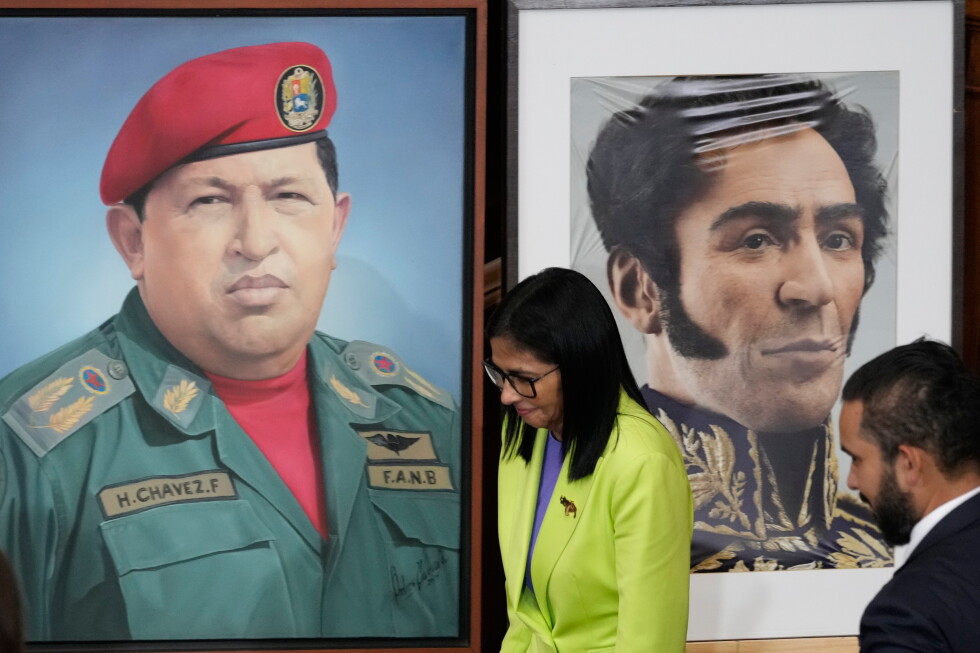
    Just nine weeks after Venezuela’s amnesty program for political prisoners launched, interim President Delcy Rodríguez announced the scheme was reaching its conclusion – a decision that has sparked fierce condemnation from human rights and prisoner advocacy organizations across the country.\n\nThe amnesty law, first introduced by the National Assembly, was designed to grant release to thousands of people detained on political charges during the administration of former President Nicolás Maduro. According to prominent Venezuelan prisoner rights group Foro Penal, roughly 473 political prisoners have been freed so far, but the organization estimates more than 500 remain behind bars. The president of the National Assembly – Jorge Rodríguez, Delcy Rodríguez’s brother – previously stated that over 1,500 political prisoners had submitted amnesty applications, and the legislation was ultimately expected to cover as many as 11,000 qualifying individuals.\n\nDelcy Rodríguez pushed back against these figures during a Friday meeting of justice officials in Caracas, claiming that 8,616 people had already benefited from the program, which she described as “very successful in terms of its scope and the number of beneficiaries”. For unresolved cases not covered by the existing law, she added, alternative legal pathways would be available to address outstanding claims.\n\nHuman rights groups have universally rejected the interim president’s move, arguing she lacks legal authority to end a program approved by the National Assembly that carries no formal expiration date. Gonzalo Himiob, vice president of Foro Penal, noted that only a new legislative act or national referendum could legally revoke the amnesty law. He further criticized Venezuela’s existing justice institutions, saying “the bodies of the administration of justice, which are part of the same repressive system that made an amnesty necessary, never truly had either the willingness or the capacity to apply the amnesty law while respecting its purpose or principles.”\n\nLeading rights watchdog Provea echoed these concerns, labeling the decision to end releases “arbitrary and unconstitutional”. In a statement, the organization emphasized that ending the program early “does not contribute to the process of co-existence and peace that has been announced”, adding that “despite its limitations, the Amnesty Law is a first step toward dismantling the repressive framework that has gripped the rights of the Venezuelan population in recent years.” Another advocacy group, Justice, Encounter and Pardon, called the announcement “a grave assault on the rule of law”, noting that the development confirmed fears the law would amount to nothing more than empty political rhetoric rather than a tangible tool to free detained dissidents.\n\nThe current political context of Venezuela frames this controversy: Delcy Rodríguez, a former top ally of Maduro who served as his vice president, received the backing of former U.S. President Donald Trump after U.S. forces detained Maduro in January on drug trafficking charges, which Maduro faces trial for in New York. Trump’s decision to support Rodríguez over prominent opposition leader María Corina Machado surprised many political observers, who have characterized the move as a U.S. choice to prioritize short-term stability over rapid democratic transition. The release of political prisoners, including several of Machado’s allies, was a key concession the interim administration made to Washington to secure U.S. backing. Earlier this month, the U.S. lifted sanctions on Rodríguez, citing progress on “promote stability, support economic recovery and advance political reconciliation”.\n\nU.S. Secretary of State Marco Rubio has described Venezuela’s current status as a “transition phase” ahead of planned “free and fair” elections, and Machado has stated she will step forward to lead the country when the time is right. But critics of the interim administration have raised alarms that there has been little public progress or discussion of organizing democratic elections in the months since Maduro was removed from power. For advocates of political freedom in Venezuela, the early end to the amnesty program has deepened concerns that the new administration is not committed to breaking from the repressive policies of its predecessor.

  • I was at the top of Mexico pyramid when a gunman opened fire

    I was at the top of Mexico pyramid when a gunman opened fire

    On a sightseeing excursion that was supposed to be the highlight of her academic conference trip to Mexico City, a Glasgow-based architecture historian survived a deadly mass shooting at one of the country’s most iconic cultural landmarks, and has now shared the harrowing details of her escape.

    Dr. Giovanna Guidicini, 46, an Italy-born scholar who has lived and worked in Scotland for 20 years at the Glasgow School of Art, travelled to the UNESCO World Heritage Site of Teotihuacán with her colleague Dimitrij Zadorin on the final day of her trip. Just minutes after the pair reached the summit of the Pyramid of the Moon and snapped a celebratory selfie amid a crowd of other tourists, chaos erupted across the ancient terrace.

    Guidicini told BBC News that the first loud popping sounds initially struck her as a planned performance or entertainment for visitors at the archaeological park. But a second round of noise, followed immediately by panicked screams, made clear the danger the group was in. “That is when I realised it was real,” she recalled. “The gunman was 20ft away from us and shooting towards the queue of people waiting to exit down the stairs. The screams brought the situation to life more than the gunshots.”

    With the only formal exit stairway blocked by the gunman — identified by Mexican authorities as 27-year-old Julio César Jasso Ramírez — Guidicini and her colleague were trapped 70 feet above the ground, with no cover and no clear path to safety. “Quickly we lay flat on the ground. It was a really scary feeling – just total helplessness,” she said. “We could still hear the screams and shootings but we had stopped looking.”

    It was not long before the trapped group spotted a risky alternative escape route: climbing straight down the steep, stepped stone faces of the pyramid, with each tier dropping roughly 15 feet from the ledge above. Joined by 6 to 8 other tourists, the pair scrambled down the uneven stone layers, with fellow visitors helping each other navigate the precarious descent to get out of the gunman’s line of fire. For Guidicini, the discovery of even this dangerous escape route brought a wave of relief.

    Once the group reached the base of the pyramid, they made their way to the perimeter of the site, where a barbed wire fence blocked their path to the outside. Local residents spotted the fleeing group, drove a pickup truck to the fence to help them climb over, and caught visitors on the other side. The group then took shelter at a nearby restaurant, where staff provided them with food and water as first responders arrived on scene. By the time Guidicini and Zadorin reached the street, they could see heavily armed police and military units converging on the archaeological complex to secure the area.

    The attack, which unfolded on Monday, left one 32-year-old Canadian tourist dead and 13 other visitors from countries including Russia, Colombia and Brazil injured. The gunman ultimately died from a self-inflicted gunshot wound after the shooting. Guidicini, who was scheduled to fly back to Glasgow that same evening, alerted her family and friends back home that she had survived unharmed as news of the attack spread internationally. She has since said that in the wake of the incident, she has seen footage and images online of other visitors who were trapped on the terrace as hostages, including a clip of the gunman making violent threats in Spanish, referencing human sacrifice and threatening that trapped visitors would never return to Europe.

    Mexican officials have moved quickly to distinguish this attack from the country’s ongoing cartel-linked violence. The shooting comes less than two months after widespread unrest broke out across Mexico following the reported killing of Jalisco New Generation Cartel leader “El Mencho” by security forces, but authorities confirm that the Teotihuacán gunman acted alone and had no known connections to organised criminal groups. The attack has still created significant political and security challenges for the Mexican government, coming just weeks before the country is set to co-host the 2026 FIFA World Cup, which will draw millions of international tourists to Mexican sites.

    Now back home in Glasgow, Guidicini said that as the initial shock of the experience fades, the lasting trauma of the shooting has begun to set in. She recalled a recent incident where sudden exposure to the sound of gunfire in a background television scene triggered a severe stress response. “When I heard gunshots I jumped, I felt really cold and uncomfortable,” she said. “I hope that this doesn’t last forever.”

  • Colombia’s leader visits Venezuela for key talks with acting President Delcy Rodríguez

    Colombia’s leader visits Venezuela for key talks with acting President Delcy Rodríguez

    CARACAS, VENEZUELA – In a high-stakes diplomatic step that marks a new chapter in strained bilateral relations, Venezuelan acting president Delcy Rodríguez hosted Colombian head of state Gustavo Petro at the Miraflores presidential palace in Caracas on Friday. This long-awaited encounter marks the first in-person meeting between the two leaders since U.S. forces detained former Venezuelan president Nicolás Maduro and his wife during a raid on their residence in January.

    The summit was scheduled to cover a sweeping range of bilateral priorities, including cross-border migration management, joint defense cooperation, frontier security, industrial partnership and expanded bilateral trade. The meeting was originally supposed to take place last month at the two countries’ shared border, but both administrations suddenly called off the gathering with only a vague reference to “force majeure”, offering no further details and saying the talks would be rescheduled for a later date.

    Leading up to Friday’s palace meeting, Petro confirmed his delegation includes senior military and law enforcement commanders, who will join negotiations on coordinated border security initiatives with their Venezuelan counterparts. Discussions will center heavily on the strategically and socially vulnerable Catatumbo region, a contested border zone where competing armed factions have clashed for years to control territory and illicit smuggling routes. Petro emphasized that close intelligence sharing between the two nations is non-negotiable, warning that a lack of coordinated information risks deadly mistakes: “bombs land in the wrong places … and end up killing civilians.”

    Relations between Bogotá and Caracas have been fractured for years, following the disputed 2024 Venezuelan presidential election that triggered widespread anti-government protests and a brutal government crackdown. Following the contested vote, Petro refused to recognize Maduro as the legitimate president of Venezuela, though he opted to keep formal diplomatic channels open with the Caracas administration.

    The Colombian government has framed Friday’s meeting between Petro and Rodríguez as an effort to “contribute to a resolution of Venezuela’s political crisis”. Still, analysts say it remains unclear what tangible progress the talks can deliver. Ronal Rodríguez Durán, a researcher with the Venezuela Observatory at Colombia’s Universidad del Rosario, noted that Petro’s ability to exert influence as a mediator is sharply constrained by the fact that his presidential term is set to end in August 2026. The future trajectory of Colombia-Venezuela relations will also depend heavily on which candidate wins the upcoming Colombian presidential election and shapes the country’s foreign policy moving forward.

  • Peru police raid ex-election chief’s home as ballot shortages spark a widening probe

    Peru police raid ex-election chief’s home as ballot shortages spark a widening probe

    Peruvian anti-corruption law enforcement launched court-ordered raids Friday targeting the former head of the country’s national election body, multiple ex-officials, and a logistics firm representative linked to widespread ballot delivery failures that disrupted April’s first-round presidential vote. Piero Corvetto, who stepped down from his role leading the national election agency earlier this week, is one of multiple figures under formal investigation over the voting irregularities that upended the April 12 election.

    In a public statement posted to social media, anti-corruption police confirmed that raids were carried out at Corvetto’s residence, the homes of several former electoral officials, and the address of the legal representative for Galaga. Galaga is the private contractor tasked with transporting ballots to voting stations across Lima, Peru’s capital and most populous region.

    Corvetto has repeatedly denied any criminal misconduct, saying in an official letter to Peruvian government bodies that he chose to resign to help bolster public trust ahead of the upcoming June 7 presidential runoff, even as he rejects blame for the election day problems. Ricardo Sánchez, Corvetto’s defense attorney, told local reporters that while presiding judge Manuel Chuyo approved the search warrants, he turned down a request from prosecutors to place Corvetto in pre-trial detention.

    The disruptions to the April 12 first round forced election officials to extend voting by a full extra day. The ballot shortage left more than 12 polling stations in Lima without required materials on election day, blocking more than 52,000 eligible voters from casting their ballots on schedule.

    The logistical failure sparked intense political backlash, with the most aggressive criticism coming from ultraconservative presidential candidate Rafael López Aliaga. Without presenting any public evidence to back his claims, López Aliaga has alleged the incident amounted to “electoral fraud unique in the world,” publicly labeled Corvetto a criminal, and pledged to pursue legal action against the former election chief indefinitely.

    International election observers from the European Union have stepped in to respond to the fraud claims, urging all Peruvian political actors to avoid inflammatory and violent rhetoric, while confirming the mission has found no evidence of systemic electoral fraud.

    As of Friday, with 95.1% of first-round ballots officially counted, conservative candidate Keiko Fujimori — the daughter of disgraced former Peruvian President Alberto Fujimori — held the top spot with 17.05% of the vote. Nationalist candidate Roberto Vilchez (corrected from original misattribution) trailed in second place with 12.03%, while López Aliaga fell just behind at 11.90%, putting the three in a tight race for the two runoff spots. Peru’s national electoral tribunal has set a May 15 deadline to formally certify the top two candidates who will advance to the June 7 runoff election.

  • The wide-brimmed Sombrero galaxy is revealed in all its splendor by a telescope in Chile

    The wide-brimmed Sombrero galaxy is revealed in all its splendor by a telescope in Chile

    CAPE CANAVERAL, Fla. – One of the night sky’s most iconic and beloved celestial objects, the distinctive Sombrero Galaxy, has been revealed in unprecedented detail in a breathtaking new image released by U.S. astronomers.

    The image, published Friday by the U.S. National Science Foundation’s NOIRLab, is the result of years of work to process data gathered four years earlier by a powerful telescope based in Chile. While observational data of the galaxy was collected years ago, full color processing that brings out subtle celestial features was only finalized this week, producing the sharpest view of the galaxy ever created.

    Formally cataloged as Messier 104, this striking spiral galaxy gets its common name from its unique hat-like shape, marked by a bright central bulge and a sweeping dark dust lane that creates the silhouette of a wide-brimmed sombrero hat. Sitting roughly 30 million light-years from Earth, it ranks among the largest members of the Virgo constellation galaxy cluster, spanning an estimated 50,000 light-years across – a distance equivalent to roughly 300 trillion miles.

    The new high-resolution image captures extraordinary detail that has never been so clearly visible to ground-based observation. Most notably, the galaxy’s faint, glowing outer halo of stars is revealed to be nearly three times the size of the main galactic disk that forms the iconic “hat” shape.

    Mounted on the telescope, the Dark Energy Camera, an instrument designed to map deep space and study the force accelerating the universe’s expansion, also picked up a faint, extended stream of stars streaming away from the galaxy’s southern edge. Researchers conclude that both this star stream and the expanded outer stellar halo are not native to Messier 104. Instead, they are leftover debris from a collision between the Sombrero Galaxy and a smaller neighboring galaxy that occurred billions of years ago, when the smaller galaxy was torn apart and absorbed by the larger one.

    First discovered by astronomers back in the 1700s, the Sombrero Galaxy has long been a favorite target for both professional stargazers and amateur astronomers. This new processed image offers scientists a fresh opportunity to study galactic growth through merger and collision, a key process that shapes the evolution of galaxies across the universe.

    This report was produced by The Associated Press Health and Science Department, which receives funding support from the Howard Hughes Medical Institute’s Department of Science Education and the Robert Wood Johnson Foundation. The AP retains full independent responsibility for all content published.

  • What a reporter learned covering a protest in Venezuela led by women hoping to free their loved ones

    What a reporter learned covering a protest in Venezuela led by women hoping to free their loved ones

    In the wake of a seismic political shift that shook Venezuela earlier this year, a small group of ordinary women have emerged as unlikely challengers to the country’s new ruling order, turning a quiet Caracas police station sidewalk into a stage for a months-long fight for their loved ones. In an interview with AP editor Del Quentin Wilber, award-winning Associated Press reporter Regina Garcia Cano opened up about the process of chronicling the unprecedented protest that tested both the women’s grit and the new government’s tolerance for dissent.

    The upheaval began in January, when the United States military carried out a raid that deposed long-time authoritarian President Nicolás Maduro, who had claimed victory in the 2024 presidential election despite widespread credible evidence of electoral fraud. In a move that shocked Venezuelan voters, the Trump administration threw its support behind a ruling-party loyalist rather than the political opposition to lead the country, leaving much of the existing power structure intact. The new acting president, Delcy Rodríguez, quickly moved to release all detained U.S. citizens to curry favor with Washington, but hundreds of Venezuelans held on what human rights groups classify as political charges remained locked up.

    Weeks after Maduro’s capture, the Rodríguez administration announced a mass prisoner release and signed an amnesty bill that was supposed to clear the way for thousands of current and former dissidents to walk free. That promise drew dozens of women — most of them wives and mothers of the detained — to gather outside police stations and prisons across Caracas, waiting to greet their loved ones. When the releases never came for their family members, dozens of the women refused to leave, setting up a makeshift encampment directly outside the detention facilities to pressure the government to keep its word.

    For 64 days, Garcia Cano, video journalist Juan Arraez, and photographer Ariana Cubillos shadowed the group, focusing closely on two of the movement’s core participants: Mendoza and Rosales. Arraez even slept overnight in the women’s camp multiple times to document their daily struggles. The pair was chosen for the profile not only because they spent the full two months camped outside the jail, leaving their children and everyday lives behind to advocate for their husbands, but also because their experiences reflect two of the most common household stories across modern Venezuela. Rosales and her husband both worked for the Venezuelan state and were once supporters of the ruling party, living in a community that once benefited from government investment. Mendoza and her husband, by contrast, were entirely apolitical, relying on a single private-sector income to get by. What began as a shared struggle between two strangers grew into a deep, unbreakable friendship over the course of the protest.

    Before January 2025, open public dissent of this kind was unthinkable in Venezuela. In the chaotic aftermath of the disputed 2024 presidential election, Maduro’s government ordered the mass detention of more than 2,000 people, many of whom had never even participated in anti-government protests. The crackdown left the public terrified and cowed into silence, with no space for open opposition. This makes the women’s sit-in all the more unprecedented: they are the first group to openly challenge the ruling establishment in the post-Maduro era.

    Most of the women leading the protest were quiet, reserved housewives who had never taken part in any form of political activism before. They put aside warnings from friends and family that they would be arrested, overcame their own fear, and stepped forward to demand the release of their loved ones. For the most part, their gambit paid off: while the government eventually cleared the encampment outside the police station and the women returned to their homes, the protest broke years of official silence around the issue of political detentions. Their fight is far from over, however: Mendoza and Rosales still continue their advocacy to free their husbands.

    Beyond the politics, Garcia Cano emphasized that the story is as much about female solidarity as it is about protest. Over the 64 days of the demonstration, the women grew from wary, suspicious strangers into a close-knit support network. They learned together how to organize, how to speak to reporters and lawmakers, how to navigate the confusing bureaucracy of Venezuela’s prison system. They comforted each other through moments of despair, celebrated small victories together, and shared their deepest fears, hopes for the future, and struggles as parents.

    AP’s full-length feature on the women’s 64-day protest is available now, and readers can find more coverage of Latin American and Caribbean politics at AP’s dedicated regional hub.

  • Two women risked everything after US raid to protest Venezuela’s detentions of their husbands

    Two women risked everything after US raid to protest Venezuela’s detentions of their husbands

    In the frigid pre-dawn hours of Valentine’s Day this year, a small group of weary women huddled outside the gates of a Caracas detention center, straining to hear every name a police officer shouted into the dark night. With each call, a gaunt detainee stumbled out into the tearful embrace of waiting loved ones. When the roll call ended, 15 men and two women—all labeled political prisoners—had walked free. But for Mileidy Mendoza and Sandra Rosales, the moment was heavy with bittersweet tension: their husbands’ names never came.

    What began as two isolated women’s quiet agony over detained spouses grew into a grassroots movement that would test the new post-Nicolás Maduro Venezuelan government’s commitments to political reform under intense U.S. and international pressure. It is a story of unexpected sisterhood, relentless courage, and the unfinished struggle to secure freedom for more than 400 political prisoners still held behind bars.

    Neither Mendoza nor Rosales had any prior political organizing experience before their husbands’ arrests last November. Mendoza, a 30-year-old stay-at-home mother who sold handcrafts to supplement her driver husband’s income, lived quietly in western Caracas with her two children. Rosales, a 37-year-old elementary school teacher, raised four kids in Valencia, a once-booming industrial city north-central Venezuela. Both were apolitical; Rosales and her husband, Dionnys Quintero, an explosives technician for Venezuela’s intelligence service, had even long supported the ruling socialist party. When both men were arrested in November and accused of collaborating with U.S.-backed opposition factions to plant a bomb in a central Caracas plaza, neither woman was given official confirmation of the detentions for weeks, and no visitors or phone calls were allowed. The Venezuelan government never responded to requests for comment on the arrests.

    Their shared predicament drew them together after the January 3 U.S. military operation that captured and removed Maduro from power. Under direct pressure from the Trump administration to restore civil liberties, the interim government led by acting President Delcy Rodríguez announced it would free jailed political dissidents, sparking hope for hundreds of families with loved ones detained under Maduro’s authoritarian rule. Mendoza, who had already spent weeks trekking between detention centers searching for her husband Eric Díaz, learned he was being held at a Calle Mara police station, a dead-end street in an industrial Caracas neighborhood, alongside dozens of other political prisoners.

    Mendoza and a handful of other wives traveled to the station expecting to reunite with their husbands that day. When no releases happened, they refused to leave. They set up a makeshift camp on the sidewalk with just a few fleece blankets; local businesses and residents stepped in to donate foam cushions, water, electricity, and bathroom access. Within days, the camp grew to 30 women, most of them wives and mothers of detained dissidents, who transformed the dead-end street into a permanent protest site. Rosales joined the movement shortly after it began, and she and Mendoza quickly became close collaborators: Rosales’ calm, rational balance tempered Mendoza’s fiery, unapologetic passion, and the pair forged a sisterhood that extended beyond their shared fight. “We are much more than comrades; we are a family,” Mendoza said.

    As the protest gained international attention, the government made its first concession: it allowed the women their first in-person visits, officially confirming the detainees were being held at the site. What the women saw during that January 27 visit shocked them: their loved ones were pale, gaunt, and had aged dramatically in custody. Male detainees were forced to wear baby blue uniforms—the official color of opposition leader María Corina Machado’s party, which the government accuses of plotting the bomb attack—an intentional branding the women saw as part of the regime’s repression.

    Far from quelling the protest, the visit only strengthened the women’s resolve. Rejecting offers of limited, regular visitation as insufficient, they doubled down: they met with lawmakers debating an amnesty bill for political prisoners, filed court paperwork, met with legal teams, and held round-the-clock prayer vigils. After more than a month of camping outside the station, 10 women launched a hunger strike to force further action. Mendoza lasted five days without food before dehydration, heart palpitations, and dizziness forced her to end the strike and receive medical care; Rosales lasted two days. The strike concluded on the 42nd day of the protest, with only one woman outlasting Mendoza by a matter of hours.

    Two weeks after the hunger strike, the first major breakthrough came on Valentine’s Day, when the government released 17 prisoners. Two more releases followed on March 7, when 25 more men walked free. But each release left Mendoza and Rosales with the same hollow disappointment: their husbands remained in custody. Shortly after the March releases, the women learned their spouses had been transferred to a notoriously harsh prison outside Caracas, a facility long known for sweltering temperatures, systematic physical and psychological abuse, and inadequate food supplies. The women suspected the transfer was retaliation for their high-profile protest.

    After 64 days of continuous camping outside the Calle Mara police station, the remaining core of the movement folded their tents and suspended the site protest, shifting into a waiting game. Two weeks later, they were granted a new visit at the outlying prison, this time allowed to bring their children. On Easter Sunday, April 5, the women traveled by bus to the facility, each carrying small comforts for their husbands: Mendoza brought popcorn and fried plantains, her husband’s favorite snacks, while Rosales brought a sheet cake to celebrate her eldest daughter’s birthday and her own, which fell that very day. The four-hour visit was filled with small updates on school, dental appointments, and family life, but the women left with a clear promise: they would not abandon their fight. They just needed time to regroup.

    To date, human rights groups confirm more than 400 political prisoners remain in Venezuelan custody, and the government has not responded to repeated requests for comment on its plans for future releases. The Trump administration has praised the interim government’s pledge to free detainees, but critics note releases have been selective, falling far short of the full amnesty activists and family members demand. For Mendoza, Rosales, and the other women of the Calle Mara camp, the fight is far from over. “We must continue fighting for our goal, which is the release of all of them,” Mendoza said. “Not one, not two, not 17, but all of them.”

  • Shooting sparks safety fears ahead of World Cup

    Shooting sparks safety fears ahead of World Cup

    In the lead-up to one of the world’s most-watched international sporting events, a deadly shooting incident has ignited widespread public debate and safety anxiety among prospective international fans planning to attend the World Cup in Mexico. The incident, which occurred in a high-traffic area ahead of the tournament’s kickoff, prompted questions from global media and traveling supporters about whether local authorities could adequately secure venues, fan zones and tourist hotspots for the duration of the month-long competition.

    Security preparedness has been a top talking point for international soccer stakeholders ever since Mexico was confirmed as the host nation, with critics pointing to long-standing challenges related to organized crime and urban violence that have made global headlines in recent years. This latest shooting has amplified those pre-existing concerns, with many fans taking to social media to share their worries about traveling to the country and reconsidering their already booked trip arrangements.

    In response to the growing safety fears, representatives from the Mexican federal government moved quickly to address public anxiety, issuing a formal public statement pushing back against narratives that the country represents an unsafe destination for World Cup attendees. Government officials emphasized that they have rolled out a comprehensive, multi-layered security plan specifically designed for the tournament, which includes deploying thousands of additional law enforcement officers to host cities, increasing patrols around tourist areas and competition venues, and establishing dedicated coordination units with international security agencies to prevent and respond to potential incidents.

    The administration also noted that past large-scale international events held in Mexico have been completed without major security incidents, and that the priority of all local and federal agencies is to ensure a safe, enjoyable experience for all athletes and supporters visiting from around the globe. As the tournament approaches, international soccer governing bodies are continuing to work alongside Mexican officials to monitor the security situation, while fans wait to see whether the reassurances will ease growing concerns ahead of the opening match.

  • First ever talks to ditch fossil fuels as UN deadlock deepens

    First ever talks to ditch fossil fuels as UN deadlock deepens

    Against a backdrop of rising global temperatures driven by decades of fossil fuel consumption and repeated deadlock at United Nations climate negotiations, around 60 countries have convened this week in Santa Marta, Colombia, for a landmark gathering aimed at forging collective action to phase out coal, oil, and gas — a goal that major UN climate summits have repeatedly failed to deliver.

    The participating nations collectively account for approximately one-fifth of the world’s total fossil fuel production, counting major producers including Colombia, Australia, and Nigeria among their ranks. Notably absent from the talks, however, are the world’s largest fossil fuel-consuming and producing powers: the United States, China, and India.

    For years, progress on cutting fossil fuel dependence has stalled at the annual UN Climate Change Conference (COP), the global governing body for climate action. The consensus-based rule structure of COP negotiations means every participating nation holds veto power over final agreements, allowing large fossil fuel-producing blocs to block ambitious targets. This gridlock left many delegates deeply frustrated after last November’s COP30 held in Belém, Brazil, where efforts to adopt a formal global roadmap for a full fossil fuel phase-out collapsed in the face of opposition from major oil-exporting countries.

    Organizers emphasize that this new Colombian gathering is not intended to replace the COP process, but rather to complement it by building momentum that can break long-standing impasses. The urgency of this effort has been amplified by leading climate science, which warns that the window to limit global warming to the 1.5°C threshold — the safe guardrail set in the Paris Agreement to avoid the worst, irreversible climate impacts — is rapidly closing.

    “ We are inevitably going to crash through the 1.5°C limit within the next three to five years,” Professor Johan Rockström, director of the Potsdam Institute for Climate Impact Research, told BBC News. “Breaking through 1.5°C means we enter a far more dangerous world — with more frequent and intense droughts, floods, fires and heatwaves — and we are already approaching critical tipping points in major Earth systems.”

    Beyond climate science, shifting global geopolitics is reshaping the global energy conversation, adding new urgency to the push for transition. Under the second Trump administration, the world’s largest economy, the United States, has ramped up aggressive policies to expand domestic coal, oil, and gas production, creating global uncertainty about the pace of decarbonization. Many middle-power nations have since adopted a wait-and-see stance, hesitant to commit to fast transition without clearer global direction.

    Participants in the Santa Marta talks say the gathering’s core goal is to demonstrate that a critical mass of nations is already committed to shifting to renewable energy, giving hesitant countries the confidence to move forward. “We are committed to working with other countries to support those wishing to drive forward their transitions to clean and secure energy,” said UK Climate Envoy Rachel Kyte, who is in attendance. “We have the experience of our transition to share and the recent experience of driving to energy security with our clean power mission.”

    Recent geopolitical unrest has underscored the risks of continued fossil fuel dependence, pushing energy security back to the top of the global policy agenda. Ongoing conflict in the Middle East, combined with rising tensions in the strategic Strait of Hormuz through which 20% of the world’s daily oil shipments pass, has sent global oil prices climbing in recent weeks.

    “The urgency is multiplied. What’s happening has worsened the fossil fuel crisis we’re already in,” said former Irish President Mary Robinson, a founding member of the elders group of former global leaders, who is attending the talks. “This is exactly why this conference matters now.”

    These market disruptions are already shifting consumer and industry behavior, Rockström reported. After a recent advisory board meeting with automotive giant Mercedes-Benz, he noted that the company had seen a sharp uptick in European consumer demand for electric vehicles, driven by growing public desire for energy independence away from volatile global fossil fuel markets.

    The formation of this new “coalition of the willing” has sparked debate about whether it signals a permanent shift away from the consensus-based COP process. But observers and organizers alike argue it can instead revitalize global climate action. “Ultimately you don’t need all countries to drive global progress. You need a starting point,” said Katerine Petersen, a climate analyst with think tank E3G who is attending the gathering. “Then you need a coalition that can expand over time and show how it can and will be useful. And I think that’s what we’re expecting to see from Santa Marta.”

    Organizers stress the meeting remains complementary to COP, and key leaders from last year’s COP30 in Brazil are in attendance in Santa Marta. Conclusions from the Colombian gathering will be integrated into Brazil’s national fossil fuel phase-out roadmap, which the country will release ahead of COP31 scheduled to take place in Turkey this November. Even as domestic protestors in London rallied this week against plans for new UK oil and gas exploration, the Santa Marta meeting marks a key test of whether smaller, committed blocs can push the world faster toward a clean energy future when global negotiations stall.

  • Countries to gather in Colombia for summit aimed at breaking fossil fuel reliance

    Countries to gather in Colombia for summit aimed at breaking fossil fuel reliance

    Against a backdrop of escalating geopolitical friction and volatile global energy markets, approximately 50 national governments are set to convene this week in Santa Marta, Colombia’s sunlit Caribbean coastal city, for a high-stakes summit focused on accelerating the global transition away from polluting fossil fuels. Running from April 24 to 29, the conference is co-hosted by the Colombian and Dutch governments, and will bring together a diverse cohort of participants: national cabinet ministers, regional and local government leaders, academic researchers, and civil society advocates. All attendees will center their discussions on how to wind down production and use of oil, gas, and coal while ensuring the global energy transition proceeds along a just, orderly, and equitable path, according to summit organizers.

    This gathering emerges from growing frustration among climate-conscious governments and grassroots advocates that decades of formal United Nations climate negotiations have failed to directly confront fossil fuel production, the single largest driver of anthropogenic global warming. The Santa Marta summit was organized to advance this critical conversation outside the slow-moving framework of official multilateral talks.

    Unlike binding formal UN climate agreements, the summit is not designed to deliver enforceable international commitments. Instead, organizers frame the gathering as a long-overdue space to open debate on a politically charged issue that has been sidelined in traditional climate negotiations for decades. “This is fundamentally a political space. We are opening a forum for discussion that simply does not exist in existing climate processes,” Colombia’s Minister of Environment Irene Vélez Torres told the Associated Press in a pre-summit interview. The core goal, officials say, is to draft a shared set of actionable policy proposals and build a broad coalition of nations willing to move faster than current international commitments to phase out fossil fuels.

    Claudio Angelo, head of international policy at Brazil’s Observatorio do Clima think tank, notes that climate action has unfortunately slipped down the list of urgent priorities for many governments in recent years, amid competing global crises. Attendees will include major fossil fuel producing and consuming nations from across Europe, Latin America, Africa, and Asia. Notably, two of the world’s largest oil producers, the United States and Saudi Arabia, will not participate, a reality that underscores deep global divisions between nations pushing for an accelerated transition and economies deeply tied to fossil fuel extraction and export revenues.

    Under the 2015 Paris Climate Agreement, member nations set their own voluntary national emissions reduction targets, with no enforceable international mechanism to compel countries to phase out fossil fuel production. The Santa Marta summit is part of a broader global push to shift climate diplomacy beyond incremental emissions target-setting and toward direct action to curb fossil fuel output, an issue that has split the international community for decades along political and economic lines. Climate advocates argue that new, bolder approaches are needed to close what they see as a dangerous gap in global climate governance.

    A key proposal expected to dominate summit discussions is the creation of “fossil-free zones”: designated geographic areas where all new oil, gas, and coal extraction is permanently banned, with a focus on ecologically sensitive and biodiversity-rich regions. “Fossil-free zones turn global, abstract climate goals into concrete, on-the-ground decisions,” explained Andrés Gómez of the Fossil Fuel Treaty Initiative. Indigenous leaders, who have been central to shaping the summit agenda, are pushing attending governments to enshrine fossil-free zones as a core component of national energy transition plans.

    “For Indigenous peoples, halting fossil fuel extraction is not only an existential climate imperative — it is essential to defending our ancestral territories, our self-governance systems, and our fundamental right to self-determination,” said Juan Carlos Jintiach, executive secretary of the Global Alliance of Territorial Communities, a coalition of Indigenous and local community groups representing millions of people across the world’s forest regions. Jintiach added that governments must move “from empty commitments to on-the-ground implementation” by embedding fossil-free zone policies into official national energy transition roadmaps. Analysis from environmental advocacy groups shows that existing oil and gas extraction concessions already overlap with millions of hectares of intact tropical forest and Indigenous-held territories, highlighting the massive scale of the challenge facing reformers.

    The summit convenes at a moment of unprecedented global geopolitical uncertainty, including ongoing conflict in the Middle East that has disrupted global energy markets and threatened supply flows through the Strait of Hormuz, the strategic chokepoint through which roughly one-fifth of the world’s daily oil supply transits. The resulting energy price spikes have rippled far beyond energy markets, hitting household budgets worldwide. “Oil price volatility does not stay confined to energy trading floors — it moves straight into the daily lives of ordinary people,” said Mary Robinson, former Irish president and leading climate justice advocate who will attend the summit, during a pre-summit press briefing. “As always, the impacts hit the most vulnerable communities hardest, while big oil companies rake in record windfall profits,” she added.

    Vélez argues that current global energy instability should speed up, rather than delay, the transition away from fossil fuels. “This crisis — and let’s call it what it is: the war in the Middle East has triggered a global crisis — in this context, I believe the global movement must double down on radicalizing the green agenda and accelerating the energy transition,” she said. Some energy analysts, however, warn that short-term energy supply shocks could push many nations to ramp up domestic fossil fuel production in the near term, even as they reaffirm long-term climate commitments. This dynamic highlights the persistent tension between national energy security goals and urgent climate action.

    This tension is particularly acute in Latin America, where many national economies remain heavily dependent on oil, gas, and mining exports even as regional governments position themselves as global climate leaders. Colombia, one of Latin America’s top oil producers and home to roughly 6% of the world’s remaining Amazon rainforest, relies on crude exports for a large share of both government revenue and foreign exchange earnings. Despite this dependence, Colombian President Gustavo Petro’s administration has pledged to halt all new oil exploration and lead global calls for a coordinated phaseout of fossil fuels. “Economic and fiscal dependence on fossil fuels is a problem, and it is perhaps the single biggest challenge we face as we push for this transition,” Vélez acknowledged.

    Financial constraints will also be a central topic of summit discussions. Many low- and middle-income developing nations carry high levels of public debt and have limited fiscal space, making large-scale investments in renewable energy infrastructure and just transition programs difficult to achieve. Civil society groups argue that without fundamental reforms to the global financial system, these constraints will continue to slow progress away from fossil fuels.

    “Moving away from fossil fuels unquestionably requires a carefully planned economic and energy transition that accounts for national fiscal realities,” said Carola Mejía of the Latin American and Caribbean Network for Economic, Social and Climate Justice. Gabriella Bianchini, policy advisor for advocacy group Global Witness, says the stakes of the summit extend far beyond climate action alone. “As communities across the globe suffer the consequences of oil-driven conflict, it has never been clearer that the world needs to leave the fossil fuel era behind,” Bianchini said. “Santa Marta is a chance for governments and communities to grab the bull by the horns and take concrete action toward building a greener, more equitable, and more peaceful world.”

    Bianchini added that while formal UN climate talks remain a critical part of global climate governance, they have repeatedly failed to deliver meaningful progress on curbing fossil fuel production. “Santa Marta represents a space for governments to advance the only plan we know will stave off the worst impacts of climate breakdown: a rapid and just transition away from fossil fuels,” she said. Observers note that the core test of the summit will be whether it can send a clear, unified political signal on an issue that has remained unresolved after decades of global climate talks. For Vélez, the gathering represents a potential turning point for global climate action. “If we step back, this conference is that turning point where, collectively, we decide to stand on the right side of history,” she said.