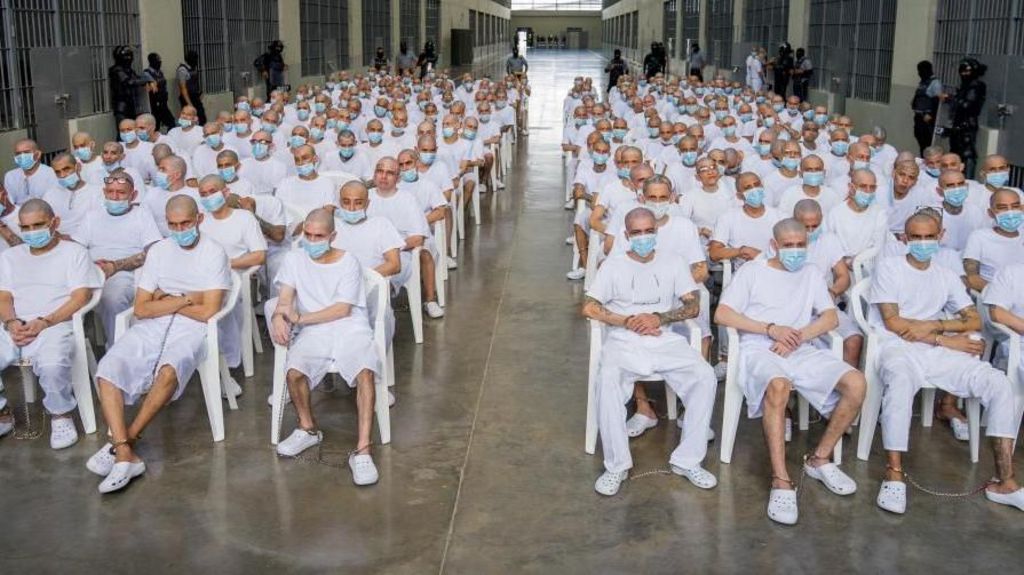
A landmark mass trial that marks one of the largest gang prosecutions in modern history has commenced in El Salvador, targeting 486 top leaders and key associates of the notorious transnational criminal organization MS-13, the country’s attorney general’s office has confirmed. The sprawling case comes nearly three years after President Nayib Bukele launched a hardline, widely debated nationwide crackdown on gang activity that has reshaped the Central American nation’s security landscape.
According to official prosecutors, the 486 defendants are collectively linked to more than 47,000 separate criminal offenses carried out between 2012 and 2022. The long list of charges includes murder, extortion, drug trafficking, arms smuggling, femicide, forced disappearances, and an unprecedented charge of rebellion. Prosecutors allege the group sought to consolidate territorial control across El Salvador to build a parallel state that could challenge the authority of the elected government. A number of the accused are also tied to a devastating 2022 outbreak of gang violence that left 87 people dead over a single weekend in March of that year—a bloodbath that directly prompted Bukele to declare a formal “war on gangs” and roll out sweeping emergency security measures.
Prosecutors have stated they hold compelling evidence that will support the pursuit of maximum criminal penalties for all defendants convicted in the case. As of the trial’s opening, 413 of the accused are already in custody, while 73 remaining suspects are being tried in absentia, with active arrest warrants still in effect for the fugitives. El Salvador’s National Civil Police says its years of targeted intelligence gathering, research and covert monitoring operations made it possible to map out the gang’s hierarchical structure, locate suspects, and document the full scope of their criminal activity ahead of trial.
MS-13, the transnational gang at the center of the case, traces its origins back to 1980s Los Angeles, where it was formed by Salvadoran refugees fleeing the country’s brutal civil war. In recent decades, the organization has expanded its footprint dramatically across Central America, where it now maintains a larger and more powerful presence than it does in the United States. Last year, the U.S. government formally designated MS-13 as a terrorist organization, acknowledging its cross-border reach and violent impact. In a statement ahead of trial, El Salvador’s attorney general’s office emphasized that the gang’s decades of systematic criminal activity have not only spread fear and immeasurable grief across Salvadoran households, but also held back the country’s broader economic and social progress.
The trial is taking place against the backdrop of a controversial ongoing state of emergency that Bukele first implemented in March 2022, shortly after the deadly wave of violence. The emergency measure vastly expanded law enforcement’s power to detain individuals suspected of gang ties or collaboration, and temporarily suspended a number of constitutional rights protections. Since the policy was implemented, tens of thousands of suspected gang members and affiliates have been arrested across the country, but the approach has drawn sharp criticism from international human rights organizations, which have documented widespread allegations of arbitrary detentions of innocent civilians and other human rights abuses. Legal reforms enacted by the Bukele administration in recent years also explicitly paved the way for mass gang trials like the proceeding that opened this week.