标签: South America

南美洲

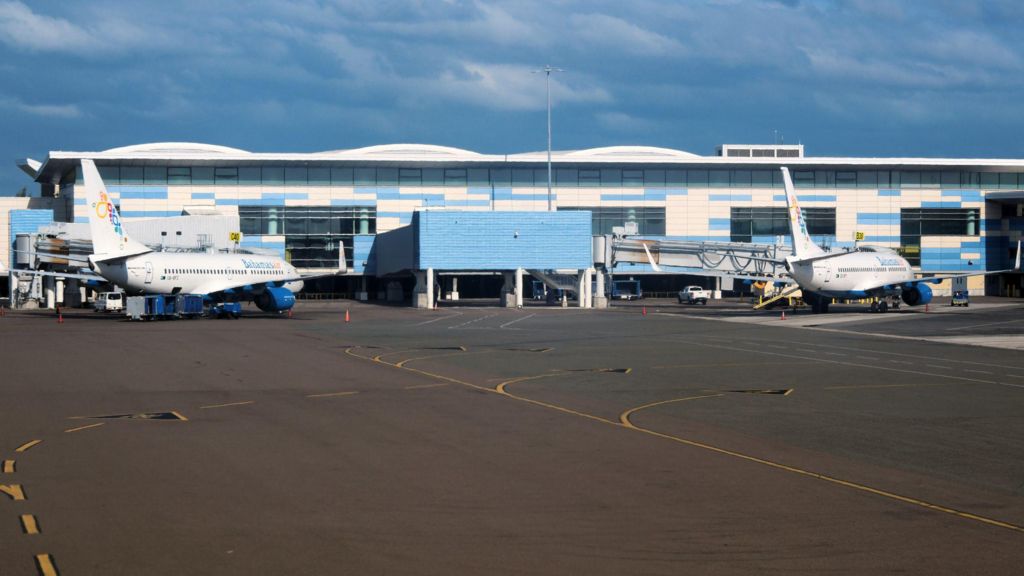
  • American Airlines gets approval to resume regular flights to Venezuela

    American Airlines gets approval to resume regular flights to Venezuela

    In a significant development for U.S.-Venezuela relations, American Airlines has received formal authorization to reinstate commercial flights to Venezuela, marking the first such service by a U.S. carrier since 2019. The approval, granted on Wednesday, follows President Donald Trump’s January directive to the Transportation Department to reopen Venezuelan airspace to American commercial aviation.

    The decision comes despite ongoing State Department travel advisories warning U.S. citizens against visiting Venezuela due to security concerns and political instability. American Airlines suspended its Miami-Caracas and Miami-Maracaibo routes in 2019, becoming the last U.S. airline to cease operations in the country amid deteriorating diplomatic relations.

    This aviation breakthrough signals a potential thaw in bilateral relations that collapsed during the political crisis that saw Nicolás Maduro’s administration challenged by U.S.-backed opposition forces. The resumption of air connectivity could facilitate family reunifications and create new commercial opportunities between the two nations.

    While specific flight schedules and operational details remain undisclosed, the restoration of service represents a symbolic step toward normalizing travel patterns that were commonplace before the diplomatic rupture. The airline previously emphasized that renewed service would provide vital connections for Venezuelan-Americans seeking to visit relatives and explore business ventures in their homeland.

  • Brazil’s Congress ratifies EU-Mercosur trade deal

    Brazil’s Congress ratifies EU-Mercosur trade deal

    SAO PAULO — In a landmark decision, Brazil’s Senate has given unanimous approval to the monumental free-trade agreement between the Mercosur trade bloc and the European Union, signaling a major advancement toward the pact’s implementation. This decisive move follows similar ratification by Brazil’s lower house and positions the agreement closer to realization than at any point in its quarter-century negotiation history.

    The agreement, which would create an integrated market encompassing over 700 million consumers, represents one of the most significant trade partnerships globally. With Argentina and Uruguay having previously ratified the deal, and Paraguay expected to follow shortly, the Mercosur bloc demonstrates unified progress. Bolivia, as the newest Mercosur member, retains the option to join the agreement in subsequent years despite not participating in initial negotiations.

    Brazil, as Mercosur’s dominant economy with a projected GDP exceeding $2.3 trillion by 2025, has been instrumental in advancing the agreement. President Luiz Inácio Lula da Silva emerged as a pivotal advocate for the pact, which still requires validation from the European Union’s top court before full implementation.

    European Commission President Ursula von der Leyen has repeatedly acknowledged President Lula’s diplomatic efforts in overcoming European opposition. The combined economic power of the participating nations amounts to approximately $22 trillion in GDP, underscoring the agreement’s global significance.

    Despite legal proceedings in Europe, Brazilian officials including Vice President Geraldo Alckmin indicate the agreement could partially take effect within months—a timeline von der Leyen supports. Senate President Davi Alcolumbre characterized the ratification as demonstrating “institutional maturity” and alignment with Brazilian societal interests.

    The trans-Atlantic trade pact, formally signed on January 17 after 25 years of stalemate, faces continued resistance from European agricultural sectors concerned about competitive imbalances. Recent months have witnessed tractor-blocking protests and firework demonstrations by European farmers in Brussels opposing the agreement.

    French President Emmanuel Macron, among the pact’s most prominent critics, has insisted on implementing robust safeguards against economic disruption, enhanced regulatory standards in Mercosur nations regarding pesticide usage, and intensified import inspections at EU ports.

  • Millions of Cubans plunged into darkness as fuel crisis deepens

    Millions of Cubans plunged into darkness as fuel crisis deepens

    A catastrophic power failure left millions of Cubans without electricity on Wednesday, marking one of the most severe blackouts in recent history as the nation grapples with an escalating energy crisis. The outage engulfed approximately two-thirds of the island, including the capital Havana, following an unexpected technical failure at the Antonio Guiteras thermal power plant located 100km east of Havana.

    This incident represents the latest manifestation of Cuba’s deteriorating energy infrastructure, which has been crippled by chronic fuel shortages exacerbated by intensified U.S. sanctions. The national electricity utility UNE immediately initiated restoration efforts, though the scale of the outage presented significant challenges to recovery operations.

    The current energy crisis has been compounded by multiple factors including aging infrastructure, reduced fuel imports from key ally Venezuela, and stringent U.S. embargo measures. Venezuela had previously supplied approximately 35,000 barrels of oil daily—covering nearly half of Cuba’s requirements—before the U.S. intervention in Venezuelan oil exports earlier this year.

    The repercussions extend beyond household electricity, with critical services including hospital emergency wards, dialysis treatment facilities, and water pumping stations experiencing severe disruptions. The energy shortage has also crippled public transportation systems and garbage collection services, creating secondary public health concerns.

    In a related development, Air France announced the suspension of its Havana services from late March through mid-June, citing insufficient aviation fuel availability. This follows similar decisions by other international carriers, further isolating the island nation and damaging its vital tourism industry.

    The current situation reflects the prolonged geopolitical tensions between the United States and Cuba that have persisted since the 1959 revolution. Recent measures under the Trump administration have explicitly targeted Cuba’s energy imports, threatening tariffs on nations providing oil to the Caribbean nation and actively intercepting fuel shipments destined for Cuban ports.

  • Freed Argentine officer urges release of remaining foreign prisoners in Venezuela

    Freed Argentine officer urges release of remaining foreign prisoners in Venezuela

    BUENOS AIRES, Argentina — In his first public appearance since being released from Venezuelan custody, Argentine military police officer Nahuel Gallo made an emotional appeal Wednesday for the international community to secure the freedom of two dozen foreign nationals still detained at the notorious Rodeo I prison in Venezuela.

    Gallo, who endured 448 days of incarceration in a facility outside Caracas before his Sunday release, declared that he cannot truly consider himself free while these detainees remain imprisoned. “My mind is still in prison,” the officer stated during a press conference in the Argentine capital, where he was flanked by high-ranking officials including Foreign Minister Pablo Quirno.

    The Argentine government maintained that Gallo had traveled to Venezuela in December 2024 on personal leave to visit his Venezuelan partner and their son. However, Venezuelan authorities under then-Attorney General Tarek William Saab arrested him on espionage charges, alleging he had attempted “irregular entry” into the country while concealing what they described as a “criminal plan” beneath the pretext of a romantic visit. Saab further accused Gallo of connections to “international far-right groups.”

    Foreign Minister Quirno expressed gratitude to several nations including the United States, Italy, and Israel for their diplomatic efforts in securing Gallo’s release. The development occurs against a backdrop of heightened international scrutiny regarding Venezuela’s judicial system and human rights record.

    In a significant judicial development hours before the press briefing, Argentine Federal Judge Sebastián Ramos summoned Gallo to testify as a witness in an investigation into alleged crimes against humanity attributed to the administration of former Venezuelan President Nicolás Maduro. According to the summons obtained by The Associated Press, Gallo potentially possesses knowledge of “events carried out by the Venezuelan state apparatus” that are under examination.

    The recently freed officer declined to address the summons during the conference, instead requesting patience from journalists, indicating he remains unprepared to fully disclose his experiences. “I still can’t talk about the atrocities they committed,” Gallo stated, suggesting deeper revelations may emerge in time.

  • Ecuador declares Cuba’s ambassador ‘persona non grata, orders mission to leave the country

    Ecuador declares Cuba’s ambassador ‘persona non grata, orders mission to leave the country

    In a significant diplomatic escalation, Ecuador has formally declared Cuba’s ambassador Basilio Antonio Gutiérrez and his entire diplomatic team persona non grata, ordering them to depart the South American nation within 48 hours. The Ecuadorian Ministry of Foreign Affairs announced the decision Wednesday, citing provisions under international diplomatic law while offering no specific justification for the expulsion.

    The move follows President Daniel Noboa’s executive order from Tuesday that abruptly recalled Ecuador’s ambassador to Cuba, José María Borja, similarly without explanation. This diplomatic rupture coincides with Ecuador’s announcement of new joint military operations with the United States targeting organized crime networks operating within the country.

    The expulsion occurs against a backdrop of intensified U.S. pressure on Cuba following Washington’s involvement in the removal of former Venezuelan leader Nicolás Maduro. The Trump administration has implemented stringent restrictions on Cuban oil imports and publicly speculated about the potential collapse of the Cuban government. Ecuador has emerged as a key regional partner for the U.S. in combating drug trafficking and criminal organizations.

    Under the Vienna Convention on Diplomatic Relations, host nations maintain the authority to declare foreign diplomats persona non grata without providing rationale, though such actions typically signal serious diplomatic discord. The Cuban embassy in Quito did not immediately respond to requests for comment regarding the unprecedented diplomatic development.

  • US interior secretary is in Venezuela to discuss critical minerals

    US interior secretary is in Venezuela to discuss critical minerals

    CARACAS, Venezuela — In a significant diplomatic move, U.S. Secretary of the Interior Doug Burgum convened with Venezuela’s acting President Delcy Rodríguez on Wednesday, signaling the Trump administration’s intensified efforts to secure influence over the nation’s vast natural resource reserves. The high-level meeting represents the latest development in Washington’s strategic pivot toward resource diplomacy in South America.

    Burgum, who chairs President Donald Trump’s National Energy Dominance Council, embarked on the two-day diplomatic mission to engage with both American and Venezuelan corporate entities. The U.S. diplomatic mission in Venezuela characterized the visit through social media channels as a ‘vital and historic step’ supporting the administration’s phased strategy for Venezuelan economic transformation, specifically emphasizing the creation of ‘a legitimate mining sector and safe critical mineral supply chains.’

    This diplomatic engagement follows the capture of former President Nicolás Maduro by U.S. forces two months ago, which precipitated Rodríguez’s ascension to acting leadership. The visit continues energy-focused diplomacy initiated in February by Energy Secretary Chris Wright, who previously explored Venezuela’s substantial petroleum potential.

    The Trump administration recently unveiled plans to establish a critical minerals trading alliance among allied nations, strategically designed to counter China’s dominant position in supplying essential elements required for advanced military equipment and consumer electronics. Venezuela’s resource portfolio extends beyond its well-documented oil reserves to include substantial deposits of gold, copper, diamonds, and other valuable minerals, though extraction operations frequently occur under hazardous conditions within a minimally regulated industry.

    Accompanied by Laura Dogu, the top U.S. diplomat stationed in Venezuela, Burgum’s meetings at the presidential palace further solidify the administration’s resource-focused foreign policy approach. Previous allegations by Maduro and his administration suggested U.S. geopolitical interests were primarily driven by Venezuela’s substantial resource wealth, claims that gain renewed context amid these developing diplomatic exchanges.

  • No More Foundation launches anti-violence campaign ahead of the Women’s World Cup

    No More Foundation launches anti-violence campaign ahead of the Women’s World Cup

    A major international initiative targeting gender-based violence was unveiled Tuesday by the No More Foundation in coordination with Brazil’s upcoming hosting of the 2027 Women’s World Cup. The comprehensive campaign aims to leverage the global sporting event’s platform to address alarming rates of violence against women in Brazilian society.

    Citing a concerning 2025 research study indicating that 37% of Brazilian women aged 16 and above experienced violence within the past year, the New York-based organization is implementing a multi-faceted approach to prevention and education. The strategic program will feature public service announcements during sports broadcasts, educational curriculum development for schools and community organizations, and extensive digital content creation in the pre-tournament period.

    Brazil, selected as host nation in 2024, will stage the tournament across eight cities from June 24 to July 25, 2027. No More Global CEO Pamela Zaballa emphasized the unprecedented reach of this initiative, stating: “Integrating prevention messaging, education, and survivor resources into one of the world’s most watched sporting events creates potential for global impact reaching millions—both women and men—with lasting effects extending far beyond the tournament.”

    The campaign has garnered significant institutional support, including partnerships with Brazil’s tourism board (Visit Brazil) and national broadcaster EBC. Marcelo Freixo of Visit Brazil noted that the World Cup preparation cycle “represents a historic opportunity to strengthen our image as a country that promotes equality, safety, and respect.”

    Launch elements included a public service announcement featuring prominent football figures: current player Tarciane, former legend Formiga, and women’s national team coach Arthur Elias, demonstrating cross-generational commitment to the cause.

  • US and Ecuador forces launch operation to fight drug trafficking

    US and Ecuador forces launch operation to fight drug trafficking

    Ecuadorian and United States military forces have initiated coordinated operations targeting organizations designated as terrorist entities within the South American nation, according to an official announcement from the U.S. Southern Command on Tuesday. The joint mission aims to combat illicit drug trafficking networks that have established significant operational presence in Ecuador, though specific operational details remain classified.

    The development follows Monday’s declaration by Ecuadorian President Daniel Noboa that American forces would participate in a ‘new phase’ of the country’s intensified campaign against drug cartels. Noboa has identified Ecuador’s extensive port infrastructure as a critical vulnerability, noting that approximately 70% of global cocaine shipments now transit through these facilities, creating highly profitable opportunities for transnational criminal organizations.

    Ecuador’s geographical positioning between Colombia and Peru—the world’s two primary cocaine producers—has made it increasingly vulnerable to narcotics trafficking operations. This security collaboration emerges just four months after Ecuadorian voters rejected a constitutional amendment that would have permitted the reestablishment of foreign military bases within the country, dealing a significant political setback to Noboa’s security agenda.

    On Monday, President Noboa convened high-level discussions in Quito with U.S. Southern Command leader General Francis Donovan and Mark Schafer, commander of U.S. Special Operations forces in Central and South America. The meetings produced agreements on enhanced intelligence sharing and coordinated operational activities at key transportation hubs, including airports and seaports.

    The U.S. Southern Command characterized the operations as ‘decisive action against narco-terrorists who have long inflicted terror, violence, and corruption throughout the hemisphere.’ This announcement follows Washington’s temporary deployment of Air Force personnel to the former U.S. military installation in Manta three months ago.

    The Trump administration has demonstrated increased focus on counter-narcotics operations in the region, conducting over 40 lethal strikes against suspected drug trafficking vessels in Caribbean and Pacific waters since September. Recent actions include the high-profile seizure of Venezuelan leader Nicolás Maduro on narco-terrorism charges and tense diplomatic exchanges with Colombian President Gustavo Petro regarding drug interdiction efforts.

  • 4 former Argentine navy officers face trial for 2017 submarine sinking that killed 44 crew members

    4 former Argentine navy officers face trial for 2017 submarine sinking that killed 44 crew members

    Four former high-ranking Argentine naval officers stood trial Tuesday in Santa Cruz province, facing criminal charges for their alleged roles in the catastrophic sinking of the ARA San Juan submarine in November 2017. The tragedy claimed the lives of all 44 crew members aboard the German-built vessel.

    The defendants, who maintain their innocence, confront allegations including dereliction of duty, breach of official obligations, and aggravated negligent destruction—all carrying potential prison sentences. Prosecutors presented evidence indicating the submarine had experienced ‘numerous technical defects’ since its 2015 mid-life overhaul, with these deficiencies reportedly documented by multiple captains over the years.

    According to judicial investigations, the fatal sequence began when seawater entered ventilation ducts, reaching battery compartments and triggering a short circuit and minor fire. This caused the vessel to lose propulsion and commence an uncontrolled descent beyond its crush depth of approximately 600 meters, resulting in catastrophic implosion.

    Despite the military prosecutions, no high-level political figures from the administration of then-President Mauricio Macri have faced legal accountability. Families of the victims, represented by attorney Luis Tagliapietra, have criticized the judicial process for excluding political leadership from investigation and for failing to conduct essential expert analyses.

    The trial unfolds more than six years after the submarine disappeared during its transit from Ushuaia to Mar del Plata following training exercises. Despite reporting and subsequently downplaying a snorkel malfunction hours before the disaster, the vessel vanished with all hands in the South Atlantic.

  • Mexican drug lord ‘El Mencho’ buried in golden coffin

    Mexican drug lord ‘El Mencho’ buried in golden coffin

    In a lavish ceremony underscoring the persistent influence of organized crime, the notorious Jalisco New Generation Cartel (CJNG) founder Nemesio Oseguera Cervantes, alias “El Mencho,” was laid to rest in a golden casket on Monday. The 59-year-old drug lord, Mexico’s most-wanted criminal with a $15 million U.S. bounty on his head, died following a late February firefight between his armed guards and Mexican special forces operatives attempting his capture.

    The funeral proceedings near Guadalajara in CJNG’s home state of Jalisco unfolded under heavy National Guard surveillance, reflecting authorities’ concerns about retaliatory violence. Despite security measures, the event displayed extravagant narco-culture symbolism, including monumental floral arrangements requiring multiple transport vehicles. Among these was a prominent rooster-shaped tribute nodding to Oseguera’s passion for cockfighting.

    Local media reported the funeral procession featured narcocorridos—ballads glorifying drug traffickers—and traditional ranchero music, with the song “El Muchacho Alegre” (The Cheerful Boy) accompanying the golden casket’s arrival at the cemetery chapel. Many attendees concealed their identities with face masks during the hour-long ceremony, highlighting the pervasive climate of fear and anonymity surrounding cartel activities.

    While the burial plot was noted as relatively modest compared to the grandiose mausoleums of other narcos, the spectacle contrasted sharply with the violence that followed Oseguera’s death. Cartel members previously unleashed coordinated attacks across 20 Mexican states, torching vehicles and blockading roads in retaliatory strikes.

    El Mencho’s death represents both a tactical victory for President Claudia Sheinbaum’s administration—which faces mounting pressure from the U.S. to combat drug trafficking—and a potential catalyst for escalated violence. Security analysts warn that power struggles within the tens-of-thousands-strong CJNG could trigger intensified factional conflicts, creating new security challenges for Mexican authorities.