标签: South America

南美洲

  • Spectacular images reveal unique sea creatures and corals off Caribbean islands

    Spectacular images reveal unique sea creatures and corals off Caribbean islands

    In a groundbreaking marine exploration mission, British scientists have uncovered extraordinary underwater ecosystems in the Caribbean waters surrounding UK Overseas Territories. The six-week expedition, conducted by the UK Centre for Environment, Fisheries and Aquaculture Science (CEFAS), revealed previously unknown geological formations and marine life that have remained hidden beneath the waves.

    The research team aboard the RSS James Cook documented an extensive underwater mountain range, a massive blue hole measuring approximately 300 meters wide and 550 meters deep, and coral reefs exhibiting remarkable resilience to climate change impacts. Operating around the clock, researchers deployed specialized equipment capable of withstanding extreme pressures at depths reaching 6,000 meters.

    Among the most significant discoveries were 146 species unique to the Cayman Islands, Anguilla, and Turks and Caicos territories, with preliminary documentation of nearly 14,000 individual specimens representing 290 distinct marine creatures. The expedition captured footage of rare species including the pelican eel with its bioluminescent tail, barreleye fish with upward-pointing tubular eyes, and dragonfish featuring glowing chin appendages.

    Professor James Bell, leading the expedition, emphasized the pristine condition of these environments: ‘We’ve found coral ecosystems completely unaffected by the stony coral disease that has devastated Caribbean reefs, likely protected by their depth and the mountainous topography.’ The team also identified black coral specimens potentially thousands of years old, ranking among the oldest living organisms ever recorded.

    The research mission faced navigational challenges due to incomplete and outdated marine charts, requiring careful acoustic mapping of previously undocumented areas. The discovery of a 70-kilometer underwater ridge and the Caribbean’s potentially deepest blue hole highlights how much remains unknown about ocean depths.

    Local environmental specialists from each territory participated in the expedition, gathering data to enhance biodiversity management strategies and identify sustainable fishing opportunities for island communities. This collaborative effort forms part of the UK’s Blue Belt Programme, supporting the nation’s commitment to protect 30% of global oceans by 2030 through scientifically informed marine protected areas.

  • Canada defeats Argentina in penalty shootout after scoreless draw in the SheBelieves Cup

    Canada defeats Argentina in penalty shootout after scoreless draw in the SheBelieves Cup

    In a tense showdown at Harrison, New Jersey, Canada’s women’s soccer team secured a dramatic 3-2 penalty shootout victory against Argentina following a goalless regulation match in the SheBelieves Cup tournament on Saturday.

    The match proceeded directly to penalties under the tournament’s unique rules, bypassing extra time. Canadian goalkeeper Kailen Sheridan emerged as the decisive hero, spectacularly saving Argentina’s first two penalty attempts. The victory was sealed when Argentina’s Vanina Preininger sent her crucial shot over the crossbar.

    During regular play, Canada’s Jordyn Huitema generated the most significant scoring opportunity in the first half, forcing a remarkable save from Argentine goalkeeper Solana Pereyra who deflected the powerful strike onto the crossbar.

    The match marked the return of Canadian captain Jessie Fleming, who had previously missed the United States match due to illness. Notably absent was Arsenal’s Olivia Smith, ruled out of the tournament with a concussion.

    Argentina concluded the tournament without scoring a single goal across all matches, finishing at the bottom of the standings. Canada’s final tournament position remained pending the outcome of the late match between the United States and Colombia.

    Both teams now look toward World Cup qualification pathways, with Argentina continuing in the CONMEBOL Women’s Nations League next month—the qualifying tournament for the 2027 Women’s World Cup in Brazil—while Canada prepares for the CONCACAF W Championship beginning in November.

  • A nightclub bombing in Peru injures 33, including minors, authorities say

    A nightclub bombing in Peru injures 33, including minors, authorities say

    A devastating explosion rocked the Dali nightclub in Trujillo, Peru during the early hours of Saturday, leaving 33 individuals wounded—including three teenagers—in the latest episode of violence plaguing the northern coastal region. According to the local Emergency Operations Center, the blast occurred in an area increasingly dominated by criminal enterprises.

    Medical authorities reported at least five victims in critical condition, with many sustaining severe shrapnel wounds and traumatic amputations requiring immediate surgical intervention. Gerardo Florián Gómez, executive director of the Trujillo Health Network, confirmed the injured included one 16-year-old and two 17-year-olds among the casualties.

    Eyewitness Fiorella Mantilla, present during the explosion, described the moment of detonation: “It sounded as if the sound system had suddenly been turned off,” she recounted while being treated for glass fragments embedded in her legs.

    This incident marks the fourth significant explosion in Trujillo within a year, following a pattern of escalating violence. Official statistics reveal that the La Libertad region experienced 286 explosions in 2025 alone, with 136 occurring specifically in Trujillo. The region’s illegal gold mining operations and extortion networks have created a fertile environment for organized crime.

    Peruvian authorities have linked the bombing campaign to sophisticated criminal syndicates, including the notorious Los Pulpos organization, which has expanded its operations beyond Peru’s borders into Chile and neighboring countries. The group allegedly uses explosives as intimidation tactics in their extortion schemes.

    The nightclub explosion occurred less than one month after another blast damaged 25 homes in the same city, and follows earlier attacks on government buildings and residential areas throughout 2025 that collectively injured dozens of civilians.

  • Lugo and Díaz pitch shutout ball for Puerto Rico in World Baseball Classic win

    Lugo and Díaz pitch shutout ball for Puerto Rico in World Baseball Classic win

    SAN JUAN, Puerto Rico — In a stirring display of resilience and national pride, pitcher Seth Lugo delivered a masterful performance Friday night, leading Puerto Rico to a commanding 5-0 victory against Colombia in their World Baseball Classic Group A opener. The right-hander dominated across four-plus innings of three-hit baseball at a vibrant Hiram Bithorn Stadium, setting the tone for what became both a personal and collective triumph.

    The game marked an emotional milestone for closer Edwin Díaz, who executed a flawless ninth inning just one year after suffering a devastating knee injury during celebratory festivities following Puerto Rico’s previous WBC victory. Díaz’s appearance generated an electric atmosphere as he struck out three consecutive batters after allowing a leadoff single.

    ‘That atmosphere was absolutely incredible—you could feel the energy from the fans building with every inning,’ Lugo reflected after receiving thunderous applause from the capacity crowd of 18,793 spectators. ‘To come out here and secure this win, especially with such overwhelming support, created a truly unforgettable moment for me.’

    The 36-year-old Lugo, who previously represented Puerto Rico in the 2017 tournament, demonstrated remarkable composure when facing pressure situations. After breezing through the initial inning, he navigated out of a second-inning jam with runners on second and third by retiring Carlos Martínez on a flyball and striking out Brayan Buelvas. Lugo again escaped trouble in the fourth inning by inducing an inning-ending double play.

    Puerto Rico manager Yadier Molina expressed particular emotion about Díaz’s successful return to the mound. ‘Witnessing Sugar emerge from the bullpen to that incredible roar from the crowd—with his family here to share this moment—was truly extraordinary. I’m incredibly happy for him personally.’

    The victory establishes Puerto Rico as a formidable contender in the international tournament while providing cathartic redemption for both pitchers—Lugo in his return to elite competition and Díaz in his recovery from a season-ending injury.

  • Like father, like son: Lucas Ramirez homers for Brazil in WBC with dad Manny Ramirez watching

    Like father, like son: Lucas Ramirez homers for Brazil in WBC with dad Manny Ramirez watching

    HOUSTON — A new generation of the Ramirez baseball dynasty announced its arrival on the global stage Friday night at Daikin Park. Lucas Ramirez, 20-year-old son of legendary slugger Manny Ramirez, launched a leadoff home run for Brazil against Team USA in the World Baseball Classic, creating a poignant family milestone.

    The moment occurred in the bottom of the first inning after Aaron Judge’s two-run homer had given the United States an early advantage. Facing San Francisco Giants ace Logan Webb, the younger Ramirez connected on the second pitch, driving the ball into the right-field seats and cutting Brazil’s deficit to 2-1.

    The scene carried profound symbolism for the Ramirez family. Manny Ramirez, a 12-time All-Star and two-time World Series champion who amassed 555 career home runs, watched from the stands as his son replicated the power-hitting prowess that defined his own 19-year Major League career.

    “I was looking forward to him doing something special,” the elder Ramirez told The Associated Press. “He’s been working so hard all year round, and I’m proud of him.”

    Lucas Ramirez qualifies for the Brazilian national team through his mother, Juliana Ramirez, who was born and raised in São Paulo. She was present at the ballpark, visibly emotional following her son’s impactful performance against one of the tournament’s favorites.

    The young outfielder, a 17th-round selection by the Los Angeles Angels in the 2024 draft, spent last season in Class A baseball, batting .266 with three home runs and 30 RBIs. His previous experience with Brazil’s national team includes a strong showing in the 2026 WBC qualifiers, where he posted a .385 batting average (5-for-13).

    Adding to the familial narrative, Lucas wears his father’s iconic No. 24 jersey while representing Brazil. Manny Ramirez expressed particular pride that his son’s breakthrough moment came against elite competition, noting “they’re No. 1” in reference to Team USA’s stature.

    The veteran slugger believes this accomplishment will provide significant momentum for his son’s professional development: “It’s going to be more special for him because that’s going to give him confidence. He’s going to be ready for the season. I hope he’s going to do good.”

    Reflecting on the full-circle moment, the proud father added: “I’m proud of him. Thank God for this opportunity that he has.”

  • China spent years building ties in Latin America. Can Trump make room for the US?

    China spent years building ties in Latin America. Can Trump make room for the US?

    In a strategic move to reassert U.S. influence across the Western Hemisphere, former President Donald Trump is convening a high-profile gathering of Latin American and Caribbean leaders at his golf club this Saturday. Dubbed the ‘Shield of the Americas Summit,’ this event marks a concerted effort to rally regional allies around U.S. national security interests while actively countering China’s expanding economic and political footprint.

    The geopolitical landscape has shifted dramatically over the past decade, with China emerging as the region’s predominant trading partner and infrastructure financier. From the massive $3.5 billion Chancay megaport development in Peru to Bogotá’s metro system in Colombia, Beijing has cemented its presence through substantial investments totaling approximately $153 billion between 2014-2023—triple the U.S. contribution during the same period.

    Trump’s diplomatic offensive features Kristi Noem as special envoy, despite her recent dismissal as Homeland Security Secretary. She will engage with conservative leaders from eight nations including Argentina, Paraguay, El Salvador, and Ecuador—all sharing ideological alignment with Trump’s administration. Notably absent are regional heavyweights Brazil, Mexico, and Colombia.

    According to security analysts, the summit agenda will prioritize combating drug trafficking, managing migration flows, counter-terrorism cooperation, and most significantly, curbing Beijing’s hemispheric influence. Professor Evan Ellis of the U.S. Army War College characterizes the event as essentially ‘a Latin American CPAC,’ referencing the Conservative Political Action Conference that gathers right-leaning U.S. politicians.

    The Trump administration has explicitly stated its objectives: to ‘enlist and expand’ U.S. partnerships while limiting Chinese engagement throughout the Americas, including preventing strategic military footholds. This approach has already yielded tangible results, from Venezuela’s political upheaval to Panama’s Supreme Court revoking a Hong Kong company’s canal contracts earlier this year.

    However, experts caution that meaningful relationship-building requires more than military posturing and economic pressure. Enrique Dussel Peters, economics professor at Mexico’s National Autonomous University, notes that U.S. policies like ‘America First,’ foreign aid reductions, and tariffs have inadvertently driven regional governments closer to China, which has pursued a decades-long strategic vision for Latin America.

    China’s economic penetration extends beyond traditional infrastructure into next-generation technologies including 5G networks, electric vehicles, and artificial intelligence. Twenty nations have joined Beijing’s Belt and Road Initiative, while free trade agreements with Chile, Costa Rica, Ecuador, Nicaragua, and Peru have fueled commercial exchanges that skyrocketed from under 2% of regional exports in 2000 to over $450 billion by 2021.

    Despite concerns about debt diplomacy and lower environmental standards, China continues investing strategically in resources like the ‘lithium triangle’ spanning Argentina, Bolivia, and Chile—home to 56% of global lithium reserves. President Xi Jinping recently announced a 9 billion yuan credit line for this mineral-rich corridor.

    As regional nations attempt to balance relationships between competing powers, Professor Facundo Robles of Argentina’s National Defense University suggests the optimal outcome would be diversified economic partnerships rather than binary alignment. With Trump scheduled to meet Xi Jinping on March 31st, Latin American countries hope to avoid becoming casualties in a great-power competition that constrains their strategic options.

  • Cuba shuts its Quito embassy as Ecuador expels its diplomats

    Cuba shuts its Quito embassy as Ecuador expels its diplomats

    In a significant diplomatic escalation, Ecuador has forcibly expelled all Cuban diplomatic personnel from its territory following a 48-hour ultimatum issued by President Daniel Noboa’s administration. The Cuban mission in Quito officially ceased operations Friday as diplomats departed the country after Ecuador’s declaration of embassy staff as ‘persona non grata’.

    Visual documentation captured the symbolic conclusion of diplomatic relations as the Cuban flag was lowered from the embassy compound in northern Quito. In a striking display of diplomatic discord, President Noboa himself shared social media footage showing embassy personnel burning documents in an outdoor oven, which he caustically described as a ‘paper barbecue.’

    Cuba’s Foreign Ministry issued an official statement condemning Ecuador’s ‘unilateral and unfriendly action,’ expressing profound regret over the abrupt termination of diplomatic presence. The expulsion occurs within a complex geopolitical context, coinciding with increased U.S. pressure on nations maintaining oil trade with Cuba and occurring just days before President Trump’s scheduled meeting with conservative Latin American leaders, including Noboa.

    Ecuador’s Foreign Ministry cited provisions of the Vienna Convention on Diplomatic Relations, which permits nations to declare diplomatic personnel unwelcome without providing justification. This development further intensifies regional tensions following recent U.S. military operations in Venezuela, a key Cuban ally, highlighting the increasingly complex political alignments within Latin America.

  • Messi has long steered clear of politics. Does his visit to Trump’s White House mark a change?

    Messi has long steered clear of politics. Does his visit to Trump’s White House mark a change?

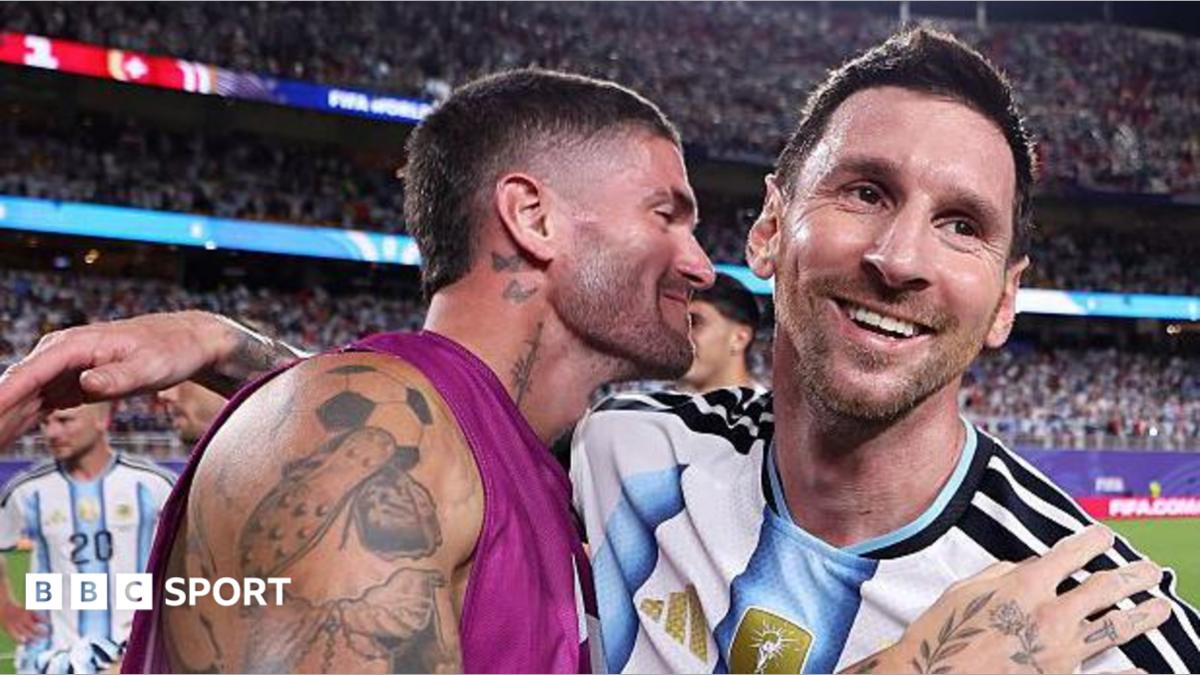
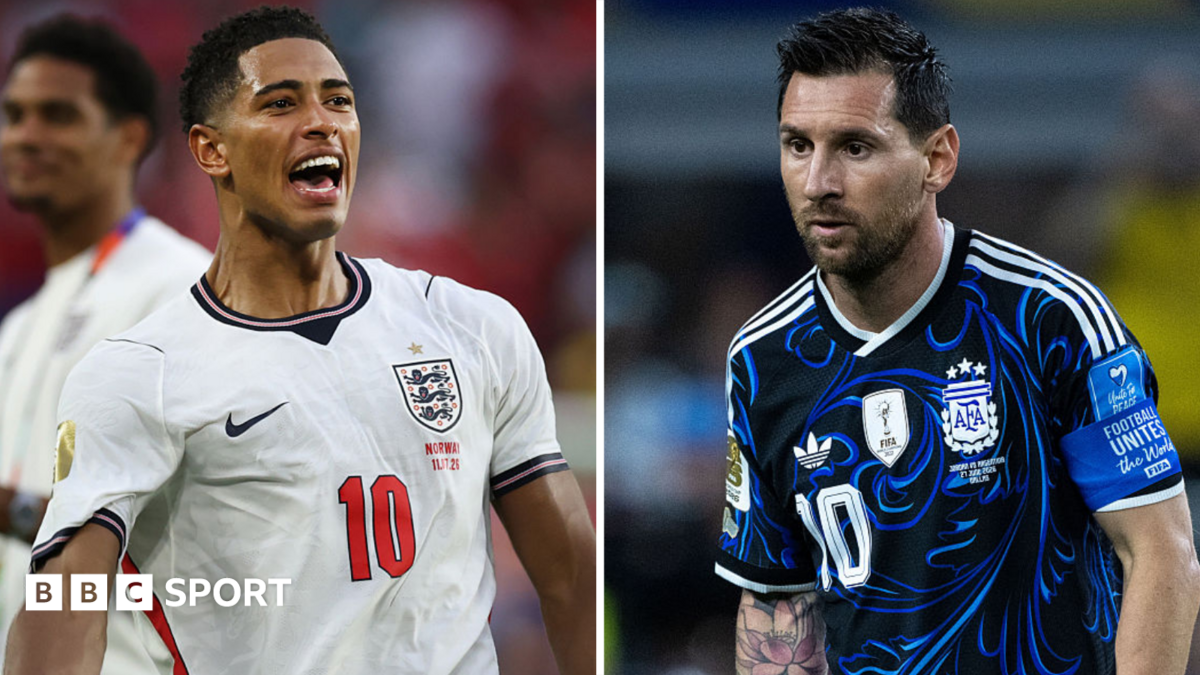
    In a striking departure from his traditionally apolitical stance, global football icon Lionel Messi made a carefully orchestrated appearance at the White House alongside former President Donald Trump. The Inter Miami superstar, who has consistently avoided political engagements throughout his legendary career, presented Trump with a custom-designed pink soccer ball during Thursday’s ceremony honoring Major League Soccer champions.

    The visit marks a significant deviation from Messi’s established pattern of political neutrality. When Argentina triumphed in the 2022 World Cup, Messi’s team notably declined an invitation to visit then-President Alberto Fernández’s Casa Rosada. Similarly, the athlete previously missed an opportunity to receive the Presidential Medal of Freedom from the Biden administration due to scheduling conflicts.

    Reactions in Argentina ranged from surprise to disappointment among fans who valued Messi’s separation from political matters—a characteristic that distinguished him from his predecessor Diego Maradona, who openly embraced leftist leaders and revolutionary figures. Maradona’s tattoo of Che Guevara symbolized his political activism, while Messi has maintained strategic silence across multiple countries he’s called home.

    Professor Kirk Bowman of Georgia Tech’s Sam Nunn School of International Affairs analyzed Messi’s approach as calculated ‘long-termism.’ The athlete’s substantial investments—including equity in Inter Miami—and his integration into Miami’s conservative-leaning soccer community suggest a deliberate strategy. Bowman notes that Messi’s perceived language barrier serves as ‘an extra layer of brand protection,’ allowing him to navigate political environments without explicit endorsement.

    Throughout Trump’s comments on international affairs, Messi remained observantly silent, offering only polite applause. Inter Miami coach Javier Mascherano characterized the visit as following ‘protocol that is practically a tradition,’ downplaying the political significance.

    Messi’s career at FC Barcelona demonstrated similar political deftness during Catalonia’s separatist movement. While occasionally participating in cultural celebrations, he avoided substantive political statements, maintaining appeal across divided fan bases. His 2024 comments acknowledging Barcelona as his children’s home and his own connection to the city exemplified his careful cultural positioning.

    Despite brief interviews with left-leaning Argentine publication La Garganta Poderosa where he acknowledged societal inequality, Messi’s overall approach suggests limited political engagement. His commercial arrangements with Saudi Arabia and awareness of ‘sportswashing’ allegations indicate a primary concern for preserving ‘Brand Messi’ above political alignment.

  • Mexico to deploy 100,000 security personnel for World Cup

    Mexico to deploy 100,000 security personnel for World Cup

    With under 100 days until the 2026 FIFA World Cup kicks off across Canada, Mexico, and the United States, Mexican authorities have unveiled an unprecedented security operation to safeguard international visitors. Dubbed ‘Plan Kukulkan’ after the Mayan serpent deity, the strategy will deploy approximately 99,000 security personnel across host cities and tourist destinations.

    The comprehensive security apparatus includes 20,000 military troops, 55,000 police officers, and additional private security contractors. The operation will utilize 2,500 military and civilian vehicles, 24 aircraft, anti-drone technology, and specially trained canine units for explosive detection.

    This massive deployment comes amid heightened security concerns following recent cartel violence in Jalisco, where Guadalajara—one of Mexico’s three host cities—has experienced significant unrest. The violence erupted after Mexican military forces eliminated Nemesio Oseguera Cervantes, known as ‘El Mencho,’ leader of the Jalisco New Generation Cartel (CJNG). The criminal organization responded with armed confrontations, road blockades, and vehicle burnings.

    Despite these challenges, both FIFA President Gianni Infantino and Mexican President Claudia Sheinbaum have expressed confidence in Mexico’s ability to host World Cup matches securely. The tournament schedule remains unchanged, with Mexico City hosting the opening match between Mexico and South Africa on June 11. Guadalajara will stage several high-profile matches, including Spain versus Uruguay and potential fixtures involving the Republic of Ireland if they qualify through playoffs.

    The security plan, coordinated by Roman Villalvazo Barrios of Mexico’s World Cup coordination center, encompasses not only stadium venues but also surrounding tourist areas. Monterrey completes Mexico’s trio of host cities, with all locations preparing to welcome millions of international visitors during the tournament running through July 19.

  • US issues a license that authorizes sales of Venezuelan gold

    US issues a license that authorizes sales of Venezuelan gold

    In a significant policy shift, the United States government issued a comprehensive license on Friday authorizing commercial dealings with Minerven, Venezuela’s state-controlled gold mining enterprise. This strategic move represents the Trump administration’s latest effort to assert greater influence over Venezuela’s vast natural resource sector while countering global competitors.

    The authorization follows high-level diplomatic engagements between U.S. Interior Secretary Doug Burgum and Venezuelan acting President Delcy Rodríguez this week. The discussions included representatives from more than two dozen American mining and mineral corporations, many with prior operational experience in the South American nation.

    According to Secretary Burgum, Venezuelan officials provided concrete security guarantees to potential investors seeking to operate in mineral-rich regions historically dominated by guerrilla factions, criminal organizations, and other illegal armed groups. The license explicitly prohibits participation by entities from Russia, Iran, North Korea, and Cuba in any contractual arrangements with Minerven.

    This development forms part of a broader administration strategy to diminish China’s dominant position in the global critical minerals market, leveraging Venezuela’s substantial untapped mineral reserves. The policy shift occurs alongside recent U.S. actions to assume legal control of a sanctioned tanker and approximately 2 million barrels of petroleum intercepted off Venezuela’s coast in December.

    The licensing initiative advances Washington’s plan for Venezuela’s economic restructuring following the detention of former President Nicolás Maduro by U.S. forces two months ago. This approach received additional momentum in January when Rodríguez enacted legislation opening Venezuela’s petroleum sector to privatization, signaling potential broader economic reforms.