标签: South America

南美洲

  • In Miami, the opening game of the World Baseball Classic was a celebration for Venezuelan fans

    In Miami, the opening game of the World Baseball Classic was a celebration for Venezuelan fans

    MIAMI — In a powerful display of national unity, Venezuelan baseball fans transformed Miami’s loanDepot park into a sea of yellow, blue, and red during Friday’s World Baseball Classic matchup against the Netherlands. The game provided a temporary respite from political divisions as thousands of Venezuelan expatriates and supporters gathered to cheer for ‘La Vinotinto’ on American soil.

    The atmosphere was electric from the early morning hours, with fans arriving more than 90 minutes before the first pitch. Outside the stadium, vendors sold national team merchandise from duffle bags while Latin music from artists like Elsen Pro, Bacilos and Carlos Vives filled the air. Inside the ballpark, the lower deck buzzed with excitement, particularly on the third-base side near Venezuela’s dugout.

    The gathering occurred just two months after U.S. forces conducted a military operation in Venezuela aiming to capture deposed leader Nicolás Maduro on drug trafficking charges. Yet political tensions seemed momentarily forgotten as fans focused exclusively on baseball. ‘For our people, baseball is joy,’ said Jessalyn Suarez, an office manager from Miami wearing her team’s jersey with the national flag around her neck. ‘Today is joy. Today is not about anything else.’

    Retired heavy machine operator Jesus Otero from Hialeah echoed the sentiment: ‘Nobody is thinking about him today. He’s not here.’ The overwhelming Venezuelan presence made Netherlands supporters a distinct minority in the crowd.

    Nelson Zurita, a Venezuelan who traveled from Chile for the tournament, explained: ‘The presence of this team provides some relief from the everyday political stress. The emphasis instead is on the Classic. Baseball breathes new life.’ Security presence appeared standard for a major sporting event, with no signs of political protests disrupting the baseball celebration.

  • Human rights court orders Peru to pay compensation for a 1997 forced sterilization death

    Human rights court orders Peru to pay compensation for a 1997 forced sterilization death

    In a historic ruling with profound implications for human rights accountability, the Inter-American Court of Human Rights has mandated that Peru provide substantial reparations to the family of Celia Ramos, a victim of the nation’s coercive sterilization program implemented during Alberto Fujimori’s presidency. The landmark decision marks the first judicial condemnation by Latin America’s supreme human rights tribunal regarding Peru’s systematic sterilization campaign that predominantly targeted impoverished and Indigenous women.

    Court documents reveal that Ramos, a 34-year-old mother of three from an Andean village, sought medical attention at a state health facility in 1997 only to be subjected to coercive tubal ligation procedures. The operation was conducted under critically substandard conditions, lacking essential medical equipment and necessary medications to address potential complications. During the procedure, Ramos suffered a severe allergic reaction but waited approximately thirty minutes before transfer to intensive care. She succumbed to complications nineteen days later on July 22, 1997.

    The Peruvian state subsequently failed to conduct a formal autopsy and provided no transparent explanation to Ramos’ grieving family regarding her tragic demise. As rectification for these grave injustices, the court has ordered compensation totaling approximately $340,000 to the Ramos family, encompassing reimbursement for medical expenses and compensation for lost lifetime earnings.

    This ruling emerges despite Peru’s judicial system having recently overturned criminal proceedings against the late President Fujimori in August 2024 regarding forced sterilizations. With Fujimori’s passing, legal attention has shifted toward establishing criminal accountability for other high-ranking officials, including multiple former health ministers implicated in the sterilization program. Peru’s Ministry of Justice had not issued an immediate response to requests for commentary regarding the court’s decision.

  • BBC looks at how Cubans are living with fuel shortages

    BBC looks at how Cubans are living with fuel shortages

    Cuba is confronting one of its most severe energy crises in recent history, with widespread fuel shortages creating profound challenges for daily life. The BBC’s on-the-ground reporting from Havana reveals a population adapting to extended power outages and transportation paralysis. Correspondent Will Grant documents how citizens spend hours in queues for rationed gasoline while businesses operate on limited schedules due to unreliable electricity supply.

    The current situation stems from a complex combination of factors including tightened US sanctions, structural deficiencies in domestic infrastructure, and broader economic vulnerabilities. These elements have converged to create an energy emergency that impacts nearly every aspect of Cuban society.

    Interviews with local residents reveal innovative adaptation strategies, from carpooling initiatives to revived bicycle transportation. Many describe reorganizing their lives around the predictable unpredictability of power availability, scheduling cooking, work, and family activities during windows of electricity access.

    The energy deficit has particularly affected medical services, education, and food preservation, raising concerns about public health implications. Despite these challenges, the reporting captures a resilient population demonstrating remarkable ingenuity in navigating the crisis while maintaining hope for improved conditions.

  • US and Venezuela agree to resume diplomatic ties after Maduro capture

    US and Venezuela agree to resume diplomatic ties after Maduro capture

    In a remarkable diplomatic turnaround, the United States and Venezuela have formally agreed to restore diplomatic and consular relations, signaling a new chapter in bilateral cooperation focused on mineral resource development and economic recovery. The breakthrough follows months of gradually improving relations that began with the controversial capture of Venezuelan President Nicolás Maduro by US forces in January.

    The diplomatic reconciliation was cemented through high-level discussions between Venezuela’s interim president Delcy Rodríguez and US Interior Secretary Doug Burgum, who jointly announced collaborative efforts to develop Venezuela’s extensive mining sector. This partnership extends to Venezuela’s oil industry, with Washington recently permitting sanctioned oil sales under US supervision and Caracas implementing legal reforms to attract foreign investment.

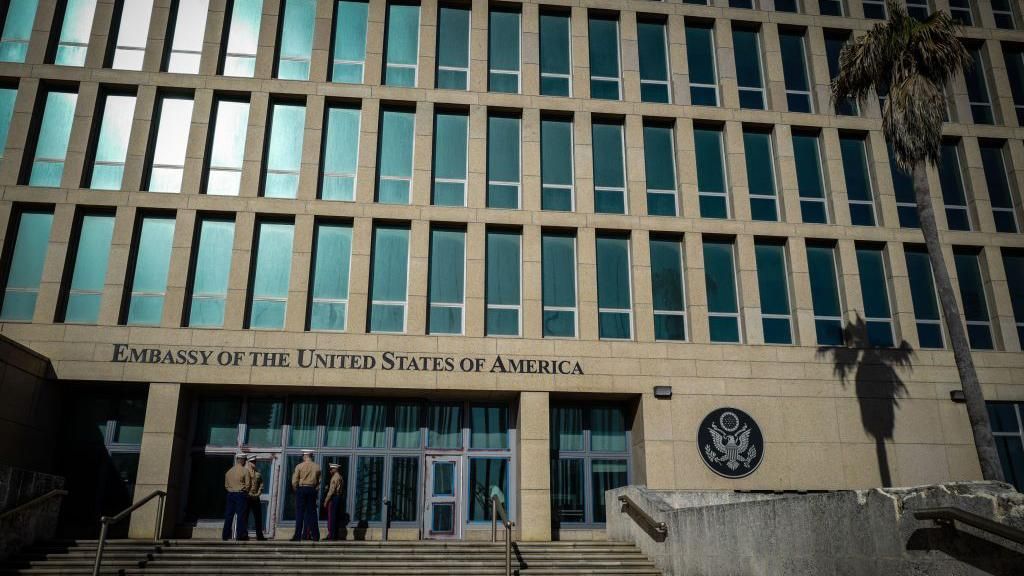
    The US Embassy in Caracas, shuttered since 2019, has already resumed operations with a newly appointed diplomatic contingent. Additional staff from the US Embassy in Bogotá are expected to transfer to Venezuela shortly, facilitating enhanced consular services and direct negotiations between officials.

    While both nations express commitment to advancing political reconciliation, their statements reveal nuanced differences. The Venezuelan government emphasizes “constructive dialogue based on mutual respect” aimed at achieving “social and economic happiness” for its citizens, without explicit mention of political transition or elections. Conversely, the US State Department frames its engagement as a “phased process” designed to create conditions for a “peaceful transition to a democratically elected government.”

    The diplomatic reset occurs against the complex backdrop of Maduro’s impending trial in the United States on weapons and drug charges, which he denies. US officials have previously characterized Maduro’s administration as a criminal organization involved in illegal mining and drug trafficking.

    Secretary Burgum characterized US intervention in Venezuela as a “brilliant strategic move” undertaken before military actions against Iran, noting that ensured “oil will flow to America.” Venezuela’s significance extends beyond petroleum, possessing the world’s largest proven oil reserves alongside substantial deposits of gold, diamonds, and critical minerals essential for technology manufacturing.

  • US and Venezuela agree to reestablish diplomatic relations in major shift after Maduro’s ouster

    US and Venezuela agree to reestablish diplomatic relations in major shift after Maduro’s ouster

    In a landmark geopolitical development, the United States and Venezuela have agreed to restore diplomatic relations, marking a significant thaw in their historically adversarial relationship. The State Department confirmed on Thursday that both nations are embarking on a phased process aimed at facilitating a peaceful transition to democratically elected governance in Venezuela.

    This diplomatic breakthrough follows multiple high-level visits by Trump administration officials to the South American nation after the U.S.-backed military operation that ousted former President Nicolás Maduro in January. The administration has subsequently intensified pressure on Maduro loyalists currently holding power to align with Washington’s vision for the oil-rich nation.

    The reconciliation announcement came at the conclusion of U.S. Secretary of the Interior Doug Burgum’s two-day diplomatic mission to Caracas, which primarily focused on providing security assurances to international mining companies considering investments in Venezuela’s mineral-rich territories, historically controlled by criminal organizations.

    Acting President Delcy Rodríguez, previously Maduro’s vice president, expressed optimism about the developments, stating on state television that these measures “will strengthen relations between our two countries.”

    In parallel developments, Venezuela’s government has approved an amnesty law that could lead to the release of numerous political prisoners, including politicians, activists, and lawyers—a move effectively acknowledging the incarceration of hundreds for political reasons. Meanwhile, opposition leader María Corina Machado, recipient of the 2025 Nobel Peace Prize, has announced her imminent return to Venezuela and confirmed that elections will be conducted in the coming weeks.

    These dramatic shifts represent a remarkable transformation for Venezuela, where the dominant Chavismo political movement has historically withstood numerous challenges including U.S. sanctions and severe economic crises.

  • Team Venezuela expects the WBC to be a celebration, even on US soil

    Team Venezuela expects the WBC to be a celebration, even on US soil

    MIAMI — As the World Baseball Classic expands beyond Tokyo to multiple global venues including Miami, the tournament has evolved into an unexpected platform where international sports and geopolitics intersect. The Venezuelan national team, managed by Omar López, finds itself at the center of this convergence amid heightened political tensions following the U.S. military operation that captured deposed Venezuelan leader Nicolás Maduro in January.

    López, whose cap displays both Venezuelan and American symbolism, maintains a firm separation between athletics and politics. “I’ve dedicated 28 years to baseball and avoid political discussions,” he stated during Thursday’s press conference. “Our sole focus remains on representing Venezuela through competitive excellence.”

    The Miami-Fort Lauderdale metropolitan area, home to approximately 200,000 Venezuelan expatriates according to U.S. Census estimates, anticipates massive turnout for Venezuela’s four scheduled games at loanDepot Park. Ticket availability and secondary market pricing indicate exceptionally high demand, particularly within the Venezuelan community concentrated in Miami’s Doral suburb—coincidentally the location of former President Trump’s golf resort slated to host the G20 Summit.

    This geopolitical backdrop extends beyond Venezuelan-American relations. The tournament commences shortly after joint U.S.-Israel military strikes against Iran, with Israel coincidentally assigned to Miami’s pool games. Cuba, another longstanding U.S. adversary, could potentially advance to Miami rounds despite opening in San Juan. These developments occur alongside intensified immigration enforcement measures that have raised concerns among international visitors.

    Despite these tensions, players emphasize baseball’s unifying potential. Miami Marlins utility player Javier Sanoja expressed emotional connection to the host city: “Miami represents the closest approximation to our homeland. Witnessing Venezuelan pride fill this stadium overwhelms me with national pride.”

    Team captain Salvador Pérez echoed this sentiment: “Spectators purchase tickets anticipating victory, not political statements. We concentrate on controllable elements—our performance on the field—while entrusting broader circumstances to divine providence.”

    No protests were observed during Thursday’s training sessions, though the potential for politically charged demonstrations remains uncertain as competition intensifies throughout the tournament week.

  • Ecuadorean troops find 35m-long ‘narco-sub’ hidden in nature reserve

    Ecuadorean troops find 35m-long ‘narco-sub’ hidden in nature reserve

    Ecuadorian military forces have intercepted a sophisticated 35-meter (115-foot) semi-submersible vessel designed for transnational drug trafficking operations. The clandestine craft was discovered concealed within the mangrove swamps of the Cayapas–Mataje Ecological Reserve, located near Ecuador’s volatile border with Colombia.

    According to an official statement from Ecuador’s Defense Ministry, the narco-submarine was fully fueled with approximately 6,000 gallons (22,700 liters) of petroleum, indicating preparations for an extended narcotics smuggling journey. The military operation also uncovered an adjacent encampment functioning as a logistical coordination center for criminal operations, along with six high-speed boats, seven outboard motors, and numerous fuel containers.

    The discovery occurred shortly after President Daniel Noboa declared a ‘new phase’ in Ecuador’s comprehensive campaign against powerful drug cartels. The operation turned hostile when military personnel encountered armed resistance from unidentified individuals, though no casualties were reported. Notably, the defense ministry’s announcement did not reference any narcotics seizures or arrests during this specific intervention.

    Ecuador’s strategic positioning between Colombia and Peru—the world’s primary cocaine producers—has transformed the nation into a critical transit corridor for illicit drugs destined for markets in the United States, Europe, and Australia. This development coincides with strengthened security cooperation between the Noboa administration and United States authorities, including recent high-level discussions between Ecuadorian officials and General Francis Donovan, commander of US Southern Command.

    While US involvement in this particular operation remains unconfirmed, Washington has significantly intensified its counter-narcotics efforts in the region through ‘Operation Southern Spear.’ This initiative, launched in September, has reportedly targeted numerous suspected drug trafficking vessels in Pacific and Caribbean waters, resulting in over 150 fatalities.

  • Hegseth urges Latin American allies to go on offense against drug cartels

    Hegseth urges Latin American allies to go on offense against drug cartels

    MIAMI — U.S. Defense Secretary Pete Hegseth issued a stark warning to Latin American nations on Thursday, demanding more forceful measures against drug cartels that threaten regional security. Speaking at the inaugural Americas Counter Cartel Conference at U.S. Southern Command headquarters, Hegseth declared that Washington stands ready to take unilateral action if allied governments fail to adequately combat these criminal organizations.

    “America is prepared to take on these threats and go on the offense alone if necessary,” Hegseth told defense officials from more than a dozen conservative governments closely aligned with President Donald Trump, including Argentina, Honduras, and the Dominican Republic. The conference served as a precursor to a scheduled weekend summit between regional leaders and Trump at his Florida golf club.

    Hegseth framed the security challenge as a civilizational struggle, emphasizing the shared Christian heritage of the Americas that he claimed was endangered by decades of inadequate responses to organized crime. He explicitly rejected continuation of previous policies, stating “business as usual will not stand,” while pledging U.S. support to combat cartels and “make the Americas great again.”

    The defense secretary’s hardline position was reinforced by Deputy White House Chief of Staff Stephen Miller, who compared Western Hemisphere cartels to global terrorist organizations. “Cartels that operate in this hemisphere are the ISIS and al-Qaida of this hemisphere and must be treated just as ruthlessly,” Miller asserted, advocating for “hard power” and lethal force rather than criminal justice approaches.

    This conference occurs within the context of the Trump administration’s strategic reorientation toward Latin America, described in national security documents as the “Trump Corollary” to the 19th-century Monroe Doctrine. Since taking office in January 2025, Trump has designated Mexican and Venezuelan cartels as foreign terrorist organizations and declared the United States to be in “armed conflict” with these groups.

    The administration’s assertive stance has already translated into military action, including 44 naval strikes against suspected drug smugglers resulting in at least 150 deaths. A substantial naval deployment—the largest in Latin America since the Cold War—facilitated the January operation that captured Venezuela’s former president Nicolas Maduro, now facing drug charges in New York.

    While the approach has gained support from conservative regional leaders like El Salvador’s Nayib Bukele and recently enabled joint U.S.-Ecuador operations against criminal groups, experts caution about the risks of militarizing law enforcement in regions with historically weak institutions and problematic military legacies.

    Rebecca Bill Chavez, president of the Inter-American Dialogue and former deputy assistant defense secretary, warned: “Without strong rule-of-law institutions and civilian oversight, militarizing the fight against cartels can weaken the very institutions needed to defeat them.”

  • Fight over Trump’s Iran war powers comes after a long stretch of Congress yielding to presidents

    Fight over Trump’s Iran war powers comes after a long stretch of Congress yielding to presidents

    The ongoing tension between presidential authority and congressional oversight over military operations has reached a critical juncture during Donald Trump’s second term. The Republican-controlled House prepares for a pivotal vote Thursday following the Senate’s rejection of Democratic-led measures to curtail presidential war powers in the ongoing U.S.-Israeli campaign against Iran.

    President Trump has consistently asserted broad, arguably unlimited authority over military deployments, approving naval strikes near Venezuela, establishing a maritime blockade, and authorizing operations to depose Venezuelan leader Nicolás Maduro—actions that many legal scholars consider acts of war under international law. These maneuvers follow earlier considerations of military action in Greenland and Latin America before escalating into comprehensive bombing operations in Iran.

    While the Constitution designates the president as commander-in-chief of armed forces, it simultaneously grants significant war powers to Congress. Trump’s refusal to accept limitations on his military options demonstrates, according to constitutional experts, a fundamental shift in the balance of power away from the framers’ original vision of civilian-controlled military authority.

    Military historian Peter Mansoor, an Ohio State University professor and retired Army colonel, emphasizes that ‘the Constitution gives war powers to two different branches of government.’ He notes with concern that ‘the pendulum has swung towards the executive,’ contrary to the framers’ intention that Congress should remain the most powerful branch.

    The historical context reveals a persistent erosion of congressional war authority. Despite Article I granting Congress the power to declare war, no formal declaration has occurred since World War II, even as American troops engaged in major conflicts in Korea, Vietnam, Iraq, and Afghanistan. The Trump administration’s recognition of military actions against Venezuela through Medal of Honor awards—typically reserved for combat against foreign enemies—further blurs legal distinctions between authorized conflicts and presidential military initiatives.

    The 1973 War Powers Resolution, designed to reassert congressional oversight, has proven largely ineffective in practice. Recent failed attempts to limit presidential authority through legislative measures demonstrate the ongoing struggle between executive action and legislative constraint—a tension that has characterized military operations from Truman’s Korean ‘police action’ to Biden’s withdrawal from Afghanistan, the nation’s longest undeclared war.

  • Dirty laundry and chocolate bars: How Venezuelan prisoners smuggled messages out of jail

    Dirty laundry and chocolate bars: How Venezuelan prisoners smuggled messages out of jail

    In a remarkable display of resilience, Venezuelan political prisoners and their families developed ingenious methods to maintain communication under the brutal conditions of El Helicoide, Venezuela’s most notorious detention facility. The story centers on Adriana Briceño, who smuggled messages to her imprisoned husband Ángel Godoy hidden within chocolate bar wrappers, while he reciprocated by writing clandestine notes on dirty laundry returned from the jail.

    Originally conceived as a luxury shopping center in the 1950s, El Helicoide was never completed and eventually transformed into a symbol of state repression under President Nicolás Maduro’s government. The United Nations has documented its use for arbitrary detentions, forced disappearances, and systematic torture practices.

    Godoy, arrested without warning by security forces, endured 96 days of complete isolation before establishing limited contact with his family. His experience mirrors that of human rights activist Javier Tarazona, who suffered 1,675 days in detention under similar conditions. Both men describe punishment cells known as ‘little tigers’—vermin-infested spaces so cramped that prisoners had to alternate lying down, using cardboard over sewer holes as makeshift mattresses.

    The psychological torture extended beyond physical confinement. Guards deliberately disrupted prisoners’ sense of time by delivering meals at irregular intervals, while authorities systematically targeted detainees’ families. Briceño lost her state telecom job after 21 years of service following her husband’s arrest, while Tarazona faced threats against his 70-year-old mother during interrogations.

    Despite being charged with terrorism, treason, and incitement to hatred, neither prisoner received proper legal representation. Godoy never saw his case file or met his assigned lawyer during his year-long detention, while Tarazona saw legal counsel fewer than five times throughout his nearly five-year imprisonment.

    In January, Venezuela’s interim president announced plans to convert El Helicoide into a social and cultural center, a move rights groups characterize as an attempt to whitewash the facility’s dark history. While over 600 prisoners have been released since military operations began, hundreds remain detained according to prisoners’ rights organization Foro Penal.

    Both released detainees express extraordinary calls for national reconciliation despite their suffering. ‘Let us move forward without hatred, resentment, or bitterness to build that wonderful Venezuela,’ Godoy urges, embodying a profound resilience that transcends the brutality they endured.