标签: South America

南美洲

  • Machu Picchu train crash leaves one dead and dozens injured

    Machu Picchu train crash leaves one dead and dozens injured

    A catastrophic head-on collision between two tourist trains on the single-track route to Machu Picchu has resulted in one fatality and at least 40 injuries, with approximately 20 victims reported in serious condition. The incident occurred Tuesday near the ancient Inca town, disrupting transportation to Peru’s most iconic UNESCO World Heritage site.

    According to local government authorities, emergency response teams deployed 20 ambulances to the rugged terrain surrounding the crash site between Ollantaytambo Station and Aguas Calientes. Medical personnel evacuated injured passengers to healthcare facilities in Cusco, though rescue operations faced significant challenges due to the difficult topography. Hundreds of tourists remained stranded at the scene awaiting evacuation, as reported by local media outlet Peru21.

    The U.S. Embassy in Peru confirmed American citizens were among those injured, though police have not yet released formal identification of victims. The involved trains were operated by rival companies PeruRail and Inca Rail, both providing service to the renowned archaeological site.

    PeruRail issued a statement expressing profound regret for the incident and confirming their staff provided immediate first aid to the train driver, conductor, and passengers. The exact cause of the collision remains under investigation.

    This tragedy occurs amidst ongoing disputes regarding transportation services to Machu Picchu, where local communities have raised concerns about insufficiently open bidding processes for lucrative transit contracts. The site’s limited accessibility creates highly profitable operations for approved transport providers, with ticket prices remaining steep for visitors.

    Built in the 15th century in the Peruvian Andes, Machu Picchu stands as one of the Seven Modern Wonders of the World. While officials implemented daily visitor caps in 2011 to address preservation concerns, the infrastructure supporting tourism continues to face scrutiny amid persistent worries about overtourism.

  • A train crash on the line to Peru’s famed Machu Picchu kills 1 person and injures at least 30

    A train crash on the line to Peru’s famed Machu Picchu kills 1 person and injures at least 30

    A tragic collision between two tourist trains near Peru’s iconic Machu Picchu archaeological site resulted in one fatality and approximately 30 injuries on Tuesday. The incident occurred near Qoriwayrachina, another historical site along the rail route connecting the ancient Inca citadel with the city of Cuzco.

    According to Captain Jhonathan Castillo Gonzalez of the Cuzco police department, the deceased was identified as a railroad employee. The railway operator immediately suspended all services along the critical transport corridor following the accident, which involved a train departing from Machu Picchu colliding with another train heading toward the UNESCO World Heritage site in the early afternoon.

    Visual evidence from local media outlets showed substantial damage to the trains, with multiple cars exhibiting shattered windows and severely dented exteriors. The damaged trains remained stranded along the narrow rail passage, which winds through dense vegetation alongside imposing rock formations.

    Machu Picchu, the 15th-century Inca emperor sanctuary renowned for its precisely engineered stone architecture, attracts approximately 1.5 million visitors annually. The vast majority access the site via railway to the gateway town of Aguas Calientes, though adventurous travelers can undertake a four-day trek from Ollantaytambo.

    Despite a 25% increase in visitation over the past decade, tourism to the region has experienced disruptions due to political instability and ongoing management disputes. Protest activities have periodically resulted in blockades along the vital rail infrastructure serving the archaeological marvel.

    Authorities have not yet determined the precise cause of the collision, with investigations ongoing. The incident highlights the challenges of managing transportation infrastructure in Peru’s popular but geographically constrained tourist destinations.

  • Miners clash with police in Bolivia as protests over fuel subsidies enter second week

    Miners clash with police in Bolivia as protests over fuel subsidies enter second week

    LA PAZ, Bolivia — Bolivia’s political landscape remains volatile as miners and protesters continued their aggressive demonstrations for an eighth consecutive day against President Rodrigo Paz’s sweeping economic reforms. The capital city witnessed dramatic scenes as protesters detonated dynamite sticks and launched fireworks toward police forces, who responded with tear gas and rubber bullets to maintain security around the congressional square.

    The core of the discontent stems from Paz’s recent decree eliminating longstanding fuel subsidies, a move that has nearly doubled gasoline prices from 53 cents to $1 per liter. The protests, initially led by state-owned miners, have gained support from teachers’ unions and Indigenous groups, indicating growing opposition from constituencies traditionally aligned with the ousted Movement for Socialism party.

    President Paz, who took office in November after October’s election, has embarked on a significant policy shift characterized by his “capitalism for all” platform. Beyond the subsidy cuts, his reforms include enabling the central bank to borrow without legislative approval and implementing measures to address Bolivia’s severe U.S. dollar shortage.

    Despite the unrest, Paz has moved swiftly to improve international relations, particularly with the United States, by agreeing to exchange ambassadors after a 17-year diplomatic hiatus. The administration maintains these economic measures are necessary to attract foreign investment and stabilize the nation’s economy, though they continue to face staunch resistance from workers’ unions who fear increased national debt and economic hardship for future generations.

  • Canadian couple found dead while vacationing in Dominican Republic

    Canadian couple found dead while vacationing in Dominican Republic

    A Canadian couple’s dream retirement vacation in the Dominican Republic ended tragically when they were discovered dead in their accommodation on Christmas Day. Christine Sauvé and Alain Noël, who had been saving extensively for their worldwide travels, passed away unexpectedly during their holiday stay.

    According to family statements, the couple’s son made the distressing discovery after they failed to wake on the morning of December 26th. Gilles Sauvé Jr., Christine’s brother, revealed to Canadian media that his sister had reported feeling unwell and experiencing dizziness shortly before the incident. She had sought medical attention at a local hospital where preliminary bloodwork was conducted, with additional scans scheduled for the following day that ultimately never occurred.

    Dominican authorities have launched a formal investigation into the mysterious circumstances surrounding the simultaneous deaths. The Canadian government, through Global Affairs Canada, has confirmed awareness of the situation and is providing consular support to the grieving family. Autopsy results, which might clarify the cause of death, are anticipated within 45 days according to official timelines.

    The tragic timing during the holiday season has complicated repatriation efforts, with family members reporting difficulties navigating bureaucratic processes due to closed embassies and government offices. The couple, described as typical ‘snowbirds’ who planned to escape Canadian winters through travel, had envisioned this trip as the beginning of their retirement adventures together.

  • US military carries out 30th strike on alleged drug boat

    US military carries out 30th strike on alleged drug boat

    The United States military has intensified its maritime counter-narcotics operations with a recent lethal strike in the eastern Pacific Ocean, resulting in two fatalities. This latest engagement brings the total number of vessel strikes to 30 and casualties to at least 107 since the campaign’s initiation in early September, according to official figures released by the Trump administration.

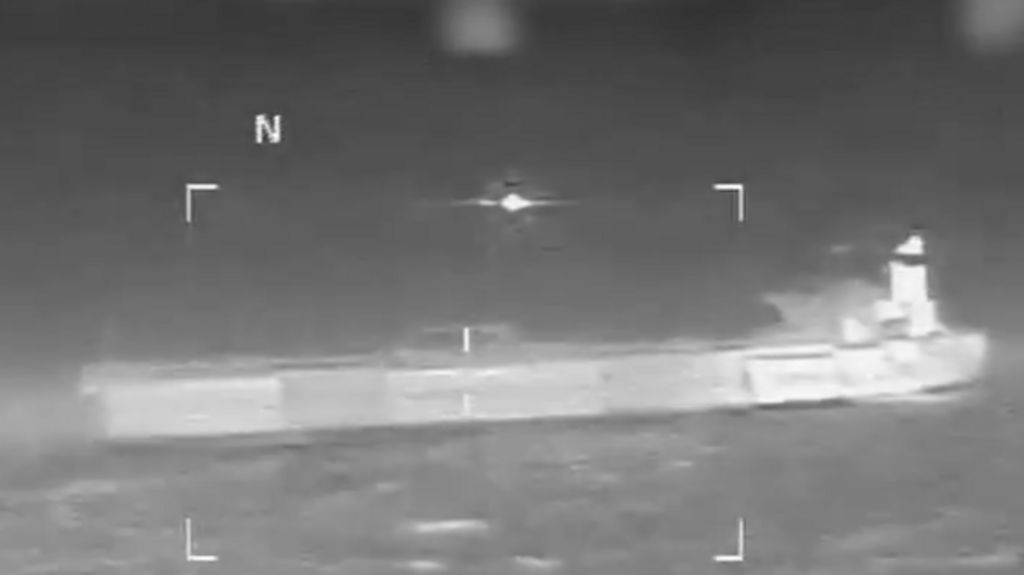
    U.S. Southern Command publicly announced the operation through social media channels, asserting that the targeted vessel was actively participating in narco-trafficking activities. While visual evidence circulated online depicts a marine craft being destroyed by dual explosions, specific operational evidence supporting the trafficking allegations remains undisclosed.

    President Donald Trump characterized these aggressive measures as essential components of America’s intensified efforts to disrupt drug smuggling networks, explicitly framing the situation as an ‘armed conflict’ against international cartels. The administration’s strategic approach extends beyond maritime strikes, encompassing increased military deployment throughout the region as part of a comprehensive pressure campaign targeting Venezuelan leadership.

    During a press briefing alongside Israeli Prime Minister Benjamin Netanyahu in Florida, Trump referenced ‘a major explosion in the dock area’ where drug-loading operations allegedly occur, though neither the White House nor Pentagon officials provided additional operational specifics.

    The administration’s multidimensional strategy has included December’s seizure of two sanctioned oil tankers near Venezuelan waters and pursuit of a third vessel, resulting in redirected shipping patterns away from the South American nation. Venezuelan President Nicolás Maduro, facing U.S. narcoterrorism charges, maintains that Washington’s true objective remains regime change.

    This aggressive tactical approach has drawn congressional scrutiny, particularly following revelations that early September operations included secondary strikes that eliminated two survivors clinging to vessel wreckage from initial engagements.

  • Peruvian shamans predict Maduro’s fall, continued global conflicts in 2026

    Peruvian shamans predict Maduro’s fall, continued global conflicts in 2026

    High above Lima, Peru, a gathering of traditional shamans convened on the sacred San Cristobal hill Monday to perform their annual divination ceremony, offering prophetic insights into global affairs for the coming year. Clad in colorful Andean ponchos and ceremonial headdresses, the spiritual practitioners conducted ancient rituals that blended indigenous traditions with contemporary geopolitical forecasting.

    The shamans delivered several striking predictions during the heightened spiritual state achieved through ceremonial consumption of plant-based hallucinogens, including Ayahuasca and San Pedro cactus extracts. Their foremost prophecy indicated Venezuelan President Nicolás Maduro would face removal from office, with shaman Ana María Simeón specifically referencing potential involvement from former U.S. President Donald Trump in this political transition.

    Beyond Venezuelan politics, the seers forecast continued international conflicts, particularly emphasizing the ongoing warfare between Ukraine and Russia. The ceremony also included appeals for Middle Eastern peace and addressed concerns about natural disasters, including seismic events and extreme climatic phenomena.

    The historical accuracy of these annual predictions presents a complex picture. While last year’s warning of nuclear conflict between Israel and Gaza failed to materialize, the group correctly anticipated the December 2024 passing of imprisoned former Peruvian President Alberto Fujimori, who died from cancer at age 86.

    The ritual itself incorporated traditional elements including ceremonial blankets adorned with yellow flowers, ritualistic placement of coca leaves, symbolic swords, and other sacred objects. Participants engaged in circular dances accompanied by ancestral musical instruments, creating an atmosphere believed to channel positive energy and influence global decision-making among world leaders.

  • Trump says the US ‘hit’ a facility along shore where he says alleged drug boats ‘load up’

    Trump says the US ‘hit’ a facility along shore where he says alleged drug boats ‘load up’

    PALM BEACH, Fla. — President Donald Trump has revealed that United States forces targeted a dock facility along Venezuela’s shoreline as part of an intensified pressure campaign against narcotics trafficking networks. The disclosure came during an exchange with reporters on Monday while meeting with Israeli Prime Minister Benjamin Netanyahu in Florida.

    Trump described the targeted site as a major implementation zone where vessels suspected of transporting illicit drugs were loaded. “There was a major explosion in the dock area where they load the boats up with drugs,” the president stated. “They load the boats up with drugs, so we hit all the boats and now we hit the area.”

    The operation represents a significant escalation in the Trump administration’s anti-narcotics initiative, marking a transition from intercepting vessels in international waters to conducting strikes on coastal infrastructure. This strategic shift aligns with Trump’s repeated warnings about potential land-based operations in South America targeting drug cartels.

    According to administration figures, U.S. forces have conducted at least 30 strikes since early September, resulting in 107 casualties. Just on Monday, the military reported another strike in the eastern Pacific Ocean that killed two individuals aboard a suspected drug-smuggling vessel.

    Despite Trump’s assertions, the administration provided limited operational details. The president declined to specify whether U.S. military or CIA assets executed the dock strike or confirm its precise location within Venezuela. “I know exactly who it was, but I don’t want to say who it was,” Trump remarked during the briefing.

    The Pentagon redirected inquiries to the White House, which had not responded to requests for clarification at the time of reporting. Venezuelan government officials similarly remained silent regarding Trump’s claims.

    This escalation occurs alongside other pressure measures including naval deployments, regional military buildup, and the seizure of oil tankers. Administration officials characterize these actions as part of an “armed conflict” with drug cartels aimed at stemming narcotics flow into the United States.

    Venezuelan President Nicolás Maduro maintains that the true objective behind U.S. operations is regime change. This perspective finds support in recent comments by White House chief of staff Susie Wiles, who told Vanity Fair that Trump intends to continue military actions until Maduro ‘cries uncle.’

  • Mexico train crash kills 13 and injures almost 100

    Mexico train crash kills 13 and injures almost 100

    A catastrophic derailment of Mexico’s Interoceanic passenger train has resulted in significant casualties, with 13 fatalities and nearly 100 injured individuals, according to the Mexican Navy. The incident occurred near Nizanda in Oaxaca’s southeastern region as the train navigated a curve, causing multiple carriages to leave the tracks and partially dangle over a cliff edge.

    The train, operational under naval administration, was transporting 241 passengers and 9 crew members along the strategic Coatzacoalcos-Salina Cruz corridor connecting the Gulf of Mexico and Pacific Ocean. Rescue operations unfolded with dramatic intensity as emergency workers assisted survivors from precariously positioned carriages while medical teams transported the wounded on stretchers.

    Mexican President Claudia Sheinbaum confirmed five critically injured patients among the 36 requiring hospitalization. The federal government has deployed high-level officials including the Secretary of the Navy to coordinate response efforts. Mexico’s Attorney General has initiated a formal investigation into the causes of the derailment.

    This rail service represents a cornerstone of Mexico’s infrastructure modernization program, inaugurated two years ago under former president Andrés Manuel López Obrador. The Interoceanic Railway was designed to transform the Isthmus of Tehuantepec into a vital trade corridor through port expansions and industrial development, serving both freight and passenger transportation needs.

    Oaxaca Governor Salomón Jara Cruz expressed profound sorrow over the tragedy while emphasizing coordinated state-federal assistance for victims and their families. The accident raises serious questions about safety protocols along this strategically important but geographically challenging route through mountainous terrain.

  • Nine people, including five children, stabbed to death in Suriname

    Nine people, including five children, stabbed to death in Suriname

    A horrific mass stabbing has shaken the South American nation of Suriname, leaving nine people dead—including five children—on the outskirts of the capital city of Paramaribo. According to official police statements, the attack occurred Saturday night on a residential road leading out of the city, marking one of the most severe violent incidents in recent memory for the country.

    Law enforcement officers responding to the scene apprehended a male suspect after shooting him in the leg to subdue him. The injured suspect was transported to a medical facility under police guard for treatment. Additionally, two other victims—one adult and one child—survived the attack with serious injuries and were rushed to hospitals for emergency care.

    While authorities have not released formal details about the perpetrator’s motives, local media outlets citing officials and residents have reported that the suspect may have been experiencing significant mental health challenges. In a sobering statement, Surinamese President Jennifer Geerlings-Simons revealed that the victims included members of the attacker’s own family and neighbors, describing the tragedy as ‘the harsh reality that there is another side to the world.’

    The president extended her condolences to all affected, stating: ‘I wish all the bereaved much strength, courage and comfort during this unimaginably difficult time.’ Police have indicated that additional information regarding the circumstances of the incident will be released as the investigation progresses.

    This devastating event stands in stark contrast to Suriname’s typically low rates of violent knife crime, making such mass casualty incidents particularly rare. The nation, which gained independence from the Netherlands in 1975, has historically experienced political instability including several coups and a civil war, but has rarely seen violence of this nature targeting civilians in residential areas.

  • Knife attack near Suriname’s capital Paramaribo kills at least 9 people, including kids, police say

    Knife attack near Suriname’s capital Paramaribo kills at least 9 people, including kids, police say

    A horrific knife attack in the small South American nation of Suriname has left a community in mourning after a domestic dispute escalated into a mass killing. The incident, which occurred in the Richelieu area of the Commewijne district approximately 25 kilometers east of the capital Paramaribo, resulted in nine fatalities, including five children.

    According to police reports and eyewitness accounts, the tragedy unfolded following a heated telephone argument between a 43-year-old male suspect and his estranged wife. The confrontation reportedly intensified when the woman informed the man that she would not be collecting their children personally but would instead send another individual to retrieve them.

    Enraged by this development, the suspect initiated a violent rampage, first targeting his own four children with a knife before turning his aggression toward neighbors who attempted to intervene. The victims included the attacker’s children and several adult neighbors, with a neighbor’s child also among those killed. Local media indicated that the attacks occurred across multiple residential properties.

    Suriname’s Police Corps confirmed that responding officers encountered an actively violent suspect who attempted to attack them upon their arrival. During the subsequent apprehension, the suspect sustained injuries and was transported to a medical facility where he remains under guard while receiving treatment.

    Additionally, a sixth child and another adult suffered serious injuries during the attack and are currently receiving medical care at a hospital in Paramaribo.

    Surinamese President Jennifer Geerlings-Simons addressed the tragedy on her official Facebook page, expressing profound grief over the incident. Writing in Dutch, the country’s official language, the president extended her condolences to the bereaved families, wishing them “strength, resilience, and comfort in this unimaginably difficult time.”

    The violence represents a particularly shocking event for Suriname, which maintains the smallest population of any independent South American nation at approximately 600,000 residents. Historically recognized for having one of the region’s lowest homicide rates, the country has recently experienced a concerning surge in violent crime. Data compiled by the think tank Insight Crime indicates Suriname’s murder rate climbed significantly in 2024, reaching 30 homicides per 100,000 residents.