标签: South America

南美洲

  • In pictures: New Year welcomed around the world

    In pictures: New Year welcomed around the world

    As the world transitioned into 2026, nations across the globe welcomed the new year with breathtaking pyrotechnic displays and diverse cultural traditions, while some celebrations carried poignant moments of remembrance.

    The Pacific atoll of Kiritimati in Kiribati became the first inhabited place to enter the new year, with one tourist describing a uniquely isolated celebration on a beach devoid of artificial light, surrounded only by natural darkness and countless crabs.

    Major global cities orchestrated spectacular visual festivities. Sydney’s iconic harbour illuminated with its famous fireworks display over the Opera House and Harbour Bridge, though celebrations were tempered by a solemn tribute to the victims of December’s Bondi Beach attack. At 11 PM local time, the harbour fell silent for a minute of reflection, with crowds holding up lights and projections of “Peace, Unity” and a Jewish menorah appearing on the bridge pylons.

    Rio de Janeiro mounted an especially ambitious pyrotechnic show attempting to surpass its own 2024 Guinness World Record, while New York’s Times Square witnessed its traditional ball drop ceremony presided over by Mayor Eric Adams before an estimated million-strong crowd.

    European capitals showcased their distinctive celebrations: London’s skies dazzled with fireworks above the London Eye and Big Ben, Edinburgh maintained its Hogmanay traditions despite weather warnings, Berlin illuminated the Brandenburg Gate, and Paris presented a light show on the Arc de Triomphe.

    Asian metropolises contributed vibrant displays, with Singapore’s Marina Bay, Manila’s skyscraper-matched pyrotechnics, Bangkok’s riverfront gatherings, Dubai’s Burj Khalifa spectacle, Hong Kong’s live performances, Beijing’s Great Wall illumination, and Seoul’s laser shows over the Lotte World Tower.

    Beyond urban fireworks, unique cultural traditions marked the transition. Southern France witnessed a traditional sea dip at a nudist beach, Copenhagen swimmers braved icy waters for the Nytaarsbad tradition, Dutch residents practiced carbide shooting with milk cans, Japanese women in kimonos performed Shinto rituals, Polish runners participated in a New Year’s race through Krakow’s Old Town, and Balinese performers conducted traditional dances to welcome the new sun.

  • Viral ‘6-7′ tops 2025 list of overused words and phrases

    Viral ‘6-7′ tops 2025 list of overused words and phrases

    In a landmark celebration of linguistic pet peeves, Lake Superior State University has unveiled its 50th annual “Banished Words List,” with Gen Z’s enigmatic phrase “6-7” claiming the dubious distinction of most unwanted terminology heading into the new year. The tongue-in-cheek tradition, born from a 1976 New Year’s Eve party concept, this year drew approximately 1,400 submissions from all 50 U.S. states and numerous countries worldwide.

    The 2025 list showcases a peculiar intersection of generational divides and digital-age communication trends. Alongside “6-7″—the viral expression that baffled those over 40 while dominating youth vernacular—the university identified “cooked,” “demure,” “incentivize,” and the perennial offender “my bad” as phrases deserving linguistic retirement. Notably, “my bad” and “reach out” demonstrate remarkable staying power, having previously appeared on the list in 1998 and 1994 respectively.

    University President David Travis attributes these linguistic phenomena to social media’s transformative impact on communication. “The list represents the fad and vernacular trends of the younger generation,” Travis observed. “We’re using terms shared through texting or posting without body language or tone context, making misunderstandings inevitable.”

    The ascendance of “6-7” exemplifies how digital platforms can propel seemingly nonsensical phrases into mainstream consciousness. Despite being named Dictionary.com’s 2025 Word of the Year, its meaning remains deliberately obscure—even to its primary users. University of Michigan student Alana Bobbitt acknowledged the phrase’s absurd appeal: “I find joy in it. It’s a little bit silly, and even though I don’t understand what it means, it’s fun to use.”

    Yet the list serves as more than mere complaint compilation. It documents language’s evolving nature, distinguishing between fleeting trends and enduring additions to the lexical landscape. While Travis predicts “6-7” will disappear by next year, he acknowledges some phrases achieve permanent residence in modern parlance, citing “my bad” as terminology that has comfortably transitioned across generations.

    The annual exercise continues to spark conversations about language preservation, generational identity, and how digital communication shapes linguistic evolution in increasingly connected societies.

  • US imposes sanctions on 4 Venezuelan oil firms and 4 more tankers in Maduro crackdown

    US imposes sanctions on 4 Venezuelan oil firms and 4 more tankers in Maduro crackdown

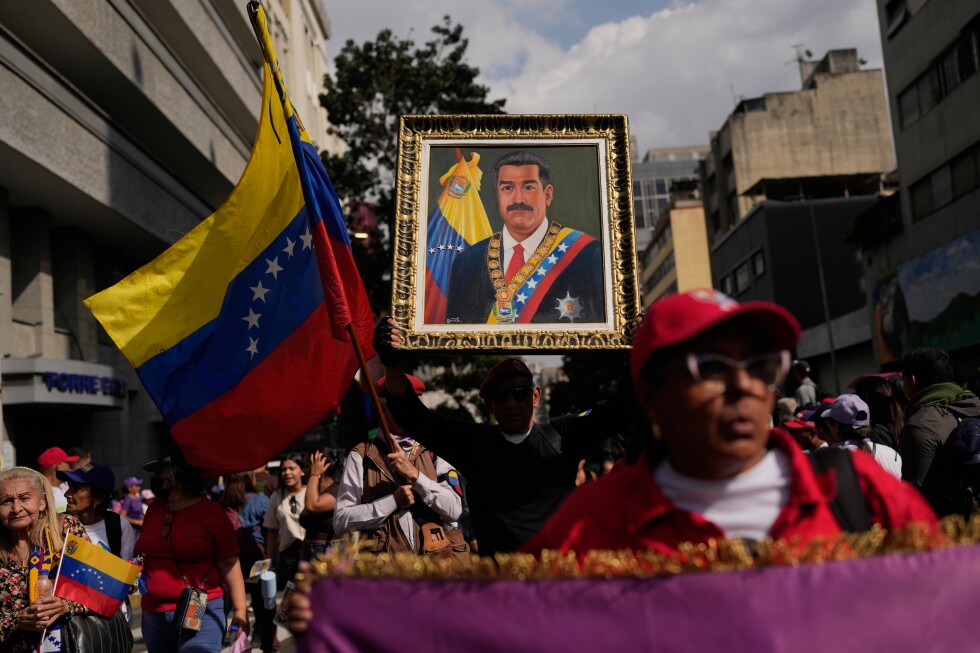
    The United States government has significantly intensified its economic and military pressure on Venezuela’s leadership through a multi-faceted approach targeting the nation’s oil sector and alleged drug trafficking operations. On Wednesday, Washington implemented comprehensive sanctions against four maritime vessels and their operating companies within Venezuela’s petroleum industry, designating them as blocked property under U.S. jurisdiction.

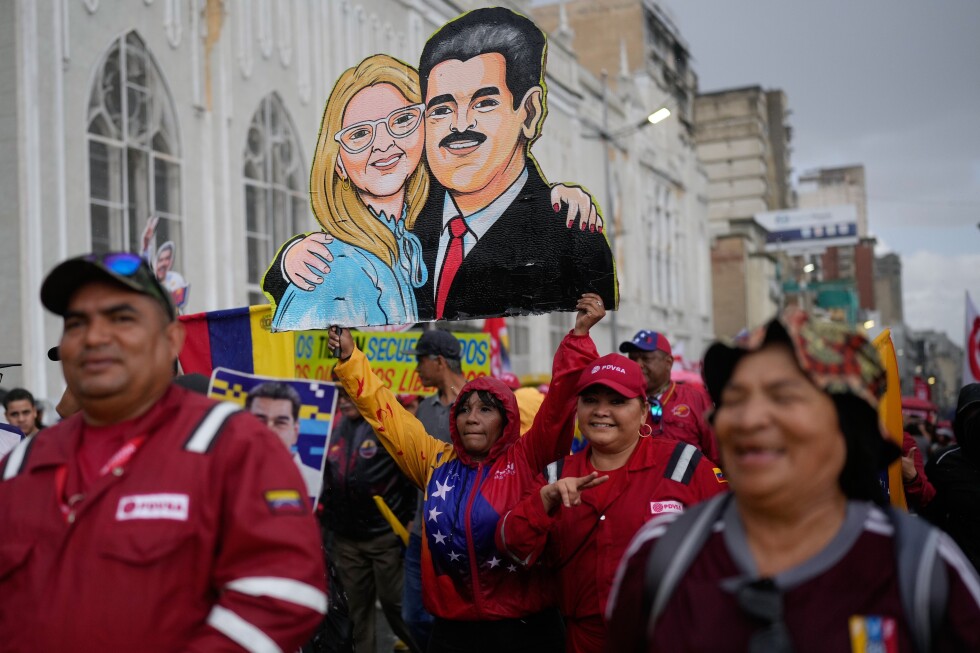
    This strategic move represents the latest development in the Trump administration’s sustained campaign against President Nicolás Maduro’s government. The sanctioned entities—Nord Star, Lunar Tide, Rosalind, and Della—along with their corporate operators, now face complete exclusion from the U.S. financial system and property holdings. Any individuals or institutions conducting business with these designated entities risk facing severe penalties themselves.

    Concurrently, U.S. military forces have executed maritime interdictions, seizing two oil tankers near Venezuelan territorial waters while actively pursuing additional vessels. More dramatically, American forces have conducted over thirty separate engagements against suspected narcotics trafficking operations, resulting in approximately 110 casualties since early September according to official reports.

    In an unprecedented escalation marking the first confirmed direct operation on Venezuelan soil, the Central Intelligence Agency orchestrated a drone strike last week targeting a docking facility allegedly utilized by drug cartels. Treasury Secretary Scott Bessent emphasized the administration’s position, stating the U.S. will prevent the ‘illegitimate Maduro regime’ from profiting from oil exports while allegedly ‘flooding the United States with deadly drugs.’

    President Trump has declared a comprehensive blockade against all sanctioned oil tankers operating in Venezuelan waters while demanding restitution for assets previously seized from American petroleum corporations. The administration maintains that Venezuela’s current leadership utilizes oil revenues to fund narcotics trafficking and other criminal enterprises.

  • Passenger describes ‘chaos’ after head-on Machu Picchu train collision

    Passenger describes ‘chaos’ after head-on Machu Picchu train collision

    A devastating head-on collision between two passenger trains near Peru’s iconic Machu Picchu has resulted in one fatality and at least 40 injuries, according to official reports. The incident occurred Tuesday at approximately 13:20 local time (18:20 GMT) along the vital transport route connecting Ollantaytambo Station and Aguas Calientes, the gateway town to the ancient Incan citadel.

    Eyewitness Niels Honkoop, a 33-year-old tourist, provided harrowing accounts of the immediate aftermath to BBC reporters. Having fortuitously moved from the middle to the rear of the train shortly before impact, Honkoop described scenes of utter chaos with injured passengers, shattered glass covering carriage floors, and structural components torn apart. “I saw staff running around and people crying and people on the floor and chaos erupted,” he recounted. “We got off the train and I saw people bleeding with very severe injuries.”

    The collision involved trains operated by PeruRail and Inca Rail, the two primary rail service providers for the UNESCO World Heritage site. Emergency response teams arrived via another train, evacuating survivors to nearby villages for medical treatment and temporary accommodation. Multiple international citizens were among those affected, with both the UK Foreign Office and US Embassy confirming they were providing consular assistance to injured nationals.

    PeruRail issued an official statement expressing profound regret for the incident and confirming their staff had provided immediate first aid to those involved. The precise cause of the accident remains under investigation amid ongoing transportation disputes in the region. Local communities have voiced concerns about insufficiently transparent bidding processes for transport services to Machu Picchu, where limited accessibility creates lucrative but expensive transit options for visitors.

    The incident highlights ongoing challenges in managing tourism to the 15th-century Incan city, designated one of the Seven Modern Wonders of the World. While Peruvian authorities implemented daily visitor caps in 2011 to preserve the archaeological site, transportation infrastructure and safety protocols remain critical concerns for the millions who visit annually via rail and hiking trails.

  • Roberto Carlos reportedly undergoes heart surgery while on vacation in Brazil

    Roberto Carlos reportedly undergoes heart surgery while on vacation in Brazil

    MADRID (AP) — Brazilian football icon and Real Madrid legend Roberto Carlos has successfully undergone cardiac surgery following the discovery of a heart condition during a routine examination. The 52-year-old former defender, currently serving as an ambassador for Real Madrid, was vacationing in his native Brazil when medical professionals identified an irregularity in his heart function.

    The health concern emerged unexpectedly when Roberto Carlos sought medical attention for what initially appeared to be a minor blood clot in his leg. Physicians subsequently ordered a comprehensive full-body MRI scan, which revealed underlying cardiac issues requiring immediate intervention. Medical teams performed a catheterization procedure that, while initially projected to conclude within 40 minutes, extended to nearly three hours due to unforeseen complications.

    Despite the extended surgical duration, the procedure achieved complete success according to reports from Spanish sports publication Diario AS. The renowned athlete remains under close medical supervision and is expected to remain hospitalized for an additional 48-hour observation period to monitor his recovery progress.

    Roberto Carlos, widely celebrated as one of football’s most offensive-minded left backs in history, earned 125 international caps for Brazil and spent eleven illustrious seasons with Real Madrid. His legendary career includes participation in three World Cup tournaments, culminating in Brazil’s 2002 championship victory. He additionally secured two Copa América titles (1997, 1999) and claimed three UEFA Champions League trophies during his tenure with Madrid.

    The Brazilian star remains particularly famous for his extraordinary 1997 free kick against France—a seemingly physically impossible strike that curved dramatically to find the net after appearing initially off target. This remarkable demonstration of skill became subject to scientific analysis and is widely regarded as one of the most spectacular goals in football history.

    Current medical reports indicate the football legend is out of immediate danger and has communicated reassuring messages to concerned supporters, stating simply: ‘I’m fine now.’

  • Life begins at 59 for the globe’s oldest professional soccer player

    Life begins at 59 for the globe’s oldest professional soccer player

    TOKYO — Japanese football icon Kazuyoshi Miura, universally celebrated as ‘King Kazu,’ continues to defy conventional athletic timelines by embarking on his 41st consecutive professional season. The legendary striker, who will celebrate his 59th birthday in February, has officially joined J3 League club Fukushima United FC on a loan arrangement from Yokohama FC.

    This move marks another chapter in Miura’s unprecedented career, following his previous season with fourth-tier outfit Atletico Suzuka, where he made seven appearances without scoring. His transition to Fukushima United represents a return to Japan’s third division as he continues his pursuit of competitive play.

    Miura’s professional journey constitutes a remarkable global odyssey that commenced in 1986 with Brazilian powerhouse Santos—the legendary club where Pelé forged his legacy. Since his debut nearly four decades ago, Miura has demonstrated extraordinary longevity, competing across five continents including prestigious spells in Brazil, Italy, Croatia, Australia, and Portugal alongside his native Japan.

    The veteran forward secured his place in football history in 2017 when, at age 50, he broke the record for oldest professional goalscorer—previously held by English knight and football pioneer Sir Stanley Matthews. This achievement underscored Miura’s exceptional physical conditioning and enduring passion for the sport.

    As a pioneering figure in Japanese football, Miura’s international legacy remains formidable. He earned 89 caps for the Japanese national team during the 1990s, netting 55 goals and establishing himself as the country’s first globally recognized football superstar during its football development era.

  • Machu Picchu train crash leaves one dead and dozens injured

    Machu Picchu train crash leaves one dead and dozens injured

    A catastrophic head-on collision between two tourist trains on the single-track route to Machu Picchu has resulted in one fatality and at least 40 injuries, with approximately 20 victims reported in serious condition. The incident occurred Tuesday near the ancient Inca town, disrupting transportation to Peru’s most iconic UNESCO World Heritage site.

    According to local government authorities, emergency response teams deployed 20 ambulances to the rugged terrain surrounding the crash site between Ollantaytambo Station and Aguas Calientes. Medical personnel evacuated injured passengers to healthcare facilities in Cusco, though rescue operations faced significant challenges due to the difficult topography. Hundreds of tourists remained stranded at the scene awaiting evacuation, as reported by local media outlet Peru21.

    The U.S. Embassy in Peru confirmed American citizens were among those injured, though police have not yet released formal identification of victims. The involved trains were operated by rival companies PeruRail and Inca Rail, both providing service to the renowned archaeological site.

    PeruRail issued a statement expressing profound regret for the incident and confirming their staff provided immediate first aid to the train driver, conductor, and passengers. The exact cause of the collision remains under investigation.

    This tragedy occurs amidst ongoing disputes regarding transportation services to Machu Picchu, where local communities have raised concerns about insufficiently open bidding processes for lucrative transit contracts. The site’s limited accessibility creates highly profitable operations for approved transport providers, with ticket prices remaining steep for visitors.

    Built in the 15th century in the Peruvian Andes, Machu Picchu stands as one of the Seven Modern Wonders of the World. While officials implemented daily visitor caps in 2011 to address preservation concerns, the infrastructure supporting tourism continues to face scrutiny amid persistent worries about overtourism.

  • A train crash on the line to Peru’s famed Machu Picchu kills 1 person and injures at least 30

    A train crash on the line to Peru’s famed Machu Picchu kills 1 person and injures at least 30

    A tragic collision between two tourist trains near Peru’s iconic Machu Picchu archaeological site resulted in one fatality and approximately 30 injuries on Tuesday. The incident occurred near Qoriwayrachina, another historical site along the rail route connecting the ancient Inca citadel with the city of Cuzco.

    According to Captain Jhonathan Castillo Gonzalez of the Cuzco police department, the deceased was identified as a railroad employee. The railway operator immediately suspended all services along the critical transport corridor following the accident, which involved a train departing from Machu Picchu colliding with another train heading toward the UNESCO World Heritage site in the early afternoon.

    Visual evidence from local media outlets showed substantial damage to the trains, with multiple cars exhibiting shattered windows and severely dented exteriors. The damaged trains remained stranded along the narrow rail passage, which winds through dense vegetation alongside imposing rock formations.

    Machu Picchu, the 15th-century Inca emperor sanctuary renowned for its precisely engineered stone architecture, attracts approximately 1.5 million visitors annually. The vast majority access the site via railway to the gateway town of Aguas Calientes, though adventurous travelers can undertake a four-day trek from Ollantaytambo.

    Despite a 25% increase in visitation over the past decade, tourism to the region has experienced disruptions due to political instability and ongoing management disputes. Protest activities have periodically resulted in blockades along the vital rail infrastructure serving the archaeological marvel.

    Authorities have not yet determined the precise cause of the collision, with investigations ongoing. The incident highlights the challenges of managing transportation infrastructure in Peru’s popular but geographically constrained tourist destinations.

  • Miners clash with police in Bolivia as protests over fuel subsidies enter second week

    Miners clash with police in Bolivia as protests over fuel subsidies enter second week

    LA PAZ, Bolivia — Bolivia’s political landscape remains volatile as miners and protesters continued their aggressive demonstrations for an eighth consecutive day against President Rodrigo Paz’s sweeping economic reforms. The capital city witnessed dramatic scenes as protesters detonated dynamite sticks and launched fireworks toward police forces, who responded with tear gas and rubber bullets to maintain security around the congressional square.

    The core of the discontent stems from Paz’s recent decree eliminating longstanding fuel subsidies, a move that has nearly doubled gasoline prices from 53 cents to $1 per liter. The protests, initially led by state-owned miners, have gained support from teachers’ unions and Indigenous groups, indicating growing opposition from constituencies traditionally aligned with the ousted Movement for Socialism party.

    President Paz, who took office in November after October’s election, has embarked on a significant policy shift characterized by his “capitalism for all” platform. Beyond the subsidy cuts, his reforms include enabling the central bank to borrow without legislative approval and implementing measures to address Bolivia’s severe U.S. dollar shortage.

    Despite the unrest, Paz has moved swiftly to improve international relations, particularly with the United States, by agreeing to exchange ambassadors after a 17-year diplomatic hiatus. The administration maintains these economic measures are necessary to attract foreign investment and stabilize the nation’s economy, though they continue to face staunch resistance from workers’ unions who fear increased national debt and economic hardship for future generations.

  • Canadian couple found dead while vacationing in Dominican Republic

    Canadian couple found dead while vacationing in Dominican Republic

    A Canadian couple’s dream retirement vacation in the Dominican Republic ended tragically when they were discovered dead in their accommodation on Christmas Day. Christine Sauvé and Alain Noël, who had been saving extensively for their worldwide travels, passed away unexpectedly during their holiday stay.

    According to family statements, the couple’s son made the distressing discovery after they failed to wake on the morning of December 26th. Gilles Sauvé Jr., Christine’s brother, revealed to Canadian media that his sister had reported feeling unwell and experiencing dizziness shortly before the incident. She had sought medical attention at a local hospital where preliminary bloodwork was conducted, with additional scans scheduled for the following day that ultimately never occurred.

    Dominican authorities have launched a formal investigation into the mysterious circumstances surrounding the simultaneous deaths. The Canadian government, through Global Affairs Canada, has confirmed awareness of the situation and is providing consular support to the grieving family. Autopsy results, which might clarify the cause of death, are anticipated within 45 days according to official timelines.

    The tragic timing during the holiday season has complicated repatriation efforts, with family members reporting difficulties navigating bureaucratic processes due to closed embassies and government offices. The couple, described as typical ‘snowbirds’ who planned to escape Canadian winters through travel, had envisioned this trip as the beginning of their retirement adventures together.