标签: South America

南美洲

  • Three dead after monster truck crashes into crowd

    Three dead after monster truck crashes into crowd

    A tragic accident at a monster truck exhibition in southern Colombia has left three people dead and at least 38 others injured after the vehicle lost control and crashed into a gathered crowd on Sunday. The incident unfolded in Popayán, the capital city of Colombia’s Cauca province, when the truck’s braking system reportedly failed mid-show, according to initial law enforcement assessments.

    Graphic footage circulating from the event captures the moment the out-of-control truck smashed through a protective barrier separating the vehicle from spectators. After barreling into the standing crowd, the truck only came to a halt after colliding with a nearby electricity pole, leaving panicked attendees scrambling for safety.

    Local official reports, shared by Colombian newspaper El Espectador, confirm that a 10-year-old girl was among those killed at the scene of the crash. Popayán’s police commander Colonel Julián Castañeda told local outlet El Tiempo that preliminary investigations point to a mechanical failure as the root cause of the disaster. “The vehicle accelerated, it couldn’t brake, and the driver is in stable condition,” Castañeda confirmed in his statement to press.

    Local and regional leaders have moved quickly to respond to the tragedy, announcing a full, transparent probe into the incident to determine what led to the crash and hold any responsible parties accountable. “These events, which should never have happened, will be clarified with total responsibility and transparency,” said Juan Carlos Muñoz Bravo, mayor of Popayán, in an official address following the accident.

    Regional governor Octavio Guzmán also extended public condolences to grieving families and the community of Popayán. “We express our solidarity with the families of those affected by this tragic accident, as well as with our capital city, Popayán,” Guzmán said. As of the latest updates, authorities have not released additional details on the condition of the injured, and the formal investigation remains ongoing.

  • Huge crowd attends free Shakira Copacabana beach concert

    Huge crowd attends free Shakira Copacabana beach concert

    One of the world’s most iconic pop superstars drew a massive gathering of fans to Rio de Janeiro’s legendary Copacabana Beach over the weekend, turning the sun-soaked coastal stretch into an open-air concert venue for a spectacular free performance that marked a major highlight for global live music in 2024.

    Shakira, the Colombian-born global sensation whose decades-long career has produced countless chart-topping hits and earned her a permanent place in pop culture history, took the Copacabana stage following in the footsteps of two other defining female pop figures: Lady Gaga and Madonna, who both headlined their own memorable free shows on the same beach in years prior. That legacy of major Copacabana beach concerts built anticipation for months among fans, who traveled from across Brazil and even other South American countries to attend the event.

    Witnesses and local event organizers confirmed that the crowd swelled to one of the largest in the beach’s long history of large-scale live events, with thousands of fans packing the sand from the shoreline all the way back to the beachfront avenue, singing along to every one of Shakira’s hit songs from *Hips Don’t Lie* to *Waka Waka (This Time for Africa)*. Local authorities deployed additional crowd management and safety teams to handle the massive turnout, and reported that the event proceeded largely without major incidents, capping a day of celebration for music lovers of all ages.

  • Shakira to follow Madonna and Lady Gaga in giving a huge free concert on Copacabana Beach

    Shakira to follow Madonna and Lady Gaga in giving a huge free concert on Copacabana Beach

    One of the most anticipated live music events in recent Brazilian history is set to unfold this Saturday night, as global Latin pop icon Shakira takes the stage for a free open-air concert on Rio de Janeiro’s world-famous Copacabana Beach, with city officials projecting an attendance of roughly 2 million fans.

    This landmark performance marks the latest in a string of massive free beach shows hosted in Rio following record-breaking gatherings for Madonna in 2024 and Lady Gaga in 2023, where hundreds of thousands of fans packed the sprawling waterfront sands to dance and sing along to their favorite artists. The Copacabana stop is part of Shakira’s ongoing *Las Mujeres Ya No Lloran* World Tour, launched in support of her 2024 studio album of the same name.

    In an interview with Brazil’s leading broadcaster TV Globo, the Colombian superstar called the opportunity to perform at Copacabana a lifelong dream, noting she has long viewed the iconic beach as a one-of-a-kind magical venue. Speaking in Portuguese — a language she learned before mastering English — Shakira added that she expects Saturday’s show to be the largest single performance of her decades-long career.

    Scholars of popular music note that Shakira’s deep connection to Brazilian audiences dates back nearly 30 years, when she first rose to global fame in the 1990s. Felipe Maia, an ethnomusicologist completing his doctorate in popular music and digital technology at Paris Nanterre University, explained that Brazil was one of the first countries to embrace Shakira’s artistry, a bond rooted in cultural similarities between Brazil and neighboring Colombia. “This concert crowns the longstanding close relationship she has built with Brazilian fans over decades,” Maia explained.

    By Saturday morning, thousands of eager concertgoers had already begun arriving on the beach to claim prime viewing spots close to the stage, which is positioned directly opposite the historic Copacabana Palace Hotel. Local street vendors have capitalized on the massive crowds, selling not just refreshments and snacks, but practical items including toilet paper, deodorant, and even elevated bags of sand that fans can stand on to get a clearer view of the performance.

    The full event schedule kicks off in the late afternoon with opening sets from local DJs, with Shakira scheduled to begin her 2-hour performance at 9:45 p.m. local time. In a new logistical adjustment first implemented for this event, a closing DJ will take over the stage immediately after Shakira’s set to keep crowds entertained while facilitating a slower, more orderly exit from the beach, city officials confirmed.

    Beyond the entertainment value, the free concert is a core part of Rio de Janeiro City Hall’s economic strategy to extend tourism and commercial activity beyond major annual events like Carnival and New Year’s Eve, ahead of the month-long Saint John’s Day celebrations kicking off in June.

    “For us, large public events are serious economic business,” Rio Mayor Eduardo Cavaliere explained Wednesday when unveiling the city’s operational plan for the concert. “These events create jobs, generate income, drive development, and strengthen Rio’s global identity. Our investment in this show will deliver a 40-fold financial return for the city.”

    A joint study from City Hall and Riotur, Rio’s municipal tourism board, projects that Shakira’s concert will generate approximately 777 million reais, equal to around $155 million, in total economic activity, fueled by tourist spending on hotels, restaurants, retail, and local services.

    City data already confirms a sharp uptick in tourist arrivals for May in years when large beach concerts are hosted: compared to 2023 (a year without these events), May 1 tourist arrivals grew 34.2% in 2024 and 90.5% in 2025 ahead of planned concerts. Short-term rental platform Airbnb reported in an April 22 statement that it has already seen a major surge in bookings for the event, with guests traveling to Rio from across Brazil, other Latin American countries, and as far as European capitals including Paris and London.

  • Cuba condemns new US sanctions as ‘illegal’ and ‘abusive’

    Cuba condemns new US sanctions as ‘illegal’ and ‘abusive’

    On International Workers’ Day, thousands of Cuban demonstrators gathered outside the United States Embassy in Havana to protest against a fresh round of punitive sanctions imposed by the Trump administration, paired with an ongoing US oil blockade that has brought widespread disruption to daily life across the island nation.

    The new executive order, signed by former President Donald Trump during a Florida campaign appearance Friday, expands US restrictions to target Cuban officials working in the country’s energy, defense, financial and security sectors, as well as individuals the administration accuses of human rights violations and corruption. Speaking to supporters in Florida, Trump doubled down on his aggressive anti-Cuba rhetoric, claiming the US would “take over” the Caribbean island – located just 90 miles off the coast of Florida – “almost immediately.” In a provocative boast, he suggested that the USS Abraham Lincoln, the US Navy’s massive aircraft carrier, could be deployed off Cuban shores to force the country’s leadership into surrender.

    Cuba’s top diplomat, Foreign Minister Bruno Rodriguez, immediately condemned the new measures as “illegal and abusive,” writing on the social platform X that the unilateral coercive measures violate core tenets of the United Nations Charter. Rodriguez emphasized the sanctions amount to deliberate collective punishment of the Cuban people, and shared footage of the May Day demonstrations, framing the protests as a defensive stand for national sovereignty. “Our people do not cower,” he added. Cuban President Miguel Díaz-Canel echoed that criticism, pointing to the intimidation and arrogance of the world’s largest military power as the root of continued hardship for Cuban citizens. The new sanctions come as a surprise reversal of tentative bilateral talks: Díaz-Canel confirmed as recently as March that Cuban officials were in negotiations with the US to reset strained bilateral relations.

    The ongoing US oil blockade has already triggered crippling fuel shortages and rolling nationwide blackouts that have disrupted critical public services, from hospital operations to public transit and school sessions. Since the blockade was implemented, only one Russian oil tanker has successfully docked in Cuba to deliver supplies. Trump has further threatened to impose steep tariffs on any country that chooses to export oil to Cuba, raising the stakes for the island’s already fragile economy.

    Bilateral tensions between the US and Cuba have persisted for more than six decades, dating back to 1959, when Fidel Castro’s communist revolution overthrew a US-backed authoritarian government. A sweeping US economic and trade embargo has been in place since 1960, and this year Cuba is marking the 100th anniversary of Castro’s birth. The latest escalation of US pressure comes as the Trump administration has made dismantling Cuba’s communist leadership a core foreign policy priority for a second term.

  • Former Miami Congressman David Rivera is convicted of secretly lobbying for Maduro’s Venezuela

    Former Miami Congressman David Rivera is convicted of secretly lobbying for Maduro’s Venezuela

    MIAMI — After a high-profile seven-week federal trial that pulled back the curtain on hidden foreign influence operations targeting U.S. Latin America policy, former Republican U.S. Representative David Rivera has been found guilty on all charges connected to a covert $50 million lobbying campaign on behalf of Venezuela’s Nicolás Maduro government during the first Donald Trump presidential term.

    Jurors delivered the guilty verdict Friday against Rivera, a decades-long close personal friend of U.S. Secretary of State (and former Florida U.S. Senator) Marco Rubio, and his co-defendant, political consultant Esther Nuhfer. All 11 counts against the pair, including conspiracy to commit money laundering and failing to register as agents of a foreign government with the U.S. Department of Justice, resulted in conviction. Rivera remained stoic and expressionless as the verdict was read, a demeanor he maintained throughout the entire course of the trial.

    Though Rivera had been released on bond ahead of the verdict, U.S. District Judge Melissa Damian immediately ordered him to be taken into federal custody. Damian ruled Rivera qualifies as a substantial flight risk, citing his access to large unreported assets, the potential for a decades-long prison sentence, and additional pending federal foreign lobbying charges linked to this scheme that he already faces in Washington, D.C.

    The trial, one of the few high-profile public proceedings to examine foreign influence operations centered in Miami, offered an unprecedented look at the city’s unique role as a hub for cross-border lobbying campaigns designed to shift U.S. policy toward Latin America. Miami’s large Venezuelan exile community, deep political connections to Washington, and concentration of regional power players have long made it a magnet for both anti-Communist advocacy and foreign corruption operations, a dynamic laid bare by the proceedings.

    The case even drew testimony from top Washington political figures, including Rubio and Texas Congressman Pete Sessions, both of whom told jurors they had no idea Rivera held a secret consulting contract with PDV USA, the U.S.-based affiliate of Venezuela’s state-owned oil giant PDVSA. Both said they were shocked when the scheme came to light.

    Prosecutors first unsealed the 11-count indictment against Rivera and Nuhfer in 2022. The case alleges that Venezuela’s then-Foreign Minister Delcy Rodríguez — who now serves as Venezuela’s acting president — personally tapped Rivera to leverage his Republican connections built during his time in Congress to convince the first Trump administration to drop its hardline opposition to Maduro and roll back crippling economic sanctions that had gutted Venezuela’s economy.

    Prosecutors argued that the pair manipulated high-profile political contacts including Rubio and Sessions like “pawns on a chessboard” as part of the lobbying push, all to advance Maduro’s goal of normalizing relations with the Trump administration at a time when the Venezuelan government faced widespread global condemnation for gross human rights violations. In his closing arguments to the jury, lead prosecutor Roger Cruz emphasized that the defendants prioritized large payments over ethical or legal obligations, saying “As long as the money kept coming in, they didn’t care from where.”

    Per prosecution arguments, Rivera and Nuhfer concealed their work to protect Rivera’s public image as a leading anti-Communist voice in Florida Republican politics; keeping the “massive secret” hidden was the only way to avoid ending his political career, prosecutors said. To hide communications from authorities, Rivera set up an encrypted chat group codenamed MIA (for Miami) with Raúl Gorrín, a Venezuelan media tycoon who served as the main liaison to the Maduro government and has since been charged by U.S. authorities with bribing senior Venezuelan officials. Chat members used coded language to obscure their activities: Maduro was referred to as the “bus driver,” Sessions as “Sombrero,” Rodríguez as “The Lady in Red,” and multi-million dollar payments were called “melons.” Prosecutors added that payments from the Maduro government were consistently referenced in chats using the Spanish word for light, “La Luz.”

    The defense pushed back aggressively against the prosecution’s narrative. Attorneys for both defendants argued their clients acted in good faith and had no legal obligation to disclose the consulting contract, which they claimed focused exclusively on commercial efforts to convince oil major ExxonMobil to return to its operations in Venezuela. Commercial work of this nature is typically exempt from foreign agent registration requirements under U.S. law. The defense further contended that Rivera’s later meetings with Rubio and Sessions, which occurred after the consulting contract expired, were focused on promoting a transition to a new Venezuelan government less hostile to U.S. interests, rather than normalizing Maduro’s rule.

    “He was working every possible angle to get Nicolás Maduro out,” defense lead attorney Ed Shohat said in closing arguments. “There was not a word in the chats about normalizing relations.” Nuhfer’s attorney, David Oscar Markus, drew a controversial comparison between the government’s case and the 17th-century Salem Witch Trials, arguing the prosecution presumed guilt on thin, insubstantial evidence that did not prove malicious intent. “My client does not have a dark heart,” Markus told the jury.

    Prosecutors rejected the defense’s framing, arguing the ExxonMobil-focused contract was just a cover for illegal political lobbying on behalf of the Maduro government. Once the scheme began to unravel, prosecutors said, Rivera and Nuhfer fabricated documents, backdated agreements, and created sham contracts to hide the flow of illegal funds. One example presented to the jury was a fake agreement created to justify a $3.75 million wire transfer to a South Florida company that maintained Gorrín’s luxury yacht.

    The political lobbying operation included arranging private meetings for Rodríguez across multiple U.S. and Latin American cities, including New York, Washington, Caracas and Dallas. The pair recruited Sessions to help broker a meeting between Rodríguez and ExxonMobil’s CEO, a position previously held by Trump’s first Secretary of State Rex Tillerson. Sessions also agreed to carry a personal letter from Maduro to Trump after holding a secret meeting with the Venezuelan leader in Caracas.

    The outreach effort ultimately collapsed within six months of Trump taking office. The Trump administration imposed sweeping sanctions on Maduro, labeled him a dictator, and launched a “maximum pressure” campaign aimed at forcing him from power. A decade later, however, Rodríguez has emerged as a key trusted partner for the second Trump administration following a U.S. military operation that ousted Maduro from power.

    Before his election to Congress in 2010, Rivera built his political career as a senior Republican leader in the Florida state legislature, where he shared a home in Tallahassee with a young Marco Rubio, who later rose to become Speaker of the Florida House of Representatives, a U.S. Senator, and most recently U.S. Secretary of State. Rivera has a long history of political controversy: in 2012, he was accused of secretly funding a Democratic spoiler candidate in his congressional re-election race, though federal prosecutors dropped the case last year after an appeals court struck down a large fine imposed by a lower court. He was also previously investigated for alleged campaign finance violations and a $1 million no-bid contract with a gambling company while serving in the Florida legislature, but never faced criminal charges in either case.

  • Exorbitantly expensive tickets for early World Cup games still on general sale

    Exorbitantly expensive tickets for early World Cup games still on general sale

    With just over 30 days remaining until the 2026 men’s FIFA World Cup kicks off across the United States, Canada and Mexico on June 11, the majority of the tournament’s group stage matches still have tickets available to the general public – but steep pricing has left many soccer fans frustrated and locked out of attending.

    FIFA has been releasing tickets in staggered sales phases since last September, and currently, remaining seats are listed through the governing body’s official website in a dedicated “last-minute sales” portal. Prices vary dramatically based on seating tier, with premium Front Category 1 seats commanding the highest costs and Category 4 being the most affordable entry point. The lowest current price for general sale group stage tickets is $380, a rate available for seven different matches, including the group stage clash between World Cup first-time qualifier Curacao and Ivory Coast, hosted in Philadelphia.

    Even with this baseline entry price, cost disparities between matches and seating tiers are striking. For example, a Category 3 seat for the United States’ opening group game against Paraguay in Los Angeles currently lists for $1,120 – nearly three times the $380 price tag of a Category 2 seat for the Austria vs. Jordan group fixture. The most expensive general sale ticket for any group stage match tops out at $4,105 for the US-Paraguay game, with dozens of other group stage matches carrying average ticket prices around the $2,000 mark. Other high-priced group fixtures include Argentina’s match against Austria at $2,925 for top-tier seats, Ecuador vs. Germany at $2,550, Uruguay vs. Spain at $2,520, and England’s clash with Croatia at $2,505. Top-tier tickets for defending champion Lionel Messi’s Argentina side range between $2,475 and $2,925, while Brazil’s tickets run from $2,280 to $2,310 for premium seating.

    This year’s tournament marks the first time FIFA has implemented dynamic pricing for the World Cup, meaning listed ticket prices can shift based on demand over time. Back in January, FIFA president Gianni Infantino claimed that public demand for World Cup tickets was equal to “1,000 years of World Cups at once,” predicting that all 104 tournament matches would sell out completely. To date, that prediction has not held: while 17 total group stage matches are listed as sold out on FIFA’s website, dozens more still have general sale inventory. The tournament’s opening match between co-host Mexico and South Africa in Mexico City is sold out, alongside seven other matches held across Mexican venues, including Mexico’s two additional group games against South Korea (Guadalajara) and Czech Republic (Mexico City). Other sold out group fixtures include Turkey vs. USA in Los Angeles, Brazil’s match against Morocco in the New York/New Jersey metro area, and Scotland’s clash with Brazil in Miami. Even for top national sides including defending champions Argentina, Brazil, Spain, France, and England, fans who can afford the current asking prices are still able to purchase tickets directly.

    Beyond group stage play, no general sale tickets are currently available for the tournament final. However, premium seats for the two semifinal matches are still on offer, with prices reaching five figures: a top-tier ticket for the Atlanta semifinal lists for $9,660, while the same seating tier for the Dallas semifinal costs $11,130.

    The unprecedented pricing has sparked significant backlash from fans worldwide, who have called FIFA’s pricing strategy a “monumental betrayal” of soccer supporters. Fan anger has been amplified by the introduction of additional high-priced seating categories as the tournament approaches, with most of the remaining general sale tickets falling into these more expensive tiers. Fans looking for resold tickets also face extreme markup: last month, four final seats were listed on third-party resale platforms (including FIFA’s official resale marketplace) for just under $2.3 million per ticket. While FIFA does not set resale prices or directly list resold tickets on its marketplace, the organization takes a 30% cut of every resale transaction, allowing it to profit a second time from the same seat.

  • Brazil’s Congress approves plan to drastically cut Bolsonaro’s jail term

    Brazil’s Congress approves plan to drastically cut Bolsonaro’s jail term

    In a high-stakes political shakeup that has shifted Brazil’s political landscape just months ahead of a critical presidential election, Brazil’s bicameral Congress has successfully overridden President Luiz Inacio Lula da Silva’s veto of a sweeping sentencing reform bill that will drastically cut the 27-year prison term handed to former President Jair Bolsonaro for his role in a post-2022 coup conspiracy. The outcome marks the second major setback for Lula’s left-wing administration in as many days, and it has amplified momentum for the opposition bloc led by Bolsonaro’s eldest son, who is already locked in a tight polling race for the nation’s top office.

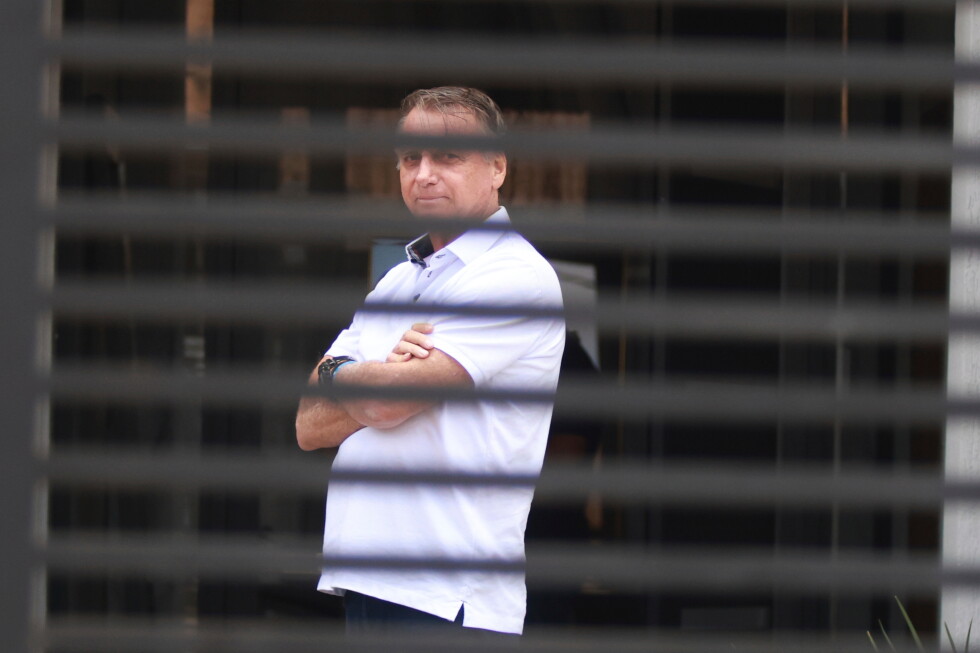
    The core of the controversy dates back to 2022, when Bolsonaro, a one-term president and former army captain who held office from 2019 to 2022, lost his reelection bid to Lula. Rather than concede power peacefully, he plotted a coup to overturn the democratic result in an attempt to cling to the presidency. Supreme Court justices found him guilty of involvement in the conspiracy, including prior knowledge of plots to assassinate Lula and his running mate Geraldo Alckmin, and sentenced him to 27 years behind bars last year. The coup attempt ultimately collapsed after top Brazilian armed forces leaders refused to back the plot, allowing Lula to be sworn in without incident on January 1, 2023. Earlier this year, the 71-year-old former leader was moved to house arrest on humanitarian grounds due to ongoing health concerns.

    The controversial new law overhauls how Brazilian courts calculate prison sentences for people convicted of crimes including coup plotting, and would slash Bolsonaro’s sentence from 27 years to just over two years. With a conservative majority holding control of Congress, the chamber moved to advance the bill earlier this year, prompting Lula to issue a veto in a bid to block the reform. But during a tense, emotionally charged legislative session on Thursday, lawmakers voted by more than the required two-thirds majority to override Lula’s veto. The final vote has opened the door for the sentencing reduction to go into effect, though legal analysts note the law still faces potential challenges in the Supreme Court.

    Immediately after the veto was defeated, jubilant opposition lawmakers broke into chants of “freedom” and shouted the name of Flavio Bolsonaro, the former president’s eldest son and a sitting Brazilian senator, who is running to claim his father’s old office in this year’s presidential election. The override fell on Flavio Bolsonaro’s 45th birthday, and he took to social media platform X to praise the legislative outcome, calling it “a very special birthday present” from fellow deputies and senators.

    The defeat of Lula’s veto comes just one day after another humiliating loss for the president: the Senate rejected his chosen nominee for a vacant Supreme Court seat, Jorge Messias. The rejection marked the first time in decades that a sitting Brazilian president’s Supreme Court nominee has been turned down by the Senate, a clear sign of eroding government power in the conservative-led legislature. Current polling shows Flavio Bolsonaro tied with Lula, who is campaigning for a fourth presidential term, making this string of legislative wins a critical boost for the opposition ahead of the election.

  • Rubio downplays reports US could review UK’s claim to Falklands

    Rubio downplays reports US could review UK’s claim to Falklands

    A weeks-long swirl of speculation over a potential U.S. policy shift on the Falkland Islands sovereignty dispute has been directly quelled by Secretary of State Marco Rubio, who downplayed suggestions of change as an overblown reaction to an internal brainstorming document. The controversy began last week when news outlet Reuters published details from a leaked internal Pentagon email, which floated potential punitive measures against NATO allies that refused to back recent U.S. military action against Iran. Among the options cited was a possible review of the longstanding U.S. position on Falkland Islands sovereignty, a long-running point of tension between the United Kingdom and Argentina.

    Speaking to The Sun on Thursday, Rubio pushed back against widespread media and political reaction to the leak, framing the document as nothing more than a draft of unvetted ideas. “It was just an email with some ideas,” Rubio told the outlet, adding that public and political response to the leak had been “overexcited.” The secretary of state’s comments came one day after he held talks on the issue with UK Foreign Secretary Yvette Cooper during a meeting in Washington, D.C.

    Rubio reaffirmed that the United States’ longstanding neutral stance on the sovereignty dispute remains fully intact. “Our position on the islands remains one of neutrality. We acknowledge that there are conflicting claims of sovereignty between Argentina and the UK. We recognise the de facto United Kingdom administration of the islands but take no position regarding sovereignty claims of either party,” he said.

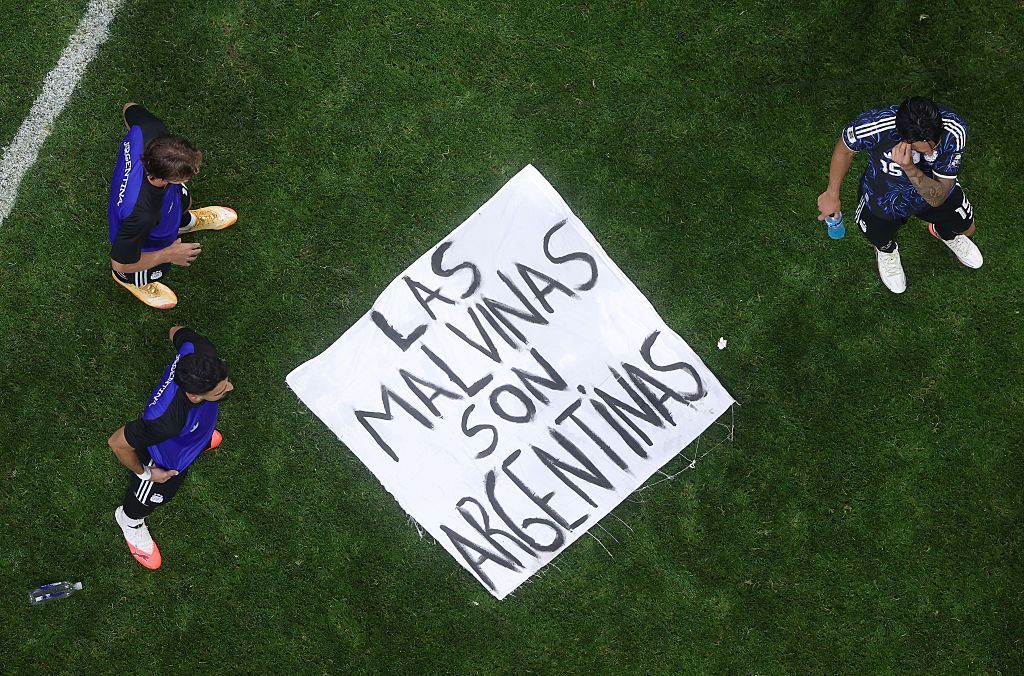
    Located 483 kilometers off the Argentine coast in the southwest Atlantic, the Falkland Islands (known as the Malvinas to Argentina) have been the center of a sovereignty clash for nearly 200 years. The UK has administered the islands as an overseas territory since 1833, but Argentina asserts it inherited legal claim to the archipelago from the Spanish crown following its independence, and points to the islands’ geographic proximity to the South American mainland as further justification for its claim.

    The dispute boiled over into open conflict in 1982, when Argentine military forces invaded the islands in an attempt to seize control by force. A 10-week undeclared war ended with the surrender of Argentine forces to a British military task force, leaving 649 Argentine soldiers, 255 British service members, and three Falkland Islanders dead. Today, the UK maintains a permanent military garrison of more than 1,000 personnel on the islands to deter any future aggression. A 2013 referendum of the archipelago’s 1,672 eligible voters saw 99.8 percent of participants back remaining a UK overseas territory, on a turnout of more than 90 percent.

    For decades, the U.S. has officially held a position of neutrality in the dispute, formally recognizing British de facto administration while offering quiet diplomatic and military backing to the UK. The leaked memo sparked immediate fears in London that a shift in U.S. policy would strengthen Argentina’s ongoing international campaign to press its sovereignty claim. Following the leak, a Downing Street spokesperson reaffirmed the UK’s unwavering position: “The Falkland Islands have previously voted overwhelmingly in favour of remaining a UK overseas territory, and we’ve always stood behind the islanders’ right to self-determination and the fact that sovereignty rests with the UK.”

    The leaked Pentagon proposal emerged against a backdrop of transatlantic tension following recent U.S.-Israeli strikes against Iran. The UK declined to join the offensive strikes, a choice that angered U.S. President Donald Trump, though it has permitted the U.S. military to use British bases for defensive strikes against Iranian missile sites. In addition to the Falklands policy review, the leaked memo also reportedly suggested pushing for Spain’s suspension from NATO as another potential punishment for non-participation. Adding another layer of context to the speculation, President Trump has maintained close political ties to Argentine President Javier Milei, who has made renewed claims to the Falklands a core part of his foreign policy agenda.

  • Brazil’s Congress overrides Lula’s veto of a bill to reduce Bolsonaro’s sentence

    Brazil’s Congress overrides Lula’s veto of a bill to reduce Bolsonaro’s sentence

    SAO PAULO — In a high-stakes political upset that has reshaped Brazil’s political landscape months ahead of October’s presidential election, Brazil’s National Congress voted Thursday to override a presidential veto and enact a controversial sentencing reform bill that will slash former President Jair Bolsonaro’s 27-year prison term for his conviction on coup plotting charges. The legislative move marks a major political blow to incumbent leftist President Luiz Inácio Lula da Silva, Bolsonaro’s long-time rival, and signals a notable erosion of Lula’s governing power in Congress ahead of his reelection bid.

    The new legislation, which immediately faces planned legal challenges in Brazil’s Supreme Court, revises sentencing rules for defendants convicted of multiple political crimes. Under the new policy, when a defendant is found guilty of multiple offenses including crimes against democratic rule of law and leading a coup attempt, their final sentence will only reflect the single count carrying the maximum penalty, rather than an aggregate of all convictions. While the exact remaining sentence for Bolsonaro has not yet been finalized, political and legal analysts project the reform could cut as much as 20 years off the former right-wing leader’s original 27-year sentence. Bolsonaro, who was convicted and began his sentence in November 2024, is currently serving time under house arrest.

    Conservative opposition lawmakers successfully rallied centrist senators and federal deputies to secure a comfortable majority to override Lula’s veto of the bill, which was originally passed by Congress in 2024. Bolsonaro’s supporters had openly predicted the outcome before voting got underway, and many framed the move as a stepping stone to broader political pardons. “This is a first and much awaited step by those who are afflicted. The next stage is full amnesty,” said Sen. Espiridião Amin, a prominent Bolsonaro ally.

    Senate leaders claimed ahead of the vote that the reduced penalties would only apply to cases directly connected to the convictions of Bolsonaro, his allies, and supporters charged in connection with the 2023 coup attempt. But legal experts have already signaled they will challenge this narrow framing in court, noting the legislation’s wording applies broadly to eligible cases.

    Pedro Uczai, congressional whip for Lula’s Workers’ Party in the Chamber of Deputies, confirmed the party will file an appeal with the Supreme Court to have the legislation annulled, arguing the reform violates Brazil’s constitution. As of Thursday evening, the court had not yet received the formal complaint.

    Bolsonaro’s congressional allies have been open that the bill will benefit not just the former president, but also hundreds of his supporters convicted for their role in the January 8, 2023 riot that destroyed multiple government buildings in Brazil’s capital Brasilia. The attack, which sought to overturn Lula’s 2022 election victory, was widely compared to the 2021 assault on the U.S. Capitol.

    Alexandre Knopfholz, a lawyer and legal scholar, told the Associated Press the bill’s wording could also reduce penalties for offenses committed by large crowds, extending legal leniency to dozens of rioters already charged in connection with the Brasilia attack. Knopfholz emphasized that even if the Supreme Court upholds the new legislation, Bolsonaro will not be released from detention automatically, and additional legal proceedings will be required to adjust his sentence.

    Thursday’s vote marks the second high-profile congressional defeat for Lula in 24 hours, capping a rough week for the incumbent ahead of his campaign for a fourth non-consecutive term. On Wednesday evening, the Senate rejected Lula’s nominee for a Supreme Court seat — the first time a sitting president’s Supreme Court pick has been rejected in 132 years.

    “They want to release Bolsonaro, his jailed generals and stop federal police investigations that implicate them,” said Lindberg Farias, a lawmaker and Lula ally, calling Thursday’s vote “a day of infamy.”

    The legislative battle has already spilled over into the upcoming presidential campaign. Lula, who narrowly defeated Bolsonaro in 2022 to return to the presidency, will face Sen. Flávio Bolsonaro, the former president’s eldest son, as his main challenger in October. During Thursday’s vote, Flávio Bolsonaro laid out his campaign pitch to voters: “If it is God’s will, I will govern this country. I will hug you and take care of you, no matter what your political view is.”

    As of Friday morning, Lula had not issued any public comment on the back-to-back congressional defeats. Political analysts say the vote is a clear warning sign for Lula’s reelection prospects, though many note there is still five months until election day, and public attention could shift to other events including the upcoming men’s soccer World Cup.

    “This vote is another sign that Bolsonaro is not finished as a political actor, his son will be competitive against Lula,” said Carlos Melo, a political science professor at Insper University in Sao Paulo.

  • Argentine workers mark May Day with protests over Milei’s labor-law overhaul

    Argentine workers mark May Day with protests over Milei’s labor-law overhaul

    On Thursday, thousands of Argentine working people gathered in the streets of Buenos Aires for annual May Day demonstrations, turning the traditional celebration of labor rights into a mass show of opposition to President Javier Milei’s sweeping rollback of decades-old worker protections. The march was organized by the General Confederation of Labor (CGT), Argentina’s largest union federation, which framed the action as a fight to preserve “decent employment” in the face of Milei’s transformative changes to the country’s 50-year-old national labor code.

    Argentina’s labor regulations, first enshrined in 1974, have long provided Argentine workers with extensive legal protections and benefits. For decades, however, economists and business leaders have argued that these rigid rules created prohibitive operational costs for companies, driving away much-needed foreign direct investment and pushing nearly half of the country’s workforce into the informal, off-the-books sector where workers receive no legal protections or benefits. Successive administrations spanning multiple political ideologies attempted to liberalize the labor market to address these issues, but every reform effort collapsed in the face of fierce pushback from Argentina’s historically powerful labor unions, which have been a core political force in the country since the rise of Peronism in the 1940s.

    Despite widespread union opposition that included weeks of rolling protests and a full nationwide strike, Milei, who swept to power on a libertarian free-market agenda, successfully pushed his labor reform package through congress in February, securing one of the most significant legislative wins of his young presidency. The new legislation makes sweeping changes to the country’s labor rules: it expands the maximum legal workday from eight hours to 12, extends the probation period for new hires, simplifies the process for companies to dismiss workers, reduces legal protections for striking workers, and caps judicial discretion for severance pay awards. Proponents argue the changes will encourage formal sector hiring and make Argentina more competitive for global investment, but critics say they erode hard-won labor rights and leave working people vulnerable.

    Opponents of the reform have turned to the courts to block the new law, launching a constitutional appeal to challenge its legality. Last week, a court overturned an earlier injunction that had suspended the law’s implementation at the unions’ request, clearing the way for the reforms to take effect. Union leaders have announced they will file a new legal challenge, and the dispute is now on track to reach Argentina’s Supreme Court for a final ruling.

    The political clash over labor reform comes at a fragile moment for Milei’s presidency. His flagship policy promise to curb Argentina’s decades-long sky-high inflation has made little progress in recent months, while national unemployment has begun to climb. For Argentina’s labor movement, which was a foundational pillar of the Peronist movement that dominated Argentine politics for nearly 80 years, the labor overhaul represents an existential threat to both worker rights and the movement’s long-held political influence.

    Ahead of Thursday’s protest, CGT leader Jorge Sola told local radio that widespread social discontent has built up across the country, driven by more than just falling household consumption. “It is due to family debt, job losses and worse working conditions than what we had before,” Sola said, capturing the simmering anger that brought thousands of workers onto the capital’s streets for the May Day demonstration.