标签: South America

南美洲

  • A supersized World Cup field begins taking shape at Friday’s draw

    A supersized World Cup field begins taking shape at Friday’s draw

    The global football landscape is poised for a transformative shift as FIFA prepares for the 2026 World Cup draw at Washington’s Kennedy Center, marking the inaugural phase of organizing the most expansive tournament in history. The newly implemented 48-team format will introduce debutants including Cape Verde, Curaçao, Jordan, and Uzbekistan to football’s grandest stage when the month-long championship commences across 16 North American venues from June 11 to July 19.

    Former Arsenal manager Arsène Wenger expressed measured optimism about the competitive quality, noting that qualification itself demonstrates meritocratic achievement. The ceremony will convene high-profile political figures including U.S. President Donald Trump, Mexican President Claudia Sheinbaum, and Canadian Prime Minister Mark Carney, though the venue’s gift shop currently reflects performing arts heritage rather than football memorabilia.

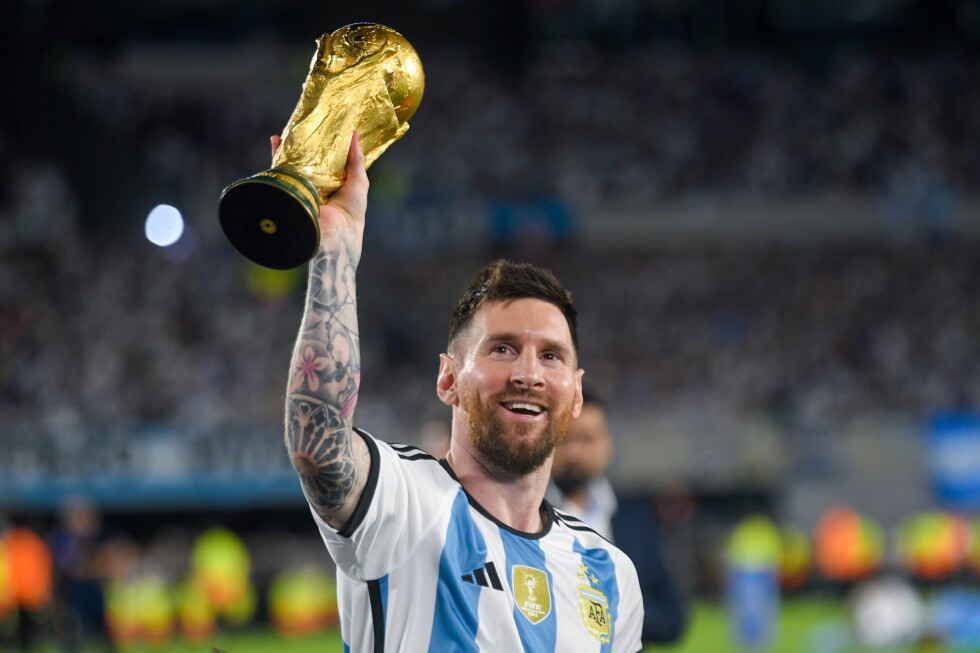
    While the world’s top 11-ranked teams have secured automatic qualification, notable absences include 12th-ranked Italy among 22 nations competing in March playoffs for the final six tournament berths. Defending champions Argentina, led by 39-year-old captain Lionel Messi, aim to become the first back-to-back champions since Brazil’s 1962 triumph, with Messi positioned to break Miroslav Klose’s all-time World Cup scoring record.

    Infrastructure preparations are underway to accommodate unprecedented attendance, with BMO Field in Toronto undergoing expansion to increase capacity to approximately 45,000 through temporary seating. Tournament organizers project record-breaking attendance figures surpassing the 3.59 million benchmark set during the 1994 U.S. World Cup.

    Controversy surrounds FIFA’s ticketing strategy, with initial prices ranging from $60 to $6,730 per match—a substantial increase from 1994’s $25-$475 range—while the organization withholds complete pricing transparency for the first time since 1990. Supplementary costs include premium parking passes priced at $175 for individual matches, though FIFA president Gianni Infantino has declined to publicly address pricing policies.

    The revised tournament structure will see the top two teams from each of 12 groups advance alongside eight best third-place finishers, potentially allowing progression to the knockout stage with just three points. According to Opta Analyst projections, host nation the United States maintains merely 0.9% probability of championship victory, with Spain (17%), France (14.1%), and England (11.8%) leading statistical forecasts.

    In an innovative competitive safeguard, FIFA confirmed that the top four ranked teams—Spain, Argentina, France, and England—will avoid confrontation until the semifinals provided they win their respective groups. The draw ceremony will feature retired sporting icons including NFL legend Tom Brady, NBA superstar Shaquille O’Neal, and NHL great Wayne Gretzky, overseen by former England captain Rio Ferdinand.

  • Ecuador’s Otavalo Indigenous people use anime to inspire pride in their ancient culture and language

    Ecuador’s Otavalo Indigenous people use anime to inspire pride in their ancient culture and language

    In the high-altitude terrain of Ecuador’s Imbabura province, a creative renaissance is unfolding as young Otavalo Indigenous filmmakers employ Japanese anime aesthetics to revitalize their cultural legacy. Their groundbreaking animated short film, “We’re Aya,” represents a innovative fusion of traditional Quechua storytelling with contemporary animation techniques, drawing direct inspiration from Hayao Miyazaki’s legendary works.

    The cinematic project centers on the mythological adventures of Aya, an Otavalo warrior, and her companions who operate under the symbolic protection of the condor—a sacred avian emblem representing power in Andean cosmology. Director Tupac Amaru characterizes the production as a cultural counteroffensive against globalization’s erosive effects on Indigenous traditions, noting that his community faced a critical choice between cultural isolation or creative resistance.

    What distinguishes this nine-minute narrative is its exclusive use of Quichua dialogue among its twelve characters—a deliberate linguistic preservation strategy targeting younger generations who increasingly communicate primarily in Spanish. Creative manager Yarik Sisa explains the film incorporates ancestral rituals, including the ceremonial placement of musical instruments at energetic terrestrial points to imbue them with spiritual essence.

    The allegorical journey follows characters representing Indigenous archetypes—Ayaruku (indomitable spirit), Ayawa (feminine sublime), and Ayaku (childlike tenderness)—as they perform rhythmic dances through a cavern symbolizing globalization. Here, they receive their mission to become cultural seeds for their people. The narrative culminates in an intergenerational exchange where a granddaughter pledges to her grandfather to become a steadfast guardian of their traditions.

    Looking beyond this initial production, the creative team envisions expanding into Quichua-language video games and international digital media markets. Creative director Malkik Arango articulates their ambition to establish a media ecosystem “made by Quichuas in a Quichua environment,” signaling a new paradigm in Indigenous-led cultural production.

  • What legal experts say about second US strike on Venezuela boat

    What legal experts say about second US strike on Venezuela boat

    International law experts have concluded that a controversial second missile strike by the U.S. military on a suspected Venezuelan narcotics vessel likely constituted an illegal extrajudicial killing under international law. The operation, which occurred on September 2nd and resulted in eleven total fatalities, has drawn sharp criticism from legal scholars across the political spectrum.

    According to verified reports, the initial strike killed nine individuals aboard the vessel, leaving two survivors clinging to the burning wreckage. The subsequent follow-up attack—ordered by US Navy Admiral Frank Bradley under authorization from War Secretary Pete Hegseth—eliminated both survivors. The Washington Post first revealed that Hegseth had directed military personnel to ‘kill everybody’ on board during the operation, though officials later denied this characterization.

    The Trump administration has defended the strikes as legally justified under the ‘law of armed conflict,’ with White House Press Secretary Karoline Leavitt stating the operation was necessary to ‘ensure the boat was destroyed and the threat of narco terrorists to the United States was completely eliminated.’

    Legal experts from multiple institutions have challenged this interpretation. Jessica Peake, Director of the International and Comparative Law Program at UCLA, stated unequivocally that ‘the US is not in an international armed conflict with Venezuela, nor is the US in a non-international armed conflict with any criminal gang or drug cartels.’ She emphasized that even if the first strike were legal, the second attack violated customary international law prohibitions against ‘denial of quarter.’

    Professor Luke Moffett of Queen’s University Belfast added that while the strikes don’t qualify as war crimes due to the absence of recognized armed conflict, ordering ‘no quarter’ would constitute a war crime if such conflict existed.

    Notably, conservative legal scholar John Yoo—a former Bush administration official—also condemned the operation, citing explicit prohibitions in the US Law of War Manual against conducting hostilities ‘on the basis that there shall be no survivors.’

    The administration’s characterization of Caribbean anti-drug operations as a ‘non-international armed conflict’ represents a significant legal framing that experts challenge. Historical precedents from the Obama administration’s drone program, which similarly employed double-tap strikes, were also deemed illegal by legal analysts despite previous presidential assertions of their legality and effectiveness.

  • Messi’s plans for 2026 World Cup? ‘One day at a time’

    Messi’s plans for 2026 World Cup? ‘One day at a time’

    Soccer icon Lionel Messi remains noncommittal about his potential participation in the 2026 FIFA World Cup, maintaining a cautious approach despite recently leading Argentina to the summit of South American World Cup qualifiers. The 38-year-old Inter Miami superstar addressed his future intentions in an exclusive interview with ESPN Argentina ahead of Friday’s highly anticipated World Cup draw.

    Messi emphasized taking a realistic, day-by-day approach to his career decisions, stating: “I’m going to take it one day at a time; being honest and trying to be realistic and feel good. This year I felt very good.” The eight-time Ballon d’Or winner acknowledged that playing professionally in the United States creates favorable conditions for considering a sixth World Cup appearance, given the tournament’s North American hosting by the U.S., Mexico, and Canada.

    The soccer legend highlighted the distinct seasonal advantages of MLS competition compared to European leagues, noting: “It catches us at a different point in the season than in Europe. We’re going to start a tough preseason in January and we’re going to have a lot of games in a row with the league and the CONCACAF Champions League.” Messi maintains regular communication with Argentine national team coach Lionel Scaloni regarding his potential role, describing their relationship as “very trusting” and open to discussing all possibilities.

    Should Messi compete in the 2026 tournament, he would join Cristiano Ronaldo in surpassing Germany’s Lothar Matthäus record of five World Cup appearances. The Inter Miami squad currently prepares for their MLS Cup final matchup against Vancouver this Saturday.

  • Honduras election on knife-edge as count delayed by technical glitch

    Honduras election on knife-edge as count delayed by technical glitch

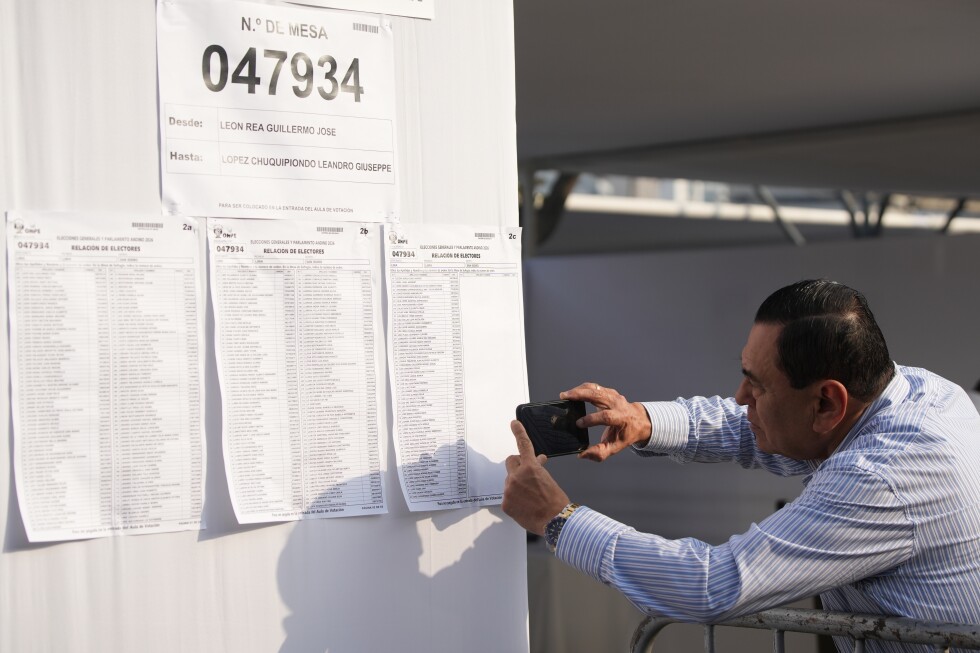
    The Honduran presidential election remains exceptionally close as vote counting extends into its fourth day, marked by technical failures and heightened international attention. With approximately 84% of ballots processed, conservative candidate Nasry Asfura holds a razor-thin lead of just 0.3 percentage points over centrist challenger Salvador Nasralla.

    The electoral process has been plagued by repeated technical outages that electoral authorities have deemed ‘inexcusable.’ On Wednesday, counting operations halted for several hours when the private contractor responsible for tabulation conducted unscheduled maintenance without consulting the National Electoral Council (CNE). This followed Tuesday’s crash of the real-time results portal, further delaying the process and intensifying political tensions.

    CNE President Ana Paola Hall expressed frustration with the technical contractor’s performance while urging public patience. Security has been reinforced around the Tegucigalpa hotel serving as the vote-counting center, with police maintaining a visible presence.

    The election has drawn significant international attention, particularly from the United States. President Donald Trump has openly endorsed Asfura, threatening to cut off aid to Honduras if the conservative candidate isn’t elected. Trump has additionally alleged, without presenting evidence, that electoral authorities were ‘trying to change’ the outcome when preliminary results briefly showed Nasralla leading by approximately 500 votes on Monday.

    Both candidates maintain confidence in their eventual victory, citing internal party projections. The election’s outcome remains uncertain as technical challenges continue to slow the final count.

  • Admiral tells lawmakers there was no ‘kill them all’ order in attack that killed drug boat survivors

    Admiral tells lawmakers there was no ‘kill them all’ order in attack that killed drug boat survivors

    A contentious congressional investigation into a lethal naval engagement near Venezuela has reached a critical juncture, with senior military officials facing intense scrutiny from lawmakers. The incident, which resulted in the deaths of two survivors from an initial strike on a suspected drug vessel, has sparked allegations of a possible “kill them all” directive from Defense Secretary Pete Hegseth.

    During classified briefings on Capitol Hill, Navy Admiral Frank “Mitch” Bradley explicitly denied receiving any such order from the Defense Secretary. Senate Intelligence Committee Chairman Tom Cotton emerged from the session stating, “Adm. Bradley was very clear that he was given no such order, to give no quarter or to kill them all. He was given an order that, of course, was written down in great detail.”

    The political divide over the incident became immediately apparent. While Republicans largely defended the military operation, Democratic lawmakers expressed profound concern. Connecticut Representative Jim Himes, the top Democrat on the House Intelligence Committee, described viewing strike footage as “one of the most troubling things I’ve seen in my time in public service,” noting the victims were “in clear distress without any means of locomotion.”

    The investigation has expanded to examine multiple aspects of the operation, including the rules of engagement, intelligence identifying the vessel as a legitimate target, and criteria used to distinguish combatants from civilians. Lawmakers from both parties are demanding complete video evidence of the September 2 attack alongside written records of all orders and directives.

    Adding complexity to the situation, the Defense Department’s inspector general concurrently released a partially redacted report criticizing Hegseth’s previous use of the Signal messaging app to share sensitive information about military operations, finding he endangered service members through this action.

    Admiral Bradley’s distinguished military career, spanning over three decades primarily with Navy SEALs and joint operations command, has positioned him as a respected figure facing difficult questions about an operation that legal experts suggest might constitute a war crime if survivors were intentionally targeted.

    The outcome of this investigation carries significant implications for military accountability and the legal boundaries of anti-narcotics operations in international waters, with more than 80 casualties reported in related strikes since September.

  • Family of Colombian man killed in US strike in the Caribbean files human rights challenge

    Family of Colombian man killed in US strike in the Caribbean files human rights challenge

    In an unprecedented legal challenge, the family of Colombian fisherman Alejandro Carranza has submitted the first formal petition against U.S. military drug interdiction operations to the Inter-American Commission on Human Rights. The filing alleges Carranza’s death during a September 15th maritime strike constitutes an extrajudicial killing that violated international human rights conventions.

    The case emerges amid escalating U.S. military operations in the Caribbean basin, where over 80 individuals have been killed since early September under the Trump administration’s enhanced counter-narcotics campaign. While U.S. officials maintain targeted vessels were operated by terrorist organizations transporting narcotics, the administration has provided minimal details about casualties and no visual evidence supporting claims that Carranza’s boat contained drugs.

    Legal representative Daniel Kovalik stated the family seeks compensation for their primary breadwinner’s death while acknowledging the non-binding nature of any commission recommendations. The attorney revealed the family has received threats from right-wing paramilitaries since publicly challenging the official narrative, creating security concerns that complicate pursuing justice through Colombian domestic channels.

    The petition gains significance amid reports that Defense Secretary Pete Hegseth issued verbal orders to ‘kill everybody’ on targeted vessels, with subsequent strikes eliminating survivors of initial attacks. President Trump’s recent statements suggesting expanded land-based operations in multiple countries, including Colombia, have intensified regional apprehensions about the legal and humanitarian implications of these military actions.

    Colombian President Gustavo Petro has condemned the maritime operations as ‘murders,’ highlighting diplomatic tensions between the traditional allies. The case represents a critical test of accountability mechanisms for U.S. military actions in the region, with potential implications for future counter-narcotics strategies and international human rights enforcement.

  • The World Cup draw is usually a spectacle. This time, FIFA hopes bigger is better

    The World Cup draw is usually a spectacle. This time, FIFA hopes bigger is better

    The 2026 FIFA World Cup draw ceremony at Washington D.C.’s Kennedy Center for the Performing Arts will feature a record 64 nations—representing over 30% of FIFA’s membership—as soccer’s global governing body implements its controversial expansion to 48 teams. This unprecedented scale introduces complex logistical challenges, with only 42 spots confirmed and 22 teams awaiting playoff results on March 31 to determine the final six berths.

    The tournament format undergoes radical transformation: twelve groups will send not only winners and runners-up but eight third-place teams to a newly created round of 32, requiring the eventual champion to play eight matches. The expanded structure will feature 104 games—a significant increase from the traditional 64—across 16 North American venues from June 11 through July 19, with 78 matches scheduled at 11 NFL stadiums including all knockout stage games from the quarterfinals onward.

    Historic debutantes include Cape Verde (ranked 68th), Curaçao (82nd), Jordan (66th), and Uzbekistan (50th), with Curaçao becoming the smallest population qualifier (156,000 residents) in World Cup history. The tournament also marks returns for Haiti (absent since 1974) and Austria, Norway, and Scotland (all returning after 28-year absences).

    Controversy surrounds record-breaking ticket pricing, with premium seats reaching $6,730, parking at $175, and hospitality packages soaring to $73,200—dramatically exceeding 1994 U.S. World Cup prices. Despite nearly 2 million tickets already sold from an expected 6 million total, concerns about affordability persist among former players and analysts.

    Environmental factors pose additional challenges, as only four U.S. venues feature climate-controlled environments. Recent weather disruptions during the Club World Cup—which caused 8 hours and 29 minutes of delays—highlight potential competitive advantages for teams drawn to indoor facilities.

    The political dimension elevates the ceremony’s significance, with expected appearances by former President Donald Trump, Mexican President Claudia Sheinbaum, and Canadian Prime Minister Mark Carney. The event will feature performances by Robbie Williams, Andrea Bocelli, and The Village People performing ‘Y.M.C.A.’—a noted Trump favorite—while FIFA plans to award its peace prize, likely to the former president.

    Sporting narratives center on Argentina’s bid to become the first back-to-back champion since Brazil (1958-1962), with captain Lionel Messi (age 39) and Portugal’s Cristiano Ronaldo (age 40) potentially appearing in their record sixth World Cup tournaments.

  • Chile becomes latest country to ban smartphone use during class

    Chile becomes latest country to ban smartphone use during class

    SANTIAGO, Chile — Chilean legislators have overwhelmingly approved groundbreaking legislation prohibiting mobile phones and smart devices in elementary and middle school classrooms nationwide. The comprehensive ban, scheduled for implementation at the beginning of the 2026 academic year, positions Chile among a growing number of countries addressing digital distractions in educational settings.

    The newly passed bill received decisive congressional support following extensive debate, with exceptions carved out for emergency situations and specific educational purposes outlined within the legislation. The measure now awaits final endorsement from President Gabriel Boric before becoming official policy.

    Education Minister Nicolás Cataldo characterized the initiative as a transformative cultural shift for Chile’s youth, emphasizing the need for children to “redisface human interaction during recreational periods and restore classroom concentration to enhance academic achievement.” The minister’s statements circulated across social media platforms shortly after the legislative decision.

    This legislative action culminates years of advocacy from concerned parents and educators who have documented smartphones’ detrimental effects on both academic performance and emotional development. Supporting evidence emerges from a recent Organization for Economic Cooperation and Development study indicating over 50% of Chilean students experience learning disruptions due to digital devices.

    Chile joins an international movement of nations implementing educational device restrictions, including France, Brazil, Hungary, the Netherlands, and China. The Santiago metropolitan area previously conducted a successful pilot program utilizing signal-blocking technology, providing empirical support for the nationwide implementation.

    The Chilean Senate had initially endorsed the concept earlier this year but introduced modifications that required reconsideration by the lower congressional chamber. Tuesday’s decisive vote establishes a clear regulatory framework for educational technology use while acknowledging legitimate needs for controlled digital access.

  • As lead changes in knife-edge Honduran election, will Trump fail to get his way?

    As lead changes in knife-edge Honduran election, will Trump fail to get his way?

    In a dramatic turn of events that has captivated international attention, Honduras finds itself at a political crossroads with presidential candidate Salvador Nasralla maintaining a slender advantage as vote counting continues. The electoral process, now entering its critical final stages, sees Nasralla narrowly outpacing his conservative opponent Nasry Asfura, though Asfura’s National Party remains confident of ultimate victory.

    The election has been significantly influenced by external forces, particularly from Washington where former President Donald Trump has actively intervened in support of his preferred candidate. Trump’s involvement has ranged from suggesting potential aid cuts to the impoverished Central American nation to making unsubstantiated claims of electoral fraud, creating what analysts describe as an unprecedented level of American interference in Honduran domestic affairs.

    Adding to the political turbulence, ex-President Juan Orlando Hernández has been unexpectedly released from U.S. custody after serving merely one year of his 45-year sentence for drug trafficking and weapons charges. His pardon, directly orchestrated by Trump, has sparked both celebration and outrage. Hernández’s presidency was marred by serious allegations of human rights violations and corruption, making his early release particularly controversial among Honduran citizens who had viewed his conviction as a rare instance of accountability for political elites.

    Political analyst Josué Murillo characterizes Trump’s interventions as reminiscent of Cold War-era tactics: “No government should come here and treat us as a banana republic. That is a lack of respect. Donald Trump saying who we should elect violates our autonomy as a nation.”

    The former first lady, Ana García Carías, has emerged as a vocal defender of her husband, describing his release as “like being in a dream, a dream made reality.” She attributes Hernández’s legal troubles to what she calls “lawfare” and a “politically motivated witch-hunt” by the Biden administration, despite evidence that the case against Hernández was developed during Trump’s own presidency. García Carías acknowledged the instrumental role of Trump allies Roger Stone and Matt Gaetz in securing the pardon.

    As the nation awaits final election results, the outcome will determine not only Honduras’s political future but also the extent of American influence in Central American affairs, with Trump potentially gaining both a new ally in Asfura and the restoration of an old one in Hernández.