标签: South America

南美洲

  • A tense calm holds on Venezuela a day after Maduro was deposed by US

    A tense calm holds on Venezuela a day after Maduro was deposed by US

    CARACAS, Venezuela — An atmosphere of apprehensive stillness enveloped Venezuela on Sunday, marking the aftermath of a dramatic U.S.-led military intervention that resulted in the capture and removal of President Nicolás Maduro from power. The capital city, typically a hub of activity, presented an eerie tableau of deserted streets and shuttered businesses, as the nation collectively held its breath regarding its political future.

    In a stark contrast to the previous day’s frantic scenes of citizens stockpiling essentials, the urban landscape of Caracas remained largely motionless. Major thoroughfares, usually vibrant with runners and cyclists, stood empty. The presidential palace, now a symbol of the seismic power shift, was secured by a combination of military personnel and armed civilian supporters.

    Beyond the capital, in La Guira state, residents navigated the physical wreckage of the operation, clearing debris from homes damaged during the explosions that accompanied Maduro’s apprehension. The structural damage to some buildings revealed gaping holes in walls, serving as tangible evidence of the preceding day’s violent events.

    The political vacuum created by Maduro’s unexpected ousting has generated widespread uncertainty across the nation. President Donald Trump’s declaration that the United States would collaborate with Maduro’s former Vice President Delcy Rodríguez to ‘run’ Venezuela has done little to clarify the country’s immediate trajectory.

    This pervasive uncertainty manifested in the subdued behavior of citizens. In eastern Caracas’ low-income neighborhoods, such as where construction worker Daniel Medalla gathered with fellow parishioners, even religious services were canceled. Medalla, 66, suggested that the deserted streets reflected not concern about additional military action, but rather fear of potential government retaliation against any public displays of celebration, a apprehension rooted in memories of last year’s election crackdowns. ‘We were longing for it,’ Medalla confessed regarding Maduro’s removal, capturing the conflicted sentiments of many Venezuelans who desire change but fear its costs.

  • Trump’s plan to seize and revitalize Venezuela’s oil industry faces major hurdles

    Trump’s plan to seize and revitalize Venezuela’s oil industry faces major hurdles

    The prospect of US-led revitalization of Venezuela’s crippled oil industry following military actions against Nicolás Maduro’s regime presents a complex scenario with limited immediate market impact. While possessing the world’s largest proven crude reserves at approximately 303 billion barrels, Venezuela’s current production languishes at just 1.1 million barrels daily – a dramatic decline from its 1999 peak of 3.5 million barrels due to years of systemic corruption, mismanagement, and international sanctions.

    Energy analysts emphasize that infrastructure decay represents merely one challenge in resurrecting Venezuela’s oil sector. Patrick De Haan, lead petroleum analyst at GasBuddy, notes that while physical infrastructure escaped recent military actions unscathed, it has been deteriorating for decades and requires substantial reconstruction time.

    The political landscape remains equally problematic. American energy corporations demand regime stability before committing significant investment, yet Venezuela’s leadership situation remains volatile. Current Vice President’s claim to power, the high court’s intervention, and competing narratives about legitimate governance create precisely the uncertainty that deters foreign capital.

    Phil Flynn, senior market analyst at Price Futures Group, suggests that demonstrated US control over the next 24-48 hours could generate optimism about rapid industry revitalization. Such development could potentially enable Venezuela to double or triple production, ultimately applying downward pressure on global oil prices and reducing reliance on Russian energy.

    However, Francisco Monaldi, director of Rice University’s Latin American energy program, projects a more realistic timeline: approximately a decade and $100 billion in investment would be required to boost production to four million barrels daily. Legal complications surrounding resource ownership and contract enforcement under occupation add further uncertainty, with Columbia University law professor Matthew Waxman highlighting potential violations of international law regarding resource appropriation.

    Despite these challenges, Venezuela’s heavy crude remains particularly valuable for diesel production and heavy equipment fuels – commodities currently in global short supply due to sanctions. Gulf Coast refineries, specifically optimized for processing such crude, would benefit significantly from renewed Venezuelan production.

  • Maduro arrives in US after stunning capture in operation that Trump says will let US ‘run’ Venezuela

    Maduro arrives in US after stunning capture in operation that Trump says will let US ‘run’ Venezuela

    In an unprecedented military operation conducted under darkness, former Venezuelan President Nicolás Maduro has been apprehended by U.S. forces and transported to New York to confront narco-terrorism conspiracy charges. The dramatic extraction from his Caracas military compound residence occurred early Saturday, marking the most assertive American action toward regime change since the 2003 Iraq invasion.

    President Donald Trump characterized the mission as “extremely successful” during a Mar-a-Lago press conference, outlining intentions for the U.S. to temporarily administer Venezuela while facilitating a “safe, proper and judicious transition.” Trump revealed plans to revitalize Venezuela’s crippled oil infrastructure and export substantial petroleum volumes to international markets.

    The operation triggered immediate political upheaval within Venezuela. The nation’s high court designated Vice President Delcy Rodríguez as interim leader, though she emphatically refused to acknowledge this transition, asserting “There is only one president in Venezuela, and his name is Nicolás Maduro Moros.” Venezuelan state media condemned the extraction as an “imperialist attack,” prompting both pro-Maduro demonstrations and celebratory gatherings among opposing factions.

    Legal authorities internationally have raised profound concerns regarding the operation’s legitimacy. Questions emerged about potential violations of international law, particularly since Congress never authorized military force against Venezuela. The UN Security Council scheduled an emergency session to address the escalating situation following Colombia’s formal request.

    Casualties were reported on both sides during the operation, with Venezuelan officials confirming civilian and military fatalities, while U.S. forces sustained injuries without fatalities. The operation culminated years of escalating tension between the nations, including recent CIA drone strikes targeting alleged Venezuelan drug trafficking operations.

    The capture represents a critical juncture in Venezuela’s political trajectory, which has been dominated by Maduro’s party since Hugo Chávez’s 1999 election. Maduro’s controversial 2018 reelection was widely disputed by international observers and opposition groups who documented substantial evidence of electoral manipulation.

  • ‘Deeply shocked’: World leaders react to US attack on Venezuela

    ‘Deeply shocked’: World leaders react to US attack on Venezuela

    International reactions have sharply diverged following the unprecedented U.S. military operation that resulted in the capture of Venezuelan President Nicolás Maduro and his wife on Saturday. The detained leader, now facing drug trafficking charges in New York, has become the focal point of a geopolitical storm that pits Western powers against traditional allies of Venezuela.

    President Donald Trump’s administration has asserted its intention to temporarily govern the South American nation, stating the U.S. will “run Venezuela until we can do a safe, proper and judicious transition.” This declaration has ignited fierce debate about sovereignty and international law.

    Traditional Western allies exhibited measured support for the operation. UK Prime Minister Keir Starmer notably declined to condemn the military action, stating his government would “shed no tears” for Maduro’s regime while emphasizing the need to establish all facts. The European Union, through top diplomat Kaja Kallas, reiterated its position that Maduro lacks legitimacy while calling for peaceful transition and respect for international law.

    Conversely, a coalition of nations including Russia, China, Iran, and numerous Latin American countries issued strong condemnations. Chinese officials expressed being “deeply shocked” by the use of force against a sovereign nation, while Russia characterized the operation as “an act of armed aggression.” Regional leaders including Brazil’s President Lula da Silva, Colombian President Gustavo Petro, and Chilean President Gabriel Boric uniformly denounced the intervention as a violation of international law that threatens regional stability.

    The United Nations expressed profound concern, with Secretary-General Antonio Guterres warning through a spokesperson that the operation sets a “dangerous precedent” by disregarding established international rules. Domestically, Senate Minority Leader Chuck Schumer criticized the action as reckless despite acknowledging Maduro’s illegitimate status.

    Amid the diplomatic turmoil, Venezuela’s Interior Minister Diosdado Cabello has urged citizens to remain calm and trust the country’s leadership and military, while opposition figures and some international leaders have begun discussing transition possibilities.

  • How cocaine and corruption led to the indictment of Maduro

    How cocaine and corruption led to the indictment of Maduro

    In a dramatic escalation of international legal pressure, Venezuelan President Nicolás Maduro and his wife Cilia Flores were apprehended during a surprise military operation in Venezuela early Saturday. The capture sets the stage for a landmark judicial proceeding in Manhattan federal court against the leader of the oil-rich South American nation.

    The U.S. Justice Department has unsealed a comprehensive indictment portraying Maduro’s government as a “corrupt, illegitimate regime” sustained by an elaborate drug-trafficking network that allegedly flooded American cities with thousands of tons of cocaine. The document charges Maduro with four serious offenses: narco-terrorism conspiracy, cocaine importation conspiracy, possession of machine guns and destructive devices, and conspiracy to possess such weapons.

    According to the indictment, Maduro systematically collaborated with “some of the most violent and prolific drug traffickers and narco-terrorists in the world,” including Mexico’s Sinaloa Cartel and the Tren de Aragua criminal organization. The Venezuelan government allegedly provided law enforcement protection and logistical support to cartels moving drugs throughout the region, resulting in approximately 250 tons of cocaine trafficked through Venezuela annually by 2020.

    The court documents further accuse Maduro and his wife of ordering kidnappings, beatings, and murders against those who interfered with their drug operations or owed them money. Flores faces additional allegations of accepting hundreds of thousands of dollars in bribes to facilitate meetings between drug traffickers and Venezuelan anti-drug officials.

    The operation to capture Maduro was characterized by U.S. officials as a “law enforcement function” conducted at the request of the Justice Department. Attorney General Pam Bondi declared that Maduro and his wife “will soon face the full wrath of American justice on American soil in American courts.” Maduro is currently being held at a federal detention facility in Brooklyn awaiting trial, with video evidence showing him smiling while escorted by DEA agents in New York.

    This prosecution builds upon earlier charges brought against Maduro in 2020 during the Trump administration, with the new indictment adding charges against his wife. The case represents one of the most significant attempts to prosecute a sitting head of state on U.S. soil for international drug trafficking offenses.

  • BBC Mundo reports from a quiet Venezuela-Colombia border after Maduro’s arrest

    BBC Mundo reports from a quiet Venezuela-Colombia border after Maduro’s arrest

    The typically bustling commercial corridors along the Venezuela-Colombia border have been transformed into zones of unusual quietude, following the issuance of an arrest order for President Nicolás Maduro. This dramatic shift in atmosphere underscores the profound anxiety gripping many Venezuelans, who are now adopting a cautious wait-and-see approach toward their nation’s volatile political future. The border region, historically a vibrant hub of cross-border trade and constant movement, now reflects a nation in suspended animation. Local merchants and residents report a significant decline in activity, as citizens prioritize monitoring the unfolding political crisis over daily commerce. This palpable tension highlights how high-stakes political developments in Caracas directly impact economic vitality and social dynamics in border communities. The current stillness is not merely an economic pause but a societal response to profound uncertainty, with many fearing potential repercussions that could alter the country’s trajectory.

  • ‘A long road ahead’: Venezuelans react to Maduro’s arrest with hope and worry

    ‘A long road ahead’: Venezuelans react to Maduro’s arrest with hope and worry

    Venezuela has been thrust into a period of profound uncertainty following the dramatic capture of President Nicolás Maduro by United States military forces. The operation, authorized by President Donald Trump and executed in Caracas early Saturday, represents a dramatic escalation in the longstanding tensions between the two nations.

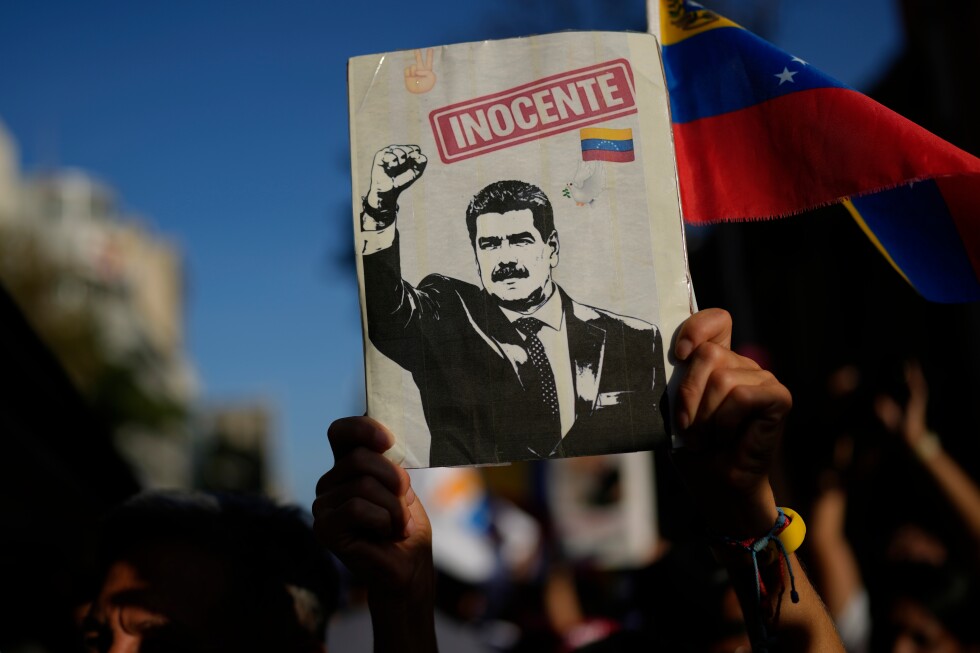
    The immediate aftermath in the capital was a study in contrasts. While some citizens emerged to celebrate, expressing gratitude to the U.S. for removing a leader they view as illegitimate, staunch government loyalists mounted counter-protests. Caracas Mayor Carmen Meléndez decried the action as an outright ‘kidnapping,’ rallying supporters who demand Maduro’s immediate release.

    The U.S. justification for the unprecedented military incursion centers on accusations that Maduro presides over a ‘narco-terrorist’ regime. These claims, which Maduro has consistently denied, form the basis for his extradition to New York City to face formal drug trafficking and weapons charges. In the power vacuum, President Trump has declared the U.S. will temporarily administer the nation and manage its vast oil reserves until a permanent government can be established.

    Yet, beneath the surface of celebration for many, deep-seated fear and skepticism persist. Interviews with citizens reveal widespread apprehension about the future. Many, like a woman identified only as ‘Dina’ for her safety, express cautious hope for economic investment but profound distrust in U.S. political consistency. The threat of violence remains palpable; reports indicate armed pro-government paramilitary groups, known as colectivos, continue to patrol streets, intimidating citizens.

    The situation is further complicated by the enduring influence of powerful Maduro allies within the government structure, creating fears of internal instability. For the nearly eight million Venezuelans living in exile, Maduro’s capture is a watershed moment, though they recognize that healing the nation’s profound wounds—including addressing those who are missing, imprisoned, or dead—will be a long and arduous process.

  • FACT FOCUS: Trump repeats false claims as he discusses US raid to extract Venezuela’s president

    FACT FOCUS: Trump repeats false claims as he discusses US raid to extract Venezuela’s president

    During an extended press briefing addressing the controversial U.S. military operation targeting Venezuelan leadership, President Donald Trump made several statistically questionable assertions regarding both the Venezuela raid and domestic National Guard deployments.

    Regarding the Venezuela maritime intervention, Trump asserted that each drug vessel neutralized by U.S. forces “kills on average 25,000 people” and that eliminating these vessels saves equivalent American lives. However, official data from the CDC’s National Vital Statistics System reveals that annual drug overdose fatalities reached approximately 76,516 during the 12-month period ending April 2025—already representing a 24.5% decrease from previous figures. Given that U.S. forces have engaged 35 vessels since operations commenced in September, Trump’s calculation would suggest 875,000 lives saved—a figure dramatically exceeding actual overdose mortality rates.

    Furthermore, operational analysis indicates these maritime strikes primarily target Caribbean routes, while the predominant opioid threat—fentanyl responsible for 65.1% of overdose deaths—typically enters via land routes from Mexico using Chinese and Indian precursor chemicals.

    On domestic security, Trump incorrectly claimed Washington D.C. had experienced no homicides “in six, seven months” following National Guard deployment. Metropolitan Police Department statistics document 59 homicides during this period, including a November terrorist attack that killed one National Guard member and injured another. While homicides decreased from 2024’s 126 to 97 in 2025, 29 occurred after the August deployment.

    Regarding Chicago and Los Angeles deployments, Trump asserted crime reduction successes despite legal constraints that prevented street deployment in Chicago. In Los Angeles, initial deployments of 4,000 Guard members and 700 Marines were gradually reduced to several hundred before court orders mandated returning control to California Governor Gavin Newsom, culminating in the Ninth Circuit’s Wednesday ruling demanding administration compliance.

  • What we know about Maduro’s capture and US plan to ‘run’ Venezuela

    What we know about Maduro’s capture and US plan to ‘run’ Venezuela

    In an unprecedented military operation dubbed ‘Operation Absolute Resolve,’ U.S. special forces have captured Venezuelan President Nicolás Maduro and First Lady Cilia Flores. The dramatic extraction occurred during early morning hours in Caracas following coordinated strikes on multiple strategic locations across Venezuela’s capital region.

    President Donald Trump confirmed the operation during a Saturday news conference, revealing that Delta Force operatives successfully infiltrated Maduro’s fortified compound at 02:01 local time (06:01 GMT). The mission, which involved over 150 aircraft and months of planning, resulted in the capture of the Venezuelan leader without U.S. casualties.

    The operation triggered explosions at key military installations including Fuerte Tiuna military base, Generalissimo Francisco de Miranda Air Base, and critical infrastructure sites in Miranda state. Venezuelan authorities reported strikes on civilian areas and deployed armed forces under a national emergency declaration.

    Maduro and Flores have been transported to Stewart Air National Guard Base in New York and face multiple federal charges in the Southern District of New York, including conspiracy to commit narco-terrorism and weapons offenses. U.S. Attorney General Pam Bondi stated the couple would ‘face the full wrath of American justice.’

    International reactions have been sharply divided. Russia, China, Iran, and several Latin American nations condemned the operation as violation of sovereignty, while the UK expressed support for Maduro’s removal. UN Secretary-General Antonio Guterres expressed alarm at the potential precedent-setting nature of the military action.

    Trump announced that the U.S. would temporarily ‘run’ Venezuela to facilitate a transition, with American oil companies expected to enter the country. The operation follows years of tensions between the nations, with the U.S. accusing Maduro of direct involvement in drug trafficking and designating Venezuelan groups as Foreign Terrorist Organizations.

  • Watch: ‘I’m so happy’ – Venezuelans in the US react to Maduro’s capture

    Watch: ‘I’m so happy’ – Venezuelans in the US react to Maduro’s capture

    In an outpouring of emotion, Venezuelan-Americans in South Florida erupted in celebration following news of a US operation targeting President Nicolás Maduro. The community in Doral, Florida—often referred to as ‘Doralzuela’ due to its high concentration of Venezuelan expatriates—gathered spontaneously, waving flags and chanting slogans against the Venezuelan leader.

    BBC correspondent Bernd Debusmann, reporting from the scene, captured raw reactions from residents who expressed overwhelming joy and relief. ‘I’m so happy,’ one emotional resident told the BBC, echoing sentiments shared by many who fled economic collapse and political repression under Maduro’s administration. The celebratory atmosphere reflected years of pent-up frustration among exiles who have advocated for international intervention.

    The development marks a significant escalation in US-Venezuela relations, with Washington taking direct action against a leader it has repeatedly sanctioned and labeled illegitimate. The events in Doral highlight how Venezuela’s political crisis has created deep diasporic communities abroad that remain intensely engaged with developments in their homeland. Many celebrators expressed hope that this operation might lead to democratic restoration in Venezuela, though the ultimate outcome remains uncertain amid complex geopolitical tensions.