A week after powerful twin earthquakes rocked Venezuela, leaving at least 1,700 people confirmed dead, grieving families across the hardest-hit coastal region of La Guaira are confronting overwhelming loss and growing fury over what they describe as a lethargic, inadequate official response to the national disaster. The disaster, labeled the “most brutal natural catastrophe” in the country’s modern history by interim President Delcy Rodríguez, has left hundreds more still missing, trapped beneath the concrete ruins of collapsed apartment blocks – and many fear critical delays in deploying rescue resources have turned a preventable tragedy into an even larger catastrophe.
At the site of a fallen 12-story residential building along one of La Guaira’s busiest roads, the tense rhythm of a search operation unfolded on a recent afternoon: rescuers called out for total silence, ordering moving vehicles to halt, construction equipment to power down, and crowds of waiting family members to quiet their breathing. One rescuer pressed his ear to a narrow hole drilled through a thick concrete slab, while another held a flashlight into the void, straining for any faint sign of life from those trapped below. This quiet vigil ended quickly with no sounds detected, and heavy machinery roared back to life – a pattern repeated countless times across the disaster zone.
Among the anxious relatives gathered on the roadside is Miguel Oscar Núñez, whose 34-year-old only son Angel lived in the collapsed building. As he huddles with other waiting families, his frustration with the authorities boils over. “My son, like hundreds of others, is trapped here,” he says. “We desperately need more official support to dig them out now. It’s bad enough that the earthquake hit, but what if he dies simply because the government failed to act?” I haven’t given up hope, but I’m broken. No parent should ever have to outlive their child.
Kevin Montilla also lost his home in the collapse, and was away at work when the earthquake hit. His wife Luzmary and 16-year-old daughter Jhoerlyzmar remain unaccounted for. Montilla echoes widespread criticism of the official response, saying rescue operations launched far too late and moved at a glacial pace. In the critical first hours after the quake, he says, only local community members showed up to dig through debris. Police only arrived to survey the damage, not to help. “The government’s response has been frustrating and impotent,” Montilla says. Families waiting at the site insist that multiple critical days were lost before any large-scale official rescue effort even began. While the building, part of a government-owned housing complex, has attracted rescue teams from both Venezuela and neighboring Colombia, large swathes of La Guaira state have yet to see any search personnel at all.
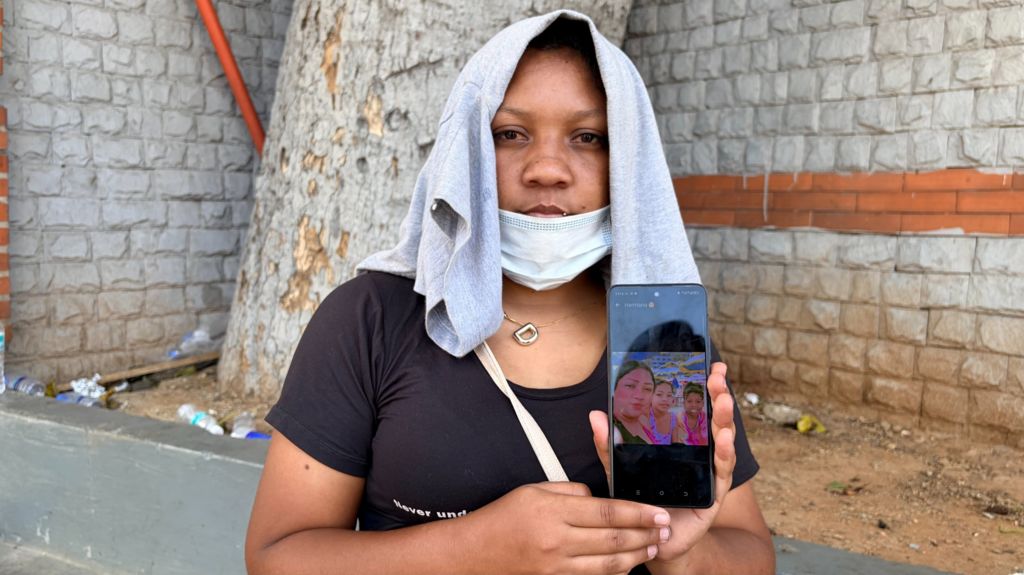
For single mother Deilisbeth Herreira, the agony of uncertainty is compounded by total abandonment by official rescuers. When the earthquakes struck, Herreira was at work, leaving her two young daughters – 12-year-old Greydelys and 13-year-old Graybelys – at home. She has traveled to the local hospital to cross-reference names on injury and fatality lists, still clinging to the faint hope that the girls were outside when the building fell and survived. But no rescuers and no heavy equipment have been sent to clear the rubble where her home once stood. “I have no help at all,” she says through tears. “It’s like you’re left all alone to find your own loved ones. My girls were quiet, studious kids. I just want them back, no matter what it takes.”
Across La Guaira, the story is the same: residents say they have been utterly let down by state authorities. At the collapsed Bello Horizonte housing complex, where two high-rise apartment buildings slid into a jumbled mass of concrete along the coastal highway, family members and local volunteers have been leading search efforts themselves. Wearing dust masks and rubber gloves, they dig through broken concrete and twisted rebar with nothing but hand shovels and crowbars.
William Rodrigues has been searching nonstop for his uncle, even as the putrid stench of decaying bodies hangs thick over the rubble. “We can’t just stand by when there’s still a chance people are alive down there,” he explains. “Help arrived way too late in most areas, and in some places, it’s still not here at all.” Though police have been posted near the complex, they have not taken part in any rescue work, locals say.
Sixty-year-old Juan Avendo, whose own home across the road from Bello Horizonte was destroyed in the quake, describes how local residents launched their own rescue effort with nothing but their bare hands. “We could hear people screaming trapped under the rubble, so we started clawing through the debris with our own nails,” he says. Avendo and his nephew Enyer Musics managed to pull one injured woman alive from the wreckage: they heard her cries overnight, but couldn’t reach her in the dark. At dawn, they found her, passed her water, and worked for hours to dig her out.
The first official Venezuelan rescue team, made up of firefighters, did not arrive at the Bello Horizonte site until Friday – nearly two full days after the earthquakes struck on Wednesday. Additional teams from El Salvador and the United States soon joined, but after pulling out a small number of additional survivors, the entire operation was called off on Sunday. Avendo estimates that hundreds of people remain buried under the debris of the collapsed complex, and many may never be recovered, leaving the full death toll of the disaster unknown to this day.
Across the entire disaster zone, the gap between official rhetoric and on-the-ground action has left a community traumatized not just by the force of the earthquakes, but by the failure of their government to come to their aid when they needed it most.