标签: South America

南美洲

  • US allies and adversaries use UN meeting to blast Venezuela intervention as America defends action

    US allies and adversaries use UN meeting to blast Venezuela intervention as America defends action

    The United Nations Security Council convened an emergency session on Monday following a controversial U.S. military operation in Venezuela that resulted in the capture of President Nicolás Maduro. UN Secretary-General Antonio Guterres expressed profound concern that the January 3rd operation may have violated established international legal principles, warning that such actions could establish dangerous precedents for future international relations.

    The diplomatic confrontation revealed deep divisions among global powers, with both American allies and adversaries condemning President Trump’s interventionist approach. Denmark’s Ambassador Christina Markus Lassen emphasized the inviolability of national borders, stating that no nation should influence political outcomes through force or threats. The criticism extended beyond Venezuela, as Trump had previously suggested potential military expansions into Colombia and Mexico regarding drug trafficking allegations, while renewing territorial ambitions toward Greenland.

    Russian Ambassador Vasily Nebenzya characterized the operation as a regression to ‘an era of lawlessness,’ accusing the United States of positioning itself as a supreme judicial authority that bypasses international sovereignty norms. Colombian representative Leonor Zalabata drew historical parallels to past interventions in the region, asserting that democracy cannot be promoted through coercive measures.

    U.S. envoy Mike Waltz defended the operation as a precisely executed law enforcement action, questioning the UN’s legitimacy should it equate democratically elected leaders with what he termed a ‘narco-terrorist.’ Maduro and his wife were apprehended from their military residence and transported via U.S. warship to face federal charges in New York, including allegations of narco-terrorism conspiracy.

    The operation culminated months of military buildup near Venezuela’s coastline, during which American forces targeted vessels suspected of drug trafficking. While President Trump suggested temporary U.S. administration of Venezuela’s oil resources, Secretary of State Marco Rubio indicated the continuation of existing oil sanctions and quarantine measures to pressure policy changes within the South American nation.

  • Who is Venezuela’s interim president?

    Who is Venezuela’s interim president?

    In a significant political development, Venezuela has witnessed the swearing-in of Delcy Rodríguez as the nation’s interim president. This transitional leadership appointment occurs amid a complex political landscape that has characterized the South American country in recent years. Rodríguez, a seasoned political figure with extensive governmental experience, previously served as Venezuela’s vice president and has been a close ally of the ruling party establishment. The interim presidency role typically signifies a temporary leadership position that maintains executive authority during periods of political transition or uncertainty. This development represents the latest chapter in Venezuela’s ongoing political narrative, which has drawn international attention and commentary. The appointment follows established constitutional protocols for ensuring governmental continuity while the nation addresses its broader political challenges. Rodríguez’s assumption of duties demonstrates the current administration’s commitment to maintaining structural stability while navigating both domestic and international pressures. The interim president now assumes responsibility for guiding the nation’s daily governance and upholding institutional operations during this transitional phase.

  • Oil stocks sharply higher after US action in Venezuela

    Oil stocks sharply higher after US action in Venezuela

    Financial markets witnessed a significant rally across the U.S. energy sector Monday, propelled by President Donald Trump’s announcement of American intentions to seize control of Venezuela’s oil industry. The declaration, which included plans for U.S. corporations to revitalize the nation’s crippled energy infrastructure following the capture of President Nicolás Maduro, triggered immediate investor optimism.

    The immediate market response saw substantial gains for companies positioned to benefit from renewed Venezuelan production. Refining giants Valero, Marathon Petroleum, and Phillips 66 saw shares climb between 5% and 6% at the opening bell. Even more dramatic surges were observed in oilfield service corporations, with SLB and Halliburton jumping 7% to 8%. Major exploration firms including ExxonMobil, Chevron, and ConocoPhillips posted more modest gains of 2% to 4%.

    This bullish sentiment stems from Venezuela’s potential to address a critical global shortage. The nation produces heavy crude oil, essential for manufacturing diesel fuel, asphalt, and other specialized industrial products. Current global sanctions on Venezuela and Russia have created a pronounced deficit in these materials, which cannot be easily substituted with America’s lighter crude varieties.

    However, beneath the market euphoria lies a complex reality. Venezuela’s oil industry, currently producing approximately 1.1 million barrels per day, lies in profound disrepair after years of mismanagement and international sanctions. Analyst outlooks on recovery timelines diverge sharply. JPMorgan projects a relatively swift rebound, anticipating production could reach 1.3-1.4 million barrels daily within two years of a political transition, potentially expanding to 2.5 million over a decade with substantial investment and reform.

    Conversely, other analysts express deep skepticism. Neal Dingmann of William Blair cautioned that political instability, inherent risks, and currently depressed global oil prices could deter the massive infrastructure investments required. He emphasized that material change would demand considerable time and millions of dollars, unlikely to occur imminently. This assessment is supported by current market conditions; U.S. crude prices remain down 20% year-over-year, struggling to surpass $70 per barrel and far from the $80 mark last seen in mid-2024.

    The ultimate trajectory of Venezuelan oil production hinges on several unpredictable factors: the stability of a governmental transition, the speed and willingness of multinational oil companies to re-enter the high-risk environment, and the long-term outlook for global energy prices. While the Trump administration’s move ignited a market rally, the path to revitalizing Venezuela’s oil sector appears fraught with operational and economic challenges.

  • US action in Venezuela not legal, senior Labour MP says

    US action in Venezuela not legal, senior Labour MP says

    A significant political confrontation has emerged within the UK Parliament regarding the recent US military intervention in Venezuela, with senior figures condemning the operation as a violation of international law. Dame Emily Thornberry, Chair of the Commons Foreign Affairs Committee, has emerged as the most prominent Labour MP to criticize President Donald Trump’s strikes that resulted in the capture of President Nicolás Maduro and his wife.

    In a forceful statement on BBC Radio 4’s Westminster Hour, Thornberry declared the military action ‘not a legal action’ and stated she ‘cannot think of anything that could be a proper justification.’ She urged the UK and its allies to collectively reject what she termed ‘the law of the jungle,’ drawing parallels to Russian and Chinese expansionist policies. ‘We condemn Putin for doing it. We need to make clear that Donald Trump shouldn’t be doing it either,’ Thornberry emphasized, warning that the precedent could embolden claims over Ukraine and Taiwan.

    The UK government has maintained a cautious stance, with Home Office Minister Mike Tapp declining to explicitly classify the operation as illegal during a BBC Breakfast interview. While characterizing Maduro as ‘an evil, illegitimate dictator who tortured people,’ Tapp emphasized the complexity of international legal determinations and stated the UK would consult with allies before reaching conclusions. The government reiterated its commitment to always ‘abide by international law as a nation.’

    Opposition parties have united in their criticism, with Liberal Democrat leader Sir Ed Davey, Green Party leader Zack Polanski, and SNP’s John Swinney all condemning the operation’s legality. Conversely, Conservative shadow minister Alex Burghart expressed understanding for US actions against Venezuela’s strongman leadership, while Reform UK’s Nigel Farage acknowledged the operation was ‘unorthodox and contrary to international law’ but potentially beneficial if it deterred adversaries.

    The developments occur as Maduro and his wife face weapon and drug charges in New York federal court, accused of profiting from cocaine smuggling operations. With Venezuela’s Vice-President Delcy Rodríguez preparing to assume interim leadership, the UN Security Council—where the UK holds permanent membership—is scheduled to convene and discuss the escalating situation.

  • Maduro is taken to a US courthouse for his first appearance on drug trafficking charges

    Maduro is taken to a US courthouse for his first appearance on drug trafficking charges

    In an unprecedented legal confrontation, deposed Venezuelan leader Nicolás Maduro and his wife Cilia Flores appeared Monday in a Manhattan federal courtroom to face narco-terrorism charges—marking the first time a former head of state has been brought to the United States under such circumstances since Panamanian strongman Manuel Noriega in 1990.

    The couple, transported under heavy armed guard from Brooklyn’s Metropolitan Detention Center, arrived via a meticulously coordinated operation involving motorcades and helicopter transfer across New York Harbor. Their appearance initiates what legal experts anticipate will be protracted proceedings challenging U.S. jurisdiction over a sovereign leader.

    Maduro’s defense team is expected to mount a vigorous challenge based on head-of-state immunity, despite the U.S. government’s position that his disputed 2024 reelection lacks legitimacy. The case presents complex diplomatic implications as Venezuela’s interim president Delcy Rodríguez has demanded Maduro’s return while simultaneously extending an olive branch for ‘respectful relations’ with the Trump administration.

    The 25-page indictment unsealed Saturday alleges Maduro and associates collaborated with drug cartels to facilitate thousands of tons of cocaine shipments into the United States, while further accusing the couple of ordering kidnappings, beatings, and murders related to drug debts. These charges carry potential life sentences if convicted.

    President Trump’s remarks aboard Air Force One signaled broader regional ambitions, notably threatening Colombian President Gustavo Petro over drug production and demanding ‘total access’ to Venezuela. The administration has clarified it will not govern Venezuela day-to-day but will enforce existing oil quarantine measures.

    Notably, an April U.S. intelligence assessment contradicted portions of the indictment, finding no coordination between the Venezuelan government and the Tren de Aragua criminal organization mentioned in the charges.

  • Thirty-two Cubans killed during US attack on Venezuela

    Thirty-two Cubans killed during US attack on Venezuela

    The Cuban government has confirmed the deaths of 32 nationals during a U.S. military operation targeting Venezuelan leader Nicolás Maduro’s compound in Caracas. According to official statements, the deceased were members of Cuba’s armed forces and intelligence agencies who had been providing security protection to Maduro and his wife at Venezuela’s request. The Cuban presidency described the fatalities as occurring ‘after fierce resistance’ during direct combat with American forces or resulting from aerial bombardments.

    While Venezuela has not released official casualty figures, unnamed sources cited by The New York Times suggest the death toll may reach 80 with numbers potentially rising. The operation, which resulted in Maduro’s capture on Saturday, has triggered two days of national mourning in Cuba and raised questions about potential U.S. actions against other adversarial nations.

    In response to developments, President Donald Trump indicated military action against Cuba would be unnecessary, stating the country appeared ‘ready to fall’ without intervention. Secretary of State Marco Rubio meanwhile characterized Cuba’s leadership as ‘incompetent, senile men’ and suggested government officials in Havana should be concerned.

    This incident occurs against the backdrop of tightened U.S. restrictions on Cuba, with Trump having signed a memorandum in July reversing earlier policies that eased pressure on the Caribbean nation. The current administration has maintained economic practices that specifically target Cuban government, military, and intelligence agencies while strengthening enforcement of travel restrictions for American citizens.

    The longstanding U.S. embargo on Cuba, initially imposed in 1962 and continuously maintained despite United Nations calls for its termination, continues to shape bilateral relations between the two nations.

  • US capture of Maduro divides a changed region, thrilling Trump’s allies and threatening his foes

    US capture of Maduro divides a changed region, thrilling Trump’s allies and threatening his foes

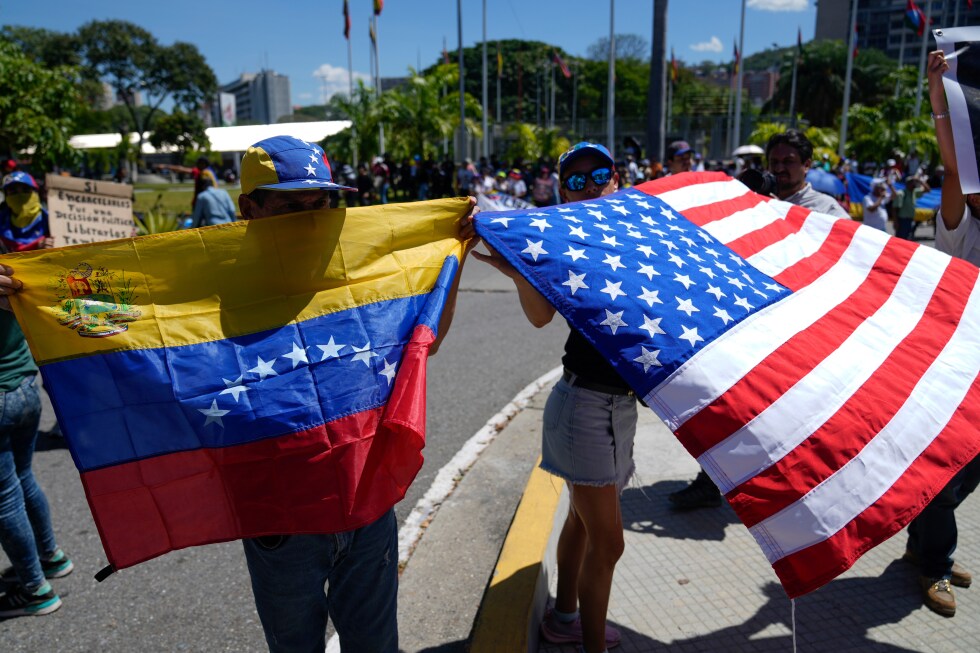
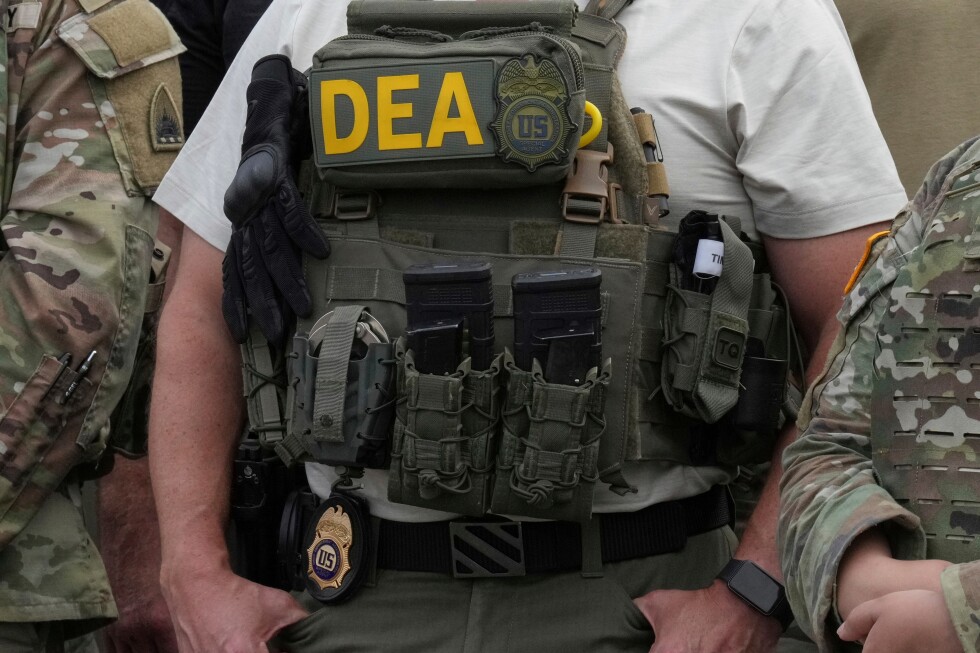
    WASHINGTON — The capture of Venezuelan leader Nicolás Maduro has unveiled a radical transformation in U.S. foreign policy toward Latin America, with President Donald Trump declaring unprecedented American dominance in the Western Hemisphere. The operation, which culminated in Maduro’s perp-walk through DEA headquarters, represents the most aggressive application of what Trump now terms the ‘Donroe Doctrine’—a modern interpretation of the Monroe Doctrine emphasizing overt interventionism.

    This doctrine has been implemented through multifaceted strategies including naval blockades against Venezuelan oil, military strikes against alleged drug traffickers, election meddling in Honduras and Argentina, and extensive use of tariffs and sanctions. The administration’s stated objectives include combating drug trafficking, halting immigration, securing strategic natural resources, and countering Russian and Chinese influence.

    The policy has sharply divided Latin American leaders along ideological lines. Right-wing presidents including Argentina’s Javier Milei, Ecuador’s Daniel Noboa, and Chile’s José Antonio Kast hailed Maduro’s capture as a victory for democracy and regional security. Conversely, left-wing leaders—Brazil’s Lula da Silva, Mexico’s Claudia Sheinbaum, Chile’s Gabriel Boric, and Colombia’s Gustavo Petro—condemned the action as dangerous bullying that violates international law and sovereignty.

    Historical parallels to early 20th-century U.S. interventions have emerged, recalling periods when American troops occupied Central American nations to protect corporate interests and supported repressive military dictatorships during the Cold War. The operation has sparked street protests and uneasy reactions even among some U.S. allies, with El Salvador’s Nayib Bukele remaining uncharacteristically quiet.

    The administration’s broader strategy appears focused on assembling a coalition of ideologically aligned governments across Latin America, leveraging the recent rise of Trump-like leaders who oppose immigration, prioritize security, and reject globalization. Trump explicitly warned uncooperative leaders, suggesting Cuba’s government ‘looks ready to fall,’ criticizing Mexico’s cartel policies, and personally attacking Colombia’s president.

  • Gold price rises after US captures Venezuela’s Maduro

    Gold price rises after US captures Venezuela’s Maduro

    Financial markets witnessed a significant flight to safety as investors reacted to heightened geopolitical uncertainty following the US military operation that resulted in the capture of Venezuelan President Nicolás Maduro. Precious metals emerged as the primary beneficiaries, with gold climbing approximately 1.8% to $4,408 per ounce during Asian trading hours, while silver posted even stronger gains of nearly 3.5%.

    The market movement represents a continuation of gold’s remarkable performance throughout 2025, which marked its strongest annual showing since 1979 with gains exceeding 60%. Despite a minor correction in the final days of December, the precious metal had reached an unprecedented peak of $4,549.71 on December 26th, driven by anticipations of monetary easing, substantial central bank acquisitions, and persistent concerns regarding global instability.

    Contrasting with the precious metals rally, crude oil markets displayed relative stability with minimal price fluctuations. Market participants carefully evaluated the potential implications of Washington’s intervention on global energy supplies. President Donald Trump’s declaration that the US would access Venezuela’s extensive oil reserves and temporarily administer the country’s transition failed to immediately translate into significant oil price movements.

    Industry analysts suggest the operational challenges facing Venezuela’s petroleum infrastructure will likely prevent any substantial near-term impact on global energy markets. According to OCBC Bank investment strategist Vasu Menon, Venezuela’s crude production has been consistently underwhelming for years, currently representing merely 1% of worldwide output, with decades of underinvestment severely degrading extraction capabilities.

    Meanwhile, equity markets across the Asia-Pacific region generally advanced, seemingly unaffected by the Venezuelan developments. Japan’s Nikkei 225 index surged 2.6% on its first trading session of the year, bolstered by newly released data indicating stabilized manufacturing activity in December. Major benchmarks in South Korea, Hong Kong, and mainland China similarly trended upward, reflecting market confidence that the Venezuelan situation would remain geographically contained.

    Market analysts attributed the equity gains to continued optimism regarding artificial intelligence technologies and their flow-on effects from Wall Street’s performance, rather than any perceived economic implications from the Caribbean nation’s political upheaval.

  • Cuba says 32 Cuban officers were killed in US action in Venezuela

    Cuba says 32 Cuban officers were killed in US action in Venezuela

    HAVANA — The Cuban government has officially confirmed the deaths of 32 military and police officers during what it described as a U.S. military operation in Venezuela over the weekend. The announcement, delivered through state television on Sunday evening, marks the first official acknowledgment of significant casualties in an ongoing regional conflict.

    According to the Cuban statement, the officers were deployed on an official mission at the explicit request of Venezuela’s government, a long-standing ally of Cuba. The Caribbean nation has consistently provided military and police support to Caracas for years, though the specific nature of this recent operation remains undisclosed.

    The statement praised the fallen personnel, stating they ‘fulfilled their duty with dignity and heroism’ during what was characterized as ‘fierce resistance in direct combat against the attackers or as a result of the bombings of the facilities.’

    In response to the incident, U.S. President Donald Trump acknowledged the casualties during remarks to reporters aboard Air Force One on Sunday evening. ‘You know, a lot of Cubans were killed yesterday,’ President Trump stated. ‘There was a lot of death on the other side. No death on our side.’

    The Cuban government has declared two days of national mourning to honor the deceased officers, highlighting the significant impact of the losses on the island nation.

  • Trump warns new Venezuelan leader as Maduro set to appear in court

    Trump warns new Venezuelan leader as Maduro set to appear in court

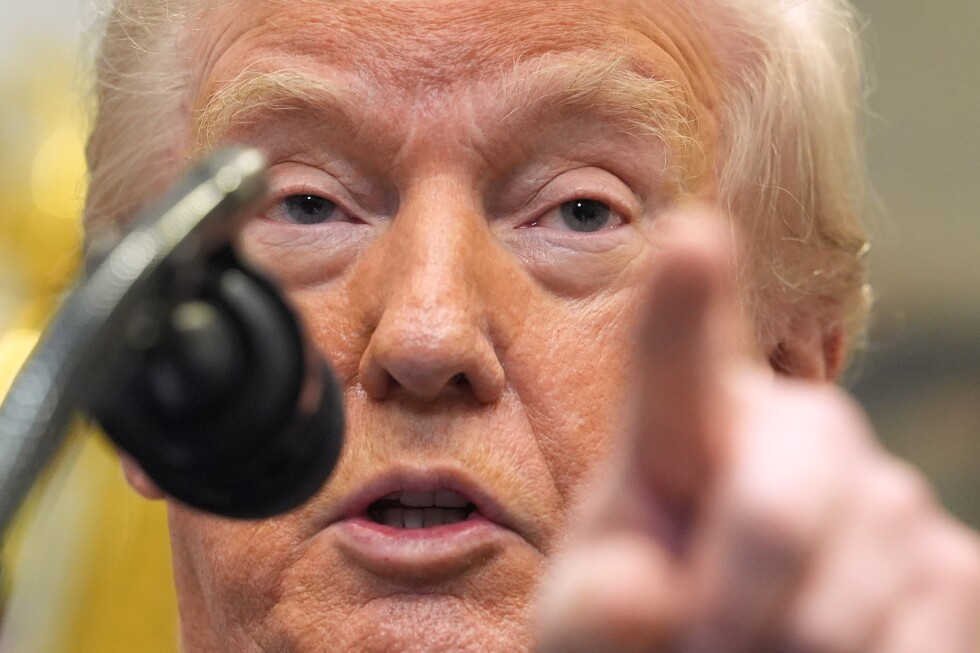
    Former US President Donald Trump has issued a stark warning to Venezuela’s newly appointed interim leader Delcy Rodríguez, cautioning that she could face consequences “probably bigger than Maduro” if she fails to align with US expectations. The threat came as ousted president Nicolás Maduro, captured in a dramatic US military operation, prepared to face New York court proceedings on drug trafficking and weapons charges.

    The extraordinary capture operation unfolded early Saturday when US special forces stormed Maduro’s compound in Caracas, resulting in the detention and transportation of both Maduro and his wife, Cilia Flores, to American soil. The operation involved strikes on military installations including Fuerte Tiuna, one of Venezuela’s largest military bases, and resulted in significant casualties according to Venezuelan officials.

    US Secretary of State Marco Rubio vigorously defended the operation, characterizing it as a “law enforcement action” rather than an act of war. “We are at war against drug trafficking organizations. That’s not a war against Venezuela,” Rubio emphasized during multiple Sunday news program appearances. He asserted that congressional authorization was unnecessary since the operation involved FBI agents making arrests rather than military invasion.

    The political transition in Venezuela saw Rodríguez sworn in as interim president by the nation’s Supreme Court, with full backing from the military establishment. She is scheduled to be formally inaugurated Monday in Caracas. However, the US maintains it does not recognize the legitimacy of the current regime structure.

    International reaction has been sharply critical, with several nations including Brazil, Chile, Colombia, Mexico, Uruguay and Spain condemning the US military action as “an extremely dangerous precedent for peace and regional security.” They expressed particular concern about external control that threatens regional stability and violates international law.

    Domestically, Democratic lawmakers have denounced the operation as an unauthorized act of war. House Minority Leader Hakeem Jeffries and Senate Minority Leader Chuck Schumer have vowed to support legislation prohibiting further presidential action in Venezuela without congressional approval, arguing that such regime change operations historically cost American lives and treasure.

    The Cuban government, a longstanding socialist ally of Maduro, announced two days of national mourning for 32 “brave Cuban combatants” killed during the operation, further escalating regional tensions surrounding this unprecedented intervention.