标签: South America

南美洲

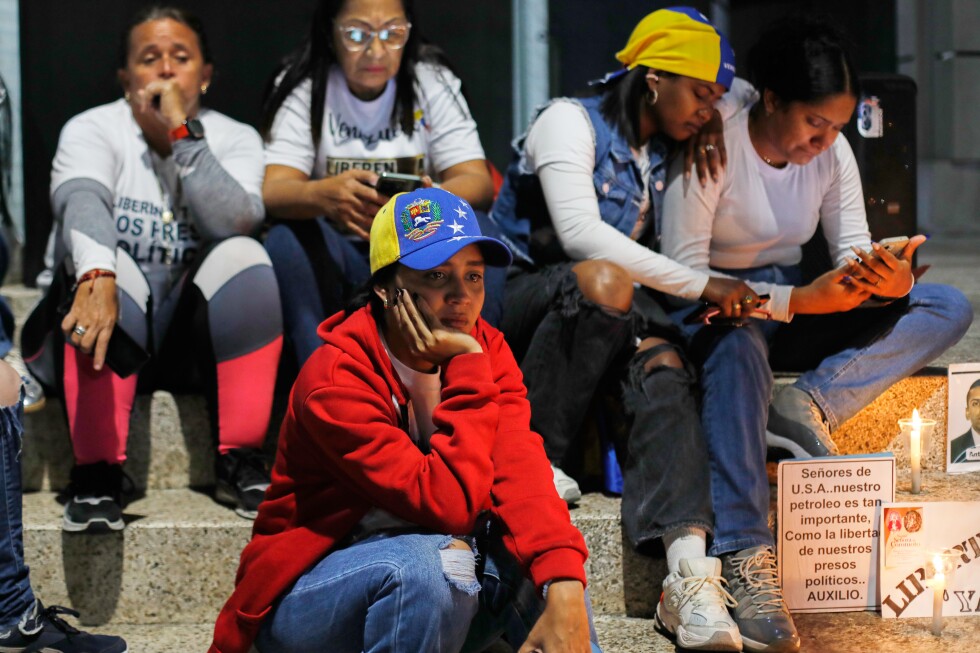
  • Fear and uncertainty: Venezuelans face up to future without Maduro

    Fear and uncertainty: Venezuelans face up to future without Maduro

    Venezuela remains gripped by profound uncertainty following the dramatic seizure of President Nicolás Maduro by United States forces. The operation, which resulted in dozens of casualties including 32 members of Cuban security forces according to Cuban officials, has created a complex and divided national response.

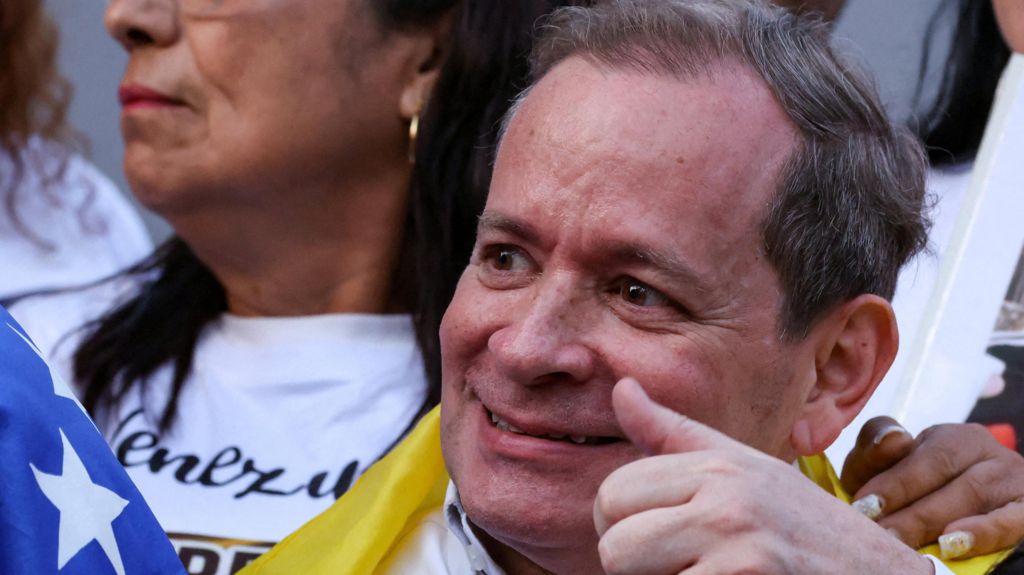
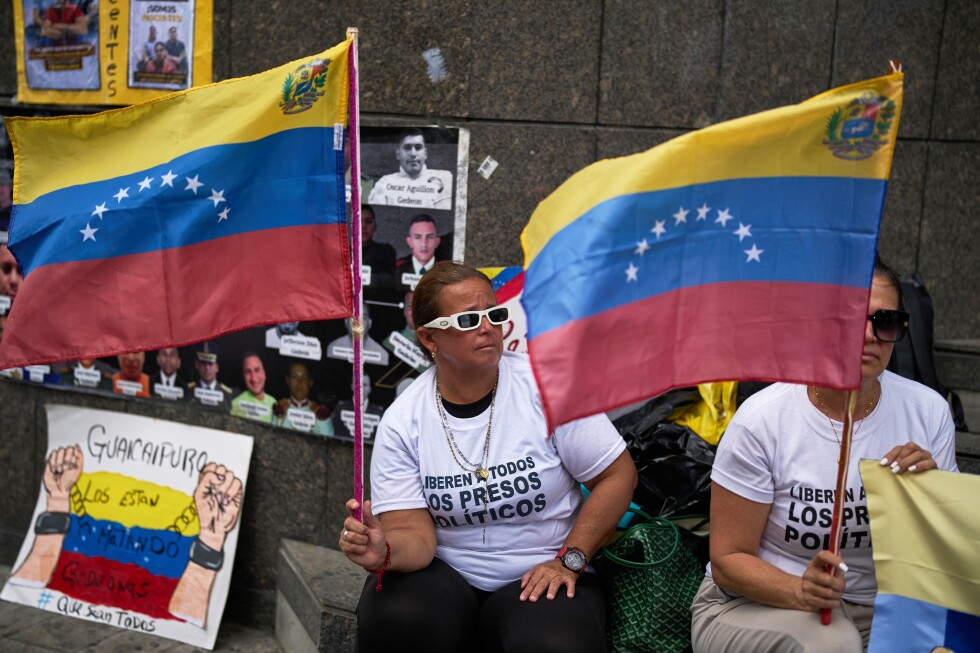
    In Caracas, student Marcelo represents many Venezuelans who cautiously welcome Maduro’s capture but refrain from public celebration due to safety concerns. ‘The majority of Venezuelans are very happy for what happened,’ Marcelo told BBC, noting that Maduro’s allies remain in power despite his capture. This sentiment is echoed by an opposition activist from Maracaibo who acknowledged the tragic loss of life but expressed relief that ‘the man they took away has done a lot of harm.’

    However, substantial support for Maduro persists among segments of the population. Rosa Contreras, 57, described feeling ‘humiliated’ by the ease with which US forces captured Venezuela’s leader. She found inspiration in images of Maduro waving upon arrival in the US, interpreting it as a message to ‘stand tall and keep going.’

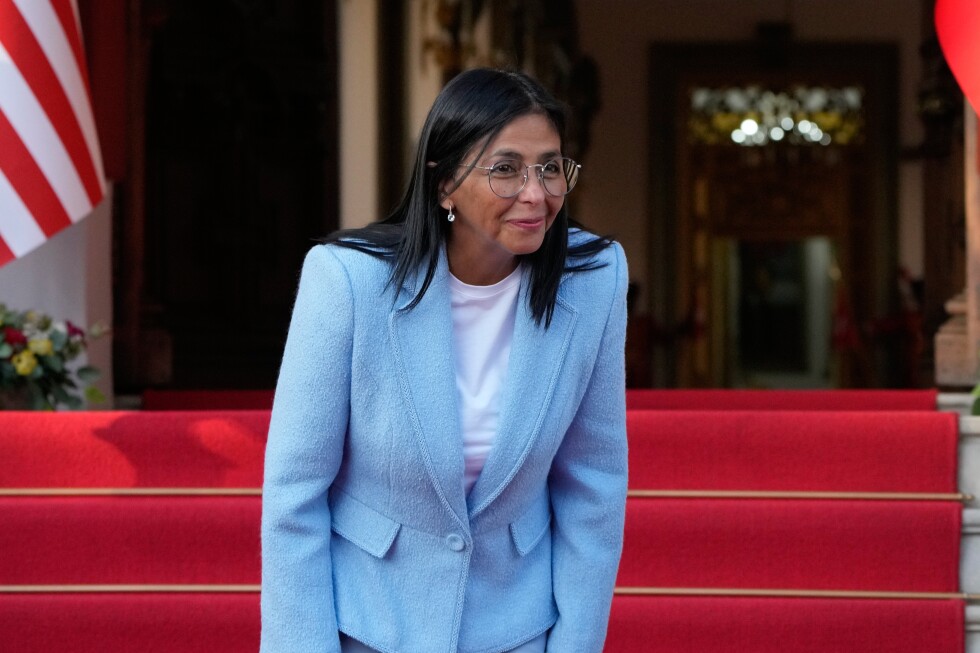
    The political transition has seen Vice President Delcy Rodríguez, Maduro’s closest lieutenant, assume interim power. Under her leadership, security forces have intensified street patrols and detained journalists, creating an atmosphere of apprehension. A 34-year-old entrepreneur reported military presence on every corner and armed civilian groups supporting the government, generating widespread fear among citizens.

    Economic concerns continue to plague ordinary Venezuelans, with reports of staple food prices skyrocketing—cornflour tripling in cost and bread increasing by approximately 30%. Many supermarkets now feature military guards as owners fear theft and robbery amid the instability.

    The future remains particularly uncertain as President Trump has not ruled out additional military action. Gelén Correa, a government social program worker, defiantly stated that Venezuelans would be ‘armed to the teeth’ against any further US incursions.

    Despite the dramatic change in leadership, some Venezuelans like 60-year-old José doubt meaningful change will occur, noting that ‘they took the leader out but the regime is the same.’ Millions who fled Venezuela during Maduro’s rule await signs of genuine political transformation before considering return, hoping for an end to Chavismo—the socialist movement established by Hugo Chávez.

  • US Christian leaders minister to an anxious diaspora with Venezuela’s future in flux

    US Christian leaders minister to an anxious diaspora with Venezuela’s future in flux

    Religious leaders across Venezuela and its diaspora communities are calling for prayerful reflection and reconciliation following the dramatic capture of former leader Nicolás Maduro by U.S. forces. The development has triggered complex reactions among Venezuelan communities worldwide, particularly within the United States where approximately 8 million citizens have fled since 2014.

    In South Florida, home to the nation’s largest Venezuelan expatriate community, spontaneous celebrations erupted with flag-waving demonstrations following Saturday’s military operation. However, beneath the surface celebrations lies profound uncertainty about the country’s future trajectory.

    Miami Archbishop Thomas Wenski, ministering to the significant Venezuelan population in his diocese, acknowledged the mixed emotions prevailing within communities. “People are happy because Maduro is out, but there’s still a lot of uncertainty,” Wenski stated in an interview with The Associated Press. He particularly highlighted concerns for those whose temporary protective status in the U.S. has recently been revoked, noting their anxiety about returning without genuine political transformation in Venezuela.

    The Catholic Church, which maintained tense relations with both Maduro and his predecessor Hugo Chávez, now sees an opportunity for renewed influence. Wenski emphasized the Church’s unique position as “perhaps the only institution that is independent of the government” capable of courageously addressing national issues. He referenced recent tensions exemplified by Cardinal Baltazar Porras, an outspoken government critic who had his passport confiscated by Venezuelan authorities.

    In Doral, Florida—nicknamed “Doralzuela” for its substantial Venezuelan population—Sunday services focused on prayers for peaceful transition. Reverend Israel Mago of Our Lady of Guadalupe urged congregants to pray for “a fair and peaceful transition in Venezuela, so peace and justice can reign.” Simultaneously, evangelical pastor Frank López of Jesus Worship Center expressed gratitude toward U.S. leadership while envisioning freedom spreading throughout the region.

    Similar gatherings occurred in Philadelphia, where Venezuelan communities organized special services at the Cathedral Basilica of Saints Peter and Paul. Arianne Bracho, vice president of Casa de Venezuela Philadelphia, described the emotional gathering as essential for “reaffirming our hope, our faith, to call on tranquility and calm.” Like many diaspora Venezuelans with family scattered worldwide due to prolonged crisis, Bracho acknowledged conflicted emotions about the necessary but painful transition.

    The religious response highlights how faith institutions are providing crucial emotional and spiritual anchoring during this period of geopolitical upheaval, while cautiously advocating for democratic processes and national reconciliation.

  • Trump leaves Venezuela’s opposition sidelined and Maduro’s party in power

    Trump leaves Venezuela’s opposition sidelined and Maduro’s party in power

    In an unprecedented military operation, U.S. forces have extracted Venezuelan authoritarian leader Nicolás Maduro from his Caracas residence, transporting him to New York to face drug trafficking charges. However, the anticipated democratic transition has stalled as President Donald Trump unexpectedly endorsed Maduro’s vice president, Delcy Rodríguez, to assume control rather than supporting the internationally recognized opposition.

    The development represents a devastating setback for Venezuela’s opposition movement, which had spent years preparing for Maduro’s removal with bipartisan U.S. support. Instead of installing opposition leadership, the Trump administration has chosen to work with Rodríguez, a key figure from Maduro’s repressive regime.

    Most prominent opposition leaders, including Nobel Peace Prize laureate María Corina Machado, remain either imprisoned or in exile. Machado, despite being the legitimate winner of the 2024 presidential election according to detailed tally sheets and international recognition, was barred from running by Maduro’s government and ultimately represented by proxy candidate Edmundo González Urrutia.

    Trump publicly expressed skepticism about Machado’s leadership capabilities, stating she lacks sufficient domestic support and respect. Ironically, Machado’s consistent praise for Trump—including dedicating her Nobel Prize to him and supporting aggressive U.S. policies toward Venezuelan migrants—has diminished her popularity at home.

    Constitutional uncertainties cloud Venezuela’s political future. While the constitution mandates elections within 30 days when a president becomes permanently unavailable, Maduro loyalists in the Supreme Court have declared his absence temporary, allowing Rodríguez to assume power for up to 90 days, extendable to six months with legislative approval.

    Secretary of State Marco Rubio attempted to clarify Trump’s controversial statement about the U.S. “running” Venezuela, emphasizing instead that Washington would leverage control over Venezuela’s oil industry—home to the world’s largest proven crude reserves—to force policy changes.

    The opposition now faces monumental challenges: both Machado and González remain in exile, while Rodríguez consolidates power among ruling party factions. Experts warn that bypassing the legitimate opposition movement risks damaging Venezuela’s democratic spirit and humiliating citizens who voted overwhelmingly for change.

  • Protest-hit Iran warily watches the US after its raid on Venezuela

    Protest-hit Iran warily watches the US after its raid on Venezuela

    DUBAI, United Arab Emirates — A palpable sense of anxiety has permeated Iran’s political landscape following the United States military’s seizure of Venezuelan President Nicolás Maduro. While Tehran has officially condemned the operation against its longstanding ally, unofficial conversations reveal growing apprehension that similar tactics could be employed against the Islamic Republic’s leadership, including 86-year-old Supreme Leader Ayatollah Ali Khamenei.

    This heightened paranoia intersects with existing concerns among Iranians regarding potential Israeli military actions, reminiscent of June’s 12-day conflict that resulted in significant losses including high-ranking military officials and nuclear scientists. The memory of Operation Eagle Claw—the failed 1980 U.S. special forces mission to rescue hostages in Tehran—further compounds these security anxieties.

    Analysts note crucial distinctions that complicate any potential intervention scenario. Iran possesses roughly double Venezuela’s territorial size, maintains more robust military capabilities, and operates under a complex political structure where the paramilitary Revolutionary Guard answers directly to Khamenei. Farzin Nadimi, senior fellow at the Washington Institute for Near East Policy, warns that hardliners could respond with assassinations, cyberattacks, and assaults on Middle Eastern shipping routes if threatened.

    The international community has responded with mixed reactions. Israeli opposition leader Yair Lapid suggested Iran’s regime should ‘pay close attention’ to Venezuela’s developments, while Prime Minister Benjamin Netanyahu acknowledged the protest movements within Iran. President Donald Trump previously warned that the U.S. would ‘come to their rescue’ if Iran violently suppressed protests.

    Meanwhile, U.S. politicians have openly speculated about regime change possibilities. Representative Marjorie Taylor Greene connected the Venezuela operation to potential oil supply control ahead of ‘the next obvious regime change war in Iran,’ while Senator Lindsey Graham publicly donned a ‘Make Iran Great Again’ hat during a Fox News segment.

    Even regional rivals are monitoring the situation closely. Ghassan Charbel, editor-in-chief of Saudi-owned Asharq Al-Awsat newspaper, described Maduro’s capture as a ‘brutal message’ to Tehran’s leadership, suggesting the psychological impact on Khamenei would be particularly devastating.

  • Opposition leader Machado says she should be in charge of Venezuela

    Opposition leader Machado says she should be in charge of Venezuela

    Venezuelan opposition figure María Corina Machado has asserted her legitimate right to govern the nation following the U.S.-orchestrated removal of President Nicolás Maduro. In an exclusive interview with CBS News, the Nobel Peace Prize laureate declared her readiness to lead, stating her movement possesses a popular mandate from the disputed 2024 elections.

    Machado expressed profound gratitude toward U.S. President Donald Trump for demonstrating ‘leadership and courage’ in authorizing military operations that resulted in Maduro’s capture. She characterized the intervention as a pivotal advancement toward reestablishing democratic governance, prosperity, and legal order in Venezuela.

    Despite her appreciation for Trump’s actions, the opposition leader faces skepticism from the White House. President Trump publicly questioned Machado’s viability as a successor, noting her apparent lack of domestic support and respect, despite acknowledging her personal qualities.

    Machado simultaneously dismissed the legitimacy of interim President Delcy Rodríguez, Maduro’s former vice-president. She accused Rodríguez of being a principal architect of state repression against Venezuelan civilians, asserting that both domestic and international observers recognize her controversial legacy.

    Rodríguez, who assumed office following Maduro’s detention, has confronted these allegations while denying U.S. hegemony over Venezuelan sovereignty. In a nationally televised address, she emphasized that ‘no external agent governs Venezuela,’ directly countering claims of American control.

    The political landscape remains fraught with tension as competing factions vie for authority, international forces weigh in, and the population awaits resolution to the prolonged power struggle.

  • Rapper Tekashi 6ix9ine reports to NYC lockup where Nicolás Maduro and Luigi Mangione await trial

    Rapper Tekashi 6ix9ine reports to NYC lockup where Nicolás Maduro and Luigi Mangione await trial

    In a dramatic spectacle streamed live to his followers, controversial rapper Tekashi 6ix9ine (legal name Daniel Hernandez) surrendered himself Tuesday at Brooklyn’s Metropolitan Detention Center (MDC), beginning another prison term. The 29-year-old artist arrived in a luxury vehicle accompanied by internet personality Adin Ross and a camera crew, turning himself in for a three-month sentence related to supervised release violations.

    The Brooklyn facility represents a convergence of high-profile detainees, currently housing Venezuelan President Nicolás Maduro and his wife Cilia Flores alongside Luigi Mangione, the accused murderer of United Healthcare CEO Brian Thompson. This institution has developed notorious status within the federal prison system, with multiple judges describing conditions as “hell on earth” due to persistent violence and substandard facilities.

    MDC Brooklyn has historically contained numerous infamous inmates, including R&B singer R. Kelly, music mogul Sean “Diddy” Combs, and Ghislaine Maxwell, longtime associate of financier Jeffrey Epstein. The facility remains New York City’s sole federal jail despite its troubled reputation.

    Hernandez’s legal troubles stem from a 2019 racketeering case involving the Nine Trey Gangsta Bloods gang, for which he received a two-year prison sentence followed by five years supervised release. His current incarceration results from discovered narcotics and an assault incident—violating his post-release conditions. Prosecutors documented small quantities of cocaine and ecstasy discovered during a Miami home raid, along with Hernandez physically attacking a Florida mall patron who taunted him about cooperating with authorities.

    Despite his legal representatives not immediately commenting on Tuesday’s surrender, previous statements indicated the rapper anticipates completing his sentence to resume musical activities. Hernandez initially gained fame through his 2017 single “Gummo” but subsequently became entangled in serious criminal proceedings despite his cooperation with federal investigations.

  • How Delcy Rodríguez courted Donald Trump and rose to power in Venezuela

    How Delcy Rodríguez courted Donald Trump and rose to power in Venezuela

    MIAMI — In 2017, as Donald Trump prepared to assume the U.S. presidency, Venezuelan Foreign Minister Delcy Rodríguez identified a strategic opportunity. With Nicolas Maduro’s socialist regime facing severe economic collapse and widespread hunger, Rodríguez orchestrated a $500,000 donation from Citgo—Venezuela’s state-owned oil subsidiary—to Trump’s inauguration committee. Simultaneously, she engaged Trump’s former campaign manager as a Citgo lobbyist, cultivated relationships with Republican legislators, and pursued high-level meetings with Exxon leadership in a bold attempt to attract American investment.

    The diplomatic offensive ultimately failed when Trump, influenced by Senator Marco Rubio, adopted Venezuelan democracy restoration as a primary foreign policy objective following Maduro’s suppression of political opponents. However, Rodríguez’s efforts established her as a significant figure within U.S. political and business circles, facilitating her remarkable ascent to Venezuela’s interim presidency.

    According to interviews with ten former U.S. and Venezuelan officials and business leaders familiar with Rodríguez, she is characterized as intellectually sharp, occasionally charming, but fundamentally ruthless toward dissent. Most sources requested anonymity due to concerns about retaliation.

    Rodríguez’s political trajectory was shaped by childhood tragedy. In 1976, her father—a socialist leader—died in police custody after being detained for questioning regarding a kidnapped American businessman. This event radicalized both Rodríguez and Maduro, creating anti-American sentiment that would persist throughout their careers.

    Her initial political advancement under Hugo Chávez was uneven. During a 2006 international tour, Chávez reportedly expelled her from the presidential aircraft in Moscow due to scheduling failures, subsequently dismissing her with accusations of arrogance and incompetence.

    Maduro revived Rodríguez’s career following Chávez’s 2013 death. Her Western education—legal studies in Britain and France—and English fluency distinguished her within Chavismo’s factional landscape. She cultivated relationships with Venezuela’s ‘boligarch’ elite, including media magnate Raul Gorrín, who collaborated on back-channel diplomacy with Trump administration officials until facing U.S. money laundering charges.

    As vice president from 2018, Rodríguez assumed control over significant portions of Venezuela’s oil economy, recruiting international financial experts and pursuing debt restructuring despite crippling U.S. sanctions. Her consolidation of power included jailing former Oil Minister Tareck El Aissami in a 2024 anti-corruption campaign.

    Following Maduro’s dramatic capture, Trump has alternated between praising Rodríguez as a ‘gracious’ partner and threatening her with similar consequences unless she maintains ruling party control and grants the U.S. ‘total access’ to Venezuela’s oil reserves. Notably absent from discussions are constitutional requirements for elections within 30 days of a presidential vacancy.

    Some analysts compare Rodríguez to China’s Deng Xiaoping for her pragmatic leadership style. Hans Humes of Greylock Capital Management suggests her operational experience makes her preferable to opposition exiles who might provoke Iraq-style instability. However, former U.S. Special Envoy Elliott Abrams contends that sustainable democratic transition remains impossible while Chavismo retains power.

  • What’s next in deposed Venezuela leader Nicolás Maduro’s criminal case

    What’s next in deposed Venezuela leader Nicolás Maduro’s criminal case

    NEW YORK — The initial U.S. court appearance of Nicolás Maduro marked the commencement of a protracted legal battle that could potentially result in lifelong incarceration for the Venezuelan leader. Maduro and his wife, Cilia Flores, faced arraignment Monday on multiple federal charges including narcoterrorism conspiracy and cocaine importation schemes, following their dramatic capture by U.S. forces in Caracas during a nighttime operation.

    During the hearing before Judge Alvin Hellerstein, Maduro defiantly asserted his continued presidency of Venezuela and characterized his apprehension as an unlawful kidnapping, declaring himself a prisoner of war. Both defendants entered not guilty pleas to all charges, which carry potential life sentences.

    The Trump administration defended the extraordinary extraterritorial operation as a justified law enforcement action against a leader prosecutors first indicted six years ago. The case presents unprecedented legal questions regarding sovereignty and immunity that may require extensive appellate review.

    Legal experts anticipate several critical developments in the coming months:

    Bail considerations remain theoretically possible but practically unlikely given the severity of charges and flight risk assessments. Historical precedents including Manuel Noriega’s case suggest pretrial detention will be maintained.

    Medical attention has been requested for Flores, who allegedly sustained significant injuries during capture requiring radiographic evaluation for potential fractures. Maduro’s counsel also indicated unspecified health concerns requiring monitoring while detained at the Metropolitan Detention Center.

    Consular access complications have emerged due to Maduro’s own 2019 order closing Venezuelan diplomatic facilities in the U.S. This creates practical challenges for legal fee payments given longstanding U.S. sanctions against both defendants.

    Substantial legal challenges are anticipated regarding sovereign immunity claims and the legality of Maduro’s capture. The defense has expanded to include Bruce Fein, a former Reagan administration Justice Department official specializing in constitutional and international law.

    The next hearing is scheduled for March 17 as both sides prepare for what may become a landmark case in international law and cross-border law enforcement operations.

  • BBC looks into the relationship between Cuba and Venezuela

    BBC looks into the relationship between Cuba and Venezuela

    The BBC has initiated a comprehensive examination of the intricate bilateral relationship between Venezuela and Cuba, with on-the-ground correspondent Will Grant providing expert analysis on this geopolitically significant alliance. This partnership, often described as a cornerstone of Latin American leftist solidarity, represents one of the most strategically important relationships in the Western Hemisphere.

    The Venezuela-Cuba dynamic operates through a well-established framework of reciprocal exchange that has evolved over decades. Venezuela provides Cuba with substantially discounted petroleum resources, which serve as a critical economic lifeline for the Caribbean nation amidst ongoing trade restrictions. In return, Cuba dispatches thousands of medical professionals, educational specialists, and security advisors to Venezuela, creating an interdependence that has weathered numerous political and economic challenges.

    This symbiotic relationship traces its origins to the personal rapport between the late Venezuelan President Hugo Chávez and Cuban revolutionary leader Fidel Castro, whose shared ideological vision forged an alliance that has persisted through leadership transitions in both nations. The partnership has consistently defied conventional diplomatic norms, maintaining resilience despite fluctuating global oil prices, international sanctions, and changing political landscapes across Latin America.

    The BBC’s investigation comes at a pivotal moment as both nations navigate complex economic circumstances and evolving international relations. The analysis provides crucial insights into how this bilateral relationship continues to influence regional politics, economic cooperation models, and geopolitical alignments throughout Latin America and beyond.

  • Trump says his voters loved the Venezuela attack — here’s what they really think

    Trump says his voters loved the Venezuela attack — here’s what they really think

    The dramatic capture of Venezuelan leader Nicolás Maduro by U.S. forces has ignited complex reactions within President Trump’s political base, revealing fissures in the “America First” coalition. While initial applause greeted the surgical operation that extracted Maduro from a military compound to a Brooklyn cell, underlying tensions emerged regarding long-term foreign entanglements.

    The raid represents a geopolitical pivot for an administration that campaigned against nation-building abroad. Trump supporters from Michigan to Mississippi expressed admiration for the operation’s precision but voiced concerns about potential escalation. Aaron Tobin, a Detroit-area supporter, envisioned cinematic potential in the raid while acknowledging the narrative remains in its opening chapter.

    Contrasting perspectives emerged across battleground states. In Colorado, Travis Garcia celebrated the capture of a “dictator constantly sending drugs our way,” seeing it as validation of Trump’s strong leadership. Yet nearby, retired engineer Patrick McCans noted the intervention contradicted campaign promises, preferring diplomatic solutions despite acknowledging possible justification.

    Pennsylvania supporters demonstrated cautious optimism. Retired firefighter Kevin Carey recalled the 1979 Iran hostage crisis as a cautionary tale, while 88-year-old Ron Soto expressed unwavering faith in Trump’s ability to “straighten that country out.” The operation’s clinical execution drew widespread praise, though many emphasized their support depended on avoiding prolonged conflict.

    The episode forced supporters to reconcile Trump’s non-interventionist rhetoric with expanding hemispheric ambitions. Mississippi electrician apprentice Chase Lewis typified this conflict, praising Venezuelan liberation while worrying about military deployment costs and potential mission creep. Even enthusiastic supporters like Michigan’s Tobin conditioned further support on maintaining casualty-free operations.

    As the administration faces challenges from Epstein file controversies to rising living costs, the Venezuela operation represents both a unifying victory and a potential stress test for Trump’s coalition. The coming weeks will determine whether this bold action strengthens political bonds or exposes fundamental contradictions in the America First doctrine.