标签: South America

南美洲

  • Supporters of Venezuelan opposition leader María Corina Machado march in cities worldwide

    Supporters of Venezuelan opposition leader María Corina Machado march in cities worldwide

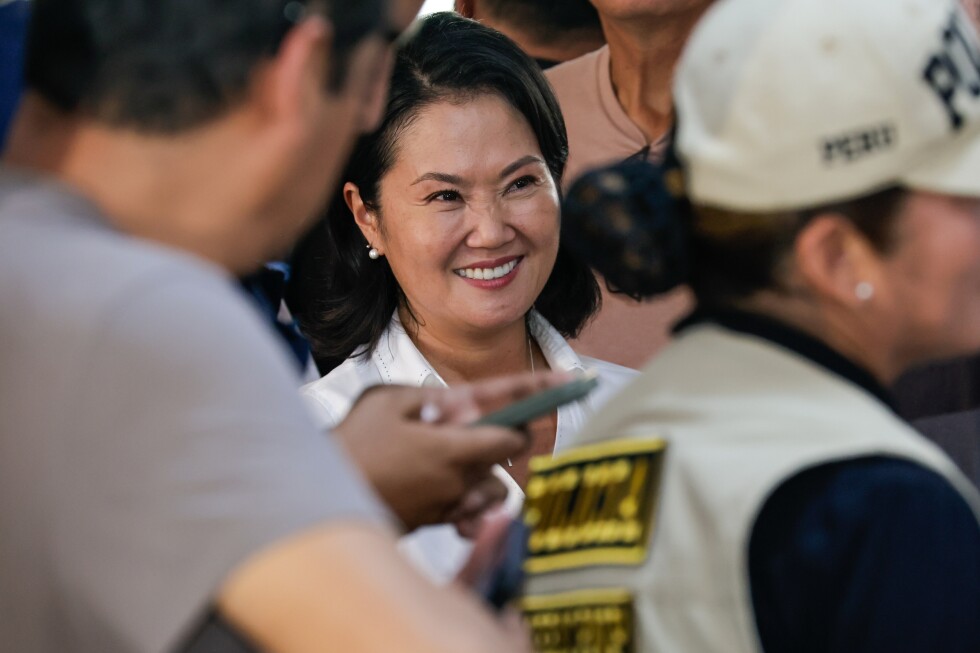
    CARACAS — International supporters of Venezuelan opposition figure María Corina Machado organized coordinated demonstrations across global cities on Saturday, leveraging her recent Nobel Peace Prize recognition to amplify calls for democratic reform in Venezuela. The gatherings occurred as escalating geopolitical tensions involving U.S. military deployments in the Caribbean region add complexity to Venezuela’s prolonged political stalemate.

    Protest marches materialized in urban centers including Madrid and Utrecht, with organizers anticipating activities in over 80 cities worldwide. These displays of solidarity aim to transform diplomatic recognition into tangible pressure for democratic transition in the South American nation, where President Nicolás Maduro maintains power despite widespread international criticism.

    The Nobel Committee’s October 10th selection honored Machado’s persistent advocacy for democratic principles, describing her as a symbolic figure “preserving democracy’s flame amid encroaching darkness.” This accolade arrives amidst heightened tensions, with the Trump administration’s military positioning in the Caribbean being interpreted by Maduro’s government as preparation for potential intervention.

    In a pre-recorded message disseminated via social media platforms, Machado addressed supporters: “We are experiencing moments that test our resilience, convictions, and organizational capacity. Our nation requires heightened dedication now that our years of struggle and the Venezuelan people’s dignity have received Nobel validation.”

    Machado’s political trajectory reveals the opposition’s challenges. After securing the opposition coalition’s primary victory, the 58-year-old economist was constitutionally barred from challenging Maduro in the 2023 presidential election. Her replacement, political novice Edmundo González, subsequently sought asylum in Spain following Venezuelan judicial authorities issuing an arrest warrant.

    The electoral process preceding Maduro’s controversial July 2024 reelection involved systematic suppression tactics including candidate disqualifications, arbitrary detentions, and documented human rights violations. Maduro commenced his third consecutive six-year term despite opposition claims of electoral manipulation through the National Electoral Council, an institution predominantly staffed by government loyalists.

    Machado’s current whereabouts remain undisclosed since her January 9th brief detention following a sparsely attended Caracas protest. Her organization continues coordinating resistance activities while navigating government suppression measures, positioning the Nobel recognition as both moral validation and strategic leverage in Venezuela’s ongoing political confrontation.

  • How could Canada, US and Mexico fare in their World Cup groups?

    How could Canada, US and Mexico fare in their World Cup groups?

    In a star-studded ceremony held in Washington DC on Friday, the football world received its first glimpse of the group stage landscape for the historic 2026 World Cup. Sporting icons Tom Brady, Shaquille O’Neal, Aaron Judge, and Wayne Gretzky presided over the draw that determined the initial matchups for the expanded 48-team tournament—the largest in World Cup history.

    The three host nations—Canada, Mexico, and the United States—each secured relatively favorable paths to the knockout stages, benefiting from their automatic placement in Pot 1 alongside the world’s top-ranked teams. The draw structure provided particular advantage in avoiding several formidable European and African opponents that could have complicated their advancement prospects.

    Mexico faces perhaps the most challenging group among the hosts, drawing South Korea—a team that remained undefeated throughout Asian qualifying while conceding just eight goals in sixteen matches. El Tri will open the tournament on June 11th at the iconic Estadio Azteca in Mexico City against South Africa, who narrowly edged Nigeria in African qualification. The group will be completed by one of four European teams: Denmark, North Macedonia, Czech Republic, or Republic of Ireland.

    Canada’s Group B presents a mix of opportunities and challenges. The Canadians will face Switzerland, who maintained an unbeaten record in qualifying, alongside 2018 host Qatar. The final group spot awaits the winner of a European playoff featuring four-time champion Italy—potentially the most daunting opponent—along with Northern Ireland, Wales, and Bosnia and Herzegovina.

    The United States emerged with the most favorable draw of the hosting nations, grouped with Australia (the lowest-ranked team in Pot 2) and Paraguay. The Americans previously defeated both teams in friendly matches earlier this year, providing psychological advantage. The final Group D slot will be filled by one of Turkey, Romania, Slovakia, or Kosovo from UEFA’s qualification pathway.

    The expanded format marks a significant evolution from the 24-team tournament when the U.S. last hosted in 1994, and the 32-team structure maintained since France 1998. With all three host nations receiving draws that suggest realistic advancement possibilities, the stage is set for unprecedented North American engagement throughout the tournament’s group phase.

  • Watch: Flames and thick smoke engulf plane in Brazil after fire breaks out

    Watch: Flames and thick smoke engulf plane in Brazil after fire breaks out

    A dramatic emergency unfolded on the tarmac of São Paulo’s international airport when a significant fire erupted from ground service equipment, rapidly spreading to engulf a stationary passenger aircraft. The incident, characterized by intense flames and billowing thick black smoke, triggered an immediate high-alert response from airport emergency services.

    Swift-acting ground crews and flight personnel executed a full-scale emergency evacuation protocol, successfully shepherding all 169 passengers to safety without physical injury. The rapid containment and evacuation response averted a potential catastrophe, though the event caused substantial operational disruptions at one of Brazil’s busiest aviation hubs.

    Aviation authorities have launched a comprehensive investigation into the root cause of the equipment malfunction that sparked the blaze. Preliminary assessments suggest the fire originated from refueling apparatus or auxiliary power units stationed near the aircraft, though official findings remain pending complete forensic analysis. The affected airline has implemented contingency plans to accommodate displaced passengers while assessing damage to the aircraft, which appears to have sustained substantial exterior damage from the intense heat and flames.

  • Argentina’s President Milei to issue a dollar bond, eyeing a return to global markets

    Argentina’s President Milei to issue a dollar bond, eyeing a return to global markets

    BUENOS AIRES — In a significant financial maneuver, Argentina’s libertarian government under President Javier Milei has unveiled plans to issue dollar-denominated sovereign bonds for the first time since 2016. This strategic move aims to facilitate the nation’s reentry into international capital markets while addressing imminent debt obligations exceeding $4.2 billion due in January.

    The Economy Ministry detailed that the new bond issuance, structured under Argentine law and targeting both domestic and foreign investors, carries a 6.5% coupon rate with a maturity date set for November 2029. While the exact offering size remains undisclosed, the initiative reflects growing market confidence in Milei’s economic agenda following his party’s decisive midterm electoral victory.

    Economy Minister Luis Caputo emphasized that this approach enables debt settlement without depleting critical foreign reserves, bypassing the need for congressional approval due to its domestic legal framework. He attributed this financial reopening to the administration’s successful efforts in controlling budget deficits and removing capital controls that previously isolated Argentina’s debt markets.

    This bond issuance represents a milestone in Milei’s ambitious economic overhaul initiated upon his 2023 inauguration. The radical economist-turned-president has pursued aggressive measures to combat hyperinflation, stabilize the faltering economy, and reverse decades of left-wing populist spending policies that led to nine sovereign defaults—most recently in 2020.

    Despite securing a $20 billion IMF loan earlier this year, Argentina faces challenges in meeting the fund’s year-end reserve target of approximately $5 billion. IMF spokesperson Julie Kozack acknowledged the difficulties, urging authorities to implement consistent monetary and exchange frameworks to support reserve accumulation.

    Market analysts remain cautiously optimistic. Fernando Marull, an Argentine economist, likened the strategy to “refinancing a loan rather than paying entirely from scarce reserves.” However, concerns persist regarding the bond’s attractiveness to foreign investors due to its local legal jurisdiction and ongoing vulnerabilities in Argentina’s economic framework.

    Juan Battaglia, chief economist at Cucchiara brokerage, noted that while the government has made progress in normalizing financial accounts, “there is still a long way to go” for a full return to international markets. The success of this offering will significantly influence Argentina’s ability to manage its substantial $40 billion IMF debt and pursue sustainable economic growth.

  • What to know as lawmakers disclose vivid new details of US boat strikes

    What to know as lawmakers disclose vivid new details of US boat strikes

    A controversial U.S. military operation targeting drug smugglers in international waters near Venezuela has ignited intense congressional scrutiny and raised profound legal questions about the Trump administration’s expansion of military authority. According to classified briefings obtained by congressional oversight committees, American forces conducted a secondary missile strike on September 2nd that killed two survivors clinging to wreckage of a vessel allegedly carrying cocaine.

    The operation, which represents the military’s first foray into destroying drug-running vessels, has resulted in approximately 87 fatalities across 22 separate engagements. Navy Admiral Frank ‘Mitch’ Bradley, who authorized the controversial follow-up strike, testified that the action aimed to prevent recovery of narcotics rather than target survivors. However, Democratic lawmakers described the incident as ‘deeply concerning,’ with Representative Adam Smith characterizing the victims as ‘drifting in the water until the missiles come and kill them.’

    At the heart of the constitutional debate lies a 40-page legal opinion from the Justice Department’s Office of Legal Counsel, dated September 5th—three days after the initial attack. This document reclassifies drug traffickers as terrorist threats, applying counterterrorism rules of engagement to narcotics interdiction operations. The administration has classified this legal justification, withholding it from most military lawyers until mid-November.

    The operation’s legal foundation remains particularly contentious as Congress never explicitly authorized military action against drug cartels. Democratic senators have demanded full disclosure of the legal argument and operational orders, with Senator Jack Reed calling the briefing ‘his worst fears confirmed.’ Meanwhile, Republican Senator Tom Cotton defended the strikes, suggesting survivors attempting to right the vessel remained legitimate targets.

    Defense Secretary Pete Hegseth’s absence during the critical decision-making phase and the premature retirement of Admiral Alvin Holsey, commander of U.S. forces in Central and South America, have further intensified congressional investigation. The administration continues to defend the operations, announcing another successful drug vessel interception immediately following congressional briefings.

  • A timeline of the US military’s buildup near Venezuela and attacks on alleged drug boats

    A timeline of the US military’s buildup near Venezuela and attacks on alleged drug boats

    A significant U.S. military mobilization is underway in the Caribbean, marking the largest American naval presence in Latin America in decades. The Trump administration has deployed a formidable fleet, including the advanced USS Gerald R. Ford aircraft carrier and multiple guided-missile destroyers, amassing approximately 12,000 personnel in the region under ‘Operation Southern Spear.’

    The official justification for this deployment is an intensified campaign against narcotics trafficking. Since early September, U.S. forces have conducted at least 22 lethal strikes on vessels suspected of smuggling operations, resulting in 87 fatalities. President Trump has characterized these actions as a necessary escalation in an ‘armed conflict’ against drug cartels, asserting that these groups have been formally designated as foreign terrorist organizations.

    However, the campaign has drawn substantial criticism and scrutiny. Venezuelan President Nicolás Maduro condemns the operations as a direct threat to his administration and a pretext for forced regime change. Internally, the strategy faces mounting legal challenges from U.S. lawmakers. Senior Democrats, including Senator Jack Reed, have challenged the legal basis for the strikes, arguing the military lacks authority to ‘hunt down suspected criminals and kill them without trial.’

    The controversy intensified following reports that the initial strike in September involved a follow-on attack targeting survivors. This prompted a Congressional investigation, leading to classified briefings with Navy Admiral Frank ‘Mitch’ Bradley, who oversaw the operations. Simultaneously, international bodies have expressed concern, with the UN human rights chief calling for an investigation and condemning the actions as potential extrajudicial killings.

    Amidst the tension, President Trump has confirmed authorizing CIA covert operations within Venezuela and has hinted at potential land operations, while also suggesting openness to diplomatic discussions with Maduro. The situation remains a volatile nexus of military action, international law debates, and heightened geopolitical tensions in the Western Hemisphere.

  • Bolsonaro’s eldest son says he’ll run for Brazil presidency in 2026

    Bolsonaro’s eldest son says he’ll run for Brazil presidency in 2026

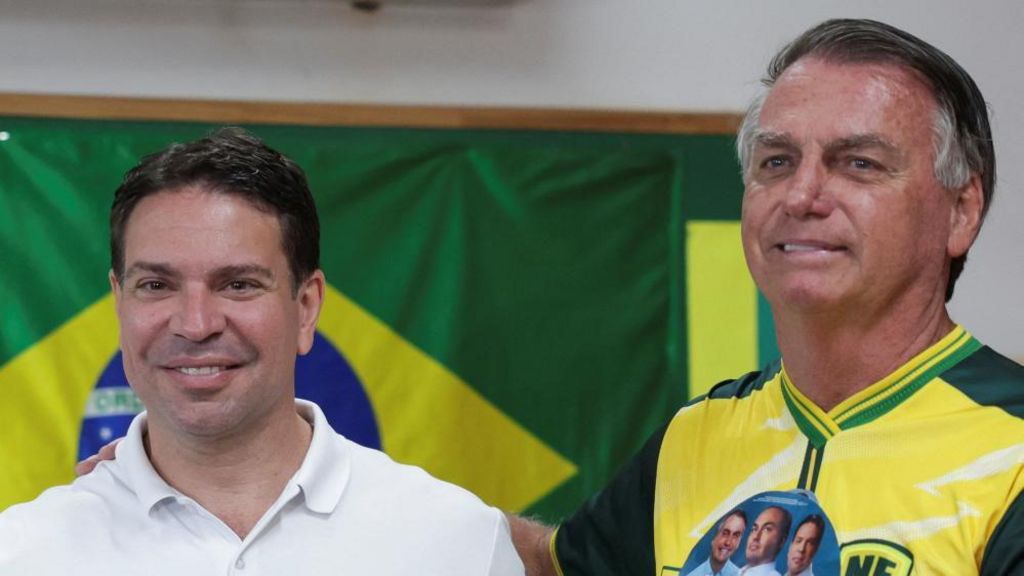
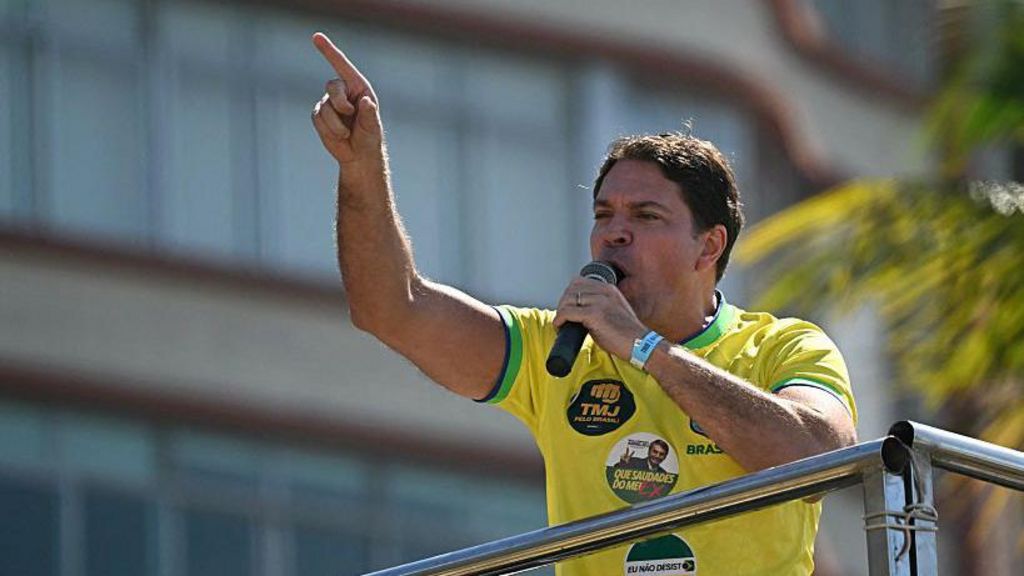
    SAO PAULO — In a significant development within Brazil’s political landscape, Senator Flávio Bolsonaro has declared his intention to contest the 2026 presidential election as the designated representative of his father’s political faction. This announcement comes amidst the ongoing incarceration of former President Jair Bolsonaro, who is currently serving a 27-year prison sentence following convictions related to attempted coup activities.

    The younger Bolsonaro confirmed his political mandate through a social media statement, quoting his father’s decision to entrust him with “continuing our national project.” His office subsequently verified to The Associated Press that he will formally challenge incumbent President Luiz Inácio Lula da Silva, who seeks an unprecedented fourth nonconsecutive term. This confirmation followed Flávio Bolsonaro’s recent prison visitation with his father earlier this week.

    The political succession within Bolsonaro’s Liberal Party had previously been subject to internal debate, with São Paulo Governor Tarcísio de Freitas—a former cabinet member—initially perceived as the natural successor. However, resistance from Bolsonaro’s inner circle ultimately favored the former president’s eldest son as their presidential standard-bearer.

    Despite his imprisonment and electoral disqualification until 2030, Jair Bolsonaro remains a pivotal figure in Brazil’s deeply polarized political environment. Political analysts emphasize that any viable opposition candidate must secure both the substantial electoral base and explicit endorsement of the far-right leader to mount a competitive challenge against President Lula.

    Flávio Bolsonaro, elected senator in 2018 following his tenure as a Rio de Janeiro state legislator, brings his own controversial political history to the campaign. Although previously implicated in embezzlement allegations involving public funds—charges which were ultimately dismissed by courts and which he continues to deny—his presidential bid now positions him at the forefront of Brazil’s ongoing political realignment.

  • Visiting Harvard instructor leaves US after BB-gun incident DHS labeled antisemitic

    Visiting Harvard instructor leaves US after BB-gun incident DHS labeled antisemitic

    A Brazilian law professor’s academic tenure in the United States concluded abruptly this week as Carlos Portugal Gouvêa returned to his home country following the revocation of his visa. The Department of Homeland Security confirmed the departure of the Harvard Law visiting scholar, who faced allegations of discharging a BB gun near a Massachusetts synagogue during Yom Kippur observances in October.

    Immigration and Customs Enforcement authorities apprehended Professor Gouvêa on Wednesday, after which he consented to voluntary departure rather than undergoing formal deportation proceedings. His legal representative, Joseph D. Eisenstadt, verified that his client had arrived in Brazil by Thursday.

    The incident that precipitated these developments occurred on October 1st, when Brookline Police responded to Temple Beth Zion following reports of an armed individual during the holiest day in the Jewish calendar. According to official documents, private security personnel guarding the temple reported hearing multiple shots and observed Gouvêa positioned behind a tree with what appeared to be a rifle. The subsequent confrontation between the professor and responding officers resulted in a physical altercation.

    While Homeland Security officials characterized the episode as an antisemitic attack, Temple Beth Zion issued a statement days after the incident suggesting the shooting appeared unrelated to religious animus. Law enforcement initially indicated that Gouvêa claimed unawareness of both the synagogue’s proximity and the religious significance of the day, stating he had been targeting rodents.

    Legal proceedings saw most charges against Gouvêa dismissed last month, with the professor accepting pretrial probation for six months on a single misdemeanor count of illegally discharging a BB gun. The agreement included restitution payment for damaged property but maintained his not guilty plea. Successful completion of the probation period would result in administrative dismissal of the remaining charge.

    Tricia McLaughlin, Assistant Secretary for Public Affairs at Homeland Security, emphasized that working and studying in the United States constitutes a privilege rather than a right. She stated, ‘There is no room in the United States for brazen, violent acts of anti-Semitism like this. They are an affront to our core principles as a country.’

    Harvard Law School’s website listed Gouvêa as a visiting professor scheduled to teach courses on corruption, inequality, and sustainable capitalism during the fall 2025 semester. The University of São Paulo, where Gouvêa serves as an associate professor, previously issued a statement defending his character and noting his advocacy for human rights and connections to the Jewish community. Harvard University declined to comment on the developing situation.

  • ‘I wanted to unite Jamaicans around the world with a song’

    ‘I wanted to unite Jamaicans around the world with a song’

    In the wake of Hurricane Melissa’s catastrophic passage through Jamaica, a powerful musical response has emerged from the diaspora. Aiesha Barrett, daughter of legendary Wailers bassist Aston Barrett and niece of drummer Carlton Barrett, channeled her emotional response to the devastation into creating an inspirational anthem titled ‘Jamaica Strong’.

    Watching the destruction from afar like millions of other Jamaicans overseas, Barrett felt compelled to contribute through her musical heritage. The track, born from genuine emotion and connection to her homeland, quickly transcended its origins as a personal project. Within days of its unofficial release, the song amassed over one million online views and organically evolved into a symbol of resilience.

    The composition’s significance was formally recognized when it was designated the official anthem for the upcoming Jamaica Strong benefit concert in New York, featuring headliners Shaggy and Sean Paul. The event aims to raise substantial funds for relief efforts while simultaneously boosting morale among affected communities.

    Barrett expressed humble surprise at the song’s impact, noting: ‘I just wanted something to give them some type of hope. The messages I’ve been receiving show people are definitely tearing up – the song is giving them assurance that things will get better.’

    The musical response comes amid staggering recovery challenges. Hurricane Melissa, among the most powerful Atlantic cyclones on record, caused dozens of fatalities, destroyed critical infrastructure including hospitals, and left widespread power outages. The International Monetary Fund estimates damage at $8.8 billion, with $6.7 billion in international recovery funding potentially available over the next three years.

    Beyond institutional support, grassroots efforts have mobilized across global Jamaican communities. Approximately 1.1 million Jamaicans in the United States and hundreds of thousands in the UK with Jamaican heritage have organized supply drives and donation campaigns. The UK government recently increased its aid package from £7.5 million to £8 million.

    Barrett, who is personally collecting food and supplies, emphasizes the importance of sustained momentum: ‘It’s about hope and faith that we will rebuild, to know that we are strong and unshakeable.’ Her musical tribute now serves as both emotional comfort and mobilization tool for a nation facing long-term reconstruction.

  • Argentina and Messi to open World Cup against Algeria, US starts against Paraguay

    Argentina and Messi to open World Cup against Algeria, US starts against Paraguay

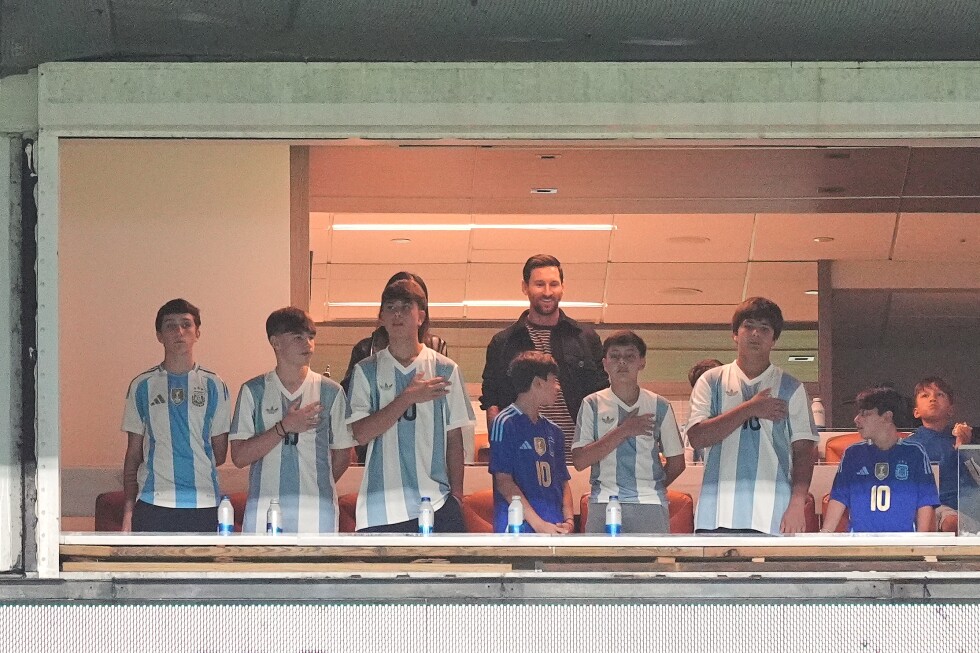
    WASHINGTON (AP) — The highly anticipated draw for the 2026 FIFA World Cup has set the stage for dramatic opening matches, with defending champions Argentina led by Lionel Messi scheduled to face Algeria in their inaugural title defense match. The Argentinian squad will compete in a group that also includes Austria, marking the beginning of what promises to be an electrifying tournament.

    The United States national team, drawn on Friday, will commence their campaign against Paraguay on June 12 at SoFi Stadium in Inglewood, California. This matchup follows Mexico’s opening game against South Africa the previous day. The U.S. team, which achieved a semifinal placement in the inaugural 1930 World Cup and reached the quarterfinals only once since then in 2002, will be looking to make history on home soil.

    The ceremonial draw event at the Kennedy Center for the Performing Arts featured unprecedented political participation, with U.S. President Donald Trump, Mexican President Claudia Sheinbaum, and Canadian Prime Minister Mark Carney personally selecting their respective nations’ balls from the drawing bowls. The elaborate ceremony extended nearly as long as a regulation soccer match, with the actual draw proceedings for the expanded 48-nation tournament commencing in the 87th minute.

    Despite wintry conditions with falling snow, soccer officials and international celebrities filled the prestigious venue exactly 189 days before the expanded tournament’s kickoff. The 104-game competition will be the largest in World Cup history, with early morning lines forming outside the complex as workers and media personnel passed through rigorous Secret Service security protocols.

    In a controversial moment during the ceremony, FIFA President Gianni Infantino presented President Trump with the organization’s inaugural Peace Prize, bestowing upon him a substantial gold-colored trophy and medal suspended from a blue ribbon. Trump, who has previously campaigned for Nobel Peace Prize recognition, accepted the honor stating, “This is truly one of the great honors of my life.” Infantino offered extensive praise to the American president during the presentation.

    The event featured a star-studded ensemble of retired sports legends, including NFL icon Tom Brady, NBA superstar Shaquille O’Neal, NHL great Wayne Gretzky, and three-time AL MVP Aaron Judge, all assisting former England captain Rio Ferdinand in conducting the ceremonial proceedings.

    The complete tournament field includes all 11 highest-ranked international teams, with 12th-ranked Italy among 22 nations competing in playoffs for the final six tournament berths to be determined on March 31. All quarterfinal matches and beyond will be hosted exclusively in the United States across 11 NFL stadiums, with specific venue assignments and kickoff times scheduled for announcement on Saturday.