标签: South America

南美洲

  • Trump invites Colombian president to White House days after threatening it with military strike

    Trump invites Colombian president to White House days after threatening it with military strike

    In a striking diplomatic reversal, former President Donald Trump has publicly lauded Colombian leader Gustavo Petro following a previously contentious relationship. The abrupt shift occurred Wednesday evening when Trump announced via his social media platform that the two heads of state had engaged in a productive telephone conversation regarding bilateral concerns.

    Trump characterized the exchange as ‘a Great Honor,’ revealing that President Petro initiated the call to address ongoing disputes, particularly surrounding narcotics trafficking and other contentious issues between the nations. The former president notably commended his counterpart’s diplomatic approach, stating he ‘appreciated his call and tone’ during their discussion.

    This conciliatory gesture marks a dramatic departure from Trump’s rhetoric earlier this week, when he asserted Colombia was ‘very sick’ under Petro’s leadership and made unsubstantiated allegations regarding the president’s personal involvement in cocaine distribution to American markets. Those remarks came in response to U.S. military operations in neighboring Venezuela, with Trump suggesting potential intervention in Colombia might be warranted.

    The newly announced White House invitation signals potential normalization of relations between the conservative former president and Colombia’s first leftist leader. Both parties have expressed anticipation for the forthcoming meeting, though specific dates remain unconfirmed at this time.

  • US seizes two ‘shadow fleet’ tankers linked to Venezuelan oil

    US seizes two ‘shadow fleet’ tankers linked to Venezuelan oil

    In a significant escalation of sanctions enforcement, United States military forces have executed dual maritime interdictions targeting tankers associated with Venezuelan oil exports. The operations, conducted in both the North Atlantic and Caribbean Sea, represent the latest development in Washington’s campaign to restrict Caracas’s petroleum revenue streams.

    The Russian-flagged vessel Marinera was apprehended following an extensive two-week pursuit through waters between Iceland and Scotland. US personnel boarded the tanker with logistical support provided by the UK Royal Navy through aerial and naval assets. Concurrently, American forces seized the M/T Sophia in Caribbean international waters, alleging the vessel was engaged in ‘illicit activities.’

    These seizures occur amidst heightened tensions following the recent detention of Venezuelan President Nicolás Maduro by US special forces. Defense Secretary Pete Hegseth publicly affirmed that the ‘blockade of sanctioned Venezuelan oil remains in FULL EFFECT’ globally via social media.

    Moscow has formally protested the seizure of the Marinera, despite the vessel having received only ‘temporary permission’ to fly the Russian flag according to transport ministry officials. The Russian government demanded proper treatment of crew members and their prompt repatriation. Initial reports suggesting Russian submarine deployment to safeguard the tanker proved unsubstantiated as US forces encountered no resistance during boarding.

    The White House designated the intercepted vessel as ‘stateless’ due to alleged false flag representation, operating as part of Venezuela’s ‘shadow fleet’ with an existing judicial order against it.

    Secretary of State Marco Rubio revealed Venezuela’s cooperation regarding the Caribbean seizure, stating Venezuelan authorities recognize that ‘the only way they can move oil and generate revenue’ without economic collapse is through cooperation with the United States. This development follows President Donald Trump’s announcement that Venezuela would transfer up to 50 million barrels of oil valued at approximately $2.8 billion to US control.

    Rubio elaborated that confiscated petroleum would be sold at market rates, with proceeds managed to ‘benefit the Venezuelan people.’ The administration outlined a three-phase plan for Venezuela involving stabilization, recovery, and transition.

    Congressional response remains divided, with Senate Majority Leader Chuck Schumer demanding clarification regarding troop commitments and operational costs. The Senate prepares to vote on a bipartisan war powers resolution seeking to constrain military engagement in Venezuela without legislative approval.

    China, Venezuela’s primary oil customer in recent years, condemned US actions as threatening global energy security.

    US European Command confirmed the Marinera (previously named Bella 1) was boarded for ‘violations of US sanctions’ pursuant to a federal warrant. Britain’s Ministry of Defence characterized their participation as ‘in full compliance with international law’ supporting global sanctions enforcement.

    Maritime experts clarified that the vessel’s identity confusion stemmed from regulations prohibiting flag changes during voyages without legitimate ownership transfer. Under UN maritime law, stateless vessels remain subject to interdiction.

    US Southern Command separately announced the apprehension of the ‘stateless, sanctioned dark fleet’ tanker M/T Sophia, now being escorted to the United States for disposition. Homeland Security Secretary Kristi Noem described the coordinated pre-dawn operations targeting ‘ghost fleet’ vessels with recent Venezuelan port connections.

  • Trump proposes massive increase in 2027 defense spending to $1.5T, citing ‘dangerous times’

    Trump proposes massive increase in 2027 defense spending to $1.5T, citing ‘dangerous times’

    WASHINGTON — In a significant policy announcement, President Donald Trump has unveiled an ambitious proposal to escalate United States military expenditure to an unprecedented $1.5 trillion by 2027. The declaration, made via his Truth Social platform on Wednesday, frames this monumental budget surge as an essential response to contemporary global threats that characterize what he termed “troubled and dangerous times.”

    The proposal arrives amidst a series of assertive geopolitical maneuvers by the Trump administration. These include a recent military operation aimed at apprehending Venezuelan leader Nicolás Maduro to face drug trafficking charges in the U.S., which has resulted in a continued massing of American forces in the Caribbean Sea. Furthermore, the President has expressed strategic interest in acquiring Greenland from Denmark for national security purposes and has hinted at potential military engagements in Colombia. Echoing this hardened stance, Secretary of State Marco Rubio issued a stark warning concerning Cuba, indicating a period of intensified foreign policy pressure.

    President Trump justified the colossal funding increase, a significant jump from the 2026 budget of $901 billion, by stating it would enable the construction of a ‘Dream Military’ to ensure national safety and security. He attributed the financial feasibility of this plan to heightened revenue streams generated by his administration’s widespread tariff policies imposed on both allied and adversarial nations since his return to office.

    Concurrently, the administration has adopted a confrontational posture toward the defense industry. President Trump explicitly threatened to sever Pentagon contracts with major defense contractor Raytheon unless it ceases its stock buyback programs and redirects profits toward expanding its weapons manufacturing infrastructure. This ultimatum, delivered on social media, criticized defense firms for perceived delays in critical weapons deliveries while simultaneously rewarding investors and executives with substantial dividends and salaries.

    The financial markets reacted promptly to this aggressive rhetoric, with shares of leading defense contractors like Northrop Grumman, Lockheed Martin, and RTX Corp. (Raytheon’s parent company) experiencing notable declines. This series of announcements signals a profound shift in U.S. defense strategy, prioritizing massive budgetary expansion and demanding greater industrial capacity from private sector partners.

  • Venezuela’s military buries soldiers slain in US operation to capture Maduro

    Venezuela’s military buries soldiers slain in US operation to capture Maduro

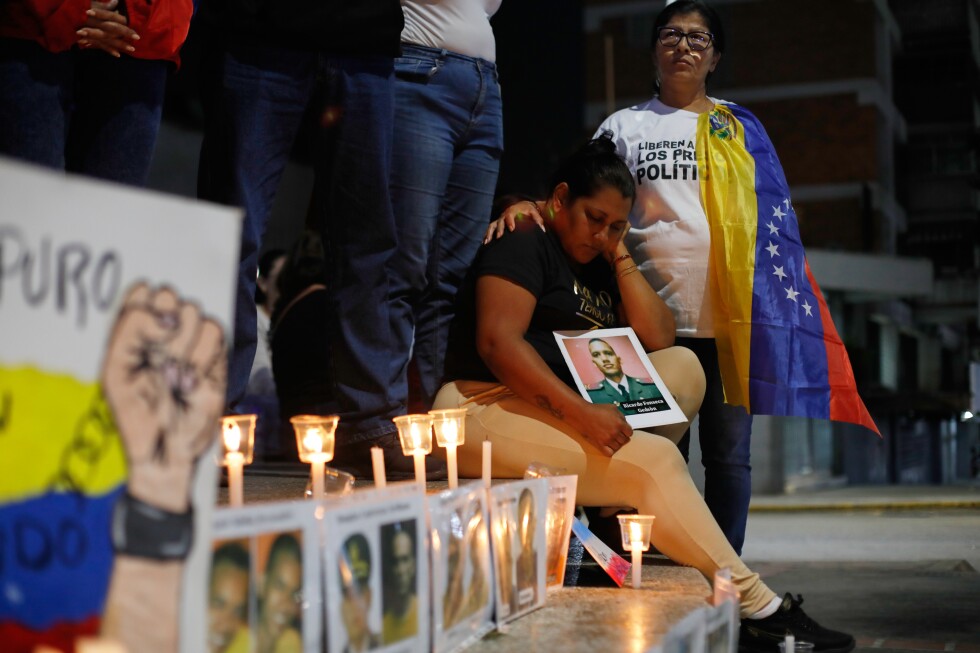
    CARACAS, Venezuela — Venezuela’s armed forces conducted a solemn state funeral ceremony on Wednesday for military personnel killed during a U.S. military operation that resulted in the capture of former President Nicolás Maduro. The emotionally charged proceedings unfolded at a public cemetery in southern Caracas, where uniformed personnel carried flag-draped caskets past formations of grieving comrades and family members.

    The atmospheric scene featured traditional military honors, with orchestral music accompanying the procession and ceremonial gunfire echoing across the burial grounds. Earlier wakes had seen distraught relatives embracing coffins containing their loved ones, their mourning observed by armed National Guard members providing security throughout the proceedings.

    According to Venezuelan military officials, at least 24 security force members perished during the nighttime U.S. operation that extracted Maduro to face narcotics charges in the United States. In a significant regional development, Cuba separately acknowledged the loss of 32 military and police advisors stationed in Venezuela, declaring two days of national mourning.

    Venezuelan Attorney General Tarek William Saab characterized the incident as a ‘war crime’ involving dozens of military and civilian casualties, promising full investigations into the circumstances surrounding the deaths. The Venezuelan military issued an official statement vowing to ‘rescue our legitimate President’ and prevent future violations of national sovereignty, emphasizing that the fallen soldiers’ sacrifice ‘reaffirms our unwavering oath’ to protect the nation.

    The geopolitical implications continue to develop as regional powers assess the extraordinary intervention and its consequences for international relations in the Western Hemisphere.

  • US to face Colombia, Argentina and Canada in 11th SheBelieves Cup

    US to face Colombia, Argentina and Canada in 11th SheBelieves Cup

    The United States Women’s National Team (USWNT) is set to compete against Canada, Argentina, and Colombia in the upcoming SheBelieves Cup tournament this March. The prestigious international friendly competition will feature a round-robin format with double-header matches across three major American cities: Nashville, Tennessee; Columbus, Ohio; and Harrison, New Jersey.

    The tournament schedule commences on March 1st at GEODIS Park in Nashville, where Canada will first confront Colombia followed by the USWNT facing Argentina. The action continues on March 4th at Columbus’s Miracle-Gro Field with Argentina versus Colombia and the highlight match between the United States and Canada. The final matches on March 7th at New Jersey’s Sports Illustrated Stadium will feature Canada against Argentina and the USWNT versus Colombia, culminating in a special ceremony honoring retired soccer star Tobin Heath, a two-time Women’s World Cup champion and New Jersey native.

    Currently ranked second globally, the USWNT will face opponents positioned at 10th (Canada), 20th (Colombia), and 30th (Argentina) in FIFA’s world rankings. US head coach Emma Hayes emphasized the tournament’s strategic importance, noting that these matches provide crucial preparation for upcoming World Cup qualifying matches and the anticipated 2027 World Cup. Canadian coach Casey Stoney similarly praised the competition as an excellent measuring stick against quality opponents, highlighting the diverse playing styles that will challenge both teams’ development.

    The United States has dominated the SheBelieves Cup historically, claiming victory in seven of the eleven tournaments held since its inception, though Japan captured last year’s title.

  • Why the US has designs on Venezuela’s oil

    Why the US has designs on Venezuela’s oil

    In a dramatic geopolitical maneuver, the United States has initiated a comprehensive strategy to reshape Venezuela’s oil industry following recent military actions. The Trump administration has outlined ambitious plans to revitalize the nation’s crippled energy sector while securing substantial oil shipments for American markets.

    Venezuela possesses the world’s largest proven oil reserves, estimated at 303 billion barrels—approximately 17% of global supply. However, decades of mismanagement, infrastructure decay, and political turmoil have reduced production to merely 1% of worldwide output. Energy experts warn that this situation represents both a critical challenge and unprecedented opportunity as global demand projections indicate potential supply shortages in the coming decades.

    The administration has selectively lifted sanctions to facilitate Venezuelan oil shipments, with proceeds directed to U.S.-controlled accounts for distribution to both American and Venezuelan populations. Initial agreements call for 30-50 million barrels of Venezuelan crude to supply U.S. refineries, particularly those on the Gulf Coast configured to process Venezuela’s heavy, sour crude variety.

    Energy analysts highlight dual objectives: reducing global energy prices through increased supply and addressing specific refinery needs for heavy crude. Kevin Book of ClearView Energy Partners notes that increased Venezuelan production could lower transportation and energy costs for consumers worldwide while improving availability of diesel and jet fuel.

    However, significant hurdles remain. Venezuela’s oil infrastructure has suffered catastrophic damage, with leaking pipelines, looted equipment, and chronic electricity shortages. The country has experienced massive brain drain as skilled workers fled economic collapse. Rystad Energy estimates require $54 billion in investment over 15 years just to maintain current production levels.

    Major oil companies approach Venezuela with caution despite potential opportunities. Exxon Mobil and ConocoPhillips remain owed billions from previous nationalizations, and industry experts question whether Venezuela can offer sufficient stability and returns compared to other global investment opportunities. Historical precedents from Iraq, Iran, and Libya suggest regime changes typically lead to prolonged production declines before recovery.

    The administration believes U.S. support could rebuild Venezuela’s oil industry within 18 months, but energy experts remain skeptical given the scale of physical, technical, and political challenges facing any potential recovery.

  • President Petro’s clash with Trump over Venezuela backs Colombia into a corner

    President Petro’s clash with Trump over Venezuela backs Colombia into a corner

    BOGOTÁ, Colombia — Colombian President Gustavo Petro has launched an unprecedented diplomatic offensive against the United States following its military operation to capture Venezuelan leader Nicolás Maduro, creating the most severe bilateral crisis in decades between the traditional allies.

    The left-wing leader condemned Washington’s actions as an “abhorrent violation of Latin American sovereignty” and drew historical parallels to Nazi Germany’s 1937 bombing of Guernica, Spain. In a dramatic escalation, Petro called for street protests to defend national sovereignty and convened emergency meetings with both the United Nations and Organization of American States.

    The confrontation places Colombia in an increasingly precarious position. As America’s staunchest regional partner for thirty years, Colombia now balances maintaining crucial security cooperation against Petro’s political imperative to challenge Washington. The country remains central to U.S. counternarcotics strategy as the world’s primary cocaine producer, with experts noting Colombia provides vital intelligence for Caribbean drug interdiction efforts.

    Michael Shifter of the Inter-American Dialogue think tank observed: “People are trying to tell Trump: ‘Look, you can punish Petro to the extent possible, but you don’t want to punish the country. That undermines the fight against drugs and is going to be harmful for the United States.’ But Trump is completely unpredictable.”

    The animosity between leaders has been brewing for months. Petro has turned back U.S. military deportation flights, criticized drug interdiction methods as “murder,” and clashed with Trump over Gaza and immigration policies. Trump has responded by revoking Petro’s visa, imposing sanctions on his administration, threatening punitive tariffs, and labeling him a “lunatic” and “international drug leader.”

    Despite the rhetoric, analysts consider actual military action against Colombia—a democratic nation unlike Venezuela—highly improbable. However, Trump’s increasing militaristic language about Latin America has caused growing alarm in Bogotá. Defense Minister Pedro Sánchez sought to reassure citizens that security cooperation continues uninterrupted, noting Washington has provided approximately $14 billion in assistance over two decades.

    Foreign Minister Rosa Villavicencio confirmed Colombia is pursuing diplomatic solutions while preparing for “the possibility of aggression against our country by the United States,” highlighting the nation’s “highly trained, very well prepared army” that has long received U.S. training.

  • Venezuela’s interim leader sacks general in charge of Maduro’s guard

    Venezuela’s interim leader sacks general in charge of Maduro’s guard

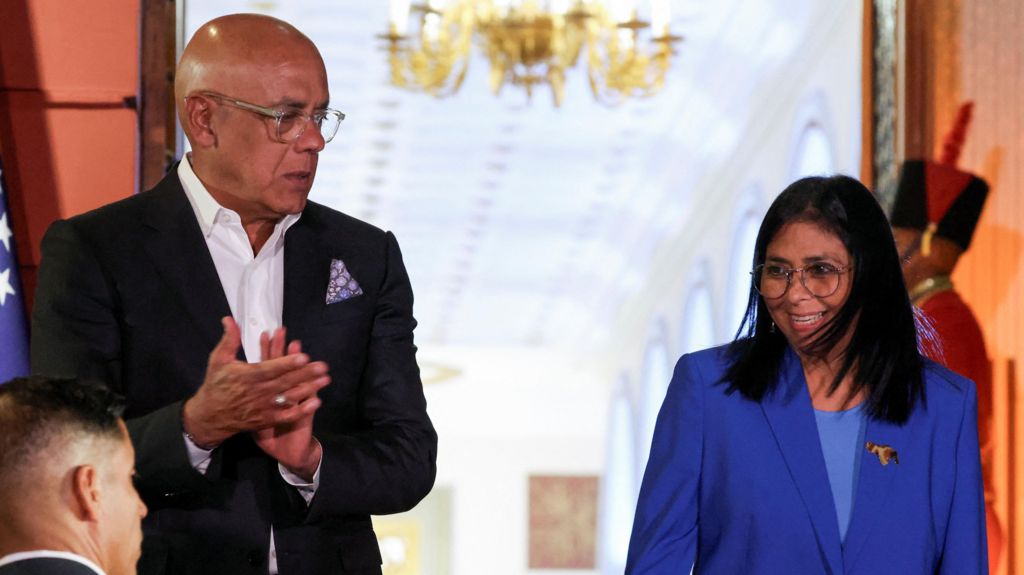
    In a significant reshuffle of Venezuela’s security apparatus, Interim President Delcy Rodríguez has dismissed General Javier Marcano Tábata from his command of the presidential honor guard. This move comes just days after U.S. forces conducted a dramatic raid in Caracas, capturing former President Nicolás Maduro and transporting him to New York to face narco-terrorism charges.

    The presidential honor guard, responsible for the head of state’s personal security, suffered substantial casualties during the operation. While official numbers remain undisclosed, Venezuelan military sources confirm 23 fatalities, including five generals. Notably, Cuba reported 32 of its nationals killed, many believed to be embedded within Maduro’s protection detail.

    Rodríguez, sworn in by the government-loyal National Assembly, faces immense pressure from Washington. President Donald Trump has demanded compliance with U.S. interests, including access to Venezuela’s vast oil reserves—the world’s largest proven stockpile. Trump explicitly threatened Rodríguez with a ‘fate worse than Maduro’s’ for non-compliance, while simultaneously claiming Venezuela would ‘turn over’ up to 50 million barrels of oil to the United States.

    The interim government’s response has oscillated between defiance and conciliation. Rodríguez condemned Maduro’s capture as an ‘illegal kidnapping’ yet extended an invitation for bilateral cooperation. Analysts suggest General Marcano Tábata’s removal relates primarily to his unit’s failure to prevent Maduro’s seizure rather than his concurrent leadership of the military counterintelligence unit (DGCIM)—an organization documented by UN investigators for systematic human rights abuses including torture and sexual violence.

    His replacement, Gustavo González López, formerly headed Venezuela’s national intelligence service (Sebin), which faces similar accusations of suppressing dissent through its control of Caracas’ notorious Helicoide prison. This suggests the dismissal represents a consolidation of trusted allies rather than a policy shift away from repression.

    With Trump acknowledging prepared secondary strikes against remaining hardliners—including Interior Minister Diosdado Cabello, who faces a $25 million U.S. bounty for alleged narco-trafficking—Rodríguez’s leadership balances domestic credibility against existential external threats. The security apparatus reorganization signals her attempt to stabilize control amid heightened vulnerability.

  • Golden Globes host Nikki Glaser struggles with Julia Roberts and Venezuela while building monologue

    Golden Globes host Nikki Glaser struggles with Julia Roberts and Venezuela while building monologue

    LOS ANGELES — As the Golden Globes ceremony approaches, comedian Nikki Glaser confronts an unexpected comedic hurdle: crafting the perfect joke about Hollywood icon Julia Roberts. The host, who earned widespread acclaim for her celebrity-roasting monologue at last year’s event, finds Roberts particularly challenging material despite her proven track record of handling A-list targets.

    “She’s been the toughest nut to crack,” Glaser acknowledged during a recent interview, expressing determination to solve the comedic puzzle before Sunday’s CBS broadcast from the Beverly Hilton. Roberts, nominated for Best Actress in a Drama for “After the Hunt,” will be seated prominently in the audience, presenting both opportunity and pressure for the host.

    The comedian revealed that test audiences have reacted unexpectedly defensively toward even mild jokes about Roberts. “People do not have a sense of humor about Julia Roberts,” Glaser observed. “She’ll be fine—other people are not fine on her behalf. The most innocent joke about her that I tried out prompted booing and jeering.”

    Glaser’s preparation involves extensive testing at Southern California comedy clubs, where she refines material through audience feedback. “I live and die by those crowds,” she explained. “They tell me what to keep and what not to. Things that I think will kill sometimes get nothing, while throwaway lines become the best jokes.”

    Among other anticipated targets are Timothée Chalamet (nominated for “Marty Supreme”), George Clooney (“Jay Kelly”), Michael B. Jordan (“Sinners”), and Leonardo DiCaprio (“One Battle After Another”). Regarding DiCaprio, Glaser teased: “Leo? We’re going to hit Leo. The icebergs are coming. Watch out.”

    The host remains adaptable to current events, recently monitoring the Venezuela situation as potential monologue material, though she notes award show audiences may not share news awareness with writers. Glaser’s approach balances affectionate teasing with sharp wit, reminiscent of last year’s successful “Wicked” joke that celebrated the film’s LGBTQ+ appeal without crossing into meanness.

  • US seeks to assert its control over Venezuelan oil with tanker seizures and sales worldwide

    US seeks to assert its control over Venezuelan oil with tanker seizures and sales worldwide

    The Trump administration has dramatically escalated its economic campaign against Venezuela by simultaneously seizing sanctioned oil tankers and announcing plans to relax certain sanctions, effectively establishing U.S. control over the distribution of Venezuelan petroleum worldwide.

    On Wednesday, U.S. authorities confirmed the seizure of two additional vessels—the Bella 1 (later renamed Marinera) in the North Atlantic and the M Sophia in the Caribbean Sea—bringing the total to at least four tankers intercepted this month. Both vessels were allegedly violating U.S. sanctions by transporting Venezuelan oil. The Bella 1 notably attempted evasion by repainting its hull with Russian flags and altering its course after the U.S. Coast Guard initiated pursuit.

    Concurrently, the Energy Department unveiled plans to selectively ease sanctions, enabling the global sale of Venezuelan oil through U.S.-approved channels. The initiative will commence immediately with 30-50 million barrels, with proceeds directed to U.S.-controlled accounts at internationally recognized banks. The administration indicated these funds would be distributed to American and Venezuelan populations at its discretion.

    Senior officials framed these actions as strategic measures to pressure the Maduro regime without military engagement. Vice President JD Vance stated, ‘We control the energy resources, and we tell the regime, you’re allowed to sell the oil so long as you serve America’s national interest.’ Secretary of State Marco Rubio suggested intercepted oil would be incorporated into bilateral agreements with Venezuela’s interim authorities.

    The moves have drawn international criticism, with Russian officials denouncing the seizures as ‘blatant piracy’ and demanding protection for Russian crew members. Maritime intelligence firms identified both vessels as part of a ‘shadow fleet’ facilitating oil smuggling for sanctioned nations including Venezuela, Russia, and Iran.

    Beyond energy controls, the administration plans to authorize equipment imports to boost Venezuela’s oil production—currently languishing at approximately 1 million barrels daily—and invest in the country’s deteriorated electricity grid to improve living conditions amid economic collapse.