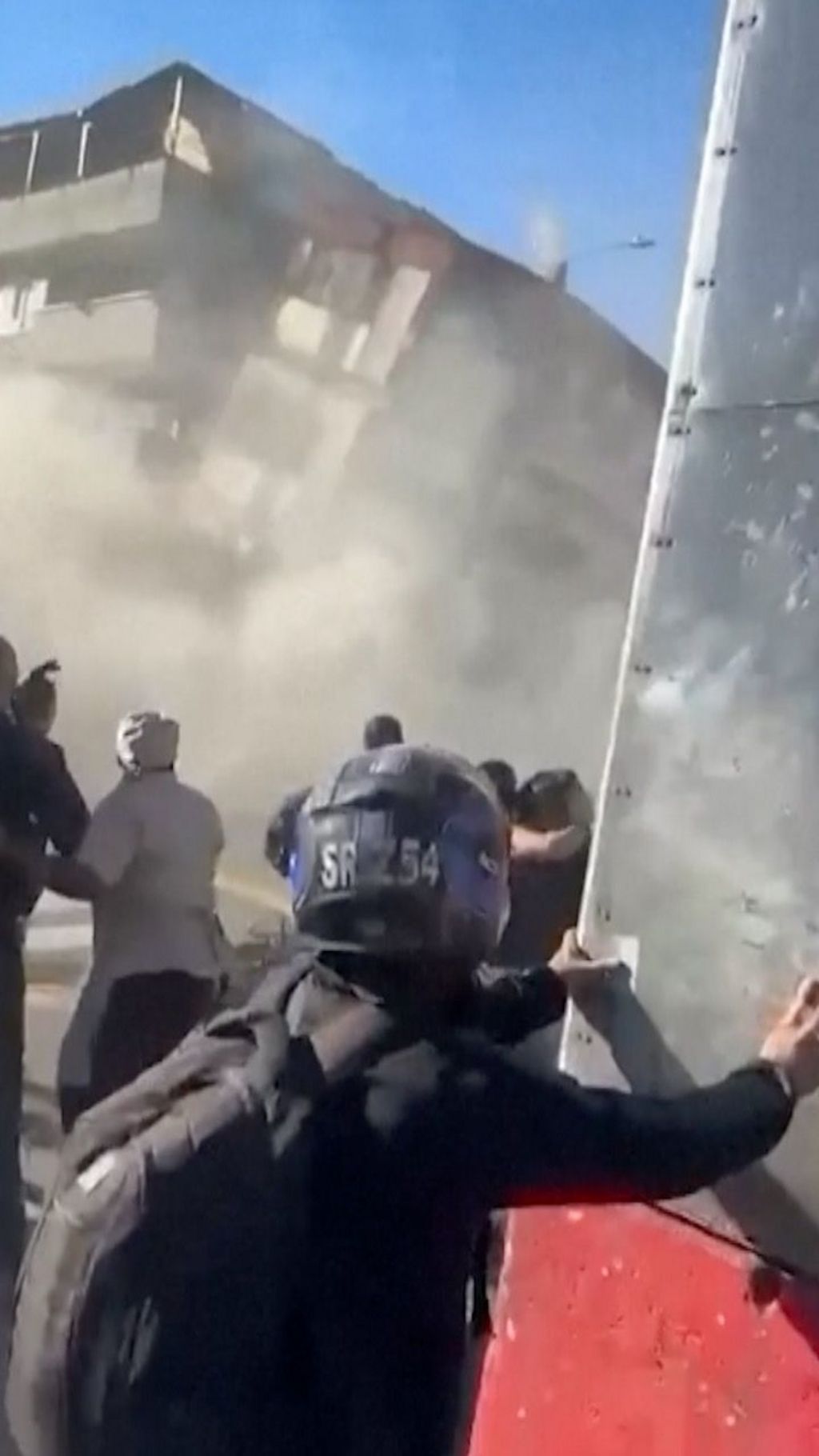
A structural failure has resulted in a building collapsing in the city of Pereira, located in the coffee-growing region of western Colombia. Local emergency response teams have been activated immediately following the incident, with first responders rushing to the collapse site to conduct search and rescue operations. As of the initial public report, details on the number of people affected, potential casualties, and the root cause of the collapse remain under active investigation. Authorities have cordoned off the surrounding area to ensure public safety and facilitate evidence collection to determine what led to the structural failure. Pereira residents have been urged to avoid the vicinity of the incident to allow emergency crews to work unimpeded.
标签: South America
南美洲
-
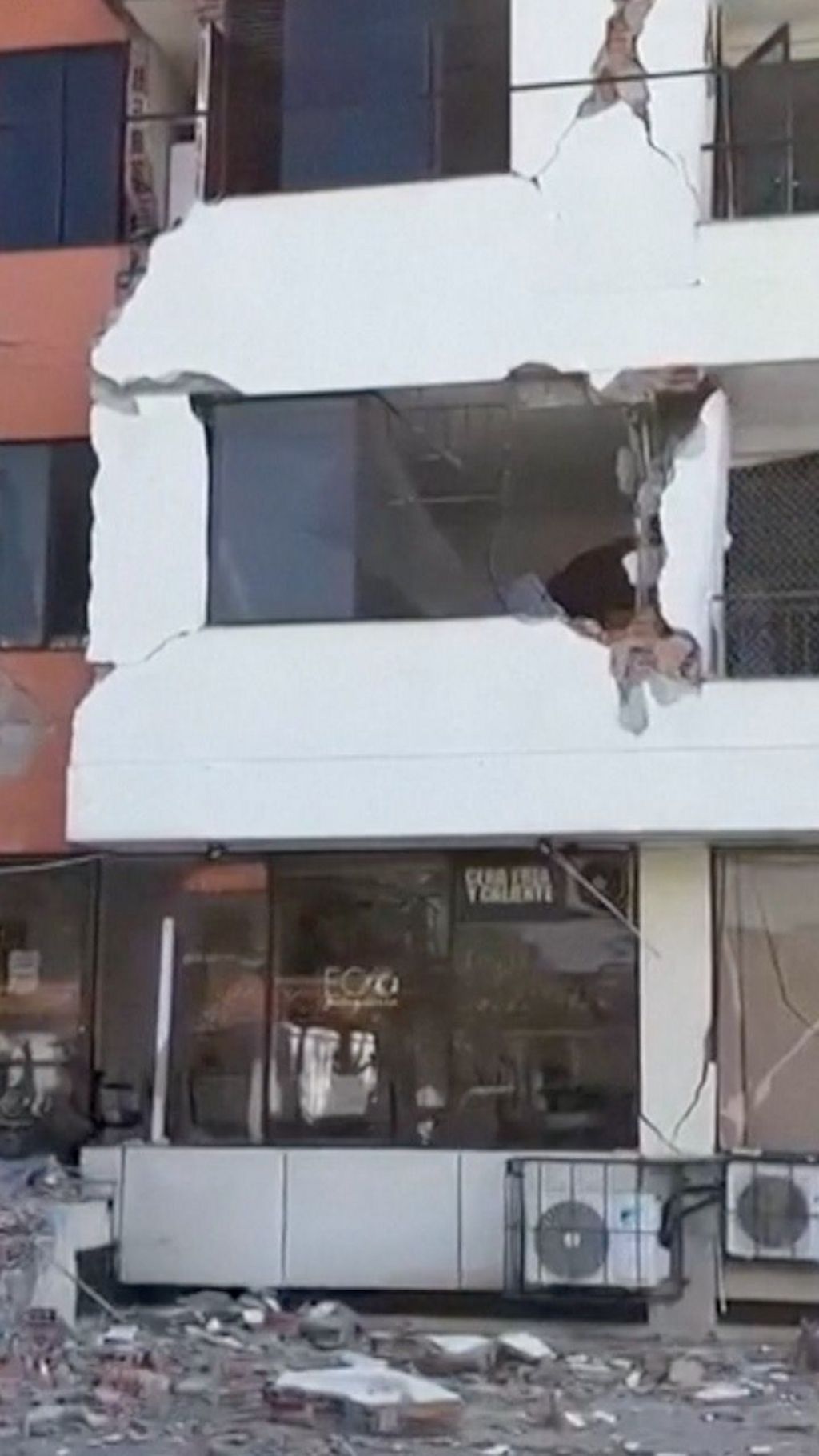
Heavy damage in Cali
Reports emerging from the Colombian city of Cali confirm that severe and widespread damage has impacted multiple areas of the major urban center. While the specific trigger for this destruction—whether a natural disaster, civil unrest, or another disruptive event—has not been detailed in initial accounts, on-the-ground assessments confirm that the harm is extensive, affecting infrastructure, properties, and potentially disrupting daily life for thousands of residents. Local authorities are expected to launch rapid damage surveys to quantify the full scope of losses, coordinate emergency response efforts, and begin developing recovery plans for affected communities. As more information becomes available, further updates will be released to clarify the causes of the damage and outline next steps for rebuilding.
-

Church tower collapses
A sudden structural failure has resulted in the complete collapse of a church tower, an incident that has sent shockwaves through the local community where the religious landmark has stood for decades. Emergency services were dispatched to the scene immediately after reports of the collapse reached local authorities early [relevant recent time frame, per original limited context]. No injuries have been confirmed as of the latest updates, though local residents who gathered near the site expressed widespread shock and grief over the loss of a structure that had long been a central part of the town’s cultural and social identity. The church, which had served as a place of worship and community gathering for generations, saw its tower topple amid ongoing discussions about needed structural repairs, according to local council records. Engineers and structural safety experts have now been called in to conduct a thorough investigation to determine the exact cause of the collapse, with preliminary assessments pointing to potential long-term water damage eroding the tower’s foundation that went unaddressed in recent years. Local leaders have announced that they will launch a full review of historic building safety protocols across the region to prevent similar incidents from occurring at other aging landmarks. Community members have already begun organizing efforts to document what remains of the structure and discuss plans for potential restoration, should that be feasible, though many acknowledge that the loss of the original tower is an irreversible blow to the area’s heritage.
-
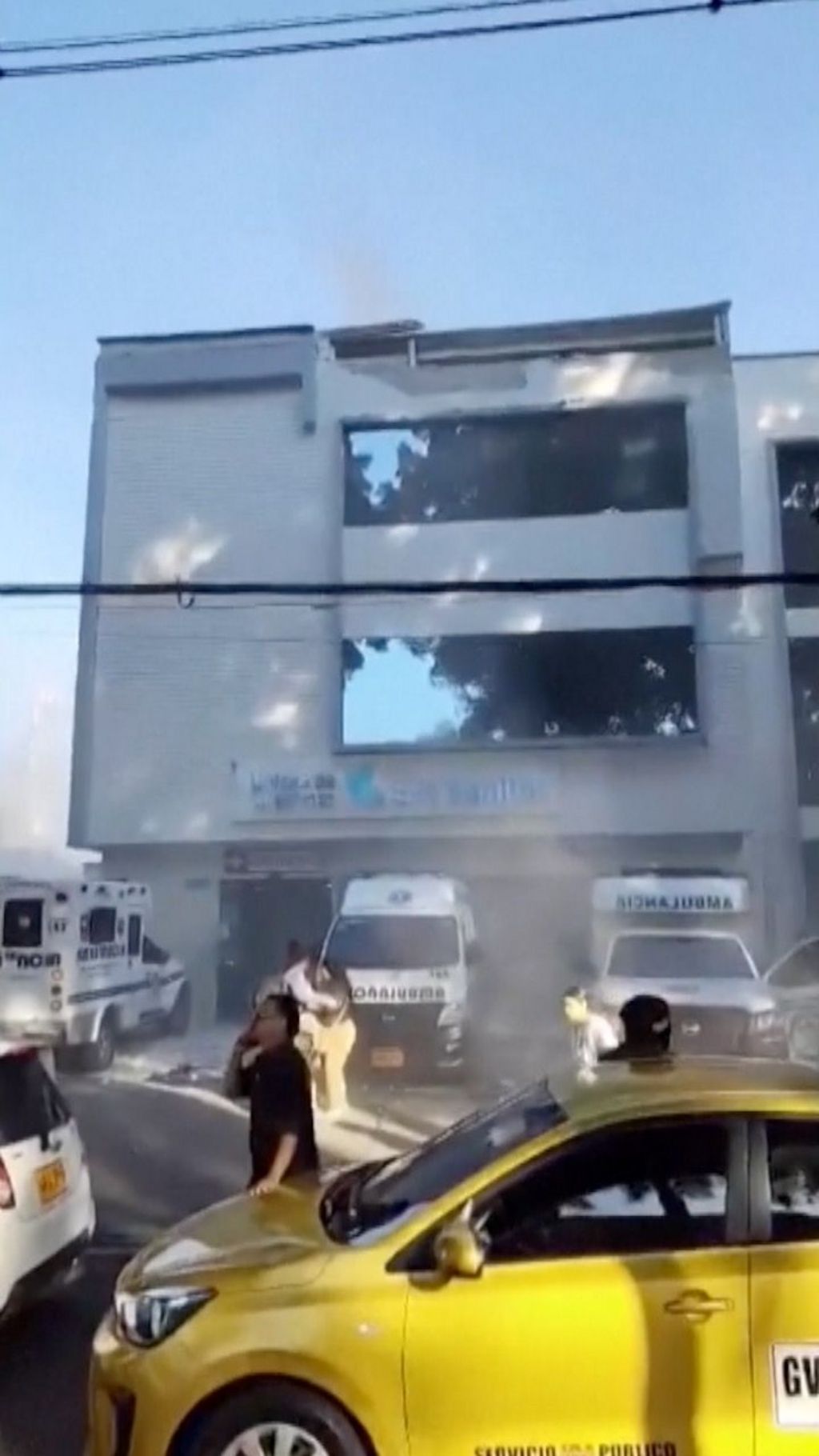
Earthquake hits hospital in Cali
A significant seismic event has rocked western Colombia, leaving a trail of destruction in its wake that particularly impacted a local hospital in the city of Cali. Geophysical authorities have confirmed the quake was powerful enough to cause substantial structural damage to the medical facility, disrupting critical healthcare services for the surrounding community. Emergency response teams have been mobilized to the area to assess the full scope of the damage, evacuate patients and staff to safer alternate locations, and begin clearing debris. While initial reports have not yet confirmed full casualty figures, the incident has sparked urgent calls for regional support to address the sudden disruption to medical care for Cali residents. Local government officials are working alongside national disaster management agencies to coordinate relief efforts, as teams work to stabilize the area and evaluate whether aftershocks could pose additional risks to already damaged infrastructure. This earthquake adds to the long history of seismic activity that Colombia, which sits along the geologically active Pacific Ring of Fire, faces on a regular basis, highlighting ongoing challenges for urban infrastructure resilience in earthquake-prone regions of the country.
-
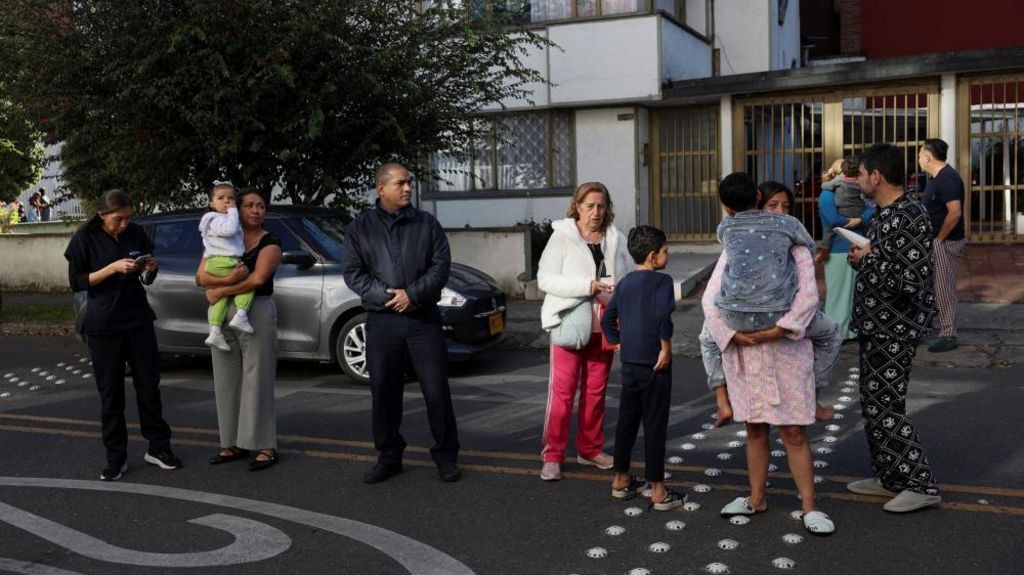
Strong earthquake causes significant damage and injuries in Colombia
On a Monday morning, a powerful magnitude-7.4 earthquake shook Colombia’s Pacific coastal region, leaving widespread structural damage in its wake and sparking urgent safety response across the country, Colombian officials confirmed. According to the Colombian Geological Survey, the seismic event hit at 07:34 local time (12:34 GMT), with a hypocenter depth of 96 kilometers, or around 60 miles. Its epicenter was located just 5 kilometers east of the small rural village of San José del Palmar in Chocó province.
Nubia Carolina Córdoba, the governor of hard-hit Chocó province, confirmed that the quake had left a number of people injured, though she did not release an exact casualty count as of early reporting. In public remarks following the event, Córdoba emphasized that authorities remain on high alert for potential aftershocks that could worsen existing damage and put more residents at risk.
The intensity of the quake was felt hundreds of kilometers away from the epicenter, reaching all the way to Bogotá, Colombia’s capital situated to the east of the impact zone. In response to the shaking, multiple buildings across the capital were evacuated as a safety precaution. Tremors were also detected in Manizales, a major city in Colombia’s renowned coffee-growing region. Local leading national newspaper El Tiempo shared user-submitted footage from Manizales showing a collapsed structure, with bystanders shouting to reach individuals believed to be trapped under the rubble.
Monday’s earthquake comes just two months after a pair of powerful seismic events devastated northern regions of neighboring Venezuela, claiming the lives of more than 6,100 people. That disaster put the entire Andean region, which sits along the geologically active Pacific Ring of Fire and faces frequent seismic risk, on heightened awareness of earthquake preparedness and response protocols.
-
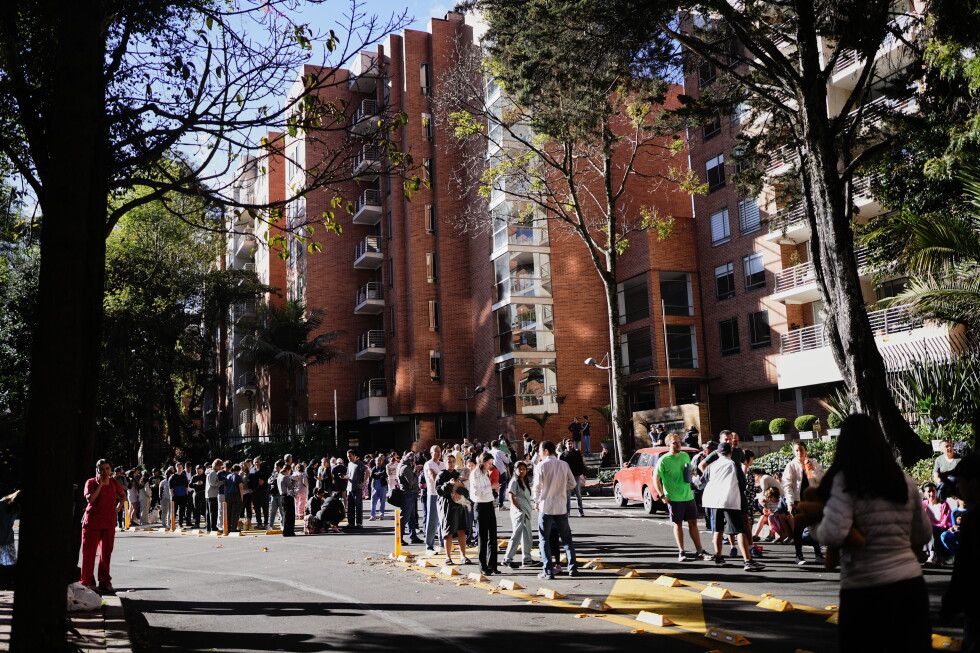
Powerful earthquake shakes Colombia and Ecuador prompting people to evacuate homes and buildings
On a Monday morning, a substantial seismic event rattled western Colombia, sending waves of tremors across the South American nation and reaching as far as neighboring Ecuador. The sudden shaking forced thousands of residents to hurriedly evacuate their homes, office buildings and public spaces in search of safe, open ground.
Both the United States Geological Survey (USGS) and Colombia’s national geological institute confirmed the earthquake registered a magnitude of 7.4. Though the tremor packed significant power, it originated at a relatively deep depth below the Earth’s surface, a factor that experts often note can mitigate the worst of surface-level damage. The epicenter was pinpointed to San Jose Del Palmar, a small rural community located roughly 400 kilometers (250 miles) west of Colombia’s capital city, Bogota.
In the immediate aftermath of the quake, emergency management authorities had not yet released any reports of structural damage or human injuries. Response teams have been dispatched to affected regions to conduct damage assessments and check on at-risk communities.
This latest major seismic event comes just one month after a pair of powerful back-to-back earthquakes, measuring magnitude 7.2 and 7.5 respectively, hit neighboring Venezuela in late June. That devastating double earthquake event destroyed hundreds of buildings across the country and ultimately claimed the lives of more than 5,000 people, leaving a widespread trail of destruction and displacement.
-
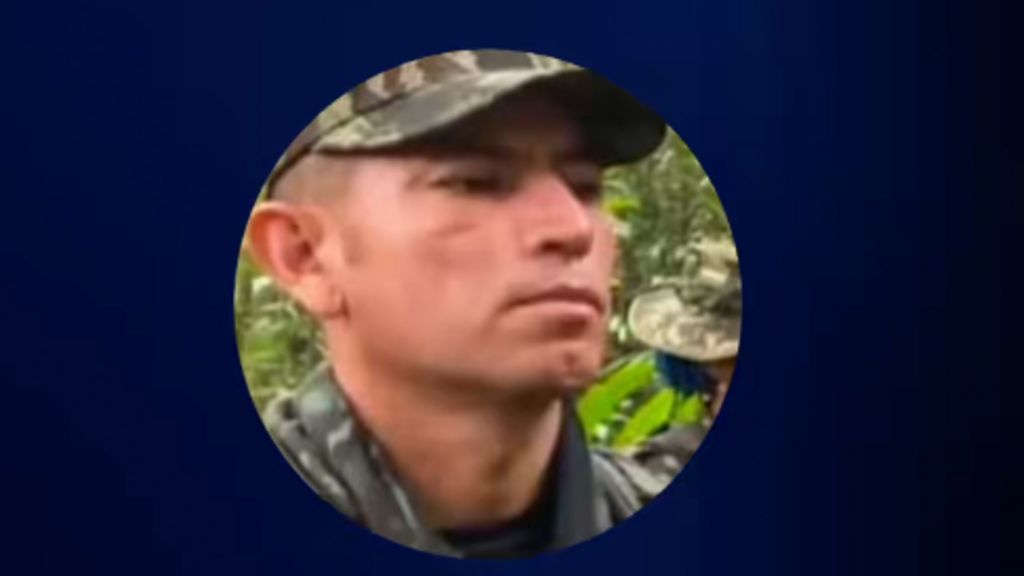
Alleged rebel leader killed in Colombia as president targets armed groups
Just four days after being sworn in as Colombia’s new head of state, President Abelardo de la Espriella has marked a sharp break from his predecessor’s security policy with a lethal military operation that eliminated one of the country’s most wanted dissident rebel commanders.
Hernando Forero Mosquera, widely known by his alias “El Ruso,” was killed alongside five other alleged armed group members during a weekend operation in central Colombia’s rural Meta province, according to official government statements. Military intelligence confirms Forero led Frente 28, a prominent dissident faction that split from the Revolutionary Armed Forces of Colombia (FARC) after the 2016 historic peace accord between the rebel group and the Colombian government.
The 2016 peace deal was hailed as a landmark step to end five decades of armed conflict, but a small contingent of FARC members rejected the agreement’s terms and refused to disarm. These breakaway factions, including Frente 28, have since become major players in the country’s illegal economy, controlling large swathes of cocaine trafficking and unregulated mining operations. Their activity has been directly linked to a marked resurgence of violent unrest across Colombia in recent years.
De la Espriella’s quick action on illegal armed groups fulfills a core campaign promise, where he pledged to wage unrelenting war on what he terms “narco-terrorism” — a stark departure from the approach of former President Gustavo Petro, Colombia’s first leftist head of state. Petro pursued a “total peace” strategy that prioritized negotiated ceasefires and dialogue over military confrontation, but his efforts collapsed after multiple armed groups repeatedly violated truce terms and abandoned talks.
In a public address following the operation, de la Espriella issued a firm warning to all outlawed armed organizations, saying the killing of Forero sends “a clear and powerful message to all bandits that there is nowhere for them to hide.” He added that Forero, an experienced explosives specialist, was a high-value target, and confirmed that two additional suspected members of the Gulf Clan, another major criminal network, were killed in a separate simultaneous offensive in Antioquia province.
The new hardline security approach has already drawn immediate pushback from dissident groups. Just 24 hours after de la Espriella’s inauguration, coordinated attacks struck two Colombian provinces: a car bomb detonated at a Cauca province toll booth, wounding two security guards, while in Cesar province, a drone-dropped explosive killed a local police officer.
The Colombian president’s administration enjoys explicit backing from former U.S. President Donald Trump, who publicly endorsed his candidacy during the election campaign. On the day of de la Espriella’s swearing-in, the U.S. State Department announced a $1 billion security assistance package to support the new government’s counter-crime efforts. Washington also formally welcomed Colombia into the “Shield of the Americas,” a U.S.-led alliance of Western Hemisphere nations committed to coordinated action against drug trafficking networks and transnational organized crime.
-

Brazilian player falls down tunnel during goal celebration
In a bizarre turn of events during a Brazilian top-flight football match, Coritiba defender Jacy Maranhao’s moment of goal-scoring joy quickly turned into painful embarrassment when he fell down an unmarked tunnel while celebrating his late first-half strike against Chapecoense.
The 29-year-old centre-back scored what looked to be a crucial opening goal in the 41st minute of the fixture, putting his side ahead 1-0 with a well-placed header. Eager to share the moment of his rare goal with waiting fans, Maranhao sprinted toward the stands and vaulted over the pitchside advertising hoarding—only to vanish from sight, landing straight in an open service tunnel that leads to the away team’s changing rooms.
Though the defender managed to pull himself back up to the surface unassisted, he left the incident with a painful twisted ankle. To make the awkward moment even worse, video assistant referees (VAR) ultimately ruled out Maranhao’s goal for an undisclosed infringement, robbing him of the goal that caused the injury in the first place.
The injury forced Coritiba’s coaching staff to pull Maranhao from the pitch shortly after the half-time break, as the defender could no longer push through the pain. Despite the embarrassing misadventure, Maranhao downplayed the severity of his injury after the final whistle, noting that his ankle remains sore but that he is otherwise in good condition.
“Centre-backs hardly ever score goals. So when you do score … I just got carried away,” Maranhao explained his overexcited celebration to reporters after the match. Remarkably, this is not the first time a similar accident has occurred at Coritiba’s home ground, the Couto Pereira Stadium in Curitiba. Back in 2014, Cameroonian striker Joel, who was playing for Coritiba at the time, suffered an identical fall while celebrating a goal in a 3-1 victory over Sao Paulo, jumping the same barrier into the same unmarked tunnel. Despite the chaotic incident early in the match, Coritiba held on to secure a 2-1 win over Chapecoense, leaving the club with three points even as their defender recovered from his unexpected injury.
-

The Argentine who wishes he could play for Wales
For more than 150 years, a distinct Welsh community has endured and thrived thousands of miles from its homeland, rooted in the windswept Patagonian region of southern Argentina. It all began in 1865, when 160 Welsh emigrants set sail across the Atlantic to build a new settlement they named *Y Wladfa* – a haven where their native language, cultural traditions, and religious beliefs could grow unimpeded by English political and cultural dominance. Today, the Welsh language remains a living part of daily life for many in the region, and more than 50,000 Patagonians can trace their lineage back to these original Welsh settlers. One of those descendants is 25-year-old professional footballer Jeremias James, a fifth-generation member of Patagonia’s Welsh-Argentine community.
James was born and raised in Trelew, a Chubut Province city founded by Welsh settlers in 1886. The city’s name translates directly from Welsh to “Town of Lewis”, a tribute to founding pioneer Lewis Jones. “I’m part of a Welsh family, part of the Welsh colony that settled in southern Argentina, specifically Chubut,” James shared in an interview with BBC Sport Wales. “Five generations of my family have been born in Trelew, and I am the fifth. Over decades, my family put down roots here, and this is where my story, my family line, and all my ancestors come from.”
Following the first 1865 voyage from Wales to Patagonia, waves of additional immigrants joined the settlement over the subsequent years. Many of these new arrivals were Welsh immigrants who had first settled in 19th-century North America, drawn south to help strengthen and sustain the growing Welsh-speaking community. After the early years of the Chubut Valley settlement brought harsh challenges and slow growth, more migrants arrived not just directly from Wales, but also from established Welsh farming communities scattered across the United States. Tracing his own family history, James explains: “The first member of my family to come to Patagonia was William James, who traveled here on a ship from the United States. David Stephen James, my great-great-grandfather, was the first member of our line born in Argentina. Then came my great-grandfather, my grandfather, my father, and me – all born right here in Trelew. The land in Chubut was granted to Welsh settlers, and my family still lives there today. That land is ours.”
Beyond his unique Welsh ancestral roots, James carries a compelling personal story of resilience. At just nine years old, he received a devastating diagnosis of leukemia, requiring his family to relocate 1,000 miles north to Buenos Aires for urgent, long-term treatment. “I underwent treatment for around a year and a half before I was able to return to Trelew, fully cleared by doctors, and slowly get back to my normal life,” he said. After making a full recovery, James worked his way through local youth football teams in Chubut, eventually catching the eye of scouts from San Lorenzo, one of Argentina’s most prestigious top-flight clubs based in Buenos Aires.
He made his professional debut in Argentina’s Primera Division for San Lorenzo in 2022, before spending successive loan spells at three other Argentine clubs: Barracas Central, Deportivo Riestra, and Alvarado. After a successful loan spell at Chilean side Magallanes earlier this season, James completed a permanent transfer to the Primera B club, where he has become a core starter for the side this year.
A left-footed ball-playing central defender renowned for his aerial strength and on-pitch leadership, James is helping Magallanes in their push to win promotion back to Chile’s top flight. “I’ve always played as a central defender, and it’s a role I’ve always loved,” he said. “I see my biggest strengths as my leadership on the pitch and my ability in aerial duels. We’ve been so lucky in Argentina over recent years to have an incredible national team and so many world-class defenders. I’ve always admired players like Cristian Romero and Nicolas Otamendi – I’ve followed their careers closely and tried to learn from their example on the pitch.”
While James has deep ancestral ties to Wales, current FIFA eligibility rules bar him from ever representing the Welsh men’s national team. The regulations require that a player’s biological parents or grandparents must be born in the country a player wishes to represent, a requirement James cannot meet – his family has lived in Argentina for five generations. Even so, James holds fast to a quiet dream of connecting with his roots. “I was born and raised in Argentina, but I’ve always known about my connection to Wales,” he said. “As you grow and progress in football, you always think about the possibility of playing for a national team you share family ties with. First and foremost, I just want to visit Wales. I’ve never had the chance to go, and it’s something I really want to do to learn more about my roots and where my family came from. It’s a dream of mine, and I know I’ll get to do it one day. If the chance ever came to play there, whether for the national team or a club, that would be something truly special for me.”
While a senior international cap for Wales seems out of reach for James today, football’s rules have shifted many times over history. If that ever changes, the small, tight-knit Welsh-Argentine community of Patagonia would be the first to celebrate.
-
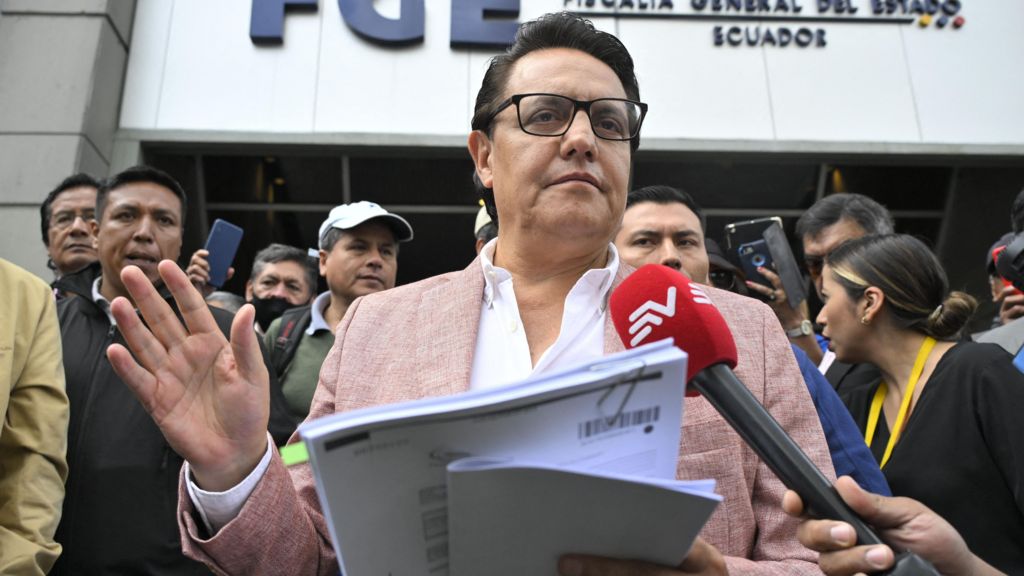
Ecuador charges ex-minister over presidential candidate assassination case
Almost three years after anti-corruption presidential candidate Fernando Villavicencio was gunned down at a campaign rally in Ecuador’s capital Quito, just days ahead of the 2023 general election, national prosecutors have unveiled new charges in the high-profile killing, implicating a former interior minister and six other co-conspirators with deep ties to organized crime.
Prosecutors formally named José Serrano, Ecuador’s former interior minister, and Wilmer “Pipo” Chavarria, the top leader of the notorious Los Lobos cartel, as key suspects in the coordinated assassination plot. The case has already seen five gang-linked defendants convicted of carrying out the killing in 2024, while Chavarria – who faked his own death to evade authorities – was captured in Spain late last year.
A former investigative journalist turned high-profile legislator, Villavicencio built his political platform on aggressive anti-graft campaigning, and stood out among 2023 election candidates for his public claims that organized crime syndicates had infiltrated senior levels of the Ecuadorian government. Despite receiving multiple death threats that prompted authorities to assign him a formal security detail, Villavicencio continued to attend open campaign events ahead of the vote, refusing to curtail his public engagement.
In the aftermath of the assassination, the 2023 election proceeded, and Daniel Noboa – a center-right business leader – claimed victory, subsequently assuming the presidency. Noboa has since taken an uncompromising, military-led hardline approach to crack down on the violent drug cartels that have destabilized the country in recent years.
In the original investigation into Villavicencio’s death, the alleged trigger puller was shot dead by security forces at the scene of the attack, and six other men initially detained in connection with the killing were later found murdered in a Ecuadorian prison while awaiting trial, a chilling sign of the cartel’s reach into state institutions. Five other co-conspirators were convicted of organizing the hit in 2024.
Announcing the new charges Saturday, Ecuador’s Attorney General’s Office confirmed that all seven newly accused are alleged to have played indirect, enabling roles in the assassination. The majority of the suspects hold confirmed ties to Los Lobos, also known as “The Wolves,” one of the most powerful and violent criminal gangs operating in Ecuador. Five of the seven charged remain at large as fugitives, authorities confirmed.
As of the latest update, Serrano and former official Xavier Jordán are believed to be residing in the United States, while ex-assemblyman Ronny Aleaga is located in Venezuela. Chavarria remains in Spanish custody, where Ecuador has submitted a formal extradition request that is still pending. The Attorney General’s Office has already requested Interpol red notices – the international law enforcement community’s highest-level alert for wanted fugitives – to secure the capture and extradition of all suspects at large.
One of the seven accused, Ángel Esteban Aguilar, a senior Los Lobos figure also known as “Lobo Menor” (“Little Wolf”), was arrested by law enforcement in Mexico City back in March after fleeing Ecuador. He was swiftly returned to Ecuador to face charges following the issuance of an Interpol red notice. Aguilar has a long criminal history: he was originally sentenced to 20 years in prison in 2013 for the murder of Serrano’s brother, but he fled the country after being granted parole. The final named accused is Luis Arboleda, another high-ranking member of the Los Lobos cartel.
Pre-trial hearings are currently underway in the case, and a judge will review the evidence presented by prosecutors to determine whether there is sufficient basis to move forward with a full public trial.
The assassination of Villavicencio unfolded against a backdrop of rising gang violence and drug trafficking instability across Ecuador. The country’s geographic position, wedged between Colombia and Peru – the world’s two largest producers of cocaine – has made it a critical transit hub for illicit drug shipments heading to North America and Europe. Transnational cartels including Los Lobos have relied on widespread corruption and brutal violence to seize control of key smuggling routes, and law enforcement investigations confirm the group maintains deep operational ties to the Jalisco New Generation Cartel, one of Mexico’s most powerful criminal organizations.