标签: Oceania

大洋洲

  • Antony Catalano: Accused media boss excused from court appearance due to ‘potentially detrimental’ impact of media reporting

    Antony Catalano: Accused media boss excused from court appearance due to ‘potentially detrimental’ impact of media reporting

    Prominent Australian media executive Antony Catalano, the former chairman of Australian Community Media (ACM), has been permitted to skip in-person court appearances for his ongoing criminal case, after his legal team argued that intense public and media scrutiny would pose severe risks to his mental well-being. The 59-year-old industry leader faces three serious charges: common assault, threats to kill, and false imprisonment, all stemming from an alleged domestic incident involving his wife Stefanie Catalano at the couple’s St Kilda apartment on March 13.

    Authorities’ accounts of the incident allege Catalano confronted his partner in an acutely drug-impaired state during the early hours of that morning. The victim was reportedly able to escape the residential complex, and was found by a passing motorist while in a state of extreme emotional distress. Catalano was taken into police custody later the same day, with reports indicating he was wearing underwear torn during the confrontation.

    In line with his bail requirements, Catalano had initially been ordered to appear in person at the Melbourne Magistrates Court for the preliminary hearing held on Monday. However, his defense barrister Tony Hargreaves made an urgent application to allow his client to appear via video link from his legal team’s office, arguing that a crowd of waiting journalists gathered in the court building would worsen his client’s already fragile mental health.

    Hargreaves told the court that following his client’s arrest and charging, Catalano admitted himself to a rehabilitation facility to address his health, and only recently completed a 28-day inpatient treatment program. He added that the intense media interest in the case had already penetrated the facility, with photographers obtaining images of Catalano during his stay, and that his client was still in the early stages of recovery post-discharge. “Forcing him to walk through the pack of media waiting downstairs would be potentially detrimental to his mental health,” Hargreaves argued.

    The application went unopposed by Senior Constable Matthew Morris, the prosecuting officer representing police. Magistrate Nahrain Warda granted the request, excusing Catalano from in-person attendance not just for this preliminary hearing, but also for all future scheduled court appearances in the case.

    During Monday’s hearing, Catalano appeared via video link dressed in a dark formal suit, sitting with his arms crossed and was not required to make any statements to the court. Hargreaves told the court that his client has already expressed deep remorse for the events that took place, but the criminal proceedings remain in their early stages, and the defense team is awaiting two key medical reports to move forward with the case. One report is from Catalano’s treating physician, and the second from a consulting psychiatrist. Hargreaves noted that the first provider will not be able to complete their report until late June, while the second will not finish theirs until mid-July, prompting a request for an adjournment.

    Catalano’s bail conditions were extended ahead of the next hearing, scheduled for June 2. In a public statement issued the day after his arrest, Catalano publicly acknowledged his responsibility, saying he was “deeply ashamed and humiliated” by the alleged incident, and announced he would step down from all his professional leadership roles. “I know that my actions have caused hurt and concern for others, including the woman involved, my family, friends, colleagues and the many people connected to the businesses I have been privileged to lead,” he said in the statement, adding that he would not make any further public comments while the matter moves through the court system per his legal team’s advice.

  • The first 48-team World Cup — more opportunities, less jeopardy?

    The first 48-team World Cup — more opportunities, less jeopardy?

    When the 2026 FIFA World Cup kicks off across North America, it will mark the most transformative change to football’s biggest showcase in four decades: the first-ever 48-team tournament. The expansion, a flagship campaign promise delivered by FIFA president Gianni Infantino just a decade after he took the helm of global football’s governing body, has reignited a fierce debate over whether broadening access to the finals will dilute the high-stakes drama that has made the World Cup a global cultural touchstone.

    Infantino has framed the shift as far more than a simple format tweak, arguing the World Cup must evolve beyond an elite athletic competition to become a truly inclusive global social event. For decades, the World Cup fell far short of its ‘global’ branding, dominated by European and South American nations from its early 16-team format through its 1982 expansion to 24 sides. Historical data underscores this imbalance: between the first World Cup and 1982, the entire African continent sent just four teams total to the finals. Even as late as the 1990 tournament in Italy, 14 of the 24 competing nations came from Europe, while Africa, Asia and the CONCACAF region each received only two slots.

    The 1998 expansion to 32 teams moved the needle toward greater fairness in slot allocation, but gaps remained: at the 2022 Qatar World Cup, Europe still claimed 13 spots while Africa earned just five. The new 48-team format addresses this without stripping established powerhouses of their existing access, reallocating slots to create a far more balanced distribution: Europe retains 16 places, Africa earns 10, Asia claims 9, South America and CONCACAF get six each, with an additional spot reserved for Oceania’s New Zealand.

    FIFA’s chief of global football development, legendary manager Arsene Wenger, has defended the expansion as an inevitable and logical step for the sport’s growth. “It’s a natural evolution. We want to make football global all over the world,” Wenger stated last December, noting 48 teams still accounts for less than 25% of FIFA’s 211 member nations, keeping the qualifying bar appropriately high.

    For underdog and smaller nations, the format shift is a historic breakthrough. Tiny Caribbean island nation Curacao, with a total population of just 160,000, is on track to make its World Cup debut in 2026, joined by other first-time qualifiers including Cape Verde, Jordan and Uzbekistan. Curacao head coach Fred Rutten says his side is already relishing the chance to pull off upset wins against global giants. The new format also gives lower-ranked sides a far better shot at advancing past the group stage into the knockout round: the top two teams from each of 12 groups advance, plus the eight best third-place finishers, meaning just one win in the group stage can often secure progression.

    But critics warn the expanded format comes at a major cost to the tension and jeopardy that has produced some of the World Cup’s most iconic moments. Where top-tier nations once faced immediate elimination after an early bad result – think 2022 when eventual champion Argentina faced elimination after an opening defeat to Saudi Arabia, or Germany’s stunning group-stage exits in both 2018 and 2022 – elite sides now have far more room to recover from a slow start. The historic drama of watching a global powerhouse crash out early in the tournament is likely to become a thing of the past, opponents argue.

    The expanded tournament also brings logistical and physical challenges for players. Where the 32-team format featured 48 group-stage games to eliminate 16 teams, the 48-team format requires 72 group-stage matches to cut the field to the same 16 knockout-round participants. To win the tournament, teams will now need to play eight matches, one more than the previous format, all scheduled for a hot North American summer that will put extra physical strain on top players already stretched by crowded club calendar schedules.

    Noted football author Jonathan Wilson, who wrote *The Power and the Glory: A New History of the World Cup*, says the 32-team format was perfectly balanced. “I see the argument about increasing representation but I think a 32-team finals was perfect,” Wilson explained. “The biggest problem with this is not really the quality, it’s the dilution of spectacle in the first round with eight third-placed teams to go through. The group stage may end up trying peoples’ patience.” He added that the extra knockout round could incentivize more defensive, cautious play, further dulling the tournament’s early excitement.

    Even elite managers acknowledge the new strategic priority for big teams has shifted: where once they needed to avoid any early slip-up, now the focus is simply on grinding out enough results to advance. “You just focus on the group, this is what you do, and make sure you are in the right head space,” England manager Thomas Tuchel said of the new approach. As the 2026 tournament approaches, the football world remains split: while smaller nations celebrate unprecedented access, fans and analysts wait to see whether the expanded format will grow the global love of the game – or erode the high-stakes magic that made the World Cup unmissable.

  • Middle East conflicts a danger for whales off S.Africa: study

    Middle East conflicts a danger for whales off S.Africa: study

    Geopolitical tensions and ongoing conflicts across the Middle East have triggered an unexpected and growing threat to vulnerable whale populations off South Africa’s southern coast, according to new scientific research presented to the International Whaling Commission (IWC) this month. The crisis has forced global shipping companies to reroute massive volumes of vessel traffic away from the historically popular Red Sea and Suez Canal corridors, pushing more ships straight through critical whale habitats along the Cape of Good Hope and dramatically increasing the likelihood of deadly collisions between large vessels and marine mammals.

    The disruption to global shipping lanes began in November 2023, when Houthi rebels seized the British-owned cargo vessel Galaxy Leader off the coast of Yemen. Subsequent attacks on commercial shipping transiting the Red Sea, paired with escalating regional tensions between Israel, the United States and Iran that have threatened transit access through the Strait of Hormuz, have pushed an ever-growing share of global maritime trade to take the longer southern route around South Africa. Data from the International Monetary Fund’s PortWatch monitoring platform underscores the scale of this shift: between March 1 and April 24 of 2024, an average of 89 commercial vessels sailed around southern Africa daily, more than double the average of 44 recorded over the same period in 2023.

    South Africa’s southwestern coastline already supports some of the most ecologically significant whale populations on the planet, while also serving as a key transit route for international trade. This creates extensive spatial overlap between heavy maritime traffic and whale feeding, breeding, and migration grounds, a dynamic that drastically amplifies collision risk, explained lead researcher Els Vermeulen, who heads the University of Pretoria’s whale research unit.

    Vermeulen told reporters that growing awareness of this risk has been amplified by unsolicited social media content from crew members on passing cargo ships. Many posts showcase large groups of whales swimming alongside vessels, framing the sighting as a thrilling novelty, but for researchers, the content tells a far more alarming story. “My heart stopped when I saw those posts — you know that with that much traffic moving through dense whale habitats, they are striking a number of whales already,” Vermeulen said. She added that whales often do not recognize or react to approaching large vessels, as they are frequently preoccupied with feeding or other critical survival activities.

    Most concerning, researchers note, is that the volume of high-speed commercial traffic — the category of vessel that poses the greatest risk of lethal collision — has increased fourfold along the route in less than six months. This rapid, unplanned shift has left whale populations no time to adapt their behavior to the new threat, explained Chris Johnson, global lead for the World Wildlife Fund’s Whale and Dolphin Conservation initiative. Different whale species respond to ship noise in unexpected ways that do not help them avoid collisions: for example, blue whales off the coast of Los Angeles simply dive deeper below the surface when they hear approaching vessels, rather than leaving the area, putting them directly in the path of oncoming shipping traffic.

    Compounding the risk, long-term ecological shifts driven by climate change have already pushed more whales into these newly busy shipping corridors. Ken Findlay, a blue economy consultant and contributing author to the report, noted that large superpods of humpback whales have begun feeding seasonally off South Africa’s increasingly busy west coast since 2011, a behavioral shift that has already elevated baseline collision risk before the current shipping surge.

    Deadly ship strikes are already recognized as one of the leading causes of human-caused whale mortality worldwide, and collisions are drastically underreported globally, according to a 2024 study published in the journal *Science*. Despite this risk, few meaningful protection measures are currently in place for whale populations that have only been slowly recovering since the 1986 global ban on commercial whaling.

    The research presented to the IWC outlines accessible, low-impact solutions to mitigate the growing risk. Modest adjustments to shipping lanes that shift traffic further offshore, away from core whale habitats, could reduce collision exposure for vulnerable whale species by between 20 and 50 percent, the report finds. Critically, this adjustment would add only 20 nautical miles to journeys that often exceed 10,000 nautical miles in total length, making the impact on shipping timelines and costs negligible. MSC, the world’s largest shipping company headquartered in Switzerland, has already successfully implemented similar lane adjustments off the coasts of Greece and Sri Lanka to protect whale populations in those regions.

    Additional mitigation strategies are also under exploration, including real-time alert systems that notify vessel captains of the presence of whale superpods via dedicated mobile applications or radio broadcasts, and the deployment of AI-powered cameras on commercial vessels to improve early detection of whales in shipping lanes. Estelle van der Merwe, head of the South African environmental NGO Ocean Action Network, noted that all feasible measures need to be on the table to address the rapidly emerging threat.

    South Africa’s Department of Environment, Forestry and Fisheries confirmed in a statement to AFP that it is committed to evaluating all available mitigation options. “Once the scientific studies and assessments have been completed, the maritime authorities will be on the front line, alongside the DFFE, to chart the way forward,” the department said.

  • CSL shares plummet 20 per cent as new boss reveals $5bn hit to profits

    CSL shares plummet 20 per cent as new boss reveals $5bn hit to profits

    Australian healthcare multinational CSL has endured another severe market setback, with its share price plummeting 20.29% at market open to hit a 10-year low Monday, after the biotech giant disclosed a fresh $5 billion non-cash impairment write-down as part of a 90-day strategic review. The sharp drop pushed CSL’s share price below the $100 threshold for the first time since 2014, a dramatic fall from the company’s peak valuation of roughly $340 per share recorded at the height of the COVID-19 pandemic, when CSL saw explosive revenue growth driven by global vaccine rollouts.

    Of the $5 billion total impairment, $1.5 billion was already accounted for in CSL’s first-half financial results, with the remaining charge reflecting underperformance across key international market segments. The company confirmed an additional $300 million write-down tied to its U.S.-based immunoglobulin business, while its albumin operations in China will take a $200 million hit from ongoing market headwinds. Weaker-than-projected revenue across these overseas segments weighed heavily on investor sentiment, leading to the historic single-day sell-off.

    Despite the markdown, CSL reaffirmed its full-year financial projections, forecasting total annual revenue of roughly $21 billion Australian dollars and net profit of $3.1 billion Australian dollars, a modest downward revision from earlier estimates of $3.3 billion Australian dollars. The downgrade was announced by interim chief executive Gordon Naylor, who stepped into the top role just three months ago after former CEO Paul McKenzie’s abrupt departure earlier this year.

    Naylor sought to reassure stakeholders Monday, noting that while the company’s long-term growth initiatives are progressing, their financial benefits will take longer to materialize than initial forecasts projected. As a result, CSL has revised downward its financial guidance through the 2026 fiscal year. The Monday announcement marks the second major market shock for CSL in just four months: back in August, the company lost $21 billion in market capitalization in a single trading session after unveiling a sweeping corporate restructuring plan. That restructuring includes cutting 3,000 global roles — an upfront cost of $770 million that is projected to generate annual savings of $500 million to $550 million over three years — as well as plans to spin off its influenza vaccine division Seqirus into an independent ASX-listed company by 2026. CSL will also merge the commercial and medical operations of its core blood plasma and iron deficiency treatment businesses into a single unified unit to streamline operations.

    As a major exporter of plasma-derived life-saving therapies to the United States, CSL also addressed growing concerns over new U.S. tariffs on pharmaceutical products in its announcement. The company confirmed it does not expect any material impact from the tariffs, as the life-saving therapies it produces are set to be exempt from the new trade measures.

  • Poland’s wanted ex-minister confirms he fled to US from Hungary

    Poland’s wanted ex-minister confirms he fled to US from Hungary

    In a confirmation that has sparked immediate diplomatic friction between Poland, Hungary and the United States, Poland’s fugitive former justice minister Zbigniew Ziobro, who is facing multiple serious criminal charges in his home country, has confirmed he has left Hungary for the U.S. following Hungary’s recent change in government.

    In an interview Sunday with Polish right-wing media outlet Republika, Ziobro openly acknowledged his new location, saying, “I am in the United States. I arrived yesterday, and this is my third time traveling around the country.” The confirmation came after multiple Polish media outlets first reported his presence in the U.S. over the weekend, with liberal broadcaster TVN24 even publishing a photograph of the former minister taken by a fellow traveler at Newark Liberty International Airport.

    Ziobro, a towering figure in Poland’s conservative politics who led the ultra-conservative Sovereign Poland party and served as justice minister and attorney general from 2015 to 2023 as a key coalition partner to the nationalist Law and Justice (PiS) party, has been a wanted man in Poland since the fall of the PiS government. He is best known as the architect of the controversial judicial reforms that triggered years of tense standoffs between Warsaw and the European Union over the rule of law.

    Last year, Ziobro fled Poland for neighboring Hungary, where he was granted asylum by the right-wing government of Viktor Orban, a longstanding ideological ally. The charges he faces in Poland include abuse of power, leading an organized criminal enterprise, and diverting public funds earmarked for crime victims to purchase Israeli-made Pegasus spyware, which was allegedly used to illegally surveil political opponents. If convicted on all counts, he could face up to 25 years in prison. He has repeatedly denied all allegations, framing the prosecution as a political witch hunt targeting conservative opposition by Poland’s current centrist government.

    Ziobro’s sudden exit from Hungary comes just weeks after Orban’s Fidesz party lost parliamentary elections, ending the former prime minister’s 12-year grip on power. Hungary’s new prime minister, Peter Magyar, who was formally sworn into office on Saturday, has made a clear break from Orban’s policy of shielding Ziobro. Shortly after his election victory in April, Magyar declared that “Hungary will no longer be a dumping ground for internationally wanted criminals,” explicitly naming Ziobro and his former deputy Marcin Romanowski — who is accused of embezzling nearly €40 million ($47 million) — as examples of figures who would no longer receive safe haven.

    A key unanswered question remains: how was Ziobro able to travel to the U.S. when Polish authorities had already revoked all of his official travel documents, including his Polish passport and diplomatic passport. Polish local news outlet Onet has reported that Ziobro obtained a U.S. journalist visa tied to his new role at Republika. Shortly after the reports emerged, Republika confirmed it had hired the former minister to serve as its U.S.-based political commentator.

    Poland’s current justice minister Waldemar Zurek has already made clear that Warsaw will not drop its pursuit of Ziobro. In a post on social media platform X, Zurek announced that Poland “will reach out to the USA and Hungary with questions regarding the legal basis that enabled Zbigniew Ziobro to… enter the United States despite lacking valid documents.” He added, “We will not cease our efforts to ensure that he and Mr. Marcin Romanowski are held accountable before the Polish justice system.” Speaking to Polsat broadcaster earlier, Zurek confirmed that once Ziobro’s location is officially verified, Poland will submit a formal extradition request to the U.S. government.

    For his part, Ziobro has said he is prepared to fight any extradition attempt in U.S. courts. “I am ready to appear before any court, and an American independent court is certainly an independent court,” he told Republika. “If they want to initiate extradition proceedings, by all means,” he added, noting that extradition cases in U.S. courts are “a demanding procedure.”

  • PSG all but secure Ligue 1 title with two games to spare

    PSG all but secure Ligue 1 title with two games to spare

    With just two matches remaining in the 2024-25 Ligue 1 campaign, Paris Saint-Germain has moved to the brink of claiming an unprecedented fifth straight domestic championship, following a tense 1-0 victory over Brest on Sunday. The result leaves Luis Enrique’s side six points clear of second-placed Lens, with an overwhelming 15-goal advantage in goal difference that all but guarantees the title regardless of next week’s result.

    Fresh off a hard-fought Champions League semi-final victory over Bayern Munich just four days prior, PSG made nine changes to their starting lineup to rest key first-team stars, including young French international Desire Doue. The 19-year-old was brought off the bench in the second half, and made an immediate impact, curling home the match-winning strike from the edge of the 18-yard box in the 83rd minute to secure all three points.

    PSG will formally claim their 12th Ligue 1 crown in 14 seasons if they avoid defeat away to Lens this coming Wednesday. Even in the highly unlikely scenario that the Parisians drop points in both remaining fixtures and Lens win out, Lens would need to erase the 15-goal gap in goal difference – a statistical near-impossibility for Pierre Sage’s side.

    Off the pitch, PSG is already looking ahead to a Champions League final against Inter Milan later this month, having edged past Bayern 6-5 on aggregate to secure their spot in the season-ending showpiece.

    For their part, Lens had already secured a guaranteed place in next season’s Champions League group stage with a 1-0 win over Nantes on Friday, and will round out their season ahead of a French Cup final against Nice on May 22.

    The race for the final Champions League spots intensified over the penultimate matchweek, with northern rivals Lille climbing into third place after a 1-0 away win over Monaco on Sunday. An own goal from Monaco captain Denis Zakaria in the second half handed all three points to Lille, who extended their unbeaten run in Ligue 1 to 13 matches. The result pushed Lille above Lyon, who fell to a 2-1 away defeat to Toulouse. After Corentin Tolisso put Lyon ahead following an early equaliser from Dayann Methalie, Warren Kamanzi netted what proved to be the match-winner for the hosts, who held on despite having Aron Donnum sent off late in the game.

    Under Ligue 1’s qualification rules, the top three sides qualify directly for the Champions League league phase, while the fourth-place side must navigate two rounds of two-legged qualifying ties to reach the group stage. Fifth-placed Rennes kept their hopes of a top-three finish alive with a 2-1 come-from-behind win over Paris FC. Division top scorer Esteban Lepaul netted his 20th goal of the season to cancel out an opening strike from Willem Geubbels, before Breel Embolo scored the winner for the home side. Rennes currently sit two points behind third-placed Lille and one point behind fourth-placed Lyon, putting them firmly in contention for a Champions League spot, and are on track to qualify for the Europa League if they hold their current position.

    Sixth-placed Marseille, three points behind Rennes, kept their own European hopes alive with a 1-0 away win over Le Havre, with Mason Greenwood scoring his 16th league goal of the campaign from the penalty spot. After Greenwood’s opener, Le Havre missed a chance to equalise when Sofiane Boufal’s penalty was saved. Marseille will face Rennes away on the final matchday next Sunday, with a win lifting them to fifth, a draw leaving them sixth, and a defeat potentially dropping them as low as seventh behind current seventh-placed Monaco. Sixth place currently earns a spot in the UEFA Conference League, but would upgrade to a Europa League place if Lens lifts the French Cup next week, with seventh inheriting the Conference League spot in that scenario.

    At the bottom of the table, the relegation battle delivered a late twist, as Auxerre climbed out of the relegation play-off spot with a 2-1 come-from-behind win over Nice. Sofiane Diop opened the scoring for Nice, but Sekou Mara equalised for the hosts before Lassine Sinayoko got the winner, leaving Nice below Auxerre on goal difference in the drop play-off spot. Auxerre’s win shook up the bottom of the table, with Metz and Nantes already confirmed as relegated, and Lorient rounding out the matchweek with a 4-0 away win over already-relegated Metz.

    In Ligue 2, Troyes have already been confirmed as champions and will promoted to the top flight next season, while Le Mans is on the cusp of joining them. However, their final match of the season away to Bastia was suspended late in the second half with Le Mans leading 2-0, after crowd trouble broke out in the stands. If the current scoreline is upheld, Le Mans will claim the second automatic promotion spot, and Saint-Etienne will face the relegation play-off against the 18th-placed Ligue 1 side for a spot in the top flight next season.

  • Renovated Istanbul Greek Orthodox school to be inaugurated, but not reopened: patriarchate

    Renovated Istanbul Greek Orthodox school to be inaugurated, but not reopened: patriarchate

    Decades after forcing the closure of one of Eastern Orthodox Christianity’s most important theological institutions, Turkey has overseen a complete renovation of the Halki seminary — but the path to reopening the school remains blocked by regulatory red tape, officials from the Ecumenical Patriarchate confirmed Sunday.

    Nestled on Heybeliada, one of Istanbul’s scenic Princes’ Islands, the Halki seminary has occupied a central place in Orthodox religious life since its founding in 1844. For more than a century, it served as the primary training ground for Orthodox clergy across the globe, counting current Ecumenical Patriarch Bartholomew I, the spiritual leader of the world’s 260 million Orthodox Christians, among its most prominent graduates. It sits on grounds that house a Byzantine-era monastery, adding centuries more religious and historical weight to the site.

    That legacy was interrupted in 1971, when the Turkish government shuttered the seminary under a new state law restricting private higher education institutions. For 53 years, Bartholomew has led a sustained international campaign to pressure Ankara to reverse the decision, drawing support from major global powers including the United States and the European Union. During a high-profile 2019 meeting at the White House with then-U.S. President Donald Trump, the patriarch raised the long-stalled issue, and Trump publicly pledged to support efforts to break the diplomatic deadlock. The EU has repeatedly criticized Turkey over its failure to guarantee full religious freedom for non-Muslim minority communities, with the Halki seminary case a frequent point of contention in bilateral talks.

    In remarks to Orthodox donors in Athens earlier this week, Bartholomew, 86, sparked widespread optimism when he announced that extensive multi-year renovation works on the seminary’s entire building complex would wrap up in September, and that the renovated structure would be inaugurated that same month. “We are also optimistic regarding the reopening of the Holy Theological School of Halki,” he told the gathering, leading many global observers to interpret the comments as a signal that the school would welcome students again after half a century.

    However, Nikos Papachristou, a spokesman for the Istanbul-based Ecumenical Patriarchate, clarified the situation to AFP on Sunday, distinguishing between the inauguration of the renovated building and the long-sought goal of resuming educational operations. “What he said in Athens is that we are expecting that the renovation will be finished by September, so at the end of September, he will be able to inaugurate the renovated building,” Papachristou explained. The patriarch’s ongoing optimism, the spokesman added, centers on the hope that Turkish authorities will grant the operating license required for reopening in time for the inauguration, turning the celebratory event into a dual milestone for the global Orthodox community. As of yet, no such license has been approved, meaning there are no concrete plans to welcome students back to the hilltop campus.

    For the global Orthodox community, the seminary carries outsized symbolic meaning: the faith’s historical center was Constantinople — the precursor to modern-day Istanbul — before the Ottoman conquest of the city in 1453, making any progress on reopening the school a matter of deep cultural and religious significance for Orthodox Christians worldwide.

  • ‘No friends left’: Jewish teen’s heartbreaking words after school kids targeted him with anti-Semitic abuse on Minecraft

    ‘No friends left’: Jewish teen’s heartbreaking words after school kids targeted him with anti-Semitic abuse on Minecraft

    Australia’s Royal Commission on Anti-Semitism and Social Cohesion has opened a critical window into the escalating crisis of anti-Jewish hostility across the country, with 56 witnesses sharing harrowing accounts of normalized abuse that has shaken communities in the months following the October 7, 2023 Hamas attack on Israel. Among the most moving testimonies came from a 15-year-old Jewish teen, identified only as ABB to protect his identity, who detailed relentless anti-Semitic bullying from peers at his own school that played out both in hallways and online in the popular sandbox game Minecraft.

    ABB told the commission that the targeted harassment began in late 2024, when fellow students in a school-connected Minecraft chat group unleashed a torrent of virulent, anti-Semitic slurs. On one occasion, a user posted the explicit declaration “I hate the Jews”; on another, a vicious comment laden with age-old anti-Semitic tropes left the teen physically ill. “It made my stomach turn upside down, I really just had to step away from my computer for a little bit and then, when I came back, I think I just closed and logged off for the day,” ABB recalled.

    Instead of ending the abuse after ABB confronted the group at school and explained the harassment was ruining his mental health, the bullying only intensified. The teen tried to handle the situation on his own for weeks before the pain became too much to bear. He ultimately walked into his parents’ room, tears in his eyes, and delivered a devastating line: “I have no friends left.” His mother ABD told the commission that the group of bullies even trapped ABB’s in-game character in a locked section of the Minecraft world and left him to die alone. Most disturbingly, ABD said her son had come to normalize the abuse, accepting it as an unremarkable part of his daily school life – a reality that leaves her constantly unsettled. While the school launched a formal investigation and three of the involved students apologized to ABB, the harassment continues: when ABB is near the group at school, he is still openly told to leave. The teen also shared that he recently overhead a group of Year 12 students casually remark in conversation that “Hitler was right to kill them all,” a comment that left him stunned.

    ABB’s father ABE told the hearing he no longer recognizes the Australia he once knew, where a cultural commitment to “a fair go” for all used to foster widespread tolerance. “All of those Australian idioms that we have for people having a fair go, that seems to have been lost,” he said. “I would like to see something come out of this commission where we can chart the course back towards that Australia, or that attitude that we had in Australia.”

    Witness testimony from other Jewish community leaders expanded on the teen’s account, painting a broader picture of a dramatic, unprecedented surge in anti-Semitic incidents across the country that has been supercharged by social media and public normalization of hate. Julie Nathan, research director for the Executive Council of Australian Jewry (ECAJ), told the commission that her organization’s 2024-2025 annual report documents a 316% jump in recorded anti-Semitic incidents since October 7 2023. Nathan, who herself was targeted with a horrifying, sexualized anti-Semitic caricature circulated online that relied on dangerous historical stereotypes of Jewish people, noted that this figure only counts offline and direct incidents – online abuse is so widespread that it is impossible to fully count, comparing the task to “trying to count the stars.”

    Nathan clarified that legitimate criticism of Israeli policy is not counted as anti-Semitism, noting that political discourse around the Israeli-Palestinian conflict remains protected even when it is harsh or offensive. Anti-Semitism is only recorded when rhetoric crosses the line into targeting Jewish people as a group, such as when pro-Palestinian messaging is placed directly on Jewish community sites like synagogues or Jewish schools. Even so, Nathan said modern anti-Semitism has become far more brazen, with perpetrators openly sharing hate without fear of social consequences. “We’re getting much more brazen and much more confident coming out and not ashamed or worried about it being anti-Semitic and inciting violence against Jews,” she said.

    Tahli Blicblau, chief executive of the Dor Foundation – an organization launched in 2024 to combat anti-Semitism – told the commission that the normalization of anti-Jewish hate began immediately after the October 7 attack, pointing to an October 8 2023 protest in Western Sydney where celebratory fireworks were set off as Israel was still counting its dead from the Hamas assault. “The glorification of violence that night at a time when Israel was still counting its dead really set the tone for a permissive environment in which glorifying violence was accepted and permissible,” Blicblau said. She added that anti-Semitic tropes are now often framed in the language of human rights, making them difficult for most Australians to recognize, while social media has allowed hate to move from the extreme fringes of society into mainstream public discourse, reaching millions of users in seconds. “The role of the internet and social media allows these hateful comments to reach millions of people within milliseconds, so in order to combat the new form (of anti-Semitism) … we need to operate there,” she said.

    The commission entered its second week of public hearings Monday, with eight additional witnesses scheduled to give evidence as the inquiry continues to gather evidence to address rising anti-Semitism across Australia.

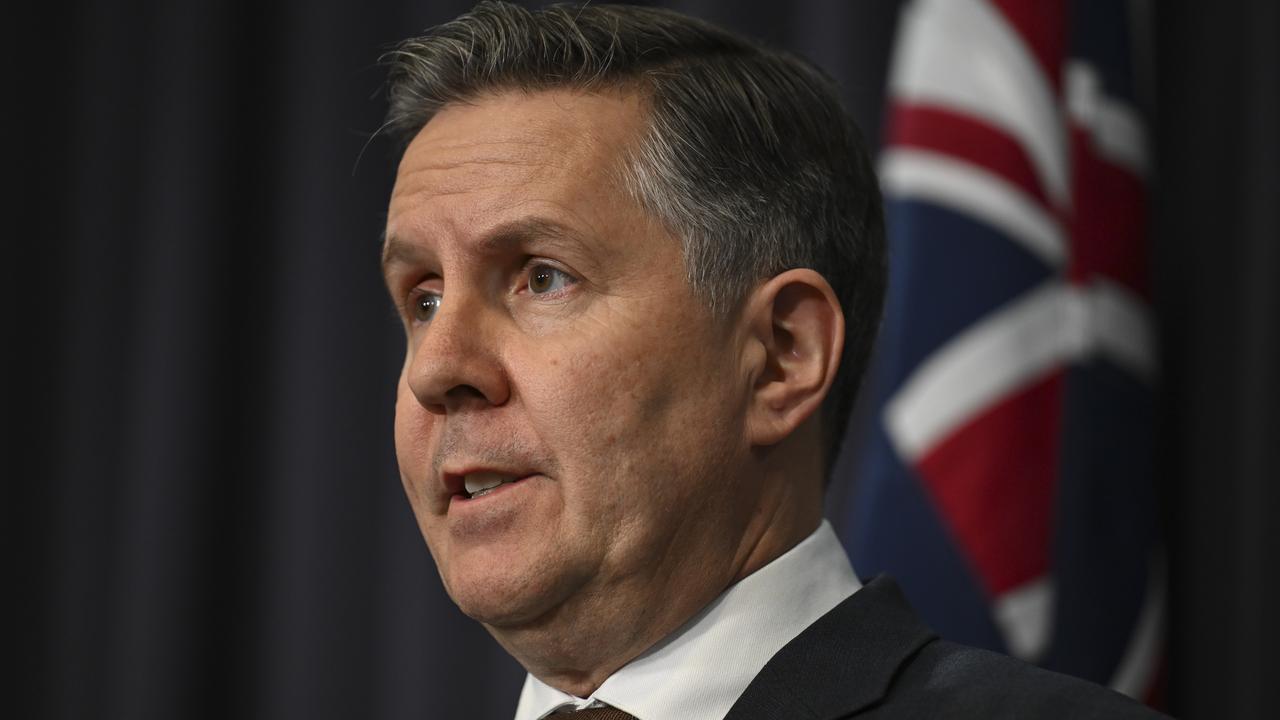
  • ‘Ambition’: Anthony Albanese defends breaking election promise on CGT, negative gearing

    ‘Ambition’: Anthony Albanese defends breaking election promise on CGT, negative gearing

    Ahead of Tuesday’s highly anticipated federal budget, Australian Prime Minister Anthony Albanese has faced intense backlash and publicly defended his government’s decision to walk back a key pre-election pledge, confirming plans to revise rules around negative gearing and capital gains tax (CGT).

    Albanese argued that the shift in policy is rooted in the growing, unaddressed crisis of intergenerational inequality that has only become more entrenched since Labor won the 2022 federal election. In an interview with ABC Radio National, the Prime Minister framed the policy reversal as a necessary response to ongoing housing affordability struggles that have shut a generation of young Australians out of home ownership.

    “Last year was a year of delivery on our core election commitments, but that was never the limit of our ambition,” Albanese told reporters. He drew a parallel to the government’s unexpected fuel excise cut introduced in response to market volatility triggered by the Middle East conflict, noting that policy adjustments are sometimes required to match shifting national circumstances.

    Since the last election, Albanese said, little progress has been made to fix the systemic barriers facing young aspiring homeowners. “Another year has passed, and too many young people are still missing out at property auctions, still renting and paying off someone else’s mortgage, and many are already close to giving up on ever owning their own home,” he said. The Prime Minister added that housing has been a top priority for his government since taking office in 2022, and the upcoming budget will deploy every available policy lever to expand access to home ownership. While the upcoming changes will roll back existing CGT concessions, Albanese emphasized the budget remains centered on delivering cost-of-living relief for working Australians, and the government will always be transparent about any shifts in policy position, motivated by what delivers the best long-term outcome for the nation.

    In the lead-up to the budget, the government has already unveiled a suite of housing-focused measures, including additional funding to boost new housing supply and accelerate construction timelines for new developments. But opposition figures have slammed the policy shift as a broken promise and a cynical cash grab.

    Liberal Senator Jane Hume criticized the turnaround, pointing out that just 12 months ago, Labor repeatedly ruled out any changes to negative gearing and CGT in this parliamentary term. Even 18 months ago, she noted, Treasurer Jim Chalmers publicly stated there was no evidence that changing these tax policies would have any positive impact on housing supply.

    “Labor said life would be better under an Albanese government: you’d have more money in your pocket, electricity prices would fall, housing would become more affordable. All of that has been a lie,” Hume told the ABC. She argued that if Chalmers cannot demonstrate how the tax changes will actually increase housing supply, the move is nothing more than a government revenue grab at the expense of Australian taxpayers, driven by what she claimed was a collapsing federal budget position.

    All eyes now turn to Tuesday, when Chalmers will officially hand down the 2024 federal budget and detail the full scope of the planned tax changes and housing measures.

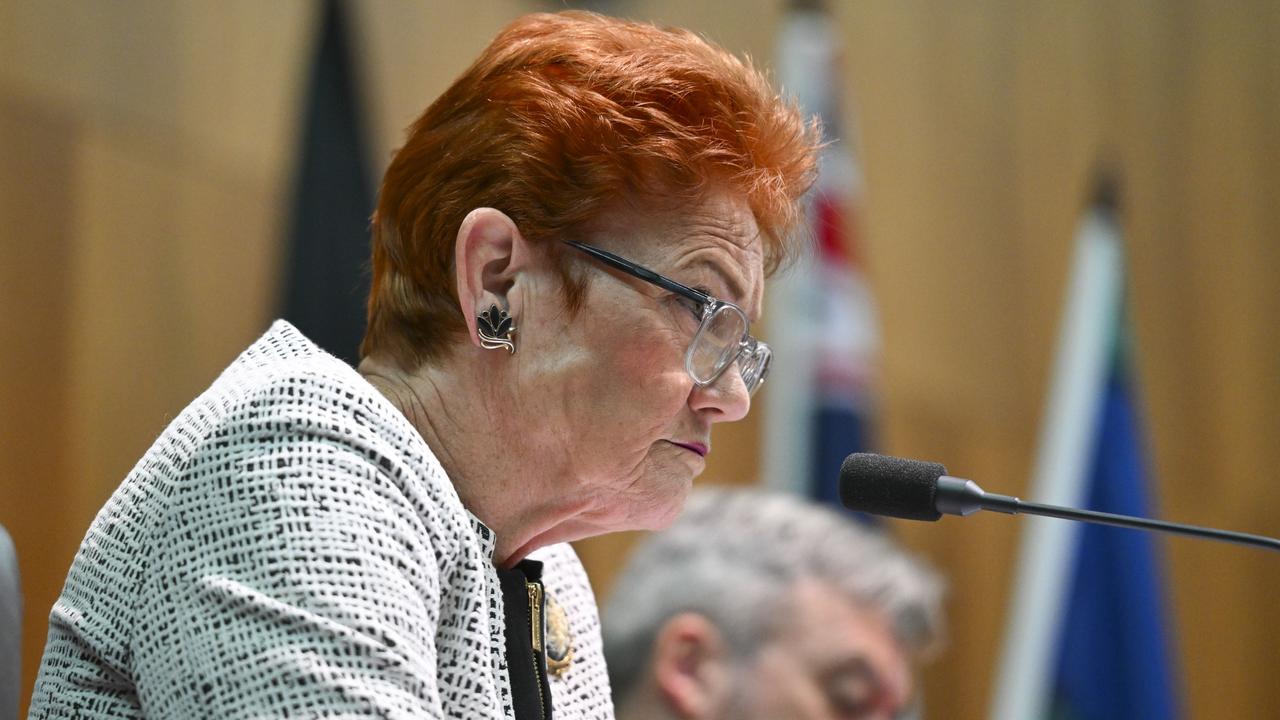
  • One Nation eyes Western Sydney seats ahead of 2028 federal election: Joyce

    One Nation eyes Western Sydney seats ahead of 2028 federal election: Joyce

    Australia’s right-wing populist party One Nation has made an unprecedented breakthrough in national politics, securing its first ever lower house parliamentary seat in a landslide by-election upset that has immediately paved the way for an aggressive expansion into key Sydney battlegrounds ahead of the 2028 federal election.

    On Saturday, One Nation candidate David Farley claimed victory in the rural New South Wales seat of Farrer, ending 77 consecutive years of unbroken control over the electorate by the conservative Liberal-National Coalition. The win marks a historic milestone for the party, which was founded by Pauline Hanson in 1997 and had never before won a seat in Australia’s lower house.

    The expansion plan was revealed by Barnaby Joyce, the former Nationals leader who defected to One Nation last November. Speaking on Seven Network’s *Sunrise* program on Monday, Joyce doubled down on remarks he made on election night, confirming that the party is actively scouting potential candidates to contest Labor-held seats across Western Sydney, a densely populated urban region that has long been a progressive stronghold. When pressed, Joyce did not rule out targeting the seat of McMahon, currently held by federal Energy Minister Chris Bowen, which covers the major working-class suburbs of Blacktown, Penrith, Cumberland and Fairfield.

    “We are very much focused on the western suburbs of Sydney. I was talking to people on the ground from the region just last night,” Joyce told reporters. “To be quite frank, I think we’re talking to potential candidates. People are very enthusiastic. They know we have huge potential as a movement, and they want to be part of that, not part of this empty, performative butterfly chasing exercise that passes for politics today.” Joyce declined to share specific details about the candidates under consideration, but noted they are mostly first- and second-generation Australian residents, reflecting the demographic makeup of the region.

    The stunning by-election result has sparked finger-pointing across the political spectrum, with Prime Minister Anthony Albanese blaming the Coalition’s own strategic missteps for One Nation’s victory. Albanese argued that the fractured conservative bloc had effectively legitimized One Nation over recent years, first by adopting watered-down versions of the party’s populist policy platform, then by directing candidate preferences to One Nation during the by-election.

    “I think the Liberal Party and National Party made a big mistake legitimising One Nation … and then following that up by giving them preferences, they were saying effectively that it was OK to vote for One Nation rather than the traditional conservative party,” Albanese told ABC Radio National.

    The Prime Minister also cited multiple internal rifts within the Coalition as key factors in the upset. The conservative alliance split twice in 2025: first in May, then again the following January, leaving deep divisions among long-time conservative voters. Albanese added that the unceremonious ousting of former Liberal leader Sussan Ley, who had held the Farrer seat for 25 years, also fueled voter anger. Ley was removed from the leadership without even being given the opportunity to deliver a single budget reply, and the leadership challenge was controversially held on the same day as the funeral of a former Liberal colleague, a move Albanese said left a “legacy of betrayal” among Farrer voters.

    Beyond internal conservative chaos, Albanese acknowledged that deep-seated economic anxiety also drove the result. “Quite clearly, there’s a lot of people under financial pressure who feel like the system isn’t working for them,” he said. “And that’s a message for all political parties in the system.”