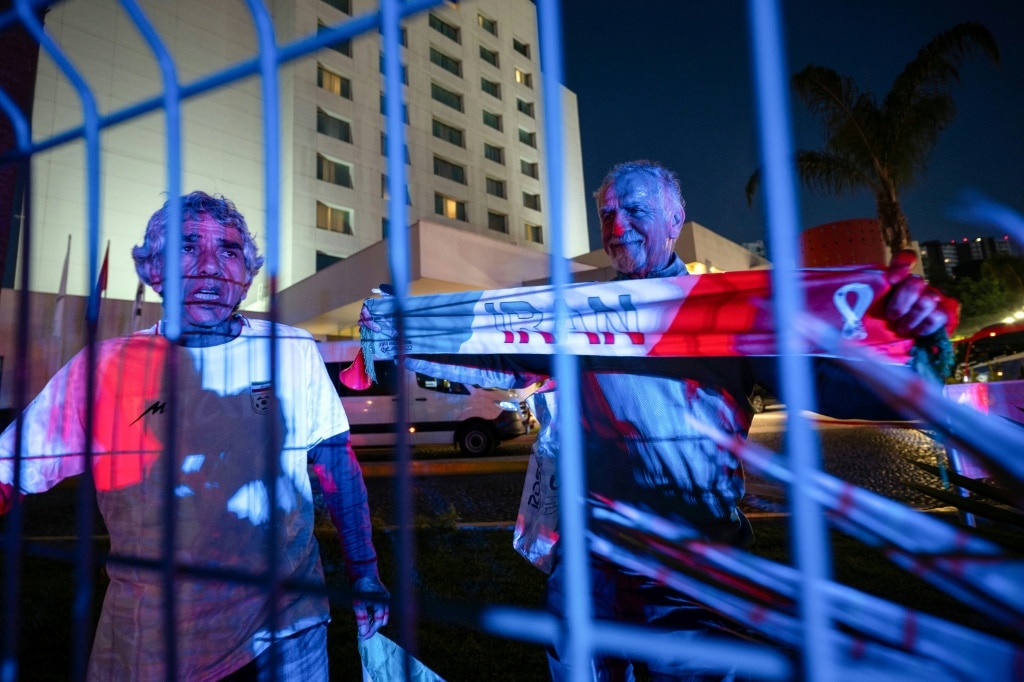
Even as geopolitical conflict rages between Iran and the United States, two lifelong Iranian American football superfans are refusing to let political tensions dim their excitement for the 2026 FIFA World Cup, which is being co-hosted across North America. For 70-year-old Mostafa Pourmand and 64-year-old Reza Mansoor, who have built a 50-year life in San Diego, California, supporting Iran’s national men’s football team Team Melli is more than a hobby — it is a decades-long commitment that has already seen them attend 11 World Cup tournaments combined. This year, even open military conflict between their home nation and their adopted home’s country has not shaken their dedication: the pair say they are eager for nothing more than a historic on-pitch showdown between Iran and the US in the knockout rounds.
To make that long-awaited clash a reality, Iran will need to hit a milestone it has never reached in its World Cup history: advancing beyond the group stage. For Mansoor, the 2026 draw gives Team Melli its best ever shot at breaking that curse, with the team drawn into a group against New Zealand, Egypt and Belgium. “There is a really high chance that we’re going to advance, best chance we’ve ever had,” he told AFP in an interview. Buoyed by that optimism, the pair have already purchased advance tickets for knockout stage matches, to ensure they will be in the stands if Iran advances to a match-up against the US.
Amid renewed deadly clashes in the Strait of Hormuz — a critical global trade waterway where hostilities flared again after a brief lull — Mansoor holds onto the hope that a football match could act as an unexpected bridge between two nations locked in conflict. “I think everyone will love it, and I think that match would actually bring out peace. It could change a lot of things,” he said.
Mansoor’s commitment to Team Melli runs so deep that he has already crossed the Mexican border to Tijuana, where he is staying at the same hotel as the Iranian squad, after the team relocated its pre-tournament training camp from Tucson, Arizona to Mexico. The 2026 tournament will mark Mansoor’s sixth World Cup attendance; he has traveled to every edition Iran qualified for, with the exception of the 1978 tournament.
For both fans, one of their most cherished memories dates back to the 1998 World Cup in France, where Iran claimed its first ever World Cup victory with a dramatic 2-1 win over the US. At the time, FIFA framed the match as one of “fraternity”, a rare moment of connection between two nations that had been estranged since the 1979 Islamic Revolution. Before kickoff, players from both sides exchanged flowers and posed for a joint group photo — a moment Mansoor calls one of the most iconic in World Cup history. That encounter opened the door for a 2000 friendly match between the two nations in Los Angeles, a city nicknamed “Tehrangeles” for its large and vibrant Iranian American community. That match ended in a 1-1 draw, and Pourmand recalls the whole stadium cheering for both sides. “Those were the good old days,” he smiled.
This year’s tournament carries far more tension, however. Since late February, Tehran and Washington have been engaged in open military conflict following joint strikes by Israel and the United States. Iran retaliated by targeting US allies in the Gulf and restricting traffic through the Strait of Hormuz, the global oil artery whose disruption has sent shockwaves through the global economy. This geopolitical turmoil cast significant uncertainty over Iran’s participation in the World Cup, which sees all three of the team’s group stage matches hosted on US soil.
While the Iranian players have received US visas to compete, several support staff and team administrators have been denied entry, prompting the squad to move their training camp across the border to Mexico. Mansoor calls this the most difficult World Cup Iran has experienced out of its seven total tournament appearances.
Beyond geopolitical tensions, the pair also face division within the global Iranian diaspora, where many see the national team as a propaganda tool for the Islamic Republic. During the 2022 World Cup in Qatar, just months after the death of Mahsa Amini in morality police custody sparked nationwide protests that were violently crushed, the team faced loud boos from dissident Iranian fans. Even Iran’s 1-0 loss to the US in that tournament was celebrated by protesters on the streets of Iran. That rift remains fresh: in Los Angeles, the Iranian diaspora held large-scale protests in January to condemn the brutal crackdown on a new popular uprising that left thousands of Iranians dead. Pourmand expects widespread opposition to the national team during matches in LA.
Still, he remains convinced that once the first whistle blows, much of that political animosity will fade for true football fans. “People like me, people like my friend, and the true fans, they are tuning out and want to just focus on the game,” he said. “We’ll deal with the politics after.”