标签: Oceania

大洋洲

  • Idi Amin’s grandson disqualified from Commonwealth boxing bout

    Idi Amin’s grandson disqualified from Commonwealth boxing bout

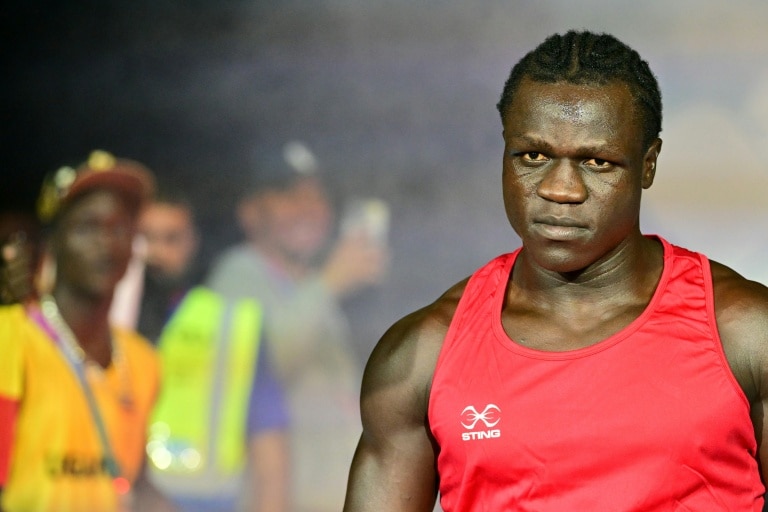
    The 2014 Glasgow Commonwealth Games has delivered a dramatic twist in men’s super-heavyweight boxing, ending the high-profile campaign of Aziz Abdul, grandson of former Ugandan leader Idi Amin, in unexpected disqualification on Wednesday.

    Aziz entered the Games carrying a symbolic nickname that echoed his grandfather’s notorious 1976 declaration where he named himself the “King of Scotland” — a comment that later inspired the Oscar-winning feature film *The Last King Of Scotland*. Ahead of his quarter-final bout, Aziz made headlines across the host nation when he stated his ambition to become the “new king of Scotland”, turning a routine boxing match into one of the most talked-about bouts of the tournament.

    Facing off against England’s Damar Thomas, the contest quickly turned tense and tempestuous. Aziz got off to a strong start in the opening round, landing three powerful sweeping left hooks that put Thomas on the back foot. However, a short, sharp left strike from Thomas left Aziz rattled, forcing the referee to issue a standing count that shifted the momentum of the fight firmly to his opponent.

    The second round saw Aziz lose control of his technique, swinging wildly at Thomas in a series of uncontrolled attacks. He was handed his first point deduction when he repeatedly struck Thomas in the face as the pair broke from a clinch. By the start of the final round, Aziz was already trailing on the judges’ scorecards, putting his gold medal bid in serious jeopardy.

    Midway through the final round, Aziz committed a clear foul that sealed his exit: he jerked his head upward to land an illegal headbutt on Thomas’s chin. The crowd in Glasgow reacted immediately, raining boos down on the Ugandan boxer as the referee handed out his third and final warning, issuing an immediate disqualification. Aziz was jeered out of the ring as his dream of a Commonwealth medal ended in disgrace.

    Speaking to reporters after the bout, an angry Aziz hit out at the referee’s decision, rejecting the outcome entirely. “This referee’s decision is not right and I am not happy,” he said. “Of course it’s unfair. When you watch the previous fights of England, their boxers create a lot of fouls.” The disqualification brings an early end to Aziz’s Commonwealth Games run, closing out one of the most dramatic storylines of this year’s boxing tournament.

  • Japanese population below 120 million for first time in decades

    Japanese population below 120 million for first time in decades

    Japan has hit a grim demographic milestone that underscores the nation’s long-running battle against plummeting birth rates and rapid population aging: new government data released Wednesday confirms the number of Japanese citizens residing within the country has fallen below 120 million for the first time since 1982.

    According to Japan’s Ministry of Internal Affairs and Communications, the domestic Japanese population stood at 119.74 million as of January 1 this year, marking a 0.76% decline from the same point 12 months prior. The country’s Japanese resident population has now shrunk for 17 consecutive years, after hitting a peak in 2009, per the ministry’s annual survey, which has tracked demographic trends since 1968.

    While the count of native Japanese residents continues to drop, the data does offer one small shift: the population of foreign residents living in Japan has reached its highest level since national record-keeping for this group began in 2013. When including non-Japanese residents, Japan’s total overall population currently sits at 123.8 million.

    Global demographic data from the World Bank ranks Japan as having the second-oldest population on Earth, with a median age of 49.9 years — outpaced only by the microstate Monaco. The severity of Japan’s demographic challenge was further highlighted by June government data showing the nation’s total fertility rate, the average number of children a woman is projected to have over her lifetime, fell to another all-time low last year. The rate dropped 0.01 year-over-year to 1.14, marking the 10th consecutive annual decline. The number of live births in 2023 also fell by nearly 15,000 to just over 670,000, the lowest recorded figure since national birth tracking began in 1899.

    As the world’s fourth-largest economy, Japan’s slow-burning demographic crisis has already translated to tangible, widespread economic and social strain. Chronic labor shortages across multiple critical industries, a rapidly expanding public social security bill to cover aging residents’ pensions and healthcare, and a shrinking national tax base are all direct consequences of the population decline and aging trend.

    Against this worrying backdrop, policymakers have turned to innovative strategies to boost marriage rates, with the goal of eventually lifting birth rates over time. A small ray of hope emerged this month from one such initiative: an AI-powered matchmaking app launched by the Tokyo metropolitan government has already resulted in 265 marriages for its users.

    Named TOKYO Enmusubi, the platform launched in September 2024 after a regional survey found roughly 70% of single Tokyo residents interested in marriage were not actively pursuing traditional matchmaking opportunities. To address user reluctance to participate and filter for only those seriously committed to marriage, the app enforces strict eligibility requirements: all applicants must provide official proof of legal single status and pass a structured online interview before gaining access.

    As of June 30 this year, the app had accepted 16,000 registered members, down from roughly 36,000 total applicants, with 760 of those matched pairs reporting they are in committed, serious relationships. One 40-year-old user, who spoke to the government under the pseudonym “Turtle”, described the app as her last chance at finding a partner. “After going on several blind dates, I met my current husband at the end of August, and we started a serious relationship in mid-September,” she shared. “I accepted his proposal at the end of December.”

  • ‘I thought I deserved to be playing’: Oryn Keeley lifts the lid on ‘emotional’ move to the Storm

    ‘I thought I deserved to be playing’: Oryn Keeley lifts the lid on ‘emotional’ move to the Storm

    For decades, the Melbourne Storm has built a reputation for turning promising fringe forwards into elite, household-name talents. Now, the club’s newest recruit, 23-year-old Oryn Keeley, is opening up about the emotional early relocation from the Brisbane-based Dolphins that brought him to Victoria, as he sets out to become the Storm’s next breakout star.

    Keeley originally signed a deal with the Storm at the end of 2025, with the expectation that he would complete the current NRL season with the Dolphins before making the move south. But limited game time at his former club changed those plans fast: the rising forward managed just six appearances for the Dolphins in 2026, four of which came off the bench, stuck behind established starters Kulikefu Finefeuiaki and Connelly Lemuelu. With the Storm battling a rash of injury problems in their forward pack, all stakeholders agreed to an early release that let Keeley make the switch immediately.

    The move wasn’t without its personal challenges. Keeley and his partner were just eight weeks into welcoming their first daughter when they packed up their life in Brisbane to head to Melbourne. His partner’s uncle even made the drive south to haul the couple’s car and Keeley’s beloved coffee machine – a key piece of kit he says matters even more after sampling Brisbane’s superior coffee beans, a quirk he jokes is an easy adjustment to make.

    “It’s definitely not easy when you’re 23 and our daughter was eight weeks at the time,” Keeley told NewsWire. “As a dad, it wasn’t easy, but having my partner trust what I needed was massive because she said that we need to be happy and I need to have a fair opportunity to play. That meant coming down here early. There were some tough conversations, but I’m very grateful that the Dolphins did release me because I’ve never been so happy in my life, and my family is very happy. It was very tough, but these tough times that I had to go through made me a better person and have made my family stronger. We know that the next challenge that comes up, we can defeat it. Whatever is thrown at us, we will deal with it.”

    What struck Keeley most in the transition was the overwhelming support the Storm provided before and during the move, a level of care that brought him to tears during his official jersey presentation ahead of his club debut against the Titans earlier this month, just days after arriving in Melbourne. So raw was his emotion that he asked his partner to wait outside the presentation to avoid being completely overwhelmed.

    “I was emotional that a great club like this wanted to bring a kid from Gosford down and give him an opportunity to play here,” he said. “It gives me goosebumps thinking about playing for this club. The faith that the club put into me is something they didn’t have to do, which is why I was a bit emotional when I looked at the jersey and saw my name on it. To have the backing of Craig [Storm coach Craig Bellamy] and the senior group to throw me in in my first week hit me in the face when I got up to speak. I always get emotional in those types of things, but that one was very emotional because it’s an honour to play at this club. I was like a little kid when I got up there.”

    Keeley’s signing was widely heralded as a major coup for the Storm, after a strong 2025 campaign that included a two-try man-of-the-match performance in the 2024 State Championship final. Stuck behind senior forwards at the Dolphins, the young back-rower jumped at the chance to join a club famous for developing edge forwards into world-class talent – a legacy that includes club greats Ryan Hoffman, Adam Blair, Tohu Harris and current star Eli Katoa, all of whom thrived in Melbourne’s system.

    “I thought I deserved to be playing now, but that wasn’t the case,” Keeley said. “They had lots of players there, so I thought I’d make the move early so I could learn the system so I could be ready next year and be aware of what’s required. It was a tough move, but it was what I needed to do for my football career and my family. As a young kid, I think everyone can agree that you’d watch Melbourne on a Friday night and you knew what you were in for. You look at the calibre of players they’ve produced, and it’s ridiculous.”

    Keeley, whose brother already supports the Storm, says he’s most excited to learn from Katoa, who he describes as the prototypical modern NRL back-rower. “I look at Eli Katoa and think what he’s done for the club already, so I can’t wait to go to battle with a player like him. It’s such a rich history here, so it’s exciting that I get to be a part of it. I think Eli is the best back-rower in the comp in terms of everything from how he gets up for the high ball, how he runs the ball and how tough he is. He’s the prototypical back-rower. That made me excited to come here and learn off him. You watch all of the back-rowers who have played here, and they all blossomed in the Storm system. For me to take my game to the next level, the best thing was for me to come here.”

    Keeley’s insights into the Storm’s culture came long before his signing, from former Storm legends Felise Kaufusi and the Bromwich brothers, who Keeley played alongside at the Dolphins. “The way they used to talk about this club, they put them on a pedestal,” he said. “If you want to become good and become great, that’s what Melbourne only accept. There’s a standard, and you don’t go below it. That made me excited that I could come down here and learn that and try to be like that every day. I think the way they hold themselves off the field – win, lose or draw – is consistent. They drill the same message into you all week and you’re expected to go out there and know what to do because of the messages you’ve received from the coaching staff.”

    This Friday night, Keeley will make his fourth appearance for the Storm, starting against the Canterbury Bulldogs, with the club facing a high-stakes run of fixtures: Melbourne’s record-breaking consecutive NRL finals streak will come to an end unless the club wins every one of its remaining matches this season. For Keeley, though, every game is just another step in a journey that’s already changed his career and his family’s future.

  • Truck and bus drivers face price hike as major fuel discount is axed

    Truck and bus drivers face price hike as major fuel discount is axed

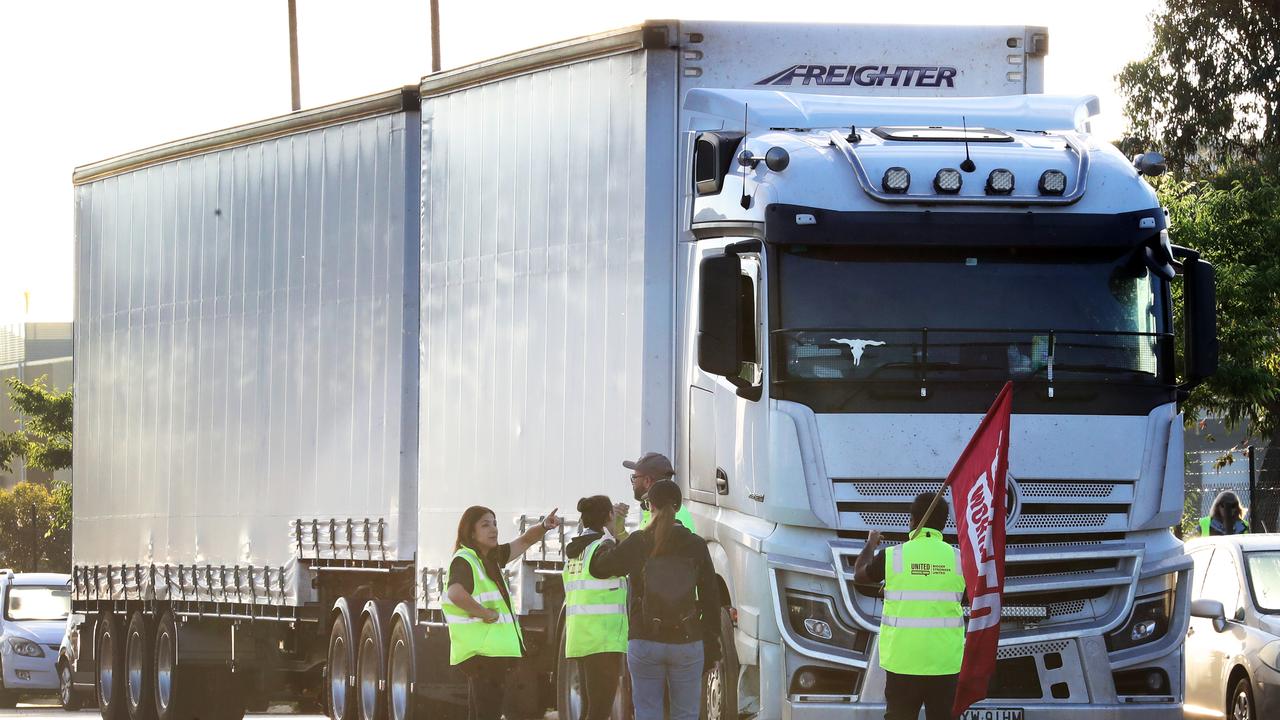
    Almost four months after rolling out emergency fuel relief for Australia’s heavy vehicle operators in response to Middle East war-driven price volatility, the federal government is winding the temporary support measure back next week, with the discount set to expire alongside the national fuel excise cut on August 3.

    Finance Minister Katy Gallagher officially confirmed the end of the Heavy Vehicle Road User Charge (RUC) discount in an interview with ABC Radio National on Friday, making clear that the policy was always designed as a short-term buffer to counter price shocks sparked by the outbreak of conflict in the Middle East earlier this year.

    “They were all temporary measures that were taken at a particular time to deal with what we saw from the initial outbreak of the war in the Middle East,” Gallagher told host Sally Sara. When pressed on whether the government would extend the support amid ongoing cost pressures for motorists, the senator confirmed her statement reflected the official cabinet position, ending speculation that the discount could be extended.

    The relief package, launched on April 1, included two key measures to support heavy transport operators including truck, bus, and coach drivers who faced projected sharp spikes in fuel costs following the escalation of Middle East tensions. The centerpiece was a 32.4 cent per litre discount on fuel, translating to a saving of roughly $64.80 for a standard 200-litre refuel. The government also pushed back the next scheduled statutory increase to the Heavy Vehicle Road User Charge by six months to ease additional cost burdens when fuel markets were at their most volatile.

    At the time the policy was introduced, Transport Minister Catherine King framed the support as a critical investment to protect the essential work that heavy vehicle operators carry out across Australia, noting that the sector forms the backbone of national supply chains that keep grocery shelves stocked and critical goods moving to communities.

    The expiration of the discount means heavy vehicle operators will see fuel costs revert to pre-conflict levels starting Monday, coming even as ongoing global price volatility continues to put upward pressure on transport costs for Australian motorists across all vehicle classes. Industry groups have raised fresh concerns that the end of the discount will flow through to higher freight costs, which could in turn push up consumer prices for everyday goods already stretched by persistent inflation.

    The end of the heavy vehicle discount aligns with the scheduled expiration of the broader national fuel excise cut, another temporary government measure introduced earlier this year to counter Middle East conflict-driven price increases that will also end on August 3.

  • Victoria appoints Nicole Faltum as its WNCL captain, taking over from Sophie Molineux

    Victoria appoints Nicole Faltum as its WNCL captain, taking over from Sophie Molineux

    After a winless, disappointing 2025-26 season that Victorian cricket fans are eager to put behind them, a new leadership era has begun for the state’s Women’s National Cricket League (WNCL) side. Nicole Faltum, the team’s veteran wicketkeeper, will be officially announced as the squad’s new skipper this Thursday, stepping into the role previously held by Australian national team champion Sophie Molineux.

    Even before her formal appointment, Faltum has already moved quickly to reset team culture and lay the groundwork for a turnaround, bringing a fresh, player-centric philosophy to the struggling side. In one of her first symbolic gestures as captain, Faltum created a blank team canvas emblazoned with every squad member’s initials and a sketch of the WNCL championship trophy, a visual tool she said she used to manifest a successful upcoming campaign that resonated strongly with her teammates.

    Faltum has already held extensive collaborative meetings with players and coaching staff, and says she has never seen the Victorian program more aligned on its core goals heading into a new season. Her leadership philosophy centers on three key pillars: authenticity, enjoyment, and relentless performance.

    “I made a point to be clear from the start about how I want to run things and shape this program,” Faltum explained. “One of my core priorities is encouraging every person in this group to be 100 percent authentic to who they are. We will have shared team values and standards, but there’s no one-size-fits-all way to contribute – that’s something I want every player and staff member to feel.”

    For Faltum, prioritizing fun and passion for the sport is non-negotiable, even at the elite level. “This is our job, and we are here to perform, but so many people would love to be in our position playing professional cricket,” she said. “We can’t lose sight of how lucky we are, and that joy has to come through in how we play.”

    That focus on culture does not come at the cost of ambition, Faltum emphasized: “There’s no hiding it – I want to win every single game we play. At the end of the day, everything we do revolves around performance, and that’s going to be our driving force.”

    Victoria’s disastrous previous campaign, which ended with the squad rooted at the bottom of the ladder without a single win, has given Faltum a clear starting point for improvement. She argues that many of last season’s struggles stemmed from gaps in cricket IQ and game awareness – areas she says are entirely teachable with intentional preparation.

    “People often joke that teams get accustomed to either winning or losing, and while that’s partly just a narrative, there’s a lot of truth to it too,” Faltum noted. “When we reflected on last season, most of our issues came down to decision-making and game awareness that we can actually work on. We’ve already made that a core focus of pre-season.”

    Faltum explained that the team’s pre-season work balances on-field skill development with off-field tactical learning: “Half of our work is hands-on skill work, but the other half is breaking down past matches in the meeting room. When you take the emotion and pressure of a live game out of it, even experienced players can learn new things about the game – that’s been really rewarding for all of us so far.”

    Beyond tactical preparation, Faltum has prioritized building personal connections with every member of the squad. Alongside the shared team canvas, she gifted each player a personalized towel embroidered with their initials, and wrote individual handwritten cards highlighting each player’s unique strengths and value to the team.

    The squad will head to Mildura next week for a pre-season training camp to finalize preparations, and will kick off their 2026-27 campaign under lights against South Australia on September 29. For Faltum and her side, the blank canvas of the new captaincy era offers the chance to build something special after a year to forget.

  • Trump says US to hit Iran hard

    Trump says US to hit Iran hard

    A fragile lull in Middle East hostilities has collapsed, sparking fears of a broader regional conflict after Iran launched missile strikes against U.S. bases in Jordan, prompting a harsh warning of massive retaliation from U.S. President Donald Trump. The resumption of cross-front attacks has sent global energy markets into turmoil, with oil prices surging 5% in a single day as investors braced for potential disruptions to critical global energy supply chains.

    The latest wave of violence ended a brief ceasefire that had raised cautious hopes for renewed diplomatic negotiations to de-escalate the years-long regional standoff. On Wednesday alone, multiple fronts flared up simultaneously: Saudi Arabia and the United States carried out joint air strikes on militant positions across Iraq, while Israel accused Iran-backed Hezbollah of breaking an existing truce along the Lebanon-Israel border.

    For two consecutive days, Saudi Arabia — the world’s largest crude oil exporter — has suffered drone attacks on its critical crude production infrastructure, which Riyadh has blamed on Tehran-aligned Iraqi armed groups. In response to the Jordan strike, Trump made his stance clear in an interview with Fox News, saying: “We’ll be hitting them hard…We are going to beat the ‘effing s’ out of them.”

    Saudi security researcher Hesham Alghannam told Agence France-Presse that Iran is leveraging its network of regional proxy groups to maintain strategic pressure on Western and allied Arab states, even as diplomatic channels remain open to absorb international scrutiny. After Iran’s missile attack on Jordan, Jordan’s military confirmed it intercepted five incoming Iranian projectiles, while Iran’s Islamic Revolutionary Guard Corps (IRGC) confirmed it targeted U.S. military bases stationed on Jordanian territory. “As long as the threats against the Islamic Republic of Iran continue…the resistance will continue,” the IRGC statement added.

    Iranian state media later reported a U.S. counter-strike near the border town of Piranshahr adjacent to Iraq, with initial reports indicating the strike hit an unpopulated area and caused no casualties. Along the Lebanon-Israel border, the Israeli military accused Hezbollah of launching a drone attack against an Israeli vehicle overnight inside Lebanese territory, labeling the incident a “blatant violation of the existing ceasefire”. Israel joined U.S. operations against Iranian targets in the early weeks of the current conflict while fighting Hezbollah in Lebanon, but has not yet joined the latest round of strikes against Iran.

    The sudden escalation sent shockwaves through global financial markets on Wednesday. U.S. stock indexes closed sharply lower amid the oil price jump, while yields on 30-year U.S. Treasury bonds hit their highest level since 2007, reflecting growing investor anxiety over inflation risks from higher energy costs.

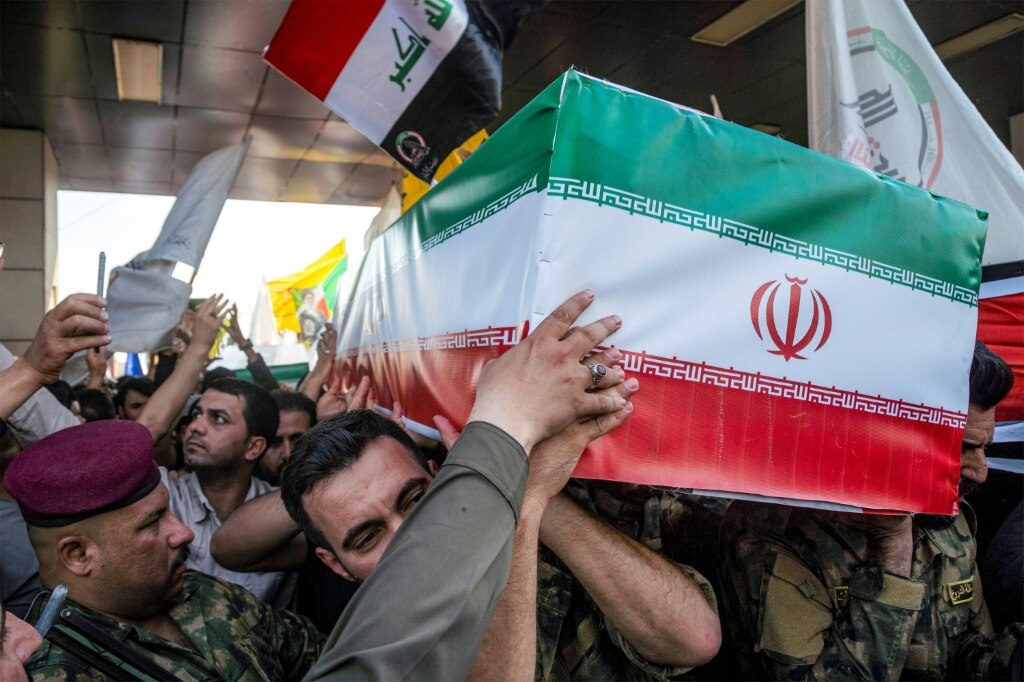
    The joint U.S.-Saudi air strikes in Iraq targeted logistics and weapons depots belonging to an Iran-aligned militant faction, according to statements from the U.S. military. Iraq’s Hashed al-Shaabi (Popular Mobilisation Forces, PMF), an integrated state security alliance originally formed in 2014 to fight extremist jihadist groups, said the strikes killed at least 20 of its members. The PMF denounced the attack as a “dangerous escalation” targeting an official Iraqi security institution. Two senior PMF officials confirmed five Iranian military advisors were among those killed, and AFP correspondents on the ground saw coffins draped in Iranian flags prepared for burial. The PMF includes multiple brigades aligned with Iran that often operate independently of Iraqi central government command.

    The Iraqi government formally condemned the joint strikes, releasing a statement rejecting “all acts of aggression, regardless of the party responsible or the justifications presented”. Iraq’s Ministerial Council for National Security said it would “confront any violation of Iraq’s sovereignty, and prevent any source from using Iraqi territory to threaten neighbouring states”. Despite this condemnation, President Trump told Fox News the strikes were “coordinated with the Iraqi government”. The operation comes amid mounting U.S. pressure on Baghdad to disarm pro-Iran militias operating within its borders; earlier this month, Iraqi Prime Minister Ali al-Zaidi conducted official visits to both Washington and Tehran in an effort to balance competing demands.

    The days-long ceasefire that collapsed this week had been billed by U.S. officials as a window to restart negotiations on multiple flashpoints, most notably the Strait of Hormuz — a critical global energy chokepoint that Iran has blockaded for much of the ongoing conflict. The IRGC recently announced it intercepted and seized three commercial tankers transiting the strait, insisting Iran exercises “full control” over the waterway that was previously open to unrestricted international passage. Tehran has stated it will maintain control of the key energy conduit, and has announced plans to charge transit fees for commercial ships passing through the strait — a policy the U.S. strongly opposes. In response, Washington announced new sanctions targeting entities linked to the IRGC, accusing the Guard of extorting fees from transiting commercial vessels.

    Iran’s blockade of the Strait of Hormuz has increased the strategic importance of the Red Sea, which Riyadh now uses as its alternative primary export route for crude oil, amplifying existing tensions over security in that critical waterway as well.

  • Inflation data gives Reserve Bank reason to pause looming interest rate hike

    Inflation data gives Reserve Bank reason to pause looming interest rate hike

    Australia’s battle against persistent inflation has hit a small but welcome milestone, with new official data showing headline consumer price growth cooled slightly in June – but top economic analysts warn ordinary households will not feel tangible relief from cost-of-living strains for a full year, and interest rate hikes remain on the table for the country’s central bank.

    New figures published by the Australian Bureau of Statistics on Wednesday put annual headline inflation at 3.8% through the end of June, a modest drop from the 4.0% recorded in May and the 4.2% reading from April. The lower-than-expected result has given some tentative hope to mortgage holders, with economists noting there is no clear trigger in the data to force the Reserve Bank of Australia (RBA) to lift interest rates at its upcoming August policy meeting.

    National Australia Bank (NAB) chief economist Sally Auld framed the latest inflation update as a small win in what remains a difficult fight to bring price growth back to the RBA’s 2-3% target range. “Whether you look at monthly, quarterly or annual readings, or core versus headline metrics, most measures came in a touch softer than anticipated,” Auld told NewsWire in an interview. “There’s no smoking gun in this data for the RBA to act in August, but we’re certainly not out of the woods yet.”

    Auld pointed to growing global headwinds that continue to threaten Australia’s inflation outlook, specifically the recent escalation of tensions in the Middle East that has already driven up global fuel prices. Those price gains will keep upward pressure on the RBA’s inflation forecasts, she said, making it far too early for the central bank to declare victory over persistent price growth. Even with the June improvement, Auld noted the RBA will remain firmly cautious, and any talk of cutting interest rates remains distant. “It’s a long way away from declaring victory on the inflation challenge or opening up the possibility of lower rates,” she added.

    Federal Treasurer Jim Chalmers echoed that cautious optimism, describing the lower inflation reading as “encouraging” while stressing the government still has more work to do to tame price pressures. “We don’t get too carried away by one set of data, one set of numbers from day to day or from week to week,” Chalmers said. “But obviously it’s a positive development that these numbers have come in lower than expected by the market, by the Treasury and by the Reserve Bank.” He also confirmed that ongoing geopolitical tensions between the United States and Iran will continue to put upward pressure on domestic inflation and the broader Australian economy.

    While headline inflation showed clear improvement, economists remain divided over the RBA’s preferred inflation metric: the trimmed mean rate, which excludes the most volatile 15% of price changes on both the upper and lower end to filter out temporary swings like sharp petrol price shifts. That core measure held steady at 3.6% in June, unchanged from previous readings and still well above the central bank’s target.

    KPMG chief economist Brendan Rynne argued that the sticky core inflation reading keeps another interest rate hike on the table for August, saying the RBA is stuck between competing priorities. “The economy is not in great shape and uncertainty driven by global and domestic factors is elevated, yet it seems inevitable that further rate rises may be necessary to bring inflation back inside the RBA’s target range within a reasonable time frame,” Rynne explained, noting the current 4.1% cash rate is still likely not high enough to bring price growth under control quickly.

    Even with the modest drop in headline inflation, cost-of-living pressures remain the top burden for most Australian households, and that strain is unlikely to ease meaningfully until mid-2025, Auld said. “Generally speaking the cost-of-living issue is still a dominant one for many bank customers and I don’t think that has changed materially in the last little while,” she said. “That is probably going to linger as we move into next year, and it probably won’t be until this time next year until households get some relief on that.”

    The pressure has also spread to business customers, who have so far absorbed higher input costs by accepting lower profit margins rather than passing all price increases onto consumers, Auld added. Over the next six to 12 months, the Australian economy can expect slower growth, a continued correction in the overheated housing market, and a modest drift higher in the national unemployment rate, she predicted.

    Still, there is a small silver lining on the horizon: if the economy weathers that period of slower growth, the RBA should be able to confirm inflation is under control and begin to normalize interest rates with modest cuts by this time next year, Auld said. “This is the nature of inflation challenges, they are not costless in the sense that we have to go through a period of below trend growth in order to get inflation back under control,” she noted.

  • Nigeria dismantles meth lab, but fears of Mexican cartel links linger

    Nigeria dismantles meth lab, but fears of Mexican cartel links linger

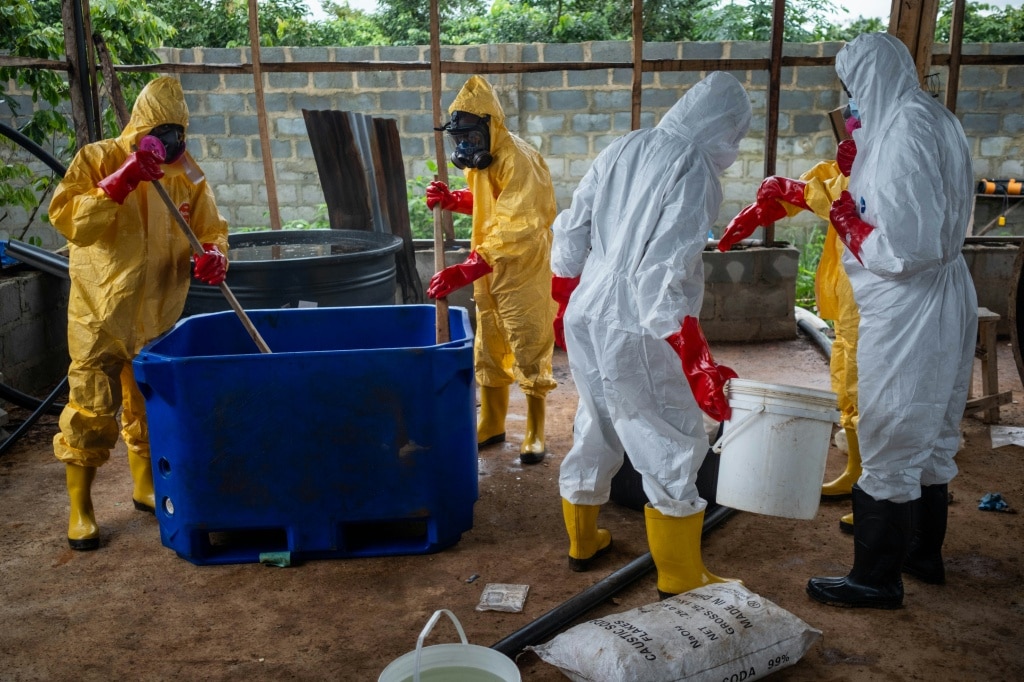
    Deep within a dense forest straddling two rural villages in Nigeria’s southwestern Ogun State, an abandoned shed hid a chilling secret: tons of unprocessed chemicals, large cooking cauldrons, and crude filtration equipment, all remnants of an alleged $360 million transnational methamphetamine operation. On Wednesday, Nigeria’s National Drug Law Enforcement Agency (NDLEA) oversaw the full dismantling of the facility, the largest meth production hub ever uncovered in the country, a move that has renewed long-simmering concerns about the expansion of Mexican cartel influence into West Africa.

    The dismantling came one week after an unprecedented on-site court proceeding, held as part of an ongoing trial of three Mexican nationals linked to the facility. An AFP correspondent accompanied NDLEA officers as they brought in local tradespeople to cut apart and remove the lab’s production infrastructure, nearly five months after the operation was first raided. In May, law enforcement teams arrested 10 suspects – seven Nigerians and three foreign nationals – during raids on the forest lab and two high-end residential properties in Lagos’ upscale neighborhoods. When the dust settled, they had seized finished meth and precursor chemicals worth an estimated $360 million on the illegal market. While the trial has moved back to indoor courtrooms in Lagos, a judge ordered the site cleared for urgent environmental reasons, with residual toxic chemicals posing a major risk to local groundwater and air quality. When the AFP visited the site this week, abandoned barrels of chemicals and partially processed meth were still emitting acrid, choking vapors that lingered across the surrounding forest.

    For decades, West Africa has served as a key transit hub for drug trafficking, most commonly for cocaine moving from South America to consumer markets in Europe. But the Ogun State bust marks a significant shift: rather than just moving drugs through the region, transnational criminal networks are now setting up local production operations for highly addictive synthetic drugs like meth. Local security officials say the scale and professional structure of the Nigerian lab is clear evidence of direct involvement by Mexican cartels, which have been exporting their illicit production expertise to West Africa since at least the early 2010s. A 2019 report from the Institute for Security Studies already documented a steady rise in meth seizures and lab raids across Nigeria since 2011, a trend that has continued into 2024: just last June, another Mexican national was arrested during a separate meth bust in Oyo State, central Nigeria.

    Despite the growing threat from transnational cartels, NDLEA officials say they are prepared to contain the crisis. “About our readiness to combat the cartel… yes, we are ready,” James Taalba, the NDLEA’s deputy commander of narcotics, told AFP. “We have people who are capable of curtailing such a situation.”

    For local residents living just kilometers from the lab, the discovery came as a shock. Florence Banjo, a 59-year-old farmer who lives in Abidagba, one of the villages bordering the forest site, said she had noticed a foul stench drifting from the forest for months, but assumed it came from a local pigsty. Like many other area residents, she had heard rumors the cleared forest land was being prepared for a new housing development – a prospect that left her excited, as she hoped the project would bring paved roads to her isolated community. “We heard rumours that they were going to build an estate there, and I was happy that they’d finally pave the road that leads into our village,” Banjo said. “We were disappointed.”

    Public health experts warn that the rise of local meth production in Nigeria poses an acute threat to the country’s already overstretched healthcare system. Small amounts of contraband that slip past traffickers have already begun to enter domestic drug markets, creating a public health crisis that poorly funded local health services are ill-equipped to address.

  • Spanish wildfire evacuees go home as France hit by new heat alert

    Spanish wildfire evacuees go home as France hit by new heat alert

    A devastating season of climate-fueled wildfires is unfolding across Western Europe, bringing a mixed wave of cautious relief and fresh anxiety this week as evacuees in Spain begin returning to their homes while France braces for a new dangerous heatwave that threatens to reignite raging blazes.

    Over the past seven days, neighboring Spain and France have faced some of the most destructive forest fire events in modern history. Vast swathes of woodland and populated areas have been reduced to ash, forcing more than 30,000 people to flee their properties to escape the advancing flames.

    On Wednesday, Spanish authorities lifted all remaining evacuation orders for Avila province, marking a full step toward recovery one day after lifting similar orders for multiple districts in the Madrid surrounding region. For some returning residents, the moment was a quiet celebration: 70-something Maria Jesus Perez Blanca, one of a dozen residents who gathered at local cafes in the Madrid-western town of Aldea del Fresno on Wednesday morning, called the return home a joyous occasion, saying she had been counting down the minutes to enjoy her morning coffee and breakfast in her own space.

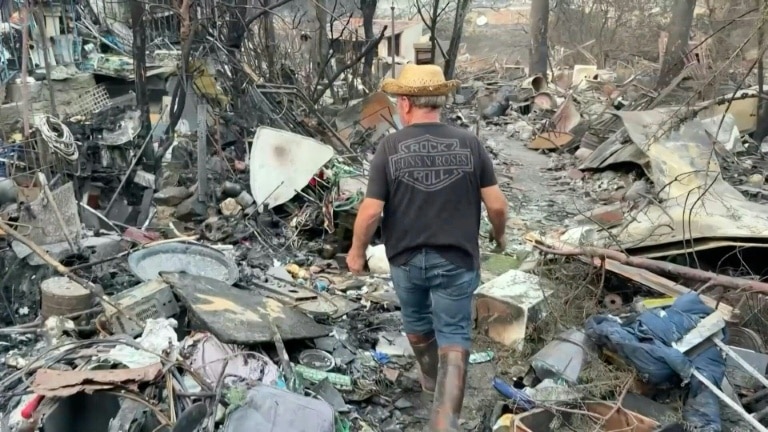
    But just 12 kilometers away, in Pelayos de la Presa, the story was one of total loss. David Rodriguez was bulldozing the blackened, collapsed remains of the family home his father built four decades ago, which had been completely consumed by the fire. “It’s a disaster. Just look at it,” he told reporters. “All my memories, everything I worked for and owned was here. Everything is gone.”

    Spanish officials credited cooler, wetter overnight conditions with allowing fire crews to fully stabilize the wildfire perimeter across most affected areas. Prime Minister Pedro Sanchez noted that the coming 24 hours would be “decisive” in the effort to fully extinguish all remaining hotspots and flare-ups.

    Across the border in France’s Gironde region, the massive wildfire burning west of Bordeaux—one of the country’s most famous winemaking hubs—has also been held in check after a second consecutive calm night, bringing tentative optimism to emergency teams. Still, that optimism is tempered by the impending arrival of the country’s fourth major heatwave of an already record-hot summer, which is forecast to send temperatures soaring and worsen fire conditions.

    Already, crews supported by volunteer civilians and water-bombing aircraft have been working around the clock to contain a new outbreak near the coastal resort town of Lanton, west of Bordeaux. For 67-year-old volunteer Jean-Claude Bonnet, the scale of destruction is unlike anything he has witnessed in his lifetime. “The worst part is seeing the animals that have been burnt to death by the side of the road,” he said.

    The volatile conditions have already forced crews to repeatedly re-attack contained areas: shortly after water-bombing planes departed the Lanton fire line, a gust of superheated wind carried stinging hot ash off burning pine trees, whipping the flames back to life and forcing emergency teams to resume their containment work.

    Forecasts predict temperatures will reach 41°C across parts of Gironde and the southern Landes region, and fire officials warn that strengthening winds could stir dormant embers and trigger new large-scale flare-ups of the main Bordeaux-area blaze. Even with these risks, authorities announced that 57,000 residents evacuated from three towns near Bordeaux would be allowed to return to their homes starting this week, five days after they were forced to leave.

    Regional fire services report they are nearing completion of a 127-kilometer firebreak to contain the Gironde blaze, a massive effort that has been supported by a surge of civilian volunteer support across the region. Firefighting Captain Wilfried Schneider highlighted the wave of public solidarity that has emerged amid the crisis, saying: “We’re seeing this outpouring of solidarity — you can see it at the water points, you can see it at our command posts, where we have more to eat and drink than we could possibly need.”

    This wildfire crisis is not limited to Spain and France: it is part of a continent-wide disaster driven by human-caused climate change, scientists confirm. A string of record-breaking heatwaves combined with a widespread, severe drought across Europe have turned normally green vegetation into dry tinder, after unusually wet spring weather that created extra vegetation growth that is now fully parched.

    Data from the European Forest Fire Information System shows that Spain has already seen 207,000 hectares of land burn between January and July 2023—one of the largest five-month totals recorded in the country’s modern history. For France, the toll is even more unprecedented: roughly 92,000 hectares have burned over the same period, the largest total recorded in 20 years of official record-keeping.

    While Western Europe is currently the epicenter of the crisis, the European Union warned this week that fire-friendly conditions are expected to spread toward Central Europe over the coming days. Emergency crews are already battling new blazes across southern Europe: a large fire is active on the Greek island of Paros, and three firefighters have already died battling blazes in Crete and near the Peloponnese port of Gytheio. In southern Turkey, wildfires near popular tourist beach destinations have forced hundreds of people to evacuate, with hundreds of firefighters working to contain the spread.

  • BTS pulls out of Grammys after Asian pop category introduction

    BTS pulls out of Grammys after Asian pop category introduction

    One of the world’s most influential musical acts, global K-pop supergroup BTS, has announced it will not submit any of its work for consideration at the upcoming Grammy Awards, a decision that comes immediately after the Recording Academy introduced a new standalone award category: Best Asian Pop Music Performance.

    The announcement, made Wednesday via synchronized posts across each member’s individual Instagram accounts, has sent ripples through the global music industry, reigniting long-simmering debates about racial categorization and inclusion in mainstream Western award shows.

    Prior to this announcement, the South Korean seven-piece band was widely considered a top contender for multiple Grammy general field categories, most notably Album of the Year, for its latest comeback record *ARIRANG*. Released following the group’s hiatus for mandatory South Korean military service, the album — titled for a iconic Korean folk song — has become one of the highest-selling releases of 2024, blending extensive English lyrics with explorations of modern Korean identity.

    In their official statement, BTS outlined the core reasoning behind their choice to skip the 2025 awards cycle. “We have decided not to enter the Grammys this year,” the group wrote. “We hope that music is heard and loved for what it is, rather than being defined by region or language.”

    Industry observers note that *ARIRANG* would not have even qualified for the new Best Asian Pop Music Performance category anyway. Among five new award categories announced by the Recording Academy last month, the new Asian pop prize requires entries to make “meaningful use” of at least one Asian language — a threshold the predominantly English-language *ARIRANG* does not meet.

    The Recording Academy has defended the new category, framing it as a step toward greater inclusion, saying the award was created to honor “artistic excellence in Asian pop music performances originating from or widely recognized within Asian markets, including but not limited to K-pop, J-pop and C-pop.”

    However, the announcement of the new category immediately drew divided reactions from music fans and industry commentators alike. Critics have argued that segregating Asian pop artists into a dedicated separate category ghettoizes their work, rather than allowing them to compete on equal footing with Western and other global artists for the awards’ most prestigious general field honors.

    This is not BTS’s first interaction with the Grammys: the group made history as the first all-South Korean act to top Billboard’s U.S. Hot 100 singles chart with their 2020 all-English track “Dynamite,” and has since performed at the Grammy ceremony multiple times and earned several nominations, including a nod for Best Music Video. Despite their unprecedented global commercial success, the group has never taken home a Grammy win.

    BTS’s boycott adds significant weight to growing calls for the Recording Academy to re-evaluate its approach to categorizing non-Western artists, with many industry analysts expecting the conversation around racial and genre segregation in major award shows to intensify in the coming months ahead of the 2025 Grammy ceremony.