A fragile lull in Middle East hostilities has collapsed, sparking fears of a broader regional conflict after Iran launched missile strikes against U.S. bases in Jordan, prompting a harsh warning of massive retaliation from U.S. President Donald Trump. The resumption of cross-front attacks has sent global energy markets into turmoil, with oil prices surging 5% in a single day as investors braced for potential disruptions to critical global energy supply chains.
The latest wave of violence ended a brief ceasefire that had raised cautious hopes for renewed diplomatic negotiations to de-escalate the years-long regional standoff. On Wednesday alone, multiple fronts flared up simultaneously: Saudi Arabia and the United States carried out joint air strikes on militant positions across Iraq, while Israel accused Iran-backed Hezbollah of breaking an existing truce along the Lebanon-Israel border.
For two consecutive days, Saudi Arabia — the world’s largest crude oil exporter — has suffered drone attacks on its critical crude production infrastructure, which Riyadh has blamed on Tehran-aligned Iraqi armed groups. In response to the Jordan strike, Trump made his stance clear in an interview with Fox News, saying: “We’ll be hitting them hard…We are going to beat the ‘effing s’ out of them.”
Saudi security researcher Hesham Alghannam told Agence France-Presse that Iran is leveraging its network of regional proxy groups to maintain strategic pressure on Western and allied Arab states, even as diplomatic channels remain open to absorb international scrutiny. After Iran’s missile attack on Jordan, Jordan’s military confirmed it intercepted five incoming Iranian projectiles, while Iran’s Islamic Revolutionary Guard Corps (IRGC) confirmed it targeted U.S. military bases stationed on Jordanian territory. “As long as the threats against the Islamic Republic of Iran continue…the resistance will continue,” the IRGC statement added.
Iranian state media later reported a U.S. counter-strike near the border town of Piranshahr adjacent to Iraq, with initial reports indicating the strike hit an unpopulated area and caused no casualties. Along the Lebanon-Israel border, the Israeli military accused Hezbollah of launching a drone attack against an Israeli vehicle overnight inside Lebanese territory, labeling the incident a “blatant violation of the existing ceasefire”. Israel joined U.S. operations against Iranian targets in the early weeks of the current conflict while fighting Hezbollah in Lebanon, but has not yet joined the latest round of strikes against Iran.
The sudden escalation sent shockwaves through global financial markets on Wednesday. U.S. stock indexes closed sharply lower amid the oil price jump, while yields on 30-year U.S. Treasury bonds hit their highest level since 2007, reflecting growing investor anxiety over inflation risks from higher energy costs.
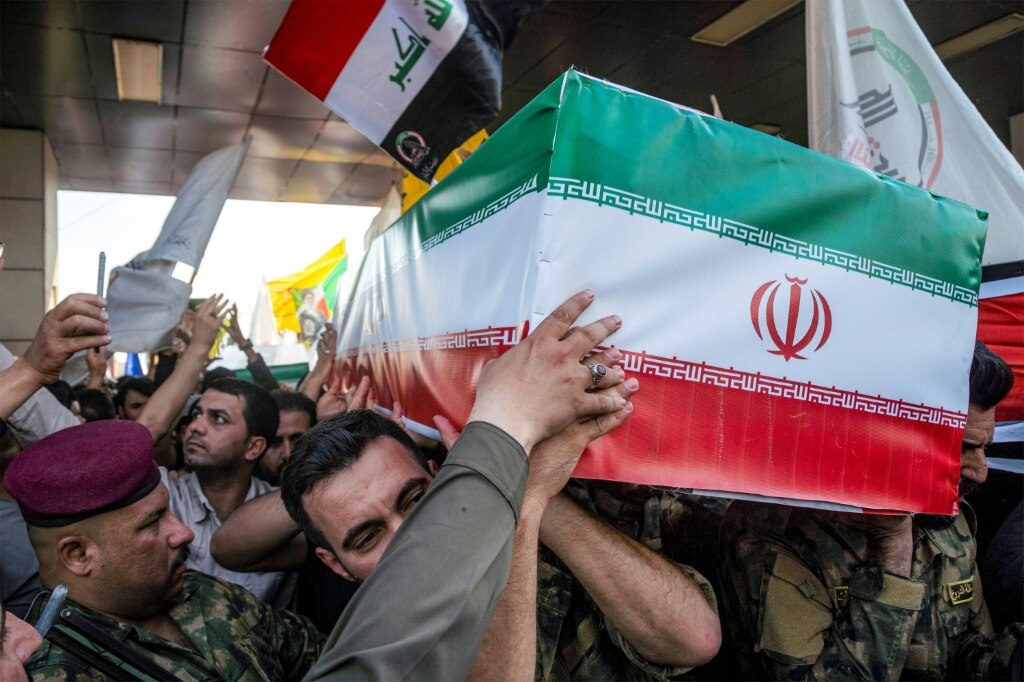
The joint U.S.-Saudi air strikes in Iraq targeted logistics and weapons depots belonging to an Iran-aligned militant faction, according to statements from the U.S. military. Iraq’s Hashed al-Shaabi (Popular Mobilisation Forces, PMF), an integrated state security alliance originally formed in 2014 to fight extremist jihadist groups, said the strikes killed at least 20 of its members. The PMF denounced the attack as a “dangerous escalation” targeting an official Iraqi security institution. Two senior PMF officials confirmed five Iranian military advisors were among those killed, and AFP correspondents on the ground saw coffins draped in Iranian flags prepared for burial. The PMF includes multiple brigades aligned with Iran that often operate independently of Iraqi central government command.
The Iraqi government formally condemned the joint strikes, releasing a statement rejecting “all acts of aggression, regardless of the party responsible or the justifications presented”. Iraq’s Ministerial Council for National Security said it would “confront any violation of Iraq’s sovereignty, and prevent any source from using Iraqi territory to threaten neighbouring states”. Despite this condemnation, President Trump told Fox News the strikes were “coordinated with the Iraqi government”. The operation comes amid mounting U.S. pressure on Baghdad to disarm pro-Iran militias operating within its borders; earlier this month, Iraqi Prime Minister Ali al-Zaidi conducted official visits to both Washington and Tehran in an effort to balance competing demands.
The days-long ceasefire that collapsed this week had been billed by U.S. officials as a window to restart negotiations on multiple flashpoints, most notably the Strait of Hormuz — a critical global energy chokepoint that Iran has blockaded for much of the ongoing conflict. The IRGC recently announced it intercepted and seized three commercial tankers transiting the strait, insisting Iran exercises “full control” over the waterway that was previously open to unrestricted international passage. Tehran has stated it will maintain control of the key energy conduit, and has announced plans to charge transit fees for commercial ships passing through the strait — a policy the U.S. strongly opposes. In response, Washington announced new sanctions targeting entities linked to the IRGC, accusing the Guard of extorting fees from transiting commercial vessels.
Iran’s blockade of the Strait of Hormuz has increased the strategic importance of the Red Sea, which Riyadh now uses as its alternative primary export route for crude oil, amplifying existing tensions over security in that critical waterway as well.