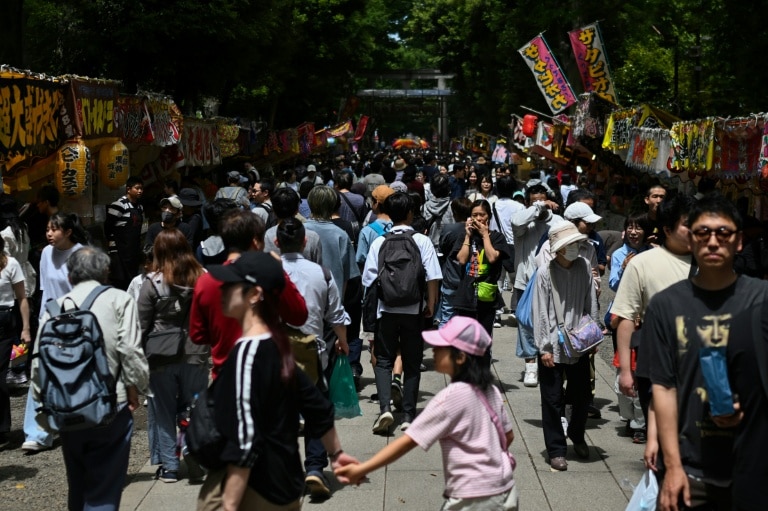
Japan has hit a grim demographic milestone that underscores the nation’s long-running battle against plummeting birth rates and rapid population aging: new government data released Wednesday confirms the number of Japanese citizens residing within the country has fallen below 120 million for the first time since 1982.
According to Japan’s Ministry of Internal Affairs and Communications, the domestic Japanese population stood at 119.74 million as of January 1 this year, marking a 0.76% decline from the same point 12 months prior. The country’s Japanese resident population has now shrunk for 17 consecutive years, after hitting a peak in 2009, per the ministry’s annual survey, which has tracked demographic trends since 1968.
While the count of native Japanese residents continues to drop, the data does offer one small shift: the population of foreign residents living in Japan has reached its highest level since national record-keeping for this group began in 2013. When including non-Japanese residents, Japan’s total overall population currently sits at 123.8 million.
Global demographic data from the World Bank ranks Japan as having the second-oldest population on Earth, with a median age of 49.9 years — outpaced only by the microstate Monaco. The severity of Japan’s demographic challenge was further highlighted by June government data showing the nation’s total fertility rate, the average number of children a woman is projected to have over her lifetime, fell to another all-time low last year. The rate dropped 0.01 year-over-year to 1.14, marking the 10th consecutive annual decline. The number of live births in 2023 also fell by nearly 15,000 to just over 670,000, the lowest recorded figure since national birth tracking began in 1899.
As the world’s fourth-largest economy, Japan’s slow-burning demographic crisis has already translated to tangible, widespread economic and social strain. Chronic labor shortages across multiple critical industries, a rapidly expanding public social security bill to cover aging residents’ pensions and healthcare, and a shrinking national tax base are all direct consequences of the population decline and aging trend.
Against this worrying backdrop, policymakers have turned to innovative strategies to boost marriage rates, with the goal of eventually lifting birth rates over time. A small ray of hope emerged this month from one such initiative: an AI-powered matchmaking app launched by the Tokyo metropolitan government has already resulted in 265 marriages for its users.
Named TOKYO Enmusubi, the platform launched in September 2024 after a regional survey found roughly 70% of single Tokyo residents interested in marriage were not actively pursuing traditional matchmaking opportunities. To address user reluctance to participate and filter for only those seriously committed to marriage, the app enforces strict eligibility requirements: all applicants must provide official proof of legal single status and pass a structured online interview before gaining access.
As of June 30 this year, the app had accepted 16,000 registered members, down from roughly 36,000 total applicants, with 760 of those matched pairs reporting they are in committed, serious relationships. One 40-year-old user, who spoke to the government under the pseudonym “Turtle”, described the app as her last chance at finding a partner. “After going on several blind dates, I met my current husband at the end of August, and we started a serious relationship in mid-September,” she shared. “I accepted his proposal at the end of December.”