标签: Oceania

大洋洲

  • Fair Work Commission flags major changes, blames AI for generating ‘explosion’ in dismissal claims

    Fair Work Commission flags major changes, blames AI for generating ‘explosion’ in dismissal claims

    Australia’s industrial relations regulator, the Fair Work Commission (FWC), is facing an unprecedented operational crisis driven by a sudden surge in unfair dismissal claims, a surge that senior leaders have directly linked to the rising accessibility of generative artificial intelligence tools for everyday applicants.

    Projections indicate the FWC will see a roughly 70% jump in total claims by the end of the current financial year compared to 2023 levels. By the end of April alone, the body had already received 44,039 dismissal-related applications, a figure that puts the commission just shy of its all-time full-year record set in the 2024-25 reporting period.

    FWC General Manager Murray Furlong told reporters the surge aligns with three overlapping challenges: a growing number of applicants representing themselves in claims, persistent resourcing and budget constraints, and the rapid proliferation of generative AI tools that lower the barrier to submitting claims.

    FWC President Adam Hatcher first raised the alarm over the unmanageable growth of unfair dismissal claims, warning that the current volume of demand is unsustainable under the regulator’s existing funding and operational structure. The backlog, Hatcher noted, already risks undermining the FWC’s ability to prioritize high-impact public interest work, including enterprise bargaining negotiations and mediation for large-scale industrial disputes.

    Historically, Hatcher explained, the number of dismissal claims filed with the FWC closely tracked overall conditions in the Australian labor market, rising during economic downturns and falling when employment conditions strengthened. But this long-standing correlation has completely broken down in recent years, a shift that coincided almost exactly with the mainstream adoption of consumer-facing generative AI tools.

    A recent internal review of incoming dismissal cases confirmed that a growing share of applicants have little to no formal experience with Australian workplace relations law, and most rely on AI-generated content to draft and file their claims. Furlong added that the unrelenting flow of new claims has stretched every part of the FWC’s operations, with no sign of the surge slowing in the coming months. “This is unsustainable and we cannot continue to operate in the same way,” he said.

    To address the mounting pressure, the FWC will roll out a series of sweeping structural and operational reforms. The centerpiece of the changes is the introduction of AI-powered application forms and an AI-assisted triage helpline designed to streamline intake and direct inquiries outside the FWC’s jurisdiction to the appropriate bodies, cutting down on administrative strain for staff.

    The regulator also plans to cut operational costs by reducing its total office space and co-locating with other Australian government agencies in two key locations: Melbourne, where the FWC’s current lease is the organization’s largest single financial commitment, and Canberra. Both leases are set to expire within the next three years, creating a natural window to restructure the FWC’s physical footprint. Furlong noted that the FWC already successfully co-locates with other agencies in regional and suburban locations across the country, so the shift will align with existing operational practices.

    Senior leaders have warned regular FWC users to prepare for significant changes to how they interact with commission services, as the organization adapts to the new AI-shaped landscape of employment dispute resolution.

  • US-Iran ceasefire hopes sent Aussie sharemarket soaring in major rally

    US-Iran ceasefire hopes sent Aussie sharemarket soaring in major rally

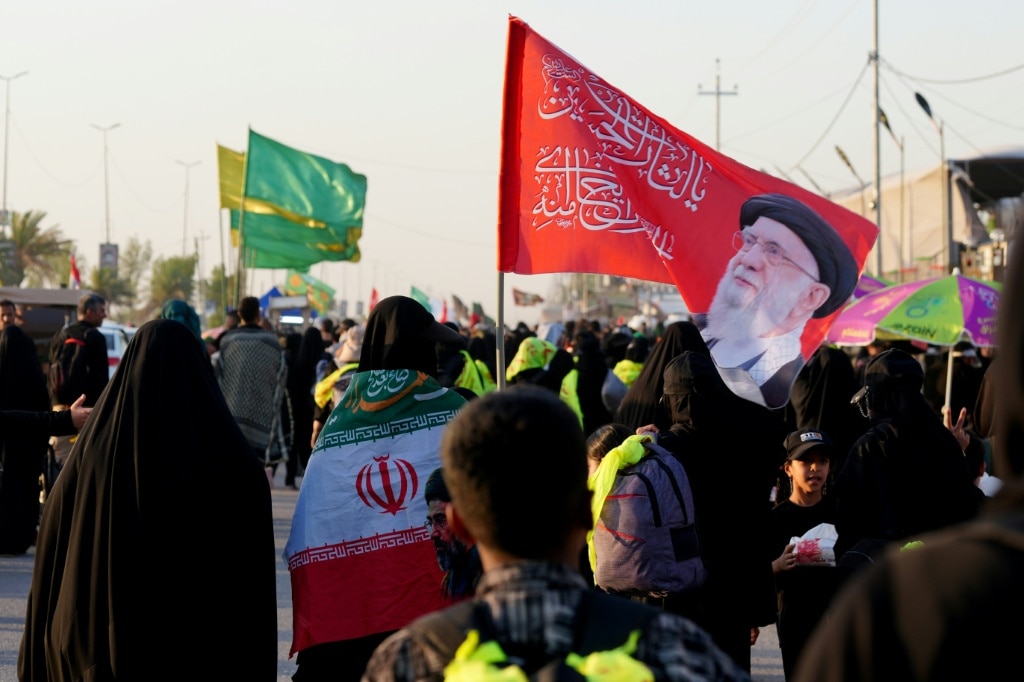
    Australia’s benchmark stock index notched its strongest single-day gain in weeks on the final trading session of the week, driven by a wave of investor optimism following news of a 60-day ceasefire extension between the United States and Iran that raises hopes for a long-term de-escalation of Middle East tensions. The ASX 200 closed up 138.80 points, or 1.62%, at 8731.70, while the broader All Ordinaries index followed closely, climbing 145.40 points, or 1.65%, to settle at 8965. The Australian dollar edged slightly lower, dipping 0.02% to 71.60 U.S. cents by market close. The majority of market sectors tracked gains, with nine out of 11 industry groups ending the session in positive territory. Top mining stocks led the rally, as a projected easing of Middle East energy tensions reduced fears of disrupted commodity supply chains. BHP’s share price jumped 2.91% to $62.31, Rio Tinto gained 1.18% to $185.63, and Fortescue Metals Group closed 2.43% higher at $22.31. Technology and consumer discretionary stocks also outperformed broader market averages. Accounting software provider Xero added 0.91% to its value, Technology One rose 2.02% to $29.84, and Codan surged 3.95% to $42.65. In the retail sector, conglomerate Wesfarmers gained 1.67% to $79.79, Afterpay’s parent company Light Wonder rallied 4.23% to $116.73, and electronics retailer JB Hi-Fi closed up 1.17% at $74.49. The sharp afternoon rally kicked off immediately after official confirmation that Washington and Tehran had agreed to extend their temporary ceasefire for two months to create space for formal negotiations on a permanent peace agreement. Global energy markets reacted immediately to the news, with Brent crude futures dropping 0.9% to settle at $92.87 U.S. dollars per barrel, easing fears of sustained high energy costs that have weighed on global economic outlooks in recent months. Samara Hammoud, international economist and currency strategist at Commonwealth Bank, noted in a client note that she holds 70% confidence that a final deal to reopen the strategic Strait of Hormuz will be finalized in the coming days. Hammoud added that U.S. Vice President JD Vance has confirmed the two sides are currently resolving remaining differences over wording in the agreement, with key sticking points including regulations on Iran’s nuclear capabilities. AMP chief economist and head of investment strategy Shane Oliver pointed out that global and Australian markets remain highly sensitive to any developments out of the Middle East, after a week of volatile trading driven by conflicting signals. “The week started on an optimistic note with former President Trump saying last weekend that the ‘final aspects and details of the deal are currently being discussed and will be announced shortly,’” Oliver explained. “But this was followed by new military strikes on Iran and Trump saying he was ‘not satisfied’ with the progress, which pushed oil prices back up. Now, indications point to a tentative agreement that only needs Trump’s final sign-off.” While Oliver acknowledged that ongoing risks of the conflict reigniting remain, he noted that striking a deal is heavily aligned with U.S. political interests ahead of upcoming midterm elections. “But the pressure on Trump to back away from continued escalation and agree to a deal is very high, as his approval rating continues to slide as the election approaches,” he said. In individual company news, Judo Bank was one of the ASX’s top performers, with its share price surging 12.23% to $1.56 after the regional lender announced it had completed a $750 million capital-relief securitization backed by small and medium enterprise loans. The move is expected to significantly strengthen the bank’s balance sheet and support future lending growth. Medical technology firm 4D Medical also notched major gains, rising 18.9% to $3.97 after it secured a commercial partnership deal with SimonMed Imaging, a leading U.S. healthcare provider that operates 170 outpatient imaging centers across the country.

  • ‘If Ebola comes, we’ll be wiped out’: DR Congo conflict-displaced

    ‘If Ebola comes, we’ll be wiped out’: DR Congo conflict-displaced

    In the dusty sprawl of Kingonze displaced persons camp on the outskirts of Bunia, the capital of northeastern DRC’s Ituri province, more than 25,000 people uprooted by years of brutal armed conflict live in cramped, makeshift tarpaulin shelters. For these displaced residents, the threat of an Ebola outbreak reaching their overcrowded home is not an abstract risk—it is a catastrophe that could wipe out the entire community.

    “If Ebola comes, we’ll be wiped out as we’re packed like sardines,” Dorcas Mapenzi, a displaced woman living in the camp, told AFP. Ituri is currently the epicenter of the latest Ebola outbreak spreading through eastern DRC, a region where decades of rebel violence and communal clashes have forced more than a million people from their homes across the province, most of whom now reside in crowded, under-resourced camps.

    The deadly Bundibugyo strain of Ebola, which spreads through close physical contact and bodily fluids, has already gained a foothold in the region. From the declaration of the outbreak on May 15 through May 24, the World Health Organization (WHO) has recorded 10 confirmed deaths and 223 suspected fatalities, out of a total of more than 1,000 confirmed and suspected cases across the country. Crucially, there is currently no approved vaccine or specific treatment for this particular strain of the virus, meaning containment efforts rely entirely on basic protective measures, social distancing and rapid contact tracing—measures that are all but impossible to implement in the camp’s current conditions.

    Kingonze camp has not yet recorded any Ebola cases, but every aspect of life here creates the perfect conditions for the virus to spread like wildfire. Widow Deborah Nzale shares a 3-square-meter tarpaulin shelter with nine family members, living and sleeping piled on top of one another in sweltering heat. “Given these conditions, how are we going to protect ourselves against this disease, when everyone tells us we need to distance ourselves to fight Ebola?” Nzale asked. “If a single person gets infected here in this camp, everyone will die.”

    Basic hygiene and sanitation infrastructure, critical to stopping Ebola’s spread, is virtually non-existent in Kingonze. Residents say their children play next to overflowing, filthy toilets and often defecate in open ground between shelters. The camp relies on just one single borehole for its entire population of 25,000, with water only flowing from the tap for a few hours each day. To date, no protective gear, hygiene kits or soap have been distributed to the camp’s residents, even after awareness teams have visited to warn about the virus’s dangers.

    “People looking to raise awareness come through here with messages but, surprisingly, we don’t have the kit we need to protect ourselves,” Budjo Amos, a displaced man who fled communal violence in the province, said. “I don’t even have soap to wash my hands. The most urgent thing is to give us clean water.”

    WHO Director-General Tedros Adhanom Ghebreyesus, who is scheduled to visit Bunia on Friday, has already warned that eastern DRC is facing a “catastrophic collision of disease and conflict.” Ongoing fighting in the region has severely hampered outbreak response efforts, and the Congolese government has faced widespread criticism for its delayed response—officials only declared the outbreak several weeks after the first cases were detected. Most hospitals across Ituri still lack critical equipment, particularly isolation units needed to quarantine infected patients and stop transmission.

    Across Ituri, there are roughly 61 displaced person camps housing a total of nearly 970,000 displaced people, meaning the risk of a catastrophic camp-wide outbreak is not limited to Kingonze. Ituri’s military governor Lieutenant General Johnny Luboya Nkashama acknowledged the urgency of the situation in comments to AFP Friday. “We need to deploy equipment and qualified, specialist medical staff as quickly as possible,” he said, “to spare this province from disaster.” As displaced residents wait for action, their fear grows that a single case could turn into a tragedy that kills thousands.

  • ‘Biggest circus in town’ the World Cup set for betting frenzy

    ‘Biggest circus in town’ the World Cup set for betting frenzy

    The 2026 FIFA World Cup, co-hosted by the United States, Canada and Mexico, is on track to become the largest sports betting event in history, with industry analysts projecting total global betting revenue will surge past the $50 billion mark — far outstripping the totals from the 2022 Qatar edition of the quadrennial football tournament.

    Two key factors are driving this unprecedented betting boom, according to Darren Small, Managing Director of Managed Trading Services at global sports technology firm Sportradar. First, the tournament has undergone a major expansion, growing from 32 competing nations to 48, creating far more matches, markets, and betting opportunities for enthusiasts worldwide. Second, shifting betting habits among modern punters have opened up massive new revenue streams that did not exist at previous World Cups.

    Gone are the days when most bettors only placed simple wagers on which team would win a match, Small explained. Today, a growing share of interest centers on player-specific props and customizable betting options, often called bet builders, that let fans craft unique wagers tailored to their expectations of a game. These can range from simple bets on whether a star player will score, to more complex combinations that include the number of corners, tackles, passes, or even which foot a player will score with. “Customers are building out entire narratives for their bets,” Small noted in an interview with Agence France-Presse. “They might combine a bet on X team winning with both teams scoring, player Y scoring a header, and over 15 total corners in the match.” This segment has already become a major driver of growth for the industry.

    David Stevens, head of public relations for leading UK bookmaker Coral, echoed this assessment, calling custom bet building “one of the fastest growing areas of our business.” The trend, he added, caters perfectly to a new, younger demographic of bettors who crave more dynamic, engaging wagering opportunities rather than traditional straight win/lose bets.

    As early betting flows in, two defending champions top the list of most-backed teams: 2022 winner Argentina and 2018 winner France hold the largest share of early wagers placed through Sportradar’s network of 250 global sports book clients. England, which has not won the World Cup since 1966, remains a fan favorite, sitting third in early odds behind France and Spain. Should England end the 60-year title drought, Stevens noted, bookmakers face a sizeable payout — though the increasingly global nature of the industry means an England win would be far less costly than it would have been a decade ago.

    In the race for the Golden Boot, awarded to the tournament’s top scorer, the bulk of early bets have gone to global superstars Kylian Mbappe of France and Erling Haaland of Norway. Small told AFP that more than 20 percent of early Golden Boot betting volume through Sportradar has been placed on Haaland alone. But one unexpected name has crept into the top 10 of early betting that has left analysts amused rather than alarmed: Ben Waine, a striker for recently relegated fourth-tier English club Port Vale, who qualified for the tournament with New Zealand. “It’s really strange, as in peculiar not sinister,” Small said of the unexpected run of bets on Waine.

    Industry leaders do note one logistical challenge posed by the 2026 co-hosting format: the wide geographical spread of match venues across North America has created tricky kickoff times for European audiences, particularly for matches held on the U.S. West Coast, which will fall in the middle of the night for most European viewers. Even so, growing betting activity in South America, led by traditional football powerhouse Brazil, is expected to offset any dip from European viewership challenges.

    For the host nation the United States, early betting interest on a U.S. title run remains low, with 40-1 odds of an American upset victory. Stevens even joked that if the U.S. did defy the odds to lift the trophy, former president and current 2024 presidential candidate Donald Trump would likely demand a spot in the trophy-lifting celebrations: “Should the USA defy odds of 40-1 and lift the trophy, expect very short odds about the President being at the centre of the celebrations!”

  • Legacy of Himalaya’s ‘Sherlock Holmes’ lives on in digital

    Legacy of Himalaya’s ‘Sherlock Holmes’ lives on in digital

    Nestled in a bustling Kathmandu restaurant, thousands of meters below Nepal’s snow-capped Himalayan peaks, German climber Billi Bierling sits across from expeditions returning from high altitude, grilling them on the details of their summit bids. Every answer, every triumph and every disputed claim gets logged into the Himalayan Database, a 60-year-old authoritative record of Himalayan mountaineering that has become the gold standard for climbers, researchers, and historians worldwide.

    The archive traces its origins back to 1963, when American journalist Elizabeth Hawley traveled to Nepal to cover a US expedition to Mount Everest. Though Hawley herself never climbed a mountain and never once visited a Himalayan base camp, she became captivated by the people who pursued these high-altitude feats. She began conducting mandatory post-expedition interviews with every team that returned from the mountains, meticulously hand-writing every detail of their journey.

    Over five decades of relentless work, Hawley earned the nickname “the Sherlock Holmes of the mountaineering world” from Sir Edmund Hillary, who alongside Tenzing Norgay completed the first recorded ascent of Everest in 1953. By the time of her death in 2018, she had cemented her reputation as the most trusted voice on Himalayan climbing, and her growing archive had become the definitive record of every major expedition in the region. As Bierling, who inherited stewardship of the project from Hawley, tells it, Hawley applied the same rigorous fact-checking to everyone she interviewed, from climbing legends like Reinhold Messner (the first person to summit Everest solo) and Ueli Steck to casual climbers just starting out.

    Bierling first crossed paths with Hawley in 2001, when she traveled to Nepal to climb 7,129-meter Baruntse. She began assisting Hawley with the project in 2004, and took over full leadership after Hawley’s passing. Today, she leads a small team of volunteers that continues to expand and update the database at a time when Himalayan mountaineering is growing faster than ever before.

    The archive’s journey into the digital age began back in 1991, when American climber Richard Salisbury recognized the historical value and vulnerability of Hawley’s handwritten records, which filled 40 full file drawers. He proposed digitizing the entire collection, a painstaking process that took nearly 11 years to complete. Today, the archive exists as a fully searchable digital resource, accessible to climbers and researchers around the world.

    For the mountaineering community, the database’s authority is unmatched. “If it wasn’t recorded, it didn’t happen,” explains Garrett Madison, a veteran expedition organizer who has led teams in Nepal since the 2000s. For climbers chasing first ascents of unclimbed peaks, the resource is irreplaceable. Japanese climber Tatsuro Sugimoto, who recently completed the first ascent of 6,473-meter Jarkya, notes that the database lets climbers quickly verify which peaks have not yet been summited, eliminating redundant work for teams exploring new routes.

    As commercial mountaineering has boomed in recent decades, the work of maintaining the database has changed dramatically. Where Hawley once only had to interview a handful of teams each season, working from her blue Volkswagen Beetle at Kathmandu’s small airport, Nepal this spring issued a record 492 solo permits for Everest alone, with hundreds more climbers tackling other peaks across the Himalayas. Hundreds of climbers now attempt high-altitude summits every season, with many targeting multiple peaks in a single trip.

    Bierling says the sheer volume of expeditions makes it impossible to interview every single climber in person, a shift that has forced the team to adapt. “If we wanted to meet everybody in person, we’d need an army of 100 people,” she explains. “It’s all so quick. People come and go, they fly in, they fly out.” The team now supplements its interviews with official expedition permit data from Nepal’s Ministry of Tourism, and focuses its in-person reporting on groundbreaking ascents: first summits, new routes, and climbs that push the boundaries of what is thought possible on the world’s highest peaks.

    Even with these adaptations, the team still adheres to the core principles Hawley established decades ago. The team starts by trusting a climber’s account of their summit, only digging deeper to verify claims when questions arise. Volunteers cross-reference photos, check topographical details, and investigate conflicting reports from other climbers, and disputed claims are tagged clearly in the database. For Bierling, every disputed claim brings her back to the question that guides all her work: what would Elizabeth Hawley do in this situation? As the mountaineering world continues to change, Hawley’s legacy lives on, preserved for future generations in the digital archive she built.

  • William Forde: AFL umpire’s mate admits he used insider information to bet on the Brownlow Medal votes

    William Forde: AFL umpire’s mate admits he used insider information to bet on the Brownlow Medal votes

    A decades-long friendship with a former Australian Football League umpire has landed a 36-year-old Melbourne man in legal trouble, after he pleaded guilty to running a two-year insider betting scheme that exploited confidential voting information for the prestigious Brownlow Medal.

    William Forde entered guilty pleas to six corruption and betting-related charges during a Friday hearing at the Melbourne Magistrates’ Court, linked to manipulated wagers placed on the 2021 and 2022 editions of the Brownlow Medal, the AFL’s highest individual honor for season-long player performance. Prosecutors agreed to withdraw 47 additional charges ahead of the plea, and the court approved an application to hear the matter through a summary proceeding rather than a full trial.

    Forde’s case is one part of a wider investigation launched by Victoria Police’s specialist sporting integrity unit, which laid charges against Forde, former umpire Michael Pell, and two other co-accused in August 2023. The court confirmed that Pell and the two other defendants are currently contesting their identical charges, with a committal hearing scheduled for next month to determine whether their cases will proceed to a full criminal trial.

    Prosecutor Greg Buchhorn outlined the Crown’s case to the court on Friday, laying out how the long-running conspiracy operated. Forde and Pell have been close since childhood, having grown up together and attended the same Melbourne schools. In 2021, Pell – who served as an umpire in AFL matches – began sharing confidential details of the three-vote selections he awarded after each game, a key component of the final Brownlow Medal vote count. Buchhorn explained that Forde recruited four additional associates to place wagers on the predetermined vote outcomes, to avoid drawing attention to the scheme.

    To cover their tracks, the syndicate adopted multiple layers of concealment: they used end-to-end encrypted messaging platforms to communicate, shared handwritten notes of vote details as image files to avoid detection, placed decoy bets on unrelated match rounds to mask their activity, and on one occasion transported thousands of dollars in cash to a regional Victorian town inside a pillowcase to avoid money tracing.

    After the full 2021 Brownlow Medal count was concluded and the winner announced, the scheme netted the group approximately AU$40,750 in illegal profits, which prosecutors allege were split between Forde, his four betting associates, and Pell.

    The conspiracy expanded in 2022, after Pell was promoted to a full-time regular field umpire position, giving him access to a greater number of vote selections ahead of the annual count. Buchhorn told the court that on August 21, 2022, just after the final round of the regular AFL season, Forde met Pell and Pell’s infant son at a public park in the Melbourne suburb of Glenroy. During that meeting, Pell passed Forde AU$27,000 earmarked for betting, as well as color-coded notes that detailed which players had received Brownlow votes in every game Pell had officiated that season.

    Profits from the 2022 round of betting exceeded the previous year’s takings, with the syndicate pulling in roughly AU$60,345 in illegal gains from bets placed directly by Forde or on his instructions.

    The operation was uncovered later that year, when betting regulators flagged suspicious wagering activity during the 2022 Brownlow count. Police arrested Forde in November 2022, and he has been on public record with charges since August 2023.

    Buchhorn told the court that during police interviews, Forde was fully forthcoming about his role in the scheme. He told investigators he had rationalized his actions by arguing that betting agencies had taken large sums of money from him through personal gambling in years prior.

    Forde’s defense attorney, Heather Anderson, told the court her client accepts the prosecution’s summary of the offending as accurate, and has expressed deep shame and genuine remorse for his actions. Anderson described Forde’s involvement as opportunistic: he simply chose to exploit confidential information shared by a close childhood friend for personal financial gain. For the three and a half years since his police interview, Anderson explained, the knowledge of his impending prosecution has hung over Forde, and he has endured significant public humiliation from widespread media coverage of the case.

    Defense counsel has argued that an appropriate sentence for Forde would be either a substantial financial penalty, or a community-based order requiring unpaid community work. The prosecution has confirmed it does not oppose this sentencing request. Magistrate Siobhan Whittle will hand down Forde’s sentence when he returns to court for a sentencing hearing on June 3.

  • Can Messi deliver again for Argentina at his final World Cup?

    Can Messi deliver again for Argentina at his final World Cup?

    It has been nearly four years since Lionel Messi etched his name into soccer immortality by lifting the FIFA World Cup trophy with Argentina in Qatar 2022, an achievement that capped what many thought would be the perfect final chapter of his legendary international career. Now, just months away from his 39th birthday, the Argentine icon is set to make history once more as he prepares to compete in a record-breaking sixth World Cup in North America, chasing an unprecedented back-to-back tournament victory that no other Argentine captain has pulled off in more than half a century.

    Messi’s 2022 campaign was nothing short of iconic: seven goals, three assists across seven matches, including a clinical brace in the unforgettable final against France, and a coolly converted penalty in the decisive shootout that secured Argentina’s third World Cup title. After that historic win, Messi himself admitted he could not have asked for a better ending to his international journey. “Obviously I wanted to finish my career with this. I can’t ask for any more,” he said in the immediate aftermath of the Doha triumph, a comment that fueled widespread speculation he would hang up his international boots soon after.

    But fueled by his enduring love for the game and a desire to continue competing as a world champion, Messi chose to extend his international career, a decision that has been widely celebrated by the Argentine camp. Head coach Lionel Scaloni has repeatedly emphasized that no replacement can ever fill the void left by arguably the greatest player to ever step onto a soccer pitch. “There can’t be. There won’t be. There won’t be an heir to Messi, for sure,” Scaloni told outlet Flashscore in September, making clear how critical the 38-year-old remains to Argentina’s title hopes.

    Critics have questioned whether Messi still has the stamina and elite edge he displayed during his peak years in European soccer. After an uneven two-year spell at Paris Saint-Germain, Messi left Europe in 2023 to join Major League Soccer side Inter Miami, meaning he no longer competes at the highest club level week in and week out; his last win in a UEFA Champions League knockout tie stretches all the way back to 2020. But the Argentine legend has shown he still has the golden touch in MLS: he helped Inter Miami lift the MLS Cup last year, and has already notched 13 goals in 16 appearances for the club in 2026. A minor hamstring injury that forced him off during a recent match against Philadelphia Union is the only question mark over his fitness ahead of the tournament, and he is on track to lead Argentina into their opening group clash against Algeria in Kansas City on June 16.

    Messi’s journey to this historic sixth World Cup began all the way back in 2006, when he made his World Cup debut as a teenager in Germany. He went on to captain Argentina to the 2014 final in Brazil, where they suffered a heart-breaking extra-time loss to Germany. Since Qatar 2022, he has added more international silverware to his cabinet, lifting the Copa America title on U.S. soil in 2024, and finished as the top scorer in South American World Cup qualifying. He is already Argentina’s all-time top goal scorer and most-capped player, and is just two matches away from hitting a remarkable 200 international caps – a milestone he could reach even before the World Cup kicks off, when Argentina plays pre-tournament friendlies against Honduras in Texas and Iceland in Alabama.

    The 39th birthday of the Argentine legend falls just three days before Argentina’s final group stage match against Jordan in Arlington, Texas, capping a historic milestone in a tournament that is widely expected to be his final World Cup. Teammate Julian Alvarez, the 26-year-old Atletico Madrid forward who was part of the 2022 title-winning squad, says the entire camp is aware of the significance of the moment. “We’re all fully aware that this could well be Leo’s last World Cup, given his age, but it’s his decision at the end of the day,” Alvarez told FIFA.com. “It’ll certainly make for a special World Cup and I don’t just mean for us, his team-mates and the Argentinian people, but for everyone who watches and follows him, given that he’s the best player of all time. He’s made a colossal impact the world over.”

    While the entire soccer world is focused on Messi’s final act, Argentina’s deep squad means the team does not have to rely solely on their ageing talisman. Alvarez himself is a world-class talent, and the squad also features a host of elite young players including Inter Milan striker Lautaro Martinez, who won the Serie A golden boot, midfield stars Enzo Fernandez and Alexis Mac Allister, defensive leader Cristian Romero, and star goalkeeper Emiliano Martinez. As proof of the team’s strength even without Messi, Argentina secured a marquee 4-1 home victory over bitter rivals Brazil in qualifying with their captain sidelined.

    Alvarez says the team’s ambition remains the same as it was in 2022, regardless of Messi’s age or status. “As an Argentinian, the excitement is always there and we always want to be crowned champions. There’s no reason for this time to be any different,” he added. For soccer fans around the world, the upcoming World Cup will be a chance to say goodbye to a legend – and to see if he can pull off one more historic miracle.

  • Football eyes NFL throne says 1994 World Cup architect

    Football eyes NFL throne says 1994 World Cup architect

    Thirty-two years after he led the groundbreaking 1994 FIFA World Cup that first cemented soccer’s place in mainstream American consciousness, 87-year-old Alan Rothenberg — the tournament’s chief architect and one of U.S. soccer’s earliest pioneers — is convinced the sport is on an irreversible trajectory to dethrone the NFL as the nation’s most popular sport.

    When the U.S. hosted its first-ever World Cup in 1994, Rothenberg recalls, soccer was widely dismissed across American media circles: derided as boring, low-scoring, and a foreign pastime that would never catch on with domestic sports fans. Speaking from his Beverly Hills home office ahead of the 2026 World Cup, where the U.S. will host the majority of matches, Rothenberg has watched that narrative flip dramatically over three decades.

    Today, Major League Soccer (MLS) boasts 30 professional franchises, drawing an average of more than 20,000 fans per game — a figure that outpaces average attendance for both the NBA and NHL. Top European competitions, including the English Premier League, now air for free on national U.S. television, bringing elite soccer to millions of households weekly.

    “Thirty years from now, I think we will have challenged, if not already overtaken, the NFL for prominence in this country,” Rothenberg told AFP. “I can’t imagine the NFL growing any further; it will eventually plateau. Mounting concerns over player injuries will slow its growth, while soccer just keeps soaring.”

    To back up his claim, Rothenberg points to a visible shift at his alma mater, the University of Michigan, a longstanding powerhouse of collegiate American football. “When I was a student, and for decades after, any open field in Ann Arbor would be full of people throwing an American football,” he explained. “Drive past those same fields today, and they’re all playing soccer.”

    Rothenberg has documented his decades-long role building U.S. soccer in a new memoir, *The Big Bounce: The Surge that Shaped the Future of US Soccer*, which traces his involvement back to the 1960s, when he helped manage the Los Angeles Wolves in the United Soccer Association, the precursor to the North American Soccer League. He later oversaw the wildly successful 1984 Los Angeles Olympic soccer tournament, which drew more than 100,000 fans to the Pasadena Rose Bowl for the gold medal match between France and Brazil.

    As CEO of the 1994 World Cup, Rothenberg led the most well-attended tournament in FIFA history, with an average match attendance of 68,991 that still stands today. He credits part of that success to the U.S. men’s national team, which defied low expectations to reach the knockout round, falling to eventual champion Brazil in the round of 16. “If our team had been an embarrassment, no matter how many tickets we sold or how much revenue we generated, there would have been a permanent dark cloud over the sport here,” he noted.

    Three decades later, Rothenberg says the pressure is off the 2026 U.S. squad, thanks to soccer’s far stronger standing in the country. “I’m confident we’ll get out of the group stage; how far we go after that depends on our development and our draw,” he said. “But I’m not worried about an embarrassment anymore — the sport has solid roots it didn’t have before. A great run will boost us even more, but a bad performance won’t kill soccer in America now.”

    On the topic of World Cup expansion, Rothenberg has broken with common critics who argue the expansion from 24 teams in 1994 to 48 teams in 2026 has diluted on-field quality. He even supports a future expansion to 64 teams, and proposes scrapping group stages entirely for a full single-elimination format that would make every match do-or-die.

    “It’s a radical idea, but it’s worth examining,” he said. “There will definitely be some blowouts, but it will also create more opportunities for Cinderella stories — underdog nations that come out of nowhere to upset top seeds, or even knock them out. That would bring a whole new level of excitement to the tournament.”

    Rothenberg also pushed back on widespread fan criticism of FIFA’s controversial 2026 ticketing model, arguing the backlash will amount to nothing more than temporary media chatter. “In the U.S., we’re already accustomed to high and dynamic pricing for major events,” he explained. “People who aren’t wealthy still spend thousands of dollars to see Taylor Swift or Bad Bunny. This just reflects the actual market. Will pricing be out of reach for some people? Yes, but that’s unfortunately the case for many things in modern society.”

  • Blue Origin rocket explodes on launch pad

    Blue Origin rocket explodes on launch pad

    On a routine ground test Thursday at the Cape Canaveral, Florida launch facility, Blue Origin’s next-generation New Glenn rocket suffered a catastrophic explosion, marking the second major setback in less than a month for Jeff Bezos’ private space exploration firm. No personnel were harmed in the incident, company representatives confirmed in the immediate aftermath of the failure.

    In a short post to social media platform X immediately after the incident, Blue Origin acknowledged that an unexpected anomaly occurred during the rocket’s hotfire test, a standard ground evaluation that involves firing the rocket’s engines while the vehicle remains anchored to the launch pad. The company also confirmed that all crew members working on the test have been accounted for and are safe.

    Footage captured at the test site shows a plume of smoke billowing from the base of the 321-foot (98-meter) heavy-lift rocket, which is the centerpiece of Blue Origin’s long-term commercial and deep-space exploration goals. Within moments, the entire lower section of the rocket ignited into a massive, billowing fireball that consumed the vehicle on the pad.

    Bezos, the billionaire founder of Blue Origin, addressed the public within hours of the explosion, acknowledging the frustrating setback while reaffirming the company’s commitment to its space development goals. “It’s too early to know the root cause but we’re already working to find it,” Bezos wrote on X. “Very rough day, but we’ll rebuild whatever needs rebuilding and get back to flying. It’s worth it.”

    Even rival SpaceX founder Elon Musk, whose company has become Blue Origin’s primary competitor in the commercial launch market, extended support following the incident, calling the failure “most unfortunate.”

    Local and federal stakeholders have also weighed in on the event. Florida Congressman Mike Haridopolos, whose congressional district includes the Cape Canaveral launch complex, confirmed he had been in direct contact with NASA Administrator Jared Isaacman to coordinate updates on the incident. Haridopolos noted in his statement that he was relieved no injuries had been reported, and thanked first responders, engineers, and launch teams for their rapid, professional response to the emergency.

    Blue Origin is a key partner to NASA on the agency’s flagship Artemis program, which aims to return the first humans to the lunar surface in more than 50 years. The company is developing a crewed lunar lander for the program under a multi-billion dollar contract with NASA. Isaacman confirmed that NASA leadership was aware of the test failure, and acknowledged the inherent risks of developing next-generation launch technology.

    “Spaceflight is unforgiving, and developing new heavy-lift launch capability is extraordinarily difficult,” Isaacman wrote on X. “We will work with our partners to support a thorough investigation of this anomaly, assess near-term mission impacts, and get back to launching rockets.”

    Thursday’s explosion is the latest problem to hit the New Glenn program in just four weeks. Last month, the rocket’s first operational launch failed to deliver a commercial communications satellite for AST SpaceMobile to its target correct orbit, despite successfully recovering and reusing the rocket’s first stage booster.

    Following that launch failure, the U.S. Federal Aviation Administration (FAA) ordered Blue Origin to conduct a full mishap investigation, which the company wrapped up earlier this month. On May 22, Blue Origin announced that the FAA had approved its final investigation report for the NG-3 mission, and that all required corrective actions had been implemented. The investigation found that off-nominal thermal conditions prevented one of the rocket’s engines from reaching full thrust during flight, leading to the missed orbit target.

    The New Glenn rocket is designed to be a reusable heavy-lift launch vehicle targeted at both commercial satellite launch contracts and NASA deep-space exploration missions, with Blue Origin positioning it to compete directly with SpaceX’s Falcon Heavy and Starship launch systems.

  • Bluesky accounts hijacked in pro-Russia propaganda campaign

    Bluesky accounts hijacked in pro-Russia propaganda campaign

    A large-scale Russian influence operation has leveraged hundreds of hijacked user accounts on the social platform Bluesky to spread pro-Kremlin propaganda aimed at eroding international support for Ukraine, cybersecurity and disinformation researchers have confirmed. What makes this campaign unusual is its departure from the standard playbook of using fraudulent fake accounts; instead, operatives weaponized the existing verified identities of real, often influential users to push anti-Ukraine messaging, marking a concerning new evolution in Kremlin-aligned disinformation tactics.

    Researchers from Clemson University have tied the operation to Social Design Agency (SDA), a Moscow-based firm already sanctioned by Western governments for coordinated information warfare. The campaign specifically targeted high-profile users including working journalists, academics, and documentary filmmakers, with many of those affected being prominent figures based in the United States.

    Multiple affected users have publicly confirmed the unauthorized activity on their accounts. Alex Ward, a reporter for *The Wall Street Journal*, reported on Bluesky that unknown actors had gained access to his profile and posted an unapproved story framing France and Ukraine in a negative light. Ward later confirmed he had reclaimed control of his account and the problematic post had been removed. Ward was not the only *Wall Street Journal* reporter affected: a database of compromised accounts compiled by an independent internet monitor tracking Russian influence operations, which was shared with AFP by a Clemson researcher, includes at least one other staff member from the outlet. Other confirmed targets include Jake Tucker, editorial director of the PC Gaming Show, who reported his account was compromised, temporarily banned, and eventually recovered; independent filmmaker Mary Beth McAndrews; and academic Ben Gilbert.

    Darren Linvill, a disinformation researcher at Clemson University who tracks Kremlin-aligned operations, told AFP that while malicious actors have used stolen or hacked accounts for disinformation for years, this operation stands out for its level of targeting and unprecedented scale for Russian operatives. “I’ve personally never seen Russia use hacked accounts at this scale before,” Linvill said. While the exact total number of compromised accounts remains unclear, as Bluesky has already removed many propaganda posts and suspended affected accounts pending recovery by their owners, Linvill confirmed he has personally tracked at least a couple of hundred hacked accounts linked to the campaign, and noted the true figure is almost certainly higher.

    Bluesky’s safety team has released official details about the operation, confirming that the platform’s core infrastructure was not breached. Instead, individual accounts were compromised using login credentials that had already been leaked in third-party data breaches from other services. The team noted that most of the affected accounts were older, inactive profiles, though a number of regularly active accounts were also caught up in the compromise. The platform added that it has already removed 4,907 accounts tied to state-backed influence operations so far in 2025, roughly twice the number removed in the whole of 2024. This campaign marks the first time state-backed influence operatives have attempted this tactic of compromising real accounts on Bluesky, the team confirmed.

    Clemson researchers link SDA’s operation to a long-running Kremlin disinformation campaign codenamed Matryoshka, after the Russian nested doll, which is well-known among disinformation experts for its impersonation-based tactics. Joseph Bodnar, senior research manager at the Institute for Strategic Dialogue, explained that Matryoshka has a track record of stealing official branding from established media outlets, government agencies, and private companies, and using artificial intelligence to clone the voices of public figures including celebrities, law enforcement officials, academics, and journalists to spread false messaging. “Hacking into accounts to post content using someone else’s identity is a logical next step for an operation that appears to have a lot of resources and no ethical constraints,” Bodnar added.

    The SDA is already a known target of Western sanctions: the United States, European Union, and United Kingdom have all imposed punitive measures on the firm for its repeated information warfare campaigns targeting democratic institutions. Earlier this month, the UK’s Foreign Office imposed new sanctions on 49 individuals employed by SDA, including writers, translators, and video producers responsible for creating and distributing deceptive pro-Kremlin propaganda. “The SDA has been tasked and funded by the Kremlin to deliver a series of interference operations designed to undermine democracy and weaken support for Ukraine,” the UK Foreign Office said in its official statement.

    Despite the tactical sophistication of the operation, researchers and platform officials agree that its actual real-world impact has been extremely limited. Bluesky’s safety team confirmed that the average propaganda post from compromised accounts received only around 50 views before it was detected and removed. Bodnar noted that this limited reach aligns with the broader goals of Matryoshka, which prioritizes shaping public perception of conflict rather than actually persuading large online audiences. “Sophistication isn’t impact,” Bodnar said. “Matryoshka’s impact is driven more by public perception than by its ability to persuade audiences online. It’s a perception hack.”