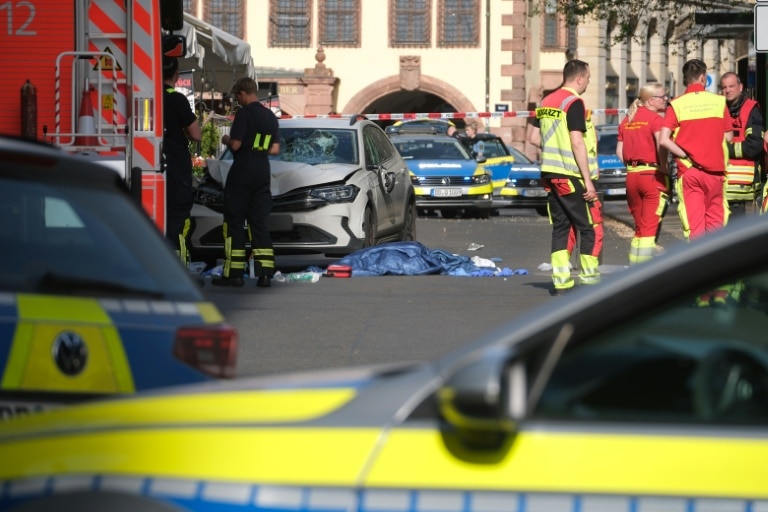
On a bustling Monday in eastern Germany, a violent incident has left the nation reeling: a car drove into a crowd of pedestrians on a central Leipzig street, claiming at least two lives and wounding multiple other people, local law enforcement and emergency authorities confirmed.
This attack marks the latest in a string of high-profile car-ramming attacks that have shaken German public life over the past decade, following similar incidents in Berlin, Munich, and most recently Magdeburg just months prior. In this new event, the suspect driver was taken into custody shortly after the vehicle careened off a central city square and onto Grimmaische Street, a busy pedestrian corridor in Leipzig’s historic old town. The tree-lined thoroughfare is lined with popular shops and centuries-old buildings, located steps away from some of the city’s most famous cultural and tourist landmarks.
As of early official updates, key details surrounding the attack remain unconfirmed. Leipzig Mayor Burkhard Jung told reporters that authorities have not yet established a clear motive for the violence, and have not released public information about the background of the perpetrator. Both Jung and local police have confirmed the fatality count stands at two. Local fire chief Axel Schuh added that at least two of the wounded are in critical condition, while an additional 20 people sustained minor injuries in the incident.
Law enforcement officials confirmed the driver was arrested without further confrontation, noting that there is no ongoing threat to the public stemming from the attack. Authorities also shared that the driver brought the vehicle to a stop on his own accord before being taken into custody.
Television footage from the scene shows a white passenger car with severe damage to its front end and windshield, with the entire street cordoned off by law enforcement. Scores of emergency response vehicles, including police cruisers, fire trucks, and ambulances, surrounded the crash site, with two medical helicopters also deployed to airlift critically wounded victims to local hospitals.
The attack comes against a longer backdrop of repeated vehicle ramming attacks that have reshaped German security and political discourse over the past eight years. The first major modern incident occurred in December 2016, when a Tunisian man motivated by jihadist ideology drove a hijacked truck into a Berlin Christmas market, killing 13 people and injuring dozens more.
More recently, a string of high-profile attacks has kept the issue at the top of public concern. In 2024, a Saudi man with documented anti-Islam views drove into a crowded Magdeburg Christmas market, killing six people and wounding more than 300. Just two months ago in February 2025, an Afghan driver rammed his vehicle into a public march in central Munich, killing a mother and her young daughter and injuring roughly 30 other attendees.
These attacks have coincided with growing tensions around immigration in German society, which first flared after a massive influx of migrants and refugees to the country in 2015. The issues of border security and immigration control have risen to the top of national political debate, a shift that has contributed to a significant surge in support for the far-right Alternative for Germany (AfD) party in recent years.