标签: Oceania

大洋洲

  • Sputtering Arsenal face test of character in Sporting clash

    Sputtering Arsenal face test of character in Sporting clash

    For Mikel Arteta’s Arsenal, a season brimming with historic ambition has hit its first major bump in the road, and the club now faces a defining moment of truth as it travels to Portugal to take on Sporting CP in the first leg of the Champions League quarter-finals. Fresh off two devastating back-to-back defeats that have punctured the Gunners’ dream of an unprecedented domestic and European quadruple, Arteta has called on his shell-shocked squad to turn the pressure into an opportunity to prove their mental grit.

    The crisis of confidence sparked on Saturday, when second-tier Southampton dumped Arsenal out of the FA Cup quarter-finals with a stunning 2-1 upset. That result came just a fortnight after Arteta’s side fell to a 2-0 loss to Manchester City in the League Cup final, wiping out Arsenal’s two remaining domestic cup hopes and ending their chase of a historic four-trophy haul. The pair of defeats mark the first time this season that Arsenal have dropped consecutive matches, with only four other losses recorded across all competitions to this point. For long-suffering Arsenal fans, who have waited 22 years for a Premier League title and not lifted a major trophy since the 2020 FA Cup, the slump has triggered widespread soul-searching, with renewed doubts over whether this squad can finally end the club’s long silverware drought.

    Despite the sudden setback, Arteta remains steadfast in his belief that his side can navigate the mounting pressure. Arsenal still hold a comfortable nine-point lead over second-place Manchester City at the top of the Premier League, and enter the tie against Sporting as clear favorites to advance to the Champions League semi-finals. The Gunners also have prior form on their side, having routed Sporting 5-1 in the 2022-23 Champions League group stage, a result many in the camp are leaning on for confidence ahead of Tuesday’s clash.

    “This is the first challenging period we’ve faced all season, but this is why we play the game,” Arteta told reporters ahead of the match. “You don’t get to win the biggest trophies without facing moments like this. Compared to what other clubs go through, this is nothing. It’s time to stand up and perform the way we have all season.”

    Arteta has doubled down on his support for his players, rejecting any criticism of a squad that has delivered a historic nine months of consistent results. “I will defend these players more than anyone else,” he said. “They’ve put everything on the line for this club all season, and one defeat doesn’t change that. I take full responsibility for the result, and we have the most exciting phase of the season ahead of us.”

    One bright spot for Arsenal in recent weeks has been the resurgence of Swedish striker Viktor Gyokeres, who now looks set to be a key figure against his former club. After a slow start to his first season at the Emirates following his summer move from Sporting, Gyokeres has found his form in crucial moments: he scored Arsenal’s consolation equalizer against Southampton, bagged a brace in the win over Tottenham Hotspur in the north London derby, and even netted the late winner that booked Sweden’s place in the upcoming World Cup.

    The biggest cloud hanging over Arsenal heading into the tie is a growing injury crisis that threatens to derail their dual title push. Star winger Bukayo Saka and midfield enforcer Declan Rice both missed the Southampton defeat and England’s recent international friendlies, and both are racing against the clock to prove their fitness for Tuesday’s clash. Center-back Gabriel Magalhaes is also a major doubt after being forced off early against Southampton with a knee injury.

    Despite the fitness concerns, midfielder Christian Norgaard has kept an upbeat tone, echoing Arteta’s call for the squad to embrace the challenge instead of dwelling on the recent upset. “It’s okay to be frustrated, and we need to learn from what went wrong against Southampton,” Norgaard said. “But this isn’t the time to walk around with our heads down. We’ve got massive games coming up, every one of them is a chance to get back on track, and we have to look forward.”

    For a club that has come so far after years of near-misses, Tuesday’s clash in Lisbon is more than just a quarter-final tie. It is a test of whether this Arsenal side has the character to turn a rare setback into another step toward ending the club’s decades-long wait for major glory.


  • Artemis mission headed for first lunar flyby since 1972

    Artemis mission headed for first lunar flyby since 1972

    Fifty-two years after the final Apollo mission departed the Moon’s vicinity, NASA’s groundbreaking Artemis program is on the cusp of a new era of human lunar exploration, with four international astronauts approaching the historic milestone of the first crewed lunar flyby since 1972. The four-person crew — mission commander Reid Wiseman, Christina Koch, Victor Glover of the United States, and Jeremy Hansen representing the Canadian Space Agency — is closing in on the moment when lunar gravity will capture the Orion capsule’s trajectory, slinging it into a loop around the Moon that marks a turning point for modern deep-space human spaceflight.

    This mission is packed with unprecedented firsts that expand the face of space exploration. Koch will make history as the first woman to fly around the Moon, while Glover, a Black astronaut, will go down in textbooks as the first person of color to complete a lunar flyby. For Hansen, the mission cements his place as the first non-American astronaut to accomplish the feat. The mission’s core objectives stretch far beyond symbolic milestones, however: during their planned flyby on Monday, the crew will spend hours documenting lunar surface features, collecting critical data that will lay the groundwork for future crewed lunar landings.

    Days ahead of the planned flyby, the crew has already achieved a first in observational astronomy. Early Sunday, NASA released a new image captured by the Artemis crew showing the massive Orientale basin on the Moon’s far side, marking the first time human eyes have ever viewed the entire sprawling crater directly. The bullseye-shaped impact crater, often called the Moon’s equivalent of the Grand Canyon, had only ever been photographed by robotic orbital cameras before this mission. Speaking in a live question-and-answer session with Canadian schoolchildren from space, Koch described the crew’s excitement at the unprecedented view. “It’s very distinctive and no human eyes previously had seen this crater until today, really, when we were privileged enough to see it,” she said.

    As the capsule swings around the far side of the Moon near the end of the flyby, the crew will also get a rare front-row seat to a deep-space solar eclipse, where the Moon will pass directly between the Orion capsule and the Sun, leaving only the Sun’s wispy outer corona visible. In addition to observational work, the mission carries a critical engineering mandate: the astronauts are the first to test NASA’s new Orion Crew Survival System (OCSS) spacesuits in the actual space environment. The bright orange suits, designed to protect the crew during launch and atmospheric reentry, can also provide up to six days of breathable air in an emergency scenario. The crew will run through functional tests to assess how quickly they can don and pressurize the suits, gathering real-world performance data that cannot be replicated in ground simulations.

    While the Artemis II crew will not land on the lunar surface itself, they are on track to break a 50-plus-year-old record: they will travel farther from Earth than any human in history. NASA Administrator Jared Isaacman outlined the mission’s broader significance in a televised interview with CNN on Sunday, noting that the data collected on this flight is irreplaceable for upcoming Artemis missions. Over the coming day, while the crew operates on the far side of the Moon out of direct communication with Earth, they will eclipse the previous distance record, and engineers will collect vital performance data on Orion’s systems. “This is the first time astronauts have ever flown on this spacecraft before,” Isaacman said. “That’s what we’re most interested in getting data from.”

    As of Sunday, the crew had already completed a successful manual piloting demonstration and walked through their full flyby plan, reviewing all lunar surface features scheduled for analysis and photography. The data collected during this mission will be critical to preparing for Artemis III, the first crewed lunar landing scheduled for 2027, and the subsequent landing mission Artemis IV planned for 2028, Isaacman added. “The information will be pretty paramount to set up for subsequent missions,” he said, emphasizing that Artemis II is far more than a demonstration flight — it is the foundational step for NASA’s long-term goal of establishing a sustained human presence on and around the Moon.

  • Hungarians’ growing anger at living in EU’s ‘most corrupt state’

    Hungarians’ growing anger at living in EU’s ‘most corrupt state’

    As Hungary prepares for its pivotal April 12 general election, widespread public anger over systemic corruption and mounting economic hardship has put an end to 16 years of Prime Minister Viktor Orban’s rule within reach, with voters increasingly rejecting the elite wealth accumulation that has defined his administration. On paper, Orban’s publicly declared assets are remarkably modest: a small cache of personal savings and a shared villa in the Hungarian capital Budapest. But a growing share of the electorate in the European Union’s most corrupt member state, per Transparency International’s latest Corruption Perceptions Index, is convinced that the prime minister and his inner circle have built an opaque network of illicit wealth siphoned from public coffers.

    While Orban himself maintains a facade of humble living, multiple members of his inner circle and close family have amassed extraordinary fortunes since he returned to power in 2010. His 85-year-old father, Gyozo Orban, owns multiple construction material businesses and the historic Hatvanpuszta estate, which he has renovated into a sprawling luxury manor estimated to be worth hundreds of millions of dollars. Drone footage from independent Hungarian media reveals the walled compound, located near Orban’s childhood home, boasts two swimming pools, a private wildlife park, and dozens of outbuildings. Leading Hungarian anti-corruption advocate and independent lawmaker Akos Hadhazy argues that Gyozo Orban acts merely as a front for his son’s hidden interests.

    Other close associates have also skyrocketed to wealth through public contracts, many of which receive partial funding from the EU. Orban’s son-in-law, Istvan Tiborcz, rose to prominence as one of Hungary’s most powerful entrepreneurs through his former company Elios, which secured billions in public lighting contracts across the country. The EU’s anti-fraud office OLAF eventually uncovered serious procedural irregularities in the deals, prompting Tiborcz to pivot his investments to the real estate and tourism sectors. Even more striking is the rise of Lorinc Meszaros, Orban’s childhood friend and a former plumber, who is now Hungary’s wealthiest individual with a net worth of $4.8 billion, per Forbes. Meszaros now controls a vast cross-sector empire spanning construction, energy, banking, and media, all built on a steady stream of government public contracts.

    Systemic corruption has drained an estimated 2.84 billion euros ($3.27 billion) from Hungarian public finances every year since 2016, Hadhazy told AFP, adding that graft is not a collection of isolated incidents but the core operating model of Orban’s administration. This graft has come at a steep cost for ordinary Hungarians, who have struggled for years with stagnant economic growth, sky-high inflation, and rapidly declining quality of public services. Gabor Szebenyi, an 81-year-old retired history teacher who attended a recent opposition rally, compared the current system to feudalism, saying: “It’s our money, not theirs. But they are spending it as if they were the sole owners.”

    A veteran construction contractor with 30 years of experience in the industry, who spoke to AFP on condition of anonymity, confirmed that public procurement contracts are predetermined before bids are even submitted, despite nominal competition on paper. “Those at the bottom of the chain do the work and get paid last — sometimes months later,” he explained, adding that he is now preparing to exit the industry and sell his equipment out of frustration. “I’m so angry. While those in power lead luxurious lives and travel by private jets, small businesses are struggling to survive.”

    The corruption crisis has already had tangible diplomatic and financial consequences for Hungary. Transparency International ranks the country as the EU’s most corrupt, tied with Bulgaria, highlighting systemic risks in public procurement and limited competition for large contracts that account for 5% of Hungary’s total GDP. The Hungarian government has rejected the ranking and insists its procurement rules fully comply with EU standards, but the EU has frozen 19 billion euros ($22 billion) in allocated development funds over persistent concerns about corruption and erosion of the rule of law.

    Orban’s main challenger in the upcoming election, opposition leader Peter Magyar, has centered his campaign on tackling graft, vowing to unblock the frozen EU funds and launch full investigations into the wealth accumulation by Orban and his inner circle if he wins office. Political analyst Zoltan Ranschburg, from the Budapest-based Republikon think tank, noted that Orban’s powerful state propaganda machine has been able to deflect criticism for years, but it has lost credibility as economic conditions have worsened. For millions of Hungarians fed up with systemic graft and elite impunity, the upcoming election represents a rare chance to end more than a decade and a half of Orban’s rule.

  • In El Salvador’s mass trials, ‘the innocent pay for the guilty’

    In El Salvador’s mass trials, ‘the innocent pay for the guilty’

    Four years after Salvadoran President Nayib Bukele launched his high-stakes war on street gangs, the Central American nation is moving forward with a sweeping, secretive mass trial process that has drawn fierce condemnation from human rights defenders over its disregard for basic due process protections. Under a nationwide state of emergency that has been in continuous effect since 2022, more than 91,000 people have been detained on alleged gang ties, and thousands of these detainees are now being judged in collective proceedings before anonymous judges in closed courts, their fates sealed in a single ruling that groups dozens of defendants together.

    For many working-class Salvadoran families, the process has already become a nightmare of arbitrary justice, where innocent people face being punished alongside actual criminals. Take 35-year-old Williams Diaz, an air conditioning technician arrested by soldiers three years ago as he traveled to his job. Diaz was immediately transferred to the Terrorism Confinement Center (CECOT), Bukele’s flagship maximum-security prison built to hold suspected gang members, where more than 10,000 detainees are packed into severely overcrowded cells. Today, he waits to be tried alongside dozens of other men accused of belonging to the Barrio 18 gang, with no prior criminal conviction on his record.

    His mother, Gladis Villatoro, a tortilla vendor who lives in a modest home 12 miles east of the capital San Salvador, fears the worst. Under the collective trial system, a conviction for one defendant in the group often means convictions for all. “If they convict one, they convict the whole lot…the innocent will pay for the guilty,” she said, speaking softly to avoid distressing her 6-year-old grandson, Diaz’s son. Her anxiety has deepened in recent months after learning her son is suffering from kidney failure; she has had no update on his condition in a year, clinging only to prayers for a miracle that contradicts Bukele’s own public promise that no suspect who enters CECOT will ever leave.

    A short drive from Villatoro’s home, 58-year-old baker Reynaldo Santos shares the same fear for his 24-year-old son Jonathan, a factory worker with no prior criminal record. Jonathan was arrested at home while playing the popular video game Fortnite, which law enforcement cited as evidence of gang affiliation. Though he was released pending trial, he faces arbitrary re-arrest at any moment. “It’s like Russian roulette, it’s a nightmare,” Reynaldo says of the family’s ongoing uncertainty. Jonathan, who lives with anxiety and depression, only asks for a fair chance to prove his innocence, his father adds.

    Bukele’s mass incarceration policy has put roughly 1.4 percent of El Salvador’s total population behind bars without full due process, creating an unprecedented backlog that the country’s court system has struggled to clear. To address the logjam, the Attorney General’s Office launched the collective mass trial process in 2024, and pledged to finalize 3,000 indictments in the first three months of 2026. In a recent move that increased the stakes for all defendants, the Salvadoran Legislative Assembly voted to raise the maximum sentence for alleged gang members, labeled “terrorists” under government law, from 60 years to life imprisonment — a change that applies even to minors. Vice President Felix Ulloa has defended the collective trial model as an “innovative” approach to tackling El Salvador’s historic gang violence crisis, and says sentences will be adjusted to reflect a defendant’s alleged rank within a gang structure.

    But human rights groups and independent legal experts warn the process is fundamentally broken, built on legal reforms that have stripped away core protections for the accused. Reforms to El Salvador’s organized crime law eliminated the requirement to assign individual criminal responsibility and scrapped preliminary hearings that are designed to weed out weak cases with insufficient evidence before they go to trial. Multiple defense attorneys, who spoke to AFP on condition of anonymity out of fear of retaliation, describe the proceedings as nothing more than a conviction factory. Before each mass trial, a co-operating imprisoned gang member with a hidden face testifies against every defendant in the group in exchange for a reduced sentence, but rarely provides any concrete evidence to back up their claims — yet their testimony is almost always enough to secure a conviction, the lawyers say. In many cases, defense attorneys are not even notified of the mass hearings or informed of the specific charges against their clients; one attorney who represented a produce vendor sentenced to 30 years in prison alongside 163 other defendants in February only got to speak to his client for one minute before the proceeding began.

    Public defender offices are completely overwhelmed by the surge in cases, so many families like Villatoro and Santos have gone into deep debt to hire private attorneys rather than rely on overworked court-appointed counsel. New York-based watchdog Human Rights Watch has documented widespread patterns of arbitrary arrest, with detainees taken into custody based on nothing more than anonymous tip-offs, personal neighborhood disputes, or police officers meeting arrest quotas to earn performance bonuses. For Juan Pappier, HRW’s deputy director for the Americas, the mass trials “lack the basic guarantees of due process, which increases the risk of convicting innocent people.” Prominent Salvadoran criminal lawyer Roxana Cardona has warned that the process will turn the country’s already overcrowded prisons into “human pits.”

    Bukele, who has won broad popular support at home and across Latin America for cutting El Salvador’s once sky-high gang violence rates, has repeatedly dismissed criticism from legal experts who warn his crackdown amounts to crimes against humanity, arguing that the dramatic reduction in violence justifies the extraordinary measures he has taken. AFP has reached out to the Salvadoran prosecutor’s office and national government for comment on the allegations of due process violations, but has not yet received a response. With trial proceedings sealed from public view and little information available about how the process is being carried out, families of the accused are left only with uncertainty and fear that their loved ones will pay the price for a government crackdown that targets the guilty alongside the innocent.

  • OPEC+ hikes oil production quotas, issues warning

    OPEC+ hikes oil production quotas, issues warning

    Against a backdrop of skyrocketing global crude prices spurred by ongoing regional conflict, the OPEC+ oil producer bloc has greenlit a second consecutive monthly increase to collective production quotas, while issuing a stark warning about the long-term risks that damaged energy infrastructure poses to global market stability.

    Following Sunday’s coordination meeting, the alliance — which counts major oil exporting heavyweights Russia and Saudi Arabia among its core members, alongside several Gulf nations that have faced direct Iranian strikes in recent weeks — confirmed it will raise collective production allowances by 206,000 barrels per day (bpd) starting in May. This marks a repeat of the 206,000 bpd quota hike implemented by the bloc’s Voluntary Eight (V8) subgroup just last month.

    While moving to expand output to counter tight global supplies, OPEC+ stressed in an official statement that repairing energy infrastructure damaged by armed conflict is an extremely costly and time-intensive process. The bloc warned that infrastructure damage has already amplified volatility in global oil markets, with the potential to disrupt global energy supplies for months or even years to come.

    The statement also emphasized the non-negotiable importance of protecting international maritime shipping lanes to guarantee uninterrupted global energy flows. Though the announcement did not explicitly name the ongoing Iran-Israel-U.S. conflict, industry analysts widely agree that the crisis that has upended energy markets is the central context shaping Sunday’s decision.

    The conflict erupted after the U.S. and Israel launched military strikes against Iran on February 28, triggering widespread retaliatory attacks from Tehran across the Middle East region. Beyond damaging critical energy facilities in multiple neighboring countries, Iran has effectively paused commercial ship transit through the Strait of Hormuz — the world’s most critical energy chokepoint — by threatening to attack any tanker that crosses the waterway without Tehran’s explicit approval.

    Before the outbreak of war, roughly 20% of the world’s total oil and liquefied natural gas (LNG) supplies passed through the strait each day. The shutdown has severely cut export volumes from Gulf oil producers, creating deep uncertainty over whether increased OPEC+ production quotas will actually translate to more oil reaching global consumers.

    Beyond the Middle East crisis, ongoing attacks on Russian energy infrastructure by Ukraine, as it defends itself against Moscow’s full-scale invasion, have added further strain to global supply chains.

    In a separate statement released Sunday, the V8 subgroup — made up of Saudi Arabia, Russia, Iraq, the United Arab Emirates, Kuwait, Kazakhstan, Algeria and Oman — echoed the bloc’s broader concerns. “Any actions undermining energy supply security, whether through attacks on infrastructure or disruption of international maritime routes, increase market volatility and make it more difficult for OPEC+ to manage global prices,” the statement read.

    The subgroup also offered praise for OPEC+ members that have successfully established alternative export routes to continue delivering crude to global markets, noting these adaptations have helped moderate some of the extreme price volatility roiling global markets since the outbreak of new conflict in the Middle East.

  • Pogacar wins joint-record third Tour of Flanders

    Pogacar wins joint-record third Tour of Flanders

    One of cycling’s modern greats cemented his legacy on Sunday, as Slovenian superstar Tadej Pogacar outmatched defending champion Mathieu van der Poel to secure a joint-record third Tour of Flanders title, cementing his status as one of the most successful one-day classic riders in history. The 27-year-old four-time Tour de France winner dropped his primary Dutch rival with just 18 kilometers remaining on the punishing 278-kilometer route, which winds across punchy climbs and multiple rugged cobbled sectors across northern Belgium.

    Heading into the race, Van der Poel had been poised to break records and claim a fourth Tour of Flanders crown, but it was Pogacar who extended an undefeated 2025 season to extend his historic career tally. With Sunday’s win, Pogacar now holds 12 victories in cycling’s five Monument races — the sport’s most prestigious one-day events — putting him alone in second place on the all-time winner’s list, trailing only Belgian legend Eddy Merckx, who retired with 19 Monument titles to his name.

    The win also marks Pogacar’s second Monument victory of the early 2025 season, following his win at Milan-San Remo last month. He has entered and won all three races he has competed in this year, and heads into next weekend’s Paris-Roubaix with a chance to make more history: a victory at the cobbled classic would make him just the fourth male rider in cycling history to win all five Monuments, joining an exclusive club that includes Merckx, Rik Van Looy, and Roger De Vlaeminck. On his Paris-Roubaix debut last year, Pogacar finished second behind Van der Poel, who claimed a third straight title.

    “It was a really crazy race today, I don’t know what to say: super-hard from I don’t know which kilometre,” Pogacar told Belgian broadcaster after crossing the finish line. “I don’t race too much, so when I race there is pressure to win. So far everything went perfect for me, so I can be more than happy. Coming next week to Roubaix, I can go motivated, but I try to enjoy the cobbles.”

    Billed as a head-to-head clash between four of cycling’s biggest stars, the men’s race played out exactly as pre-race analysis predicted, with Pogacar ultimately proving too strong for the competition, even as Van der Poel — one of the greatest cobbled classics specialists of all time — pushed him to the final kilometers. Pogacar first launched an acceleration on the second ascent of the iconic Oude Kwaremont climb with 57km left to race, dropping every competitor except Van der Poel and Belgian double Olympic champion Remco Evenepoel, who was making his Tour of Flanders debut.

    Evenepoel was quickly dropped on the very next climb, the Paterberg, and despite staying within a few seconds of the leading pair early, he gradually faded over the closing kilometers, ultimately finishing third more than a minute behind Pogacar, ahead of another top Belgian star Wout van Aert in fourth.

    Pogacar and Van der Poel rode side-by-side for nearly 40 kilometers after the elimination of Evenepoel, before the Slovenian made his decisive race-winning attack on the final ascent of Oude Kwaremont. He crossed the climb’s crest with a six-second advantage, and Van der Poel’s challenge was broken, with the Dutch rider losing more time all the way to the finish line.

    The day’s breakaway formed within the first 40 kilometers of the race, when 13 riders including Mongolia’s Sainbayaryn Jambaljamts escaped the peloton, building a maximum lead of five-and-a-half minutes after the main peloton was delayed at a level crossing. That gap held steady for more than 100 kilometers before the general classification teams upped the pace to bring the break back. With just over 100 kilometers remaining, Pogacar’s UAE Team Emirates teammates pushed the pace on the Molenberg climb, splitting the peloton and forming a 15-rider chase group containing all the pre-race favorites, who caught the breakaway with just under 80km left, holding a lead of more than one minute over the main peloton for the rest of the race. From that point, it was only a matter of whether any rider could match Pogacar’s strength on the closing climbs — and no contender could keep up.

    In the women’s edition of the race, European champion Demi Vollering mirrored Pogacar’s winning performance, dropping her rivals on the final Oude Kwaremont ascent to claim a solo victory. The 2023 Tour de France Femmes winner crossed the finish line of the 164-kilometer route with a 45-second advantage over France’s Pauline Ferrand-Prevot, who outsprinted Netherlands’ Puck Pieterse to take second place. The win gives Vollering her third career Monument victory, adding to two previous titles at Liege-Bastogne-Liege. Three-time defending champion Lotte Kopecky finished just outside the podium in fourth.

  • Leeds beat West Ham in shoot-out to reach FA Cup semis for first time in 39 years

    Leeds beat West Ham in shoot-out to reach FA Cup semis for first time in 39 years

    In a rollercoaster FA Cup quarter-final clash that will be remembered for decades, Leeds United booked their place at Wembley Stadium with a 4-2 penalty shootout victory over West Ham United on Sunday, ending a 39-year drought for a semi-final appearance in the historic competition.

    Daniel Farke’s side looked set for a straightforward victory after taking a commanding 2-0 lead at the London Stadium. Japan international Ao Tanaka broke the deadlock in the 26th minute, twisting cleverly to create space inside the 18-yard box before his deflected effort bounced off the crossbar and into the net. Leeds doubled their advantage in the 75th minute, when referee Craig Pawson overturned his initial decision after a VAR review, awarding a penalty following Max Kilman’s foul on Brenden Aaronson. Dominic Calvert-Lewin converted the spot-kick with cool composure, sending West Ham goalkeeper Alphonse Areola the wrong way before celebrating with the 9,000 travelling Leeds fans packed behind the goal.

    But West Ham, managed by Nuno Espirito Santo who had rotated his squad to prioritise an upcoming Premier League relegation clash with Wolverhampton Wanderers, pulled off a stunning late stoppage-time rally to force extra time. In the third minute of 11 minutes of added time, Mateus Fernandes tapped home a rebound after Jarrod Bowen hit the post. Just three minutes later, Axel Disasi volleyed home Adama Traore’s inswinging cross to level the score at 2-2, stunning Leeds and sending the remaining home fans into delirium.

    The dramatic equaliser caught many off guard: thousands of West Ham supporters had already exited the stadium, and hundreds rushed back to the gates only to find them locked, leaving them stranded outside for the remainder of the match.

    After 30 minutes of extra time failed to separate the two sides, the tie went to penalties. West Ham were forced to hand a senior debut to 20-year-old reserve goalkeeper Finlay Herrick, after Areola was forced off with an injury. Herrick, who spent the first half of the season on loan at non-league side Boreham Wood, got off to a dream start by saving Leeds’ first penalty from Joel Piroe.

    However, the fairytale debut for the young goalkeeper did not materialise. Leeds converted their next four penalties through Calvert-Lewin, Aaronson, Wilfried Gnonto and Pascal Struijk, while Leeds goalkeeper Lucas Perri produced two key saves: he stopped West Ham’s opening kick from Bowen and also denied Pablo Fornals. That was enough to secure a 4-2 shootout win and book Leeds’ first FA Cup semi-final spot since 1987.

    Speaking after the match, Farke praised his side’s mental strength to secure the historic result. “We always do it the tough way, never the easy way. We could have made our lives easier,” he said. “We had a late sucker punch when the whole stadium was buzzing. To keep the nerves and win the penalty shoot-out shows great mentality and character. A chapter of Leeds history. It will be a big night for us at Wembley. It’s a great step for this club and a great reward for everyone.”

    Leeds’ last appearance in the FA Cup semi-finals came in 1987, when they were beaten by eventual winners Coventry City at Hillsborough. The Yorkshire side have also struggled on their past three trips to Wembley, losing play-off and League Cup finals in 1996, 2008 and 2024. Their only FA Cup title came in 1972, and their last win at the national stadium was a 4-3 Charity Shield victory over Liverpool in 1992.

    The result offers a much-needed boost for both sides, who are currently locked in a tight Premier League relegation battle. West Ham sit third from bottom, one point adrift of 17th-place Tottenham Hotspur with just seven matches remaining in the league season. Leeds sit four points above West Ham, and the two sides will meet again at the London Stadium on the final day of the campaign in what could prove to be a decisive clash for both clubs’ top-flight survival hopes.

    Leeds will now face Chelsea in the FA Cup semi-final at Wembley in late April, with the club just 90 minutes away from a first FA Cup final appearance in more than half a century.

  • Lebanon’s Christians mark Easter in solidarity with war-hit south

    Lebanon’s Christians mark Easter in solidarity with war-hit south

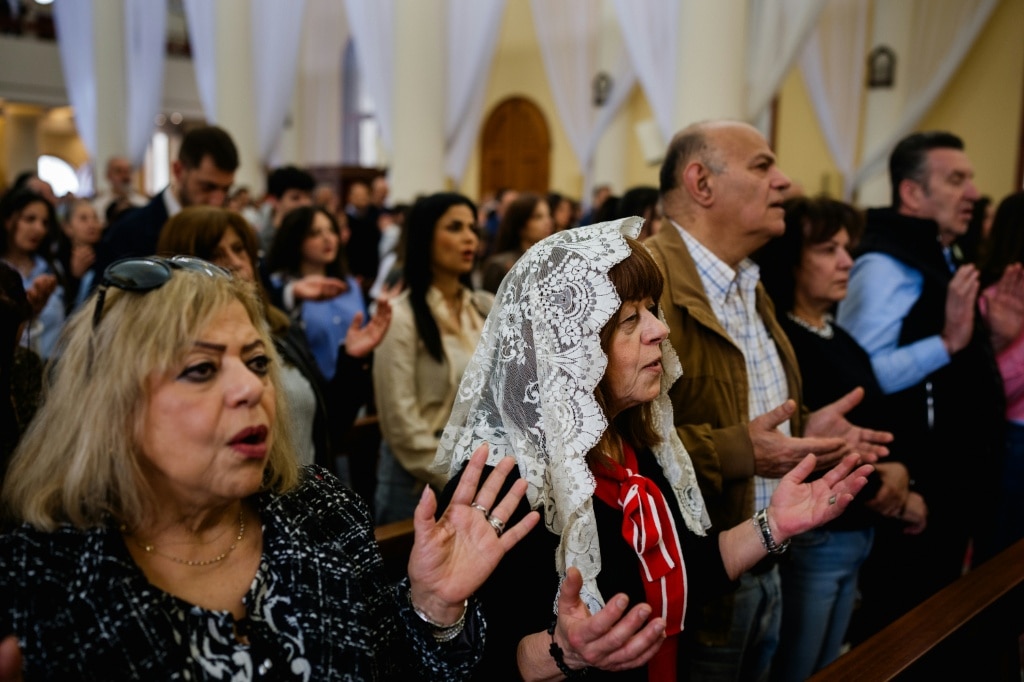
    Easter Sunday, one of the holiest days on the Christian calendar, took on a somber tone across Lebanon this year, as worshippers centered their prayers and celebrations on the hundreds of thousands of civilians trapped in the country’s southern border region, where relentless clashes between Israel and Hezbollah have turned once-quiet communities into active conflict zones.

    The annual joy of the resurrection was woven through with urgent calls for peace, as communities across the country opened their churches to displaced southern residents and demonstrated unwavering solidarity with those caught in the crossfire. At a parish church in Jdeideh, a northern suburb of the Lebanese capital Beirut, turnout for Easter mass far outstripped the building’s capacity. Crowds spilled out of the pews and onto the sidewalk outside, as worshippers gathered to stand with their compatriots in the south.

    Jenny Yazbek al-Jamal, a 55-year-old Beirut resident who leads the parish choir and has family members still residing in southern conflict zones, said this year’s Easter festivities were explicitly dedicated to all people displaced and endangered by the border fighting. “It is not only Christian villages suffering in this war,” al-Jamal told reporters after mass. “Muslim villages too… we stand with all the people of the south who were forced to flee their homes.”

    Inside the packed church, placards listing the names of cut-off and embattled Christian southern villages lined the base of the altar, a quiet, visible tribute to communities trapped between warring factions. Even in the capital, the shadow of the conflict was impossible to ignore: the roar of low-flying Israeli fighter jets, which regularly break the sound barrier over Beirut to intimidate local populations, drowned out portions of the hymns sung by the parish choir. al-Jamal noted that the constant overflights have become a new normal, even during the holiest days of the Christian calendar. “Even during our religious holidays, even on Good Friday, jets fly over us and break the sound barrier just to scare us,” she said.

    Worsppers across the country echoed her calls for an end to the fighting, describing the humanitarian catastrophe unfolding in the south as a crisis that impacts all Lebanese, regardless of faith. Marina Awad, another 55-year-old worshipper who attended mass with her husband, called for an immediate end to hostilities, saying she was heartbroken by the scale of displacement. “It’s truly very sad to know people had to abandon homes built over a lifetime, unsure if they will ever return,” she said.

    The situation for civilians who remain in border villages is catastrophic, according to 65-year-old Dori Ghrayeb, who outlined the collapse of basic services in embattled communities. “No food, no water, no bread, no medicine, and no medical care,” he said, adding his voice to widespread calls for a ceasefire. “I am for peace; the war must stop so that we can sit at the same table.”

    The depth of the crisis was highlighted this weekend by the last-minute cancellation of a high-profile humanitarian aid convoy that had been organized jointly by the Vatican’s envoy to Lebanon, the United Nations Interim Force in Lebanon (UNIFIL), and two prominent Lebanese Christian charities. The convoy, which was carrying 40 tonnes of life-saving medicine and essential basic supplies, had been scheduled to reach the border village of Debl, one of several majority Christian frontier villages trapped between advancing Israeli forces and Hezbollah fighters.

    The Maronite Patriarchate, Lebanon’s largest Christian church body, issued a statement Sunday expressing “deep disappointment” over the cancellation, which was announced for unspecified security reasons. Several key Christian border communities, including Ain Ebel, Rmeich and Debl, have become focal points of the conflict in recent weeks. Local residents have rejected repeated Israeli calls to evacuate the area, insisting they have no stake in the ongoing conflict between Israel and Hezbollah. Many have spoken of feeling abandoned after official Lebanese military forces withdrew from multiple border positions in the region, leaving civilians to fend for themselves.

    Caritas-Lebanon and L’Oeuvre d’Orient, the two charities that partnered on the aid mission, issued a joint statement condemning the cancellation as a clear violation of international humanitarian law, emphasizing that the decision punishes vulnerable civilians who are already trapped in life-threatening conditions. As Easter celebrations close across Lebanon, the collective call for peace from Christian communities adds to growing international pressure to de-escalate the border conflict and open unimpeded access for humanitarian aid to trapped civilian populations.

  • Major sponsors drop Kanye West London gigs as PM voices concern

    Major sponsors drop Kanye West London gigs as PM voices concern

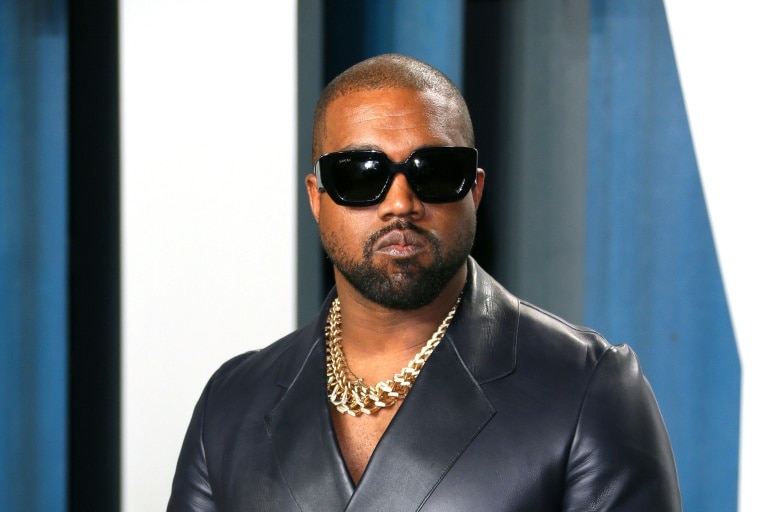
    A growing firestorm of controversy surrounding Kanye West, the 48-year-old US rapper legally renamed Ye, has forced two of the world’s biggest beverage brands to pull their sponsorship of London’s 2026 Wireless Festival, where the hip-hop star is scheduled to headline three nights this July as part of a controversial European comeback tour.

    PepsiCo, the festival’s lead sponsor, confirmed to AFP on Sunday that it would exit its sponsorship partnership, declining to provide further public comment on the decision. Spirit and alcohol giant Diageo, whose brands Johnnie Walker and Captain Morgan were listed as official event partners, also followed suit. A Diageo spokesperson told reporters the company had shared its concerns with event organizers and would not participate in the 2026 edition of the festival.

    The backlash against West’s booked performance has drawn condemnation from the highest levels of UK politics. British Prime Minister Keir Starmer publicly voiced deep concern over the booking, telling The Sun newspaper that it is alarming that West was added to the lineup despite his long record of harmful antisemitic remarks and open celebration of Nazism. “Antisemitism in any form is abhorrent and must be confronted firmly,” Starmer added.

    This is not the first wave of criticism sparked by West’s Wireless appearance. When organizers first announced the booking via social media last month, Jewish advocacy groups and London Mayor Sadiq Khan immediately issued condemnations. On Sunday, leading UK antisemitism advocacy charity Campaign Against Antisemitism amplified pressure on the prime minister, urging him to reject a role as a bystander and formally block West from entering the United Kingdom. The organization argued on social platform X that West meets the criteria for an entry ban as a non-citizen whose presence would not be “conducive to the public good.”

    West’s planned European tour has already sparked similar controversies across the continent. In France, the mayor of Marseille declared the rapper “not welcome” for a scheduled June concert in the city.

    West has a long documented history of inflammatory antisemitic public remarks, most recently drawing widespread outrage in May 2025 when he released a song titled “Heil Hitler” to mark the 80th anniversary of Nazi Germany’s defeat in World War II. The track was quickly removed and banned from all major music streaming platforms. In past statements, West has expressed vague regret for his antisemitic outbursts, claiming they were a side effect of his bipolar disorder diagnosis.

    As of Sunday, Live Nation, the multinational entertainment company that operates Wireless Festival, has not responded to multiple requests for comment from AFP on the withdrawal of sponsors and ongoing controversy.

  • What we know about the race to rescue downed US airman in Iran

    What we know about the race to rescue downed US airman in Iran

    A high-stakes, cross-border standoff has erupted following the downing of an American F-15E strike fighter over southwestern Iran late last week, as U.S. President Donald Trump and Iranian authorities offer sharply conflicting accounts of what unfolded during a frantic mission to recover a wounded U.S. airman. With details still murky and disinformation circulating rapidly across social media, a review of public statements and established media reports sheds light on one of the most tense covert operations involving the two hostile nations in recent years.

    The downed aircraft, a cutting-edge F-15E, crashed in the mountainous terrain of Iran’s Kohgiluyeh and Boyer-Ahmad province last Friday. According to Trump administration accounts, the jet’s two crew members ejected after the crash; the pilot was recovered by U.S. special operations forces hours after the incident, while the second crew member — a weapons system operator — remained missing, sparking a days-long race for his capture or rescue. Little has been disclosed about the airman’s identity, but U.S. officials quoted by Axios and The New York Times have offered some details of his journey after ejecting: wounded but able to move, he climbed a 2,100-meter mountain ridgeline before sheltering in a rocky crevice, and reportedly radioed the phrase “God is good” to waiting U.S. teams, a nod to his personal religious faith. Like all U.S. military aviators deployed to high-risk regions, he had completed rigorous Survival, Evasion, Resistance and Escape (SERE) training ahead of the mission, and carried a combat vest outfitted with a GPS-enabled location beacon, communications equipment, emergency rations, first aid supplies, and a sidearm for self-defense. Trump confirmed Sunday the airman had sustained serious injuries, and CBS News later reported he had been evacuated to a U.S. medical facility in Kuwait for treatment.

    From the moment the jet crashed, both sides recognized the high strategic and political stakes of capturing or recovering the airman. Iranian security forces immediately mobilized local communities and tribal groups to scour the remote mountain region, aiming to take the U.S. crew member alive for leverage against Washington. That set off a urgent race against time, as U.S. military and intelligence assets moved to locate and extract the downed aviator before Iranian forces could close in.

    U.S. media reports, citing anonymous senior administration officials, outline how the operation unfolded: the Central Intelligence Agency (CIA) took a leading role in pinpointing the airman’s location and launched a elaborate deception campaign designed to mislead Iranian forces into believing the airman had already been captured, drawing Iranian search teams away from his actual hiding spot. Overnight between Saturday and Sunday, a large-scale extraction force was deployed: according to Trump, the mission involved dozens of U.S. aircraft, and U.S. media reports confirm the force included hundreds of special operations personnel, including the elite Navy SEAL Team 6 — the same unit that carried out the 2011 raid that killed al-Qaeda leader Osama bin Laden. Attack aircraft provided overwatch and fire support for the SEAL team as they moved in to extract the airman as Iranian security forces were converging on his location. U.S. forces engaged Iranian personnel to hold them back during the extraction, and Trump has confirmed no U.S. service members were killed in the operation. Israeli Prime Minister Benjamin Netanyahu also confirmed Monday that Trump thanked Israel for unspecified assistance during the mission, though no further details of Israel’s role have been released.

    The competing narrative from Tehran directly contradicts the White House’s account. Iranian military officials have claimed the entire U.S. rescue operation was “completely foiled,” though they have not released a full, detailed accounting of the incident that matches the U.S. version. On Sunday evening, Iran’s Revolutionary Guards released an image via the ISNA news agency claiming to show the skull of an American serviceman recovered from the jet’s wreckage, calling the incident a “humiliating defeat” for what they termed “the liar Trump.”

    Iranian military spokesperson Ebrahim Zolfaghari told state media that U.S. forces used an abandoned airfield in Isfahan province, northwest of the crash site, to stage what he described as a “deception and escape mission” under the cover of recovering the downed airman. Iranian state media broadcast footage of charred plane wreckage in a desert region, and claimed U.S. forces lost two C-130 military transport planes and two Black Hawk helicopters during the failed operation. Open-source geolocation experts have confirmed the footage was shot roughly 50 kilometers south of the city of Isfahan. U.S. officials quoted by The Wall Street Journal have acknowledged that two C-130s became stuck in soft terrain during the operation, and were deliberately destroyed by U.S. forces to prevent sensitive technology from falling into Iranian hands before the remaining teams were airlifted out by other aircraft.

    Local Iranian officials have added further conflicting details: the governor of Kohgiluyeh and Boyer-Ahmad province told the Mehr news agency that five people were killed and seven wounded in clashes in the Kuh-e Siah mountain region, but denied any U.S. forces had landed in the province, calling those reports “completely false and have no validity.” In his Sunday statement, Trump also referenced a second, unconfirmed rescue mission for another downed pilot inside Iran that he chose not to announce publicly to avoid risking the operation, though no further details of that second mission have emerged.

    In the absence of independent on-the-ground reporting from the remote region, many details of the incident remain unconfirmed, and social media platforms have been flooded with doctored and misleading images related to the crash and rescue, making it harder to verify competing claims from the two adversarial governments.