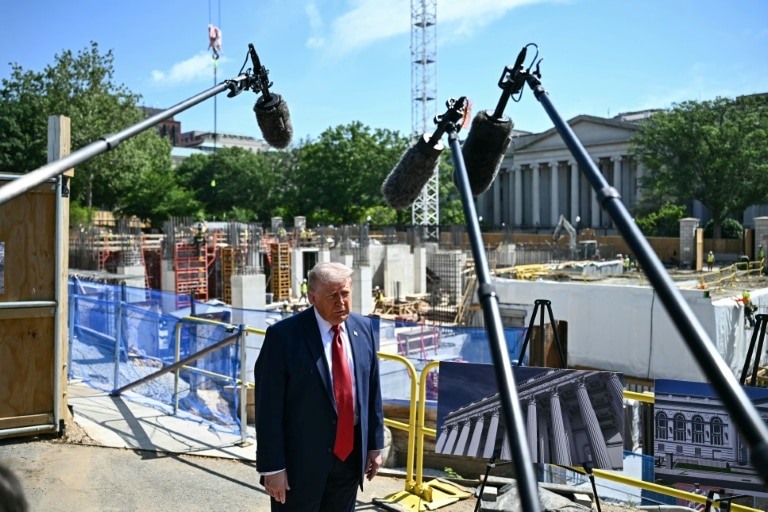
On May 19, 2026, U.S. President Donald Trump led reporters on a tour of the active construction site for his proposed new White House ballroom, a massive project that has already become a central flashpoint in the lead-up to November’s critical midterm congressional elections. Against a constant backdrop of clanging hammers, buzzing saws and the hum of construction work, the former real estate magnate leaned into his comfort zone as he walked journalists through the cavernous concrete excavation that will form the base of the 400 million dollar development.
Standing beside bright yellow safety railings at the edge of the construction pit, Trump framed the initiative as a contribution to the nation. “This is a gift to the United States of America,” he stated, emphasizing that the construction costs are drawn from his personal funds and contributions from private donors, and carry no tax burden for the project itself. As he laid out details of the planned development, Trump highlighted the unconventional multi-functional design of the building: the ballroom itself will sit above six underground levels that he says will house secure military facilities, classified research laboratories and a fully operational on-site hospital. He described the above-ground ballroom as a protective barrier for the sensitive infrastructure below, noting that the reinforced roof would deflect unauthorized drone incursions, and that the building’s layout would offer strategic advantages for security snipers.
The property developer’s signature enthusiasm for design was on full display as he outlined the building’s architectural inspiration: one facade will draw from classical ancient Greek styling, while a second will reflect the grandeur of ancient Roman architecture. Initially estimated to cost $200 million, the project’s price tag has doubled since it was first proposed, a shift that has added to growing scrutiny. Trump has repeatedly maintained that all construction costs are covered by private donations from his wealthy supporters and a range of corporate contributors, but his political opponents have pushed back hard on the project, particularly over a proposed $1 billion taxpayer-funded security allocation tied to the development.
Critics argue that the extravagant ballroom, paired with broader infrastructure refurbishments across Washington D.C., reveals a damaging lack of awareness of economic hardship facing American households. Amid soaring cost of living driven by the ongoing Iran war, the project has landed as tone-deaf to widespread voter anger over stagnant wages and rising prices for everyday goods. Critics also point to a recent controversial comment from Trump, who said last week that “I don’t think about Americans’ financial situation” when it comes to the Iran conflict, noting his priority is blocking Tehran from developing a nuclear weapon.
With less than six months remaining until the midterm elections that will determine which party holds control of both chambers of Congress, Democrats have seized on both the ballroom project and Trump’s recent comment to frame the incumbent president as out of touch with working American needs. The opposition has made the controversy a core line of attack against congressional Republican candidates as they fight to flip control of the legislature.