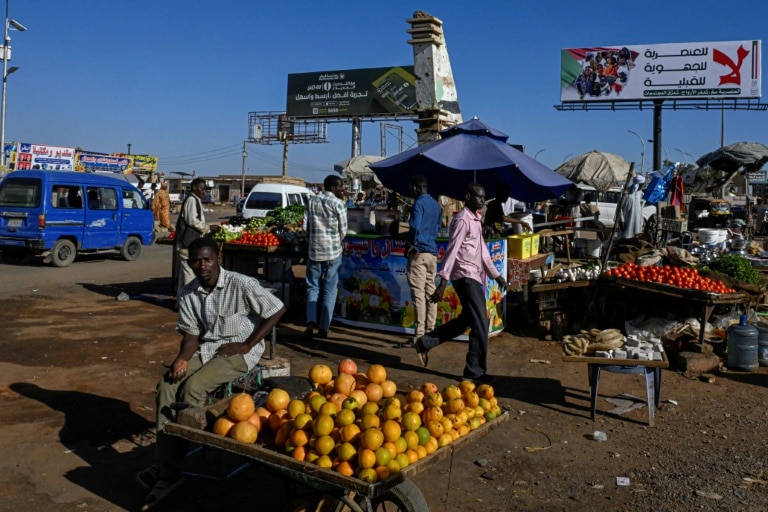
On a routine Tuesday in the Sudanese town of Ghubaysh, a drone attack tore through a crowded public market in West Kordofan, leaving 28 civilians dead and 23 others injured, according to medical sources and witness accounts shared with Agence France-Presse. The strike ranks among the deadliest attacks on non-combatants since Sudan’s brutal civil war entered its fourth year in April 2025.
Ghubaysh falls under the control of the Rapid Support Forces (RSF), the paramilitary group that has been locked in a devastating power struggle with Sudan’s regular military since April 2023. Local medical personnel confirmed that all casualties, both dead and wounded, were transported to the town’s main hospital for treatment immediately after the attack.
Witnesses painted a harrowing picture of sudden, indiscriminate destruction in the town’s central commercial hub, where thousands of local residents rely on daily trade for food and essential goods. Two witnesses confirmed that a drone hit a popular packed restaurant within the market, and both laid blame for the attack at the feet of the Sudanese military. A third witness described a possible two-stage strike pattern: an initial blast targeting an RSF vehicle that killed three people, followed seconds later by a second explosion that hit the crowded restaurant.
Sudanese legal advocacy organization Emergency Lawyers noted that the strike hit a critical market that serves as the primary source of food and basic supplies for thousands of civilian households in the area. A spokesperson for the Sudanese military quickly issued a denial of responsibility, stating that the armed forces only conduct targeted strikes against legitimate military objectives, such as enemy vehicles and weapons storage facilities. An alliance aligned with the RSF issued a formal condemnation of the attack, accusing the military of carrying out a systematic campaign of intentional strikes against civilians and civilian infrastructure, a clear violation of international humanitarian law.
Tuesday’s fatal attack comes as drone warfare has emerged as an increasingly dominant tactic in Sudan’s expanding conflict, with both the RSF and the military routinely deploying unmanned aerial strikes across widening front lines. United Nations data shows that between January and April 2025 alone, drone strikes accounted for at least 880 civilian deaths – more than 80 percent of all conflict-related civilian fatalities recorded in that period.
Fighting has escalated sharply in recent months across southern Kordofan and the southeastern state of Blue Nile, a shift that followed the RSF’s capture of El-Fasher last October. El-Fasher was the Sudanese military’s last major stronghold in the western Darfur region, and its fall opened the door for expanded operations across central Sudan.
The broader Kordofan region holds major strategic and economic importance: it holds significant oil deposits, large swathes of arable agricultural land, and hosts the RSF’s most powerful paramilitary allies. It also acts as a critical geographic link connecting the RSF’s established strongholds in Darfur to the army-controlled eastern half of the country. The RSF already holds full control of West Kordofan, and has been pushing eastward for months in an attempt to seize Sudan’s central supply corridor. The military has mounted a fierce counteroffensive, breaking RSF sieges on two key cities in South Kordofan and working to cut off the RSF’s critical supply lines connecting their forces to Darfur.
Now in its fourth year, the conflict has already claimed the lives of tens of thousands of Sudanese people and forced more than 11 million to flee their homes, creating what the United Nations has labeled one of the worst humanitarian catastrophes on the globe today. Compounding the crisis, Sudan is currently facing the world’s largest acute hunger emergency: a UN-backed food security monitor, the Integrated Food Security Phase Classification (IPC), estimates that nearly 20 million Sudanese – roughly two out of every five people in the country – are currently experiencing severe acute food insecurity.
Just last week, the UN issued a stark warning that without immediate, large-scale international intervention, the already catastrophic crisis could spiral into an even greater human tragedy. Famine was officially declared last year in both El-Fasher and Kadugli, the capital of South Kordofan. The IPC has further warned that 14 additional areas across Darfur and South Kordofan face imminent famine risk if fighting continues to escalate, access to food, medical care and clean water keeps deteriorating, and mass civilian displacement accelerates.
Since October 2024, more than 300,000 people have fled frontline combat zones including El-Fasher, parts of Kordofan and Blue Nile, according to UN figures. As the war grinds on with no diplomatic breakthrough or clear military resolution in sight, the human cost of the conflict continues to climb at an alarming rate.