标签: Oceania

大洋洲

  • Russian strikes kill six in Ukraine, officials say

    Russian strikes kill six in Ukraine, officials say

    A new barrage of Russian missile, drone and guided bomb attacks across Ukraine on Saturday left at least six civilians dead and dozens injured, Ukrainian authorities have confirmed, marking the latest escalation in Moscow’s ongoing full-scale invasion that began in February 2022.

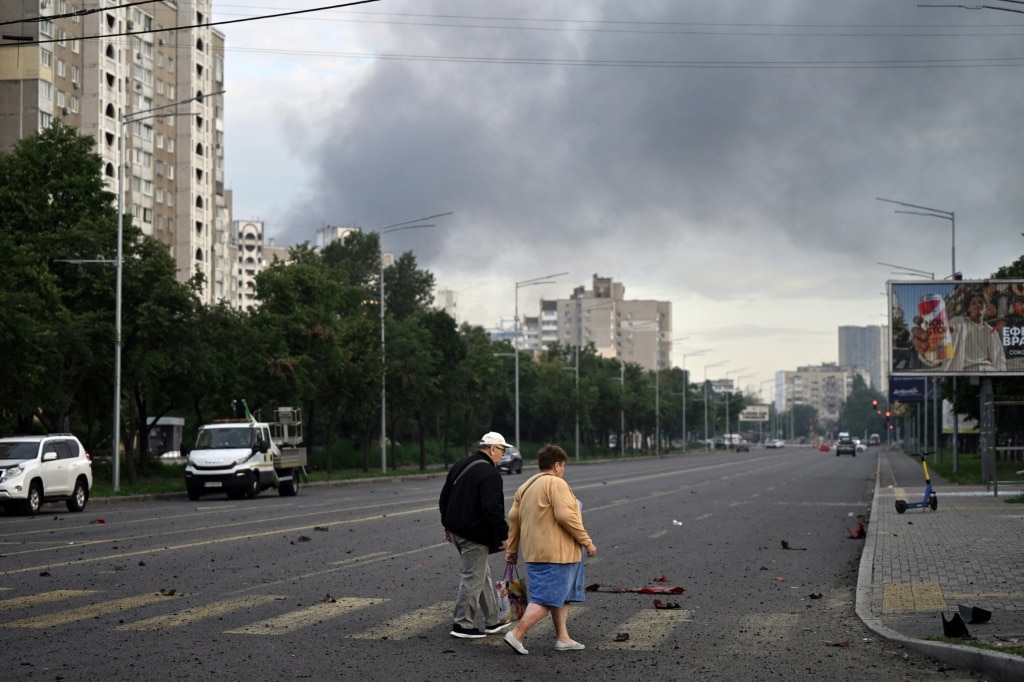
    In the capital city Kyiv, regional officials reported that 12 people were wounded in the strikes, including two minor children. AFP correspondents on the ground in Kyiv confirmed hearing two distinct waves of explosions in the early hours of Saturday, with a nationwide air alert siren activated only minutes after the first blast rattled the city.

    While Russian forces have launched near-daily airstrikes against Kyiv since the invasion began, a recent surge in deadly attacks deploying large volumes of ultra-fast ballistic missiles has stretched Ukraine’s overstretched air defense network to breaking point. In a public post on social media platform X Saturday, Ukrainian President Volodymyr Zelenskyy confirmed that Russia launched more than 120 drones and 12 missiles overnight, with half of those projectiles being hard-to-intercept ballistic missiles.

    “Civilian infrastructure was hit even before the air raid alert was issued,” Zelenskyy said, alongside shared footage showing first responders and emergency crews searching for survivors through smoke and rubble of destroyed structures. He added that apartment blocks, commercial office buildings and a theological academy in Kyiv sustained heavy damage, with search and recovery operations ongoing across multiple affected regions.

    Casualties were reported in two other major Ukrainian cities outside the capital. In the northern city of Sumy, a guided aerial bomb strike killed four people, including a young girl, Sumy Mayor Artem Kobzar confirmed. A separate missile attack on the southern port city of Odesa left two more civilians dead, regional governor Oleg Kiper announced.

    Zelenskyy noted that Ukrainian air defenses successfully intercepted the majority of incoming Russian targets, but struggled against the faster ballistic missiles. He renewed his longstanding plea for Western military allies to speed up and expand security assistance to help Ukraine fend off the invasion, which has entered its third full year of conflict. Specifically, he called on the United States to quickly finalize a pledge to allow Ukraine to domestically produce Patriot air defense systems. Earlier this week, U.S. President Donald Trump announced the U.S. would approve Ukrainian domestic manufacturing of Patriot missiles, though Zelenskyy noted Thursday that key technical details of the agreement are still being negotiated.

    Saturday’s pre-air-alert strike on Kyiv marks the second time in less than a week that Russian projectiles hit targets before sirens could be activated. Sergiy Sternenko, an advisor to Ukraine’s defense minister, wrote on Telegram that the early impacts suggest Russia is repurposing its S-400 anti-aircraft systems to conduct ground strikes, a tactic that makes incoming projectiles far harder for Ukrainian radar systems to detect in advance. “There is no military logic to such attacks. It is simply terrorism for the sake of terrorism,” Sternenko added.

    Moscow has denied intentionally targeting civilian populations in Ukraine, claiming in a statement that its Saturday strikes only hit “military-industrial facilities in Kyiv and seaport infrastructure in Odesa.” The attack comes one day after Ukrainian drones struck multiple oil refineries in southern Russia, part of Kyiv’s recent campaign targeting Russian energy infrastructure to disrupt its war machine.

  • ‘I can’t tell the future’: Jason Ryles leaves the door wide open for Jarome Luai to join the Eels where he can nurture the club’s young halves

    ‘I can’t tell the future’: Jason Ryles leaves the door wide open for Jarome Luai to join the Eels where he can nurture the club’s young halves

    The Parramatta Eels, a National Rugby League (NRL) side brimming with highly touted junior prospects, could find the perfect short-term solution to develop their rising talent by landing star playmaker Jarome Luai on a one-year deal, according to head coach Jason Ryles. The speculation around Luai’s move to Parramatta gained momentum earlier this month after his current club, the Wests Tigers, confirmed the playmaker had been granted an early release from the final year of his contract, making him a free agent for the 2027 NRL season. Luai is already set to join newly formed expansion franchise PNG Raiders as their marquee signing in 2028, opening the door for a one-year interim stop at the Eels that aligns perfectly with the club’s long-term development strategy. This is not an untested model for Parramatta: the club already executed an identical one-year deal for young playmaker Jonah Pezet this season, before Pezet departs for the Brisbane Broncos in 2027. Ryles has confirmed the club remains open to replicating that structure for Luai. Speaking to reporters after a recent narrow loss to the Sydney Roosters, Ryles declined to give an immediate confirmation of the signing, noting that recruitment discussions would take place away from match week hype. “Tonight’s about the game, not recruitment. I’ll sit down with club decision-makers and we’ll make a call on this going forward,” Ryles told media. The Eels have a clear gap to fill: they are searching for an experienced halves partner to line up alongside incumbent starting halfback Mitch Moses, and Luai already has a proven track record of chemistry with Moses from their time together representing the New South Wales Blues in State of Origin. When asked if a Luai-Moses pairing could unlock the Eels’ attack in 2027, Ryles simply replied, “I reckon it might.” That veteran presence is exactly what Parramatta’s spine needs right now: the club has locked in a core of young rising stars on long-term contracts, but most are still unproven at the top NRL level. Moses, fullback Isaiah Iongi, young forward Tallyn Da Silva and utility Ryley Smith are all contracted for multiple seasons, with Ryles confirming the club is in the process of extending more young talents as it builds towards sustained long-term success. “When elite players become available, we are always interested, and we are in a position to pull off a move like this,” Ryles said. “We have a really clear long-term strategy we’re working toward. We’ve got Izzy signed for five years, Mitchell for five years, Tallyn for four, and we’ve extended Ryley and a host of other young players. Any elite talent that becomes available that can help us develop our future core will get our full attention.” Promising young playmaker Lorenzo Talataina is widely viewed as the future centerpiece of Parramatta’s halves lineup, but he remains a raw prospect who still needs more game time in lower-grade competitions to refine his skills before making the step up to first-grade NRL. That is where Luai’s experience would provide the most value, Ryles explained, pointing to Iongi’s development pathway at the Penrith Panthers as a blueprint. Iongi spent dozens of games in the NSW Cup learning from champion Panthers fullback Dylan Edwards, a mentorship that prepared him to succeed once he got his shot at first grade. Luai, a seasoned State of Origin and premiership-winning playmaker, would provide that exact same guidance for Parramatta’s next generation of halves, who are not expected to be ready to take over the starting lineup full-time until 2028 at the earliest. When asked if the club’s young crop would be ready for NRL first-grade action next year, Ryles said: “I’m not a fortune teller, I can’t predict what will happen. But we are incredibly lucky to have some very talented young players coming through our system. They just need match reps and time to grow. I use Izzy as an example: he played 60 Cup games behind one of the best systems in the league, and that gave him the best possible chance to get to where he is today. We’re only in year two for him, and he’s still nowhere near his ceiling. Development just takes time.”

  • Iran supreme leader vows revenge for father’s killing

    Iran supreme leader vows revenge for father’s killing

    A sharp escalation of hostile threats between the United States and Iran has sent regional security concerns soaring over the weekend, just days after mutual exchanges of military strikes derailed a fragile interim ceasefire agreement that was meant to end a conflict launched by massive U.S.-Israeli air operations in late February.

    In his first public statement since assuming the role of Iran’s supreme leader following his father and predecessor Ali Khamenei’s death in the late February U.S.-Israeli strikes, Mojtaba Khamenei issued a firm vow of retaliation Saturday. In a written message released to the public — his first since his father’s funeral earlier this week — Khamenei emphasized that vengeance is a non-negotiable demand of the Iranian people, and its execution is inevitable regardless of leadership changes. “This matter depends neither on my personal existence nor on that of other officials. Whether we are present or not, it will come to pass,” he wrote, adding that Iranian authorities have already compiled a targeted list of individuals for retaliation.

    The fiery Iranian statement came just hours after former U.S. President Donald Trump took to his Truth Social platform to issue a stark warning of his own, threatening catastrophic military retaliation if Tehran makes any attempt to assassinate him. “1000 Missiles are Locked and Loaded and aimed at the Islamic Republic of Iran, with thousands of more to immediately follow, should the Iranian Government act on its threat, pronounced in many corners of the Globe, to assassinate, or attempt to assassinate, the sitting President of the United States of America, in this case, ME!” Trump wrote. He added that full orders have already been issued to U.S. military forces, which he said are prepared to completely decimate all key areas of Iran for a period of at least one year, extendable upon order.

    The rapid back-and-forth of threats comes as regional mediators led by Qatar rush to salvage diplomatic efforts that have stalled since the conflict resumed this week. According to Iranian state media, a Qatari mediation delegation arrived in Tehran on Friday to reinforce Doha’s role as a neutral broker in talks. Qatar’s emir also held a diplomatic call Friday with Pakistani Prime Minister Shehbaz Sharif, whose country has also joined mediation efforts. Sharif’s office confirmed that the Pakistani leader has also spoken directly to Iranian President Masoud Pezeshkian, urging Tehran to prioritize protecting the region’s hard-won opportunity for peace. Despite these outreach efforts, Iran’s chief negotiator for talks with the U.S., Mohammad Bagher Ghalibaf, struck a defiant tone in comments carried by Iran’s ISNA news agency. “Ending the war is a priority for the countries of the world, but everyone must know that this confrontation will never end with Iran’s surrender,” Ghalibaf said, noting that the Iranian people are fully prepared to defend their territory and sovereignty.

    The core sticking point preventing a long-term diplomatic breakthrough remains the status of the Strait of Hormuz, the strategically critical chokepoint that carries roughly a fifth of the world’s daily oil trade and is the primary export route for energy-rich Gulf nations. Iran closed the strait to commercial shipping after the outbreak of war in February as retaliation for the U.S.-Israeli strikes, a move that sent shockwaves through global energy markets and disrupted the world economy. Tehran has rejected calls to return to the pre-war status quo of free unimpeded navigation, instead insisting on retaining full authority to control ship transits through the waterway and announcing plans to charge transit fees. This position violates customary international law, which bars nations from collecting tolls on straits used for international navigation, and Washington has flatly rejected Tehran’s terms.

    According to reports from U.S. outlets Axios and Politico, the Biden administration gave Tehran a deadline of Saturday to end all attacks on commercial vessels transiting the strait and formally reaffirm the waterway’s open status to global shipping. This week’s resumption of large-scale hostilities was triggered by Iranian attacks on three commercial ships that Tehran said had deviated from its approved transit route. In response, the U.S. military launched a massive wave of air strikes across Iran, hitting approximately 90 targets across the country. Iran’s health ministry confirmed Saturday that the U.S. strikes left 17 people dead and another 115 injured. The strikes also prompted a wave of retaliatory attacks by Iran against U.S. allied Gulf states that host American military bases.

    On Saturday, Iranian Foreign Minister Abbas Araghchi traveled to Oman, the neighboring nation that shares the Strait of Hormuz with Iran, for talks focused on the strait’s future administration. Araghchi has insisted that Tehran has fully complied with its obligations under the memorandum of understanding signed with the U.S. last month, saying “Tehran has so far kept its word. Reality check: There can only be mutual compliance.” Trump, who has said talks with Iran will continue on paper, has publicly dismissed the negotiations as “a waste of time.”

  • ‘Ring the bells’: residents recall escape from deadly Spanish wildfire

    ‘Ring the bells’: residents recall escape from deadly Spanish wildfire

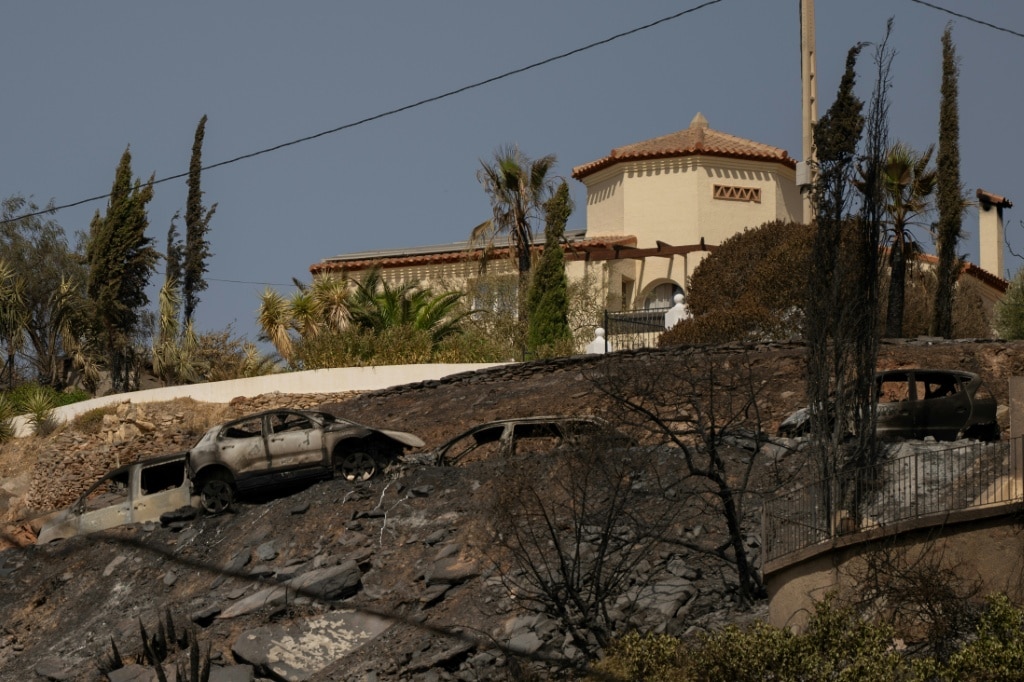
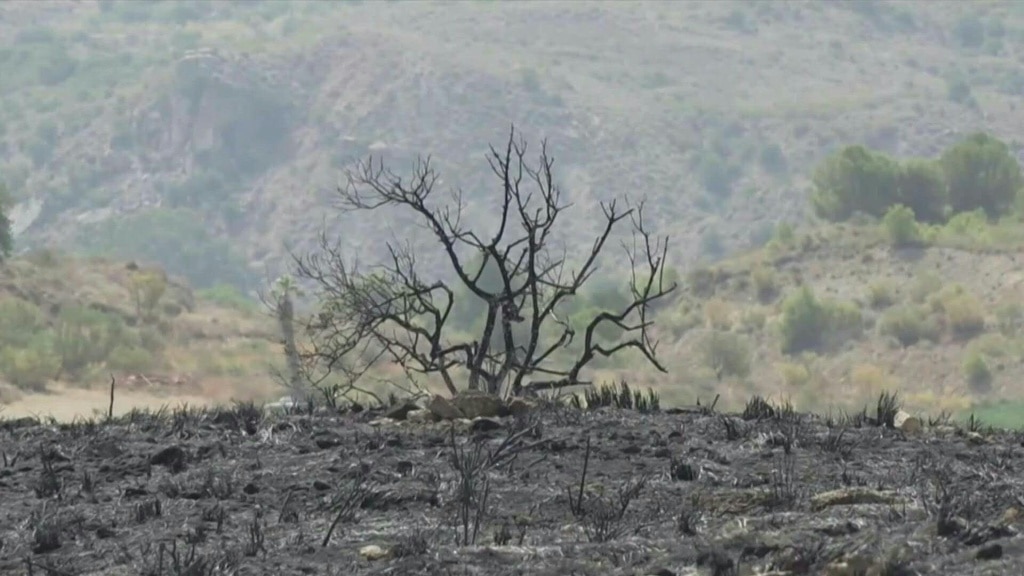
    The arid hills of southeastern Spain’s Mediterranean coast, long a quiet haven for retirees and holidaymakers from across Europe, have been reduced to ash by a devastating fast-moving wildfire that has claimed 12 lives and scorched more than 6,000 hectares of land. Survivors of the blaze, which broke out last Thursday amid record-breaking extreme heat that turned dry vegetation into a tinderbox, have shared harrowing accounts of sudden escape and narrow survival as flames advanced faster than many could outrun.

    When the fire’s edge began to encroach on the small village of Bedar, the epicenter of the disaster, 72-year-old local town councillor Manoli Ramos received an urgent, last-minute order from the mayor: race to the village church and ring its bells to sound the alarm for residents who had not yet received official evacuation alerts. “We rang the bells many times so people would know,” Ramos told AFP from her temporary refuge in nearby Los Gallardos, one of hundreds of displaced residents who fled their homes as the blaze moved through the region.

    Official preliminary investigations point to a broken power line as the likely ignition source, with the extreme heat wave that has gripped southern Spain creating ideal conditions for the fire to spread rapidly. Most of the 12 victims killed were foreign residents, many of whom died trapped in their vehicles or while attempting to escape on foot. Officials have noted that many of the foreign residents in the area live in scattered, isolated properties outside the core of Bedar, drawn by the privacy and quiet of the rural hillside — a choice that left many with slower access to emergency warnings and fewer clear escape routes as the fire advanced.

    “Foreigners live scattered outside Bedar,” Ramos explained. “They have beautiful homes and their belongings. They like living a little away from the centre.”

    For 52-year-old Moroccan resident Hassan Oulghazzi, who has called Bedar home for 16 years, the first sign of danger was not visible flames, but an ominous dark cloud hanging over the hills that quickly turned into thick, choking black smoke. Before he could spot the fire advancing, local police were pounding on his front door, ordering him to leave immediately.

    “How could you not be afraid?” Oulghazzi said. “When someone knocks on your door and tells you: ‘Get up, come on, leave here. This is real, you have to go.’” He fled with his wife and daughter with only the clothes they were wearing, leaving all their possessions behind. The family has since taken shelter at a municipal sports hall in the coastal town of Garrucha, where the Red Cross is providing food, medical care and support to hundreds of evacuees. For Oulghazzi, his own fear of displacement pales in comparison to the grief of losing neighbors and acquaintances in the blaze.

    “Everyone was afraid, but I am really touched by the dead and those who were burned. I really am,” he said. “There are some people I know.”

    Local officials have confirmed that some of the victims did not follow official orders to evacuate early or shelter in place once the flames reached their properties, a choice that proved fatal as the fire moved faster than many anticipated. For survivors who did escape, the scale of the destruction is still difficult to process, with many describing the scene as something out of a disaster film, not real life.

    Eighty-seven-year-old British evacuee Austin Crilly, who has lived in the region for years and says he has weathered no shortage of crises, told reporters that Thursday’s blaze was unlike anything he had ever experienced. Crilly was watching television at home when he spotted what he thought was an unusual large dark cloud on the horizon. Minutes later, police arrived at his door with a direct order to evacuate immediately. “Take your money, take your cards and get out,” he recalled officers telling him. Like many other evacuees, Crilly has been staying at the Garrucha sports hall, waiting for updates on when it will be safe to return to assess his home.

    British couple Martin and Elizabeth Smith, who were staying at a local campsite for a holiday, echoed that sense of surrealism. Martin Smith, 63, who has already had to cut his trip short and return to the United Kingdom, said the chaos of the escape was something he had only ever seen on screen. “It wasn’t good. Not good at all. I’d never seen anything like it. You see things like that in films, but never in real life,” he said. Despite the trauma of the disaster, Smith added that the fire has not dimmed his affection for Spain as a holiday destination. “It hasn’t put us off coming to Spain,” he said.

  • Paris landmarks shutter early as quarter of France swelters under heatwave

    Paris landmarks shutter early as quarter of France swelters under heatwave

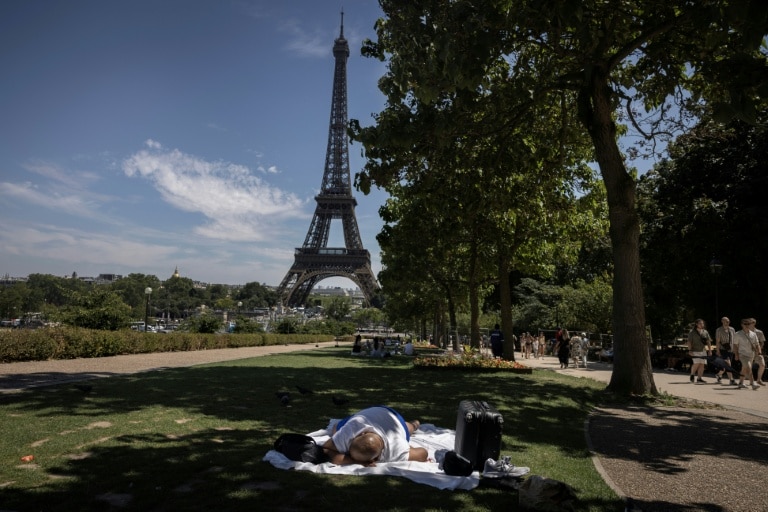
    As a record-breaking third heatwave bears down on France, a quarter of the nation’s mainland territory has been placed under the country’s highest heat warning, forcing iconic Paris landmarks including the Eiffel Tower, the Louvre, and the Musee d’Orsay to shut their doors hours earlier than their usual summer schedules.

    France’s national meteorological service Meteo-France placed 24 mainland departments — home to more than 22 million people, per an Agence France-Presse tally — on maximum red heat alert on Saturday. An additional 59 departments across mainland France remain under an orange heat warning, one tier below the highest emergency level. The extreme heat has hit during a busy national holiday weekend, with millions of travelers crowding national highways and rail networks ahead of the July 14 Bastille Day celebration.

    A spokesperson for the Eiffel Tower, the 324-meter steel monument that draws 7 million annual visitors and typically stays open past midnight during peak summer tourist season, confirmed that the landmark would implement extraordinary early closures at 4 p.m. (1400 GMT) both Saturday and Sunday, a measure put in place directly due to projected extreme high temperatures. Two of Paris’s other most visited cultural institutions have followed suit: the Louvre, the world’s most-visited art museum, will close at 4 p.m. from Friday through Monday, while the Musee d’Orsay will shut at 5 p.m. from Saturday through Wednesday in response to the extreme heat.

    Beyond disrupted tourist schedules, the heatwave has forced widespread cancellations of traditional Bastille Day firework displays across hundreds of French towns. Officials cited elevated wildfire risk and extremely dry vegetation conditions for the cancellations. A senior French official confirmed Friday that wildfires have already burned twice as much land across France in 202X as they did during the same period last year. Speaking on Saturday, President Emmanuel Macron urged the public to remain vigilant, noting that 9 out of 10 wildfires in the country stem from human activity.

    “One single moment of inattention can put families at risk, endanger the first responders who protect us, and destroy our natural landscapes,” Macron wrote in a post on social platform X.

    This heatwave marks the third extreme heat event to hit France since May. A record-shattering heatwave in June pushed official excess death figures above 2,000, with an additional 300 excess deaths recorded during a late May heat event, according to national public health data. The French government has faced growing public criticism in recent weeks, with opponents and climate experts accusing the administration of being unprepared for the rising frequency of extreme heat events, a trend climate scientists have directly linked to anthropogenic climate change. Meteo-France forecasts that high temperatures will persist across the country through Bastille Day on July 14.

  • Nigerian forces suffered casualties in kidnap rescue: army

    Nigerian forces suffered casualties in kidnap rescue: army

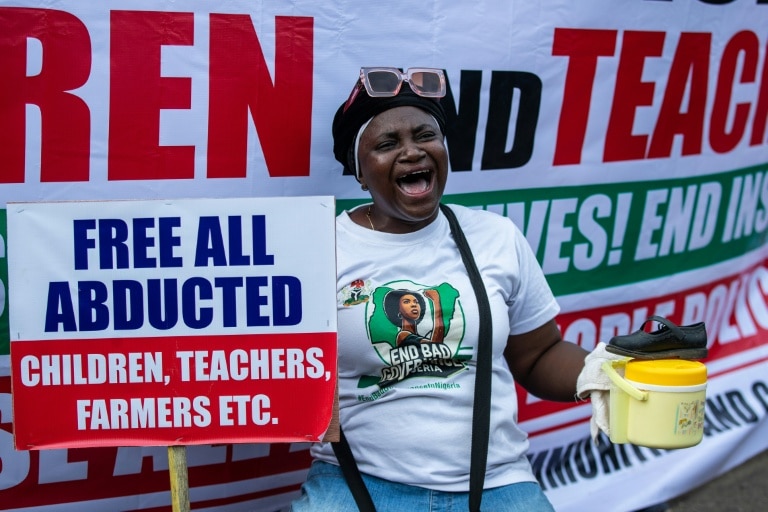
    Nigeria’s military has confirmed that security personnel sustained unspecified casualties during a multi-week operation that secured the freedom of more than 40 kidnapped schoolchildren and teachers held captive for nearly two months in the country’s southwest, a region long considered one of the nation’s safest. The hostages, who included toddlers as young as two and three years old, were abducted in late 2025 from three schools in Oyo State’s Oriire local government area, a kidnapping that triggered nationwide outrage, protests and a regional teachers’ strike just 14 months ahead of Nigeria’s January 2027 presidential election.

    The rescue operation, formally announced by authorities on Friday, was described by the Nigerian Army as a carefully coordinated campaign carried out jointly by military units, domestic intelligence agencies, state police and local community vigilante groups. While the operation successfully freed all hostages, the army confirmed Saturday that “there were some casualties on the part of the security forces,” offering no additional details on the number of personnel killed or injured.

    Nigerian President Bola Tinubu has attributed the mass abduction to Ansaru, a jihadist splinter faction of Boko Haram that has historically operated primarily in central Nigeria, marking a concerning expansion of the group’s operational reach into the southwest. Oyo State Senator Abdulfatai Buhari, who met with the freed hostages after their rescue, told reporters he was overcome with emotion after seeing the condition of the captives, saying, “I was almost shedding tears yesterday when I saw them. It was mental torture… They were so frail.”

    For more than a decade, Nigeria has battled an expanding jihadist insurgency that began in the country’s northeastern region. In recent years, armed Islamist factions and criminal gangs known locally as “bandits” have spread their influence across the north, increasingly adopting mass kidnapping as a tactic to generate millions of dollars in ransom payments and leverage political concessions from the federal government. The Oyo State abduction sent shockwaves across Nigeria, however, because it represented a major act of jihadist kidnapping in a region that had long been seen as insulated from the worst of the country’s ongoing security crises. Southwest Nigeria is home to Lagos, Nigeria’s economic and commercial capital, while Oyo State is one of the nation’s most populous sub-national regions, with its capital Ibadan ranking as a major center for education in the country.

    Nigeria’s Defence Minister Christopher Musa explained last week that the kidnappers had seized the students to use as bargaining leverage, after Nigerian security forces detained several of the group’s senior commanders. The faction threatened to kill all hostages if military forces launched an offensive against their positions, Musa added. Over the course of a more than month-long operation, military forces targeted the group’s broader criminal network, clearing multiple militant hideouts scattered across the forested terrain of Old Oyo National Park. Supporting arrest operations carried out across multiple Nigerian states disrupted the group’s command structure, the military said, leaving the faction disorganized and under overwhelming pressure, which ultimately forced the terrorists to unconditionally release all captives.

    Following their rescue, the freed schoolchildren and teachers are currently receiving medical assessment and treatment at a military medical facility based in Ibadan. Mass school kidnappings have long been a high-profile tactic used by armed groups in Nigeria, dating back to the 2014 abduction of 276 schoolgirls from a secondary school in Chibok, Borno State, an incident that drew global condemnation and sparked the international #BringBackOurGirls movement. A wave of mass abductions across northern Nigeria in late 2025, including the kidnapping of two dozen schoolgirls in Kebbi State and more than 300 students and teachers in Niger State, has renewed international scrutiny of Nigeria’s persistent insecurity and the federal government’s ability to contain the spread of violent extremism. Since the Oyo State kidnapping, public protests have repeatedly called on the Tinubu administration to implement sweeping reforms to end the country’s ongoing kidnapping crisis, which experts estimate has generated hundreds of millions of dollars in illicit ransom payments for armed groups over the past decade.

  • Firefighters gain upper hand on deadly Spain wildfire

    Firefighters gain upper hand on deadly Spain wildfire

    Sixteen months after one of the deadliest wildfires in modern Spanish history erupted in southern Spain’s Andalusia region, emergency crews have finally turned a corner in their battle against the blaze, thanks to a sudden shift in favorable weather conditions.

    The fast-moving inferno first ignited on Thursday in the hilly Gallardos area, a scenic stretch of Andalusia that hosts a large community of foreign residents and seasonal tourists. By Saturday, improved atmospheric conditions — including dropping temperatures, receding high winds that had previously stoked the flames, and rising humidity — gave firefighters the opening they needed to launch a direct offensive against the blaze, a tactic that had been impossible for the first 48 hours of the emergency.

    Twelve people from multiple nationalities have been confirmed killed in the fire, with most of the victims discovered in or near the small whitewashed village of Bedar. Many of the deceased were trapped while attempting to flee the advancing flames, either in their vehicles or on foot, regional officials confirmed. Authorities have also noted that a number of the victims failed to comply with mandatory evacuation orders or instructions to shelter in place as the fire approached their communities.

    Survivors who escaped the blaze have described harrowing, nightmare-like scenes that they say will stay with them forever. “We were absolutely terrified. We could see the flames. It was horrific,” Manoli Ramos, 72, a local councillor in Bedar, told reporters. Ramos, who lived through a major 2012 wildfire in the same region, compared this event to something out of a nightmare: “This time it was like hell.”

    Austin Crilly, an 87-year-old British resident who was evacuated by police from the high-risk zone, recalled the sudden speed with which the fire advanced. “I was watching television when I saw a huge black cloud, well I thought it was a cloud,” Crilly said. “I thought, ‘My God, I will shut the door’. Then, five minutes later, there was banging at the door. They said, ‘Take your money, take your cards and get out’.”

    Martin Smith, a 63-year-old British tourist who was evacuated from a local campsite alongside his 65-year-old wife Elizabeth, called the scene unprecedented. “It wasn’t good. Not good at all. I’d never seen anything like it. You see things like that in films, but never in real life,” Smith said.

    Antonio Sanz, chief of emergency management for the Andalusian regional government, announced Saturday that no new fatalities had been recorded overnight, a development he called “the best news we could have”. Spain’s Civil Guard has completed an initial sweep of burned areas, and while search operations continue, no additional bodies have been discovered so far.

    Sanz also clarified public confusion around reports of 23 missing people, explaining that the count refers to individuals whose families have been unable to reach them, many of whom have already reached safe evacuation centers. Only seven formal missing persons reports have been filed with authorities to date. Officials caution that a final confirmed death toll will not be released until all recovered remains undergo autopsies and formal identification, which is still underway.

    As of Saturday, the blaze has scorched approximately 6,600 hectares (16,300 acres) of rugged terrain, marked by steep ravines that make it nearly impossible for ground fire vehicles to access. Around 500 firefighting personnel, supported by more than 20 water-bombing aircraft, have been deployed to contain the spread of the fire.

    Investigators currently believe the wildfire was sparked when a power line snapped amid weeks of extreme heat that has gripped Spain, with temperatures regularly exceeding 40°C. Those sustained high temperatures turned the region’s vegetation into dry, tinder-like fuel ready to ignite at the smallest spark.

    Climate scientists around the world have repeatedly warned that human-caused climate change is increasing both the frequency and severity of extreme weather events, including the record-breaking heatwaves and large-scale wildfires that have become increasingly common across southern Europe in recent years.

  • Newly-released video shows Peter Falconio’s killer questioned

    Newly-released video shows Peter Falconio’s killer questioned

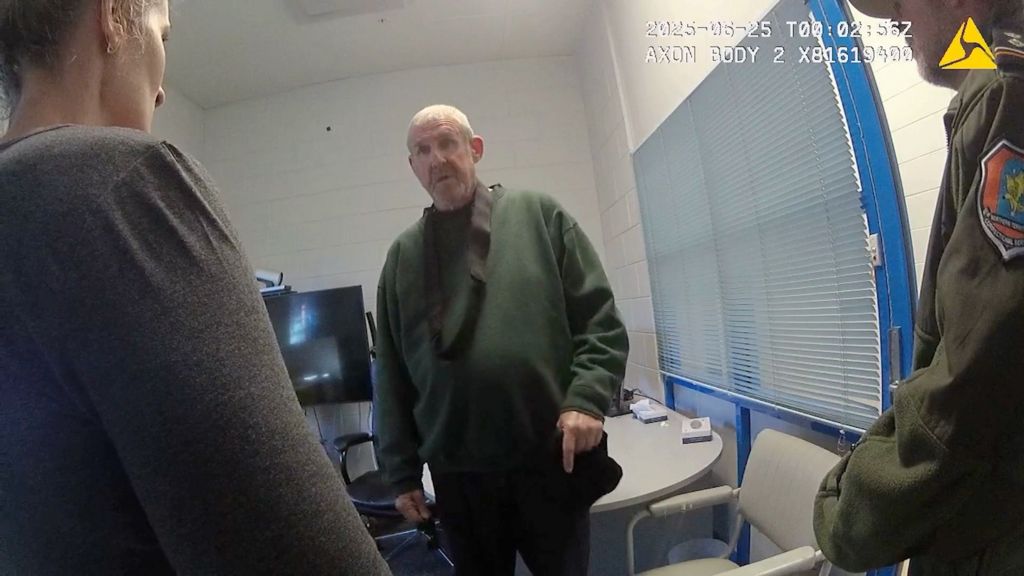
    A quarter-century after the high-profile disappearance and murder of British traveler Peter Falconio outback Australia, Australian law enforcement has made a rare move by publishing previously unseen body-worn camera footage. The newly released clip captures one of the final official efforts by investigators to compel convicted killer Bradley Murdoch to disclose where he hid Falconio’s remains, marking the somber 25th anniversary of the crime that shocked the nation.

    Falconio’s 2001 murder on a remote stretch of the Stuart Highway, a major outback road connecting the Northern Territory and South Australia, remains one of Australia’s most infamous cold-case adjacent crimes. Despite Murdoch’s conviction in 2005 for Falconio’s murder and the abduction of Falconio’s then-girlfriend Joanne Lees, the victim’s body has never been located. For 25 years, Falconio’s family has held out hope for answers that would allow them to lay their loved one to rest, while the case has continued to capture public attention across Australia and internationally.

    The released bodycam footage offers a raw, unfiltered look at the ongoing effort by police to get a full accounting of the crime. Shot during a recent interview with Murdoch, who is currently serving a life sentence in an Australian prison, the recording shows investigators pressing the convicted murderer to share details he has long withheld. This move to release the footage comes as the anniversary brings renewed attention to the case, with police holding out that new public interest could potentially prompt further information, even after decades of uncertainty.

    For Falconio’s family, the anniversary and the release of the footage represent another difficult moment in their long wait for closure. Law enforcement officials have stated that they will not give up efforts to locate the victim’s body, noting that solving this final piece of the case is a priority for both the investigation and the family who has endured 25 years of not knowing what happened to their son.

  • England battle Norway as Argentina face Swiss in World Cup last eight

    England battle Norway as Argentina face Swiss in World Cup last eight

    The final stretch of the men’s World Cup has reached its most anticipated phase, with four teams set to lock horns this weekend in the last-eight ties that will determine which sides advance to the tournament’s semi-finals. Friday’s build-up has centered on the explosive quarter-final between England and Norway, a matchup that brings two of the world’s deadliest attackers together on soccer’s biggest stage, as 2026 World Cup action continues across the United States.

    At Hard Rock Stadium in Miami on Saturday, England captain Harry Kane will go head-to-head with Norway’s superstar center-forward Erling Haaland in what fans have dubbed a battle for the title of the world’s best striker. Both forwards have carried their nations’ deep runs into the knockout stage: Kane, 32-year-old Bayern Munich star, has notched six tournament goals so far, and delivered a heroic performance in England’s draining 3-2 last-16 win over Mexico at the iconic Estadio Azteca. That win came despite England having a player sent off early, forcing Kane to drag his side through 80 minutes of attritional play to secure the quarter-final spot.

    For Norway, Haaland has been equally unstoppable, scoring seven goals to push his country to the furthest stage in World Cup history – a run that already includes a massive upset win to eliminate pre-tournament favorites Brazil. Off the pitch, the Norwegian’s laidback, confident energy has endeared him to fans across the U.S., while the team’s supporters have turned every venue into a raucous celebration, with their viral rowing celebration transforming crowd stands into giant human Viking ships.

    Ahead of kickoff, Kane praised his rival, calling 25-year-old Manchester City star Haaland “a beast” while noting the two strikers have distinct playing styles. “I see myself as a different player, although I score the same goals,” Kane told reporters on Friday. “I like to maybe touch the ball a little bit more, be involved with the play a little bit more, but also can play as maybe the out-and-out number nine. I don’t think it’s one to compare ourselves. I respect him a lot as a player and as a professional. Obviously, I’m hoping he has a quiet day tomorrow, but I think his overall performance is very good.”

    England received a major boost ahead of the tie, with key trio Declan Rice, Marc Guehi and Reece James returning to full training on Friday after recovering from minor injury and illness issues. England manager Thomas Tuchel called their return “the best news” for the side, adding that the team remains focused on the task ahead: “We took a big step in our last match, but it was only a step. The next step is to win a quarter-final. The important thing is to look up at what is ahead of us.”

    One wild card for the Miami matchup is the extreme late-spring heat, with forecasts predicting game-day temperatures will climb above 40 degrees Celsius (104 degrees Fahrenheit), which could force players to manage fatigue over the full 90 minutes.

    The winner of the England-Norway clash will advance to the semi-finals to face the winner of the second quarter-final, which sees defending champions Argentina take on surprise underdogs Switzerland at Kansas City’s Arrowhead Stadium on Saturday.

    Argentina is bidding to make history as the first national team to win back-to-back World Cup titles since Brazil in 1962, but the side has already been pushed to the brink in the knockout stage, after hard-fought narrow wins over debutants Cape Verde and then Egypt. Questions have grown around whether age and fatigue will catch up to the defending champions, especially talisman Lionel Messi, who turned 39 during the group phase. Despite his age, Messi has once again been Argentina’s match-winner, pulling the side out of multiple tight spots en route to the quarter-finals, and he will enter Saturday’s tie having already set a new all-time record of 21 World Cup goals across six tournament appearances.

    For Switzerland, the well-organized side led by defensive anchor Granit Xhaka has flown under the radar to reach the last eight, and many analysts believe the European side is well-positioned to exploit any Argentine fatigue to pull off an upset. Speaking to reporters on Friday, Argentina manager Lionel Scaloni acknowledged the challenge his side faces: “They have very experienced players. They are strong. So it will be a tough opponent, that is for sure.”

    On Friday, the first quarter-final was completed, when Spain scored a late 88th-minute winner to beat Belgium 2-1 in Los Angeles, booking their spot in a blockbuster semi-final against France. The winning goal came from an uncharacteristic mistake from Belgian goalkeeper Senne Lammens, who spilled a long-range shot into the path of Spain’s Mikel Merino, who converted from close range to secure the win. The result means European champions Spain – who conceded their first goal of the entire tournament in the match against Belgium – will face France in Arlington, Texas next Tuesday. Spanish manager Luis de la Fuente described the upcoming matchup as “a final before the final”, a nod to the elite quality of both sides that will compete for a spot in the World Cup final.

  • Two men in their 20s arrested after man found unconscious on popular Fremantle street

    Two men in their 20s arrested after man found unconscious on popular Fremantle street

    A fatal incident on one of Fremantle, Western Australia’s most frequented commercial strips has left the community shaken, with two men now in police custody following the death of a man in his 60s. The alarm was raised just after 2 a.m. local time, when emergency responders were called to South Terrace, near the intersection of Douglas Street, around 20 kilometers southwest of Perth’s central business district, to reports of an unresponsive middle-aged to older man lying on the roadway.

    Paramedics immediately transported the man to Fiona Stanley Hospital for urgent emergency care, but medical teams were unable to revive him, and he was pronounced dead shortly after arrival. In response to the suspicious circumstances of the incident, Western Australia Police’s Homicide Squad was activated to lead the formal investigation into the man’s death.

    Two men, both in their 20s, were taken into custody at the incident site within hours of the initial report. As of the latest update from law enforcement, the two suspects are currently cooperating with detectives during questioning, and no formal charges have been filed against either individual at this stage of the probe.

    The high-traffic, popular South Terrace strip remains closed to both pedestrian and vehicle traffic as forensic teams carry out an extensive crime scene investigation to collect evidence and determine the exact sequence of events that led to the man’s death. Police have issued a public appeal for any witnesses who were in the area around 2 a.m., or anyone with additional information about the incident that could assist the investigation, to contact Crime Stoppers anonymously to share details.