标签: Oceania

大洋洲

  • Angus Taylor leaves door open to One Nation deal after Tony Abbott spruiks preference swap

    Angus Taylor leaves door open to One Nation deal after Tony Abbott spruiks preference swap

    Australia’s federal political landscape has been thrown into fresh flux after senior Liberal Party figure Angus Taylor confirmed the centre-right opposition is open to striking a electoral alliance with Pauline Hanson’s right-wing populist One Nation party, a development that follows growing momentum for Hanson’s movement and public backing for a partnership from a senior Liberal heavyweight. The comments come on the heels of Western Australia’s state Liberal leader Basil Zempilas recently stating he was also willing to collaborate with One Nation, setting the stage for a debate over the future of preference arrangements ahead of any upcoming national and state elections.

    Speaking to reporters on Tuesday, Taylor pushed back against questions over whether pursuing a partnership with One Nation is appropriate, framing the party’s top priority as restoring public confidence after years of electoral setbacks. “What is appropriate is to be winning back the trust of the Australian people,” Taylor argued. He added that while he ultimately hopes to secure a majority of first-preference votes from Australian voters, the party recognizes it must repair broken trust with working-class Australians who feel disillusioned and let down by the current federal Labor administration.

    Taylor stressed that the Western Australian Liberal branch retains full autonomy to make its own decisions about local electoral arrangements, but drew a clear line on the federal opposition’s broader approach: “we will work, as I said earlier, with whoever we can to get rid of this rotten Labor government.” The senior Liberal went on to echo widespread frustration among opposition ranks, acknowledging that the Coalition has suffered a nosedive in public approval, and that the anger among voters is justified. “They are angry, and I completely understand why,” he said. “They are swinging the bat now. We have to do better as a party, and I’ve said this many times to rebuild trust with Australians, and we have to lay out our plans every day.”

    Taylor accused Prime Minister Anthony Albanese of failing to deliver on his promises, leaving many Australian voters feeling betrayed. “I want Australians to get that Australian journey back, and it’s disappearing under this government,” he said. “This Prime Minister has no idea. He has no idea. And, so I can understand why they’re angry.”

    Taylor’s comments are the second high-profile endorsement of a potential arrangement with One Nation in as many days. On Monday, new Liberal Party federal president and former prime minister Tony Abbott publicly threw his support behind a preference swap deal between the two parties, a long-debated strategy that has divided the centre-right in Australia for decades.

    The push for closer ties with One Nation comes at a time when Hanson’s party is seeing historic gains at the polls. The most recent Newspoll data shows One Nation has overtaken Labor on primary vote share for the first time in the party’s history, a seismic shift in Australian voting intentions. The party has also built momentum off recent electoral breakthroughs in South Australia and in the former New South Wales Liberal seat of Farrer once held by ex-opposition frontbencher Sussan Ley. Even with these gains, One Nation has faced growing scrutiny in recent days over its housing policy, marked by public confusion and sudden policy backflips from the party’s sitting members of parliament.

    For the Liberal Party, Taylor has positioned the party around a platform of lower national taxes and addressing the country’s ongoing housing affordability crisis through strict cuts to net immigration levels.

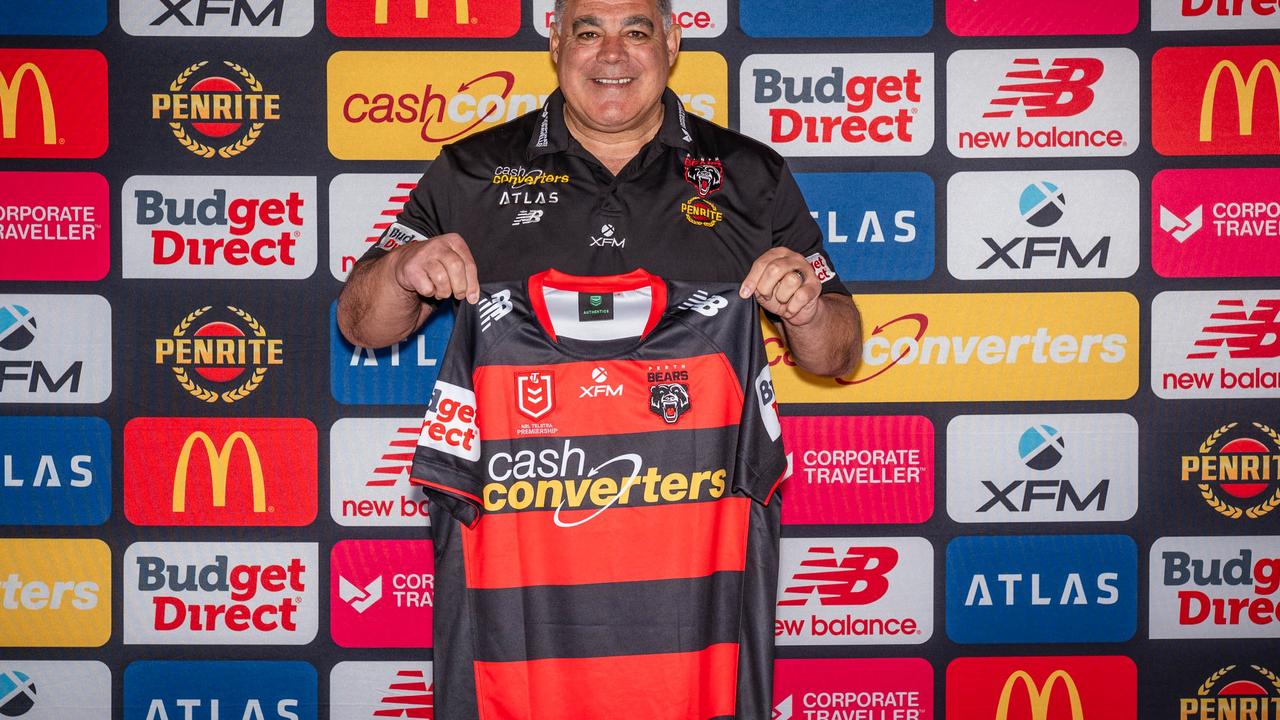
  • ‘I don’t think it’s a risk’: Blues confident in Mitchell Moses’ fitness as star playmaker parks his ego to partner game’s biggest star

    ‘I don’t think it’s a risk’: Blues confident in Mitchell Moses’ fitness as star playmaker parks his ego to partner game’s biggest star

    As State of Origin II approaches at the Melbourne Cricket Ground, NSW Blues star playmaker Mitchell Moses is racing against time to prove his hamstring injury has healed enough to take his place in the starting side alongside Nathan Cleary, with Blues head coach Laurie Daley confirming a final fitness check will happen at Thursday’s team training session.

    Moses’ history of recent soft-tissue injuries has put his spot under the microscope: the Parramatta Eels playmaker was forced to withdraw from the series opener in Sydney just 24 hours before kickoff after pulling his hamstring during post-training extra drills – marking the first time he has suffered a hamstring injury in his professional career. Last year, a calf injury sustained in Origin camp sidelined him for the final two matches of the series, and persistent setbacks have limited him to just 21 total appearances across the 2024 and 2025 NRL seasons, with his last match coming back on May 16.

    Despite Moses’ late injury withdrawal, stand-in halves partner Ethan Strange delivered a breakout performance for NSW in game one, putting in one of the best outings of any player on the field at Accor Stadium after being called in on extremely short notice. Still, Daley opted to turn to the experienced Moses, citing his elite kicking game as a key asset to pair with the in-form Cleary, who many analysts argue is playing the best rugby league of his career after a dominant display against the Tigers in his most recent NRL outing.

    Daley has pushed back against concerns that selecting Moses is a risky call, saying he has full confidence in the playmaker’s recovery. “I don’t think it’s a risk,” the coach told reporters. “He’s ticked every box through the rehab process, and you don’t hold a player of his calibre back over what ifs. We’re confident he’ll get through the session and be right for next week. We’ve also got Ethan, who already proved he’s more than capable, ready to step in immediately if anything goes wrong during the game.”

    Moses will not be required to complete the full training session Thursday, but will need to perform at full match intensity to prove his fitness. Dolphins halfback Isaiya Katoa has been named as emergency cover, but Daley noted that Katoa will still line up for his NRL club this Friday, a sign the coaching staff is optimistic about Moses’ chances of playing.

    “If we had major concerns, we would have named Izzy in our extended 20-man squad already,” Daley explained. “Right now, we’re comfortable with where things stand.”

    For his part, Moses says he is fully confident his body will hold up, and is eager to pull on the Blues jersey for just the second time ever pairing with Cleary in the Origin halves. The two combined for an encouraging performance in last year’s series opener, silencing critics who claimed two specialist halfbacks could not build effective chemistry at the highest level of interstate rugby league.

    The veteran playmaker added that representing his state requires a team-first approach, saying that all star players need to set personal ambitions aside to pursue a collective win. “When you get into this side, you’re surrounded by the best players from every club,” Moses said. “Everyone has an ego – that’s what makes a lot of us good at what we do. But when you pull on this jersey, it’s not about your personal stats or individual glory anymore. It’s about the state, it’s about the team, and doing whatever job the side needs from you. I’m not here to take control, I’m just here to nail my role and help us get the result we need.”

    Moses added that he and Cleary have built strong connection both on and off the field, saying it is easy to work alongside a player of Cleary’s caliber who is in such devastating form.

  • Killing the mood: smartphones reduce birth rate, studies say

    Killing the mood: smartphones reduce birth rate, studies say

    For more than a decade, policymakers and demographers across the globe have scrambled to address a persistent demographic crisis: steadily falling fertility rates that threaten to reshape aging societies, strain social safety nets, and slow long-term economic growth. While countless explanations have been put forward — from post-2008 recession fallout to rising childcare costs, shifting educational gender norms, and expanded contraceptive access — no single theory has fully accounted for the sustained decline that has continued even amid economic recovery. Now, two independent research projects from U.S. academic institutions are pointing to an unexpected, understudied contributing factor that reached global markets just as birth rates began their steep post-2007 drop: the modern smartphone.

    The first of the studies, released Monday by the National Bureau of Economic Research, even frames the trend with a provocative framing question: “Is the iPhone Birth Control?” The paper, led by Middlebury College economist Caitlin Myers and student researcher Ezekiel Hooper, set out to explain why U.S. fertility rates have fallen 22% since 2007 — the year Apple launched the first mass-market touchscreen smartphone, kicking off a global digital revolution.

    Prior to this research, the most widespread explanation for the U.S. decline centered on the 2008 global financial crisis, which pushed millions of households into economic uncertainty and led many to delay having children. But that theory failed to explain why birth rates never rebounded once global economies stabilized in the following years. To test their smartphone-focused hypothesis, Myers and Hooper leveraged a unique early market quirk: between 2007 and 2011, iPhones were exclusively available through AT&T’s cellular network in the U.S. This allowed the researchers to compare birth rates across U.S. counties with near-universal AT&T coverage against counties with little to no service during that period.

    Their analysis uncovered a clear, statistically significant correlation: regions with early widespread iPhone access saw birth rates drop by 4.5% to 8% among women aged 15 to 19, and by 3.2% to 6.6% among women aged 20 to 24. Smaller but still measurable declines were also recorded among older age groups of women. The researchers emphasize that smartphones are not the sole cause of falling fertility, but conclude that the introduction of the ubiquitous device played a sizable role in shifting social behavior that ultimately reduced birth rates. Their core explanation centers on changing patterns of social interaction: as smartphone usage expanded, in-person gatherings with friends and partnered sexual activity declined sharply, while consumption of online pornography — a potential substitute for partnered sex — rose dramatically.

    A second independent study, published in May by University of Cincinnati economists Nathan Hudson and Hernan Moscoso Boedo, extends these findings to a global scale, identifying a consistent cross-border trend that aligns with the U.S.-based results. The pair analyzed World Bank data tracking smartphone penetration and teenage fertility across 120+ countries, spanning vastly different healthcare systems, cultural norms, economic profiles, and social welfare structures. They found that no matter the national context, the decline in birth rates accelerated sharply after smartphones became widely available, a pattern the researchers describe as a common global technology shock.

    Not all demographic experts are convinced by the new findings, however. Skeptics point out that teenage birth rates in the United States have been falling since the early 1990s — nearly 15 years before the launch of the first iPhone. Neither study has yet explored what policy implications its findings might hold for governments already struggling to reverse falling birth rates, leaving an open question for future research.

    The demographic shift explored in the studies carries far-reaching consequences for nations across the income spectrum. Declining birth rates lead to rapidly aging populations and shrinking working-age cohorts, which puts unprecedented pressure on public retirement and social security systems, while also dragging down long-term economic growth and productivity. U.S. fertility rates are currently at an all-time low, according to Centers for Disease Control data, and major Asian economies including China, Japan, and South Korea are all projected to see their total populations shrink in coming decades. China scrapped its decades-long one-child policy in 2016 in an effort to boost birth rates, while Japan and South Korea have poured billions into pro-natal policy initiatives — all with little meaningful impact on national fertility rates. While the world’s lowest-income nations, primarily those in sub-Saharan Africa, still maintain high birth rates, middle-income economies including India and Brazil have also recorded rapid fertility declines in recent years.

  • ‘What the team needs’: Laurie Daley explains why he made the ‘hard’ call to drop wrecking ball Haumole Olakau’atu

    ‘What the team needs’: Laurie Daley explains why he made the ‘hard’ call to drop wrecking ball Haumole Olakau’atu

    In a stunning shakeup of the New South Wales Blues side ahead of the upcoming State of Origin II in Melbourne, coach Laurie Daley has delivered a bombshell selection call, dropping one of the sport’s most in-form edge forwards, Haumole Olakau’atu, to clear the way for rookie Dylan Lucas to make his debut. As the Blues aim to close out the 2024 Origin series with a decisive win, the decision has quickly become one of the most talked-about talking points in rugby league this week.

    The selection process unfolded over 24 hours that left fans and pundits speculating: the Blues first named an alphabetized 21-man extended squad on Monday night, with few expecting that Olakau’atu, widely ranked as the best edge forward in the global game right now, would be the one cut from the final 19-player match-day side revealed Tuesday morning. Olakau’atu’s recent form has been nothing short of dominant for his club, the Manly Warringah Sea Eagles: since Kieran Foran took over as head coach, the back-rower has stepped up his game to new heights, notching a match-winning performance in last week’s defeat of South Sydney Rabbitohs where he ran for a game-topping 250 meters. He also featured in the series opener, only coming off the pitch late in the game after suffering cramps — a minor issue that few expected would lead to his full omission from the squad.

    Speaking to reporters after the team announcement, Daley defended the call as a difficult but necessary choice to balance the side for the must-win clash. “It’s always difficult to have those chats [about being dropped], but you’ve just got to make the decision on what you think is in the best interest of the team and what the team needs,” Daley said. “We tried to see whether we could put him on the bench, but just the balance of the side and the balance of the bench with another back-rower there, we felt like we needed a big man. So it’s just one of those hard calls that you’ve got to make. He’s a destructive back-rower, but unfortunately we want to give Dylan a run in this game and I’m sure that he’ll play really well.”

    Lucas, who has enjoyed a breakout season as left edge forward for the Newcastle Knights, narrowly missed out on a match-day spot in Origin I despite being named in the initial squad, a snub that many observers called unfair at the time. Daley said the young forward’s consistent 2024 form earned him the starting spot this week. “I think he’s been in great form all year. His last few performances have been excellent,” Daley noted. “Like with all our young guys, they’re just keen to get out there and keen to play, keen to represent New South Wales. I think you saw how they all performed in game one, so there’s no reason to suggest that Dyl won’t handle it.”

    Olakau’atu’s axing is not the only major change to the NSW side following Monday’s initial squad announcement. Canterbury Bulldogs captain Stephen Crichton has also been ruled out of the clash due to a persistent AC joint injury that has left him unfit for the high-contact intensity of Origin football. Daley explained that after speaking to Crichton following the Bulldogs’ most recent club match, it became clear the centre could not prepare adequately for the game. “He’s been carrying an AC joint injury and he’s a bit banged up,” Daley said. “So he wouldn’t have been able to do a lot of training and in particular contact which is always a concern. He was just in no shape to be ready for an Origin game.”

    Replacing Crichton in the starting centres will be young gun Casey McLean, who already proved his mettle in Origin I when he was unexpectedly thrown into the game early after starting winger Tolu Koula suffered a head knock from a shoulder charge that saw Kalyn Ponga sent off. McLean, who was not expected to see any game time in the series opener, stepped up and delivered a steady performance that impressed the coaching staff. “What Casey did in game one was terrific coming off the bench, and someone that probably wasn’t going to get any game time but was thrust in and then to handle it as well as he did was pretty special,” Daley said. “So there was no hesitation in putting a guy like Casey in. He handled it, so that gives us great belief.” Sydney Roosters winger Mark Nawaqanitawase has been called up to the extended 21-man squad as injury cover for the upcoming match.

  • Bolivian president says ‘narcoterrorists’ behind crippling protests

    Bolivian president says ‘narcoterrorists’ behind crippling protests

    Weeks of mass anti-government demonstrations and widespread road blockades have pushed Bolivia to the brink of a total national standstill, leaving embattled conservative President Rodrigo Paz with dwindling patience and on the cusp of deploying military forces to crush the unrest. The ongoing disruption has sent food and fuel prices soaring, created acute shortages of essential goods across the country, and sparked violent clashes that have left multiple people injured on both sides. Riot police attempts to clear barricades with tear gas have been repelled by gunfire that wounded several officers, while Bolivia’s ombudsman’s office confirms at least 14 civilians have also been hurt in the unrest, during which protesters have thrown stones and burned tires to maintain their blockades. Demonstrators have two core demands: they want Paz’s newly formed administration to address the nation’s deep, ongoing economic crisis, and many are calling for the pro-business US-backed president to resign from office entirely. Speaking at a signing ceremony on Monday for a new emergency powers law, President Luis significantly ramped up his rhetoric against the movement, blaming so-called “narcoterrorists” for fomenting the chaos and warning that the dissidents’ “days are numbered.” The legislation, approved by Bolivia’s legislature on Sunday, clears the legal path for Paz to declare a national state of emergency that would formally authorize military deployment to clear blockades and suppress the protest movement. Paz has long implied that former left-wing president Evo Morales, the leader of Bolivia’s first Indigenous-led government and his political predecessor, alongside Morales’ base of coca-growing supporters, are behind the unrest in a plot to destabilize the country’s first conservative government in 20 years. “Our security is put at risk when narco‑terrorism, and the priorities of certain actors, are not aligned with our democracy, our constitution,” Paz stated during the ceremony. “They put their own interests above those of Bolivian society.” As the crisis drags on, a growing counter-movement has emerged among residents exhausted by the shortages and disruption. On Monday, hundreds of Bolivians marched through central La Paz waving white flags and chanting “Peace for La Paz,” calling for an immediate end to the paralyzing roadblocks. Ninoska Diaz, a market vendor who joined the counter-protest, told AFP that widespread deprivation has become unbearable for ordinary citizens: “We can no longer bear the hunger of the people, whose food baskets are empty.” In a post to social platform X on Sunday, Paz attempted to strike a more optimistic tone, acknowledging that the capital La Paz and the country’s second-largest city El Alto “are still facing difficult times, but concrete progress is also beginning to be made,” including improvements to disrupted fuel distribution networks. Paz, who took office in November on a promise to resolve Bolivia’s worst economic crisis in decades, has seen public anger surge over his unpopular austerity-focused economic reforms and his perceived failure to address urgent social needs. Morales, who has been in hiding to avoid prosecution on charges related to an alleged relationship with a minor that resulted in a child, has been directly accused by Paz’s administration of orchestrating the current unrest. International backing for Paz’s handling of the crisis arrived last Friday, when the new “Shield of the Americas” anti-cartel alliance, launched by former U.S. President Donald Trump and made up of pro-U.S. administrations across Latin America including Argentina, Chile and Bolivia, issued an unambiguous statement of support for the embattled Bolivian president.

  • World Cup nears kickoff after pre-tournament turbulence

    World Cup nears kickoff after pre-tournament turbulence

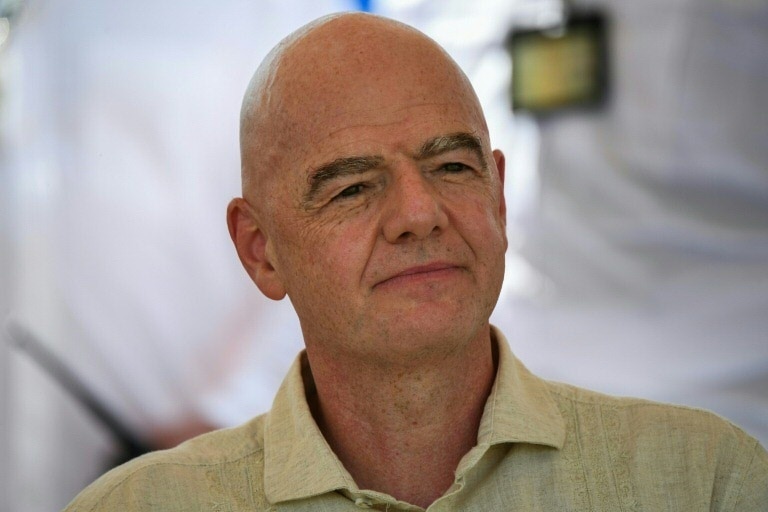
    The world’s most anticipated football spectacle is just hours away from its opening kickoff this Thursday, with FIFA pinning its hopes on the World Cup’s timeless global appeal to overshadow widespread pre-tournament turmoil. From unprecedented anger over staggering ticket costs to political friction in host nation the United States and the lingering shadow of Middle Eastern conflict, the 2026 edition – the first ever co-hosted by three countries, the United States, Canada and Mexico – has faced one of the rockiest build-ups in modern tournament history.

    This year’s World Cup breaks new ground as the largest iteration of the tournament ever staged, with an expanded 48-team field set to bring millions of travelling fans across 16 host venues across the three North American nations. The opening match will launch the nearly six-week event on Thursday afternoon local time at Mexico City’s legendary Estadio Azteca, where co-host Mexico will face off against South Africa. The tournament will wrap up on July 19, with the final contested at New Jersey’s 82,500-capacity MetLife Stadium.

    For football fans around the globe, the on-pitch action promises a slate of historic storylines. At 38, Lionel Messi has the chance to cement his legacy as the undisputed greatest player of all time by leading Argentina to a second consecutive World Cup title. His long-time rival Cristiano Ronaldo, 41, will look to defy age and deliver Portugal’s first ever World Cup crown. Meanwhile, England captain Harry Kane will lead his side’s bid to end the nation’s 60-year wait for a second major title, following their lone 1966 World Cup win. FIFA president Gianni Infantino has already touted the tournament as “the greatest show that the planet has ever seen,” but his upbeat framing has run into significant pushback in the lead-up to kickoff.

    The most fierce backlash has centered on the tournament’s sky-high ticket pricing, which has sparked global outrage that has left FIFA and Infantino scrambling to respond. At the 2022 Qatar World Cup, the most expensive face-value final ticket cost roughly $1,600. This year, the priciest face-value ticket for the 2026 final hits an eye-watering $32,970, a massive markup that has held across all 104 tournament matches. Despite widespread fan demand for the event, thousands of seats remain listed on secondary resale markets, a sign of sticker shock for casual and dedicated fans alike. Even Infantino’s political ally, U.S. President Donald Trump, has publicly pushed back on the costs, admitting to the New York Post he would not pay the $1,000 price tag for tickets to the United States’ opening match against Paraguay in Los Angeles this Friday.

    Beyond affordability concerns, critics have warned that the current political climate in the United States, one of the tournament’s three hosts, could overshadow the football. Human Rights Watch has argued that Trump’s administration’s crackdowns on immigration, public demonstrations and press freedom could frame the entire tournament around “exclusion and fear.” Those concerns gained new traction earlier this week when FIFA confirmed it had removed Somali referee Omar Artan from the tournament’s officiating roster after U.S. border authorities denied him entry to the country. Artan was set to become the first Somali match official to work a World Cup finals, but was turned away upon arrival at Miami International Airport Saturday; FIFA said it had no ability to reverse the U.S. government’s decision.

    The ongoing fallout from recent U.S.-Israel military strikes on Iran has also cast a shadow over the tournament, where Iran is scheduled to play three group stage matches on U.S. soil, kicking off against New Zealand on June 15. Trump initially suggested Iran should withdraw from the tournament for their own “life and safety,” before walking back the controversial comments. In response, Iran relocated its pre-tournament training base from Tucson, Arizona to Tijuana, Mexico, where the team arrived early Sunday. While Iranian players are permitted to travel in and out of the U.S. for their matches, roughly 15 Iranian administrative and coaching staff have been denied U.S. visas, a move Iranian officials have condemned as deliberate, discriminatory treatment.

    On the pitch, the tournament’s most transformative change is the expansion of the field from 32 to 48 teams, a shift that has already sparked debate over whether it will dilute the intensity of the group stage. Under the new format, 72 opening-round matches will only eliminate 12 teams, with 32 sides advancing to the knockout stage – the top two from each of 12 groups, plus the eight best third-place finishers.

    A slate of other new innovations are also making their World Cup debut this year. For the first time, every match will include mandatory cooling breaks midway through each half, a policy designed to counter extreme heat and humidity forecast for many host venues. New on-pitch rules will also require teams to complete substitutions within 10 seconds to cut down on intentional time-wasting, while a new crackdown on on-pitch racist abuse will see players risk a red card for covering their mouth during confrontations with opponents. This year’s final will also make history as potentially the longest ever, after organizers decided to add a Super Bowl-style halftime show headlined by Madonna, Shakira and BTS, stretching the break from the traditional 15 minutes to roughly 25 minutes.

  • Australia, Germany condemn Iran as MP warns Aussies ‘frustrated’ by war

    Australia, Germany condemn Iran as MP warns Aussies ‘frustrated’ by war

    Two months after a ceasefire brokered with the United States paused open hostilities between Israel and Iran, a new wave of tit-for-tat strikes reignited global fears of a full-scale regional war, pushing Australia and Germany to issue a joint condemnation of Iran’s actions and call for urgent de-escalation. While the two sides agreed overnight to halt the recent exchange of attacks, the road to a durable, lasting peace remains deeply uncertain, as Israel continues its military campaign to dislodge the Iran-backed militant group Hezbollah from southern Lebanon.

    In a joint statement released during diplomatic talks in Berlin, Australia’s Foreign Minister Penny Wong and Defence Minister Richard Marles joined their German counterparts Johann Wadephul and Boris Pistorius to unequivocally denounce Iran’s recent escalatory moves. The statement specifically called out Iran’s actions in and around the strategic Strait of Hormuz, including targeted attacks on commercial merchant vessels and repeated threats of further hostile action. Against the backdrop of widening conflict and a worsening humanitarian catastrophe across the Middle East, the two nations urged all involved parties to strictly adhere to international law and prioritize the protection of innocent civilian lives.

    Ministers also highlighted the severe spillover effects of the ongoing tensions on the global economy and international supply chains, reaffirming their shared commitment to open markets and rules-based trade for energy resources, liquid fuels, and downstream commodities. They called on Iran to immediately and unconditionally reestablish free, safe, and unimpeded passage for all shipping through the Strait of Hormuz, a critical chokepoint that handles nearly a fifth of the world’s oil trade, and reiterated their full support for a negotiated diplomatic resolution to the broader conflict.

    The joint diplomatic action comes as Australian officials warn that the current ceasefire between Israel and Iran remains extremely fragile, and that domestic public frustration is growing over the ongoing disruptions caused by the stop-start cycle of conflict. Assistant Immigration Minister Matt Thistlewaite told ABC Radio National that many Australians are increasingly irritated by the persistent closure of large sections of the Strait of Hormuz to commercial shipping, which has driven up fuel prices across Australia’s domestic markets. These higher energy costs have already begun to filter through to everyday household goods including food and groceries, adding additional upward pressure on national inflation that has stretched household budgets thin.

    “Australians are becoming increasingly frustrated with the stop-start nature of this conflict… we want to see this conflict brought to an end as quickly as possible. We want this temporary ceasefire to become a permanent,” Thistlewaite said, adding that the Australian government has maintained ongoing dialogue with Israeli ambassador Hillel Newman in the wake of Israel’s recent deep incursion into Lebanon, the deepest such advance in nearly 30 years.

    Thistlewaite confirmed that Australian diplomatic discussions have centered on pressing Israel to end its military incursions into southern Lebanon, abide by existing ceasefire terms, and negotiate a long-term settlement for the region. Echoing the Australian government’s longstanding policy, which is backed by United Nations resolutions, he noted that a lasting two-state solution for Israel and Palestine remains the only path to sustainable peace across the Middle East.

    “Until we can say that the parties are willing to look to negotiate something like that, it makes it very difficult for this conflict to come to an end,” he added.

    On a separate issue, Thistlewaite rejected calls for Australia to follow Italy’s lead in launching an independent investigation into allegations of sexual assault and mistreatment of passengers on an activist flotilla detained en route to Gaza, which included multiple Australian citizens. Israeli authorities have outright denied the allegations.

    The current round of hostilities dates back to March 2, when Hezbollah entered the conflict on Iran’s side, prompting massive retaliatory action from Israel. Since that time, more than 3,600 Lebanese people have been killed, and at least one million have been displaced from their homes. Separate negotiations are already underway between Israel and Lebanon to reach a lasting peace, decades after Israeli troops advanced all the way to Beirut during the Lebanese Civil War in an effort to oust the Palestine Liberation Organisation and install a pro-Israel government in Beirut.

    Hezbollah, which rose to prominence fighting to end Israel’s 18-year occupation of southern Lebanon, has rejected claims that it is bound by existing agreements between the Lebanese government and Israel, further complicating efforts to reach a lasting regional settlement.

  • Pauline Hanson doubles down on criticism of Premier Jacinta Allan over sexist campaign

    Pauline Hanson doubles down on criticism of Premier Jacinta Allan over sexist campaign

    A firestorm of political controversy has swept across Australia after a sexist electoral campaign targeting Victorian Premier Jacinta Allan drew widespread condemnation — and sparked an extraordinary rebuke from One Nation leader Pauline Hanson, who has doubled down on her criticism of the embattled state leader. At the center of the outrage is an outdoor billboard bearing the inflammatory slogan “Ditch the Witch,” a phrase already notorious in Australian politics for its use against former prime minister Julia Gillard during the 2011 national carbon tax debate. Friday brought confirmation that the campaign counts partial funding from Franco Puleo, a Melbourne-based brothel owner, which amplified public backlash almost immediately.

    In comments delivered to Sky News on Monday night, Senator Hanson rejected widespread labeling of the slogan as misogynistic, and instead told Premier Allan to “suck it up” and accept harsh political criticism. Drawing on her own 30-year career in public office, Hanson argued that strong language is par for the course in Australian politics, adding “if the shoe fits, wear it.” The One Nation leader went on to tie the inflammatory slogan to widespread public discontent with Allan’s leadership, listing rising violent crime, street gang activity, and ongoing conflict over transmission line development in Victoria’s agricultural sector as evidence that Allan’s government had failed the state. “It’s an absolute basket case,” Hanson said of Victoria, adding that if harsh words are enough to derail a sitting premier, they cannot be trusted to manage a state of millions. “I’ve been called so many things over my career, it’s water off a duck’s back now,” Hanson wrote in a follow-up social media post.

    But the far-right leader’s comments have been roundly rejected by political figures across the ideological spectrum. Prime Minister Anthony Albanese led national condemnation on Monday, warning that dehumanizing, sexist political rhetoric creates a culture that can lead to violence against elected officials. “What I don’t want to do is to have a press conference in this courtyard after a tragedy,” Albanese said, calling on political actors to “turn the temperature down” on aggressive discourse. The prime minister added that unchecked misogyny in politics discourages women from entering public life, eroding what should be an honourable profession.

    Puleo, the campaign’s co-funder, has denied that the slogan is sexist, rejecting widespread criticism of the messaging. For her part, Allan acknowledged that political disagreement is a normal part of democracy, but emphasized the broader harm of the slogan. “I care that this attacks women. And I care about who’s next,” she said, noting that Australian political debate has grown increasingly corrosive over the past decade. Even Victorian Opposition Leader Jess Wilson, who leads the state’s center-right opposition against Allan’s Labor government, called the slogan “not appropriate language,” though she framed the campaign as the work of a small, unrepresentative fringe group.

    The most high-profile show of solidarity came from Julia Gillard, the former prime minister who was targeted by the exact same “witch” slur 15 years ago. In a rare public statement on social media, Gillard said she had long held that the treatment of women in Australian politics was slowly improving, with misogyny becoming less common in mainstream political discourse even as social media remains a toxic space. “I am saddened to see that improvement cast aside and this tired old trope resurrected,” Gillard said.

    The controversy comes at a precarious moment for Allan, who took over the Victorian premiership from the controversial Daniel Andrews in 2023. The premier is facing a tough state election contest this November, with polling showing declining approval ratings, ongoing public friction over infrastructure projects and rising crime, and a sharp surge in support for Pauline Hanson’s One Nation party in the state. Recent days have even brought open questions about the future of Allan’s leadership of the state Labor party, as internal and external critics increasingly question her ability to hold the line against growing conservative and far-right momentum.

  • Somali referee is dropped from World Cup after turned back at US border

    Somali referee is dropped from World Cup after turned back at US border

    As the 2026 FIFA World Cup, co-hosted by the United States, Mexico and Canada, enters its final days of preparation ahead of Thursday’s opening kickoff, two high-profile border entry denials have reignited long-simmering criticism of U.S. immigration policy, while Mexican authorities move to head off planned protests that could disrupt the tournament’s opening match.

    The most notable disruption came with the removal of Somali referee Omar Artan from the tournament’s official match official roster, after U.S. Customs and Border Protection (CBP) turned him away at Miami International Airport on Saturday over unspecified “vetting concerns.” Artan was set to make history as the first Somali match official to officiate at a men’s World Cup finals, a milestone cut short by U.S. immigration restrictions first implemented under former President Donald Trump’s administration. Somalia remains on the travel ban list rolled out as part of Trump’s sweeping immigration crackdown, a policy that is now directly impacting a major global sporting event hosted on U.S. soil.

    FIFA confirmed the development in an official statement to AFP, noting that the governing body of global football has no authority to override entry decisions made by host nations. “FIFA can confirm that match official Omar Abdulkadir Artan will be unable to train and officiate at the FIFA World Cup 2026 after he was denied entry into the United States,” a FIFA spokesperson said, confirming Artan would play no part in the month-long tournament.

    Artan’s exclusion is not an isolated incident. The Iranian men’s national team has also been caught in a diplomatic and visa storm amid ongoing military tensions between the U.S. and the Islamic Republic, with U.S. authorities refusing to issue visas to 15 members of the team’s support staff. The team has currently set up its base camp in Tijuana, Mexico, after its arrival was delayed by a full week due to the visa logjam. Iranian head coach Amir Ghalenoei publicly criticized the handling of the visa process Sunday, saying that basic ethical and human considerations were overlooked in the lead-up to the tournament. “Usually in these tournaments, before technical matters, ethical and human considerations must be respected — which I think for us it was not the case,” Ghalenoei said.

    South of the border, Mexican authorities are working to secure the opening match between Mexico and South Africa, scheduled to kick off in Mexico City on Thursday. Mexican President Claudia Sheinbaum has vowed to guarantee the tournament runs “in peace and tranquility” after a teachers’ union announced planned demonstrations to demand higher salary raises, raising fears of disruption to the opening game. On June 1, police dispersed protestors near Mexico City’s historic Zocalo square, where authorities have built a massive public viewing screen for the official World Cup fan zone, using tear gas and rubber bullets. Metal barricades now block off all streets surrounding the square, a measure Sheinbaum says is necessary to guard against unapproved provocations.

    Amid the off-field turbulence, the 48 participating teams – expanded from 32 in previous World Cup editions – have begun settling into their base camps across the three host nations for the 39-day tournament, which will conclude with the final on July 19. Five-time tournament winners Brazil, one of the pre-tournament favorites aiming to secure a record-extending sixth title, have been finalizing preparations in New Jersey. Star midfielder Bruno Guimaraes pushed back against what he sees as a lack of respect for the Brazilian side, noting that no other nation can match Brazil’s five World Cup titles. “Nobody else has five stars on their chest. We have great players who play for top teams, like Vini (Vinicius Junior) and Raphinha. We need to give our players the respect they deserve,” Guimaraes told reporters.

    The Brazilian camp also provided an update on star forward Neymar, the nation’s all-time leading international goalscorer who was recalled to the national side after a two-year absence. The 34-year-old is continuing to recover well from a calf injury, though he remains a doubt for Brazil’s opening group stage match against Morocco this Saturday.

    Over in Europe, 2022 runners-up France – another top contender to lift the trophy this year – wrapped up their final pre-tournament warm-up with a confidence-boosting 3-1 win over Northern Ireland in Lille, with Crystal Palace star Michael Olise netting a hat-trick. The result erased any lingering doubts over the side’s form after an unexpected loss to Ivory Coast in their previous warm-up fixture. Head coach Didier Deschamps will lead the side to their U.S. training base near Boston on Wednesday, ahead of their opening group match against Senegal next Tuesday.

  • Serena Williams to return to tennis in Queen’s doubles on Tuesday

    Serena Williams to return to tennis in Queen’s doubles on Tuesday

    The global tennis community is buzzing with excitement after organisers at London’s Queen’s Club confirmed that 23-time Grand Slam singles champion Serena Williams will step back onto a professional court for the first time in nearly four years this Tuesday. Williams, who last competed at the 2022 US Open where she signaled she was “evolving away from tennis”, has accepted a wildcard entry into the women’s doubles draw of the pre-Wimbledon warm-up grass-court tournament.

    The 44-year-old American tennis icon will pair with 19-year-old Canadian rising star Victoria Mboko to face third seeds Erin Routliffe and Nicole Melichar-Martinez in their opening match. The unexpected comeback has sent shockwaves through the global sporting landscape, capturing the attention of fans and pundits alike who have followed Williams’ legendary career for decades.

    In her first public comments since announcing her return, Williams revealed the core motivation behind stepping back into competitive tennis: she wants her two young daughters with husband and tech entrepreneur Alexis Ohanian to see her compete before she retires from the sport for good. “It’s really about the kids seeing me play,” Williams told reporters at Queen’s on Sunday. “Olympia is a little bit older, Adira is very young. It’s components like that.”

    Following her appearance at Queen’s Club, Williams is already scheduled to compete in doubles at the Berlin Open, which runs from June 15 to 21. When pressed about speculation that she could extend her comeback to singles competition – particularly at Wimbledon, where she has claimed seven career singles titles – Williams struck a careful balance, neither confirming nor ruling out a potential singles appearance.

    “For singles, I can’t say ‘yeah’ and I can’t say ‘no’,” Williams explained. “Right now, no. I feel like I probably need to train a little bit more if I want to play singles. We will see if I get there and if not, it is not my journey right now.”

    Williams’ return comes as one of the most unexpected developments in men’s or women’s professional tennis in recent years, with the all-time great already cemented as one of the most influential athletes in the history of the sport. Fans around the world are already waiting anxiously to see her back in action this week, with speculation continuing to build around what comes next for the tennis legend.