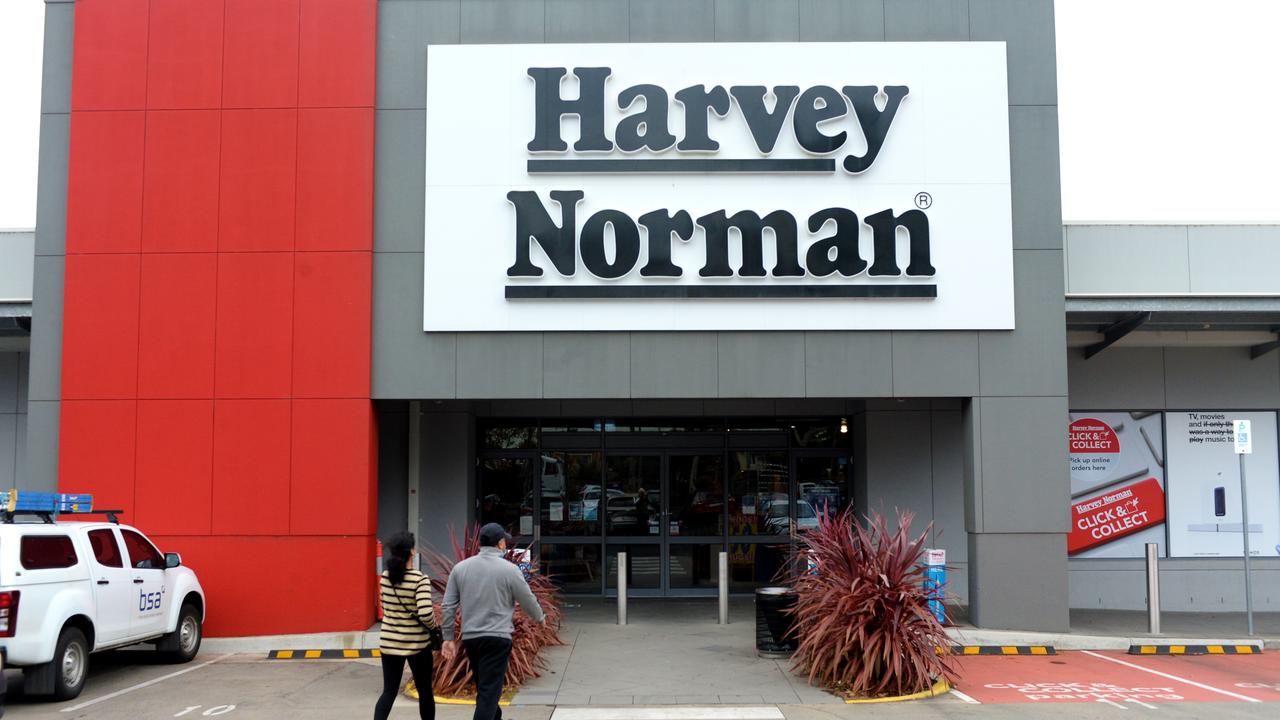
One of Australia’s biggest retail names, Harvey Norman, has linked a sharp slowdown in sales growth in the second half of its financial year to weakened consumer confidence triggered by the federal government’s 2026 May budget, with mounting cost-of-living pressures and three consecutive interest rate hikes amplifying the strain on discretionary spending.
The iconic furniture and electronics retailer reported a solid overall annual result in its latest market update, recording a 3.1% year-on-year rise in total sales to hit $9.6 billion, with Australian franchisee revenue accounting for $6.6 billion of that total. Net profit for the first half climbed 15.2% compared to the previous year, fueled by strong household spending through the key Christmas trading period. But the company made clear that momentum stalled immediately after the federal budget announcement, with consumers pulling back on non-essential purchases amid widespread economic uncertainty.
“Consumer confidence softened further following the May 2026 federal budget, resulting in more cautious discretionary spending,” the company said in its official update.
Chairman Gerry Harvey noted the business started the year on a strong trajectory, before a confluence of economic factors dragged down sales in the second quarter. The retailer stopped short of placing full blame on the federal government, also citing skyrocketing fuel and energy costs, elevated freight expenses, and the three consecutive interest rate increases from the Reserve Bank of Australia as key headwinds.
The Albanese government’s 2026 budget introduced sweeping, once-in-a-generation changes to Australia’s capital gains tax and negative gearing rules, policies that have reshaped investor sentiment across the property and retail sectors. Starting July 1, 2027, the existing 50% capital gains tax discount will be replaced with an inflation-adjusted indexation system. A new 30% minimum tax rate on capital gains will take effect a year later in 2028, eliminating the long-standing tax advantage that allowed asset-rich, cash-poor households to sell assets during low-income years to reduce their tax burden. Negative gearing tax deductions have also been eliminated for new purchases of existing residential properties, though the policy retains existing arrangements for current landlords and allows negative gearing for newly constructed properties.
Harvey Norman is not alone in facing challenging trading conditions. Fellow major Australian retailer JB Hi-Fi also flagged broader economic pressures when releasing its recent results. In a mid-August earnings call, CEO Nick Wells said the retailer saw a slow start to the new financial year driven by higher interest rates and fuel costs, but he remained optimistic that upcoming major sales events including Black Friday would boost revenue for the remainder of the year.
Despite the second-half slowdown, Harvey Norman leadership struck a confident tone about the company’s long-term outlook. “The full-year sales result reflects a strong first half and a resilient performance across the Harvey Norman brands as retail conditions became more variable during the second half,” Mr. Harvey said. “Disciplined cost management and sales growth enabled us to absorb inflationary pressures and continue to invest in our expansion initiatives.” He added that the business is well positioned to deliver sustainable long-term growth for its shareholders.