标签: Oceania

大洋洲

  • UK observatory nervously watches growing space junk threat

    UK observatory nervously watches growing space junk threat

    Beneath the sweeping arc of one of southern England’s most powerful satellite dishes, a team of experts at Chilbolton Observatory works around the clock to map a rapidly growing threat: the chaotic cloud of human-made debris cluttering Earth’s orbit. Operated by RAL Space, the UK’s national space laboratory, the facility is the backbone of Britain’s national space monitoring infrastructure, tracking every object from active UK-licensed satellites to shards of exploded rockets scattered across low and medium Earth orbit.

    When the observatory’s giant antenna pivots into position, control room screens light up with a real-time log of everything the high-resolution radar detects: distant stars, functioning communications satellites, discarded rocket hulls, and tiny fragments left over from decades of space launches, explosions, and accidental collisions. This space junk poses a growing risk to all orbital activity: even centimeter-sized fragments can disable working satellites, while larger objects that survive re-entry into the atmosphere threaten populated areas on the ground.

    Current data from the European Space Agency underscores the scale of the problem: more than 46,000 tracked pieces of large orbital debris, with a combined total mass of 17,000 tonnes, are currently circling the planet. “Most of those don’t collide with anything, most of the time,” explained Matthew Archer, deputy director for launch and space domain awareness at the UK Space Agency, during a press visit to the site. “But any of them can cause significant damage or even destroy potential satellites.”

    The urgency of the threat was highlighted just this month, when a bus-sized segment of a discarded SpaceX rocket crashed into the lunar surface, creating a new crater and adding thousands of additional fragments to the already crowded orbital environment. Researchers warn that rising congestion could eventually trigger Kessler syndrome, a catastrophic cascade effect where one collision generates more debris that triggers further impacts, rendering entire orbital orbits unusable for future missions.

    Chilbolton Observatory feeds its real-time detection data to the UK’s National Space Operations Centre (NSpOC), a joint initiative led by the UK Space Agency and UK Space Command that works 24/7 to prevent orbital collisions and monitor incoming debris re-entries. “Our role is to look at everything that happens and is in space,” Archer said. For the UK, the stakes could not be higher: orbital infrastructure underpins roughly 20 percent of the national economy, from GPS navigation to weather forecasting and global communications, making congestion mitigation a critical economic and national security priority.

    As the number of satellites in orbit skyrockets, the pressure on monitoring systems has grown exponentially. Right now, around 14,000 active satellites circle Earth, but private companies including SpaceX have announced plans to launch more than 1.7 million additional satellites in the coming decade, with SpaceX alone set to deploy over 1 million starting in 2028. Dozens of these SpaceX Starlink satellites pass across Chilbolton’s screens every day, a visible reminder of the rapid commercial expansion of orbit.

    To meet this growing challenge, the UK government has committed £85 million ($114 million) to expanding NSpOC’s capabilities, which currently issue roughly 3,000 collision warnings to satellite operators every month. Beyond debris tracking, the facility also enforces license compliance for UK-registered satellites and monitors potential adversarial activity from foreign space actors. “We see examples of countries that have demonstrated the ability to get close or to fly by certain objects,” Archer noted. “We do have to track… threats regularly from a military perspective.”

    When large debris objects do begin their re-entry into the atmosphere, Chilbolton’s team stands by to issue warnings if fragments are expected to survive and land on populated areas. Earlier this year, the facility joined European partners in closely tracking the re-entry of a large Chinese rocket, after initial projections raised fears that fragments could fall on British territory. The rocket ultimately disintegrated and landed harmlessly in the Pacific Ocean.

    Beyond orbital debris and satellite monitoring, Chilbolton also plays a key role in planetary defense, tracking near-Earth comets and asteroids that could pose an impact risk to the planet. Last year, the UK Space Agency joined the International Asteroid Warning Network (IAWN), a global collaborative body that coordinates monitoring of potentially hazardous near-Earth objects. The UK team works alongside NASA and other U.S. partners to calculate impact probabilities for asteroids that pass close to our planet, and is supporting the European Space Agency’s 2029 mission to study Apophis, a 375-meter wide asteroid that will make a close pass by Earth that year.

    Sarah Nash, Chilbolton’s facility leader, emphasized that the changing nature of the space environment demands coordinated global action. “The whole environment is changing,” she said. “It really is a multinational environment and there are so many objects that are not controllable. The only way that all of this can continue to operate safely is by keeping track of where everything is.”

    For Graham Marshall, the observatory’s station manager, the threat of large asteroids serves as a reminder of the limits of current monitoring technology. Giant asteroids are tracked by long-range optical sensors, as they are usually too distant for Chilbolton’s radar to detect. “If they’re close enough for the antenna to see them, then we have bigger problems,” he joked.

  • ‘You beat them up big time’: Wayne Bennett hits back at media after threats the NRL will punish clubs for hiding players

    ‘You beat them up big time’: Wayne Bennett hits back at media after threats the NRL will punish clubs for hiding players

    One of rugby league’s most decorated coaches, Wayne Bennett, is standing firm in his commitment to protect star players from excessive media scrutiny – and he has made clear he will not back down even if the National Rugby League (NRL) introduces harsh penalties for clubs that restrict player access to the press. Bennetts’ stance comes amid growing tensions between the league’s governing body and club leadership over player media availability, a issue that has moved to the forefront of discussions after a landmark, record-breaking broadcast rights deal that league officials say requires the sport’s biggest names to maintain consistent public visibility.

    Earlier this week, reports confirmed NRL administrators are set to meet with the Rugby League Players Association to address the growing issue of high-profile stars declining midweek media requests. Several top players have been flagged by league headquarters for their limited media appearances this season: South Sydney Rabbitohs superstar Latrell Mitchell has only completed a single midweek interview all year, which came ahead of a milestone match for teammate Campbell Graham. Mitchell’s inactivity is part of a longer pattern, with the star barely making any media appearances over the past two seasons. He is joined on the league’s watchlist by Rabbitohs forward David Fifita and Brisbane Broncos standout fullback Reece Walsh.

    League observers have noted that widespread restrictions on player media access leave fans without the opportunity to hear directly from the athletes they support, a growing issue given the massive new investment in NRL broadcast content. But Bennett, who has built a decades-long reputation for prioritizing player mental wellbeing, says he will continue to block media access when he believes it is in the best interest of his players. The legendary coach argued that harsh, critical media coverage takes a measurable toll on athlete performance and mental health, and that players are far better served focusing on their on-field work rather than engaging with the press.

    “I’m a bit of a fan of some of them not being available sometimes,” Bennett told reporters. “You (the media) beat them up big time, and it has an impact on them, there’s no doubt about that. They’re better off saying less and just playing football. The NRL can do it (punish clubs) but I’ll stand behind my player every time I think he shouldn’t be in the media and the limelight because of a situation that may have happened or because some journo decided he’s the flavour of the month. I’ve seen players driven out of the game in this country because of media exposure, so I’m no fan of just having open slather for players.”

    Beyond the media policy standoff, the Rabbitohs are navigating significant injury hurdles heading into their critical Saturday clash against the Parramatta Eels, as they fight to secure a place in the 2024 NRL finals. Bennett confirmed that Mitchell, who has been sidelined with back and calf injuries since round 11 of the competition, remains unavailable to play, with no clear timeline set for his return. The club suffered a fresh injury blow this week when Graham was ruled out of the Eels match with a calf strain, forcing a last-minute positional change. Young winger Jye Gray will step into Graham’s spot to match up against Eels speedster Josh Addo-Carr, with Bennett optimistic Graham will be able to return to the side next week.

    “He’s got a bit of a strain. It’s not too serious but he’s not quite right,” Bennett said of Graham’s injury. “(Jye will replace him on the wing) so we’ve matched the big guy with the big guy.”

    In a positive development for the Rabbitohs, three key stars – Cameron Murray, Tallis Duncan, and David Fifita – are set to return to the starting lineup this weekend. South Sydney currently sits on the edge of the top eight, locked in a tight finals race with the Canterbury Bulldogs, North Queensland Cowboys, and Newcastle Knights. In the coming weeks, the Rabbitohs are scheduled to face two top-four contenders, the New Zealand Warriors and Sydney Roosters, before a critical, season-shaping clash against Canterbury next week. When asked if every remaining match on the Rabbitohs schedule is a must-win, Bennett pushed back on the idea that the club is under immediate do-or-die pressure.

    “I wouldn’t say that (it’s must win each week),” Bennett said. “We certainly have to win some games, but it’s not a position where we have to win each week because the teams around us are playing some pretty tough opposition as well, so we can probably afford to lose one or two games.”

  • Carlton interim coach Josh Fraser remains coy on applying for permanent top job

    Carlton interim coach Josh Fraser remains coy on applying for permanent top job

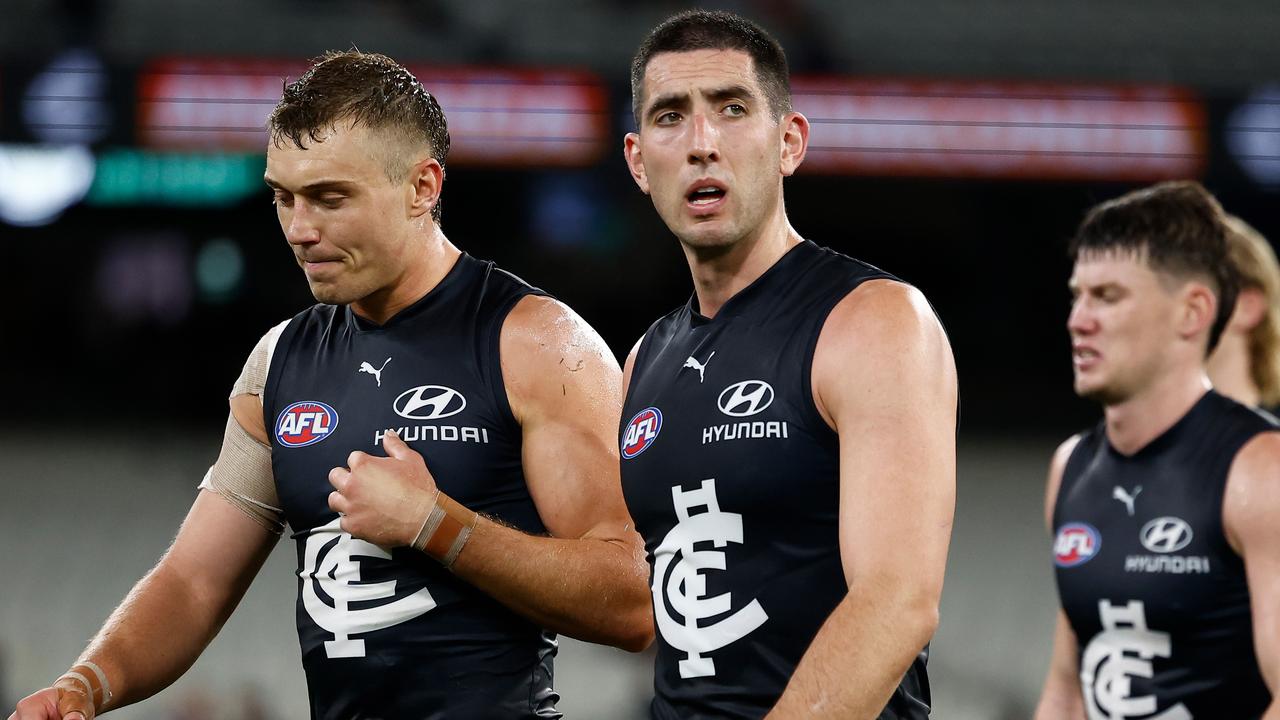
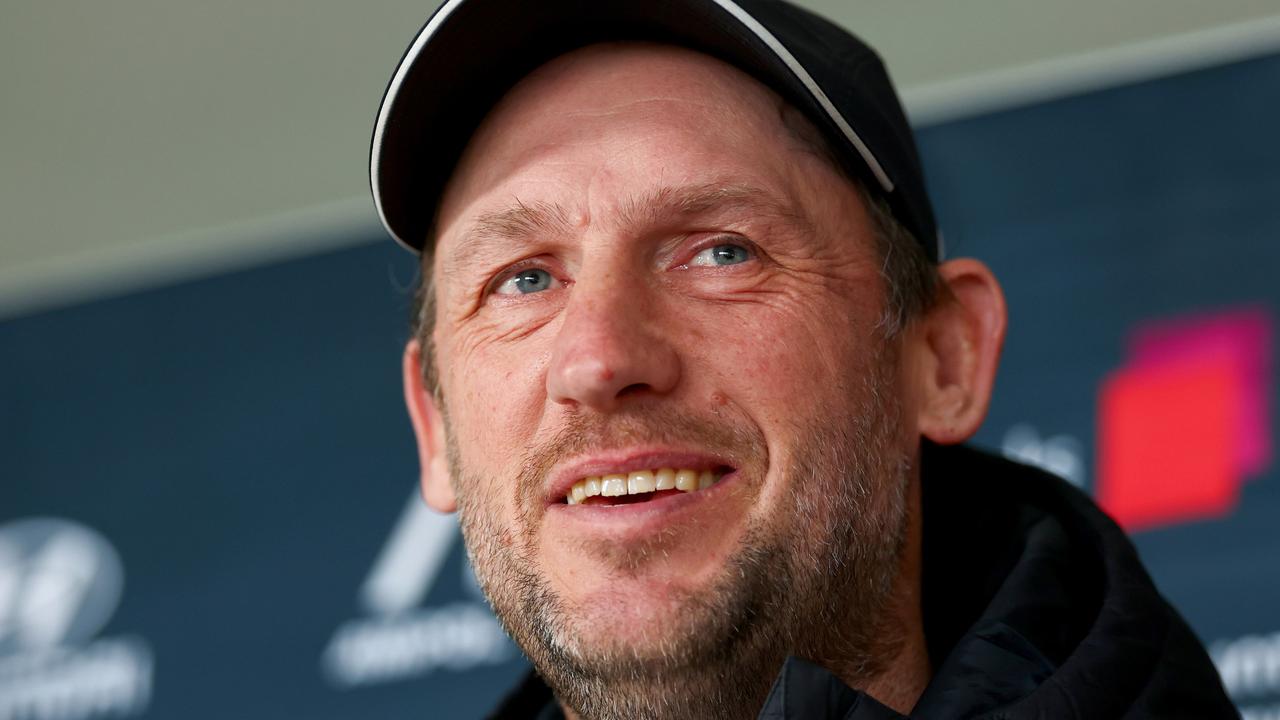
    A stunning mid-season turnaround for AFL side Carlton has catapulted the club from the bottom of the ladder into wildcard contention, yet the architect of that resurgence, interim coach Josh Fraser, still declines to definitively say he wants the permanent top job.

    When former head coach Michael Voss parted ways with the Blues earlier this season, the club was mired in a dismal slump: just one win from its opening nine matches, sitting 16th on the competition ladder with little sign of improvement. Since Fraser stepped into the caretaker role, the narrative has flipped dramatically. The interim leader has guided Carlton to nine wins across his first 11 games at the helm, transforming a disappointing season into one with genuine finals aspirations.

    This Sunday, Carlton will face 11th-ranked St Kilda at Marvel Stadium, with a win nearly locking in their spot in the upcoming finals series. Despite the on-field success that has sparked widespread speculation about his candidacy for the full-time position, Fraser is taking a deliberate, cautious approach to confirming his intentions.

    Speaking to reporters on Friday, the interim coach acknowledged his long-term career goals while pushing for time to make a considered decision. “I’m very ambitious about being a senior coach,” Fraser said. “If I don’t put my hand up for the role, there will be a reason for that. I’m in a fortunate position where the club has given me time to gather all the information I need around the position. I’d love for it to be as simple as just saying ‘yeah, I’m all in’, but it’s not that straightforward.”

    Fraser emphasized that leading a top AFL club carries enormous weight, and a rushed decision would do the club a disservice. “Coaching this football club is a huge responsibility,” he explained. “I’d be doing a disservice to the process if I wasn’t making a decision based on all the information all together. It’ll take some conversations, and I need time to work through that.”

    Looking ahead to Sunday’s critical clash, Fraser warned his side against falling into the habits that have derailed past Carlton campaigns, urging the team to focus on process rather than obsessing over the finals outcome. “We need to lean into the occasion to a certain extent, but it’s important that we attach ourselves to the process around this game and not get too outcome driven,” he said. “This club maybe historically has ridden the wave, and I just look at where we’re at, and I think we’ve got so much work in front of us still.”

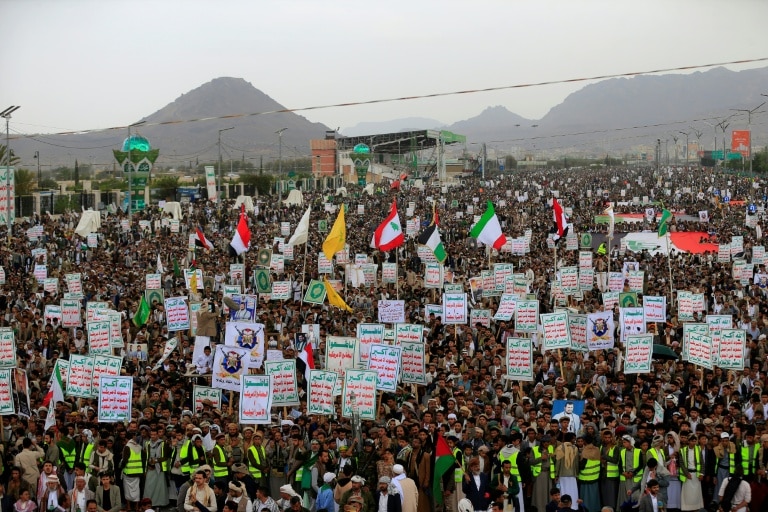
  • Houthi missile attacks kill 58 Saudi-backed Yemeni govt forces: source

    Houthi missile attacks kill 58 Saudi-backed Yemeni govt forces: source

    A devastating wave of missile and drone strikes carried out by Iran-backed Houthi rebels in Yemen has claimed the lives of at least 58 troops aligned with the Saudi-backed internationally recognized government, marking one of the deadliest single days of conflict in the country’s civil war in four years, a senior military source confirmed Thursday.

    The lethal assault comes as Yemen is increasingly drawn into the expanding regional conflict centered on escalating tensions between the US-Israeli bloc and Iran, with Houthi forces ramping up attacks on both Yemeni government positions and neighboring Saudi Arabia, a key American ally and primary backer of Yemen’s official administration.

    Houthi military spokesperson Yahya Saree stated that the strikes targeted government military outposts in retaliation for what the rebels claim is a Saudi-backed military buildup by government forces in contested regions. Initial casualty reports from medical sources had put the death toll at 38, but an updated figure from an anonymous military source confirmed 58 troops killed, with dozens more wounded.

    A senior military official, speaking on condition of anonymity, noted that Thursday’s coordinated attacks on multiple military camps represent the worst single loss of life for government forces since 2022. Yemen’s defense ministry issued a brief statement following the strikes, affirming that the country’s armed forces would respond to the assault “at the appropriate place and time.”

    The escalation of violence spilled across Yemen’s northern border into Saudi Arabia on Thursday, with Saudi officials confirming that Houthi cross-border attacks wounded 11 civilians in the southern Saudi region of Najran. Coalition spokesperson Major General Turki al-Malki told the official Saudi Press Agency that the wounded casualties included seven Saudi citizens, one Yemeni, two Egyptians, and one Pakistani national.

    Saudi Arabia has led a regional military coalition supporting Yemen’s government against Houthi forces since the conflict escalated in 2015. Al-Malki condemned the rebels for carrying out “indiscriminate shelling against civilian objects” and reaffirmed that coalition forces would continue all necessary measures to protect civilian populations on both sides of the border.

    Houthi forces have significantly increased provocations against Saudi Arabia over the past month, amplifying regional chaos that followed the eruption of open US-Iran hostilities in late February. The coordinated strikes Thursday hit three key government positions: a major military camp in the al-Ruwaik district of Yemen’s central Marib province, and two additional camps in the Al-Abr and Al-Wadiah areas of Hadramawt governorate, located near the Saudi border.

    One of the deadliest single strikes hit troops during their morning formation at the Marib province camp, leaving “at least 45 personnel killed and wounded,” according to a military source who requested anonymity for security reasons. Saree confirmed Al-Ruwaik, al-Thaniyah, and al-Abr as targeted locations, and warned that Houthi forces remain “prepared to confront any escalation” from government and coalition forces.

    Yemen has been mired in full-scale conflict for more than a decade, after Houthi forces seized the capital Sanaa and much of the country’s populous northern region in 2014, forcing the internationally recognized government into exile and later into control of most of southern Yemen. The conflict, which has already killed hundreds of thousands of people through direct fighting and humanitarian crisis, created what the United Nations has long called the world’s worst humanitarian disaster.

    A UN-negotiated truce brokered in 2022 largely froze frontline fighting, and the truce agreement broadly held even after its official expiration. That fragile calm collapsed last month, however, as Houthi forces allowed an Iranian plane to land directly in Sanaa in a move that violated truce terms, triggering escalating tit-for-tat strikes. The rebels later announced a self-declared maritime blockade of Saudi ports and began attacking Saudi commercial tankers. Just last month, Houthi strikes killed 16 government-aligned troops south of the strategic port city of Hodeidah, two medical officials confirmed to AFP.

  • South Africa coach Erasmus wary of struggling Argentina

    South Africa coach Erasmus wary of struggling Argentina

    As world rugby champions South Africa prepare to face Argentina in a one-off Test in Buenos Aires this Saturday, Springboks head coach Rassie Erasmus has warned his squad against underestimating their opponents, dismissing the idea that the match is a mere warm-up ahead of their upcoming series against New Zealand.

    Erasmus, the mastermind behind South Africa’s back-to-back Rugby World Cup titles in 2019 and 2023, stressed that the Pumas, despite their inconsistent results in the recent Nations Championship, will pose a bruising, high-stakes test for his side in the iconic Estadio Jose Amalfitani. “Argentina are a quality outfit and we are preparing for a physical and gruelling battle,” Erasmus told reporters ahead of the clash. “They are a well coached team who have tested us in the last few years, so it will be a good challenge for us. They gave us one of the biggest hidings we have suffered since I became involved with the Springboks in 2018.”

    The lead-up to the match has been marked by mixed results for Argentina in the inaugural Nations Championship. The Pumas secured a solid win over Wales but fell to Scotland and England in a controversial, ill-tempered closing clash. In that match, Argentina thought they had scored a late game-tying try, only for referee Angus Gardner to disallow the score following a lengthy VAR review. The call sparked an angry reaction from Pumas fly-half Tomas Albornoz, who had to be restrained by teammates and staff while confronting the official. Albornoz has since received a four-match suspension, ruling him out of Saturday’s clash against the Springboks.

    Even with the absence of their star playmaker and primary goal-kicker, Erasmus said he has not eased off preparation for the match, rejecting growing narratives that the game is a warm-up for South Africa’s four-Test home series against New Zealand, set to kick off on August 22. “This match was not planned with that reason in mind — it was always about honouring our relationship with Argentina,” he insisted. This year, the annual Rugby Championship, which traditionally includes two regular matchups between the Springboks and Pumas, has been canceled to accommodate the All Blacks tour schedule.

    South Africa has named an experimental starting XV for the Test, with only five players penciled in as probable starters for the opening New Zealand clash. The match marks the long-awaited return of several key stars from injury, including fly-half Sacha Feinberg-Mngomezulu, locks Eben Etzebeth and Lood de Jager, and captain and flanker Siya Kolisi. Only two players from the Springboks’ dominant 43-0 win over Wales in Durban retain their starting spots: full-back Aphelele Fassi and scrum-half Cobus Reinach.

    For Argentina, head coach Felipe Contepomi has handed a starting Test debut to tighthead prop Francisco Moreno. Three other players — hooker Leonel Oviedo, and back-rowers Juan Penoucos and Juan Martin Scelzo — are in line to earn their first international caps if they come off the substitutes bench on Saturday. English referee Christophe Ridley has been named to officiate the cross-hemisphere clash.

  • Meta ordered to pay US state $567 mn to abate ‘public nuisance’ and child harm

    Meta ordered to pay US state $567 mn to abate ‘public nuisance’ and child harm

    In a landmark ruling that adds to growing legal pressure on social media platforms over youth safety, a New Mexico judge has ordered tech giant Meta to pay $567 million in penalties and remediation funds to resolve claims that the company created a public nuisance and inflicted widespread harm on children across the state. The decision marks a major escalation of a legal battle that first reached a jury verdict earlier this year, and it sets a clear precedent for dozens of similar pending cases against the company across the United States.

    The case dates back to 2023, when New Mexico Attorney General Raul Torrez filed a lawsuit against Meta, the parent company of major platforms Facebook, Instagram and WhatsApp, accusing the firm of systemic failures to protect minor users from a range of online dangers. In March 2025, a jury already found Meta liable for endangering children, including leaving young users vulnerable to predation, and awarded $375 million in damages to the state. Thursday’s ruling finalizes additional penalties and outlines required changes to Meta’s platform operations in the state.

    Prosecutors argued during the trial that Meta’s recommendation algorithms actively steered adult users toward content posted by teenage users, while the company intentionally suppressed internal research that documented significant mental health and safety risks that its platforms posed to young people. The jury ultimately agreed that Meta violated New Mexico’s Unfair Practices Act by misleading consumers about the child safety standards of its products.

    Under the terms of the new ruling, roughly three-quarters of the $567 million payment will be allocated to fund long-term mental health treatment for children harmed by Meta’s platforms, with the full amount paid out over a five-year period. The remaining quarter of the fund will be distributed across targeted programs: public awareness and harm prevention, youth mental health screening and assessment, care referral and coordination, and ongoing compliance implementation and evaluation.

    Beyond financial penalties, the judge imposed sweeping operational changes on Meta for its New Mexico user base. The company is required to strengthen efforts to block users under the age of 13 from accessing Facebook and Instagram, a mandate that aligns with growing global regulatory momentum for age verification on social platforms, even as implementation of such policies remains technically and logistically complex.

    In his written ruling, Judge Bryan Biedscheid emphasized that adolescent brains are uniquely susceptible to the addictive platform features designed to maximize user engagement, including infinite scrolling, autoplay video, public like counts, push notifications and algorithmic content recommendations. While the ruling acknowledged that many of these design choices represent industry-wide practices that intersect with complex free speech debates, it ordered Meta to implement targeted restrictions for users under 18 in New Mexico: limiting monthly platform usage to 90 hours (an average of three hours per day), capping push notifications, and hiding public like counts from minor user accounts. Meta will also be required to submit bi-annual compliance updates to the court to ensure the changes are being implemented.

    In an immediate response to the ruling, Meta reiterated its intent to challenge the decision, saying, “We disagree with the ruling and will appeal.” The company added that it “works hard to keep people safe on our platforms and have been transparent about the challenges of identifying and removing bad actors and harmful content,” noting that it remains “confident in our record of protecting teens online and will continue to defend ourselves against claims that misrepresent the facts.”

    For New Mexico officials, however, the ruling represents a long-awaited win for families. “This case has always been about protecting children, standing up for families, and making sure that one of the world’s largest technology companies cannot profit from practices that endanger young people without consequence,” Torrez said in a statement Thursday. “Today’s decision is a victory for every parent who has worried about what social media is doing to their child and every child who deserves to grow up safer online.”

    The New Mexico ruling is part of a much broader wave of legal action against social media companies across the U.S. Thousands of individual and state-level lawsuits have been filed holding platforms liable for alleged youth mental health harms, with more than 30 states bringing similar cases against Meta. The next major bellwether trial is scheduled to begin in August in Oakland, California, which will set a key framework for resolving thousands of remaining pending claims across the country. Recent prior bellwether proceedings have produced mixed outcomes: a July 2025 trial against Meta ended when the teenage plaintiff dropped the case days before opening arguments, after reaching confidential settlements with other major platforms including TikTok, YouTube and Snap. The first bellwether trial concluded in March 2025, when a Los Angeles jury ordered Meta and Google to pay $6 million in damages to a 20-year-old woman who alleged social media addiction caused her lasting harm. In May, Meta, Snap, TikTok and YouTube reached confidential settlements with a Kentucky school district that had sued over youth social media harms.

  • Greens’ plea for $4bn for homelessness as women’s ministers meet

    Greens’ plea for $4bn for homelessness as women’s ministers meet

    As Australia’s federal, state and territory women’s ministers gather for the national Women’s Safety Ministers Council, the Australian Greens have issued a stark warning: a $4 billion-plus funding gap is putting thousands of women and children fleeing domestic violence at grave risk of returning to abusive situations due to a critical shortage of accessible, affordable housing.

    New data from the 2024-25 Australian Institute of Health and Welfare (AIHW) underscores the severity of the crisis. Women and children escaping family and domestic violence make up the single largest group of people seeking support from specialist homelessness services across the country, with more than 100,000 survivors reaching out for help annually. Despite this overwhelming demand, the system is failing to deliver: nearly 12,000 women and children are turned away from life-saving short-term accommodation each year, and roughly 60% of survivor-victims leave crisis housing without securing stable long-term housing. For many of these people, the only available option is to return to live with their abusive perpetrator.

    Greens leader Larissa Waters emphasized that the national housing and homelessness crisis is not just an economic issue—it is a core women’s safety issue. “When politicians ask ‘why didn’t she just leave?’ they’re ignoring that unaffordable housing, skyrocketing rents, and widespread shortages of crisis and transitional housing leave women and children with nowhere to go,” Waters said in a statement released ahead of the council meeting.

    Waters noted that soaring housing costs have pushed more survivors to seek help from crisis accommodation and frontline support services, but the overstretched sector is on the brink of collapse. “The sector is breaking at the time it is needed most, forcing services to turn away women and children every day,” she said. “This is something that the government can, and must, fix by investing in public housing and frontline services.”

    Speaking directly to the ministers gathering for Friday’s summit, Waters called on national and state leaders to step up and address the unmet need. She pointed out that the $4.6 billion the Greens say is needed to close the housing gap amounts to less than a quarter of the annual revenue that would be raised by a tax on gas exports, and a tiny fraction of the billions the Australian government has committed to the AUKUS nuclear submarine program, a project Waters argued wastes public funds on defense assets that may never be delivered.

    Waters also criticized the ruling Labor government for dragging its feet on responding to the crisis. “Labor knows there is massive unmet need, but even their pilot project to collect data on that need is years overdue and just got another extension,” she said. “The sector, and the women and children who rely on it, cannot wait any longer. Labor must start prioritising people over corporate profit and investing in the things that people need to survive and live a good life.”

    To date, government commitments have fallen far short of what is required. The Albanese Labor government has allocated $100 million for new crisis, transitional and youth housing as part of its $1 billion Housing Australia Future Fund, launched in 2023. The fund’s stated goal is to deliver 55,000 new social and affordable homes by mid-2029, but the broader program has faced ongoing implementation delays and challenges, and independent analysis suggests it is unlikely to hit its target.

    At the state level, the New South Wales government committed $130 million last year to expand crisis accommodation beds for people experiencing homelessness, on top of a $6.6 billion state housing program that aims to deliver 8,400 new public homes, with at least half reserved for women and children escaping violence. Even with these investments, Greens and frontline service providers agree that national collective action and far greater public investment are needed to end the preventable crisis putting survivors’ lives at risk.

  • AFL 2026: Carlton to reintroduce Jacob Weitering back through the VFL on managed minutes

    AFL 2026: Carlton to reintroduce Jacob Weitering back through the VFL on managed minutes

    Ahead of one of the most high-stakes matches of Carlton’s AFL season this Sunday against St Kilda, the club’s coaching hierarchy is prioritizing long-term player health over short-term results, confirming star defender Jacob Weitering will not be rushed back into the senior side.

    Weitering, the Blues’ vice-captain, has endured a nightmare 2024 campaign marked by a string of debilitating injuries. A rib fracture sustained during the State of Origin clash, followed by a concussion and repeated calf setbacks, have sidelined the key defender since Carlton’s round 12 matchup against Geelong. He has only managed to take the field for 10 senior games this year, leaving the gap in Carlton’s backline to be filled by emerging young talent Harry Dean.

    While a victory over St Kilda would push Carlton significantly closer to locking in a top-eight finish (corrected from the original report’s top-10 framing, consistent with AFL finals structure) and keep its finals momentum building after last weekend’s stunning upset over reigning premier Brisbane Lions that shook up the entire finals race, interim head coach Josh Fraser says a gradual return through the reserves competition is the only responsible path forward.

    “Jacob has progressed really well through his rehab, and he will be available to get some game minutes under his belt in the VFL this weekend,” Fraser told reporters this week. “Every decision we make around a player coming back from injury is always centered on what is best for that individual player in the long run. Weiters has put in an enormous amount of work to get himself back to this point, and all Carlton fans should recognize just how much effort he has invested in his recovery. This week, he will continue that progression through the VFL.”

    When asked whether previous coaching regimes at the club may have pushed Weitering back into the senior side earlier despite his lack of match fitness, Fraser declined to comment on past decisions, noting he was not part of the club’s setup in previous seasons. He did, however, double down on the club’s current approach to injury management.

    “It’s hard for me to speak about previous years, not having been here,” he said. “But my approach is always to gather all the available information from our medical and performance staff, and ultimately do the thing that is best for the player. He has missed a fairly substantial amount of game time, and he has been working incredibly hard to get back to full fitness. Logically, getting some minutes in the VFL is the right next step for his progression.”

  • 2 killed, 13 wounded in bus blast near Syrian capital: state media

    2 killed, 13 wounded in bus blast near Syrian capital: state media

    A deadly improvised explosive device detonated inside a civilian minibus on Thursday in the Damascus suburb of Jaramana, a multi-religious town home to large Druze and Christian communities, killing at least two people and injuring 13 others, Syrian state media has confirmed, citing official data from the country’s health ministry.

    Agence France-Presse (AFP) photographers on the scene documented the extensive damage caused by the blast: the minibus’s roof was completely blown off, its internal chassis was reduced to mangled wreckage, and scattered debris covered a major thoroughfare that was immediately closed to traffic by responding authorities. Multiple ambulances were spotted rushing emergency personnel and supplies to the blast site, while forensic medical teams have begun the process of recovering and identifying human remains, according to reports from Syria’s official state news agency SANA.

    Preliminary government investigations confirm the blast was a targeted attack, with the explosive device pre-planted on the vehicle before detonation, an official source told Syrian state television. As of Thursday evening, no armed faction had issued a claim of responsibility for the attack.

    This latest incident comes amid a sustained wave of instability across Syria, nearly 12 months after former long-time ruler Bashar al-Assad was toppled from power in December 2024. Since taking control of the country, Syria’s new Islamist-led administration has made restoring national security and extending full state authority across its territory a top policy priority, but the capital Damascus and its surrounding suburbs have emerged as a repeated flashpoint for attacks targeting both civilians and state security forces.

    Jaramana itself has already experienced sectarian violence earlier this year, in spring 2025, and this bombing fits a pattern of frequent attacks that have rocked the country in recent months. Just one month prior, during a historic visit to Damascus by French President Emmanuel Macron—the first EU head of state to travel to Syria since Assad’s ouster—two homemade bombs detonated, leaving one dead and 36 injured. Macron was unharmed, as he was not at his nearby hotel when the blasts went off, and Syrian security forces later announced they had captured an Islamic State (IS)-affiliated cell responsible for the attack.

    Just days before the Macron visit bombing, a separate explosion at a central Damascus cafe killed 10 people and wounded roughly 20 others. The deadliest attack to hit Syria this year occurred in June 2025, when a suicide bombing targeting a Damascus church left 25 people dead. While a Sunni Islamist faction initially claimed the attack, Syrian authorities have pinned the blame on IS.

    While current Syrian President Ahmed al-Sharaa has repeatedly pledged to protect the country’s minority communities in Syria’s multi-ethnic, multi-sectarian society, the past year has seen widespread sectarian bloodshed: massacres of Alawite communities in their coastal heartland, and violent clashes involving the Druze minority in southern Syria. In a December address marking the one-year anniversary of Assad’s ouster, al-Sharaa called for national unity, saying all Syrians must work together to “build a strong Syria.”

    Syria joined the U.S.-led global coalition against IS last year, more than six years after the jihadist group was declared territorially defeated in Iraq and Syria in 2019. Despite the loss of all occupied territory, IS retains an extensive network of dormant sleeper cells across both countries, and continues to issue calls for armed attacks against the new Syrian authorities.

  • Thousands protest private property legislation in Argentina

    Thousands protest private property legislation in Argentina

    Thousands of Argentine demonstrators gathered outside the National Congress in Buenos Aires on Thursday, defying severe stormy weather to voice their fierce opposition to a divisive private property law pushed by libertarian President Javier Milei, in a demonstration that ended in violent scuffles between protesters and security forces. What began as a large-scale peaceful protest organized by left-wing political movements and national trade unions eventually erupted into clashes on Congress Square. Protesters threw stones and other projectiles at police officers, who responded by deploying tear gas, rubber bullets, and a high-pressure water cannon to disperse the crowd.

    The legislation in question, officially titled the Inviolability of Private Property Bill, is currently going through debate in Argentina’s Senate. The proposal includes a series of sweeping changes to the country’s existing property regulations: it would streamline lengthy eviction processes, revise rules governing rural land use, and impose new restrictions on the state’s ability to expropriate private property. Milei’s administration has framed the bill as a critical legal framework designed to unlock much-needed foreign direct investment and stimulate Argentina’s struggling economy.

    Even after Milei’s ruling party made a major concession last week — removing the most controversial provision that would have raised the cap on foreign-owned land from 15% of the country’s total territory to 25% — protesters refused to end their demonstration. Opponents of the legislation, including opposition political blocs and leading environmental advocacy groups, argue that the bill still poses a severe threat to national sovereignty. Many demonstrators carried Argentine national flags and held signs reading “The homeland is not for sale,” echoing widespread concerns that the legislation would open the door to what opponents call the “colonization, fragmentation, fracture and balkanization” of Argentine territory.

    Milei’s party currently holds just 20 out of 72 seats in the Argentine Senate, leaving it with little choice but to make concessions to win broader support for the legislation. A 2025 joint study from the University of Buenos Aires and independent research groups found that foreign entities already own roughly 5% of Argentina’s total territory — an area roughly the same size as the entire country of England. The report also noted that in multiple strategic regions, foreign ownership already exceeds the current 15% cap. This is particularly true in resource-rich territories with abundant water reserves, rich mineral deposits, and key logistical advantages such as major port districts.

    The protest highlights the deep political divides facing Milei’s administration just months into his term, as he pushes forward with a sweeping pro-market reform agenda that has faced widespread pushback from labor unions, left-wing groups, and environmental organizations across the country.