标签: Oceania

大洋洲

  • ‘Acted appropriately’: SA Police Commissioner defends decision to use taser after man’s death in Clare

    ‘Acted appropriately’: SA Police Commissioner defends decision to use taser after man’s death in Clare

    A fatal confrontation in the regional South Australian town of Clare has prompted formal investigations and reignited public discussion over police use of force, after a 44-year-old man died following the deployment of a taser by responding officers.

    The incident unfolded on Opie Street in Clare, where the 44-year-old was reportedly behaving erratically: he was armed with a metal pole, damaging local property, and issuing violent threats to bystanders. Among those threatened were an elderly couple, according to senior police officials. To de-escalate the situation and take the man into custody, officers made the call to deploy a conducted energy device, more commonly known as a taser.

    Immediately after the taser was used, the man became unresponsive. First responding officers administered emergency first aid on scene, and paramedics rushed to provide advanced care — but their efforts were unsuccessful, and the man was pronounced dead at the location of the incident.

    In his first public comments since the Sunday incident, South Australia Police Commissioner Grant Stevens broke his silence Tuesday, defending the responding officers’ actions after reviewing the body-worn camera footage captured during the confrontation. “I am satisfied that a preliminary view of the body worn video shows that the officers acted appropriately and within general orders,” Stevens told reporters. “Having viewed the body worn video, it is clear the responding officers were confronted by an agitated man behaving in a threatening and aggressive manner. This person was also threatening an elderly man and woman.”

    Stevens also praised law enforcement for their response to the dangerous situation, noting that the footage underscores both their professionalism and courage in working to protect everyone present, including the man causing the disruption. He additionally recognized a member of the public who stepped in to assist officers with restraining the 44-year-old.

    The death will now trigger two formal probes: an investigation by the state’s police standards unit, and a separate public inquiry led by the Police Commissioner itself. A full case file will also be compiled and submitted to the South Australian Coroner for a formal inquest into the death. As of Tuesday, the case has not been referred to the Office for Public Integrity or the independent Commissioner Against Corruption, according to SA Police spokesperson.

    Local community leaders have voiced deep concern over the fatal outcome. Allan Aughey, mayor of the Clare and Gilbert Valleys Council, told the Australian Broadcasting Corporation that he felt “very troubled” by the incident, which has sent shockwaves through the small regional community.

  • Australian shares fight back from sharp falls as retailers rally against miners

    Australian shares fight back from sharp falls as retailers rally against miners

    After a volatile, stomach-churning opening drop that sent the Australian benchmark index down 134 points at Tuesday’s opening bell, Australia’s sharemarket staged a remarkable afternoon recovery, driven by shifting investor sentiment around Middle East tensions and growing expectations of an Australian interest rate cut. While both the benchmark ASX 200 and broader All Ordinaries still closed in negative territory by session end, the partial rebound erased much of the early session’s steep losses that followed widespread global market downturns over the prior two trading days. The ASX 200 finished the day down just 0.24% (20.90 points) to settle at 8604.20, while the All Ordinaries closed 0.35% lower (31.10 points) at 8824.80, a far better outcome than the catastrophic opening numbers had forecast. The Australian dollar also gained ground against the U.S. dollar, rising 0.25% to hit 70.54 U.S. cents by market close.

  • Business, unions unite against Swiss immigration cap push

    Business, unions unite against Swiss immigration cap push

    As Switzerland prepares for a high-stakes public referendum this Sunday, an unusual coalition of top business leaders and major trade unions has mobilized in force to defeat a controversial proposal to cap national immigration and cap the country’s total population below 10 million by 2050. The initiative, spearheaded by the hard-right Swiss People’s Party (SVP) — Switzerland’s largest political party — has sparked widespread fears of severe damage to the country’s employment market, economic prosperity, and critical trade ties with the European Union. Dubbed “No to a Switzerland of 10 million!”, the proposal frames current immigration levels as “out of control”, claiming unchecked population growth is responsible for a raft of national issues, from overcrowded public transit and soaring rental costs to unregulated urban expansion. While the initiative faces broad, unified pushback from the Swiss federal government, national parliament, and the entire business community, recent public opinion polls indicate the final vote result could be extremely close, leaving both sides bracing for a tight outcome. Leading employer associations and trade unions have jointly labeled the plan the “chaos initiative”, warning it threatens to erode the foundations of Switzerland’s decades-long economic prosperity. Much of the country’s core economic sectors — from cutting-edge medical research and large-scale construction to public healthcare — rely heavily on foreign labor, the vast majority of which comes from neighboring European Union member states. Martin von Moos, head of the national hospitality industry group HotellerieSuisse, emphasized that more than half of all employees in Switzerland’s hotel and tourism sector are foreign workers. He warned the cap would dramatically worsen the chronic labor shortages already plaguing the industry. Beyond domestic labor market disruptions, critics warn the initiative puts at grave risk the sweeping bilateral agreements that bind Switzerland to the EU, its largest trading partner by far. Most critically, the proposal would violate the 1999 Agreement on the Free Movement of Persons, a cornerstone of Swiss-EU trade relations. In 2023 alone, more than half of all Swiss exports — totaling more than 147 billion Swiss francs, equal to roughly $185 billion — were shipped to EU markets. For export-focused Swiss firms, maintaining unimpeded access to the European single market and a flexible cross-border labor pool is non-negotiable. Pierre-Yves Bonvin, chief executive of Vionnaz-based textile machinery manufacturer Steiger, which exports 100 percent of its production to the EU, told reporters that his firm simply could not operate without foreign specialist workers. While the company has moved low-value manufacturing to China, it retains all high-value-added production at its Swiss facility, where more than a third of its 40 local employees are foreign nationals. “In Switzerland, we can find engineers to design and assemble our machines, but we lack the specialized expertise to test and calibrate them,” Bonvin explained. “There is no longer any vocational training for this skill set in Switzerland, so we have to recruit these specialists from France and Germany. Without that expertise, we could not continue producing these machines here.” The SVP has dismissed widespread criticism of the plan, noting that the proposal includes annual immigration quotas that would allow roughly 40,000 new foreign residents to enter the country each year. But industry leaders reject that defense, arguing the proposed quotas are far too small to meet Swiss labor demand and would prioritize social sectors over manufacturing, leaving business stranded. Simon Michel, CEO of leading medical technology firm Ypsomed — based near Bern and a producer of diabetes injection systems — and a right-wing Liberal legislator, warned that the quotas would prioritize hospital care and elder care, leaving industrial recruitment at the back of the line. Facing growing global demand for obesity and diabetes treatments, Ypsomed plans to hire 100 new precision mechanics over the next three years for its Solothurn factory. Even with a robust domestic apprenticeship program, Michel said the company cannot train enough qualified workers locally, and will need to recruit from France, Germany, and Poland to fill roles. Trade unions echo business concerns, adding that the cap could push struggling export firms to relocate production entirely abroad, leading to widespread domestic job losses. Switzerland’s largest union, Unia, also warned the initiative would weaken longstanding national labor protections, eliminate anti-discrimination rules that guarantee equal treatment for resident and foreign workers, and open the door to widespread wage dumping that would drag down pay for all Swiss workers. In a statement, the union cautioned that the SVP’s xenophobic campaign around the initiative would put downward salary pressure on every working person in the country, regardless of their origin.

  • Seven Georgians tried in France over theft of rare Russian books

    Seven Georgians tried in France over theft of rare Russian books

    A high-stakes trial centered on one of the most brazen cultural theft rings in recent European history opens Tuesday in Paris, where seven Georgian nationals will answer for charges connected to the systematic theft of rare 19th-century Russian literary classics valued at more than 1.25 million euros from leading institutional libraries across the continent.

    The case is the culmination of a multi-year cross-border investigation into a string of identical heists that targeted rare collections across Germany, Switzerland, the Czech Republic, and France. Law enforcement and judicial officials have linked the thefts to a sophisticated organized criminal network that operated across European borders for years, outwitting library security protocols through carefully planned deception.

    Targeted works included first and early editions from iconic Russian literary figures Alexander Pushkin and Nikolai Gogol, with the total collective value of all stolen volumes across Europe estimated in the millions of euros. All seven defendants facing the Paris tribunal have been charged with criminal conspiracy and intent to commit theft; several also face additional charges for stealing cultural items on public display. If convicted, they could receive prison sentences of up to 10 years.

    Two of the accused are being tried in absentia, and international arrest warrants remain active for their detention. Two other defendants, identified only as 50-year-old Mikheil Z. and 49-year-old Beqa T. by French judicial procedure, are already serving prison sentences for identical theft convictions in Lithuania and Estonia respectively, and have been temporarily extradited to France to stand trial for their alleged roles in the French heists. Last year, Mikheil Z. was sentenced to three years and four months in a Lithuanian prison for stealing 19th-century publications worth 606,000 euros, while Beqa T. received a three-year-and-six-month sentence in Estonia for similar crimes.

    French investigating judges who reviewed the case file shared with Agence France-Presse confirm the network’s operational method was consistent across all targeted institutions. Thieves would first pose as academic researchers to gain access to the rare reading rooms of major libraries, where they would photograph, measure, and document the target volumes before leaving. They would later return to swap the authentic rare books with near-identical high-quality forgeries that evaded detection for months.

    In France, the heists unfolded in 2023 across three major cultural institutions: the Diderot Library at the Ecole Normale Superieure in Lyon, the National Library of France (BnF) in Paris, and the University Library of Languages and Civilisations (BULAC), also in Paris. Court records show that between March and October 2023, Mikheil Z. visited the BnF 40 times, requesting access to rare Pushkin manuscripts under the pretense of writing academic research on democratic themes in 19th-century Russian literature. It was not until November 2023 that library staff discovered nine authentic rare works had been swapped for fakes, with the BnF alone suffering an estimated loss of 650,000 euros.

    When questioned by investigators, Mikheil Z. confessed to stealing the volumes but claimed he acted alone, stating his motive was purely financial greed and that he had sold all stolen books to buyers in Russia. A curious development in the case came in June 2024, when Russia’s Litfond auction house listed a second edition of Pushkin’s *The Prisoner of the Caucasus* — a volume matching the description of one stolen from the BnF — in its public auction catalogue. Litfond representatives provided French authorities with documentation claiming the book had been acquired from a private Russian owner between 2014 and 2015, years before the French heist.

    Investigative judges have put forward two competing working theories for the network’s motive: beyond simple financial profit, the thefts may be connected to a broader push to “repatriate” Russia’s cultural heritage at a time of unprecedentedly strained relations between Moscow and Western Europe following the 2022 Russian invasion of Ukraine. To date, none of the stolen volumes have been recovered.

    Despite the loss, the BnF remains committed to its core public mission, according to the institution’s lawyer Alexandre de Konn. “The National Library of France has not given up hope of recovering these works,” de Konn told Agence France-Presse. “It remains true to its mission: to continue making heritage open to the public while constantly strengthening its protection.”

    The cross-border investigation that led to the 2024 arrests and this week’s trial was made possible by a joint investigation team launched under the auspices of Europol and Eurojust, the European Union’s law enforcement and judicial coordination agencies, formed specifically to dismantle the theft ring after heists were reported across multiple member states.

  • Round 15 team lists: Souths name Jai Arrow in touching act as Ezra Mam remains on the Broncos bench

    Round 15 team lists: Souths name Jai Arrow in touching act as Ezra Mam remains on the Broncos bench

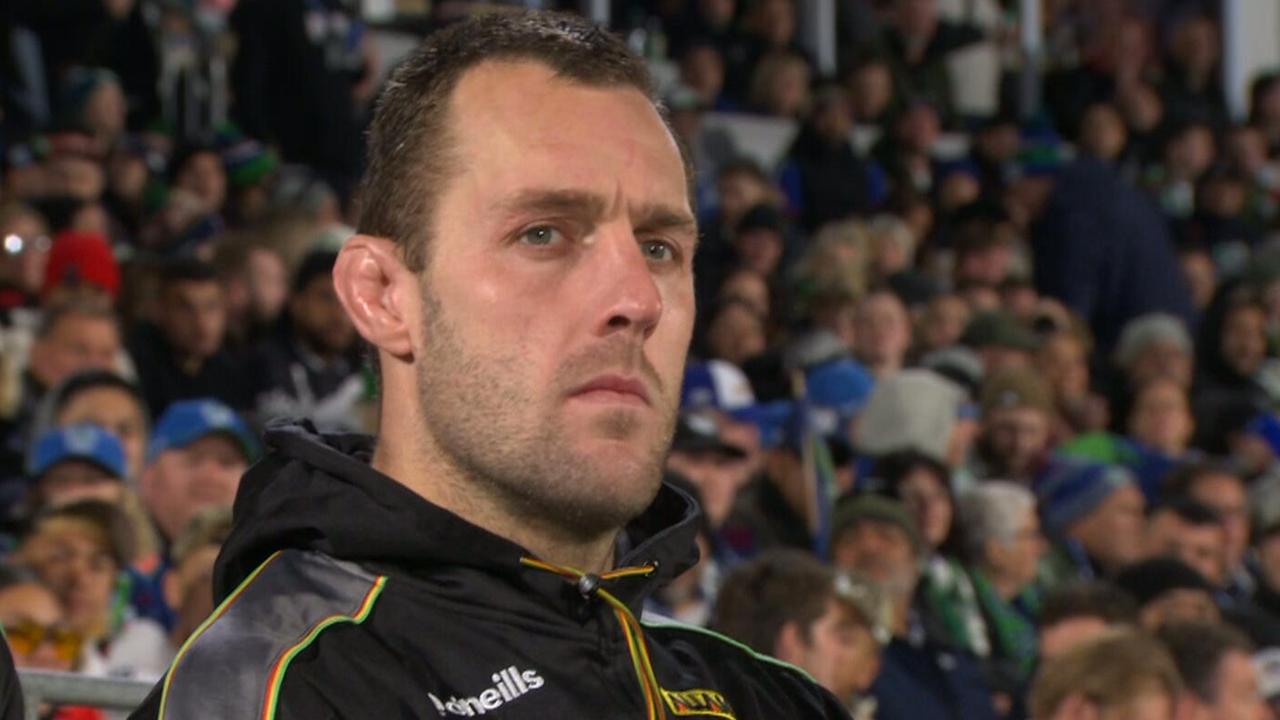
    The National Rugby League community is coming together to celebrate the career of beloved player Jai Arrow, who was forced into early medical retirement earlier this year after a devastating motor neurone disease diagnosis, as Round 15 of the competition opens Thursday with a series of touching tributes planned by both his former and current clubs.

    Arrow’s current club, the South Sydney Rabbitohs, have pulled off one of the most emotional gestures in recent rugby league history, naming the retired forward to their extended bench for Thursday’s clash against the Brisbane Broncos — Arrow’s first professional club. He will wear jersey number 23 for the match, and the club has invited all fans and members to join in honoring his legacy ahead of kickoff.

    The tributes do not end with South Sydney, either. The Broncos, where Arrow launched his NRL career across two seasons before moving to the Gold Coast Titans and ultimately signing with the Rabbitohs in 2021, will also honor the former representative star, with every Broncos player set to display Arrow’s name and original club number on their game jerseys for the matchup.

    The pre-game ceremony will include one particularly poignant moment: Arrow will have the honor of ringing the iconic Rabbitohs Legacy Bell before the match, while players from both the Rabbitohs and Broncos will form a guard of honor to welcome him as he takes the field. The Rabbitohs confirmed the plans in an official statement, calling on supporters to turn out to celebrate Arrow’s career alongside him.

    Beyond the emotional tributes, Round 15 brings a host of team selection changes across the league, largely driven by State of Origin representative commitments and injury updates. For the Rabbitohs, the club will be missing all their Origin-selected stars, plus starting center Campbell Graham who sidelined by a calf injury. Tallis Duncan will shift to the backline to pair with Latrell Siegwalt in Graham’s absence.

    For the Broncos, standout playmaker Ezra Mam will remain on the bench after missing a match-winning opportunity in the final minute against the Titans last week and subsequently being dropped from Queensland’s squad for State of Origin II. Hayze Perham will step into the fullback position to replace Reece Walsh, while backrower Jordan Riki returns to the starting side after recovering from an injury layoff.

    Across other Round 15 fixtures, the Cronulla Sharks will again be without star halfback Nicho Hynes, who remains sidelined by a calf injury for their cross-Tasman trip, with Luke Metcalf held over on the extended bench. For the Dolphins, Trai Fuller will step in at fullback for Hamiso Tabuai-Fidow, while playmaker Isaiya Katoa is set to be released from New South Wales Blues Origin camp to take the field against the Sydney Roosters.

    The Roosters will have Cody Ramsey in at fullback to replace the Origin-bound James Tedesco, with Hugo Savala moving to his preferred halves position to partner Daly Cherry-Evans. Tommy Talau will make his club debut on the wing, filling in for Mark Nawaqanitawase who is with the NSW Origin camp. The Wests Tigers have received a major boost, with winger Taylan May returning to the side after recovering from a shoulder injury as the club chases a much-needed win at Leichhardt Oval.

  • Simon Lara: Fake seizure guy gives odd interview after pleading guilty to public nuisance charges

    Simon Lara: Fake seizure guy gives odd interview after pleading guilty to public nuisance charges

    A 44-year-old Melbourne man has made headlines after pleading guilty to three criminal charges linked to a pattern of bizarre public behavior, where he faked medical emergencies to trick strangers into restraining him. Simon Lara entered guilty pleas to two counts of public nuisance and one count of public indecent behaviour during a Tuesday morning hearing at Melbourne Magistrates Court, with the charges stemming from three separate incidents across 2023.

    Court documents and prosecutor accounts detail a consistent pattern of deception across all three events. The first incident unfolded just after 6 p.m. on March 13 outside a Carlton North venue on Rathdowne Street. Lara collapsed on the ground, and when two passersby stopped to offer assistance, he claimed to suffer from a chronic muscle spasm condition that required physical restraint to subside. The two good Samaritans followed his instructions, kneeling on his back as he writhed on the ground for two to three minutes, before Lara stated the spasms had passed and he departed the scene.

    The second incident occurred in the late evening of June 3 outside Windsor Railway Station. A member of the public found Lara shaking on the ground, and Lara again asked the man to kneel on his back. When the passerby expressed discomfort with the request, Lara stood up unassisted, thanked him, and left the area. The man later reported the encounter to police after recognizing Lara in a viral Reddit post about the fake seizure scheme.

    The third incident took place on Flemington Road in Parkville on August 4, when Lara asked another stranger to kneel on his buttocks. The man complied for roughly 30 seconds while asking bystanders to contact emergency services, before Lara stood up, shook the man’s hand, and walked away. Five days later, that same man recognized Lara in a 9News report about the so-called “Fake Seizure Guy” and alerted authorities.

    Notably, these three incidents all occurred before Lara was sentenced in August 2023 for nearly identical offending linked to an incident at a local Melbourne beach earlier that year. For that prior conviction, Lara was ordered to serve a community corrections order that included mandated treatment for what the court described as his “complex needs.” Legal representatives confirmed Lara has two additional pending matters before the courts, but he has not been accused of any similar offending since October 2023.

    Outside the courtroom following Tuesday’s hearing, Lara gave an unorthodox interview to assembled television cameras, spinning for the lens and openly stating that he has always dreamed of becoming a TV star. “Go right ahead put it on television. I’ve got nothing to hide, not all disabilities are visible,” he told reporters, pointing to a flower emblem stitched to his shirt. Lara also reaffirmed that his previous expressions of remorse for his actions were genuine, and claimed the public would not see any further issues from him moving forward.

    Lara’s defense team has confirmed the defendant has significant documented vulnerabilities, including a diagnosis of autism, anxiety, and obsessive-compulsive disorder, alongside a history of traumatic life experiences. His legal team has requested a lengthy adjournment of the current case to allow time for a psychologist to conduct a full assessment of Lara and prepare a formal psychiatric report for the court. The case will return before Magistrate William Parker for a further hearing in August.

  • Outdoor hospitals, cut-off communities as Philippine quake toll hits 41

    Outdoor hospitals, cut-off communities as Philippine quake toll hits 41

    A powerful 7.8-magnitude earthquake that struck off the coast of Mindanao, the southern major island of the Philippines, on June 8 has left 41 people dead, more than 450 injured, and thousands displaced, with disaster response efforts hampered by ongoing aftershock risks and widespread infrastructure damage, according to latest updates from national and local disaster management agencies.

    The quake, which triggered immediate tsunami warnings across the Pacific region that forced thousands of coastal residents in the Philippines and neighboring Indonesia to evacuate to higher ground, was followed by a cascade of powerful aftershocks that began just two hours after the initial tremor, with hundreds of smaller seismic events continuing to rock the disaster zone in the days after the main shock. By midday the day after the quake, all tsunami warnings had been lifted, with the highest recorded waves reaching just 20 centimeters off Japan’s Pacific coast, well below dangerous thresholds.

    Sarangani province, the hardest-hit region, faces particularly acute challenges: local government officials confirmed Tuesday that several remote communities remain completely cut off from outside aid, with damaged roads and a collapsed bridge expected to block access for at least a week. Some isolated areas can only be reached by helicopter, and repeated aftershocks have forced rescue teams to proceed with extreme caution to avoid being caught in further structural collapses.

    “There are still aftershocks, so the rescuers are very cautious in their approach. That’s a challenge,” regional civil defence chief Rodrigo Sosmena told reporters during a Tuesday briefing.

    The widespread damage to buildings has left medical facilities across the region unable to operate normally, forcing medical teams to treat patients in makeshift outdoor wards set up under the scorching tropical sun. At a hospital just outside General Santos, the region’s largest urban center, reporters with Agence France-Presse witnessed one young mother successfully give birth behind a temporary fabric screen, with medical staff guiding her through the delivery in the open air.

    In Glan municipality, where 13 residents were killed after being buried by landslides that hit their residential areas, a local hospital administrator told AFP that all 60 of the facility’s patients had been moved to outdoor beds after structural inspections found severe damage to the building that rendered it unsafe for occupancy. “The hospital sustained a lot of damage,” the staff member said. “The municipal engineer decided we could not use the building.” As of Tuesday morning, only four people remained listed as missing across the entire disaster zone.

    Recovery efforts have resumed in General Santos after pausing overnight, with search and rescue teams and specialized canine units working through the rubble of a collapsed local grocery store to reach two employees who were trapped when the building crumbled. A local rescuer told reporters the operation had shifted from active rescue to recovery, though a senior regional official later clarified that no formal decision on this shift had yet been made. The Philippine Coast Guard is also still searching for two swimmers who went missing off a local beach resort when the quake triggered violent churning of coastal waters.

    Social media videos verified by AFP have captured the scale of the destruction: one clip shows the full collapse of a General Santos shopping center that housed a popular Jollibee fast food outlet, while another shows an empty school building crumpling to the ground. A third video, posted to a local school’s official Facebook page, captures young students screaming as they cling to their teachers during the violent shaking, with a flimsy metal structure visible toppling in the background before the clip cuts off. The school’s caption confirmed no one was injured when the structure fell.

    This latest major seismic event comes just eight months after two powerful earthquakes, measuring magnitude 7.4 and 6.7, hit eastern Mindanao in October of the previous year, killing at least eight people.

  • Pauline Hanson defends senator over eligibility question, attacks Fatima Payman

    Pauline Hanson defends senator over eligibility question, attacks Fatima Payman

    A fresh political firestorm has erupted in Australian federal politics over constitutional eligibility rules, after One Nation leader Pauline Hanson launched a fierce defense of one of her party’s senators and reignited a long-running public conflict with independent legislator Fatima Payman. The clash comes as senior figures from the opposition Coalition are demanding the eligibility question be formally escalated to either the parliamentary privileges committee or Australia’s High Court for a binding ruling.

    The controversy centers on One Nation West Australian Senator Tyron Whitten, after reporting from *The Australian* newspaper raised red flags over his ongoing financial holdings. The outlet claimed Whitten, who co-founded construction firm Whittens Group with his brother, still retains shares in the company – a business that holds a contract for the major Snowy Hydro 2.0 infrastructure project. In recent days, Whitten updated his mandatory parliamentary register of interests, removing both Whittens Group and a second associated entity, Whittens Bros Investments Pty Limited, from his public disclosures.

    These revelations have triggered fresh scrutiny under Section 44 of the Australian Constitution, a statute that bars sitting parliamentarians from holding any direct or indirect financial interest in Commonwealth government projects or public assets. Rejecting the Coalition’s calls to refer the matter to the High Court acting as the Court of Disputed Returns, Hanson launched a blistering attack on opposition lawmakers, labeling them “gutless wonders” and “pure hypocrites” for their stance.

    Hanson pushed back firmly against the eligibility claims, arguing: “The fact is, there is no question over Senator Whitten’s eligibility. Snowy Hydro is a public company, not a government department.” Instead of addressing the Coalition’s demands, Hanson pivoted to renew her earlier questioning of Payman – a former Labor senator who now sits as an independent – dragging the years-old debate over Payman’s citizenship status back into the national spotlight.

    Payman, who was born in Afghanistan, took steps to renounce her Afghan citizenship ahead of the 2022 Australian federal election. However, her request was never finalized by the Afghan embassy after the Taliban seized control of the country, a regime that Australia does not formally recognize. Section 44 of the constitution bars dual citizens from serving in federal parliament, except in cases where a candidate can prove they took all reasonable steps to renounce their additional citizenship.

    In a social media statement published over the dispute, Hanson argued: “The most questionable senator in parliament, Fatima Payman, holds Afghan citizenship. It’s a case that still needs investigation and an answer. I tried to have her qualification to sit in parliament under section 44 of the constitution referred for an inquiry. The hypocrites in the Coalition joined with Labor and the Greens to kill that inquiry and make sure she was never investigated. If the Coalition didn’t have double standards, they wouldn’t have any. I wish the Coalition would put as much effort into working together and fixing the country as they put into trying to take One Nation down.”

    Section 44-related disputes are not a new feature of Australian politics. Between 2017 and 2018, 15 sitting federal politicians were forced to resign from their seats after being found to breach the dual citizenship provision of the rule, in many cases for holding secondary citizenship they had no prior knowledge of. All affected lawmakers were required to contest their seats in subsequent by-elections to regain their positions.

  • Apple ‘inspired’ by Australian social media ban, CEO Tim Cook says

    Apple ‘inspired’ by Australian social media ban, CEO Tim Cook says

    In a development that marks a significant shift for one of the world’s largest technology companies, Apple CEO Tim Cook has confirmed that the firm’s upcoming suite of child-focused digital safety features was directly inspired by Australia’s groundbreaking ban on social media use for users under 16 years old. The revelation came during a personal phone call between Cook and Australian Prime Minister Anthony Albanese, just months after the national policy sparked fierce pushback and concern across Silicon Valley’s tech ecosystem.

    Cook shared with Albanese that the new set of parental management tools, which will roll out as part of Apple’s autumn software update this year, grew partially out of Australia’s regulatory lead. The features are designed to give parents far greater control over their children’s device usage, including streamlined access to content filters, communication restrictions, and app access scheduling. Among the key updates are a simplified onboarding process that automatically installs a curated set of age-appropriate essential apps, a new “Ask to Browse” approval system for unapproved content, custom time allowances for app and device use, and a full redesign of Apple’s existing Screen Time activity tracking tool.

    Following the call, Albanese released a public statement confirming the details of the conversation, noting that Cook also extended an invitation for the prime minister to visit Apple’s Cupertino, California headquarters on his next trip to the United States. Albanese said he has accepted the invitation to continue collaborative talks on child online safety, adding that he is proud of Australia’s role as a global trailblazer in protecting young people from the well-documented harms of unregulated social media use.

    “Mr Cook told me these changes are in part inspired by Australia’s world-leading social media age ban, as well as the continued research Apple is undertaking into the impact of social media on kids,” Albanese said. “I welcome this announcement, and I am proud of the world leading work Australia is doing to fight for a safer online world for our children. I plan to take up that offer so we can keep learning how best to protect our kids.”

    Australia’s under-16 social media ban was enacted after years of advocacy from the grassroots “Let Them Be Kids” campaign, and requires 10 major global social platforms — including industry leaders Instagram, TikTok, and YouTube — to bar users under 16 from creating and accessing accounts on their services. To date, the Australian government reports that more than 5 million under-16 accounts have been removed, deactivated, or restricted across participating platforms. Still, Albanese acknowledged that regulatory enforcement remains a work in progress: eSafety Commissioner Julie Inman-Grant recently told Senate estimates that no formal compliance action has yet been taken against platforms, as the watchdog continues to verify disenrollment data from companies.

    Despite the ongoing implementation work, the policy has already spurred global ripple effects. A growing list of nations, including Malaysia, France, and Spain, have either pledged to introduce similar age-based bans or are currently advancing draft legislation to adopt comparable regulations. Albanese highlighted this global momentum in his remarks, emphasizing that Australian parents were the driving force behind the push for reform.

    “We have a long way to go, however, we are now seeing a number of nations follow Australia’s lead and take forward their own social media age bans,” he said. “Australian parents led this effort, and we are proud to back them. Social media companies have a social responsibility, and we make no apology for holding them to account to help keep kids safe.”

    Alongside the software updates, Apple has launched a dedicated public website to support parents as they adopt the new safety tools, offering step-by-step guidance and educational resources on setting age-appropriate digital boundaries. Sumbul Desai, Apple’s vice president of Health and Fitness, said the company’s approach to child digital safety centers on flexibility, recognizing that every family has different needs and every child develops at a different pace.

    “Our work to help families create safer digital experiences is grounded in the belief that every child is unique,” Desai said. “That’s why we build simple and intuitive tools, based on expert guidance, to let parents tailor their kids’ digital journey. Today, we’re introducing major updates to help families thoughtfully establish age-based protections and develop healthy digital habits.”

  • French justice minister refuses to resign over girl killing case

    French justice minister refuses to resign over girl killing case

    A national reckoning over judicial failures in child protection and sexual abuse case management has gripped France this week, after Justice Minister Gerald Darmanin publicly refused to step down amid growing fury over his department’s role in the killing of 11-year-old Lyhanna.

    The young girl’s body was discovered last week, nearly two weeks after she disappeared from her home near the southwestern town of Fleurance on May 29. The primary suspect is a 41-year-old man who is the father of one of Lyhanna’s school friends, a detail that has amplified public shock: court records show the man had already been formally accused of child rape on two separate occasions prior to Lyhanna’s disappearance.

    One of those prior sexual assault complaints was filed in August of last year, but the investigation was never advanced, and law enforcement never questioned the suspect before Lyhanna went missing nine months later. After acknowledging what he called a “huge failure” in the handling of the prior accusations in an apology Friday, Darmanin faced immediate cross-party and public calls to resign over the systemic breakdown that allowed the suspect to remain free.

    Appearing before reporters at a Monday press conference, Darmanin pushed back against those demands, saying the question of his resignation would only be justified if he refused to take accountability for the failures exposed by the case. “I will tell the whole truth without hiding anything from the French people,” he told attendees, framing the crisis not as an isolated misstep but a potential systemic breakdown that requires urgent review. As an immediate first step, Darmanin announced he has ordered all public prosecutors across France to launch a full re-examination of roughly 70,000 pending child crime complaints that are currently stuck in the nation’s backlogged judicial system.

    But judicial leaders say the current crisis stems from deep underfunding and understaffing, not just individual mismanagement. Ludovic Friat, head of one of France’s major magistrates’ unions, warned Darmanin in a formal letter this week that judicial workers simply cannot keep pace with ministry demands when France has four times fewer prosecutors per capita than the European average.

    Independent data bears out the scope of the systemic failure: according to CIIVISE, France’s independent national commission on sexual violence, only 7 percent of all reported complaints for child sexual assault in the country ultimately result in a criminal conviction.

    Lyhanna’s killing has already reverberated far beyond the case itself, sparking widespread national calls for sweeping reform to how France investigates and prosecutes sexual abuse against both children and women. Yael Braun-Pivet, speaker of France’s National Assembly, has called on the government to immediately speed up legislative review of a pending bill targeting all forms of sexist and sexual violence. Drafted based on 140 recommendations from leading women’s rights organizations, the legislation includes key provisions to expand specialized training for police officers and judges who handle sexual abuse cases, a move advocates say will address longstanding gaps in how these sensitive investigations are conducted.