标签: Oceania

大洋洲

  • UK, France agree three-year deal to stop migrant crossings

    UK, France agree three-year deal to stop migrant crossings

    After months of tense negotiations over border security, the United Kingdom and France have formally announced a new three-year bilateral agreement aimed at halting dangerous unauthorized migrant crossings of the English Channel in small vessels. The accord, which renewes and updates the 2018 Sandhurst Treaty set to expire this year, marks a major new step in addressing a long-running contentious issue that has roiled domestic politics on both sides of the Channel.

    Under the terms of the new deal, France has committed to expanding its coastal law enforcement presence by more than 50 percent, with a target of 1,400 active officers deployed to border patrols by 2029. To support these expanded efforts, the UK will provide up to 766 million euros (equivalent to $897 million) in funding, though roughly 24 percent of this total allocation is tied to performance conditions. Even if the conditional portion of funding is not released, the UK’s guaranteed core contribution of 580 million euros still represents a 40 million euro increase over the funding level agreed in the last iteration of the treaty.

    The months-long negotiation process was shaped by longstanding disagreements between the two neighboring countries. The UK has repeatedly criticized France for insufficient action to stop asylum seekers and irregular migrants from departing French shores, a gap that has allowed people smuggling networks to operate and pushed migrants to take increasingly life-threatening risks to avoid detection. Ahead of a new agreement, London insisted that any renewal of the Sandhurst Treaty would require the ability to attach performance conditions to how British taxpayer funds are used by French authorities.

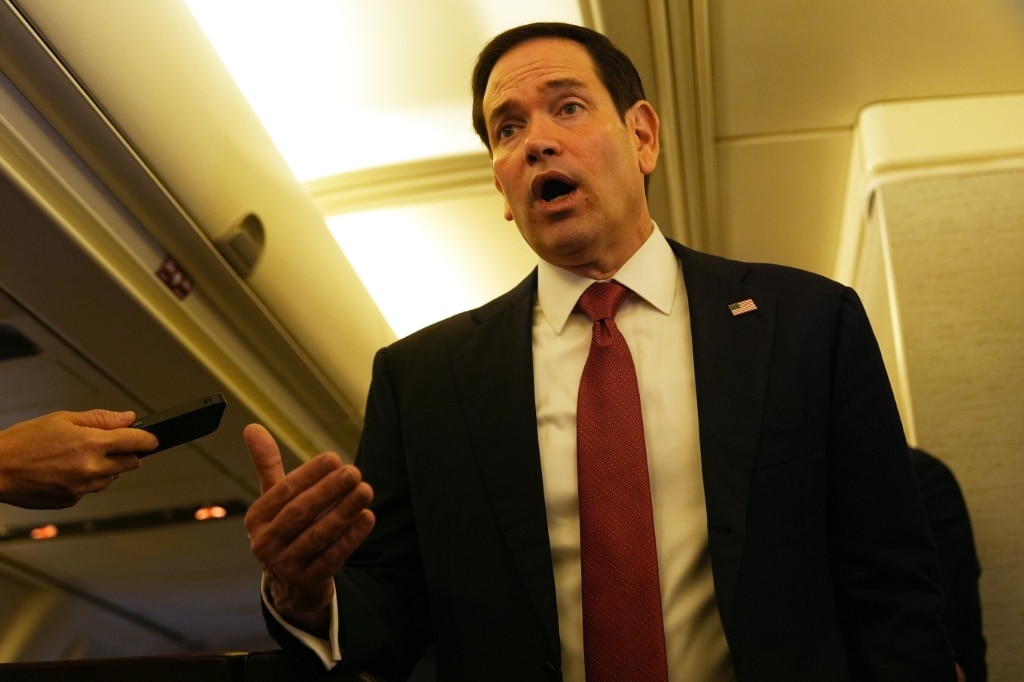
    British Prime Minister Keir Starmer framed the agreement as a historic breakthrough for UK border security, noting that existing bilateral cooperation “already stopped tens of thousands of crossings.” He added that “this historic agreement means we can go further: ramping up intelligence, surveillance and boots on the ground to protect Britain’s borders.” UK Home Secretary Shabana Mahmood echoed that framing, stating that “This landmark deal will stop illegal migrants making the perilous journey and put people smugglers behind bars.” Mahmood and French Interior Minister Laurent Nunez are scheduled to unveil further operational details of the plan Thursday during a visit to the site of a planned deportation accommodation center in Loon-Plage, near Dunkirk.

    Per terms outlined in a French interior ministry document outlining the agreement, if the new measures fail to deliver “sufficient results” — as determined by a joint annual assessment — unspent conditional funding will be redirected to alternative anti-smuggling and border control initiatives.

    Beyond increased foot patrols, the deal’s roadmap outlines plans for France to deploy new technological resources, including drones, helicopters and digital surveillance tools, to disrupt smuggling operations before departures. The agreement reflects a key constraint of international maritime law: once a small vessel has left shore, authorities may only intervene to rescue migrants from drowning, rather than turning them back to France.

    The new deal comes at a critical political juncture for Prime Minister Starmer, who took office recently and faces intense domestic pressure to curb unauthorized immigration. His government is currently mired in a growing political scandal over the appointment of Peter Mandelson as UK ambassador to the United States, over Mandelson’s longstanding personal ties to the late convicted sex offender Jeffrey Epstein. Starmer’s political standing and the future of his Labour Party are widely seen as tied to the party’s performance in upcoming May local elections, with recent polling suggesting Labour faces significant projected losses.

    Official data underscores the scale of the challenge the new agreement aims to address. Official UK statistics show that 41,472 people crossed the Channel to reach the UK illegally via small boat in 2025, marking the second-highest annual total on record since large-scale crossings began in 2018. An AFP tally compiled from official French and British sources confirms that at least 29 migrants died attempting the crossing in 2025. French officials have pushed back against UK criticism, noting that unauthorized arrivals to the UK have halved in early 2026 compared to the same period in 2025, and that French law enforcement arrested roughly 480 suspected people smugglers across 2025.

  • Queensland Police recall service-issued Glock handguns after major safety malfunction detected

    Queensland Police recall service-issued Glock handguns after major safety malfunction detected

    Queensland Police Service (QPS) has announced a full recall of every service-issued Glock handgun across the entire state for urgent safety testing, after a potentially dangerous malfunction was uncovered during routine proactive weapons inspections. The safety review of the QPS’ entire firearms fleet was already in progress when inspectors identified the defect: under specific conditions, the weapon can discharge multiple rounds with a single trigger pull, a flaw that puts both officers and members of the public at unnecessary risk.

    In an official public statement, QPS confirmed that it has moved to accelerate expanded testing across every regional command and operational division, prioritizing the recall to guarantee that all weapons in active use meet mandatory safety standards. At the time of the announcement, the service stressed that no operational accidents or injuries have been linked to the weapon defect to date.

    The recall process will see all issued handguns collected for comprehensive testing. Firearms that pass the rigorous new inspection regime will be returned to frontline officers for active duty. Any weapons that fail to meet QPS safety requirements will be immediately withdrawn from service and retained by authorities. QPS added that it is already collaborating directly with Glock suppliers to develop a full resolution for the identified issue, aiming to restore the full complement of service weapons as quickly and safely as possible.

  • ‘Catastrophic’ Melbourne Airport near-misses only avoided by ‘good luck’ after international airliners take off metres from active worksite

    ‘Catastrophic’ Melbourne Airport near-misses only avoided by ‘good luck’ after international airliners take off metres from active worksite

    Australia’s aviation sector has been forced to confront critical gaps in safety protocols after a long-awaited official investigation concluded that two alarming near-collisions at one of the country’s busiest international hubs avoided catastrophe last year through nothing more than sheer good fortune. The Australian Transport Safety Bureau (ATSB) released its final public report on Thursday, detailing the two separate September 2023 incidents that unfolded at Melbourne Airport, Victoria’s primary international gateway, when runway construction work left a section of the takeoff strip drastically shortened.

    The first incident occurred on September 7, when a Malaysia Airlines wide-body Airbus A330-300, bound for Kuala Lumpur with hundreds of passengers on board, exited the usable length of the temporary runway during its departure takeoff roll. After overshooting the marked end of the available runway, the large commercial jet climbed just 7 meters above an active construction worksite, where heavy machinery and ground personnel were working below.

    In response to this first close call, Melbourne Airport leadership launched an internal risk review and implemented incremental safety adjustments, including updating internal communication protocols and issuing a general safety alert to all airlines operating at the facility. But just 11 days later, a second nearly identical incident unfolded: a Bamboo Airways Boeing 787-9 en route to Hanoi also overran the same shortened runway, clearing the construction site by an even slimmer margin of only 5 meters.

    In its official statement accompanying the final report, the ATSB confirmed that on both occasions, powerful jet blast from the departing aircraft directly impacted the active work zone, where workers and heavy vehicles were present. While no ground personnel suffered physical injuries in either incident, one worker developed a stress-related injury following the second close call.

    Investigators found that information about the reduced runway length had been correctly distributed to the aviation community, including being broadcast over radio frequency and included in routine Automatic Terminal Information Service (ATIS) updates received by both flight crews. However, ATSB Chief Commissioner Angus Mitchell explained that neither flight crew recognized just how drastically the runway’s usable length had been reduced. “While both crews accessed a version of the ATIS that mentioned the shortened runway, they only noted to air traffic control the weather information from the ATIS, and not the reduced runway length,” Mitchell said.

    Further investigation revealed that while flight dispatchers at both airlines had adjusted their performance calculations to account for the shorter runway, the adjustment was not explicitly flagged in the pre-flight briefing materials provided to the operating crews. The ATSB noted this oversight was likely rooted in the fact that both aircraft were fully capable of departing safely from the shortened runway if correct power settings were applied. Nonetheless, the missed alert led both crews to plan their takeoffs using the original full runway length, and set reduced thrust settings for departure, resulting in the overruns.

    Legal experts have sharply criticized the systemic gaps exposed by the investigation. Peter Carter, director of Australian law firm Carter Capner Law, emphasized that the incidents exposed basic failures in core aviation safety procedures. “These are basic requirements even for day one students,” Carter said, noting that pilots are obligated to review NOTAMs (notices to airmen) and cross-check all ATIS safety information before departure. He added that a catastrophic collision would have killed more than 350 passengers and crew, along with any workers on the ground, and left a permanent stain on Australia’s already-tarnished aviation safety record. “A catastrophic event was avoided only by good luck,” Carter said. “It could have resulted in a 350-person fireball.”

    In the wake of the ATSB’s findings, both Malaysia Airlines and Bamboo Airways have committed to updating their internal flight dispatcher procedures and pre-flight briefing guidance to prevent similar oversights. Australia’s national air navigation provider Airservices Australia and the country’s civil aviation regulator Civil Aviation Safety Authority (CASA) have also proposed revisions to protocols for communicating safety-critical information related to runway construction projects.

    Mitchell closed by outlining long-term safety changes that could prevent similar near-misses globally, arguing that prominent visual markings, such as the signage proposed for inclusion in ICAO Annex 14, the international body’s standards for airport design, can serve as a critical final safety net to alert crews to changed runway conditions when the altered layout would otherwise look normal from the air. “Flight dispatchers, aircraft operators, airport operators, individual air traffic controllers, air traffic services providers and others can all contribute to ensuring pilots are aware of safety‑critical information when they need it,” Mitchell said.

  • AFL 2026: St Kilda forward Lance Collard is challenging his nine-match ban

    AFL 2026: St Kilda forward Lance Collard is challenging his nine-match ban

    An Australian Football League (AFL) player is taking one final stand to reverse what his legal team calls an excessively harsh and unprecedented suspension over an alleged homophobic slur, with his appeal hearing scheduled for Thursday evening.

    Lance Collard, a 21-year-old forward for St Kilda, was handed a nine-match ban last week after the AFL Tribunal found him guilty of conduct unbecoming. The charge stemmed from an on-field incident where he was accused of directing a homophobic slur at an opponent from the Frankston team during a match. Collard has consistently denied using the slur, claiming the word he shouted was a different insult — he says he called Darby Hipwell, his former Sandringham teammate, a “maggot”.

    This is not the first disciplinary issue for Collard: he already served a six-match suspension in 2024 for the same type of alleged homophobic slur offense. Two of the nine matches in the current ban are tied to an existing two-game suspension he received for a striking offense in the same match, meaning the new penalty for the slur itself accounts for the bulk of the suspension.

    During the original tribunal hearing, Collard’s defense led by Michael Borsky KC argued the young player was physically jostled, roughed up and subjected to verbal abuse from opposing Frankston players before the alleged incident. Borsky described the nine-match ban as unfairly punitive, warning it could be a life-altering “sliding doors” decision that would effectively end Collard’s promising AFL career, which to date includes 15 senior-level appearances. He also noted that no player in league history has ever received a suspension of this length for a homophobic slur offense, marking the penalty as unprecedented. Borsky additionally requested that any new suspension be served concurrently with the existing striking ban, given the entire incident was triggered by the initial on-field collision and subsequent melee.

    The Australian Football League Players’ Association (AFLPA) has publicly thrown its support behind Collard throughout the process, with chief executive James Gallagher releasing a formal statement last week reaffirming that backing.

    Gallagher acknowledged that the entire AFL industry shares the common goal of eliminating homophobia from the sport, but noted the case highlights critical flaws in the current disciplinary framework. “The Tribunal has, rightly, acknowledged that issues such as racism and homophobia are difficult and sensitive issues and the manner of dealing with them is not enhanced if the starting point is a fierce debate over whether the words were used,” he said.

    “Lance has maintained his innocence, and this has been consistent throughout. We’re disappointed the Tribunal did not accept that evidence. We’ll continue to fully support him and the club through this process including exploring any options to appeal.”

    Gallagher added that meaningful long-term change requires a holistic approach, not just harsh punitive measures. He argued that lasting progress requires collaborative engagement with LGBTIQA+ community leaders, targeted education that centers the diverse backgrounds and experiences of players, and a disciplinary process that is fit for purpose: one that reduces harm, remedies harm when it occurs, and drives lasting behavioral change. He noted that through collective bargaining agreements, the AFLPA has already negotiated a shared commitment with the AFL to advance equality, inclusion and safety for all people in the sport, and work on these commitments remains ongoing. He also acknowledged the far-reaching impact of the case on all stakeholders, including the LGBTIQA+ community, First Nations communities, and Collard and his family.

    The appeal hearing on Thursday will mark Collard’s final opportunity to overturn or reduce the historic ban, with the outcome set to shape not only his career but also potential future debates around how the AFL handles on-field discriminatory language. This story remains developing, with further updates expected after the appeal board delivers its decision.

  • AFL 2026: Richmond coach Adem Yze says his side has ‘nothing to lose’

    AFL 2026: Richmond coach Adem Yze says his side has ‘nothing to lose’

    As the only side still searching for its first win after six rounds of the current Australian Football League season, the Richmond Tigers head into one of the most anticipated games on the early calendar with an unorthodox mindset: nothing to lose, everything to gain. Head coach Adem Yze, now in his third season leading the rebuilding club, has urged his young, developing squad to embrace a no-fear approach ahead of the annual ANZAC Day eve blockbuster against an in-form Melbourne side at the Melbourne Cricket Ground this Friday night.

    Melbourne enters the clash as heavy favourites, and Yze has not shied away from acknowledging the size of the challenge his team faces. Melbourne has enjoyed a strong start to the 2025 season, fresh off an upset victory over last year’s premiers that cemented their early form. The side retains a core of experienced premiership winners, complemented by emerging young talent that has filled key roles seamlessly, with their skipper hitting arguably the best form of his career to open the year.\n\n“It’s going to be a big test for us, on a big stage, against a team that’s in form – they’ve just beaten last year’s premiers,” Yze told reporters ahead of the clash. “Our boys are really looking forward to that, we’ve got nothing to lose, we’ve got some young lads playing. It’s an amazing game, we’re really privileged to be playing in it, we’ve got to do it justice.”

    To help the young Tigers rise to the occasion, Yze has confirmed a series of changes to the match-day squad that inject both new blood and much-needed veteran leadership. Two first-year players, Sam Cumming and Tom Burton, will make their senior AFL debuts on Friday night, with Yze saying he expects the pair’s high-energy running game to put Melbourne’s defenders under pressure across the entire MCG pitch. The biggest boost, however, comes from the long-awaited return of star spearhead and key leader Tom Lynch, who has been sidelined by injury in recent weeks.

    Lynch was a late omission from Richmond’s squad a week earlier, with coaching staff opting to hold him out to avoid rushing his recovery. At the time, a return would have come with just five days of recovery between his final training run and the match, so the club chose an extra week of preparation to get him fully up to speed. Now, the star forward is cleared to return, and his presence will be felt both on the scoreboard and in the young forward group that has been forced to step up in his absence.

    “(Lynch) is ready to go, he was almost ready last week and the decision was to be really cautious with him,” Yze explained. “He would’ve been coming off a five-day break if we played him last week, so we took that extra week to get another week of training in him. We’ve obviously got a really young forward line at the moment, so to have him down there is really important for leadership. But his contest and the form he was in before he hurt himself was really strong. We can’t wait to see him back out there in our colours.”

  • Westpac hikes fixed rates twice in 3 weeks, 6.29 per cent starting point

    Westpac hikes fixed rates twice in 3 weeks, 6.29 per cent starting point

    One of Australia’s four largest domestic banks has taken the unusual step of raising fixed mortgage interest rates for a second time in just three weeks, piling additional financial pressure on home loan borrowers just days ahead of a highly anticipated monetary policy meeting from the Reserve Bank of Australia (RBA).

    On Thursday, Westpac Banking Corporation confirmed it would lift its fixed interest rates across all loan terms spanning one to five years by 0.15 percentage points, marking its second upward adjustment in 21 days. Following the change, the bank’s lowest available fixed rate now sits at 6.29% for a two-year fixed home loan. Cumulatively, Westpac has increased its fixed mortgage rates by a total of 45 basis points over the three-week period. Even after the consecutive hikes, analysis from financial comparison platform Canstar confirms Westpac still offers the most competitive fixed rate pricing among Australia’s big four banking institutions.

    Industry analysts note this move is far from an isolated adjustment, pointing to a widespread trend of repricing across the Australian lending sector driven by growing expectations of persistently high inflation and additional RBA rate increases. Sally Tindall, Canstar’s director of data insights, explained that most major and minor lenders have been revising their pricing upward repeatedly in recent weeks as concerns mount over a resurgence in Australia’s annual inflation rate. “Our analysis shows more than 90 per cent of lenders have adjusted fixed rates higher since the RBA’s last policy decision, including all four of the major banks. Westpac and the National Australia Bank have both implemented two separate hikes in this window,” Tindall noted.

    The scale of the repricing shift is stark: just 19 Australian lenders currently offer at least one fixed home loan product with a rate below 6%, down from 83 lenders offering sub-6% fixed rates at the same time last year. For home borrowers already struggling with soaring borrowing costs, this rapid round of adjustments sends a clear message: the window for locking in a relatively competitive fixed rate is rapidly closing, Tindall added.

    Westpac’s rate hikes come as the bank’s economic team forecasts three more official RBA cash rate increases in 2026, starting with a hike at the central bank’s upcoming May policy meeting. Luci Ellis, Westpac’s chief economist, linked the expected monetary policy tightening to ongoing geopolitical instability in the Middle East, specifically the conflict that has disrupted shipping through the Strait of Hormuz — a strategic waterway that carries roughly 20% of global oil trade. Since the outbreak of hostilities in late February 2026, global crude oil prices have nearly doubled, climbing from roughly US$56 per barrel to around US$100 per barrel. For Australian motorists, this translates to an extra 10 cents per litre of fuel for every US$10 per barrel increase in crude prices.

    Ellis explained that Westpac’s updated forecast accounts for extended fuel supply disruptions, as the Strait of Hormuz has remained effectively closed for eight weeks, with shipping only gradually returning to normal volumes. She added that the pass-through of higher fuel and energy costs to broader consumer prices in Australia has happened far faster than many economists previously projected. “We believe the RBA will respond to this accelerated pricing behavior by tightening monetary policy more aggressively than it would have if these cost increases had not filtered into broader inflation so quickly,” Ellis said.

  • Inter ready to pounce for Serie A title glory as Milan host Juve

    Inter ready to pounce for Serie A title glory as Milan host Juve

    With just five matches left in the 2024-25 Serie A campaign, Italian football’s biggest domestic prize is on the brink of being claimed, as Inter Milan stands 12 points clear at the top of the table and could seal their 21st Scudetto as early as this weekend. The race for the title, the final Champions League qualification spots, and relegation safety all converge on a critical matchweek that kicks off Friday evening, when title holders Napoli host relegation-battling Cremonese.

    Cristian Chivu’s Inter side hold a commanding advantage over both second-placed AC Milan and last season’s champions Napoli, putting the Nerazzurri in a position where even the slightest slip from Napoli on Friday will open the door for Inter to wrap up the league crown with four matches still to play. If Napoli fails to pick up all three points against Cremonese, a victory for Inter away to Torino on Sunday would confirm Inter as champions. Even if Napoli does win, the math remains firmly in Inter’s favor: the leaders only need four more points from their remaining five fixtures to secure the Scudetto regardless of other results.

    Inter’s path to this point has defied early expectations from just a month ago. Ahead of the most recent international break, the side appeared to be wobbling, with both Napoli and AC Milan closing the gap and threatening to knock them off their perch at the top. But since domestic club football resumed after the break, Inter have been unstoppable, picking up all nine available points and hitting 12 goals across three matches to restore their unassailable lead. Compounding their rivals’ woes, Inter are also targeting a domestic double: a recent thrilling win over Como booked their place in next month’s Italian Cup final, where they will face Lazio.

    All eyes will also turn to San Siro on Sunday evening, where second-placed AC Milan hosts Juventus in a clash that will have major implications for next season’s Champions League. While Milan can mathematically gift the Scudetto to their cross-city rivals if results go against Napoli and in Inter’s favor, the Rossoneri have their own top-four target to secure. AC Milan currently hold an eight-point lead over fifth-placed Como, meaning even a defeat on Sunday would likely leave them in a top-four spot. Juventus, by contrast, are in a far more precarious position: sitting fourth, they hold just a five-point lead over both Como and sixth-placed Roma, making three points a near-necessity to solidify their Champions League hopes.

    The headline player to watch in the San Siro clash is French midfielder Adrien Rabiot, who will line up against his former club Juventus this weekend. Signed by AC Milan last August after an acrimonious exit from Marseille that followed a violent altercation with teammate Jonathan Rowe, Rabiot has repaid Massimiliano Allegri’s faith in him in spades this season. Across 25 league appearances, the 31-year-old has notched six goals and four assists, with his recent strike against Verona highlighting his trademark powerful running and clinical finishing. Rabiot was a key part of Juventus’s last Serie A title win in 2020, and went on to spend four more seasons with the Turin giants before moving to Marseille, adding extra narrative weight to his return on Sunday. Alongside Luka Modric, he is expected to lead Milan’s midfield charge against his old side.

    Elsewhere in the matchweek, Como will face a tough test away to in-form Genoa, who can secure their own top-flight safety with a positive result this weekend. Como, who threw away a two-goal lead before being eliminated from the Italian Cup by Inter earlier in the week, will be looking to close the gap on Juventus and keep their own Champions League dream alive.

    The full matchweek fixture list (all times GMT) is as follows: Friday sees Napoli host Cremonese at 1845. On Saturday, Parma faces Pisa at 1300, Bologna takes on Roma at 1600, and Verona hosts Lecce at 1845. Sunday’s action kicks off at 1030 with Fiorentina vs Sassuolo, followed by Genoa vs Como at 1300, Torino vs Inter Milan at 1600, and the headline AC Milan vs Juventus clash at 1845. The matchweek wraps up on Monday with Cagliari vs Atalanta at 1630 and Lazio vs Udinese at 1845.

  • Fresh paint, careful choreography as pope visits African prison

    Fresh paint, careful choreography as pope visits African prison

    The air was thick with the unmissable stench of sweat and urine inside Bata Prison, despite fresh coats of salmon-pink paint covering the facility’s outer walls to spruce it up for Pope Leo XIV’s high-profile visit on Wednesday. This notorious correctional facility in Equatorial Guinea played host to the leader of the global Catholic Church, who is in the middle of a 10-nation African tour, and the day was defined by a sharp contrast between carefully stage-managed hospitality and longstanding international criticism of the country’s prison system.

    Hundreds of incarcerated people gathered in the prison’s open courtyard, greeting the pontiff with chants of “freedom” as heavy tropical rain poured down across the complex. Around 600 inmates, 30 of whom were women, lined up in neat rows for the visit, all with shaved heads, wearing standard-issue bright orange or khaki-green uniforms, cheap plastic sandals, and in some cases, cloth face masks. Their coordinated jumps and chants were part of a carefully choreographed welcome planned ahead of the papal arrival, a public relations push for a prison system that has faced decades of global condemnation.

    Equatorial Guinea, a Spanish-speaking Central African nation of roughly 2 million people, has been under the authoritarian rule of President Teodoro Obiang Nguema Mbasogo since 1979. The regime has been repeatedly accused by international human rights organizations of systematic violations across all sectors of public life, including its detention network. For Obiang’s government, Pope Leo’s visit represented a rare chance to reframe the global image of its widely criticized prison operations.

    This polished, red-carpet welcome stood in stark opposition to multiple independent reports documenting brutal conditions inside the country’s prisons. A 2023 U.S. State Department human rights report detailed widespread accounts of torture, severe overcrowding that leaves cells crammed beyond capacity, and unsanitary conditions that pose constant health risks to detainees. A 2021 report from Amnesty International echoed these findings, noting that official population data for Equatorial Guinea’s prisons is rarely made public and almost always outdated. The organization added that hundreds of incarcerated people are held for years without access to visits from legal counsel or family members, leaving relatives with no information about whether their loved ones are even alive. For Pope Leo’s visit, reporters were barred from conducting independent interviews with inmates, and only government-approved statements were permitted. Justice Minister Reginaldo Biyogo Mba spoke to reporters at the prison entrance, framed by a guard tower patrolled by two armed officers, and praised what he claimed were safe, humane conditions at the facility.

    When the pope arrived, upbeat rhythmic music blared over prison loudspeakers as inmates performed a coordinated song and dance routine under the watchful eye of uniformed prison guards. Without warning, a heavy tropical deluge broke out, drenching the entire crowd. Rather than brush off the downpour, Pope Leo framed it as a meaningful symbol in remarks delivered to the assembled detainees. “Rain is a sign of God’s blessing,” the 70-year-old U.S.-born pontiff declared in Spanish, drawing loud cheers and applause from the crowd.

    In his address to incarcerated people, Pope Leo struck a carefully balanced but pointed tone. “The administration of justice aims to protect society,” he told the gathering. “To be effective, however, it must always promote the dignity of every person.” He added a message of solidarity, telling detainees “you are not alone” in their experiences of incarceration. Analysts note that these comments, while delivered with diplomatic restraint, represent an unprecedented public critique of government policy in a country where freedom of expression is heavily suppressed.

    The Bata Prison stop came on the 10th day of Pope Leo’s African tour. Earlier the same day, he led a large open-air mass in Mongomo, a city near Equatorial Guinea’s border with Gabon, with President Obiang in attendance. During that service, the Catholic leader also called explicitly for “greater room for freedom” and the universal protection of human dignity for all people in the country.

  • Albanese warns of Iran war ‘tail’ as fuel reserves reach 46 days

    Albanese warns of Iran war ‘tail’ as fuel reserves reach 46 days

    In the wake of the recent ceasefire between Iran, Israel and the United States, Australia’s top political leaders gathered for the first post-ceasefire national cabinet meeting on Thursday, where Prime Minister Anthony Albanese issued a stark warning: the nation will face a long-drawn economic “tail” from the ongoing Middle East conflict, even with domestic fuel reserves now sitting higher than they were before hostilities erupted.

    Albanese told reporters following the meeting that while Australia’s near-term fuel supply outlook remains secure, the federal government is actively developing contingency plans to counter potential future disruptions to both fuel and fertilizer imports. He credited voluntary behavior changes from Australian motorists and consumers for the steady growth in national petrol reserves, which now stand at 46 days of coverage. While this is still only 51% of the 90-day minimum reserve requirement set by the International Energy Agency, it marks a notable improvement from the 36-day reserve level recorded when the conflict first began in late February.

    Even a complete, immediate end to hostilities and a full reopening of the strategically critical Strait of Hormuz would not erase the lingering economic impacts, Albanese explained. There is an inevitable time lag before global supply chains reset after two months of disrupted trade: clearing the waterway to restore safe passage, repositioning dozens of diverted or stuck cargo vessels from the Persian Gulf, unloading shipments, and returning vessels to their collection points to restart the regular supply cycle will take weeks of coordination. “So, there will be a long economic tail here,” the prime minister emphasized.

    Currently, six fuel cargo vessels are en route to Australia carrying more than 300,000 litres of diesel, and the federal government is exploring options to secure additional cargoes through the global spot market. Albanese also highlighted that the government has made significant progress in diversifying Australia’s import sources to reduce reliance on traditional Middle Eastern suppliers: the U.S., which has historically not been a major fuel provider to Australia, now accounts for roughly 18% of the nation’s fuel imports, while Argentina – once a negligible supplier – now contributes double-digit percentages of imports, and Algeria has also joined the list of active fuel exporters to Australia.

    Climate and Energy Minister Chris Bowen echoed the prime minister’s caution, noting that Australia still faces strong international headwinds, ongoing risks, and persistent market uncertainty over the medium term, but added that the government is leaving no stone unturned to position the nation to withstand any future shocks.

    Amid the broader economic concerns, there are small signs of relief for Australian motorists heading into the upcoming Anzac Day long weekend. Wholesale fuel prices have been falling steadily for several weeks, and these declines are now being passed on to consumers at the pump, according to Peter Khoury, a spokesperson for the NRMA motoring association. Over the past three weeks, wholesale diesel prices have dropped by one Australian dollar per litre, while wholesale unleaded petrol has fallen by 70 cents per litre.

    “Some good news finally for motorists,” Khoury said Thursday from Sydney. NRMA price tracking shows the majority of Australian retailers are now in the lower half of the national price range, with half of all Sydney service stations selling unleaded petrol for less than $1.90 per litre. “It is very clear that we’re in a better position than we were a couple of weeks ago, and that should continue into the long weekend, although looking at what is going on over the Middle East who knows how long that will last,” he added, urging motorists to compare prices using dedicated fuel price apps to lock in the lowest possible rates.

    Even with recent price declines, however, industry analysts warn that the threat of sky-high fuel prices has not passed. New modelling from Primera Research shows that Australian diesel prices were on track to hit $3.90 per litre earlier this month, a crisis that was only averted by two temporary interventions. First, the federal government implemented a temporary cut to fuel excise and paused 32 cent-per-litre heavy vehicle road user charges for three months. Second, fuel retailers voluntarily absorbed massive losses to keep prices from spiking, collapsing their average profit margins to just 1.7% – far below the standard 9.8% margin.

    “The $3.90 moment passed. But the costs that prevented it didn’t disappear; they were deferred,” said Robert Beerworth, managing director of Primera Research. The temporary federal excise cut is set to expire on July 1, which will trigger an overnight 32-cent-per-litre price increase that will ripple through the entire national economy. “Diesel moves every truck and every delivery in the country. When its price goes up, so does everything on the shelf,” Beerworth explained. Already, retailer profit margins are starting to recover to pre-crisis levels, pushing already absorbed costs back onto pump prices gradually – and the July excise cut expiry will bring all deferred costs to consumers at once. “The threat of $3.90-per-litre diesel had not evaporated,” he added.

  • ‘Dancing in their hands’: Japan wig masters set stage alive

    ‘Dancing in their hands’: Japan wig masters set stage alive

    Beneath the bright lights of Tokyo’s iconic Kabuki-za Theatre, before a packed audience leans in to watch centuries of traditional drama unfold, one quiet craftsperson lays the final foundation for a performer’s transformation. For kabuki, the iconic Japanese performing art famed for its dramatic stylized makeup, lavish period costumes and expressive storytelling, the wig is not just an accessory—it is the critical bridge between an actor and their character.

    Sixty-year-old Tadashi Kamoji, a fourth-generation master kabuki wig artisan known as a tokoyama, knows this weight of responsibility better than most. Ahead of a recent performance, he carefully positioned a handcrafted topknot wig on 33-year-old rising performer Nakamura Tanenosuke, who stars in a new production centering on a 19th-century noble family feud. “A kabuki actor cannot step onto stage as his ordinary self,” Kamoji explained in an interview with AFP. “It is only when the wig is in place that he truly becomes the character he is meant to play. That is why we carry such a heavy responsibility for our work, and why we hold such pride in what we do.”

    For decades, these skilled artisans have worked largely out of public view, tucked away in backstage ateliers far from audience applause. But the unsung craft of kabuki wig making has recently stepped into the international spotlight after the hit Japanese drama *Kokuho* earned an Oscar nomination for Best Makeup and Hairstyling. The film, which follows the lives of two onnagata—male actors who specialize in playing female kabuki roles—has brought long-overdue attention to the hidden craft that underpins every kabuki performance.

    Kabuki itself dates back to 17th-century Japan, blending dynamic dance, emotional drama and traditional music into a performance form that remains a cultural cornerstone of the country. Every element of a kabuki production is intentional: from the archaic dialect actors use to the elaborate hand-painted sets, each detail works together to transport audiences to another era. Nowhere is this intentionality more clear than in the wigs.

    After master craftsmen construct each wig from raw human hair, tokoyama like Kamoji take over to shape, style and customize the piece to fit both the actor and their character. This work goes far beyond simple hairdressing, Kamoji explains. “To create a wig that feels true, you have to first understand the core of the character,” he said. Kamoji joined the family trade when he was just 18, following in the footsteps of multiple generations of artisans, and he still learns new techniques from his 85-year-old father today.

    Whether the role calls for a righteous middle-aged samurai, a high-ranking Edo-era courtesan or a professional sumo wrestler like Tanenosuke’s recent part, each wig is designed to communicate specific details about the character’s age, social standing, occupation and personality to the audience before the actor even speaks a line. For Tanenosuke’s sumo role, Kamoji spent two hours in his atelier shaping the wig into the traditional curved mage topknot, a hairstyle that fell out of common use in Japan more than a century ago. Working kneeling on a traditional tatami mat, he sectioned the hair with hand-carved wooden combs, smoothed strands with heated steaming irons, and pulled tight securing knots with his teeth—a technique that has been passed down through generations of tokoyama.

    For performers like Tanenosuke, who has worked with wig masters since he began training in kabuki at age five, these artisans are entirely irreplaceable. “There is almost no traditional kabuki performance that does not rely on handcrafted wigs,” he said. “The wig is the final touch that completes the transformation into character. Every step of getting into costume and makeup is a switch that prepares you, but it is not until the wig is set that you fully step into the role. The audience’s enjoyment of kabuki depends on the skill of the actors, yes, but also on the beauty of the costumes, sets and wigs—our work would not be complete without the masters.”

    The scale and diversity of the craft is staggering: there are roughly 400 distinct wig styles for female roles alone, and more than 1,000 unique variations for male parts. Every wig is custom made from scratch for each production and tailored to fit the individual actor who will wear it, with simple pieces taking only a few hours to complete and complex, one-of-a-kind designs requiring up to a month of meticulous work.

    Even after 42 years in the profession, Kamoji says he is still honing his craft. “To this day, I still learn new things from my father,” he said. “This is a craft of endless improvement. When I watch the most senior masters work, it looks like the hair is dancing in their hands. I have not reached that level yet; I think I will only truly master that control when I am my father’s age.”

    Still, all the long hours of meticulous work feel worthwhile to Kamoji when the curtain rises and the audience erupts in applause for the performer on stage. “When the audience cheers that the actor looks brilliant, I feel a part of that success,” he said. “To know that the wig we created helped bring the character to life, that suited the actor perfectly—that brings me a huge sense of joy.”