标签: Oceania

大洋洲

  • ‘They can make a mess of us’: The worrying trend Storm must fix if they want to extend crazy streak against the Rabbitohs

    ‘They can make a mess of us’: The worrying trend Storm must fix if they want to extend crazy streak against the Rabbitohs

    For more than two decades, the Melbourne Storm have held an unbeatable record on their home turf against the South Sydney Rabbitohs, holding a flawless 20-0 win streak in matches played in Melbourne. But this Saturday, that historic run faces its most threatening test yet, as the NRL powerhouse confronts an internal issue that has derailed its 2026 season before it even hits the halfway mark: crippling 20-minute concentration lapses that have turned premiership contenders into table drifters.

    No one knows the Storm’s identity better than club legend Cameron Smith, widely regarded as the greatest player in NRL history. Smith was the first to flag the worrying pattern that has brought the franchise its longest losing skid in 14 years. The Storm, who entered the 2026 season as one of the top favorites to lift the premiership trophy after back-to-back grand final appearances, have dropped five consecutive matches, leaving them clinging near the bottom of the ladder heading into the Anzac Day weekend clash.

    The core issue is not consistent poor performance across full 80-minute matches, head coach Craig Bellamy acknowledges. Instead, the team repeatedly falls apart in short, concentrated stretches of play that cost them critical points and match results. This pattern has played out week after week: in the 2025 grand final rematch against the Brisbane Broncos, the Storm held a lead before conceding three tries in just 17 minutes to throw away the win. Against the North Queensland Cowboys, three tries went to the opposition in six devastating late minutes. Last week against Canberra, the Raiders crossed the line twice in quick succession in both halves to secure the win.

    Injury woes have compounded the team’s focus problems, too. The Storm lost key stars Ryan Papenhuyzen, Nelson Asofa-Solomona and Jonah Pezet in the off-season, and long-term injuries to starting players Eli Katoa and Xavier Coates have gutted the team’s depth and consistency. It is a far cry from the opening two rounds of the season, when Melbourne exploded out of the gate to score 98 points and looked set to dominate the competition.

    Bellamy echoed Smith’s assessment of the problem, saying the team’s failure to compete for a full 80 minutes is the root of its current slump. “We just seem to find ways of not playing for the full 80 minutes; we’re only playing for 50 or 60 minutes,” Bellamy said. “Cameron Smith made the point that you don’t win games in this competition by playing for 50 or 60 minutes, and that’s basically what we’ve been doing. We’re just picking a different time each week of (when to play) the 50 or 60 minutes.”

    The coach emphasized that consistent full-game intensity is non-negotiable for turning the season around, even when the team is put under pressure. “It’s important that we get our jobs done for 80 minutes, and hopefully the team can get their jobs done for 80 minutes,” he said. “We just need to put that effort in that we’re putting in at other times and make sure we do it for 80 minutes. There are going to be stages in the game where your backs are against the wall and things are going to happen that put you on the back foot, but that’s when you’ve got to stiffen up, toughen up and get through that period. You’ll know at some stage that it’s going to end, but you’ve just got to keep turning up.”

    The historic 20-0 home streak against South Sydney will get its biggest challenge on Saturday night, with the Rabbitohs poised to target Melbourne’s right defensive edge with their red-hot left attack. Star fullback Latrell Mitchell comes into the match fresh off a four-try haul against the St George Illawarra Dragons, while winger Alex Johnston holds an incredible personal record against the Storm, with 17 tries from just 15 career matches against the Melbourne side.

    Bellamy said his defensive unit on the right edge is gearing up for the toughest test of the season so far, and acknowledged a lapse in focus against the Rabbitohs’ star pairing would be catastrophic. “I’d like to think that our right hand side will be up for it,” Bellamy said. “We know with Latrell and Alex how good a player they are and what they can do to you. If you don’t aim up, they can make a mess of us.”

    For the Storm, this weekend’s clash is not just about protecting an almost unheard of long-term home winning streak. It is also a critical chance to fix the concentration issues that have derailed their season, and avoid a sixth straight loss that would put their once-certain finals hopes in serious jeopardy.

  • US soldier allegedly bet on Maduro operation using intel

    US soldier allegedly bet on Maduro operation using intel

    The U.S. Department of Justice announced criminal charges Thursday against a 38-year-old active-duty Army soldier accused of exploiting classified access to a secret U.S. military operation to illegally profit hundreds of thousands of dollars via an online prediction betting platform.

    Gannon Ken Van Dyke, a resident of Fayetteville, North Carolina, faces five felony counts stemming from his alleged bets on Polymarket, a popular crypto-based prediction market. Court documents allege Van Dyke, who participated in planning and executing the U.S. mission to capture former Venezuelan President Nicolas Maduro, placed wagers on two key outcomes: that U.S. forces would enter Caracas and that Maduro would be removed from power. When the operation launched on January 3, which resulted in Maduro and his wife Cilia Flores being arrested and transferred to New York to face federal drug trafficking charges, Van Dyke walked away with more than $400,000 in illicit winnings, prosecutors say.

    Acting U.S. Attorney General Todd Blanche emphasized the gravity of the alleged misconduct in an official statement. “Our men and women in uniform are entrusted with classified information solely to carry out their national security missions,” Blanche said. “They are strictly prohibited from exploiting this highly sensitive data for personal financial gain.”

    In a response to the charges, Polymarket officials confirmed they had proactively flagged the suspicious betting activity to the Department of Justice and fully cooperated with the ongoing investigation. “Insider trading has no place on Polymarket,” the company said in a statement. “Today’s arrest is proof the system works.”

    The indictment against Van Dyke is not an isolated incident: it represents the latest confirmed case of insiders leveraging nonpublic information about the second Trump administration’s policy and military actions to profit from prediction market bets. Earlier this year, six unidentified Polymarket accounts netted a combined $1.2 million by correctly betting the U.S. would launch a military strike against Iran on February 28, the exact date open hostilities in the Middle East began. No arrests have been made in that case, and investigators have not uncovered any evidence linking President Donald Trump or senior White House staff to those transactions.

    Speaking to reporters Thursday, Trump distanced himself from the unregulated prediction betting industry. “The whole world, unfortunately, has become somewhat of a casino… in Europe and every place, they’re doing these betting things,” Trump said. “I was never much in favor of it.”

    The charges have reignited long-simmering accusations of systemic conflicts of interest plaguing Trump’s second term in office, particularly centered on connections between Trump’s family and Polymarket itself. Progressive Democratic Senator Bernie Sanders highlighted these concerns in a post Thursday on the social platform X, arguing that the Trump family has amassed $4 billion in unethical income during his time in office, calling the situation an “unprecedented kleptocracy.”

    Previous incidents have already raised alarms about potential insider trading tied to the White House: in March, Trump posted on his Truth Social platform that talks with Iran were “very productive,” a statement that triggered a drop in global oil prices and a surge in equity markets. Market analysts calculated that traders who placed positioned in oil and stock futures in advance of the post earned tens of millions of dollars in profits. The Trump family has also earned hundreds of millions of dollars from cryptocurrency investments, a sector Trump has moved to deregulate since returning to office. Most notably, Trump’s eldest son, Donald Trump Jr., is a partner at private equity firm 1789 Capital, which made a multimillion-dollar investment in Polymarket in 2024. Following the investment, Polymarket named Trump Jr. as a company advisor.

    If convicted on all five charges — one count of wire fraud, one count of unlawful monetary transaction, and three counts of violating the Commodity Exchange Act — Van Dyke faces a maximum sentence of 50 years in federal prison.

  • ‘Raw and honest’: India climbers face obstacles in race to the top

    ‘Raw and honest’: India climbers face obstacles in race to the top

    In a display of jaw-dropping speed, Indian speed climber Deepu Mallesh can scale a vertical wall equivalent to the height of five full-sized city buses in just five seconds – a feat so quick it can easily slip past an untrained eye. Yet for Mallesh and dozens of other elite Indian climbers chasing international Olympic dreams, the biggest obstacle is not the steep rock face in front of them, but the systemic barriers that have left the sport largely unsupported in a cricket-mad nation.

    Once a niche recreational activity, competitive climbing has exploded in grassroots popularity across India over the past decade. The Indian Mountaineering Foundation (IMF) reports that tens of thousands of people now participate in sport climbing regularly, with more than a dozen purpose-built commercial climbing gyms opening across the country since 2014. But while recreational participation has surged, the transition to a full-time professional career has remained out of reach for most talented athletes, held back by prohibitive costs, near-zero sponsorship access, and a complete lack of official government recognition.

    Today, just 3,500 climbers compete at any level across India, and only around 60 athletes earn the chance to compete in international tournaments each year. Many promising climbers have been forced to walk away from the sport entirely due to financial pressure. For those who persist, like 28-year-old Mallesh, balancing elite training with basic survival is a constant juggle. Mallesh, who has already represented India in international competition and dreams of becoming the first Indian climber to qualify for the Olympic Games, works part-time as a climbing instructor to fund his training and competition goals for the 2028 Los Angeles Olympics.

    “What I like most about climbing is how raw and honest it is. It’s just you, the wall and the clock,” Mallesh explained. Despite placing outside the medals at last month’s IFSC World Climbing Championships in China, Mallesh set a new Indian national record of 5.39 seconds in the men’s speed discipline, and earned a spot to compete at the 2025 Asian Games in Tokyo this autumn. Still, his journey has been marked by financial uncertainty. For years, Mallesh relied entirely on crowdfunding to cover international competition costs, raising roughly 1 million rupees ($10,500) two years ago to attend six global events. He has missed multiple competitions over his career simply because he could not raise enough money to cover travel and entry fees. “If I get proper funding and proper support I might see my career through till the Olympics. Otherwise I will have to find something else to do,” he said.

    The financial burdens facing climbers are substantial even at the basic level. A single high-quality pair of climbing shoes and safety harness costs around 10,000 rupees ($106), and a chalk bag for improving grip costs an additional 5,000 rupees. Unlike regular athletic shoes, competition climbing shoes wear out quickly, lasting just three to six months with regular training – and most athletes carry a backup pair for competition events. Nineteen-year-old 2024 Asian climbing silver medalist Joga Purty is one of the rare lucky few: she holds a sponsorship from Indian conglomerate Tata, a lifeline that has allowed her to continue competing. “If I didn’t have this I also would be one of those who quit the sport,” Purty said.

    Unlike most major sports in India, competitive climbing has not earned official government recognition or support under the National Sports Governance Act. IMF representative Keerthi Pais says the organisation is currently in active negotiations to secure this designation, a change that would open up access to government funding, training infrastructure, and development programs that could transform the sport’s trajectory in India. “This recognition will help them continue their climbing career,” Pais said. For Mallesh, official status would do far more than provide symbolic validation: “It directly impacts support, funding, infrastructure and sponsorship opportunities.” Pais added that government policy to reduce barriers for building new climbing gyms would also be transformative, calling the move “the game-changer” that would unlock widespread, sustainable growth for the sport.

    Commercial gym operators have already stepped into the gap left by limited government support, acting as a catalyst for grassroots growth. Mumbai-based The Indian Bouldering Company owner Shaiv Gandhi says private facilities have driven rising public awareness and provided the specialized training infrastructure that emerging athletes need to develop their skills. His gym has even launched an internal talent scouting program that allows promising young climbers to train for free, putting the onus on facility owners to nurture the next generation of elite competitors. “We already have a programme where we have told our instructors to keep an eye out for budding talent… if anyone you think has potential, let them climb. It’s on me,” Gandhi said. Since 2002, Indian climbers have already claimed nearly 70 medals across international competitions, including top finishes at Asian youth championships, proving that with systemic support, Indian athletes could compete with the best in the world on the global stage.

  • ‘Clearly me’: AI drama accused of stealing faces

    ‘Clearly me’: AI drama accused of stealing faces

    The rapid expansion of artificial intelligence has opened a new chapter of ethical and legal uncertainty, highlighted by a recent high-profile case in China’s booming microdrama industry, where two creators have accused a viral AI-generated series of stealing their likenesses without consent to portray villainous characters.

    Christine Li, a 26-year-old model and social media influencer based in Hangzhou, never auditioned for, nor agreed to appear in, the AI microdrama *The Peach Blossom Hairpin*. The show, which premiered last month on Hongguo — a leading short-form microdrama platform owned by ByteDance, the parent company of TikTok — gained significant traction before the controversy broke. Li only learned of her unauthorised appearance when fans reached out to alert her that the show’s lead antagonist was an obvious digital replica of her, created from public photos she had posted to her social media channels two years prior.

    What made the experience even more distressing for Li was the nature of the character: her digital deepfake was scripted to commit acts of violence against other women and animal abuse. “I was genuinely shocked. It was clearly me,” Li told Agence France-Presse in an interview. “I also felt a deep fear. I kept wondering what kind of person would do something like this.”

    Li is not alone in her experience. A male stylist specialising in traditional Chinese clothing and cosmetics, who requested the pseudonym Baicai to protect his privacy, also discovered his likeness had been stolen to play the role of Li’s character’s husband, another unsavoury, “sleazy” antagonist. Like Li, Baicai had shared public costume photos on Xiaohongshu, China’s Instagram-style social platform, which were used to generate his digital twin. Both individuals confirmed to AFP that their original photos bear an unmistakable resemblance to the characters featured in the series.

    Baicai shared the same concerns as Li, worrying that the negative portrayal could damage his personal reputation and harm future career opportunities. “There are probably plenty of cases with unknown victims,” he noted, pointing to the widespread lack of oversight for unauthorised AI deepfake use in the fast-growing sector.

    Microdramas, ultra-short online soap operas with episodes running just two to three minutes, have exploded in popularity across China and global markets in recent years. As of October 2024, Hongguo alone counts roughly 245 million monthly active users, hosting thousands of free AI-generated and live-action bite-sized shows. The industry has turned to AI as a low-cost tool to speed up production and cut expenses in the highly competitive, multi-billion-dollar market.

    However, the case has exposed critical gaps in content moderation and regulatory oversight. Even after the story gained public attention and sparked widespread outcry over AI ethics, AFP confirmed that *The Peach Blossom Hairpin* remained online for days before it was removed, with the unauthorised deepfake characters only quietly swapped out after public pressure grew.

    In early April, Hongguo released an initial statement confirming it had removed the series after finding producers violated platform rules and contractual agreements. In a follow-up statement released earlier this month, the platform said it would implement broader reforms to strengthen content review and creator authorisation protocols. It also noted that it had already removed 670 AI-generated microdramas that violated platform regulations, and would issue harsher penalties for repeat offenders. When contacted by AFP for comment, ByteDance directed reporters to the two existing Hongguo statements.

    Two Chinese companies are linked to the production of *The Peach Blossom Hairpin*: one is associated with a verified account on Douyin, the Chinese version of TikTok, that published the series, while the other is listed as the official producer on a Chinese government registration portal. AFP contacted both firms for comment but received no response. Li and her legal team are still working with Hongguo to confirm the exact identity of the responsible creator, a necessary step before moving forward with the planned lawsuit against both the producers and the platform.

    Current Chinese regulation places primary responsibility for screening potentially problematic content on hosting platforms, according to rules set by the National Radio and Television Administration. Platforms that fail to complete mandatory content reviews face forced removal of non-compliant content. If platforms are aware of intellectual property or rights infringement and fail to take action, affected individuals can report the issue to Chinese cyberspace regulators, who can levy administrative penalties, explained Zhao Zhanling, a partner at Beijing’s Javy Law Firm.

    Yijie Zhao, Li’s lawyer from Henan Huailv Law Firm, noted that using AI to feature an individual in a demeaning, negative role without explicit permission may violate both portrait rights and reputation rights under Chinese law. New national regulations that took effect this month require all AI-generated microdrama content to be officially registered and licensed, but legal experts note that bad actors can still avoid accountability by registering temporary shell companies or hosting content on overseas servers to hide their activity.

    While 2024 saw a Beijing Court order a company to pay compensation and issue a public apology to a celebrity whose likeness was used without permission to create an AI deepfake for inappropriate purposes, lawyers note that plaintiffs who are not public figures with high commercial value often receive relatively low compensation for such violations. For Li, the damage extends far beyond financial compensation: she worries that her connection to the controversy will damage her reputation and cost her future modelling opportunities, leaving her permanently associated with the scandal.

    Baicai has not yet launched formal legal action, but he joins Li in calling for stronger regulatory and platform safeguards to prevent similar unauthorised deepfake misuse from happening to other people. The case has reignited global conversations around the risks of AI deepfake technology, which has already raised widespread concerns over job displacement for actors, as well as its misuse for scams, disinformation and non-consensual intimate content.

  • Woodside grilled by senator over political donations amid calls for new gas tax

    Woodside grilled by senator over political donations amid calls for new gas tax

    Australia’s largest ASX-listed energy firm Woodside Energy has found itself at the center of a fiery senate inquiry, where executives defended the nation’s existing gas taxation framework amid intense scrutiny over the company’s decade-long $2.5 million in political donations to Australia’s three major parties: the Liberals, Nationals, and Labor.

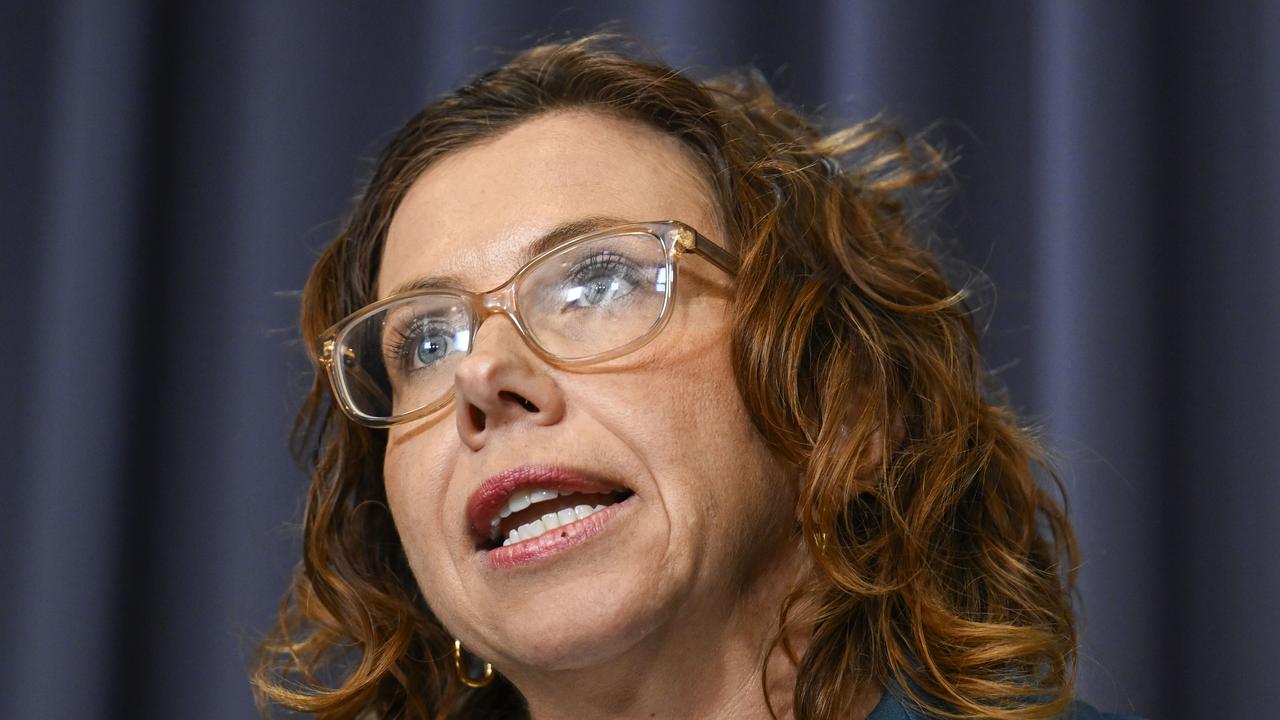
    The hearing, focused on reviewing gas resource taxation rules, was led by Greens committee chair Steph Hodgins-May, who pressed Woodside representatives hard over the nature of their political giving. Hodgins-May challenged the company to disclose what policy access the donations secured, questioning whether corporate funding should even buy entry into policy discussions. “As a Greens senator I could never ever imagine taking money in exchange for a meeting with a stakeholder,” she stated during the session. She further pressed for details on private communications between Woodside executives and Western Australian Premier Roger Cook ahead of Cook’s public stance opposing new gas taxes ahead of the upcoming federal budget, a question Woodside officials declined to answer immediately, saying they would respond to the query on notice.

    The inquiry comes amid growing public and political pressure to implement a new 25% minimum tax on gas exports, a push Hodgins-May has publicly backed. She has pushed back against industry warnings that the time is not right for such a reform, arguing that energy giants have long delayed sharing their extraordinary windfall profits with the Australian public, the rightful owners of the nation’s natural resources. This momentum for higher gas taxes has built following a global energy price surge triggered by ongoing geopolitical conflicts in Ukraine and the Middle East, which has delivered Australian gas exporters a combined $149 billion in export profits since 2022. Over that same period, Australia’s national debt has swelled to nearly $1 trillion, with economic analysts projecting a 25% export tax would add roughly $17 billion in annual government revenue.

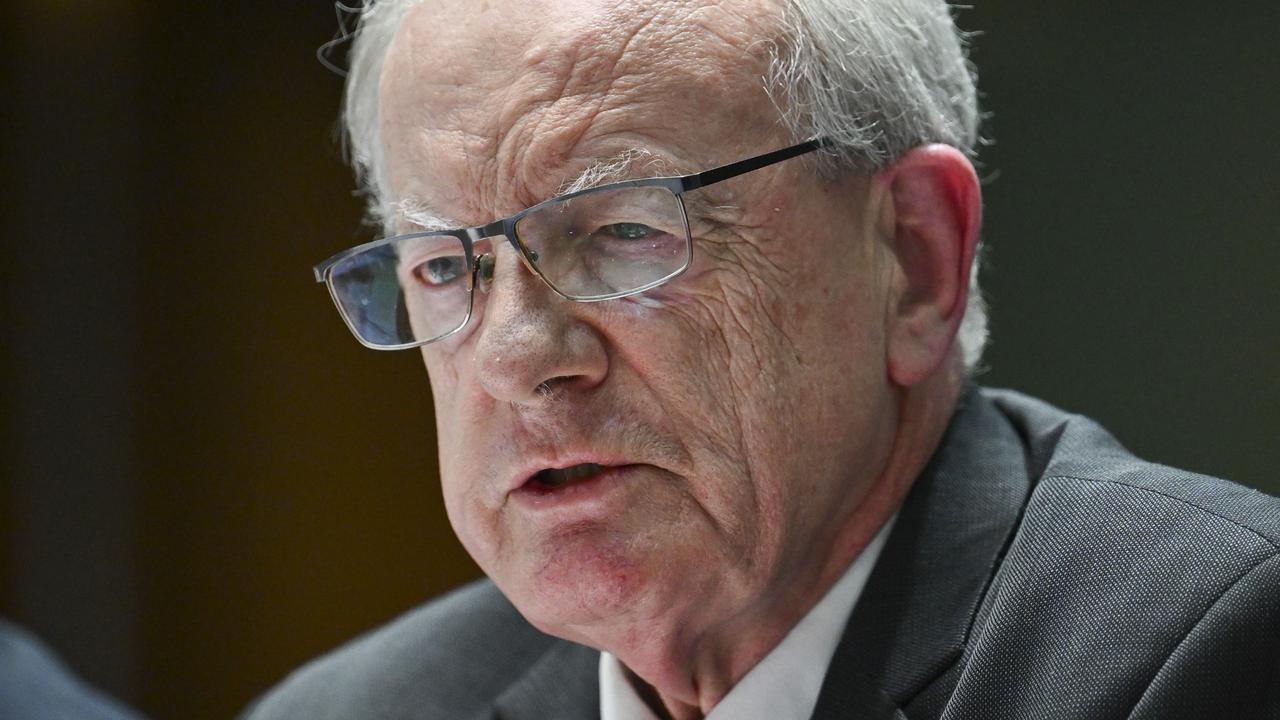
    In his opening testimony before the committee, Woodside Chief Financial Officer Graham Tiver defended the company’s record and the current taxation structure. Tiver emphasized that Woodside already makes a massive contribution to Australian public finances and the national economy, noting that over the past four years, the company has paid roughly $13.8 billion in taxes, royalties, Petroleum Resource Rent Taxes, and other levies, equal to around 44% of revenue from its gas projects being returned to government. “Each year Woodside makes a very substantial contribution back to the Australian community through tax, royalties and other levies. When Woodside succeeds, Australian workers, community and shareholders share in that success, and governments receive the revenue needed to fund essential services such as hospitals, schools and roads,” Tiver said.

    Tiver added that Australia’s existing tax framework strikes the right balance between generating public revenue and supporting the stable, competitive investment environment needed to maintain domestic energy security, create jobs, and keep local energy prices affordable. He noted that Woodside invests more than $10 billion in upfront capital for new projects, and that effective tax rates increase naturally over the lifecycle of gas developments as upfront costs are depreciated.

    Market analysts have noted that the debate over windfall gas taxes brings legitimate arguments on both sides. Morningstar market strategist Lochlan Halloway explained that it is understandable for Australians to feel frustrated by the sudden surge in gas producer profits at a time of broader cost of living pressures. He acknowledged that as the collective owners of Australia’s natural resource endowment, the Australian public currently receives a smaller share of windfall profits than resource holders in comparable nations such as Norway or Qatar. However, Halloway warned that retroactively imposing a new windfall tax carries long-term economic risks. Unlike Norway, where the government is not just a tax collector but also an equity participant that shares upfront project costs and downside risks, a unilateral windfall tax in Australia would shift all asymmetric risk to private investors: the public would collect gains during price booms, but private capital would still bear all losses during price downturns. Halloway noted that the United Kingdom implemented a similar unbalanced windfall levy, and the policy has already led to a complete halt in new offshore North Sea oil and gas exploration, a situation not seen since 1964. Such an outcome in Australia would risk deterring future energy investment and undermining long-term energy security, he argued.

  • ‘Always has been’: Michael Cheika receives strong support as the former Wallabies coach continues to be linked with the Dragons

    ‘Always has been’: Michael Cheika receives strong support as the former Wallabies coach continues to be linked with the Dragons

    As the St. George Illawarra Dragons search for a permanent replacement for outgoing head coach Shane Flanagan ahead of next season, a high-profile cross-code candidate has received a glowing endorsement from one of the NRL’s most respected club leaders. \n\nTrent Robinson, the long-serving Sydney Roosters head coach, has publicly backed former dual-code international rugby union coach Michael Cheika, confirming the 59-year-old possesses every quality needed to succeed as an NRL head coach — and argued that club CEOs and chairmen simply need to take a chance on him.\n\nCheika’s name has repeatedly circulated as a candidate for NRL head coaching vacancies over the past several years, but the decorated mentor has never been given an opportunity to lead a top-flight NRL side, despite a stellar track record across global rugby union. His resume includes head coaching roles with the Australian Wallabies, Argentina’s Pumas, and the Lebanese rugby league international side, a resume that has kept him on the radar for NRL clubs seeking fresh leadership.\n\nCheika already has deep ties to the Roosters organization: he first joined the club as a consultant back in 2020, and has recently returned to the NRL premiership contenders in a specialist role working with the club’s forward pack. That working experience has given Robinson a first-hand look at what Cheika would bring to any NRL head coaching role.\n\nWhen asked whether NRL clubs would be willing to hire a coach with a primarily rugby union background, Robinson redirected the question to the decision-makers at the top of clubs, but left no doubt about Cheika’s credentials. “He’s a head coach, that’s pretty clear, and he always has been,” Robinson told reporters. “Whenever that comes up, he’ll be a head coach in the future somewhere pretty quickly, so he’ll be ready to go.”\n\nRobinson added that Cheika’s work with the Roosters forwards has been a major boost to the squad, noting that while Cheika continues to familiarize himself with the specific nuances of NRL play, his decades of elite coaching experience have already added immense value to the club. “He works with the forwards a lot and he’s worked really well with that crew. Building that mindset along with the skill set, he’s learning at the same time around the nuances of the game, but the mindset he’s had for a long time, so he’s been a good value add,” Robinson said.\n\nBeyond Cheika, Robinson also praised another product of the Roosters’ coaching pathway: club legend and former NSW captain Boyd Cordner, who recently stepped into a new role as assistant coach for the NSW Blues State of Origin side. Cordner replaced outgoing Dean Young, who stepped up to serve as the Dragons’ interim head coach following Flanagan’s departure announcement.\n\nCordner has already built a strong coaching resume through his work leading the Roosters’ SG Ball Cup youth side, and Robinson said the former premiership-winning forward has all the tools to become a top-level head coach in the future. “He is a great coach. He will be a great coach. And it’s a good step towards his future,” Robinson said. “(He’s got a) deep knowledge of rugby league, so he knows the nuances of the game. He knows how the game should be played, and then he’s got the ability to communicate that. So it’s Boydo’s choice that if he wants to go down that line, then he can, and he’s obviously doing it in part-time roles. But Boyd is and will be a very good coach.”\n\nLooking ahead to the Roosters’ upcoming Anzac Day clash against the Dragons, Robinson said his side is focused on preparing for their opponents rather than being distracted by the Dragons’ ongoing off-field coaching saga. The biggest talking point for the match is the NRL debut of Dragons rookie halfback Kade Reed, who is expected to be a primary target for the Roosters’ aggressive defensive line.\n\nRobinson confirmed that the Roosters have done their full scouting work on Reed, noting that while the young half is making his first NRL appearance, he has extensive experience through the junior and reserve grade pathways. When asked about the strategy of targeting debutant playmakers, Robinson said modern NRL requires all 13 players to step up physically, regardless of position or experience.\n\n“That’s the game, that will always be a part of it. But it won’t just be him,” Robinson said, also confirming Roosters centre Billy Smith will not return to the side for this week’s clash. “The game used to be played where years ago, they (smaller halves) used to play second line (defence) and they used to slot in on the far side of where the defensive lines were or where the ball was and move around. That’s not the case anymore. You need 13 guys aiming up and it’s a physical game.”\n\nRobinson added that the Roosters’ preparation for the match has centered on reviewing their own recent performance and locking in their game plan, rather than making drastic adjustments to target Reed. “Our most important preview for this game was our review, and that’s the things that we want to do and the things that we want to improve on,” he said. “You don’t change direction, but our style of game can double down on some of those areas that we want to attack. We’ve done our work as we do each week, no more than any other player that we face each week. But we’re really clear on the way that he plays the game and what he’ll bring to them, and then also what we need to do. He’s played a lot of footy, and we’ve watched him play a lot of footy. He just hasn’t played NRL yet. He’s played a trial, but he’s played a lot of reserve grade and he’s come through the grades, so as long as you do your work, you know the player.”

  • EU unblocks funds as Ukraine presses for membership progress

    EU unblocks funds as Ukraine presses for membership progress

    After months of diplomatic gridlock driven by Hungarian opposition, European Union leaders have formally given final approval to a €90 billion ($105 billion) aid package for Ukraine, paired with a new round of anti-Russia sanctions. The breakthrough comes as Ukrainian President Volodymyr Zelensky arrived in the Cypriot coastal resort of Ayia Napa for talks with EU leaders, where he immediately shifted the conversation to advancing Kyiv’s long-held ambition of full European Union membership.

    Zelensky opened his remarks by expressing profound gratitude for the long-delayed financial support, noting that the funds would be critical to keeping Ukraine’s military equipped and sending a clear, unified message to Moscow that European backing for Kyiv remains unshaken. But speaking to reporters outside the seaside conference venue, the Ukrainian leader made clear that his priority now is moving accession talks forward, stating bluntly: “We will push everybody.” He added that his ultimate goal is securing full Ukrainian membership in the bloc by 2027.

    The path to membership talks has recently cleared significantly, following the electoral defeat of Hungarian nationalist leader Viktor Orban earlier this month, who had spent months blocking progress on both the aid package and the opening of accession negotiating clusters. Orban, who skipped what would have been his final EU summit before leaving office, had wielded his veto over the €90 billion loan as leverage to force Ukraine to repair a pipeline damaged in a Russian strike. With repair work completed this week, Russian oil has resumed flowing through the pipeline to both Hungary and Slovakia, resolving the last sticking point for the aid package.

    European Council President Antonio Costa, who represents the bloc’s 27 member states, signaled openness to moving forward, saying the EU must “look forward and prepare the next step”, which would include formally opening the first negotiating clusters for Ukraine’s accession. However, not all EU capitals are on board with accelerating the process. Several senior leaders have pushed back against a fast track, arguing that accession must follow a strict merit-based system that requires Ukraine to meet all membership criteria before advancing. “Fast tracks are not possible,” Belgian Prime Minister Bart De Wever said. Luxembourg Prime Minister Luc Frieden echoed that stance, noting that “you simply cannot become a member of a club without meeting the conditions.”

    French President Emmanuel Macron declined to take a position on accelerated membership, but called on the EU executive branch to draft a clear timeline and outline next steps to be completed in the coming weeks. For his part, Zelensky has rejected calls for a lesser, symbolic membership status, reiterating that Ukraine will accept nothing less than full membership in the bloc. Zelensky also outlined plans for the aid, saying the €90 billion will go toward strengthening Ukraine’s military, expanding domestic air defense production, and shoring up the country’s damaged energy grid. He expects the first disbursement of funds to arrive by late May or early June at the latest.

    Beyond Ukraine, the summit in Cyprus, which currently holds the rotating EU presidency, will tackle a range of pressing global and internal issues. EU leaders will turn their attention to the ongoing Middle East conflict and its economic fallout, which has driven sharp spikes in global energy prices. The island nation was drawn into the conflict in March when a drone struck a British military base located on Cypriot territory. On Friday, EU leaders will be joined by their counterparts from Lebanon, Egypt, Syria and Jordan for what a senior EU official described as “intensive dialogue” on regional stability.

    A top economic priority for the bloc is addressing disruption to global energy supplies linked to tensions around the Strait of Hormuz. A de facto partial closure of the key shipping route has already pushed oil prices sharply higher and reduced jet fuel supplies across Europe. Leaders will also hold their first discussion on the EU’s 2028-2034 multi-year budget. The European Commission has proposed a expanded two trillion euro ($2.3 trillion) budget to account for new priorities including aid for Ukraine and defense spending, but many national governments have already pushed back against calls to increase their national contributions to the bloc.

  • Trump ‘gold card’ visa granted to one person so far: US commerce chief

    Trump ‘gold card’ visa granted to one person so far: US commerce chief

    A high-profile immigration initiative launched by US President Donald Trump has marked its first formal approval, with only one applicant successfully clearing the process for the administration’s signature $1 million ‘gold card’ residency visa to date, the nation’s top commerce official told lawmakers this week.

    US Commerce Secretary Howard Lutnick made the disclosure Thursday during a hearing before the US House of Representatives, updating Congress on the status of a program that has sparked intense debate since its unveiling last year. First ordered into creation by Trump in September 2024, the gold card scheme offers permanent US residency in exchange for a flat entry fee. It opened its application portal to prospective candidates in December 2024.

    Beyond the single completed approval, Lutnick confirmed that hundreds of additional candidates are currently moving through the multi-stage review pipeline. All applicants face not just the steep financial cost, but also rigorous background screening. The program sets a $1 million fee for individual applicants, while corporate sponsorship of candidates carries a $2 million price tag. Applicants must also cover a separate $15,000 processing fee charged by the US Department of Homeland Security, and all submissions undergo what Lutnick described as ‘most serious vetting and analysis.’

    The gold card program was paired with another Trump immigration policy: a new $100,000 annual fee added to the popular H-1B skilled worker visa program for foreign employees. When first announcing the initiative, Trump framed it as a measure that would attract high-impact job creators to the US while generating new revenue to help cut the federal national deficit.

    The update on the gold card program comes amid broader shifts in US immigration policy under Trump’s second term. Since returning to the presidency in 2025, the administration has pushed for stricter immigration controls and carried out a series of large-scale, aggressive deportation raids across the country.

  • Israel, Lebanon extend ceasefire as Trump hopes for historic deal

    Israel, Lebanon extend ceasefire as Trump hopes for historic deal

    In a development that keeps fragile peace hopes alive along the Israel-Lebanon border, US President Donald Trump announced Thursday that the two rival nations have agreed to extend their existing temporary ceasefire for an additional three weeks. The announcement came as the US leader laid out his vision for a landmark three-way summit at the White House to advance a potential full peace deal, even as fresh deadly exchanges of fire underscored the truce’s deep instability.

    Speaking alongside Israeli and Lebanese ambassadors at the White House – the first high-level direct encounter between the two states, which have no formal diplomatic relations, since 1993 – Trump struck an optimistic tone about the prospect of ending decades of open conflict between the two nations. “I think there’s a very good chance of having peace. I think it should be an easy one,” he told reporters, adding that he expects Israeli Prime Minister Benjamin Netanyahu and Lebanese President Joseph Aoun to travel to Washington for talks during the newly extended truce window.

    The original ceasefire was first agreed on April 14 following initial ambassador-level talks and was set to expire Sunday. Lebanese officials had previously pushed for a one-month extension, with Aoun demanding the truce explicitly include commitments to halt destruction of civilian infrastructure, and end attacks on civilians, places of worship, medical and education facilities, and journalists. The demand gained urgent traction after a Lebanese journalist, Amal Khalil, was killed in an Israeli strike in Lebanon Wednesday, with mourners holding a funeral procession for her in the southern Lebanese town of Bissariye this week.

    The current round of open conflict between Israel and Hezbollah dates back to late February, when Israel launched a major offensive in Lebanon in response to Hezbollah rocket fire. The Iran-aligned militant group had pledged retaliation after Israel killed Iran’s supreme leader Ayatollah Ali Khamenei at the opening of the US-Israel war on Iran that began February 28. According to Lebanese authorities, the Israeli offensive has killed more than 2,450 people and displaced over one million, while Israeli forces have occupied a 10-kilometer deep “security zone” along the southern Lebanese border.

    Even as the ceasefire extension was being announced at the White House, new violence erupted Thursday: Hezbollah confirmed it had launched a fresh barrage of rockets into northern Israel, saying the attack was retaliation for repeated Israeli violations of the original truce. Israeli officials reported that all incoming rockets were intercepted by their defense systems. The exchange followed a deadly day of Israeli strikes Wednesday that killed five people across Lebanon, including Khalil. On Thursday, Lebanon’s state-run National News Agency reported an Israeli drone strike targeted a vehicle near the southern city of Nabatieh, roughly 35 kilometers north of the Israel-Lebanon border. Israel has repeatedly argued that truce terms allow it to carry out operations against what it frames as imminent or ongoing Hezbollah attacks, while Hezbollah has launched multiple small-scale attacks on Israeli troops and military assets in southern Lebanon in recent days.

    Israeli ambassador to the US Yechiel Leiter struck a conciliatory tone Thursday, saying Israel seeks a formal peace agreement with the Lebanese government and claimed the campaign against Iran has significantly weakened Hezbollah’s military capacity. “We’re united with the Lebanese government in wanting to rid the country of this malign influence called Hezbollah,” he said.

    The ceasefire extension comes against a backdrop of stalled US-Iran negotiations. Iran had made a full ceasefire in Lebanon a precondition for resuming talks with Washington aimed at ending the ongoing war, but refused to attend a planned second round of negotiations this week in protest of a continuing US naval blockade of Iran. Despite the breakdown, Trump announced Thursday he was extending an existing truce with Iran indefinitely. Notably, Lebanese President Aoun has already pushed back on a prior Trump claim that he would hold a direct telephone call with Netanyahu, signaling ongoing divisions remain even as diplomatic efforts move forward.

  • Stuffed toys in US capital symbolize displaced Ukrainian children

    Stuffed toys in US capital symbolize displaced Ukrainian children

    In a striking, somber display just steps from the U.S. Capitol in Washington D.C., 20,000 stuffed teddy bears line a National Mall fence, each one standing in for a Ukrainian child Kyiv accuses Russia of abducting since the full-scale invasion began in 2022. On Thursday, Ukrainian activists and U.S. lawmakers gathered at the installation to draw global attention to the missing children, uniting under the urgent rallying cry: “Bring Them Home.”

    For 24-year-old Ukrainian activist Mariia Hlyten, the sheer number of toys on display underscores the scale of the crisis unfolding while world powers work toward diplomatic resolution. “When you see the scale… you then start to understand how terrifying this is, and that all this time, while we are waiting for some kind of negotiations, there are children’s lives at stake,” Hlyten said, emphasizing that the abducted children must be repatriated without delay.

    The event was organized by Razom for Ukraine, in partnership with the American Coalition for Ukraine. Three senior U.S. lawmakers addressed the crowd, each condemning the alleged abductions as a deliberate act of cultural erasure and a violation of international law. Senate Democrat Richard Blumenthal argued that Russian President Vladimir Putin’s campaign extends far beyond territorial conquest. “What Vladimir Putin is doing here is not trying to take territory alone. He’s not trying to defeat a nation alone,” Blumenthal said. “He’s trying to destroy the people, that is the purpose of abducting children, changing their names, re-education. Killing their identity, if not the children themselves — making sure that they never grow up speaking their own language, knowing their own religion and culture.”

    House Democrat Jamie Raskin echoed Blumenthal’s criticism, calling the forced removals a blatant violation of international humanitarian standards and the laws of war. “It’s a war crime and if it’s done intentionally… it is part of the proof of genocide,” Raskin said.

    Standing nearby draped in Ukraine’s blue-and-yellow national flag, 28-year-old Arkady Dolina, a Ukrainian and relative of Hlyten, described the mass abductions from Russian-occupied Ukrainian territories as “absolutely horrible.” He framed the campaign as the latest chapter in a long-running Russian policy of forced indoctrination, saying: “This is the continuation of a centuries long Russian policy to abduct, indoctrinate kids and then send them as their cannon fodder to fight their stupid, useless, brutal wars.”

    Moscow has repeatedly denied all accusations of forcibly abducting Ukrainian children. Still, claims from Kyiv have gained traction from international bodies and world governments. In February, Ukrainian President Volodymyr Zelensky announced that roughly 2,000 children had been successfully returned to Ukraine from Russia and Russian-held territories, but thousands more remain held captive. In March, the U.S. government launched a $25 million fund to support efforts to reunite displaced Ukrainian children with their families, a cause that former U.S. First Lady Melania Trump has also publicly backed. In 2023, the International Criminal Court issued arrest warrants for Putin and his children’s rights commissioner, charging the pair with the war crime of unlawful deportation of Ukrainian children.

    Kyiv alleges that Russia has systematically worked to erase the Ukrainian identity of abducted children, forcing them to undergo pro-Russian indoctrination, compelling many to take Russian citizenship. These claims have been corroborated by firsthand testimony from Ukrainians who have escaped Russian occupation.