标签: Oceania

大洋洲

  • Russian strikes kill six across Ukraine

    Russian strikes kill six across Ukraine

    Fresh Russian aerial attacks across multiple regions of Ukraine left at least six civilians dead and dozens more injured on Saturday, marking another chapter of persistent targeting of civilian infrastructure in the 2-year full-scale invasion, Ukrainian officials have confirmed.

    The deadliest violence unfolded in the eastern industrial city of Dnipro, where two separate strikes hit the same residential neighborhood over a short period. First, an overnight strike on a multi-story apartment block claimed four lives and left 27 people injured, Oleksandr Ganzha, head of the Dnipropetrovsk regional military administration, announced via Telegram. A follow-up strike on a second residential building in the same area killed one additional civilian and wounded seven more, Ganzha added.

    Further south in the Zaporizhzhia region, a Russian drone strike struck a civilian minibus, killing one passenger and wounding four others, regional administration head Ivan Fedorov confirmed in a Telegram post.

    In a public address following the attacks, Ukrainian President Volodymyr Zelenskyy noted that Russian military tactics have not shifted throughout the conflict: Moscow relies on a combination of attack drones, cruise missiles, and large volumes of ballistic missiles, with most of its targets located in urban areas far from front lines. “Residential buildings, energy facilities and businesses have been damaged,” he said, adding that the unrelenting attacks on civilian populations demand a much stronger response from Ukraine’s international partners, particularly European nations.

    “Every such strike should serve as a reminder to our partners that the situation requires immediate and firm action, and the rapid strengthening of our air defence,” Zelenskyy stated, renewing his call for the European Union to ramp up punitive sanctions against Russia.

    The appeal came just two days after EU leaders finally approved the bloc’s 20th package of sanctions against Moscow, a measure that had been stalled for months by former Hungarian Prime Minister Viktor Orban, who left office two weeks ago. The new sanctions package targets Russia’s banking sector and tightens restrictions on Russian oil exports. Alongside the sanctions, the EU also approved a €90 billion ($105 billion) long-term loan for Ukraine, earmarked to reinforce the country’s air defense and cover core state budget expenses through 2027.

    Since Russia launched its full-scale invasion in February 2022, civilian casualties have become a daily occurrence across Ukraine, with bombardments hitting populated areas on an almost constant basis. Saturday’s attacks also drew a reciprocal response on Russian territory: one person was injured in a Ukrainian drone strike in Russia’s western Kursk region, which shares a border with Ukraine, regional governor Alexander Khinshtein announced Saturday. In neighboring Belgorod region, another series of Ukrainian drone strikes left one woman dead, a man with life-threatening injuries after an attack on a civilian car, and a second man wounded when his tractor was targeted, regional governor Vyacheslav Gladkov confirmed.

    Diplomatic efforts to resolve Europe’s deadliest conflict since World War II remain deadlocked. U.S. mediation efforts that once focused on negotiating a path to peace have been redirected to the ongoing outbreak of conflict in the Middle East, leaving no active negotiations toward a ceasefire or peace deal in place.

  • AFL 2026: Collingwood champion Scott Pendlebury likely to be rested after extraordinary Anzac Day

    AFL 2026: Collingwood champion Scott Pendlebury likely to be rested after extraordinary Anzac Day

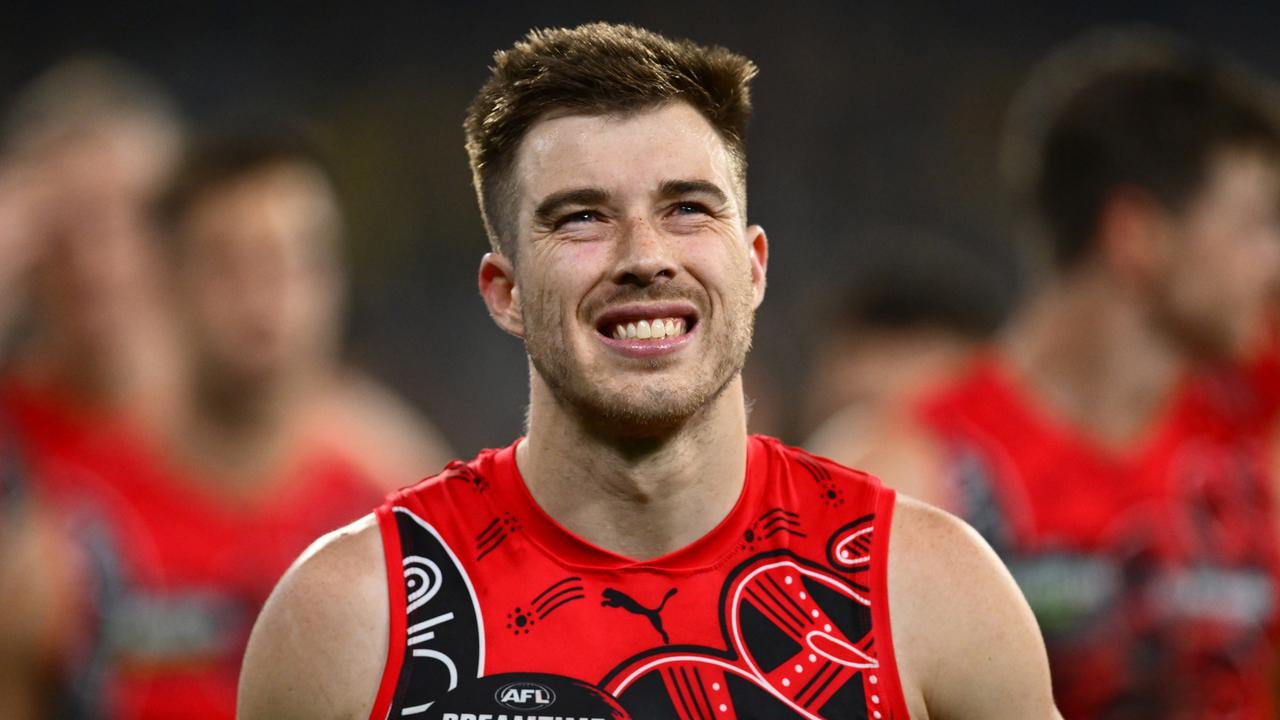
    AFL fans witnessed a slice of history on Anzac Day at the Melbourne Cricket Ground, where Collingwood legend Scott Pendlebury delivered one of the finest performances of his 18-year career – a standout display that will likely lead to the 38-year-old being rested for the club’s critical upcoming clash with Hawthorn next Thursday.

    Facing off against traditional rival Essendon, Pendlebury put on a clinic that will be remembered in Anzac Day lore: the veteran playmaker finished the match with 43 disposals, 19 direct score involvements, and two crucial goals. This dominant outing earned Pendlebury a record-breaking fourth Anzac Day Medal, pushing him past former Essendon champion James Hird to claim the outright record for most medals awarded to the best on ground in the annual blockbuster fixture.

    Despite the career-topping performance, the tight five-day turnaround between the Anzac Day match and Collingwood’s next fixture against Hawthorn means Pendlebury is extremely unlikely to take the field next week. Collingwood head coach Craig McRae opened up about the planned rest in a post-match press conference alongside the star player, noting that the high volume of minutes Pendlebury logged during Saturday’s game puts unnecessary strain on the veteran ahead of the quick turnaround.

    “I won’t make that final decision now, but I would probably think you’re unlikely to play next week,” McRae said. “We’ve got a five-day break, we’ll make final decisions early in the week but we’ll see how he pulls up. We already had an initial conversation that it could go either way, but he logged so much time on the ground today, which was perfect for this game but creates challenges for next week. We’ll complete a full fitness assessment during the week before locking in a call.”

    McRae made no attempt to hide his admiration for the evergreen veteran, saying he remains constantly amazed by what Pendlebury can produce at an age when most AFL players have long retired.

    “He’s played many incredible games throughout his career, and statistically, this is one of the very best,” the coach said. “I told the players on the bench this, and I’ll say it openly: I don’t want to get older and take for granted what this man gives us. What we saw today just reaffirmed he’s a legend of this sport and a legend of this football club. To put in a performance like that at 38, there are no age barriers for him and no ceiling on what he can do. He’s remarkable, every time I watch him play I’m in awe.”

    Pendlebury, who has built his 431-game career as a versatile utility capable of slotting into any role the Magpies need, made a last-minute position shift late in the Anzac Day clash that led to his second goal – a change that sparked a raucous “Pendles” chant from the packed crowd of Collingwood supporters. The 38-year-old explained after the match he made the call to move into a deep forward role to grant young teammate Beau McCreery the chance to take over centre bounce duties, and also relished the personal matchup against young Essendon defender Archie Roberts.

    “It was actually Beau kept saying he wanted to take centre bounce, so I told him if he wanted it he could have it and I’d move forward,” Pendlebury said. “I actually coached Archie Roberts when I was at Haileybury four years ago, we won a premiership together. When I saw he was matched up on me, I decided I’d take him deep. The old APS school football community has already been talking about that matchup, so I won’t let Arch live that down anytime soon.”

    Pendlebury brushed off praise for his individual performance, attributing his stellar day to the team’s solid defensive structure and a bit of good fortune. “The way our team set up today, we defended really well, and I’m happy to just be a small cog in the machine that is this club,” he said. “I was saying to Jordy De Goey late in the game that even when I was trying to stay away from the footy, it still ended up finding me. It was just one of those days where everything bounced my way, and at 38, you definitely take those days.”

    The result of the Anzac Day clash sets up a critical round of AFL action, with Collingwood set to take on Hawthorn in a Thursday night fixture that could shape the remainder of the club’s season, as the side waits to confirm Pendlebury’s availability ahead of the match.

  • ‘Embarrassed’: Dean Young says major changes are needed at the Dragons, confirms Kade Reed will keep his starting spot

    ‘Embarrassed’: Dean Young says major changes are needed at the Dragons, confirms Kade Reed will keep his starting spot

    The St. George Illawarra Dragons entered the Anzac Day round already mired in crisis, and their latest outing only amplified the club’s struggles, delivering a 62-point thrashing at the hands of the Sydney Roosters that has left interim head coach Dean Young calling for widespread systemic changes. Still, Young found one silver lining amid the chaos: rookie halfback Kade Reed’s encouraging debut performance has earned him a guaranteed starting spot in the team’s next clash against the Newcastle Knights following the upcoming bye.

    The defeat capped a chaotic 7-day stretch for the Red V. The week began with the club parting ways with incumbent head coach Shane Flanagan, and ended just hours after the club announced the high-profile signing of fullback Scott Drinkwater, who will join the squad for the 2025 season. For Young, a club legend who stepped into the interim role, long-term roster moves for future seasons are not a priority right now. His sole focus is ending the Dragons’ historic winless drought to open the 2024 NRL campaign.

    The full-scale breakdown on Saturday left no doubt about how deep the Dragons’ issues run: two players were sin-binned, the defensive unit missed 36 tackles, and the team committed 13 unforced errors throughout the contest. “The first thing I did after the game was check in on the players, and every one of them is embarrassed by the performance we put out there,” Young told reporters post-match. “We started decently, going up 6-nil early, but when that lead was overturned, we completely folded under pressure. This was a tough week for the whole club, but we expected a far better response than this.”

    Against that backdrop of poor play, Reed’s performance stood out as the only bright spot for the Dragons. Making his first NRL start in front of a packed crowd at Allianz Stadium, the young playmaker showed no hesitation in attacking, testing the Roosters’ defensive line with creative passes and tactical kicking. He looked to have set up the opening try of the game with a long-range pass to Mat Feagai, only for an earlier error from a teammate to disallow the score. Later in the match, a late try he scored was also overturned for obstruction, but he consistently took on responsibility in both attack and defence, even as opponents targeted him as an obvious weak point.

    “I’m really proud of how he stepped up,” Young said, confirming his decision to retain Reed in the starting lineup. “It’s an enormous ask for a rookie to make his debut on Anzac Day, when we’re already 0-7 and carrying all that pressure. He still has a lot of development ahead of him, but there were enough positive signs to give him another start. Kade will be our starting halfback against the Knights.”

    Captain Clint Gutherson is expected to return from injury for the Knights clash, though Young has not yet confirmed what other changes he will make to the lineup. What the interim coach does know is that widespread changes to the club’s training and game operations are non-negotiable, given the 0-8 start to the season. “We have to change the way we run our programs, because what we’re doing right now is obviously not working, as everyone saw on Saturday,” he explained. “I can’t predict how quickly things will turn around. All I can do is focus on getting better one day at a time. We’ll do a full review on Wednesday, make sure we learn every possible lesson from this loss, and move forward from there.”

    Young has experience turning around a season on the brink: back in 2021, he was an assistant coach with the North Queensland Cowboys when the club dropped 10 consecutive matches to open the year. The side responded by signing experienced veterans Chad Townsend and Peta Hiku, and climbed into the top four of the ladder the following season. But turning around the Dragons’ current slump will first require rebuilding a playing group that has clearly lost confidence after eight straight losses.

    “Of course confidence is low right now — any group would be in this position, so I knew this wouldn’t be an easy fix,” Young said. “But I still expected a better fight than what we gave on Saturday. Right now, we’re not just playing against the opposition — we’re beating ourselves.”

  • Dragons demolished: Kade Reed denied epic moment on debut as Roosters heap more misery on the winless Red V

    Dragons demolished: Kade Reed denied epic moment on debut as Roosters heap more misery on the winless Red V

    The 2024 NRL Anzac Day clash delivered a brutal reminder of just how wide the gap between title contenders and battlers has become, as the in-form Sydney Roosters crushed a crisis-hit St George Illawarra Dragons side by a stunning 46-point margin to extend the Dragons’ winless start to the season to eight straight losses. The result caps a chaotic week for the Dragons, which began with the club parting ways with head coach Shane Flanagan on Monday and ending with a humiliating defeat that stands as one of their lowest points in recent seasons. Following Flanagan’s departure, club legend Dean Young stepped into the interim head coaching role, and one of his first major decisions was to hand promising young halfback Kade Reed his NRL debut — a call that former coach Flanagan had resisted, opting to wait until Reed gained more experience in lower grades.

    Reed’s debut almost got off to a fairy-tale start just minutes into the match, when the 19-year-old threw a perfectly weighted, pinpoint cut-out pass that put winger Mat Feagai over for what looked to be a dream opening try. The crowd’s cheers quickly fell silent, however, when the NRL Bunker overturned the score after spotting a marginal forward knock-on in the lead-up. Despite the disallowed try, Reed put in a fearless performance across his 80 minutes: he tested the Roosters defensive line with early attacking chips, pressed for opportunities to shift the point of attack, and even had a second try denied late in the game by an obstruction call. The rookie was not without growing pains — he finished the match with six missed tackles, and a costly dropped ball under pressure allowed Roosters captain James Tedesco to race away for a try that pushed the home side’s score past 50. Still, his bright glimpses of potential gave Dragons fans one of the few positives to take away from a grim day.

    Young’s squad did little to help their new interim coach or their young debutant, however. Two first-half sin-binnings for ill-discipline left the Dragons short on the edge of their own try line repeatedly: Luciano Leilua was sent off the field for a high shot on Roosters halfback Sam Walker, while Daniel Atkinson joined him for a deliberate professional foul. Unforced errors also proved costly, with multiple spilled kicks directly leading to Roosters tries, turning small moments of pressure into converted tries for the red-hot visitors.

    For the Dragons, the only other bright spot came off the field, with the club confirming Saturday that they had signed representative fullback Scott Drinkwater from the North Queensland Cowboys, with the move set to take place from the 2027 season onward. Still, it will be a long road back to competitiveness for Young, who now faces the challenge of rebuilding a culture and fixing on-field performance after one of the worst start to a season in the club’s history.

    For the Roosters, the performance was far more than just another win: it was a statement of intent that the club is emerging as the biggest threat to reigning premiers Penrith Panthers’ bid for a fourth straight premiership. After scrambling to secure wins with second-half fightbacks in recent weeks, this match was a clinical 80-minute performance from Trent Robinson’s side, with their entire spine firing on all cylinders from the opening whistle. Captain James Tedesco continued his career-best form, notching two try assists and opening up the Dragons’ middle defense repeatedly to set up a first-half double for Sam Walker. Five-eighth Daly Cherry-Evans was equally dominant, laying on three first-half tries, while hooker Reece Robson turned in a dynamic performance out of dummy-half that included his first try in Roosters colours. Walker also put in a strong kicking game that pinned the Dragons deep in their own half for long stretches, forcing multiple line dropouts that kept the pressure consistent.

    The Roosters will face their biggest test of the season so far next week, when they take on the red-hot Brisbane Broncos in what is already shaping up to be one of the must-watch matches of the 2024 NRL regular season.

  • Albanese government flags major capital gains tax overhaul targeting property and share investors

    Albanese government flags major capital gains tax overhaul targeting property and share investors

    As Australia’s federal budget delivery on May 12 draws near, emerging reports reveal the Albanese government is actively preparing a landmark overhaul of the nation’s capital gains tax (CGT) regime, a change framed by the administration as a step to correct long-standing intergenerational inequity that hits younger Australians particularly hard.

    According to reporting from *The Weekend Australian* on Saturday, the core of the proposed reform would replace the current 50% CGT discount for assets held at least 12 months with an inflation indexation model applied to all new investment holdings. To avoid immediate disruption for existing market participants, the plan is expected to include grandfathering provisions, meaning current investors will not face sudden tax increases on their existing assets under the new framework.

    Australia’s current CGT system has been in place for decades, designed to streamline tax administration, incentivize long-term investment, and offset inflation-related gains that do not represent real profit growth. Under the existing rule, any investor holding an asset for 12 months or longer can cut their taxable capital gain in half, with only the remaining portion added to their assessable income and taxed at their individual marginal tax rate. This proposal marks a retreat from an earlier, more radical idea that would have eliminated CGT discounts entirely for property assets, but it still has drawn fierce pushback from key industry groups and opposition politicians.

    Days before the budget announcement, four of Australia’s largest housing and construction industry bodies — the Housing Industry Association, Master Builders Australia, the Property Council of Australia, and the Real Estate Institute of Australia — issued a joint open letter to federal parliament warning of severe unintended consequences from the CGT changes. The groups argue that the reform will discourage property investment, reduce the overall supply of new housing, and push up prices for existing dwellings at a time when Australia is already grappling with a severe national housing shortage. They note that private investors currently fund four out of every 10 new homes built across the country, and more than half of all new apartment developments.

    “Any increase on capital gains tax to housing and/or a cap on negative gearing, risks material withdrawal from property investment when we need more investment in housing, not less,” the letter read. “If the federal budget is used to actively drive investors into shares rather than financially supporting new housing projects in our cities and towns, Australia’s national housing crisis will deepen.”

    For the Albanese government, the reform is rooted in a stated commitment to rebalancing the tax system and housing market to benefit younger generations. In recent public comments, both Prime Minister Anthony Albanese and Treasurer Jim Chalmers have openly highlighted the intergenerational unfairness embedded in current policy settings.

    “We have been really upfront for some time now in saying that we do think that there is intergenerational unfairness in the tax system and in the housing market,” Chalmers told reporters. “I think the housing market is where some of those intergenerational issues are most obvious.”

    Opposition figures have already launched fierce criticism of the leaked plan, with Shadow Treasurer Tim Wilson labeling the proposed changes an “aspiration tax” that punishes ordinary savers and people working to build wealth. Wilson also claimed the leak itself reveals deep internal divisions within the government over the policy.

    “The Albanese government is launching an assault on aspiration though their new tax on self-starters according to leaks from deep inside their budget inner sanctum,” Wilson said in a statement. “Such a significant leak out of the budget process says even Labor MPs know how toxic the Prime Minister’s aspiration tax would be to those who save and work hard to get ahead. We know there’s deep division between the Prime Minister and the Treasurer on budget matters, and this leak says one of them is trying to kill the other’s proposal.”

    Not all policy experts oppose the plan, however. Matt Nolan, senior research manager at progressive economic think tank e61, argues that the proposed inflation indexation model is a fairer and more economically efficient approach to taxing capital gains than the current flat discount.

    “By taking into account the unique circumstances of the investor, indexation is a fairer and less distortionary way of taxing capital gains,” Nolan wrote. “This would be a significant reform, and even more so if it becomes the first step toward taxing capital income consistently with other income over time.”

    As the May 12 budget release approaches, all sides are continuing to ramp up pressure on the government, with the outcome of the reform expected to have far-reaching impacts on Australia’s property market, share market, and long-term intergenerational equity.

  • Palestinians to vote in first elections since Gaza war

    Palestinians to vote in first elections since Gaza war

    On Saturday, Palestinian residents across the Israeli-occupied West Bank and the central Gaza district of Deir el-Balah cast ballots in municipal elections, marking the first popular vote held by Palestinians since the outbreak of the latest Israel-Hamas war. This long-awaited electoral process unfolds against a backdrop of a restricted political field, widespread public apathy, and deep-seated challenges posed by ongoing conflict and occupation.

    According to official figures from the Ramallah-based Central Elections Commission, approximately 1.5 million registered voters are eligible to participate in the West Bank, while another 70,000 residents in Deir el-Balah, one of the only areas of Gaza with a largely non-displaced population after more than two years of war, can also cast their ballots.

    The structure of the electoral race reflects long-standing political divisions within Palestinian society. Nearly all competing candidate lists are either aligned with Palestinian Authority President Mahmoud Abbas’s secular-nationalist Fatah party or running as independent candidates. Notably, no candidate lists are affiliated with Hamas, Fatah’s long-time political rival which controls roughly half of the Gaza Strip. In most contested constituencies, Fatah-backed tickets face off against independent lists led by figures from smaller factions including the Popular Front for the Liberation of Palestine.

    Widespread public disillusionment defines the lead-up to the vote, with many Palestinians questioning whether the election will deliver any tangible change to their daily lives under occupation. In Tulkarem, a northern West Bank city where two adjacent refugee camps have been under continuous Israeli military control for more than a year, local businessman Mahmud Bader said he would still cast a ballot, even as he saw little hope for improvement. “Whether candidates are independent or partisan, it has no effect and will have no effect or benefit for the city,” Bader told Agence France-Presse. “The Israeli occupation is the one that rules Tulkarem. It would only be an image shown to the international media — as if we have elections, a state or independence.”

    In a sign of the limited political competition, multiple major population centers including Nablus and Ramallah, the administrative seat of the Palestinian Authority, only saw a single candidate list submitted for each local council. Those candidates will automatically claim their seats without any public vote.

    Electoral officials have adjusted voting procedures to accommodate the extreme conditions in war-ravaged Gaza. Polling stations in the West Bank will operate from 7 a.m. local time to 7 p.m., while voting in Deir el-Balah will end two hours earlier at 5 p.m. This early closing is designed to allow vote counting to finish before dark, as widespread damage to infrastructure has left most of Gaza facing chronic electricity shortages.

    International observers have framed the vote as an important milestone for Palestinian democratic process. UN Special Coordinator for the Middle East Peace Process Ramiz Alakbarov praised the Central Elections Commission for organizing a “credible process” amid extraordinary hardship. “Saturday’s elections represent an important opportunity for Palestinians to exercise their democratic rights during an exceptionally challenging period,” Alakbarov said in an official statement.

    For Palestinian political analysts, the limited scope of the Gaza vote — restricted only to Deir el-Balah — carries clear strategic meaning for the Palestinian Authority. Deir el-Balah was selected for the pilot vote in large part because it is one of the only areas of Gaza where the majority of the original population has remained in place, rather than being displaced by the war, explained Jamal al-Fadi, a political scientist at Cairo’s Al-Azhar University. Al-Fadi added that the restricted election is an experiment for the Palestinian Authority to test public support after the war, when no formal opinion polling has been conducted.

    The vote comes amid long-standing criticism of Abbas, who is 90 years old and has held the presidency for more than 20 years without winning a single re-election. Abbas has repeatedly promised to hold national legislative and presidential elections, but none have been held since 2006.

    Despite widespread cynicism, some first-time voters in Gaza see the election as an act of political resilience. Twenty-five-year-old Farah Shaath, who is voting for the first time in her life, said she felt excited to participate even amid the chaos of war. “Although it is unlike any election in the world, it is a confirmation of our continued existence in the Gaza Strip despite everything,” Shaath said.

    Logistical and security arrangements for the Gaza vote have already highlighted overlapping authority between the Palestinian Authority and Hamas. Election commission spokesman Fareed Taamallah said the body had recruited polling staff from local civil society groups and hired a private security firm to secure voting locations in Deir el-Balah. However, an anonymous source within the Gaza branch of the election commission told AFP that Hamas police have insisted on taking responsibility for securing the electoral process. The source added that Hamas will deploy unarmed personnel in civilian clothing around the 12 polling stations established in Deir el-Balah.

  • ‘Major asset’: Dragons sign Scott Drinkwater for the next three years leaving a veteran without a clear role for 2027

    ‘Major asset’: Dragons sign Scott Drinkwater for the next three years leaving a veteran without a clear role for 2027

    The National Rugby League (NRL) has been rocked by a major offseason roster move, with St George Illawarra Dragons securing the signature of elite Cowboys fullback Scott Drinkwater on a three-year contract starting in 2027. The deal, confirmed by both clubs in late April 2026, ends weeks of intense transfer speculation and triggers cascading position changes across two teams.

    After weeks of widespread rumors linking Drinkwater to a move south to the Dragons, North Queensland Cowboys formally agreed on Saturday to release the 28-year-old from the final year of his existing contract, clearing the way for the official announcement. The timing of the deal comes off a career-defining performance from Drinkwater: just one day before the agreement, the dynamic fullback notched one try and three assists in a dominant home victory over the Cronulla Sharks, underscoring his top form ahead of the move.

    In a statement following the signing, Drinkwater expressed his enthusiasm for the next chapter of his career. “I’m really looking forward to joining the Dragons and being part of what the club is building,” he said. “You can see the young talent from the area making its way through the ranks, so it’s an exciting challenge to go on this journey with them. I look forward to finishing strong at the Cowboys this year and then arriving at the Dragons for 2027 to do everything I can to contribute to the team’s success.”

    For the Dragons, the signing fills a long-standing gap in the club’s attacking lineup. Drinkwater’s signature creativity and elite ball-handling skills from the fullback position add the attacking spark the franchise has lacked for multiple seasons, and he joins recently signed forward Keaon Koloamatangi as a key foundational recruit for the incoming full-time head coach set to replace interim leader Shane Flanagan. The official Dragons NRL account welcomed Drinkwater to the club with a social media announcement alongside a graphic introducing the new recruit.

    Dragons chief executive Tim Watsford emphasized the high value the club places on the new signing. “Scott is a player of genuine class in our competition, and we’re thrilled to have him commit to the Dragons from 2027,” Watsford said. “He brings proven NRL experience, composure, skill and an attacking instinct that will be a major asset for our club. Importantly, we believe Scott will fit strongly with our playing group both on and off the field.”

    The blockbuster signing immediately prompts questions about the future of incumbent Dragons fullback Clint Gutherson, who is currently under contract through 2026. To accommodate Drinkwater’s arrival in the fullback role starting 2027, Gutherson will need to transition to a new position, most likely centre or five-eighth, opening up a key position shift for the veteran back.

    For the Cowboys, Drinkwater’s departure creates an unexpected opportunity for rising club talent. Young gun fullback Jaxon Purdue is now set to step into the starting fullback role for the 2027 season, giving the dynamic, promising playmaker expanded space to showcase his explosive running game and cement his place in the NRL.

    Cowboys chief executive Micheal Luck paid tribute to Drinkwater’s eight-year tenure with the North Queensland franchise, noting that the club could not match the long-term contract offer extended by the Dragons. “Scott has been not just a valued member of our club, but a wonderful member of the North Queensland community since he arrived eight years ago,” Luck said. “Scott received a long-term offer from another club, which we were not in the position to match. He remains an integral member of our squad for the remainder of the 2026 season. We wish Scott and his young family the very best in their next adventure. They will always be welcome at our club.”

    The official announcement of the signing was made just hours before the Dragons’ high-stakes clash with the Sydney Roosters, drawing major attention from NRL fans and analysts across the country ahead of the blockbuster match.

  • UK PM vows legislation to ban Iran Guards: report

    UK PM vows legislation to ban Iran Guards: report

    British Prime Minister Keir Starmer has announced plans to table new legislation within coming weeks to formally proscribe Iran’s Islamic Revolutionary Guard Corps (IRGC), according to a recent report from Agence France-Presse. The commitment was delivered during an interview with the Jewish Chronicle, carried out during Starmer’s visit to a London synagogue that survived an attempted arson attack just seven days prior to his trip.

    This policy pledge follows a similar move by the European Union, which voted in January to officially label the IRGC a terrorist organization in response to the group’s brutal crackdown on large-scale anti-government protests inside Iran. When questioned about the timeline for the proscription, Starmer confirmed that targeted legislative action is required to crack down on hostile foreign actors operating within UK borders, and his government intends to move forward with the bill as rapidly as possible.

    “We go into a new session (of parliament) in a few weeks’ time and we’ll bring that legislation forward,” Starmer added.

    Tensions have been running high across Jewish communities in northwest London in recent weeks, with local residents remaining on high alert after a string of arson attacks targeting synagogues and Jewish community infrastructure. The wave of incidents began shortly after U.S.-Israeli military strikes on Iranian targets launched on February 28. Starmer has publicly stated he is growing increasingly concerned about foreign states conducting malicious activities through proxies on British soil.

    First established after Iran’s 1979 Islamic Revolution, the IRGC functions as the ideological wing of Iran’s military, tasked with protecting the country’s clerical ruling system. Beyond its security and military mandate, the organization also holds direct or controlling ownership of businesses across nearly every major strategic sector of the Iranian economy, giving it extensive influence over the nation’s domestic and international affairs.

  • Why is this game only legal across Australia one day a year?

    Why is this game only legal across Australia one day a year?

    Across Australia, there is a unique traditional betting game that holds a peculiar legal status: it can only be played legally across the entire nation on one single day each year. That game is two-up, a simple yet beloved coin-tossing gambling activity that is deeply woven into the country’s wartime history and cultural identity.

    The origins of this one-day legal exception stretch back to World War I, when Australian soldiers stationed overseas regularly gathered to play two-up between deployments. For troops facing the uncertainty and horror of battle, the game became more than just a form of recreation—it was a way to build camaraderie, lift collective morale, and hold onto a small piece of home while thousands of miles from Australian soil. Many soldiers continued to play the game after returning home, passing down the tradition through generations of families and veteran communities.

    Over time, general gambling laws across most Australian jurisdictions restricted unlicensed two-up games, reflecting broader regulations around betting activities. To honor the game’s deep ties to Australian military history and the sacrifices of Anzac (Australian and New Zealand Army Corps) soldiers, lawmakers carved out a special exemption: two-up can be played legally anywhere in the country on April 25, the national holiday that commemorates the Anzac landing at Gallipoli in 1915.

    Today, the annual tradition of playing two-up on Anzac Day remains a beloved part of commemorations across the country. Pubs, RSL (Returned and Services League) clubs, and community gathering spots set up games, where participants of all ages join in, not just for the chance to win bets, but to connect with the nation’s wartime heritage and pay tribute to the service members who first popularized the game a century ago.

  • Battle lines drawn over EU’s next big budget

    Battle lines drawn over EU’s next big budget

    Fresh divisions have erupted among European Union leaders as they kick off high-stakes negotiations over the bloc’s next seven-year budget, setting the stage for weeks of tense bargaining between net-contributing frugal states, institutional leaders and pro-spending blocs. The talks, held Friday in Nicosia, Cyprus, come as EU institutions race to lock in a final agreement for the 2028-2034 budget cycle by the end of 2026, well ahead of pivotal national elections across the bloc next year. Last year, the European Commission tabled a €2 trillion ($2.3 trillion) spending plan that would cover everything from common agricultural policy subsidies to cross-border research initiatives, representing a notable increase over the bloc’s current long-term budget. That proposal has already drawn sharp pushback from the EU’s biggest net contributors, led by the so-called “frugal four” core members Germany and the Netherlands, who have drawn a clear line in the sand against the proposed spending increase. Ahead of Friday’s opening talks, German Chancellor Friedrich Merz rejected calls from France for higher collective debt to fund expanded spending, arguing that the EU must prioritize targeted spending cuts in non-critical areas to make room for new priorities rather than raising overall outlays. “We will be setting new priorities. This means that we will also have to reduce spending in the European budget in other areas,” Merz told reporters ahead of the closed-door discussions. Dutch Prime Minister Rob Jetten echoed that hardline position, saying the commission’s proposed total “needs to be significantly reduced.” For the Netherlands, one of the largest per-capita contributors to the EU budget, an unchecked increase in national contributions would be “unacceptable,” he added. Reaching a final deal will require compromise not just among member states, but also between EU national governments and the European Parliament, which must sign off on any final long-term budget agreement. EU leaders have prioritized wrapping up talks by the end of 2026 to avoid political disruption from 2027 national elections, most notably in France, where a far-right election win could complicate efforts to pass a budget deal. The commission’s proposal includes a key provision requiring the EU to begin paying off tens of billions of euros in annual debt accumulated during the COVID-19 pandemic’s economic recovery program, a requirement that many EU lawmakers oppose, with some pushing to extend the debt repayment timeline. Parliamentary leaders have also thrown their weight behind a push for new bloc-wide taxation of large global technology firms to generate fresh revenue, rather than leaning entirely on increased contributions from member states or cutting existing spending programs. European Parliament President Roberta Metsola emphasized Friday that the bloc needs new revenue streams to cover existing debt obligations, telling reporters in Nicosia: “We cannot solve all the crises and the difficulties we are facing. We need new money to service old debt, and that is something that we will ask the member states to look at.” European Commission President Ursula von der Leyen echoed that position, framing the creation of new tax-based revenue streams as “indispensable” for the bloc’s fiscal stability. “Without them, the choice is stark. It’s either higher national contributions or it’s lower spending capacity,” she told a press conference following the opening round of talks. Irish Prime Minister Micheal Martin, whose country will take over the rotating EU Council presidency from Cyprus in July, warned that negotiations would be grueling and require give-and-take from all sides. “There will have to be compromise,” Martin said. “Some think the budget is too high as it is. Others think it’s not high enough.” With the deadline for a 2026 agreement fast approaching, European Council President Antonio Costa stressed that the bloc faces a collective responsibility to strike a deal on time. “The clock is ticking,” Costa said after Friday’s opening talks concluded. “We have a collective responsibility to reach an agreement by the end of the year.”