标签: Oceania

大洋洲

  • Justice Dept ends criminal probe into US Fed chair Powell

    Justice Dept ends criminal probe into US Fed chair Powell

    In a move that resolves a high-stakes political standoff over the independence of America’s central bank, the US Department of Justice announced Friday it has ended its criminal investigation into Federal Reserve Chair Jerome Powell. The development clears a major procedural hurdle for the confirmation of President Donald Trump’s nominee to lead the Fed, after weeks of controversy over what critics called a politically motivated inquiry.

    US Attorney Jeanine Pirro made the announcement of the probe’s closure via the social platform X, confirming that oversight of the Fed’s headquarters renovation cost overruns — the core issue that sparked the Justice Department investigation — will now be handled by the Federal Reserve’s own inspector general. The investigation, which opened under intense public and private pressure from President Trump, will remain dormant for the time being, but Pirro left open the possibility of reviving criminal proceedings if new evidence emerges.

    “I will not hesitate to restart a criminal investigation should the facts warrant doing so,” Pirro said in her public statement.

    The probe has been a flashpoint in US politics for months, as Trump has repeatedly broken longstanding Washington norms to publicly and personally attack Powell, repeatedly calling on the Federal Reserve to cut interest rates far more aggressively than the central bank’s independent policy framework has allowed. With Powell’s four-year term as Fed chair set to expire on May 15, the looming investigation threatened to delay the Senate’s consideration of Trump’s pick to replace him, former Fed governor Kevin Warsh.

    Shortly after the Justice Department’s announcement, White House spokesman Kush Desai reaffirmed the administration’s optimism that the Senate will move quickly to confirm Warsh. “The Trump administration remains as confident as before that the Senate will swiftly confirm Kevin Warsh as the next Federal Reserve Chairman,” Desai said.

    Critics across the political spectrum, including former Federal Reserve chairs and sitting lawmakers from both parties, had denounced the investigation as an unprecedented attempt to erode the central bank’s long-held independence from political interference. The standoff reached a breaking point this week, when Republican Senator Thom Tillis of North Carolina, a member of the Senate Banking Committee, made clear he would continue blocking all new Fed appointments if the Powell investigation was not resolved. A single defection from Tillis would have been enough to create a deadlock on the panel, which Warsh must pass to move to a full Senate vote.

    Even with the probe closed, however, top Democratic lawmakers warn that political pressure on the Federal Reserve remains far from over. Senate Banking Committee ranking member Senator Elizabeth Warren called the investigation a “bogus” inquiry, noting that the Justice Department’s action still leaves open the threat of renewed proceedings against Powell at any time, while a separate criminal investigation into Fed Governor Lisa Cook remains active. That probe stems from Trump’s move to attempt to fire Cook over unproven mortgage fraud allegations, a case that is currently before the US Supreme Court. Justices are set to rule on whether Trump has the legal authority to oust a sitting Fed governor.

    Powell, who first took office as Fed chair in 2018 during Trump’s first term and was reappointed by Democratic President Joe Biden in 2022, said last month that he would not step down from his lifetime seat on the Fed’s Board of Governors until the investigation against him was concluded with full transparency and finality. It is unusual for a former Fed chair to remain on the board after leaving the leadership post, and Powell’s current term as governor runs through 2028. It remains unclear whether Powell will choose to stay on the board now that the probe has been closed.

    All market and political observers are now turning their attention to Powell’s scheduled press conference next week, which will follow the conclusion of a two-day monetary policy meeting by the Federal Open Market Committee, where he is expected to address his future plans and the end of the investigation.

  • Radar detects even more human remains in suspected Indigenous burial sites on Rottnest Island

    Radar detects even more human remains in suspected Indigenous burial sites on Rottnest Island

    One of Western Australia’s most beloved tourist destinations, Rottnest Island — better known for its sun-soaked white-sand beaches, iconic wild quokkas and postcard-perfect coastal views — is now at the center of a sobering discovery that pulls back the curtain on the site’s brutal colonial history.

    The discovery began earlier this month, when construction crews carrying out upgrades for a new bus stop near Holy Trinity Church, located on the island roughly 19 kilometers off the coast of Perth, uncovered a set of unidentified human bones. Work on the infrastructure project immediately halted after the find, triggering a joint investigation by local police and the state’s lead archaeologist. Subsequent forensic testing confirmed the remains were of Indigenous ancestry and dated to historical times, aligning with the island’s dark past as a 19th and early 20th century Aboriginal prison.

    To determine if more unmarked graves sat beneath the construction site, authorities deployed ground-penetrating radar to survey the surrounding area. The advanced scanning technology has now identified 12 separate locations across the site that show strong potential to be unmarked burial sites. Further archaeological and anthropological work is required to confirm the findings and analyze any potential remains at the sites.

    Rottnest Island, known by its traditional name Wadjemup to the local Whadjuk Noongar people, has a long and violent colonial history that is often overshadowed by its modern reputation as a top global tourist spot. From 1838 to 1931, the island operated as a forced labour camp and prison for Indigenous Australian men and boys, holding more than 4,000 prisoners over the near-century of operation. Many incarcerated people died on the island from poor conditions, abuse and disease, and scores are believed to be buried in unmarked graves across the site.

    In a joint statement from the Rottnest Island Authority (RIA) and the Whadjuk Aboriginal Corporation (WAC), representatives acknowledged the profound cultural and spiritual importance of Wadjemup to the Whadjuk Noongar people and all Aboriginal Australian communities. The organizations confirmed that since the initial discovery of remains, they have collaborated closely to uphold traditional cultural protocols and guide all decision-making around site protection and management with cultural respect.

    “We acknowledge and express our deep regret for the significant distress this incident and subsequent investigations has caused Aboriginal people,” the statement added. Moving forward, all work at the site will remain paused while experts work with Indigenous stakeholders to conduct further investigations and plan next steps that honor the cultural significance of the area.

  • War in the Middle East: latest developments

    War in the Middle East: latest developments

    The ongoing conflict in the Middle East has sent ripples across global energy markets and international diplomacy, with a flurry of new developments emerging over the past 24 hours that have heightened economic uncertainty and shifted geopolitical dynamics.

    One of the most significant warnings came from the International Energy Agency (IEA), which projects that strained global liquefied natural gas (LNG) markets—tightened significantly by the ongoing regional conflict—will remain constrained through the end of 2026 and into 2027. The energy volatility has already moved global markets: oil prices have continued their upward climb, while equity markets have faced downward pressure as investors grow increasingly anxious over stalled diplomatic efforts to de-escalate the crisis. Adding to market jitters are ongoing threats to critical energy chokepoints, with Iran maintaining its position of tension around the Strait of Hormuz and the United States upholding its blockade of Iranian ports.

    On the diplomatic front, French President Emmanuel Macron emphasized the urgent need for regional calm during his participation in an EU summit held in Nicosia, where scheduled talks with Middle Eastern leaders were on the agenda. “It is in everyone’s interest for stability to return as soon as possible and for the world’s economies to be reassured,” Macron stated.

    In a counterterrorism move, the U.S. State Department announced a reward of up to $10 million for any information leading to the leader of Kataeb Sayyid al-Shuhada (KSS), an Iraqi armed group backed by Tehran that Washington has formally designated as a terrorist organization.

    A limited win for de-escalation came with the announcement of a three-week extension to the ceasefire between Israel and Lebanon, made public by U.S. President Donald Trump on Thursday. Speaking to reporters, Trump expressed optimism about long-term peace, saying “I think there’s a very good chance of having peace. I think it should be an easy one.” He also confirmed plans to hold high-level talks with leaders from both nations in the coming two weeks. The ceasefire extension was immediately tested, however, after Hezbollah announced it had launched rocket attacks targeting the Shtula settlement in northern Israel. The group claimed the strike was retaliation for Israeli violations of the ceasefire and an Israeli strike on the southern Lebanese town of Yater.

    Trump also addressed rising tensions with Iran, telling reporters at the White House that while the U.S. faces no immediate pressure to end the ongoing standoff with Tehran, “the clock is ticking” for the Iranian government as the conflict’s disruptions continue to harm the global economy. He explicitly ruled out the use of nuclear weapons against Iran, noting “A nuclear weapon should never be allowed to be used by anybody.”

    To bolster its military presence in the region, the U.S. military confirmed that the USS George H.W. Bush aircraft carrier has arrived in Middle Eastern waters, bringing the total number of U.S. Navy carrier battle groups deployed in the theater to three. Trump also issued a new operational order for U.S. naval forces in the region, saying “I have ordered the United States Navy to shoot and kill any boat, small boats though they may be…that is putting mines in the waters of the Strait of Hormuz.” Just days after a similar interdiction, the U.S. Defense Department also announced that U.S. forces had boarded a vessel in the Indian Ocean suspected of carrying material support to Iran, marking the second such operation in three days.

    On the sports front, U.S. Secretary of State Marco Rubio distanced the American government from calls to bar Iran from this year’s World Cup, including a proposal that Italy take the Iranian national team’s place in the tournament. Rubio confirmed that Iranian footballers are welcome to compete, and denied that Washington had requested the team stay home. He did, however, note that members of the Iranian delegation with documented ties to the Islamic Revolutionary Guard Corps (IRGC) may be denied entry.

    Israeli Defense Minister Israel Katz reaffirmed his country’s military preparedness for wider conflict, stating that Israel is “prepared to resume the war” and is only waiting for authorization from Washington to push Iran back “to the Stone Age.”

  • Hot pants: Tokyo government workers swap suits for shorts

    Hot pants: Tokyo government workers swap suits for shorts

    As Japan braces for another sweltering summer and grapples with mounting energy security risks tied to ongoing conflict in the Middle East, Tokyo’s metropolitan government has rolled out a dramatic update to its long-running energy conservation campaign, now allowing public sector workers to swap formal suit trousers for comfortable shorts at work.

    An anonymous Tokyo government official confirmed the new dress code adjustment to AFP on Friday, noting that amplified concerns over energy supply volatility spurred by the Middle East war was a key driving force behind the policy update. The change expands on Japan’s iconic “Cool Biz” initiative, a national energy-saving program first launched by the country’s Ministry of the Environment back in 2005. The original campaign encouraged public servants to abandon stiff neckties and heavy formal jackets during the hot summer months, eventually allowing more casual options such as Okinawan-style open-collar tee-shirts. This year’s update marks the most significant loosening of workplace attire rules since the program began.

    Local media footage captured earlier this week already shows male government employees embracing the new policy, wearing casual shorts and tee-shirts around Tokyo metropolitan office buildings. The policy has the full backing of Tokyo Governor Yuriko Koike, who actually launched the original Cool Biz campaign two decades ago when she served as Japan’s environment minister.

    Addressing reporters earlier this June, Koike laid out the full scope of the updated initiative, emphasizing the urgent context driving the changes. “This summer, we encourage ‘cool’ attire that prioritizes comfort, including polo shirts, T-shirts and sneakers and — depending on job responsibilities — shorts,” she stated, pointing to “a severe outlook for the supply and demand of electricity” as the core motivation. Beyond the relaxed dress code, the updated 2025 Cool Biz push also includes expanded incentives for teleworking and adjusted work schedules that allow employees to start their shifts earlier to avoid peak midday heat and energy consumption.

    The policy update comes as Japan faces a growing pattern of record-breaking summer heat. According to the Japan Meteorological Agency, 2024 saw the country experience the hottest summer since formal temperature recording began in 1898. Extreme heat events, where daily temperatures climb above 40 degrees Celsius, have become so frequent in recent years that the agency introduced a new official classification for these dangerous heat waves just last week, coining the term “kokusho,” or “cruelly hot,” to describe these high-risk weather days.

  • Aboriginal children’s book pulled over illustrator’s Bondi attack comments

    Aboriginal children’s book pulled over illustrator’s Bondi attack comments

    A controversial decision by one of Australia’s most established publishing houses to scrap a printed Indigenous children’s book has ignited fierce national debate over free speech, antisemitism, and political censorship, with dozens of prominent authors severing ties in protest.

    The canceled work, *Bila, A River Cycle*, was written by award-winning Wiradjuri poet Jazz Money and illustrated by Melbourne-based artist Matt Chun. Thousands of copies of the book had already gone to press before the publisher, University of Queensland Press (UQP), announced it would halt distribution and explore recycling options for the entire print run, currently held in storage.

    The cancellation came in response to public comments Chun made in a Substack essay published earlier this year, where he reflected on public and media reactions to the December 2024 Bondi beach shooting. In that attack, two gunmen opened fire on a Jewish festival hosted at the iconic Sydney beach, killing 15 people including prominent Chabad rabbi Eli Schlanger, head of the local Chabad mission which organized the gathering.

    In his essay, Chun argued that the Australian political left had rushed to perform public respectability in the wake of the attack to avoid unfounded accusations of antisemitism, and criticized widespread media framing of the incident. He also publicly called out Schlanger and the Chabad organization for their longstanding support of Israeli military actions and illegal settlements in occupied Palestinian territories.

    In an official statement to the BBC, The University of Queensland, UQP’s parent institution, described Chun’s comments as “abhorrent and hateful to the innocent victims of the attack.” The institution added that it could not overlook or condone the remarks, nor move forward with publication in any way that could be interpreted as institutional endorsement or association with Chun’s views. UQP also expressed regret over the negative impact of the decision on Jazz Money, noting the institution holds deep respect for the award-winning Indigenous author and would welcome the chance to collaborate with her on future projects.

    Separately, New South Wales Police confirmed to the BBC that the force’s Engagement and Hate Crime Unit is leading an investigation into Chun’s social media and Substack post.

    Chun has pushed back against UQP’s decision, arguing on his public Instagram that the institution has failed to identify which specific passages of his political writing violate its internal policies and values, nor has it pointed to any clause in the existing publishing contract that justifies terminating the agreement. He also revealed that he and Money have been aware of UQP’s cancellation decision for several months, long before it became public.

    Money, whose poetry has earned national accolades including the 2025 Kate Challis RAKA Award for Indigenous artists and the Australia Council for the Arts First Nations Emerging Career Award, announced her relationship with UQP is permanently over. In an Instagram post, she warned that the decision to pulp *Bila* sets a dangerous precedent that any book exploring political, urgent or sensitive topics can be targeted for censorship, cancellation and retaliation.

    UQP’s move has prompted widespread backlash from Australia’s literary community, with multiple high-profile writers launching a boycott and severing all existing professional ties with the 76-year-old publisher. Award-winning Indigenous poet Evelyn Araluen said she was extremely disappointed by UQP’s handling of the book, and would terminate all remaining contracts she held with the press. Australian-Palestinian author Randa Abdel-Fattah, who made headlines earlier this year when she was disinvited from a major Adelaide literary festival sparking national outcry, said her upcoming upcoming UQP title *Discipline* will be her first and last book with the publisher. Other prominent writers including Melissa Lucashenko and Natalia Figueroa Barroso have also publicly announced they are ending their partnerships with the press.

    Founded in 1948 as an academic publishing house, UQP has grown into one of Australia’s leading independent publishers, releasing titles across fiction, nonfiction, poetry and children’s literature.

  • Benjamin Luke Johnston revealed as gun for hire who shot and killed Rebels bikie boss

    Benjamin Luke Johnston revealed as gun for hire who shot and killed Rebels bikie boss

    A long-standing court-ordered publication ban that concealed the identity of a contracted hitman has finally been lifted by Western Australia’s Supreme Court, allowing the public to learn the name of the former soldier who murdered the leader of the Rebels outlaw motorcycle gang in 2020.

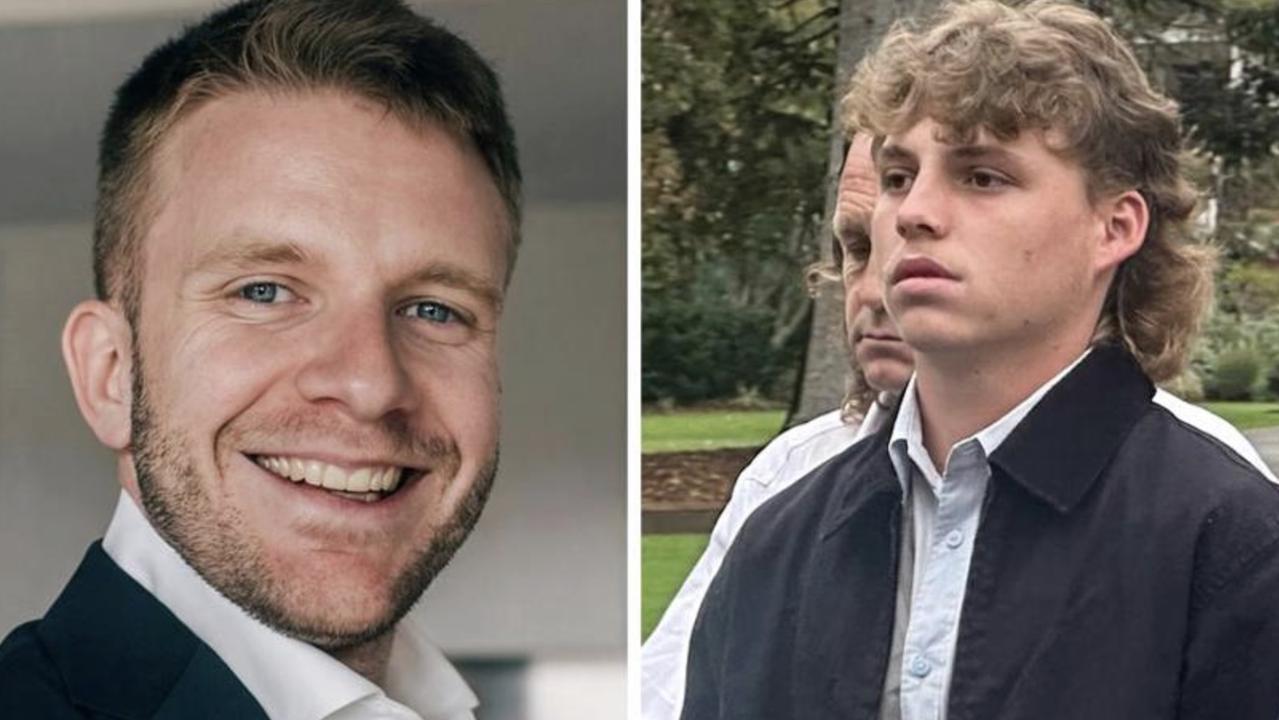
    Thirty-nine-year-old Benjamin Luke Johnston was recruited by a rival faction of outlaw motorcycle gangs to carry out the targeted killing of Rebels national president Nick Martin, court documents confirm. On a December day in 2020, Johnston positioned himself hundreds of meters away from the Perth Motorplex, where Martin was attending a public event alongside his family, and fired a sniper round that struck Martin in the chest, killing him instantly in front of onlookers and his loved ones.

    Johnston pleaded guilty to the charge of murder in 2021 and was subsequently handed a 20-year prison sentence for his crime. Beyond his own conviction, Johnston also served as a key prosecution witness in the separate murder trial of David Pye, another bikie figure linked to the assassination plot. Johnston testified during Pye’s trial that Pye was the person who arranged and paid for the contract killing. A jury ultimately found Pye guilty of murder, and he remains in custody awaiting his sentencing hearing.

    The suppression order on Johnston’s identity was in place for more than three years, originally put in effect out of concerns for his personal safety while he was serving his sentence and cooperating with authorities. However, when the matter came before the Supreme Court of WA on Friday, the court heard that those safety concerns no longer hold any weight. Johnston’s legal representative, David Merena, told the court that his client planned to enroll in a university degree program in health science while incarcerated, a goal that required him to use his legal name. The gag order had also created unnecessary barriers for family and friends to schedule prison visits to see Johnston, Merena added.

    Counsel for Pye pushed back against the request to lift the order, arguing that the suppression should remain in place in case Johnston is required to give testimony during any future appeal proceedings for Pye’s conviction. Despite that objection, Justice Joseph McGrath ruled in favor of lifting the publication ban. In his ruling, Justice McGrath noted that Johnston’s name is already widely known among the prison population, and Johnston himself has stated that he no longer fears for his personal safety behind bars. The judge added that WA Police had been consulted on the request, and state authorities no longer argued that the suppression order was necessary to protect Johnston’s security.

  • Mass MS-13 trial held at El Salvador mega-jail

    Mass MS-13 trial held at El Salvador mega-jail

    In a historic, high-security proceeding at El Salvador’s controversial Terrorism Confinement Center (CECOT) — the world’s largest mega-prison — hundreds of alleged members of the transnational criminal gang Mara Salvatrucha, better known as MS-13, appeared before the court this week to face charges of mass murder, torture and organized terror. On Thursday, Agence France-Presse reporters granted access to the restricted facility witnessed a stark scene: 220 defendants, all clad in matching white t-shirts and shorts, heads shaved, secured by chains, sat motionless and silent in orderly rows of plastic chairs arranged across CECOT’s main assembly hall. Hundreds of additional co-defendants joined the proceeding remotely from other blocks of the facility. Among those on trial are roughly 20 alleged high-ranking MS-13 leaders, including Borromeo Henriquez (known by the alias “The Little Devil of Hollywood”) and Carlos Tiberio Ramirez (“Snaider of Pasadena”), alongside dozens of mid-level gang lieutenants. Most defendants bore the gang’s signature tattoos across their faces, necks, hands and scalps, with some staring directly at visiting press as heavily armored security guards bearing riot shields formed a protective perimeter around the courtroom. Prosecutors allege the group collectively carried out more than 29,000 brutal killings across El Salvador over decades of gang rule. During Thursday’s testimony, graphic accounts of the gang’s violence played over the courtroom’s public address system. One witness recalled, “We burned her genitals and buttocks,” describing a targeted killing ordered by gang leadership. Additional testimony from two witnesses confirmed that MS-13 commanders continued to order murders from inside prison walls, even amid widespread state crackdowns. Prosecutors have directly linked the two top accused leaders to roughly 9,000 crimes, and the men showed no visible reaction as the chilling charges were read aloud. The mass trial is the centerpiece of Salvadoran President Nayib Bukele’s high-profile “war on gangs,” a sweeping security crackdown launched in 2022 that has seen more than 90,000 suspected gang members arrested under a prolonged state of emergency. Bukele, who has openly styled himself as the “world’s coolest dictator” in media appearances, has compared the CECOT mass trial to the Nuremberg Trials that prosecuted Nazi leadership after World War II. CECOT director Belarmino Garcia echoed the government’s framing, telling reporters, “These individuals caused mourning and pain to our society for many years.” A uniformed CECOT security agent, who spoke on condition of anonymity, added of the witness testimony: “It’s a horrifying account that makes your hair stand on end.” The Salvadoran government invited international journalists to observe the fourth day of proceedings, though access was tightly controlled under strict security protocols. For Bukele, the crackdown on gangs has proven politically transformative: supporters credit him with turning El Salvador from a nation once labeled the murder capital of the world into a safer country, and his hardline approach has become a template for right-wing political candidates across Latin America seeking to capitalize on widespread public anger over violent crime. Yet the mass trial and Bukele’s broader security campaign have faced sharp international criticism, particularly from human rights organizations that warn the sweeping dragnet of arrests has inevitably swept up thousands of innocent people, many of whom were detained for months before being cleared of any links to gangs. The process of mass trying hundreds of defendants at once has also raised alarms about due process violations. Controversy extends beyond El Salvador’s borders as well: Last year, former U.S. President Donald Trump authorized the transfer of 140 alleged Venezuelan gang members to be incarcerated at CECOT, a move that U.S. courts later ruled was unlawful. In 2021, U.S. authorities also leveled allegations that undermined Bukele’s carefully cultivated tough-on-crime image, claiming his administration held “covert negotiations” with MS-13 and other gangs, offering financial incentives in exchange for reduced gang violence and political support for Bukele’s ruling New Ideas party. The CECOT mega-prison, purpose-built to hold tens of thousands of suspected gang members, and the ongoing mass trial have become defining symbols of Bukele’s polarizing approach to public security, dividing supporters who hail his success in curbing violence from critics who warn the campaign is eroding democratic norms and civil liberties in the country.

  • Soviet architecture vanishes as Central Asia drifts from Moscow

    Soviet architecture vanishes as Central Asia drifts from Moscow

    Thirty-five years after the collapse of the Soviet Union left the five Central Asian states independent, a quiet erasure of Soviet-era architectural and artistic heritage is accelerating across the region, driven by a growing ideological shift away from Moscow and state-led efforts to cement distinct national identities.

    In Dushanbe, the capital of Tajikistan, one striking example of this trend sits on the facade of a soon-to-be-demolished apartment block: a massive mosaic honoring Soviet cosmonauts and engineers, celebrating the union’s mid-century scientific breakthroughs. Like thousands of other Soviet relics across Central Asia, the artwork is set to be destroyed to clear space for a luxury new residential development. Local resident Rakhmon Satiev told AFP he holds out hope the mosaic could be carefully removed and reinstalled at the new site, but that wish has little chance of being fulfilled.

    Over the past decade, deliberate neglect and intentional demolition have gutted the region’s Soviet built heritage, from iconic architectural landmarks to public artworks including mosaics, frescoes, and monumental sculptures. “If a building is old and does not fit into the new city plan, it is torn down. The city is being rebuilt and renovated, and the past is vanishing,” Dzhamshed Dzhuraev, a prominent Tajik mosaic artist, explained in an interview with AFP. Behind his Dushanbe studio, a once-prominent monument to Soviet founder Vladimir Lenin stands hidden from public view, a relic of an era regional leaders now deem out of step with modern national narratives.

    Following their 1991 independence, the five Central Asian former Soviet republics — Kazakhstan, Kyrgyzstan, Uzbekistan, Tajikistan, and Turkmenistan — have seen their urban landscapes transform into a disjointed mix of gleaming new high-rises, crumbling Soviet-era buildings, informal shanties, and half-finished construction projects. For preservation advocates, the rate of heritage loss is alarming. Altynai Kudaibergenova co-founded Artkana, one of the region’s few independent groups working to save Soviet-era architectural heritage in Kyrgyzstan. She says the number of destroyed monuments is “striking,” and warns that Bishkek, Kyrgyzstan’s capital, still holds dozens of magnificent examples of socialist-modernist architecture — a style that has grown popular with international tourists and design fans on social media — that are now at risk of demolition.

    The widespread demolition is rooted in ideological change, as long-serving regional leaders have worked to position themselves as the founding fathers of new independent nations, prioritizing new symbols of national power over leftover markers of Soviet rule. Rarely do officials frame the campaign in explicit ideological terms, however. Even as the region balances enduring economic dependence on Russia with growing Chinese investment, government leaders cast the demolition drive as a practical, cost-effective measure. They argue that renovating aging Soviet-era structures is more expensive than building new developments from scratch, noting the region’s total population has grown to roughly 80 million, creating urgent demand for new housing.

    In Dushanbe, where the mayor is the son of long-ruling president Emomali Rakhmon, the push for urban renewal has centered on replacing Soviet-era landmarks with symbols of the current government. Prominent Tajik sculptor Safarbek Kosimov told AFP that the city’s administration “is doing everything possible to make the buildings as beautiful and comfortable as he can,” adding that Soviet-era mosaics are simply “no longer necessary.” Portraits of the 73-year-old incumbent leader have already replaced many of the demolished Soviet artworks on public building facades across the capital.

    Critics of the campaign say it erases important cultural history for private and political gain. “Most Soviet mosaics were designed to convey an ideological message, but their artistic value is also important,” preservation advocate Kudaibergenova said. “Unfortunately, businesses are rarely receptive to such considerations. Their main priority is selling square metres at a high price.” Multiple nonprofits and international monitoring organizations have documented widespread corruption and opaque collusion between government officials and real estate developers driving large-scale urban renewal projects across the region.

    In Bishkek, local painter Erkinbek Bolzhurov is currently fighting to save the city’s historic House of Artists, which sits adjacent to the former national printing house — a structure that has already been reduced to nothing but its outer walls. “We want the city to develop, of course, but not at the expense of our memory,” he said. “Great artists worked inside these walls. That is what makes the building unique — it has a history.”

    Across Central Asia, tight government control over public expression means authorities rarely consult local communities or preservation groups before approving demolition projects. Still, some artists hold out hope for a future shift in attitudes. Tajik mosaic artist Dzhuraev says he believes “the time will come” when public art like Soviet-era mosaics will again be valued as part of the region’s layered history. “Architects and urban planners should pay them more attention,” he said, adding that a revival of appreciation for this heritage is still possible.

  • Man, 45, charged after allegedly kicking at airline staff, biting passenger while being restrained on Perth-bound flight from Canberra

    Man, 45, charged after allegedly kicking at airline staff, biting passenger while being restrained on Perth-bound flight from Canberra

    A chaotic mid-air incident that endangered the safety of passengers and crew on a domestic Australian flight from Canberra to Perth has led to criminal charges against a 45-year-old Queanbeyan resident, Blake Antrobus, Australian Federal Police (AFP) have confirmed.

    The disruptive incident unfolded on 16 April, when Antrobus allegedly began engaging in aggressively disorderly conduct mid-flight: he shouted profanities, repeatedly ignored explicit safety directives issued by cabin crew, and physically kicked and shoved the seat positioned in front of him, which was occupied by a female passenger. When the woman asked him to cease the disturbance, his behavior escalated into open aggression.

    After crew members reported the unruly conduct to the flight captain, authorization was granted to restrain Antrobus to prevent further harm to other people on board. During the restraint process, AFP allege that Antrobus kicked a senior cabin crew manager and bit the arm of a fellow passenger who was assisting in holding him down.

    Following the aircraft’s landing, Antrobus was taken into custody. He faces three distinct criminal charges: one count of assaulting an aircraft crew member, one count of failing to adhere to a legally required safety instruction from cabin crew, and one count of engaging in offensive, disorderly conduct on an aircraft. He made his first appearance at Perth Magistrates Court the day after the incident, on 17 April, and returned for a brief further hearing this Friday.

    In an official statement following the case, AFP Acting Superintendent Peter Brindal emphasized the serious risks that unruly, anti-social behavior poses to the entire aircraft cabin. “Being in the air does not give anyone a free pass from the law and consequences on the ground,” Brindal stated. He added that the AFP maintains close collaborative partnerships with Australian airlines to protect the safety of all domestic air travelers, and any individual accused of endangering that safety will be brought before the courts to answer for their actions.

  • India criticizes ‘poor taste’ Trump post against immigrants

    India criticizes ‘poor taste’ Trump post against immigrants

    A fresh diplomatic row has erupted between the United States and India after former President Donald Trump shared an incendiary social media post that branded India a “hellhole” and attacked Indian immigrants to the U.S. The controversy comes just weeks ahead of a planned official visit to New Delhi by U.S. Secretary of State Marco Rubio, whose trip was already framed as an effort to de-escalate recent bilateral tensions between the two long-time strategic partners.

    The inflammatory post, shared by Trump late Wednesday, targets the long-standing U.S. constitutional principle of birthright citizenship, echoing decades of far-right anti-immigration rhetoric. Beyond attacking birthright citizenship, the post spread two false and harmful claims about Indian immigrants working in the U.S. technology sector: first, that they systematically refuse to hire white, American-born workers, and second, that they lack adequate English language proficiency. The post went on to generalize its attack, claiming that birthright citizenship allows immigrants to bring entire family chains into the U.S. from what it called “hellhole” countries including China and India.

    India’s Ministry of External Affairs issued a swift and sharp rebuke of the comments on Thursday. Spokesperson Randhir Jaiswal dismissed the remarks as “obviously uninformed, inappropriate and in poor taste,” emphasizing that they do not align with the long-standing foundation of the India-U.S. relationship, which is built on mutual respect and overlapping strategic and economic interests.

    The post has also drawn widespread condemnation from American political and advocacy groups. Democratic Congressman Ami Bera, whose parents immigrated to the U.S. from India, called the comment “offensive, ignorant and beneath the dignity of the office” of the U.S. presidency. He added that Trump, who was born into immense wealth and privilege, has never experienced the daily struggles that shape the lives of millions of immigrant families across the United States.

    The Hindu American Foundation, a leading advocacy group representing Indian-American communities, also issued a statement saying it was deeply disturbed by the “hateful, racist screed.” The organization noted on social media platform X that the president’s endorsement of such bigoted rhetoric fuels rising xenophobia and racism already at record levels in the U.S., putting Indian-American and other immigrant communities at direct risk of harm.

    Cracking down on illegal and legal immigration has been a signature policy priority for Trump throughout his political career, and he has repeatedly targeted the H-1B temporary work visa program that is widely used by skilled Indian technology workers. This is not the first public friction between Trump and the Indian government: for months, Trump maintained steep punitive tariffs on Indian imports after taking offense to Prime Minister Narendra Modi’s muted response to his offer of mediation during a military conflict between India and Pakistan.

    Trump’s confrontational approach to India marks a clear break from decades of policy pursued by successive U.S. administrations of both major political parties. For decades, U.S. policymakers have prioritized building cooperative bilateral ties with the world’s largest democracy, framing New Delhi as a key strategic counterweight to an increasingly assertive China in the Indo-Pacific region.