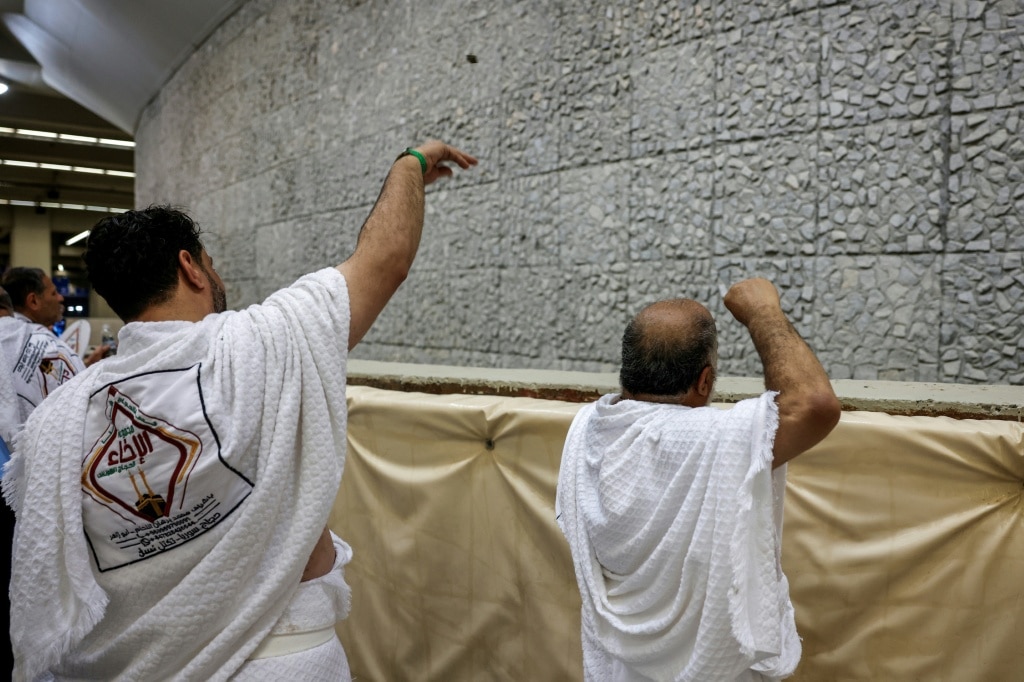
The 2025 Hajj pilgrimage reached its dramatic climax on Wednesday, as more than 1.7 million Muslim worshippers gathered in Saudi Arabia’s Mina Valley to carry out the iconic ‘stoning of the devil’ ritual, confronting both searing desert temperatures and heightened regional geopolitical unrest.
标签: Oceania
大洋洲
-

Iran says ‘low’ possibility of return to war with US
Tensions across the Middle East remain at a fever pitch this week, even as a senior Iranian military official has downplayed the risk of a return to open war between Tehran and Washington. The cautious assessment comes just days after fresh cross-border hostilities violated the fragile ceasefire that has held between the two sides since April, raising new fears of a wider regional escalation.
Mohammad Akbarzadeh, deputy political chief of Iran’s Islamic Revolutionary Guard Corps (IRGC) Navy, told state-owned Tasnim News Agency on Wednesday that the possibility of full-scale conflict with the United States remains low, citing what he described as growing weakness among American forces. “The possibility of war is low because of the enemy’s weakness, the armed forces are lying in wait with full magazines,” Akbarzadeh said. He issued a stark warning to any potential aggressors, adding: “Do not doubt that we will turn the area from Chabahar to Mahshahr into a graveyard for aggressors,” referencing the two coastal cities that bookend Iran’s 1,000-mile southern coastline along the Gulf of Oman and Persian Gulf.
Akbarzadeh’s comments came one day after Iranian officials accused the U.S. of multiple deliberate violations of the April ceasefire, following the downing of an American drone that entered Iranian airspace near the key Strait of Hormuz and anti-aircraft fire directed at a U.S. F-35 fighter jet. Hours before those Iranian defensive actions, U.S. Central Command (CENTCOM) spokesperson Captain Tim Hawkins confirmed that American forces had carried out new self-defense strikes against targets in southern Iran. “US forces conducted self-defence strikes in southern Iran today to protect our troops from threats posed by Iranian forces,” Hawkins said, confirming that the strikes targeted Iranian missile launch sites and boats suspected of attempting to lay naval mines, offering few additional details.
The Iranian foreign ministry issued a formal condemnation of the strikes, noting that the “US terrorist army, continuing its illegal and unjustified actions since the ceasefire… has, in the past 48 hours, committed a gross violation of the ceasefire in the Hormozgan region.” The statement added that Tehran “will not leave any evil unanswered and will not hesitate to defend the Iranian nation,” without specifying what form retaliation would take.
Peace talks between Washington and Tehran have been ongoing for weeks, with Pakistan leading third-party mediation efforts to end the regional war that erupted in late February, when U.S. and Israeli forces launched opening strikes against Iranian targets across the Middle East. The conflict quickly spread across multiple fronts, upended global energy markets, and pushed the region to the brink of a catastrophic regional war. As of this week, both sides remain deadlocked on core sticking points, including control of the Strait of Hormuz – the world’s most critical chokepoint for global oil and liquified natural gas shipments – and the future of Iran’s nuclear program. Neither side has shown willingness to compromise on these core issues, despite the fact that the conflict has failed to produce a clear winner for either camp. After Iran blockaded the Strait of Hormuz in retaliation for the opening strikes, the U.S. responded with its own counter-blockade of major Iranian export ports. Tehran has also announced plans to impose new “navigational fees” on commercial shipping passing through the waterway, a move that has already rattled energy markets.
U.S. Secretary of State Marco Rubio maintained on Tuesday that a final peace deal remains achievable, repeating Washington’s demand that the Strait of Hormuz must be reopened to full commercial navigation “one way or the other.” Iranian officials confirmed this week that they are working to finalize a 14-point framework for a peace agreement, and Iranian President Masoud Pezeshkian told Qatari ruler Sheikh Tamim bin Hamad Al Thani in a Tuesday phone call that Tehran remains “ready to reach a respectful framework to end the war,” according to Iranian state broadcaster IRIB. A top Iranian negotiating delegation returned from a two-day exploratory visit to Qatar on Tuesday, signaling continued behind-the-scenes progress toward a potential agreement.
In a written statement marking the start of the Eid al-Adha holiday, Iran’s supreme leader Ayatollah Mojtaba Khamenei argued that U.S. influence across the Middle East is steadily eroding. He warned regional countries against hosting American military bases that can be used to launch attacks on Iranian targets, saying: “the United States, in addition to no longer having any safe haven in the region for aggression and the establishment of military bases, is moving further and further away from its former position with each passing day.”
The spillover of the wider conflict has continued to escalate in southern Lebanon, where a separate ceasefire between Israel and Iran-aligned militant group Hezbollah has failed to stop regular deadly violence. On Tuesday, Israeli air and ground strikes killed 31 people across southern Lebanon, including at least four children, according to Lebanon’s health ministry. Israeli Prime Minister Benjamin Netanyahu vowed Monday to “crush” Hezbollah, and a senior Israeli military official confirmed to AFP on Wednesday that Israeli forces are expanding ground operations deeper into Lebanese territory, far from the shared border. Iran has made it a core demand of any U.S.-Iran peace deal that any final accord must also cover the Lebanese front, a condition Israel has so far rejected.
Global financial markets reacted with cautious optimism to ongoing diplomatic efforts this week, with major stock indexes ending the trading day mixed amid hopes that a final agreement can be reached to de-escalate the crisis.
-
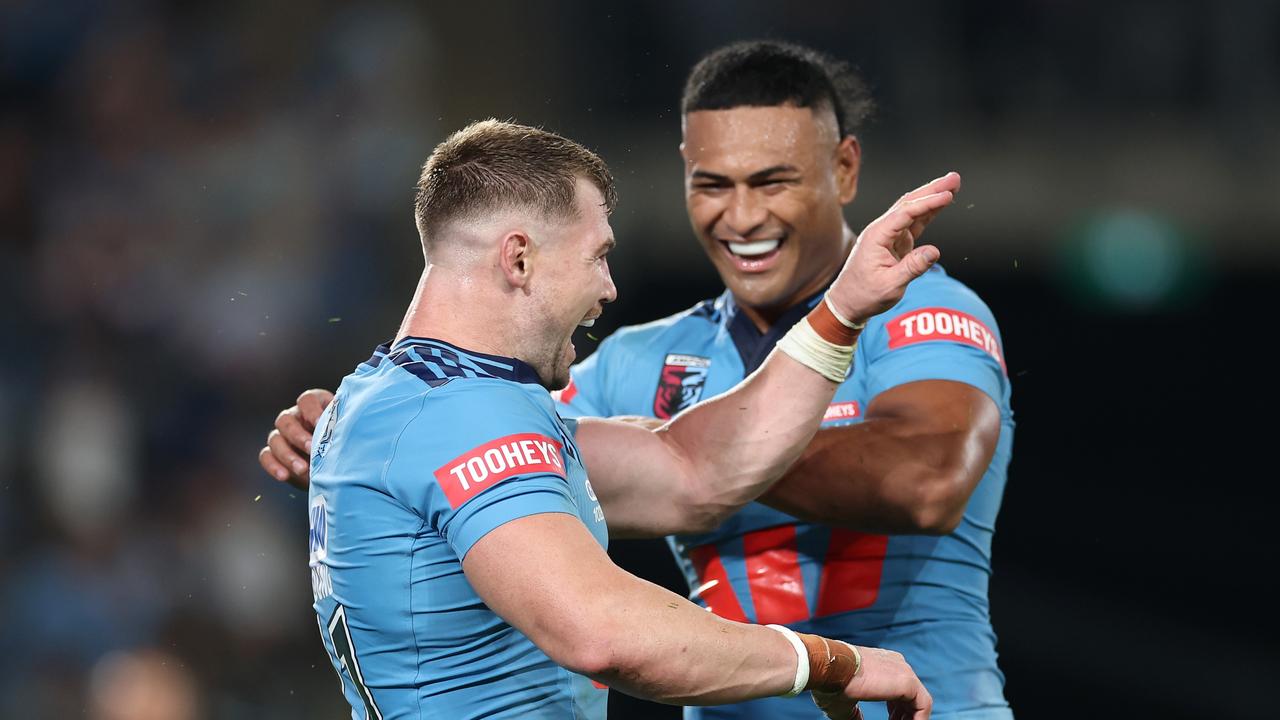
Teddy magic: NSW Blues overcome 20-point deficit to steal Origin opener with epic late try
In what will go down as one of the most dramatic comeback victories in State of Origin history, NSW’s Blues stole a 22-20 opening round win over Queensland’s Maroons at Sydney’s Accor Stadium on Wednesday, capping a stunning second-half turnaround with a last-minute match-winning try from NSW captain James Tedesco that left the rain-soaked home crowd in delirium.
Just 20 minutes into the match, the result looked all but decided. The Maroons charged out of the gate to build an insurmountable-looking 20-0 lead, with Blues fans and pundits already voicing fierce criticism of the team’s selection choices and coaching staff. Calls for head coach Laurie Daley’s dismissal were growing louder, critics questioned star halfback Nathan Cleary’s suitability for the Origin arena, and many argued rookie Dylan Edwards should have been selected ahead of Tedesco in the starting side. Even the Blues’ early play supported the skepticism: forward Mitch Barnes knocked a cold drop on the opening set, while established stars Stephen Crichton and Brian To’o posted three uncharacteristic errors apiece, leaving NSW facing what looked like a humiliating home defeat.
Queensland’s first-half dominance was led by rookie halfback Sam Walker, who stepped into the starting side seamlessly after reigning Wally Lewis Medal winner Tom Dearden withdrew through injury. Walker delivered a masterclass in the opening 40 minutes, setting up the Maroons’ opening try for Robert Toia with a deft grubber kick, then throwing the final pass for Tom Flegler’s emotional try on his return to Origin, following a sharp dummy-half run from hooker Harry Grant. By the 20th minute, Cameron Munster had set up Hamiso Tabuai-Fidow for Queensland’s fourth try, putting the visitors firmly in control of the series opener.
That all changed in the 57th minute, when Maroons fullback Kalyn Ponga was sent off for a high shoulder charge on Blues winger Tolu Koula, reducing Queensland to 12 men for the final 23 minutes of play. The red card completely flipped the momentum of the match, allowing the Blues’ halves pairing of Cleary and last-minute call-up Ethan Strange to seize control of the field.
Strange’s Origin debut will go down in folklore: the Canberra Raiders star was only promoted to the starting five-eighth role 24 hours before kickoff, after regular starter Mitch Moses pulled out with a hamstring injury. From the moment play restarted after Ponga’s send-off, Strange was unstoppable: he forced Queensland’s first error of the night with a bone-rattling tackle on Cameron Munster, had an earlier try disallowed for obstruction, then backed up a break from Stephen Crichton to cross for the Blues’ first try of the night, kickstarting the comeback. Cleary followed with a try of his own and nailed a crucial 40/20 kick, mirroring the clutch play he delivered to lift Penrith to the 2023 NRL Grand Final title. The pair dragged the Blues back into contention, cutting Queensland’s lead to just two points with 10 minutes left on the clock.
The Blues wasted multiple chances to take the lead in the final stages, including a glaring overlap that ended with a dropped pass from Haumole Olakau’atu after a slightly off-target throw from Tedesco. But with just 60 seconds left on the clock, Cleary launched a towering bomb toward the Queensland try line, and Tedesco – recalled to the starting side for his first Origin appearance in two years – soared above the Maroons’ defensive line to claim the ball one-handed, juggling it before securing the hold and grounding it for the match-winning try.
The stunning result mirrors the come-from-behind wins the Maroons have built their decades-long Origin legacy on, delivering the Blues one of the unlikeliest victories in the history of the interstate rivalry. For Queensland, the loss means they must now win game two in Melbourne to level the series, and force a decider at Brisbane’s Suncorp Stadium on July 8 to keep their hopes of an Origin crown alive.
-

Woman, 21, described as ‘perfect in every way’ after Australia crash death
A devastating car crash outside Perth, Australia, has claimed the life of 21-year-old Annie Evans-Lewis, a Welsh expat who had just moved to the country to build a future with her long-term partner, leaving loved ones across the globe heartbroken and searching for answers.
Originally from the small village of Llanybri in Carmarthenshire, Wales, Evans-Lewis had relocated to East Pingelly, southeast of Perth, in September 2025 to join her boyfriend Cai James, 22, who had secured a three-year agricultural sponsorship in the country. The couple, who first met four years earlier when Evans-Lewis was driving a tractor with a friend, had already built years of shared memories across continents, with James cutting short an early harvest work trip to New Zealand because he could not bear to be apart from her.
The tragedy unfolded on Saturday afternoon, shortly after the pair had enjoyed a rare day off together following six consecutive 100-hour workweeks of seeding. After sharing a lunch and shopping trip, James dropped Evans-Lewis off at a nearby farm to retrieve her own car, before stepping away briefly to get petrol for his chainsaw. When he resumed his drive, he spotted a crashed vehicle off the side of the road — and quickly realized it was Evans-Lewis’s car.
According to local law enforcement, Evans-Lewis’s vehicle left the roadway around 3:30 p.m. AWST and collided head-on with a tree, leaving her with catastrophic, life-threatening injuries. She was airlifted immediately to Royal Perth Hospital, where every available on-duty medical team worked to save her. James was by her side, holding her hand through her final moments.
In an emotional tribute, James described Evans-Lewis as the most beautiful person he had ever known, perfect in every way. “Without Annie it’s like I’m missing one leg or one arm,” he said. The couple had dreamed of growing old together in Australia, building a life and one day watching their grandchildren grow up. “She was everything and with her gone, I don’t know what to do with myself,” James added.
Evans-Lewis’s mother Angharad Evans echoed the profound grief of losing her daughter, calling Annie her whole life and her amazing princess. A childhood leukemia survivor, Evans described her daughter as an incredibly strong, brave, energetic, and kind young woman who filled every room with laughter. “The fun and laughter we had will always live with me for the rest of my life,” she said. “We were more like best friends. I will never be the same without you in my life my Annie, my angel.”
Outside of her life with James, Evans-Lewis quickly settled into her new Australian home: she held a role with leading grain-growing company CBH, and during the agricultural off-season, she also worked alongside her partner’s boss’s wife on a local farm, helping with cooking, cleaning, and caring for farm staff and family. She was known to love animals and outdoor work, traits that drew her to life in rural Australia.
Australian police have launched an official investigation into the circumstances of the crash, and are asking any members of the public who witnessed the incident or have relevant information to come forward to assist with their inquiries.
To help cover the costs of repatriating Evans-Lewis’s remains back to Wales for burial, along with funeral expenses, Evans-Lewis’s cousin Emily Davies set up a public online fundraising page on behalf of the family. As of current reports, the campaign has raised more than £32,000 from more than 1,000 individual donors hailing from countries across the world, a testament to how many lives Evans-Lewis touched in her 21 years.
-

‘Very confused’: Australia’s Human rights boss grilled over trans pregnancy protection law
A tense Senate Estimates hearing in Canberra has reignited fierce debate over Australia’s Sex Discrimination Act, after the country’s top human rights official defended existing protections that shield transgender women from workplace discrimination based on assumptions of potential pregnancy.
Australian Human Rights Commissioner Anna Cody faced sustained grilling from conservative Senator Michaelia Cash over the scope of the anti-discrimination provision, which Cody confirmed applies to trans women rejected for roles because employers assume they may become pregnant. Cody emphasized that the core of the regulation targets unlawful employer conduct, rather than biological capacity: any unfair treatment rooted in assumptions of pregnancy or potential pregnancy, regardless of the individual’s actual ability to conceive, qualifies as unlawful discrimination under the current framework.
When pressed by Cash on whether the same protection would extend to a cisgender man applying for a job who indicated he planned to have children, Cody acknowledged the provision does not apply to cisgender men. That admission triggered sharp pushback from the Senator, who argued the inconsistent application of the law exposes its inherent absurdity.
Cash, who is calling for urgent amendments to the legislation, pointed to basic biological facts to back her criticism, noting that cisgender men cannot biologically become pregnant, making the current carve-out for trans women but not cis men logically inconsistent. She went further, arguing that the current framework is an insult to cisgender women who have faced actual pregnancy discrimination in the workplace, diverting attention from the systemic barriers that still disadvantage cisgender women seeking employment.
Cody pushed back against the criticism, countering that discrimination occurs when an employer makes an assumption about a candidate’s potential pregnancy and bases their hiring decision on that biased assumption. For trans women, who may be incorrectly perceived as capable of becoming pregnant by employers, that biased hiring decision falls squarely into the category of unlawful conduct the Sex Discrimination Act was designed to prohibit, she said. The exchange is the latest in a series of heated parliamentary debates over gender and anti-discrimination protections in Australia, with lawmakers divided over how to balance inclusive protections for transgender people with consistent, clear legal language.
-

‘Don’t have a fine-issuing button’: eSafety chief defends lack of fines for social media companies
Six months after Australia’s groundbreaking ban on social media use for children under 16 came into force, the nation’s top online safety regulator has laid out the legal and procedural reasons no penalties have yet been issued to non-compliant platforms.
During a Senate estimates hearing this week, eSafety Commissioner Julie Inman-Grant pushed back against growing public and political pressure to issue immediate fines, emphasizing that the regulator does not have the authority to unilaterally impose penalties.
The ban, enacted by the Albanese government, took effect on December 10, 2026, and since that date, eSafety has been conducting in-depth compliance reviews of 10 major global social media platforms, including Meta-owned Facebook and Instagram, as well as Snapchat. Inman-Grant told the committee that the investigations into whether platforms are meeting the legal requirement of taking “reasonable steps” to block under-16 users remain ongoing, describing the process as inherently complex.
While Inman-Grant confirmed that regulators raised serious concerns about industry compliance in a March 2026 regulatory update, she noted that targeted engagement with platforms has already delivered measurable incremental progress. As of March, data showed a 37% drop in the number of confirmed under-16 accounts across major platforms, and parents have reported more open, constructive discussions with their children about online safety risks and appropriate digital habits.
Since the March update, Inman-Grant said additional corrective changes have been implemented by platforms. Some services have introduced new age verification checks for accounts that had adjusted their stated birth date to 16+ just before or after the ban took effect, catching additional underage users who slipped through initial checks. Others have removed unnecessary administrative barriers that made it harder for parents to report underage accounts, and several platforms have updated their age ratings in major app stores to align with the new national rules.
Despite these encouraging early signs, Inman-Grant stressed that regulators have not yet reached a final ruling on whether any platform meets the full legal standard for compliance. Systemic non-compliance can only be punished after regulators build a solid evidence base and pursue formal legal proceedings through the court system, she explained, rejecting the idea that penalties could be handed down quickly. “Unfortunately, we don’t have a fine issuing button,” Inman-Grant told the committee. “Rather, systemic non-compliance needs to be proven in court with solid evidence and complex legal proceedings.”
To support the ongoing investigation and any future enforcement actions, the regulator has now retained an external independent legal team, Inman-Grant confirmed. When pressed by Liberal Senator Sarah Henderson to name which specific platforms have made changes, eSafety General Manager for Regulatory Operations Heidi Snell said details shared by platforms under statutory compulsory notices cannot be disclosed at this stage. Snell explained that public release of platform-specific information would jeopardize ongoing investigations and any potential future enforcement action, as assessments of the effectiveness of corrective measures are not yet complete.
Inman-Grant used the occasion to point to a recently concluded three-year enforcement action against X Corp, formerly Twitter, as a case study for how the regulator pursues non-compliance. The company was found non-compliant with a transparency mandate related to child sexual abuse material, ultimately admitted liability, and agreed to pay a AU$650,000 penalty plus covering regulatory court costs. Inman-Grant noted that this action is one of the few successful enforcement outcomes against a global tech platform by any regulator worldwide, proving that methodical, evidence-based enforcement delivers tangible results even against large companies. “Such outcomes are hard won, and they demonstrate that careful, methodical enforcement with a substantial evidence base is results,” she said.
-
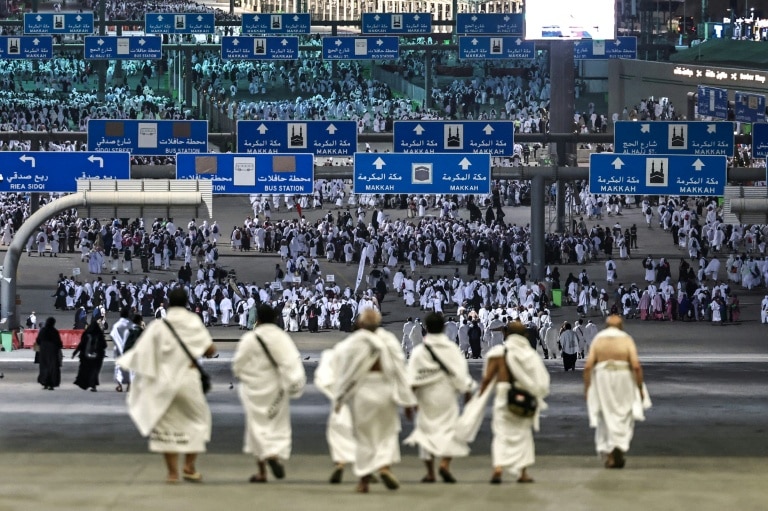
Hajj pilgrims stone the devil in final ritual
The largest Islamic religious gathering of the year reached its dramatic climax on Wednesday, as more than 1.7 million Muslim pilgrims gathered in Saudi Arabia’s Mina Valley to carry out the symbolic “stoning of the devil” — the final core ritual of the annual Hajj pilgrimage.
From the first light of dawn, throngs of faithful from across the globe moved through designated routes in the valley, located just southeast of Islam’s holiest city Mecca, to hurl small collected pebbles at large concrete pillars that stand in for Satan. This centuries-old practice reenacts a foundational moment in Islamic tradition: when the Prophet Abraham encountered Satan at three separate sites, where the devil attempted to tempt him into disobeying God’s command to sacrifice his son Ishmael. Abraham’s rejection of temptation, marked by driving the devil away with stones, is remembered and recreated by pilgrims each year.
For able-bodied Muslims with the financial means to travel, completing the Hajj at least once in a lifetime is one of the five central pillars of Islam. This year’s gathering, which brings together believers from every corner of the world, has unfolded against a challenging backdrop of dual pressures: extreme seasonal heat and simmering regional conflict.
For the third consecutive year, the holiest festival in Islam has been overshadowed by geopolitical unrest across the Middle East. This year, the shadow comes from the ongoing US-Israeli standoff with Iran that has drawn in Gulf nations. A fragile ceasefire has been in place since April 8, largely halting active hostilities, but diplomatic efforts to negotiate a permanent end to the conflict have yet to produce a conclusive breakthrough.
Compounding the security and diplomatic uncertainty, pilgrims have had to endure extreme high temperatures through the sequence of mostly outdoor rituals that make up the week-long pilgrimage. On Tuesday, one day before the stoning ritual, pilgrims climbed and prayed atop Mount Arafat — the site where the Prophet Muhammad is believed to have delivered his final sermon — where mercury hit 45 degrees Celsius. Following the day of prayer, the faithful spent the night camped under open skies at Muzdalifah, a stretch of desert between Mount Arafat and Mina, where they collected the smooth pebbles they would use for the next day’s stoning.
After completing the climactic stoning ritual on Wednesday, pilgrims will make their return to Mecca to carry out a final circumambulation of the Kaaba, the sacred cuboid structure at the center of the Grand Mosque that is the qibla — the direction all Muslims face when performing daily prayers.
The final day of the Hajj coincides with Eid al-Adha, one of Islam’s major religious holidays that honors Abraham’s willingness to obey God’s command. According to tradition, before Abraham carried out the sacrifice of his son, the angel Gabriel intervened, allowing Abraham to sacrifice a ram in Ishmael’s place. The holiday is traditionally marked by the ritual slaughter of sheep, with a portion of the meat distributed to low-income and needy communities around the world.
-

Pete Waterman: ‘We had no concept of how big Kylie was’
As one of the architects of Kylie Minogue’s decades-spanning global pop career, hitmaking producer Pete Waterman has opened up about the unassuming start of his working relationship with the star, admitting he had never heard of her when he first signed on to produce her debut three studio albums.
Waterman’s recollections feature in the new Netflix documentary simply titled *Kylie*, which charts the Australian singer’s extraordinary trajectory from a small-screen soap opera actor on *Neighbours* to one of pop music’s most enduring international icons. The project marks a reflective full-circle moment for Waterman, who, alongside production partners Mike Stock and Matt Aitken, formed the legendary Stock Aitken & Waterman team that shaped Minogue’s early sound in the late 1980s and early 1990s.
Speaking in the documentary, Waterman explained the collaboration first came about at the request of the Australian distributor for Stock Aitken & Waterman’s record label, which reached out for support to launch Minogue’s first foray into music back in the late 1980s. This was months before her breakout role as Charlene Mitchell on *Neighbours* turned her into a household name across the United Kingdom.
“She turns up at the studio, we knocked together *I Should Be So Lucky*, and she was at the airport by 4 o’clock, to fly back to Australia for *Neighbours*,” Waterman recalled.
The partnership would go on to spawn a record-breaking string of chart hits for Minogue. *The Loco-Motion*, which became the first of her 54 UK Top 40 hits when Minogue was still just a teenager, was actually a remixed version of a track that had already claimed the number one spot on Australian charts, produced by the Stock Aitken & Waterman team. *I Should Be So Lucky* followed as the trio’s second hit for the rising star. Between 1988 and 1992 alone, the production collective delivered 19 Top 20 hits for Minogue, and ultimately produced four full studio albums for the singer between 1988 and 1991.
Waterman shared that his first impression of the young artist was that she was soft-spoken but unwaveringly driven. He recalled his partner Matt Aitken telling him, “this kid’s got an amazing voice and is a great learner of a song. We taught her the song once, she’d remembered it straight away. Because she’s an actress, of course.”
Despite *Neighbours*’ rapidly growing popularity in the UK that was turning Minogue into a national sensation, Waterman said the production team had no time to anticipate how that fame would translate to massive record sales. “This sounds ridiculous [but] we had no concept of how big Kylie was,” he said.
That explosive growth quickly became clear as the team negotiated for Minogue’s third album. Waterman noted, “So here we are, Kylie’s selling 2.5 million albums every time we put an album out and suddenly we’re negotiating for a third album. And you’re dealing with lawyers who are basically Madonna’s lawyers. So you’ve gone from a little girl in *Neighbours* to the hottest lawyer on the planet who’s looking for millions of pounds in his pocket.”
When Minogue reached out to Waterman to ask him to appear in the new documentary chronicling her life and decades-long career, he said the decision to participate was immediate. “It wasn’t a thought, it was – yeah, where do you want me to be?” he said. “This is Kylie from the four men in her life. What an amazing honour that is, from [being a boy from] Stoke Heath to world domination! My God, what a place to be!”
-

Australian sharemarket surges after inflation news slashes interest rate hike odds
After starting Wednesday’s trading session in negative territory, Australia’s domestic sharemarket staged a sharp midday turnaround, driven by unexpectedly soft headline inflation data that immediately cut market expectations of another Reserve Bank of Australia (RBA) interest rate hike in June.
The country’s benchmark ASX 200 closed up 59.90 points, or 0.69%, at 8717.70, while the broader All Ordinaries index gained 62.60 points, or 0.70%, to settle at 8945.20. The Australian dollar weakened against the U.S. dollar following the data release, dipping to 71.62 US cents by market close.
Ten of the 11 measured industry sectors finished the trading day in positive territory, with information technology and consumer discretionary stocks leading the upward charge. Among tech shares, logistics software firm WiseTech Global rose 1.43% to $36.93, data center operator NEXTDC climbed 3.75% to $15.20, and enterprise tech provider Technology One added 0.60% to $30.17. In the consumer discretionary space, retail conglomerate Wesfarmers gained 1.41% to $77.56, electronics retailer JB Hi-Fi rose 1.18% to $73.95, and furniture retailer Harvey Norman jumped 2.47% to $4.56.
Clive Maguchu, senior strategist at State Street Investment Management, explained that the inflation print was the core catalyst for the market’s sudden reversal. “The headline inflation number came in at 4.2% for the 12 months to April, which is a bit lower than the market consensus expectation of 4.4%,” Maguchu noted. He added that lower fuel price gains, partially driven by fuel excise discounts, were a key factor pulling down the headline figure. However, Maguchu also pointed out that not all inflation signals were positive: the RBA’s closely watched trimmed mean inflation, which strips out volatile price movements to track underlying price pressures, ticked up to 3.4% year-on-year in April, leaving residual hawkish pressure on the central bank.
Even with the uptick in core trimmed mean inflation, money markets quickly re-priced the probability of a June rate hike, slashing those odds sharply. The shift in rate expectations dragged three of Australia’s four largest banks into negative territory by close: Westpac fell 0.60% to $36.39, National Australia Bank dropped 0.63% to $37.75, and ANZ slipped 0.25% to $35.57. Only the Commonwealth Bank bucked the trend, gaining 0.31% to $164.81.
Other notable individual stock movements marked the session. Alcohol and retail group Endeavour Group slumped 4.87% to $2.93 after releasing a strategic update that included a restructuring of its wine operations, designed to cut $300 million in costs by fiscal year 2029. The firm also announced it would reduce dividend payouts, targeting a new payout ratio of 50 to 75% of group underlying net profit after tax.
Online travel firm Web Travel outperformed market expectations, gaining 2.1% to $2.43 after updating the market on a stronger-than-projected 2026 financial result, even amid ongoing tourism headwinds stemming from US-Iran tensions. The firm’s underlying net profit after tax rose 8% to $85.9 million. Market operator ASX Ltd extended its recent sell-off, plummeting 9.73% to a decade-low of $46.06 a day after the company lifted its capital expenditure guidance to a range of $180 million to $200 million, up from the prior forecast of $160 million to $180 million. Finally, defence shipbuilder Austal gained 7.59% to $4.25 despite no new corporate announcements accompanying the rally.
-
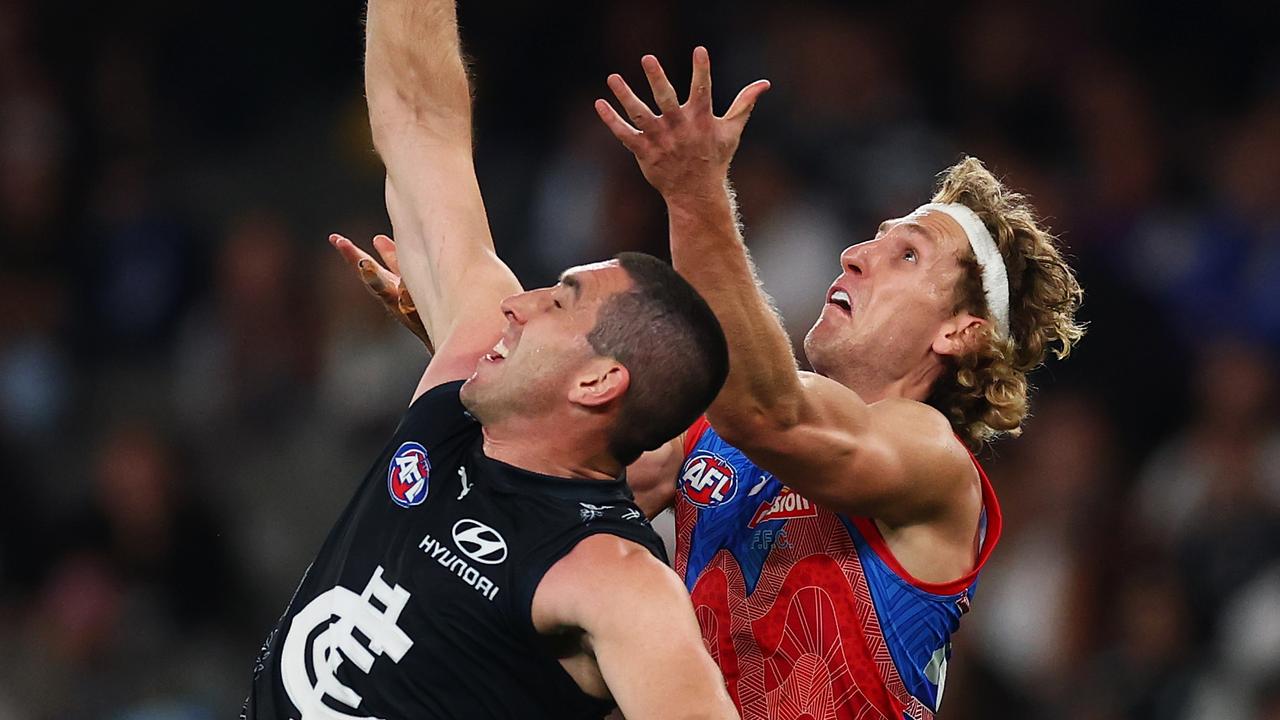
AFL 2026: Carlton is poised to regain a star defender ahead of its clash with Geelong
As the Carlton Blues prepare for one of the most challenging matches of their Australian Football League season, the club is holding out hope that star key defender Jacob Weitering will make a timely return from injury ahead of Friday night’s high-stakes clash against Geelong at the Melbourne Cricket Ground.
Weitering has been sidelined for weeks with a calf injury, but interim head coach Josh Fraser confirmed on Wednesday that the veteran backline leader is on track to prove his fitness for the blockbuster matchup. The 2024 Blues’ season has seen a sudden shift in momentum over the past fortnight: two consecutive wins have followed the abrupt departure of former senior coach Michael Voss, and the team is now gearing up to test its improved form against a powerhouse Geelong side armed with one of the league’s most dangerous forward groups.
Fraser shared that Weitering completed a full training session while the team was in Adelaide over the weekend, and the club will make a final call on his availability following a Thursday main training session. “He’s important to us – not only through his on-field performances but also his leadership,” Fraser told reporters, noting that Weitering’s presence would be critical to shutting down Geelong’s premiership-caliber attacking line, headlined by star forward Jeremy Cameron.
Alongside the anticipated return of Weitering, Fraser has highlighted the impressive early contributions of first-year defender Harry Dean, while arguing that the young talent has not received enough external recognition for his impact this season. Dean has featured in nine senior matches in his debut campaign, already taking on defensive assignments that most first-year players rarely handle. The 19-year-old has stepped up in high-pressure matchups week after week, and Fraser said his mature approach to the game has been a revelation for the club.
“I’m not sure Harry is getting enough credit externally, I think he’s been outstanding,” Fraser said. “He had a big job last week, he’s had a big job most weeks, and he’s doing a terrific amount of work for us. He plays with a maturity above his age, he brings a competitive edge to what we’re doing on-field. I’ve loved the start to his career, I think Carlton supporters should be pretty excited about the way his career is going to unfold.”
When asked about the team’s recent two-game winning streak – a better result than the club notched in its first nine rounds under Voss – Fraser pushed back on the narrative that a complete systemic overhaul has driven the turnaround. Instead, he framed the improvement as a gradual evolution of the club’s existing game plan and off-field structures, rather than a full reset.
“I like to think we’ve evolved more than we’ve changed,” he explained. “When you evolve, there are natural changes with what you do, but there’s been a strong foundation built. We’ve been able to consider what that looks like moving forward: some of the changes have been on game day, some of it has happened Monday to Friday with where we’re putting our energy and where we’re educating. It’s evolving. We’ve got a lot more steps in front of us, but there have been encouraging signs so far.”
Friday’s clash at the MCG will be the clearest test yet of whether Carlton’s recent improvement is sustainable, with a win over the top-tier Cats cementing the club’s rising status in the 2024 AFL competition.