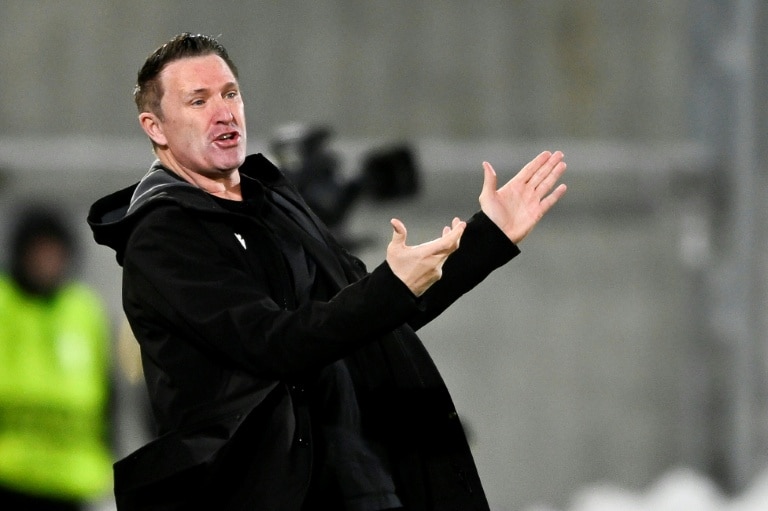
A proposed move to bring former Irish football star Robbie Keane in as the next manager of Scottish Premiership champions Celtic has triggered widespread vocal and public pushback from the club’s pro-Palestine supporter base, over Keane’s decision to remain in his role at Israeli top-flight side Maccabi Tel Aviv after the outbreak of the latest Gaza conflict. Keane, who remains the Republic of Ireland’s all-time leading goalscorer and previously enjoyed a successful loan spell at Parkhead back in 2010, has emerged as the top candidate for the vacant managerial post, with reports confirming he has already entered direct talks with Celtic’s majority principal shareholder Dermot Desmond. What was shaping up as a potential popular homecoming for the fan-favorite former player has quickly turned into a major controversy, however, rooted in Keane’s 2023-2024 tenure at Maccabi Tel Aviv. Keane was first appointed to lead the Israeli side in June 2023, months before the October 7 Hamas attacks that prompted Israel’s large-scale military campaign in Gaza. Rather than stepping down from his role immediately after the conflict began, Keane chose to see out the full domestic season, guiding Maccabi Tel Aviv to a domestic league and cup double before resigning in 2024 and taking the top job at Hungarian side Ferencvaros in 2025. He has previously defended his decision to stay, noting he felt a professional responsibility to the coaching and backroom staff he had brought with him to the club. For a large and vocal segment of Celtic’s supporter base, that choice is unacceptable. Celtic fans have longstanding and well-documented commitments to Palestinian solidarity, regularly displaying large Palestine flags at club matches throughout the ongoing conflict. In recent weeks, as rumors of Keane’s impending appointment have spread, opponents have taken visible action to make their anger known: anti-Keane graffiti and protest banners have already appeared around the perimeter of Celtic’s Glasgow stadium, Parkhead. A formal statement coordinated by the group Celtic Fans for the Liberation of Palestine argues that hiring Keane would create deep, lasting division among the club’s global support base. As of press time, 67 separate Celtic supporter groups have publicly endorsed the anti-Keane statement, via the popular North Curve Celtic account on the social platform X. The statement emphasizes that Celtic’s own founding identity is rooted in solidarity with oppressed and displaced communities: the club was established in 1887 by Irish immigrant communities in Glasgow, who carried direct intergenerational memories of the Great Famine and colonial displacement. “Celtic supporters have a long and proud history of solidarity with the Palestinian people,” the statement reads. “For us, Robbie Keane’s decision to manage Maccabi Tel Aviv during the genocide in Gaza is impossible to ignore. To choose to manage a club in Israel while, less than 40 miles away, the same country was using indiscriminate weapons of mass murder against defenceless people is unconscionable. Celtic was founded by a community shaped by the legacy of genocide, displacement and famine. Our club’s roots lie in solidarity with those who suffered injustice and oppression. We urge the Celtic board to listen to supporters’ concerns and reconsider this appointment.” The vacancy for the managerial role opened up at the end of the 2024-2025 season, with interim manager Martin O’Neill, 74, stepping in to guide the club to a Scottish Premiership title and Scottish Cup victory on a temporary basis after the departure of the previous permanent manager.
标签: Oceania
大洋洲
-
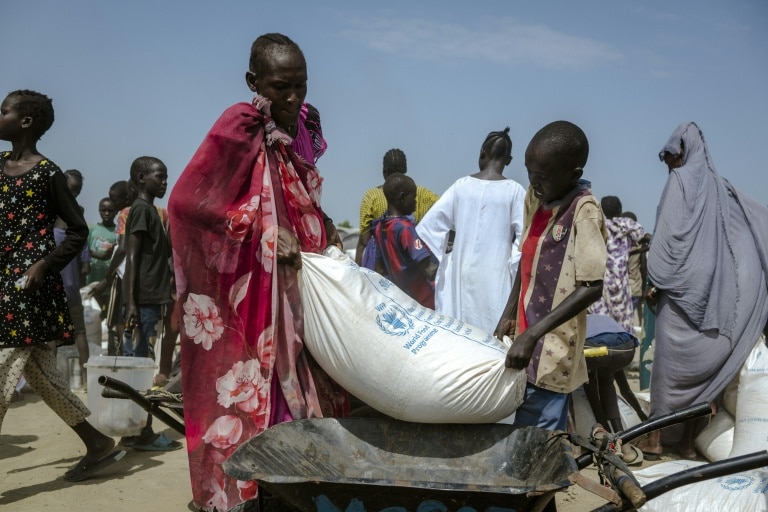
Feared global hunger crisis ‘coming to pass’ as Mideast war lingers: UN
Three months into the ongoing Middle East conflict sparked by cross-border strikes in late February, the United Nations World Food Programme (WFP) confirmed Friday that dire earlier predictions of a soaring global hunger crisis are no longer a hypothetical threat — they are becoming reality.
When the conflict first erupted and roiled global energy markets, WFP analysts issued a stark warning in March: if oil prices held steady near $100 per barrel through the end of June, an additional 45 million people across the world would fall into acute food insecurity. That would add to the nearly 320 million people already facing urgent hunger at the start of 2026.
Weeks of fraught negotiations, marked by hostile rhetoric and repeated outbreaks of violence, have failed to secure a ceasefire deal that would reopen the Strait of Hormuz, the world’s most critical chokepoint for global oil supplies. Jean-Martin Bauer, director of WFP’s food and nutrition analysis service, told reporters that the worst-case scenario the agency warned of is now materializing. “The closure of Hormuz is translating into increased hunger,” he explained, noting that prices for staple foods including wheat and rice have skyrocketed as costs are passed down global supply chains. “Unfortunately, the pessimistic projections that were made earlier this year are coming to pass, and we need to act.”
The crisis has sent shockwaves far beyond the Middle East, generating cascading cross-border spillovers that hit vulnerable nations the hardest through fuel price hikes, food inflation, lost income, and disrupted trade routes. When these new pressures combine with pre-existing structural vulnerabilities in low-income nations, they rapidly erode food security and livelihoods, WFP’s analysis found.
Take Somalia as a pressing example: the East African nation already has 6 million people facing acute hunger. By the end of 2026, WFP projects an additional 2.5 million Somalis will be unable to cover their basic food needs, pushing the share of households unable to afford essential goods to nearly 60%, up from 47% in 2025.
Bauer warned the world is now facing a return to the crippling global cost-of-living crisis that followed Russia’s 2022 full-scale invasion of Ukraine. But unlike 2022, when the global humanitarian community was able to mobilize rapid, well-funded support, the system is now stretched thin by deep cuts to international aid funding, particularly following U.S. policy shifts after Donald Trump’s return to the White House. “In 2022, humanitarian programmes were better funded. Humanitarians were in places where they are no longer,” Bauer said.
Compounding this strain, logistical disruptions and broad inflation tied to the Middle East conflict have pushed up the cost of delivering aid worldwide. WFP’s analysis warns the humanitarian system is facing an unprecedented double squeeze: rapidly growing demand for assistance paired with soaring delivery costs, which has created major gaps in coverage. The agency now expects to serve 1.5 million fewer people in 2026 than its original planning target. If the conflict drags on for six months, more than 9 million vulnerable people could lose critical food assistance entirely.
In Somalia alone, the WFP risks completely running out of food to distribute within months, Bauer revealed. The agency is bracing for a “pipeline break” as soon as next month, when no food will be available to distribute to vulnerable communities. The hardest hit will be young children under five, a group already at extreme risk of malnutrition, and one Somali district already faces an active threat of famine. “This is a very serious situation that requires immediate attention,” Bauer said.
With no clear path to a ceasefire in the Middle East, the global food security outlook is likely to worsen further before it improves. The conflict is far from the only threat facing global food systems, Bauer added: a high-likelihood strong El Niño event is on track to supercharge climate instability in the coming months, which could further disrupt crop production and food markets, adding more pressure on vulnerable populations through 2027.
-

Serena Williams’ comeback to continue in Berlin
Tennis icon Serena Williams is continuing her highly anticipated return to professional tennis, with organizers of the Berlin WTA Open confirming Friday that the 44-year-old American will compete in the tournament’s women’s doubles draw this June. This marks the next stop on Williams’ comeback trail, nearly four years after she stepped away from full-time competitive play.
In an official statement released alongside the announcement, Williams emphasized the significance of adding each new stop to her comeback schedule. “Every tournament I add to my schedule right now is special, and Berlin is no exception,” she said. “I look forward to playing in front of the German crowd and continuing to build momentum for the grass-court season.” Organizers noted that Williams’ doubles partner will be revealed at a later date, as preparations for the event continue to take shape.
The confirmation comes just days after Williams announced her return to the tour earlier this week, confirming she will kick off her comeback at London’s Queen’s Club tournament, which gets underway on June 8. The Berlin Open, hosted in Germany’s capital, is scheduled to open its doors on June 15, serving as a key traditional warm-up event for the 2025 Wimbledon Championships that kick off on June 29. This year’s edition of the Berlin tournament already boasts an incredibly competitive field, with nine of the top 10 players on the WTA tour set to compete at the west Berlin venue.
Williams’ most recent full-time tour appearance came more than two years ago, when she bowed out in the third round of the 2022 US Open, in what was widely expected to be her final professional tournament. After stepping away to focus on other pursuits and family, her surprise comeback has sent shockwaves of excitement through the global tennis community.
Following the Berlin event, Williams will have two additional pre-Wimbledon tune-up tournaments to refine her form: one in Bad Homburg, Germany, and another in Eastbourne, England, before she competes at the All England Club. For Williams, Wimbledon has long been one of the most successful stops of her legendary career: she has claimed seven singles titles and six doubles titles at the grass-court Grand Slam over the course of decades on the tour.
-

US Senate approves $70 billion for Trump immigration crackdown
In a pivotal legislative vote held on Friday, the U.S. Senate has passed a $70 billion funding package to advance former President Donald Trump’s hardline immigration enforcement agenda, capping off a full day of fractious amendment votes that laid bare deep internal divisions within the Republican Party over several of the Trump’s most controversial policy proposals.
The legislation would allocate sustained funding to U.S. Immigration and Customs Enforcement (ICE) and the U.S. Border Patrol for the remainder of Trump’s current term, delivering the Republican leader a long-sought major victory on one of his signature policy issues. This outcome follows months of bitter partisan conflict over the future direction of U.S. immigration enforcement. Next, the bill will move to the House of Representatives, where top Republican leaders are pushing to hold an early vote next week to finalize the measure and send it to Trump’s desk for signature.
Friday’s vote comes in the wake of a record-breaking partial shutdown of the U.S. Department of Homeland Security (DHS) earlier this year. That shutdown was triggered when Democrats refused to support new immigration enforcement funding without placing restrictions on controversial tactics, including immigration raids in sensitive community locations and the use of unmarked masks by enforcement officers. Republicans rejected these Democratic demands, opting instead to advance the ICE and Border Patrol funding through the fast-track budget reconciliation process, a procedural rule that allows the party to bypass Democratic opposition as long as their own caucus remains unified.
The final vote followed an hours-long, chaotic amendment process known on Capitol Hill as a “vote-a-rama,” which permits lawmakers to force roll call votes on politically charged issues ahead of the final up-or-down vote on the full bill. For Trump, the process brought renewed public scrutiny to controversial proposals that have already sparked unease among some members of his own party. These included a proposed $1.8 billion “anti-weaponization” compensation fund for allies who claim they were unfairly targeted by federal law enforcement, and a $1 billion earmark for security upgrades at a planned private White House ballroom. While the $1 billion ballroom funding was ultimately stripped from the final immigration bill, both proposals have become flashpoints for broader Republican anxiety about defending Trump’s policy priorities ahead of upcoming midterm elections, where voter anger over the rising cost of living is expected to dominate the campaign landscape.
The bill’s passage had already been delayed for weeks after a rebellion within the Senate Republican caucus over the Justice Department’s proposed $1.8 billion anti-weaponization compensation package. Critics across the political spectrum have slammed the fund as an unaccountable “slush fund” that could potentially divert taxpayer money to people convicted of crimes related to the 2021 attack on the U.S. Capitol. Acting Attorney General Todd Blanche told lawmakers earlier this week that the Trump administration would not move forward with implementing the fund. Despite this public statement, Trump himself has continued to praise the proposal, calling it “beautiful” and saying he would need to “ask the lawyers” to confirm whether the plan was fully scrapped or just temporarily paused.
This deliberate ambiguity from the president pushed a bloc of Senate Republicans to support a Democratic amendment that would codify the fund’s elimination into law. “When you’re explaining, you’re losing. There’s no way to explain the $1.776 billion fund. So the only way you can explain it is explain that you got rid of it,” North Carolina Senator Thom Tillis told reporters Friday. While the string of amendment votes ultimately failed to derail Trump’s broader immigration agenda, the outcomes exposed clear limits to Republican party discipline: multiple GOP senators defected from the party line on votes targeting the anti-weaponization fund, the scrapped ballroom security funding, and Trump’s recent move to install a loyalist housing official to lead the U.S. intelligence community.
For their part, Democrats leveraged the vote-a-rama process to highlight their policy priorities, introducing amendments that would redirect immigration enforcement funding toward affordable housing and other programs aimed at easing household cost burdens. Democrats argued that Republicans were prioritizing Trump’s mass deportation agenda over addressing the economic struggles of American voters. In a separate, high-profile rebuke of Trump’s foreign policy, several Senate Republicans joined Democrats to back an amendment that would bypass House Republican leadership and hold a vote on new sanctions targeting Russia over its full-scale invasion of Ukraine, paired with $8 billion in new military financing loans for Kyiv.
Republican supporters of the immigration funding bill pushed back against criticism, arguing that the new allocation was necessary to resolve the ongoing uncertainty around immigration enforcement funding left unresolved by the earlier DHS shutdown. The temporary stopgap funding measure that ended the earlier shutdown provided funding for most DHS agencies through September 30, including the Federal Emergency Management Agency, the U.S. Coast Guard, the Transportation Security Administration, and the U.S. Secret Service. However, it deliberately excluded funding for ICE and Border Patrol, setting the stage for the separate partisan battle that concluded with Friday’s Senate vote.
Friday’s outcome delivers Trump a major legislative win on his core immigration pledge, while simultaneously highlighting a persistent structural challenge for Republican congressional leaders: even with full control of both chambers of Congress, they must constantly navigate internal resistance to the political baggage tied to many of the president’s most divisive priorities.
-
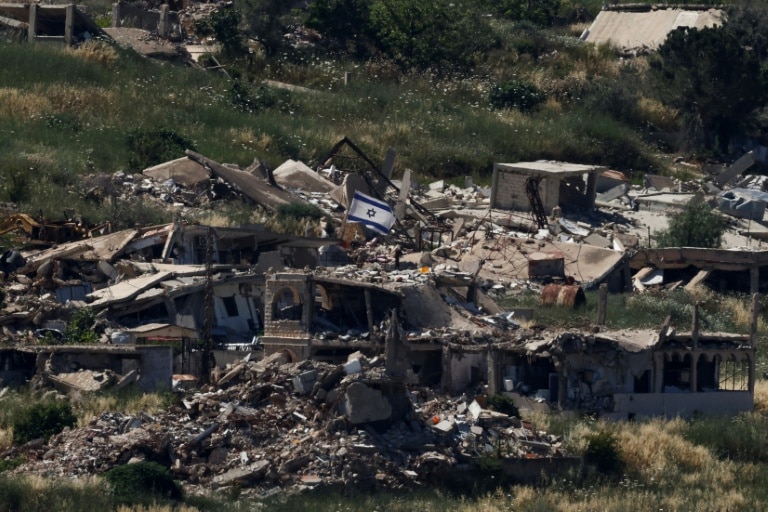
Israel strikes Lebanese village after warning to several areas
Escalating tensions across the Israel-Lebanon border boiled over on Friday, as the Israeli Air Force carried out an airstrike on a southern Lebanese village just hours after the military ordered mass evacuations of multiple population centers. The strike comes after Iran-aligned militant group Hezbollah rejected a conditional ceasefire agreement hammered out by Lebanese and Israeli negotiators in Washington this week, derailing a rare diplomatic push to de-escalate a conflict that has already claimed thousands of lives.
The cross-border violence erupted on March 2, when Hezbollah launched coordinated attacks on Israeli targets to avenge the killing of Iran’s supreme leader on February 28, dragging Lebanon into the broader regional war that Israel and its key ally the United States launched against Iran. Since that opening strike, Israel has pushed into southern Lebanon with its deepest ground incursion in 20 years, steadily expanding its military operations across the border region.
In the lead-up to Friday’s strike, Israeli military spokesman Avichay Adraee, who handles communications in Arabic, issued multiple urgent evacuation orders. First, he called on residents of three villages north of the Litani River to leave their properties immediately, before expanding the warning to six additional towns and villages, including the coastal town of Sarafand located between Tyre and Sidon. Posting on social platform X, Adraee emphasized the risk to civilian life, writing: “For your safety, you must evacuate your homes immediately and move away from the villages and towns by at least 1,000 metres into open areas. Anyone who is near Hezbollah operatives, their facilities, or their weapons endangers their life!”
Lebanon’s state-run National News Agency confirmed that thousands of civilians fled the three villages named in the initial warning, and later verified that an airstrike had hit the village of Arqoun. Overnight strikes across southern Lebanon’s coastal city of Tyre left seven people dead, a Lebanese civil defence source confirmed to Agence France-Presse. One of those strikes hit near Jabal Amel hospital in central Tyre, killing four people, wounding seven, and causing minor damage to the medical facility. A second strike on a nearby residential neighborhood killed three more people, including two children, and wounded five others. An AFP correspondent reporting from the scene found a local bank, one of only three operating in the city, left heavily damaged by the blast.
Hezbollah’s leader Naim Qassem explicitly rejected the Washington-brokered truce during a public address on Thursday, rejecting the conditional deal that required the group to halt all cross-border attacks on Israel. “The ceasefire must be comprehensive… without the Israeli enemy having the freedom to kill,” Qassem said, adding that he urged the Lebanese government to end “the farce and humiliation called direct talks” with Israel. The group has maintained its demand for a full, permanent ceasefire and a complete withdrawal of all Israeli military forces from southern Lebanon.
Israeli Defense Minister Israel Katz responded by confirming that military operations would continue uninterrupted. “At this stage, [the army] will continue its fire and ground operations… without the return of the population, while continuing to dismantle terrorist infrastructure,” Katz said, adding that Israeli forces retain full authority to strike targets as far north as the Lebanese capital Beirut if Hezbollah continues attacks on Israeli civilian communities.
The escalating airstrikes and evacuation orders have sparked a humanitarian crisis across southern Lebanon. After Israel ordered most of Tyre’s population to evacuate, hundreds of displaced residents fled to the city’s small, historic old town, which had not yet faced evacuation warnings or strikes and is home to Lebanon’s Christian community in the area. With all official shelters already filled to capacity, many displaced people have been forced to sleep in their cars or improvised tents. Earlier this week, the Israeli military claimed Hezbollah operatives were operating in the old town, threatening to order a full evacuation if the militants remain, pushing hundreds more residents to flee the area.
Hezbollah has held a unique position in Lebanese politics since the end of the 1975-1990 civil war, as the only militant faction that refused to disarm, arguing that its arsenal was necessary to oppose Israeli occupation of southern Lebanon. After Israeli troops fully withdrew from the region in 2000, international and domestic pressure for Hezbollah to disarm grew steadily, with current Lebanese President Joseph Aoun’s administration taking the hardest line to date on the issue. The Lebanese government has formally declared Hezbollah’s independent military activities illegal, and the Lebanese Army had been working to disarm the group in areas south of the Litani River near the Israeli border prior to the outbreak of the current conflict.
Since Hezbollah recommenced hostilities in March, joining the regional war against Israel alongside Iran, cross-border exchanges of fire have killed more than 3,500 people in Lebanon alone, according to official data from the Lebanese Ministry of Health. For civilians on both sides of the border, the collapse of the latest truce effort has erased any remaining hope of a quick end to the violence. “We can’t keep doing this,” a 60-year-old resident of Shlomi, a small town in northern Israel, told AFP. “This is not a life.”
-

Judge urges Melbourne orchestra and pianist to resolve case over Gaza comments without him
A high-profile legal dispute between award-winning British-Australian pianist Jayson Gillham and the Melbourne Symphony Orchestra (MSO) has hit a key juncture, with the presiding judge urging both parties to negotiate a private resolution rather than waiting for a formal judicial ruling. The three-week trial concluded last Friday, and Justice Graeme Hill opted to adjourn the case to give the two sides additional time to reach a negotiated settlement.
The conflict stems from a brief on-stage statement Gillham delivered during an August 11, 2024, Melbourne performance. In his remarks, Gillham noted that more than 100 Palestinian journalists had been killed by Israeli forces since the outbreak of the Gaza war in October 2023, adding that many of these deaths constituted targeted assassinations of media workers who were clearly identified as press, traveling in marked vehicles or wearing identifiable press jackets. Gillham told the 150-person audience that the deliberate killing of journalists qualifies as a war crime under international law, carried out to suppress the documentation and public dissemination of war crimes to the global public.
Independent press freedom advocacy group the Committee to Protect Journalists has since updated its tally, confirming that at least 206 journalists have been killed in Gaza since the war began. Three audience members submitted formal complaints about Gillham’s comments, prompting MSO leadership to cancel a subsequent performance Gillham was scheduled to give just four days later, on August 15, 2024. The cancellation triggered more than 500 new complaints against the orchestra, and MSO ultimately canceled the entire concert over unsubstantiated public safety concerns.
The orchestra later acknowledged it made an error in canceling Gillham’s performance and stated it was working to reschedule the show. But Gillham argues the organization rejected all of his reasonable proposals to remedy the situation, leading the pianist to file a workplace discrimination lawsuit against MSO in late 2024. At the time of the cancellation, MSO said in a public statement to patrons that Gillham’s unsolicited remarks caught the organization off guard and put it in an untenable position, adding that the orchestra does not permit its stages to be used as platforms for personal political commentary.
Gillham’s legal team argues that his on-stage statement fell under his protected workplace right to express political beliefs, a right enshrined in anti-discrimination law in the Australian state of Victoria. Under Victorian law, employers are prohibited from retaliating against or mistreating workers for their legally held political convictions. During the trial, Gillham told the court that after the initial cancellation and public backlash, MSO offered to reinstate his performance only on the condition that he refrain from making any political comments on stage. In her closing arguments, Gillham’s barrister Sheryn Omeri called MSO’s conditional offer of reinstatement insulting.
Representing the orchestra, MSO’s barrister Justin Bourke KC framed the organization’s decision as a reasonable response to an extremely high-pressure situation. “You can’t ignore that it was a highly controversial statement made in a setting where this was the biggest issue in the world,” Bourke told the court.
Nearly two dozen witnesses testified during the three-week trial, including Gillham himself and multiple former senior MSO executives. Justice Hill noted that two previous attempts at an out-of-court settlement between the two parties had already failed. While the judge said he typically issues rulings relatively quickly after a trial concludes, he emphasized that this complex, high-stakes case is not an ordinary matter. “I’m afraid it might take me some time to go through everything and work out the right answer,” the justice said. Adjourning the case, he explained that the additional time would give both parties the space to reconsider a negotiated settlement, rather than forcing the court to hand down a binding ruling that could leave one side deeply unsatisfied.
-
Turkmenistan’s ‘heavenly’ horses at the heart of fervent state cult
Against the backdrop of the tightly controlled desert nation of Turkmenistan, one of the world’s most closed countries, the annual Akhal-Teke horse beauty pageant unfolds as a uniquely vivid display of national and political culture. On the arena floor of the capital Ashgabat’s modern equestrian complex, trainers in ornate traditional uniforms trimmed with white fur headgear lead stallions draped in gold ornamentation around the stage, watched by thousands of attendees and presided over by current President Serdar Berdymukhamedov, the son of former leader and self-styled ‘Father of the Nation’ Gurbanguly Berdymukhamedov.
AFP journalists were granted rare access to the 2024 pageant, a privilege rarely extended to foreign media in the authoritarian Central Asian state. As crowds of men in identical tracksuits waved national flags and clapped in synchronized rhythm, sand-colored stallion Hankerven – adorned with gemstone jewelry and a hand-woven traditional Turkmen carpet – took home the competition’s top honor. For local breeders and citizens, the pageant is far more than a livestock event: it is a celebration of the breed that sits at the core of modern Turkmen national identity.
“There are no beauty contests for women in Turkmenistan but there are for horses,” explained 70-year-old veteran breeder Ashir during an interview at his stud farm just outside Ashgabat. “We Turkmen are known for our carpets and horses. That is why our flag features carpet motifs and our coat of arms depicts the Akhal-Teke.”
The fervent state-sponsored focus on Akhal-Tekes, an ancient breed on the global endangered list, is largely rooted in the lifelong passion of former president Gurbanguly Berdymukhamedov, who has built the cult of the horse alongside pervasive personality cults for himself and his son, who inherited the presidency in 2022. Political criticism of the ruling father-son dynasty is banned in Turkmenistan, an energy-rich former Soviet republic that human rights monitors rank among the most isolated nations on Earth, alongside North Korea and Afghanistan.
Gurbanguly, an avid equestrian, has written multiple books celebrating the Akhal-Teke breed and even recorded a viral rap song dedicated to his favorite foal, Rovach. In the lyrics, he gushes: “You are like the wind at daybreak, you are like a cherished vision. You are an inspiration… more precious than gold.” Another of his personal horses holds a Guinness World Record for the fastest 10-meter dash on hind legs, completed in just 4.19 seconds.
State-run media regularly frames Akhal-Teke conservation and breeding as a “strategic national priority” and the “unshakeable foundation of Turkmen national identity.” The country’s official 2026 motto has already been set as “Independent neutral Turkmenistan is the homeland of purposeful winged horses,” and the breed is widely known by the reverent nickname “heavenly horses,” a title drawn from an ancient myth of an Akhal-Teke outracing a falcon in a legendary contest.
With only an estimated 4,000 to 7,000 Akhal-Tekes alive worldwide, the vast majority reside in state-run Turkmen stud farms. A senior official from the State Organisation for Turkmen Horses confirmed to AFP that the breed remains “on the brink of extinction,” but credited the ruling leadership’s intense personal interest with securing its future. A major milestone for the breed came when UNESCO added the “art of Akhal-Teke horse breeding and traditions of horses’ decoration” to its Intangible Cultural Heritage List, a win that state officials call a “major achievement of national cultural policy.”
Widely celebrated for their athleticism adapted to Turkmenistan’s harsh desert climate, Akhal-Tekes excel in endurance riding, dressage, and show jumping. Retired 66-year-old veterinarian Sapargeldy, who spoke to AFP on condition of not sharing his surname, described the breed’s distinctive physical traits: “large size, long legs, well-developed musculature, slender and elegant head set on a long, straight neck, expressive eyes, high withers and sturdy hooves.” The breed’s most famous feature, he added, is its unique metallic sheen in sunlight, caused by fine, hollow-core hairs that reflect light differently than other equine breeds.
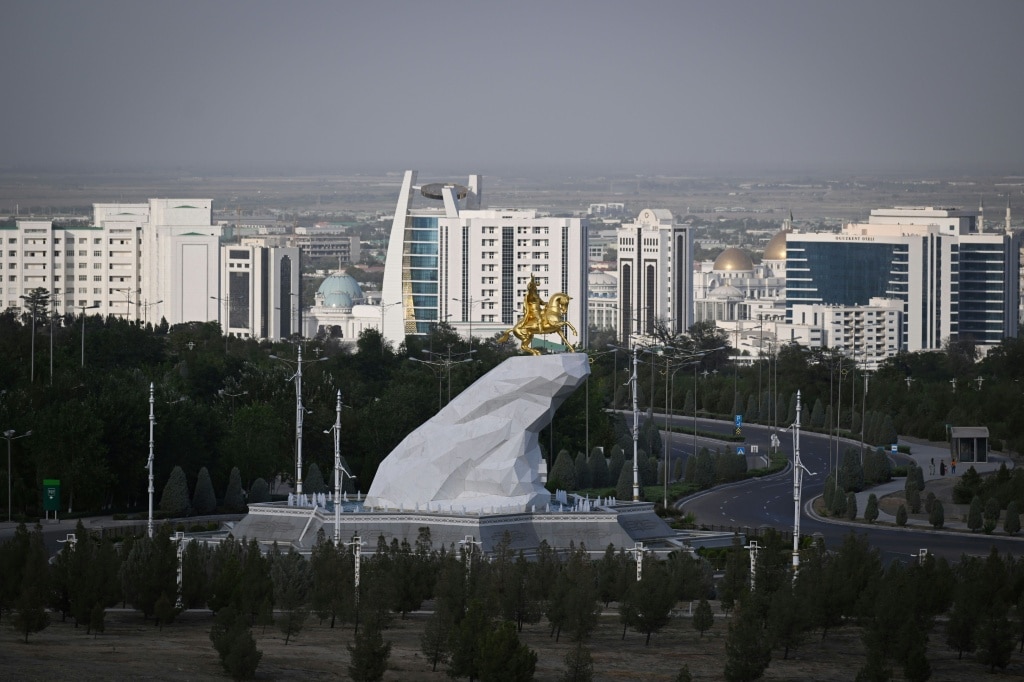
The Turkmen government traces its celebration of the Akhal-Teke back to pre-colonial nomadic traditions, when tribes roamed the Central Asian desert before the Russian Empire conquered the region in the 19th century. But in modern Turkmenistan, the horse cult is deeply intertwined with the ruling regime’s politics: monuments to Akhal-Tekes dot every major city, and in 2023 Gurbanguly unveiled a 43-meter-tall golden statue depicting himself riding an Akhal-Teke in a pose modeled after Napoleon Bonaparte.
The breed also plays a central role in Turkmenistan’s limited diplomatic engagement with the world. When rare high-level foreign dignitaries visit the isolated country, they are often gifted a purebred Akhal-Teke as a gesture of goodwill. Past recipients include former French President Francois Mitterrand, Russian President Vladimir Putin, and Chinese President Xi Jinping.
-
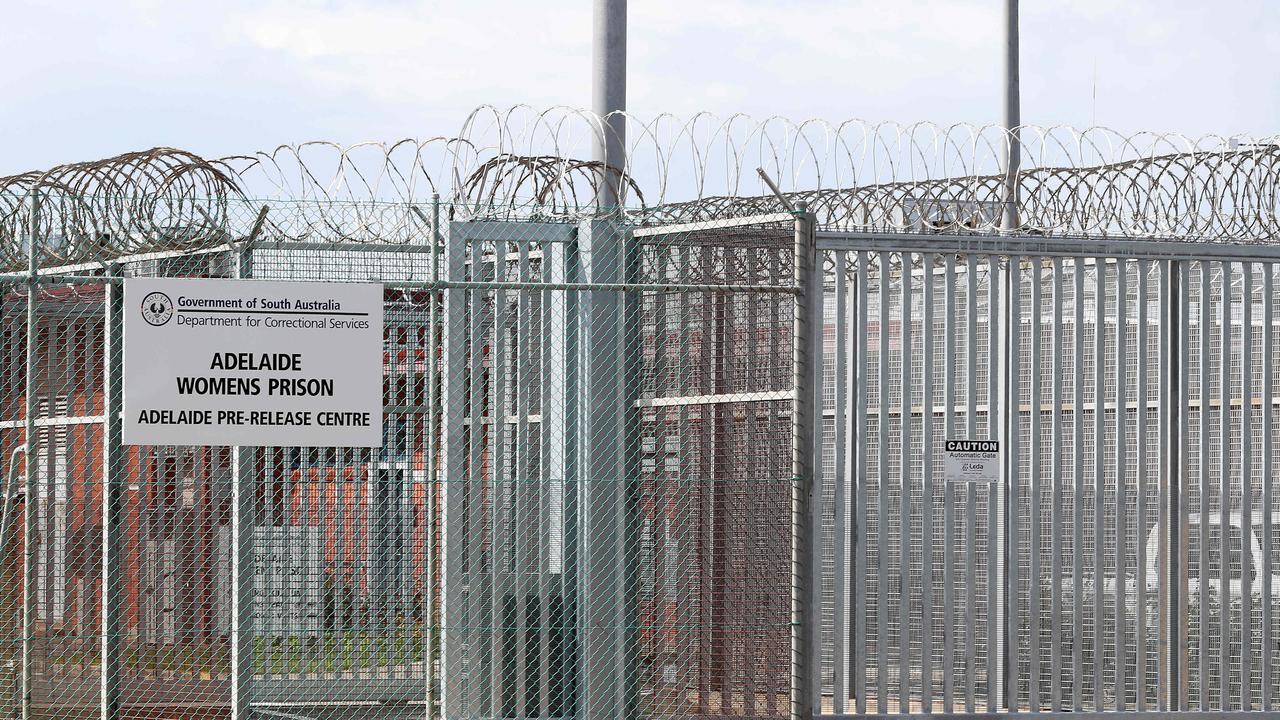
Adelaide prisoner escapes jail, returns two hours later with booze
A peculiar security lapse at an Australian women’s prison has sparked fierce parliamentary scrutiny over the state of correctional facility safety in South Australia, after an inmate walked away from a minimum-security prerelease unit and returned two hours later with a hidden cache of alcoholic beverages.
The unusual incident unfolded last week at the Adelaide Women’s Prison, where the unidentified prisoner left the facility’s prerelease center without any escort or authorization. She remained outside correctional custody for two full hours before voluntarily returning to the site—smuggling in multiple bottles of alcohol hidden on her person.
The breach came to a head on Thursday, when Correctional Services Minister Michael Brown faced intense questioning from parliamentary members over the mishap, an event that has reignited widespread public debate about whether the state’s prison system can guarantee adequate safety for both the public and people incarcerated within the system.
While Brown acknowledged that the unapproved absence of an incarcerated person is a serious issue that demands full investigation, he pushed back against growing criticism that the incident points to systemic failure across South Australia’s correctional network. He told parliament the security breach was a single, isolated case, not evidence that all state prisons are fundamentally insecure.
“I can give a full assurance to the people of South Australia that our correctional service delivers complete protection to the broader community,” Brown stated in his address. “I am not seeking to downplay the severity of what happened—any unapproved absence from a correctional facility is a problem, which is exactly why a formal review is already underway. At the same time, we must keep this incident in context: this was an individual from a minimum-security prerelease center who was only absent for two hours. There is no need to exaggerate the situation and stoke unnecessary fear among community members.”
But opposition leaders have rejected the minister’s framing, warning that the lapse exposes dangerous gaps in facility security. Opposition correctional services spokesman Tim Whetstone questioned what could have happened if the inmate had chosen to smuggle in something far more dangerous than alcohol. “What protocols are in place to stop an inmate from sneaking back into the facility with a weapon?” Whetstone asked, adding that this incident is far from an isolated one.
“This is not the first time a prisoner has managed to leave custody without permission,” he noted. “By my count, this is the second such incident in just six months.”
In response to opposition questions, Brown reaffirmed that appropriate security measures are already in place across all state correctional facilities, and the ongoing review will identify any adjustments needed to prevent similar lapses from occurring in the future.
-
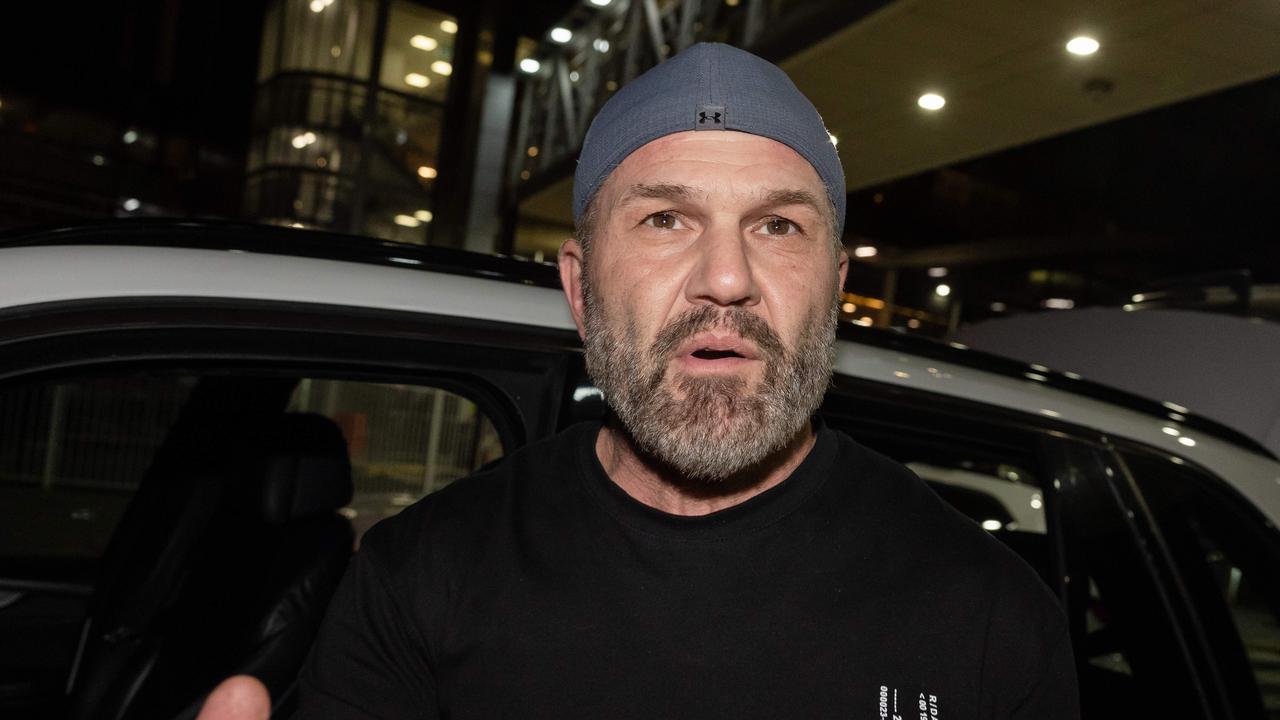
Uncle of ISIS bride Zeinab Ahmad denounces terror group as ‘evil’ in bail bid
In a historic Australian court hearing that marks the country’s first prosecution for slavery offences including crimes against humanity linked to the Islamic State (ISIS), a Melbourne mechanic has publicly condemned the terror group in unflinching terms as he pushes to secure bail for his accused niece, offering up a $75,000 financial guarantee and a permanent home in his household.
Self-employed tradesman Abraham Abbas took the witness stand on the second day of 31-year-old Zeinab Ahmad’s bail application at the Melbourne Magistrates Court on Friday. When asked directly about his stance on the terrorist organization, Abbas did not moderate his views. “I hate those bastards. Sorry Your Honour, I do,” he told the court. “Sorry for the language — they’re evil and they don’t represent anything we believe in Islam at all.” He confirmed he stood ready to house Ahmad and meet all bail conditions if the court granted her release.
Ahmad and her 54-year-old mother Kawsar Ahmad made international headlines when they touched down at Melbourne Airport on May 7 after more than 12 years living abroad. Both were immediately taken into custody on slavery and crimes against humanity charges — the first time such charges have been laid against suspects in Australia. Court documents outline that the pair had been held at the Al Roj displacement camp in northern Syria, alongside several minor family members, after surrendering to Kurdish forces following the collapse of ISIS’s final territorial stronghold of Baghouz in March 2019.
Prosecutors laid out the core allegations against the family during the opening days of the bail hearing, which began Thursday. They claim that Zeinab’s father Mohammed Ahmad, who remains detained in Iraq and has not yet been charged, purchased a 15-year-old Yazidi teenager as a slave for $10,000 in approximately June 2017. The victim was captured by ISIS as part of the terror group’s systematic ethnic and religious cleansing of the Yazidi community in northern Iraq, and was passed between 17 different ISIS fighters before being freed in 2019. In testimony before the court, Australian Federal Police (AFP) Senior Constable Marc Clendenning shared the victim’s account, which details repeated beatings, sexual assault, and forced unpaid labor at the hands of Mohammed Ahmad before she was resold to another ISIS fighter in late 2018.
While Zeinab Ahmad is not accused of directly assaulting the victim, prosecutors allege she participated in the enslavement by mistreating the teenager, ordering her to complete household labor, and failing to intervene during sexual assaults. Clendenning added that social media posts and private communications from Ahmad to relatives in Australia demonstrate what police describe as “open support for Islamic State activities, objectives, and ideological principles.”
Law enforcement has formally opposed bail, arguing that Ahmad poses an unacceptable risk to the Australian public, in large part because she has never publicly renounced her connection to the terror group. “The accused has never explicitly renounced or stated that she no longer supports the Islamic State since her surrender to Kurdish forces,” Clendenning told the court.
Court records confirm that Zeinab Ahmad first traveled to Turkey separately from her family, before relocating to Syria to join ISIS alongside her parents, husband, and other relatives in January 2015. Multiple family members, including her husband Dawod Elmir and two brothers, were killed by coalition forces between 2016 and 2017, according to testimony.
Defense lawyer Grace Morgan centered her cross-examination of Clendenning on the extreme constraints that women faced under ISIS rule, noting that Zeinab Ahmad was forced to marry three different ISIS fighters over a three-year period, a claim the officer confirmed. Morgan also pushed for details about the availability of state-backed reintegration programs and electronic monitoring that would allow for strict supervision of Ahmad if she is granted bail.
The bail application was adjourned until June 15 to allow the defense to question AFP Detective Sergeant Greg Adams, who recorded a statement from the enslaved victim in Iraq back in September 2019. The court also confirmed that domestic intelligence agency ASIO had alerted the AFP that Ahmad may hold information about another Australian family currently connected to conflict zones in the Middle East. Kawsar Ahmad, Zeinab’s mother and co-accused, is expected to file her own bail application later this June.
-
‘Justifiably grave concerns’ about ANU, but ‘nothing unlawful’, interim chancellor says
The Australian National University (ANU), one of Australia’s most prestigious higher education institutions, has been roiled by years of escalating internal controversy that culminated in the high-profile resignation of former Liberal foreign minister Julie Bishop from the post of chancellor last month. Now, the university’s acting chancellor has publicly confirmed what critics and campus stakeholders have alleged for years: the institution faces deep, systemic problems across its governance, leadership, decision-making structures, and internal culture.
Appearing before a Senate estimates hearing on Friday, Andrew Metcalfe, who stepped into the acting chancellor role following Bishop’s departure, delivered a blunt 22-word summary of the ongoing crisis that has already prompted six additional ANU Council members to resign and triggered regulatory scrutiny from the Tertiary Education Quality and Standards Agency (TEQSA). “There are justifiably grave concerns about many aspects of the governance, leadership, decision making and culture of the ANU in recent years,” Metcalfe told the committee. “It therefore follows that rebuilding confidence in the governance and leadership of ANU will require many practical actions and the resolve to sustain them.”
Bishop’s exit came after weeks of intense public scrutiny over her governance of the institution, with the former cabinet minister citing what she described as “unprecedented and co-ordinated interference” from TEQSA in the operations of ANU’s governing council. In his testimony, Metcalfe acknowledged that long-running tensions and repeated controversies have created a traumatic environment for ANU’s staff and student body, noting that many stakeholders he has spoken with described the past few years as marked by anger, disillusionment, and a sense of being undervalued. Even so, he added, the vast majority of campus community members remain deeply committed to ANU’s core academic mission and have continued their work despite the ongoing upheaval.
Years of controversy have already drawn critical scrutiny from official auditors: a scathing review from the Australian National Audit Office found ANU Council approved a controversial $250 million cost-cutting program without clear evidence the cuts were either urgent or necessary.
In the wake of Bishop’s resignation, which triggered the wave of council departures, Metcalfe confirmed ANU Council is now cooperating fully with TEQSA as it moves forward to select a permanent new chancellor. The appointment process will be overseen by a largely independent selection panel that includes Metcalfe himself, a measure he framed as a first critical step to rebuilding public and internal trust. “We believe that this largely independent selection committee is one practical way for the Council to start to earn back the trust and confidence that has been lost,” he said.
Pressed by Liberal Senator Maria Kovacic on the wave of council departures and questions over the legality of the institution’s approach to cooperating with TEQSA during the selection process, Metcalfe confirmed the council had received legal advice recommending against cooperation, but ultimately chose to proceed in what members determined was the best interest of the university. “We’re very confident we’ve done nothing unlawful. Quite to the contrary, we made a very sensible decision,” he said.
Metcalfe also publicly defended Interim Vice-Chancellor Rebekah Brown, who has faced unsubstantiated attacks in media coverage that have damaged her professional reputation. The ANU Council has formally concluded Brown “acted properly and in the best interest of the university at all times” amid what Metcalfe described as “pernicious actions” targeting the interim vice-chancellor.
Speaking after the hearing, Brown outlined the staggering tangible cost the ongoing crisis has already inflicted on the institution, projecting that reputational damage alone could reach $100 million. The harm has already impacted key revenue streams, including donor contributions and international student recruitment, which are core to ANU’s operations and financial stability. “The reputational damage to the ANU has been very significant,” Brown said. “We are still modelling the impact, some of the impacts are still live. Our modelling, from the end of last year, it’s in the reputational impact in terms of our impact on our donor pipeline and our impact on our international agents work with international student recruitment, it’s in the order of $100m.”