标签: North America

北美洲

  • Earthset and a solar eclipse: Nasa releases first images from Moon fly-by

    Earthset and a solar eclipse: Nasa releases first images from Moon fly-by

    In a landmark moment for modern human space exploration, NASA has publicly released the first never-before-seen photographs captured by the Artemis II crew during their groundbreaking flight past the Moon, offering the public an intimate, unprecedented view of our closest celestial neighbor and home planet from a human vantage point not seen since the final Apollo mission more than 50 years ago.

    Among the released images, one frame that has already drawn global attention captures what NASA describes as a quiet, stunning Earthset: our blue home planet peeking gently over the rugged, crater-pocked horizon of the Moon, a perspective that has only ever been witnessed by a handful of humans in history. A second photograph showcases a rare, spectacular solar eclipse, a sight only accessible to a crew orbiting the Moon — the lunar body perfectly aligned between the spacecraft and the Sun, completely blocking the star’s bright disk to create a singular astronomical view. A third image, nicknamed by NASA “Ready for a close up”, offers a crisp, detailed look at the Moon’s battered, ancient surface, highlighting the geological features that scientists continue to study to unlock the solar system’s history.

    The images were captured during the mission’s six-hour lunar flyby maneuver, a phase of the journey that included a period of planned radio silence when the Orion capsule passed behind the far side of the Moon, cutting off contact with ground control on Earth. According to NASA’s official timestamp, the iconic Earthset photograph was shot through one of Orion’s observation windows at 18:41 Eastern Daylight Time (23:41 BST) this past Monday.

    In its detailed official description of the frame, NASA explained that the shadowed portion of Earth in the image is in the grip of nighttime, while the sunlit hemisphere clearly shows swirling cloud systems stretching across Australia and the Oceania region. In the immediate foreground of the photograph sits Ohm crater, a well-preserved complex impact crater marked by distinct terraced edges and a relatively flat floor split by sharp, raised central peaks. NASA added that these central peaks form when the asteroid or comet impact that creates the crater temporarily liquefies the lunar surface, which then rebounds upward to form the raised central rock formations after the initial impact.

    The agency has not yet confirmed which of the four Artemis II crew members took the photographs, as the mission is currently on its return trajectory toward Earth, with splashdown planned in the coming days. The Artemis II mission is the first crewed test flight for NASA’s Artemis program, which aims to land the first woman and first person of color on the lunar surface later this decade, establish a long-term sustainable lunar outpost, and prepare for future human missions to Mars. These first hand-held photographs from the mission are already being celebrated as a reminder of the power of human space exploration to connect people across the globe to the wider universe.

  • Generations leap: 50 years of the unbroken lion

    Generations leap: 50 years of the unbroken lion

    Fifty years ago, a Chinese master named Wan Chi Ming carried a centuries-old cultural inheritance across continents and planted its roots in the heart of New York City. This year marks the golden anniversary of that momentous journey, and the legacy Wan brought to the United States remains as vibrant and resonant as ever: the roar of the traditional Chinese lion dance still echoes across New York’s communities, unbroken by five decades of change.

    Wan’s line of transmission stretches all the way back to the legendary Chinese martial artist Wong Fei-hung, a icon of kung fu and folk culture whose legacy has been preserved carefully through successive generations of practitioners. When Wan chose to build a new life in New York after being born and raised in China, he did not leave his cultural heritage behind. Instead, he committed himself to sharing this centuries-old tradition with new audiences in the United States, and to passing his skills and knowledge down to a new generation of learners rooted in American life.

    Today, half a century after Wan first brought the legacy to New York, that commitment has borne lasting fruit. Young New Yorkers from different backgrounds now step into the role of the lion, learning the intricate movements, the cultural significance, and the core values that have defined the tradition for hundreds of years. For these new practitioners, the lion dance is far more than a performance art—it has become a space to connect with their cultural roots, to build community, and to discover their own sense of identity. What began as one man’s promise to preserve his ancestral tradition has grown into a living, evolving practice that continues to thrive across generations, proving that authentic traditional spirit never fades when it is nurtured and passed forward.

  • Artemis II astronauts further from Earth than any human ever

    Artemis II astronauts further from Earth than any human ever

    A new chapter in human deep space exploration was written on April 6, 2026, when the four-person crew of NASA’s Artemis II mission broke the long-standing record for the farthest distance humanity has ever traveled from Earth. The milestone toppled a mark that had stood for more than half a century, set by the Apollo 13 mission all the way back in April 1970.

    NASA confirmed the record fell at 1:57 p.m. Eastern Time, when the agency’s Orion capsule surpassed the 400,171-kilometer distance mark logged by Apollo 13. By roughly 7:02 p.m. ET that same day, the mission reached its maximum distance from our home planet: 406,771 kilometers. That puts the Artemis II astronauts 6,600 kilometers farther from Earth than the Apollo 13 crew ever traveled, cementing the new historic milestone.

    The international crew comprises Commander Reid Wiseman and Pilot Victor Glover, both from NASA, along with NASA Mission Specialist Christina Koch and Canadian Space Agency Mission Specialist Jeremy Hansen. By the time the record was set, the team had already wrapped up its planned lunar observation phase and begun the journey back toward Earth. Per NASA’s mission timeline, Orion is scheduled to exit the Moon’s gravitational sphere of influence at approximately 1:25 p.m. Eastern Time on April 7.

    The 10-day mission launched from NASA’s Kennedy Space Center in Florida on April 1, kicking off what would become a history-making voyage. After spending roughly 25 hours in a stable Earth orbit to conduct initial system checks, Orion departed for its lunar approach on the evening of April 2. Early on April 6, the spacecraft entered the Moon’s sphere of influence, the point where the Moon’s gravitational pull becomes stronger than Earth’s, clearing the way for its close lunar flyby.

    During the pass, Orion came within 6,550 kilometers of the lunar surface, the closest approach of the entire mission. The seven-hour observation window gave the astronauts an unprecedented opportunity to map and study lunar terrain up close, including regions on the Moon’s far side that never face Earth and had never been viewed directly by human eyes before this mission.

    At roughly 6:44 p.m. ET on April 6, as Orion passed behind the Moon from the perspective of ground control on Earth, the crew entered a planned 40-minute communications blackout. The blockage of radio signals by the lunar mass was fully expected by mission planners, and the event proceeded without any unexpected complications.

    Like the Apollo 13 mission before it, Artemis II uses a free-return trajectory around the Moon, a path that uses gravitational pull to naturally return the spacecraft to Earth without requiring major additional engine burns. For Apollo 13, this trajectory was an unplanned emergency route after an oxygen tank explosion aborted the mission’s planned lunar landing in 1970. For Artemis II, the path was intentionally selected as part of the mission’s test objectives.

    Unlike both Apollo 13 and later Apollo landing missions, Artemis II does not include a planned lunar landing. The crew is on track to splash down in the Pacific Ocean off the coast of San Diego, California, on the evening of April 10, wrapping up the 10-day test flight.

    As the first crewed mission of NASA’s Artemis lunar exploration program, which was first announced in 2019, Artemis II carries critical objectives beyond just setting a distance record. The mission is designed to test and validate the full suite of technologies and capabilities needed for future long-duration deep space and lunar missions, most notably verifying the performance of Orion’s life support systems that keep astronauts alive on deep space voyages. The flight also gives the crew the chance to practice operational protocols that will be essential for upcoming landing missions under the program.

    NASA completed the first mission in the Artemis program, an uncrewed test flight that circled the Moon, in November 2022. In February 2026, the agency released an updated timeline for the program that adjusted future mission goals, delaying the first crewed lunar landing from 2027 to 2028 and adding an additional test mission to the sequence. Under the revised plan, Artemis III will now focus on testing new systems and operational capabilities in low Earth orbit in 2027, paving the way for the Artemis IV crewed lunar landing mission in 2028.

  • OpenAI encourages firms to trial four-day weeks to adapt to AI era

    OpenAI encourages firms to trial four-day weeks to adapt to AI era

    As artificial intelligence grows increasingly integrated into global workplaces and its capabilities advance at an unprecedented pace, OpenAI, the developer of the widely used ChatGPT platform, has laid out a series of people-first policy recommendations urging employers across industries to test the feasibility of a four-day workweek with no corresponding cut to worker pay.

    Outlined in OpenAI’s new policy paper *Industrial Policy for the Intelligence Age*, the proposals are framed as a starting point for urgent global discussions on how societies can adapt to the coming AI transformation— a shift the company acknowledges will bring widespread benefits to productivity and innovation, but also significant disruptive change to existing labor markets and career trajectories.

    OpenAI argues that ongoing advances in AI are rapidly cutting down the time required to complete many common work tasks, bringing a full transition to advanced AI systems into closer view than many policymakers and business leaders anticipate. “If progress continues, we can expect systems to be capable of carrying out projects that currently take people months,” the report notes, adding that this seismic shift will fundamentally reorganize how companies operate, how knowledge is generated, and how workers access meaningful employment and economic opportunity.

    Beyond the push for four-day workweek pilots, OpenAI has put forward a suite of additional policy and business recommendations. It calls for incentivizing companies to deliver long-lasting improvements to worker benefits, including higher retirement contributions, expanded healthcare coverage, and subsidized childcare. The company also recommends expanding job opportunities in people-centric sectors that are less vulnerable to AI displacement, such as early childhood education, childcare, and public healthcare. OpenAI adds that its initial set of proposals is primarily targeted at policymakers and business leaders in the United States, with the goal of jumpstarting broader global conversations about proactive governance of AI growth.

    The recommendations come amid ongoing, fierce debate over how AI will reshape global labor markets over the coming decades. Last December, Bank of England Governor Andrew Bailey warned that AI-driven job displacement could mirror the massive labor upheaval seen during the first Industrial Revolution, which displaced millions of traditional agricultural and craft workers over a century. This is not the first time a major AI developer has laid out a vision for social and economic policy changes to manage AI’s growing impact; OpenAI’s proposal to create a public wealth fund that would give all citizens a direct stake in AI-driven economic growth echoes nearly identical policy ideas released by competing AI firm Anthropic last October. Anthropic’s framework also called for upgrading worker training programs to prepare people for emerging AI-era jobs and expanding energy and computing infrastructure to support sustained AI development.

    Despite the warnings of widespread disruption from major AI developers, many economic analysts argue that AI’s transformative impact on jobs, productivity, and the broader economy may be much further off than tech leaders claim. In a recent research note, Adam Slater, lead economist at Oxford Economics, pointed out that most scenarios predicting rapid, transformative AI growth rely on overly optimistic assumptions about productivity gains and the speed of global AI adoption. Slater noted that while past waves of technological innovation have delivered large long-term productivity gains, these improvements often take decades to materialize across the broader economy, and can slow far more quickly than early projections predict.

    As the global AI development race accelerates—with companies pouring billions into research into even advanced systems, including hypothetical “superintelligence” that could outperform humans on most cognitive tasks— the debate over how to shape policy to mitigate harm and share AI’s benefits continues to intensify. Readers can follow the latest technology trends and breaking AI news by signing up for *Tech Decoded*, the weekly newsletter covering the global tech sector.

  • Watch: Artemis II’s historic lunar flyby… in 90 seconds

    Watch: Artemis II’s historic lunar flyby… in 90 seconds

    One of humanity’s most anticipated recent deep-space milestones, the Artemis II lunar flyby mission, has been condensed into a tight, action-packed 90-second recap that highlights the mission’s groundbreaking achievements. At the heart of this mission are four astronauts who launched aboard NASA’s Orion spacecraft, embarking on a 10-day journey around the moon that pushed human space exploration further than it has ever gone before. When the mission reached its farthest point from our home planet, the crew officially set a new world record for the greatest distance any human beings have ever traveled from Earth, capping off a historic test flight that paves the way for future lunar landings and long-term deep-space exploration. The condensed recap offers space enthusiasts and casual observers alike a quick, vivid look at the key moments of the mission, from launch to the lunar flyby and the craft’s planned return to Earth, capturing the significance of this step forward in humanity’s quest to explore beyond low-Earth orbit. As the first crewed mission to the moon in more than 50 years following the Apollo program, Artemis II represents a new era of lunar exploration, laying critical groundwork for the Artemis III mission that will see the first woman and first person of color walk on the lunar surface. This record-setting flight is more than just a test of spacecraft systems—it is a proof of concept that human crews can safely travel to deep space, opening the door for future scientific research on the moon and eventual crewed missions to Mars.

  • 1 killed, 2 injured in fire beneath bridge on Panama Canal

    1 killed, 2 injured in fire beneath bridge on Panama Canal

    A deadly blaze erupted on Monday beneath the Bridge of the Americas, the iconic crossing spanning the Panama Canal near Panama City, leaving one person dead and two others hospitalized with injuries, according to international wire service reporting from the Central American nation.

    The fire broke out involving multiple fuel trucks parked or operating under the bridge, triggering an emergency response from local safety and law enforcement authorities. Details of the fire’s origin and the identities of the casualties have not yet been released to the public as of Monday’s update.

    Located at the Pacific entrance to the Panama Canal, the Bridge of the Americas is a critical piece of transportation infrastructure connecting North and South America, as well as facilitating overland access across the canal itself. The incident has raised preliminary questions about safety protocols for fuel storage and transport near major canal infrastructure, though no disruptions to canal operations have been reported in the initial wake of the tragedy.

    The Spanish news agency EFE first reported the casualty toll, with the update published by Xinhua on April 7, 2026. Local emergency teams have not yet issued a full statement on how the fire started or the extent of damage to the bridge structure, beyond confirmation of the human cost of the incident.

  • Artemis II crew surpasses Apollo 13 distance record

    Artemis II crew surpasses Apollo 13 distance record

    Fifty-six years after Apollo 13’s emergency lunar trajectory set an unrivaled milestone for human space exploration, NASA’s Artemis II mission has rewritten the history books: the four-person crew has officially surpassed the record for the farthest distance any human beings have ever traveled from Earth. The groundbreaking milestone was confirmed by NASA, clocking in at approximately 1:56 p.m. Eastern Time (1756 GMT) on Monday, April 6, 2026.

  • Trump threatens Iran could be ‘taken out’ in one night

    Trump threatens Iran could be ‘taken out’ in one night

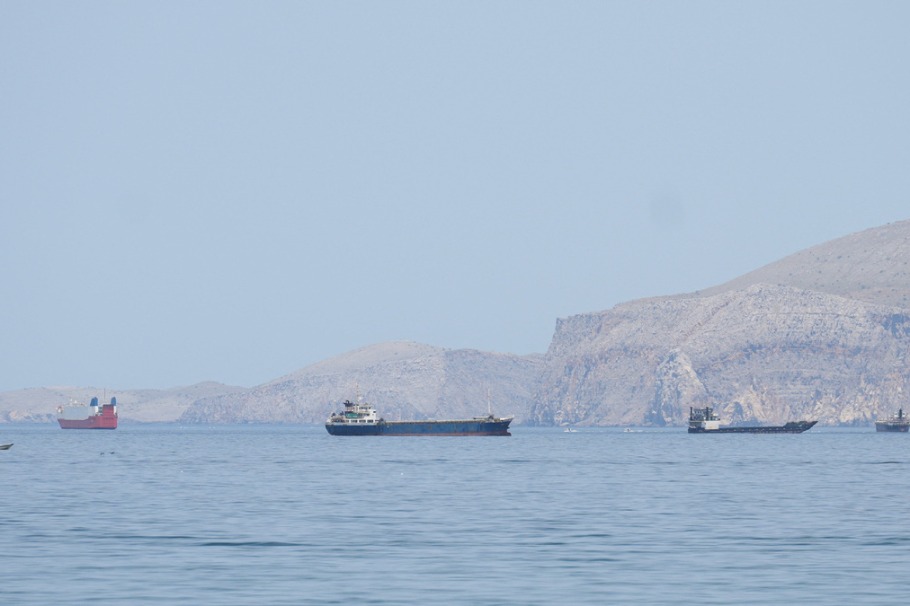
    On April 6, 2026, U.S. President Donald Trump delivered a stark public warning to Iran during a White House press briefing in Washington D.C., standing alongside newly appointed Defense Secretary Pete Hegseth. The president set a firm 8 p.m. Eastern Time deadline on Tuesday for Iran to reach a negotiated agreement and reopen the strategically critical Strait of Hormuz, threatening that the entire Iranian nation could be “taken out” in a single night of military action — a night that could fall as soon as the deadline passes.

    “The entire country could be taken out in one night, and that night might be tomorrow night,” Trump told reporters gathered in the James S. Brady Press Briefing Room. Despite the escalated threats, the president acknowledged that indirect negotiations through intermediaries have made progress, framing Iran as an “active, willing participant” in talks aimed at resolving the ongoing standoff.

    “I can’t talk about ceasefire, but I can tell you that we have an active, willing participant on the other side. They would like to be able to make a deal. I can’t say any more than that,” Trump added, confirming that the Tuesday evening ultimatum remains final. Beyond broad threats of full-scale elimination of Iranian state capacity, the president revealed his administration has a detailed operational plan to demolish critical infrastructure across Iran, targeting key bridges and power plants by midnight Tuesday if no deal is reached. “I mean complete demolition by 12 o’clock. And it will happen over a period of four hours if we wanted to. We don’t want that to happen,” he claimed, emphasizing that military action remains a preventable outcome.

    Defense Secretary Hegseth backed up the president’s threats, confirming that U.S. military forces have already ramped up offensive operations. He told reporters that Monday’s airstrikes would be the largest single wave of attacks launched since the U.S. military campaign against Iran began on February 28, with even heavier strikes scheduled for Tuesday ahead of the deadline. “Per the president’s direction, today will be the largest volume of strikes since Day One of this operation. Tomorrow, even more than today. And then Iran has a choice,” Hegseth stated.

    The escalating exchange has ratcheted up fears of a full-scale regional conflict in the Middle East, centered on control of the Strait of Hormuz — a chokepoint through which roughly 20% of global oil supplies pass, making its closure a major threat to global energy markets and international economic stability.

  • China is winning one AI race, the US another – but either might pull ahead

    China is winning one AI race, the US another – but either might pull ahead

    Seventy years ago, the most high-stakes global technological contest of the Cold War saw the United States and the Soviet Union pour billions of dollars and the world’s top scientific talent into developing increasingly powerful nuclear arsenals. Today, a new great power rivalry is unfolding, this time between Washington and Beijing, with a completely different prize at stake: global dominance of artificial intelligence (AI).

    Unlike the Cold War nuclear race, this contest plays out not just in classified government facilities, but in university research labs, the boardrooms of Silicon Valley’s most valuable startups, and the campuses of China’s leading tech hubs, with trillions of dollars of investment and the future of the global economy hanging in the balance. As University College London cognitive neuroscience researcher Nick Wright frames it, the competition can be neatly split into a battle between AI “brains” and AI “bodies” — with each power holding distinct historical advantages that are rapidly shifting as the race accelerates.

    For years, the United States has held an unchallenged lead in AI “brains”: the software, microchips, and large language models (LLMs) that power conversational AI tools like ChatGPT. The turning point for mainstream AI came in November 2022, when California-based OpenAI launched ChatGPT, the first widely accessible LLM trained to hold natural, conversational interactions with users. The launch sent shockwaves through the global tech industry, with social media flooded by users sharing innovative use cases for the new tool overnight.

    Today, OpenAI reports more than 900 million weekly users of ChatGPT — nearly one in eight people on Earth — and rivals including Google, Anthropic, and Perplexity have poured billions of dollars into developing competing LLM systems to capture a share of the emerging commercial market, which threatens to upend entire white-collar industries. But beyond commercial gain, US policymakers have framed AI dominance as a core strategic priority in the rivalry with China, with American advantage built not just on clever algorithms, but on control of the advanced hardware that powers cutting-edge AI.

    Virtually all of the world’s most advanced high-performance microchips, required to train and run large LLMs, are designed by US firm Nvidia, which in 2024 became the first company in history to reach a $5 trillion market valuation. Most of these chips are manufactured by Taiwan Semiconductor Manufacturing Company (TSMC) in Taiwan, a US ally. Washington has leveraged a decades-old framework of export controls, strengthened dramatically by President Joe Biden in 2022 as the AI race heated up, to block China from accessing these chips. The US’s “foreign direct product rule” forces even foreign manufacturers like Dutch semiconductor equipment giant ASML — the only company in the world that produces the extreme ultraviolet lithography machines required to make advanced chips — to comply with US export restrictions, blocking shipments to China.

    For years, this policy appeared to successfully lock in US advantage in AI “brains” — but in January 2025, the same week that Donald Trump was inaugurated for his second presidential term, China upended the status quo with the launch of its own conversational AI chatbot, DeepSeek. For end users, DeepSeek delivers comparable performance to ChatGPT: it can answer complex questions, write functional code, and is available entirely for free — at a fraction of the development cost of leading American LLMs.

    The launch triggered immediate market upheaval: Nvidia lost $600 billion in market value in a single day, the largest single-day loss in US stock market history. AI journalist Karen Hao argues that Washington’s export control policy may have backfired dramatically: forced to develop LLMs without access to cutting-edge American chips, Chinese developers were pushed to innovate more efficient model architectures, accelerating the country’s push for AI self-reliance.

    In Beijing, DeepSeek acted as a major catalyst for the country’s AI ecosystem, according to Selina Xu, a researcher focused on Chinese AI policy working in the office of former Google CEO Eric Schmidt. The launch also highlighted a key structural difference between the two countries’ AI industries: while US firms tightly guard AI intellectual property behind closed, proprietary systems, Chinese developers have adopted a widespread open-source approach, publishing model code publicly to allow other firms to build on existing work rather than starting new projects from scratch. As a result, Xu notes, while top American proprietary models may still hold a small quality edge, Chinese models deliver 90% of the capability at just 10% of the cost, erasing much of the US’s historical lead in AI brains.

    When it comes to AI “bodies” — the physical robotics and drones that integrate AI into real-world tasks — China has held the upper hand for more than a decade. Beginning in the 2010s, the Chinese government poured billions of dollars in subsidies into robotics research and manufacturing, leveraging the country’s position as the world’s leading manufacturing hub to build a dominant domestic industry. Today, China is home to more than two million working industrial robots — more than the rest of the world combined — and international visitors to major Chinese cities are often surprised by how fully integrated robots are into daily life, from autonomous drone food deliveries to automated retail restocking.

    China has made particularly rapid progress in humanoid robots, human-shaped machines designed to replicate human movement and task performance. A 2025 report from the bipartisan US think tank Center for Strategic and International Studies highlighted a fully automated “dark factory” in Chongqing, where 2,000 robots and autonomous vehicles work together to roll a new car off the production line every minute, capable of operating 24/7 without any human staff. Facing a rapidly aging population that will see more than 300 million people aged 60 or older by 2035 — a total larger than the entire current population of the United States — the Chinese government sees humanoid robots as a critical solution to filling labor gaps in manufacturing and elder care. Today, China controls 90% of global exports of humanoid robots.

    Even with this lead in physical robotic systems, however, China still faces a gap when it comes to the intelligent software “brains” that enable robots to carry out complex, variable tasks. Simple repetitive industrial tasks only require basic control software, which China can produce domestically, but advanced robots capable of adapting to unstructured environments need agentic AI — a form of AI that can operate as an independent actor to complete multi-step assignments without constant human input. For this high-value AI software, Wright notes, the United States still holds a clear lead — and 80% of a robot’s total value comes from its brain, not its body.

    Today, both powers are racing to integrate agentic AI into physical robotic systems, and US firms have already demonstrated breakthroughs in this space. Boston Dynamics, the American engineering firm, has integrated agentic AI into its famous four-legged robot Spot, which has become a viral online sensation with millions of views of its capabilities. Spot now carries out autonomous safety inspections in industrial warehouses, detecting overheating equipment, gas leaks, and chemical spills, then feeds its findings to AI analytics software that can resolve issues without any human intervention.

    Beyond industrial applications, the fusion of AI and robotics is already transforming military conflict: last year, Ukraine deployed the Gogol-M, an AI-powered aerial mothership drone that can fly hundreds of kilometers into Russian territory, release smaller attack drones, and allow those drones to autonomously identify targets and detonate without any human guidance.

    With no clear finish line to the AI race, it remains impossible to predict which power will come out on top, says Greg Slabaugh, professor of computer vision and AI at Queen Mary University of London. Unlike the 1969 moon landing, Slabaugh argues, AI victory will not come down to one singular, defining moment. Instead, long-term sustained advantage will depend on which country most effectively embeds AI across its entire economy and sets global standards for the technology — just as with past transformative technologies like electricity and computing, the ability to scale and adapt matters more than inventing the technology first.

    The two powers are also pursuing fundamentally different governance models for AI: large US private tech companies are pushing to speed development with minimal regulation, while China’s government places strict state oversight over all AI research. One model promises a future of hyper-charged consumer capitalism built around AI, while the other frames the technology as a tool to be directed by the state for national goals.

    Oxford Said Business School professor Mari Sako notes that each power is well-positioned to succeed under its own framework, but when two competing systems clash, the side that can win the support of global users and adopters is most likely to emerge on top. With the entire global balance of power in the 21st century hanging in the balance, this AI race could well be the contest that decides which nation emerges as the world’s leading superpower.

  • Watch: Artemis II mission loses contact with Earth for 40 minutes

    Watch: Artemis II mission loses contact with Earth for 40 minutes

    NASA’s Artemis II lunar mission faced an unexpected disruption on Tuesday when all communications between the spacecraft and ground control on Earth were cut off for nearly 40 minutes, triggering temporary concern among mission teams monitoring the test flight. The 40-minute blackout, which unfolded as the crew conducted routine system checks ahead of their planned lunar flyby, marked one of the first major unplanned technical hurdles for the Artemis program’s first crewed mission.

    Once ground controllers reestablished stable communication links with the spacecraft, astronaut Christina Koch, one of the four members of the Artemis II crew, shared her first reaction to reconnecting with mission control. “It is so great to hear from Earth again,” Koch said in remarks that were broadcast publicly shortly after contact was restored.

    Mission officials have not yet released a full public explanation of what caused the communications outage, but initial preliminary assessments indicate the issue was linked to a planned testing procedure that temporarily switched off the spacecraft’s primary communication transponders, rather than an unexpected technical failure. The Artemis II mission, which is scheduled to carry four astronauts around the moon and back to Earth later this year, is a critical precursor to the Artemis III landing mission that aims to put the first woman and person of color on the lunar surface. The mission is designed to test all of the core systems required for long-duration deep space human flight, including communication networks, life support, and navigation capabilities, ahead of future crewed lunar landing missions and eventual crewed missions to Mars.