标签: North America

北美洲

  • Trump threatens Iran’s ‘whole civilization will die tonight’ as war escalates

    Trump threatens Iran’s ‘whole civilization will die tonight’ as war escalates

    Tensions between the United States, its ally Israel and Iran have surged to a new dangerous peak after former U.S. President Donald Trump issued an unprecedented, extreme threat targeting the entire Iranian civilization. In a public post shared to his social media platform Truth Social on Tuesday morning, Trump warned that “a whole civilization will die tonight, never to be brought back again” – a comment tied to his self-imposed deadline for Iran to reach a new negotiation deal and reopen the strategically critical Strait of Hormuz. He added that while he does not want the catastrophic outcome to unfold, he believes it is likely to occur.

    The incendiary statement comes amid a rapidly deteriorating security landscape that has already pushed the long-running US-Israeli confrontation with Iran to the brink of open large-scale war. The Strait of Hormuz, a narrow waterway that connects the Persian Gulf to the Arabian Sea, is one of the world’s most vital chokepoints for global energy trade, with roughly a fifth of the world’s total oil consumption passing through the corridor daily. Any sustained closure of the strait or a full-scale military conflict in the region would send shockwaves through global energy markets and risk dragging regional and global powers into a broader, destabilizing war. As of the update on April 7, 2026, no immediate official response from Iranian authorities has been reported, and the international community is on high alert for rapid developments that could reshape global security in the coming hours.

  • Bill Gates set to testify before US Congress in Epstein investigation

    Bill Gates set to testify before US Congress in Epstein investigation

    A key development in the ongoing congressional investigation into the crimes of convicted sex offender Jeffrey Epstein has emerged, with lawmakers confirming that Microsoft co-founder and billionaire philanthropist Bill Gates will appear before the U.S. House Oversight Committee to answer questions about his past interactions with Epstein. The hearing has been formally scheduled for June 10, marking Gates as the latest high-profile public figure to commit to testifying in the probe.

    A spokesperson for Gates confirmed to the BBC that Gates “is looking forward to answering all the committee’s questions to support their important work.” To date, no accusations of misconduct related to Epstein’s crimes have been leveled against Gates by any of Epstein’s victims, and his inclusion in the investigation’s documentary record does not carry any implication of criminal wrongdoing on his part.

    Details of Gates’ communications and professional and social connections to Epstein were made public earlier this year as part of a massive document dump ordered by federal law. The U.S. Department of Justice has already released more than three million pages of records from the Epstein investigation, but millions more documents are still being held back from public disclosure. The 2024 legislation requiring the full release of Epstein investigation files was signed into law by former President Donald Trump last November, which is what paved the way for the exposure of previously undisclosed details of Gates’ relationship with the disgraced financier.

    Gates has already addressed his ties to Epstein privately and publicly on multiple occasions. During an internal meeting with staff of the Bill & Melinda Gates Foundation, Gates spoke openly about the relationship and took personal responsibility for his decision to meet with Epstein. A foundation statement following the meeting noted that “Bill spoke candidly, addressing several questions in detail.”

    According to reporting from The Wall Street Journal, Gates apologized to foundation staff for the association, and confirmed he had two extramarital affairs with Russian women that Epstein later discovered. When discussing his connection to Epstein, Gates told staff: “I did nothing illicit. I saw nothing illicit.”

    In a public interview with Australia’s 9News earlier this year, Gates expanded on his explanation of the relationship, saying his interactions with Epstein were limited to informal dinners and that he never traveled to Epstein’s private island where many of the financier’s abuses took place. “Every minute I spent with him I regret and I apologise that I did that,” Gates told the outlet.

    A subsequent statement from Gates’ spokesperson to the BBC further clarified Gates’ position, emphasizing that the Microsoft co-founder never attended social gatherings with Epstein and had no involvement whatsoever in any illegal activities linked to the late financier. “While Mr. Gates acknowledges that meeting with Epstein was a serious error in judgment, he unequivocally denies any improper conduct related to Epstein and the horrible activities in which Epstein was involved,” the spokesperson said.

    The request for Gates’ testimony, which was sent in a formal letter dated March 3, comes as the House Oversight Committee continues to gather testimony from a string of high-profile figures connected to Epstein. Former U.S. President Bill Clinton and his wife, former Secretary of State Hillary Clinton, already appeared before the committee for questioning in February. Upcoming testimony is expected from U.S. Commerce Secretary Howard Lutnick and former Florida Attorney General Pam Bondi in the coming weeks.

  • The church behind Hegseth’s crusading religious rhetoric

    The church behind Hegseth’s crusading religious rhetoric

    Long before Pete Hegseth sat for his 2025 Senate confirmation hearings to become U.S. Secretary of Defense, his deep conservative evangelical religious commitments had already sparked public scrutiny and debate. Hegseth holds membership in the Communion of Reformed Evangelical Churches (CREC), a global denomination whose core theology is shaped by the 20th-century Christian Reconstructionism movement.

    Many senior CREC leaders openly advocate for replacing secular governance with biblical law, building a theocratic state structured around Christian patriarchy. For the CREC, this theocratic model would be governed by a strict conservative evangelical reading of Christian doctrine. The denomination’s official website lists more than 160 member congregations distributed across North America, Europe, Asia, and South America.

    Hegseth’s consistent use of explicitly religious language and public prayer in his official capacity has amplified questions about how his personal theological beliefs intersect with his leadership of the U.S. military, the world’s largest fighting force. Most notably, during a March 25, 2026 prayer gathering held amid the ongoing war in Iran, Hegseth delivered a public invocation that read: “Let every round find its mark against the enemies of righteousness and our great nation.” He continued: “Give them wisdom in every decision, endurance for the trial ahead, unbreakable unity, and overwhelming violence of action against those who deserve no mercy.”

    As a scholar specializing in the study of American Christian right movements, I have closely researched the CREC, and unpacking the denomination’s history, doctrine, and controversial leadership is critical to understanding Hegseth’s public rhetoric and decision-making.

    The CREC is a transnational network of evangelical congregations most closely linked to Doug Wilson, the influential pastor who founded Christ Church in Moscow, Idaho. Christ Church functions as the CREC’s flagship congregation and de facto denominational headquarters, after Wilson co-founded the network in 1993. A third-generation evangelical who grew up in Moscow, Wilson has built an interconnected religious and educational ecosystem around the church: he founded Logos Schools (a network of private K-12 institutions and homeschool curriculum), Canon Press (a religious publishing and media company), and New Saint Andrews College, all based in the small Idaho town. Every arm of this ecosystem shares the core belief that faithful Christians exist in fundamental conflict with secular modern society.

    While Wilson is not Hegseth’s personal pastor, he is the undisputed most influential voice within the CREC, and the two men have repeatedly expressed public approval of one another’s work. In February 2026, Hegseth invited Wilson to lead a prayer service for Pentagon personnel, where Wilson told assembled service members: “If you bear the name of Jesus Christ, there is no armor greater than that. Not only so, but all the devil’s R&D teams have not come up with armor-piercing anything.” In framing the conflict this way, Wilson tied U.S. military personnel’s safety and mission success to personal Christian faith, framing the nation’s enemies as literal agents of Satan.

    As Wilson grew Christ Church into the CREC’s hub, he and his congregation have worked to transform Moscow into a model conservative Christian community, with the long-term goal of expanding the movement across the United States and beyond. “Our desire is to make Moscow a Christian town,” Wilson has stated publicly.

    CREC doctrine explicitly rejects religious pluralism and political perspectives that diverge from its strict theology. The denomination’s official mission statement commits it to “maintaining its Reformed faith, avoiding the pitfalls of cultural relevance and political compromise that destroys our doctrinal integrity.” CREC congregations adhere to a highly patriarchal reading of Christian scripture: Wilson has publicly argued that in heterosexual sexual relationships, “A woman receives, surrenders, accepts.”

    Politically, CREC theology rejects the dominant interpretation of the U.S. Constitution’s Establishment Clause, which requires a separation of church and state to protect religious freedom and bar state sponsorship of religion. As religion scholar Julie Ingersoll explains, within the CREC community, “there is no distinction between religious issues and political ones.” The denomination broadly holds that all government officials must be practicing Christians, and Wilson has gone so far as to argue that “Christians and only Christians are qualified to hold political office” in the United States.

    To expand its reach, the CREC uses a “church planting” model that lowers barriers for new congregations to join the network. Religion scholar Matthew Taylor describes the movement’s core mission: “They believe the church is supposed to be militant in the world, is supposed to be reforming the world, and in some ways conquering the world.” While the CREC lacks the mainstream name recognition of large evangelical denominations or high-profile megachurches, it has built a significant footprint across the U.S. and around the globe through this planting strategy. Unlike traditional denominations that require centralized ordination and oversight for new congregations, the CREC provides core theological materials and guidance to independent groups seeking to join the network, allowing for rapid expansion.

    As the movement has grown, it has faced growing national scrutiny and controversy. In 1996, Wilson published a book that offered a positive portrayal of chattel slavery in the American South, claiming the system cultivated “affection among the races.” The denomination has also faced national backlash over its handling of widespread sexual abuse allegations. Reporting from Vox’s Sarah Stankorb documented a pervasive culture of normalized sexual abuse and assault, particularly within marriages in CREC communities, leading to a popular podcast centered on survivors’ accounts. Wilson has denied any personal wrongdoing and has stated that abuse claims are referred to law enforcement.

    Hegseth’s high-profile policy decisions shortly after taking office in 2025 have further drawn attention to his CREC affiliation. His order banning transgender people from serving openly in the U.S. military, and his decision to strip the name of gay rights activist and former Navy service member Harvey Milk from a U.S. Navy warship, aligned with the CREC’s conservative social views, prompting critics to question the influence of his religious beliefs on military policy.

    Amid the Trump administration’s multiple ongoing military conflicts across the globe, Hegseth regularly invokes religious framing to justify U.S. military action. In a March 2026 speech to leaders from Central and South America, he defended U.S. intervention in Venezuela, the blockade of Cuba, and regional military strikes by appealing to a shared transnational Christian identity. He told the gathered leaders: “We share the same interests, and, because of this, we face an essential test – whether our nations will be and remain Western nations with distinct characteristics, Christian nations under God, proud of our shared heritage with strong borders and prosperous people, ruled not by violence and chaos but by law, order, and common sense.”

    Hegseth has also leaned heavily on religious language to frame the 2026 war in Iran, with many of his references echoing the medieval Crusades, the series of holy wars waged between Christian and Muslim forces centuries ago. Hegseth bears three tattoos tied to Christian nationalist and Crusader symbolism: one reads “Deus Vult” (Latin for “God wills it,” the original rallying cry of the First Crusade), another is the Arabic word for “infidel,” and the third is the Jerusalem cross, a widely recognized symbol of Christian nationalism. He has also published a book titled *American Crusade* that lays out his ideological framework. Framing the U.S. military campaign in Iran, Hegseth argued: “We’re fighting religious fanatics who seek a nuclear capability in order for some religious Armageddon.”

    As long as Hegseth leads the Defense Department, his affiliation with the CREC and consistent use of religious framing will remain a key lens through which to analyze U.S. military policy and conflict management at home and abroad. This analysis is written by Samuel Perry, associate professor of rhetoric at Baylor University.

  • Georgia holds run-off election to replace Marjorie Taylor Greene

    Georgia holds run-off election to replace Marjorie Taylor Greene

    A high-stakes special runoff election is set to unfold Tuesday in Georgia’s 14th Congressional District, where two candidates are vying to fill the unexpected vacancy left by former Republican Congresswoman Marjorie Taylor Greene. The outcome carries national ramifications, as Republicans cling to an extraordinarily narrow majority in the U.S. House of Representatives that could be upended by even a single seat flip.

    Greene’s abrupt resignation from Congress in January came after a public and bitter split with former President Donald Trump, leaving thousands of the district’s constituents disgruntled and the seat empty months before the regular November general election. A first round of special voting was held on March 10, but no candidate managed to secure the required outright majority, thanks to a crowded field of contenders. In that initial vote, Democratic candidate Shawn Harris outperformed Republican Clay Fuller by a narrow margin, a shift partially attributed to the lack of other high-profile Democratic candidates in the race. That result cleared the path for Tuesday’s head-to-head runoff, and the winner will immediately face a new challenge: they will serve out the remaining portion of Greene’s original term, which ends in January 2027, and must launch a re-election campaign just months later for the November 2026 midterm elections. Political analysts say it is highly likely that Harris and Fuller will face off again on the general election ballot in the fall.

    Fuller, a former district attorney, earned Trump’s early endorsement that pushed him to the top of the crowded Republican primary field. Running in a solidly conservative district that has long leaned Republican, Fuller enters the runoff with a structural advantage. His policy platform aligns almost entirely with Trump’s America First agenda, prioritizing sharp cuts to illegal immigration and the implementation of mass deportation policies. Following his advancement to the runoff, Fuller emphasized that the district’s Republican base is unified behind Trump’s policy goals. “They support President Trump,” he told reporters in March. “They know they want an America first fighter on Capitol Hill, fighting for his policies that are going to make a difference.”

    Spanning Georgia’s far northwest corner, stretching from the outer Atlanta suburbs north to the Tennessee state line, the 14th District is mostly rural and has long been a Republican stronghold. Still, it holds small but organized pockets of Democratic support in the communities closer to Atlanta and around the city of Rome. That demographic split is what Harris, a retired U.S. Army brigadier general, is counting on to pull off an unexpected upset.

    Harris has campaigned aggressively across the district, raised millions in campaign funds, and earned the backing of national Democratic figures including former presidential candidate and Cabinet secretary Pete Buttigieg, who held a public town hall with the candidate in March. Harris is betting that low off-cycle voter turnout, a common dynamic in special runoffs outside regular election years, will let him consolidate enough Democratic and independent voter support to narrowly eke out a win. After advancing to the head-to-head contest, Harris reached across the aisle to voters who backed other candidates in the first round, saying, “Everybody who voted for any other candidate […] I want to talk to every last one of them, and say: ‘Give me a chance.’”

    Trump has made repeated public interventions in the race, pushing hard to keep the seat in Republican hands. The stakes are extraordinarily high for GOP House leadership: Republicans currently hold just 217 seats to Democrats’ 214, with one independent who caucuses with the GOP and three vacancies currently being filled. The party’s current majority is so slim that just a handful of defections can derail planned legislation, making the loss of this open seat a worrying prospect for House Republican leadership.

    After Fuller secured his spot in the runoff, Trump released a public statement on his Truth Social platform throwing his full weight behind the candidate. “Clay Fuller is going to be a fantastic Congressman in representing the Great State of Georgia,” Trump wrote. “Now we have to be careful and finish it off. MAKE AMERICA GREAT AGAIN!!!”

  • Newly released video undermines ICE account of Minneapolis migrant shooting

    Newly released video undermines ICE account of Minneapolis migrant shooting

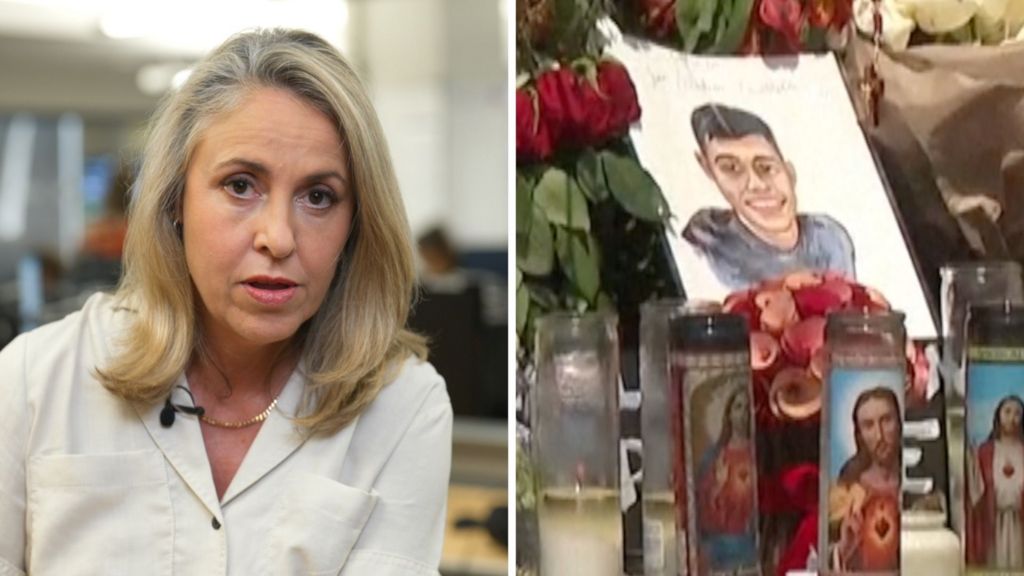
    A newly released city-owned surveillance video from Minneapolis has thrown into question the official account provided by U.S. Immigration and Customs Enforcement (ICE) regarding the January shooting of Venezuelan migrant Julio Cesar Sosa-Celis, opening a new rift between local officials and federal immigration authorities amid an ongoing national crackdown on unauthorized migration.

    In the immediate aftermath of the January 14 incident, the U.S. Department of Homeland Security (DHS) claimed that an ICE officer had shot Sosa-Celis in the leg in self-defense, stating the agent had been ambushed by three people and attacked with a snow shovel and broom handle. The confrontation was framed as the conclusion of a high-speed car chase involving Sosa-Celis, who was residing in the U.S. without legal authorization. Based on the officers’ initial statements, federal prosecutors filed charges of assaulting federal officers against both Sosa-Celis and a second migrant, Alfredo Alejandro Aljorna.

    However, those charges were abruptly dropped in February, after ICE officials acknowledged that the two involved agents appeared to have submitted false statements about the encounter. On Monday, Minneapolis city officials released the full CCTV footage of the lead-up to the shooting, a recording that further undermines the federal government’s original narrative.

    The grainy, low-light distant footage does not capture the shooting itself, but it contradicts key claims made by DHS. It shows only a brief struggle between agents and two men, not an ambush by three. Most notably, the footage shows one individual tossing a shovel aside before any physical contact with agents occurs, directly contradicting the claim that an agent was struck with the shovel. The video captures Sosa-Celis running up a residential street, chased by an agent, stumbling before continuing toward a nearby house, followed by a short scrum on the ground before the shooting.

    This shooting was not an isolated incident. It is one of a string of violent encounters involving ICE agents operating in Minneapolis, a city that has been a key target of the Trump administration’s aggressive immigration enforcement push. The string of violent incidents, which also include the fatal shootings of U.S. citizens Alex Pretti and Renee Good, already sparked large public protests against federal immigration operations in the city.

    Crucially, reporting from The New York Times, which first broke the story of the conflicting footage, revealed that federal investigators had full access to the CCTV recording within hours of the shooting. Despite this access, investigators did not review the footage until nearly three weeks after the two men had already been formally charged. The involved officers, who have not been publicly identified, have been placed on administrative leave as the DHS conducts an internal investigation, and a separate criminal investigation into the incident is also ongoing.

    When releasing the video this week, Minneapolis city officials declined to add any further context or comment, stating they had no additional information to share at this time. But Minneapolis Mayor Jacob Frey issued a sharp rebuke of the federal government’s account, saying the video makes clear that the official federal narrative is inconsistent with the facts. Frey noted the discrepancy mirrors other problematic incidents that occurred during Operation Metro Surge, the federal immigration enforcement sweep targeting the Minneapolis region.

  • US journalist Shelly Kittleson to be released after kidnap in Iraq, militia says

    US journalist Shelly Kittleson to be released after kidnap in Iraq, militia says

    Nearly one week after a U.S. freelance journalist was abducted on the streets of Baghdad, an Iran-aligned Iraqi Shia militia has announced plans to free the 49-year-old reporter, with major uncertainty still surrounding her current status and whereabouts.

    Kataib Hezbollah, the paramilitary group that held Shelly Kittleson following her March 31 kidnapping, confirmed Tuesday it would release the journalist on the sole condition that she departs Iraq immediately. In an official statement released by the group’s senior security official Abu Mujahid al-Assaf, the decision to free Kittleson was framed as a gesture recognizing the outgoing Iraqi prime minister’s national positions.

    Multiple major U.S. news outlets, including The New York Times and The Associated Press, have cited anonymous Iraqi government officials claiming Kittleson was released Tuesday, but no verifiable information about her current location has been made public as of this reporting.

    In the immediate aftermath of the abduction, Iraqi security forces launched a manhunt for the kidnappers. The operation resulted in one suspect being taken into custody after one of the perpetrators’ vehicles overturned during the chase. Iraqi Prime Minister Mohammed Shiaa al-Sudani also issued a formal order last week directing all security agencies to track down and hold accountable all individuals responsible for the abduction of foreign nationals in the country.

    In a separate social media post, Assaf added that Kataib Hezbollah would soon publish an audio recording purporting to detail Kittleson’s “activities and role” within Iraq, though the group offered no further context or timeline for the release of the recording.

    Kittleson’s abduction comes against a backdrop of escalating regional tensions, marked by repeated attacks on U.S.-affiliated targets across Iraq and the broader Middle East carried out by Iran and its allied Iraqi Shia militias since the outbreak of the Israel-Hamas conflict, which has strained Iranian-U.S. relations.

    Alex Plitsas, a CNN national security analyst who is Kittleson’s designated emergency contact and close friend, confirmed Tuesday that he had reviewed the militia’s purported release statement, but emphasized that no official confirmation of the release has been issued by the U.S. government.

    Multiple U.S. officials had repeatedly reached out to Kittleson in the months and weeks leading up to her abduction to warn her of specific threats targeting her, Plitsas previously told CBS, the U.S. partner of the BBC. According to Plitsas, U.S. intelligence agencies informed Kittleson that her name appeared on a target list held by Kataib Hezbollah, which had been actively plotting to kidnap or kill female foreign journalists operating in Iraq.

    A veteran conflict reporter based in Rome, Italy, Kittleson has covered major conflicts across Afghanistan, Iraq, and Syria for dozens of international publications, according to her public professional profile on social media platform X. The U.S. State Department has maintained a longstanding Level 4 travel advisory urging all U.S. citizens to avoid all travel to Iraq due to persistent threats of kidnapping, violence, and terrorism targeting foreign nationals.

  • What the US military could do if Iran fails to meet Trump’s ultimatum

    What the US military could do if Iran fails to meet Trump’s ultimatum

    As the deadline set by U.S. President Donald Trump for Iran to reach a negotiated deal ticks down, military and legal experts are raising sharp questions about both the practicality and legitimacy of his sweeping threats to destroy massive swathes of Iran’s civilian infrastructure. In a series of escalating statements beginning Monday, Trump promised to wipe out “every bridge” and power station across Iran within just four hours if no agreement was reached by 20:00 EST Tuesday, going so far as to warn that “a whole civilization will die” should Iran fail to meet his demands.

    Legal and military analysts interviewed by the BBC universally frame these threats as an unprecedented step for a sitting U.S. president, with international law experts noting that deliberate targeting of civilian infrastructure qualifies as a war crime under established international conventions. Trump dismissed these concerns outright during a Monday press briefing, brushing off questions about the humanitarian and legal implications of his proposed action.

    Beyond legal concerns, former senior U.S. defense officials and military analysts agree that Trump’s promise to eliminate all of Iran’s bridges and key civilian sites in a single four-hour window is logistically impossible. Spanning a territory roughly one-third the size of the continental United States, Iran hosts a vast network of infrastructure spread across thousands of locations across the country. While U.S. intelligence has solid data on the location of major nuclear sites and key energy facilities, experts say it cannot map and destroy every relevant civilian target across such a large nation in such a compressed time frame.

    “To meet this threat literally would be an absolute herculean task. And would it have the desired strategic effect?” a former senior U.S. defense official, speaking on condition of anonymity, told reporters. “Trump is almost struggling to come up with a new level of threat that he can say with words that will move the strategic needle more in favour of the U.S. here.”

    While a widespread attack on Iran’s power sector is more logistically feasible than eliminating every bridge in the country, analysts say even that would fail to deliver the outcome Trump seeks. Most of Iran’s power plants and oil refineries are concentrated in three coastal provinces along the Persian Gulf: Bushehr, Khuzestan, and Hormozgan. Striking these sites would certainly deal a major blow to Iran’s economy and oil export capacity, Miad Maleki, a former senior U.S. Treasury official who led Iran sanctions programs and now serves as a senior fellow at the Foundation for Defense of Democracies, explained, noting that any disruption in these three provinces would cut Iran’s regime off from critical oil revenue and access to the Strait of Hormuz.

    U.S. Vice President JD Vance confirmed Tuesday during a press briefing in Budapest that the U.S. has already carried out airstrikes on military targets on Kharg Island, which handles roughly 90% of Iran’s total oil exports. Vance emphasized that the strikes did not represent a shift in U.S. strategy, adding that negotiations would continue through Trump’s deadline but warning that the U.S. is prepared to inflict “much greater pain” on Iran’s economy if no deal is reached. “So they’ve got to know, we’ve got tools in our toolkit that we so far haven’t decided to use. The president of the United States can decide to use them, and he will decide to use them, if the Iranians don’t change their course of conduct,” Vance said. The White House later moved to quash speculation that Vance’s comments referenced a potential nuclear strike on Iran.

    Limited strikes on civilian infrastructure have already occurred: Iran’s state media reported Tuesday that a joint U.S.-Israeli airstrike targeted a bridge in the holy city of Qom, marking the second such attack on a major Iranian bridge after Trump confirmed an airstrike on Iran’s largest bridge last week. Joint U.S.-Israeli operations have continued to hit multiple targets across Iran as of Tuesday, with video and images showing plumes of smoke rising over the capital Tehran.

    As of Tuesday, direct talks between U.S. and Iranian officials have commenced after weeks of indirect negotiations failed to narrow gaps between the two sides. Despite the resumption of direct dialogue, the parties remain far apart on core sticking points, including the future of Iran’s oil sector, the status of its nuclear program, and governance of the Strait of Hormuz. Trump has named special envoy Steve Witkoff, his son-in-law Jared Kushner, and Vice President Vance as lead negotiators, but a senior anonymous U.S. official clarified that Witkoff and Kushner are leading daily negotiations, with Vance only set to join directly if a final deal appears imminent.

    Trump appears to be betting that widespread attacks that disable Iran’s power grid will stoke public pressure on Iran’s regime to accept a deal, but analysts say that calculation is flawed. Even before the current conflict began in late February, Iranians were already grappling with chronic, widespread power outages, and the regime is unlikely to view additional blackouts as motivation to concede to U.S. demands, Maleki argued. “This is not a wartime issue. The Iranian people are already dealing with a completely dysfunctional energy and power sector,” he said.

    Furthermore, attacks on Iran’s energy infrastructure could undermine Trump’s own core goal of reopening the Strait of Hormuz, which Iran has effectively closed to most oil tanker traffic. The closure has already roiled global energy markets and sent oil prices soaring. Jason Campbell, a former Department of Defense official who served under both Trump and former President Joe Biden and now is a senior fellow at the Middle East Institute, noted that Trump has failed to make a convincing case that escalation will deliver the U.S. its desired outcomes. After nearly six weeks of conflict, Iran’s regime has already demonstrated a high tolerance for disruption and is unlikely to cave to U.S. demands, Campbell said, noting that for Iran’s leadership, the conflict is “an existential fight not just for the country but for the regime.”

  • Tracking recent US-Israeli strikes on Iranian infrastructure

    Tracking recent US-Israeli strikes on Iranian infrastructure

    The ongoing military conflict between the United States, Israel and Iran has escalated dramatically in recent weeks, after US President Donald Trump issued an ultimatum demanding Tehran reach an acceptable negotiated settlement by Tuesday night, or face widespread targeting of key civilian infrastructure across the country. In stark, incendiary rhetoric, Trump publicly threatened to bomb Iranian infrastructure “back to the Stone Ages”, specifying that bridges and power plants would be primary targets. In a social media post published Tuesday, he went further, warning that an entire civilization would be lost if no agreement was reached by his self-imposed deadline.

    Weeks of coordinated airstrikes carried out by US and Israeli forces have already left a trail of destruction across Iran, with a growing share of damage concentrated on critical infrastructure that supports the daily lives of ordinary Iranian citizens. Fact-checking and verification team BBC Verify has independently confirmed that in the 14 days leading up to this report, strikes have hit at least two major steel production facilities, three highway bridges, and a key pharmaceutical manufacturing plant. The escalation has drawn sharp condemnation from senior Democratic lawmakers in the US Congress and top United Nations officials, who have repeatedly warned that the deliberate targeting of civilian infrastructure could violate international law and qualify as war crimes. Trump rejected these concerns outright during a White House press briefing on Monday, dismissing all criticism of the airstrike campaign.

    One of the deadliest recent attacks took place last Thursday, when US warplanes struck an under-construction bridge in the central Iranian city of Karaj. Local Iranian authorities confirmed the strike killed at least 13 civilians, with multiple additional people injured. Footage verified by BBC Verify shows two separate impact craters on the structure, which now has a large gaping hole in its central span, with construction cranes still standing on either side of the destroyed section. President Trump later republished verified footage of the strike to his social media platform, writing that Iran’s “biggest bridge comes tumbling down, never to be used again” and teasing that far more strikes would follow in coming days.

    Iran’s critical steel production sector, a cornerstone of the country’s non-oil economy, has been among the hardest hit by the campaign. On March 27, verified footage captured thick plumes of smoke rising from the Isfahan Mobarakeh Steel Company, Iran’s largest single steel producer, forcing an immediate full suspension of all operations. Industry data linked to the company shows the facility exported roughly $860 million worth of steel between March 2025 and January 2026. Satellite imagery also confirms extensive damage at Khuzestan Steel Company, Iran’s second-largest steel manufacturer, with local officials estimating repairs could take up to 12 full months to complete.

    Israeli Prime Minister Benjamin Netanyahu has claimed the coordinated strikes have disabled approximately 70% of Iran’s total steel production capacity. Arman Mahmoudian, a research fellow at the University of South Florida’s Global and National Security Institute, warned the damage will have severe, long-lasting ripple effects across Iran’s entire economy. “Steel is a cornerstone of Iran’s non-oil economic capacity,” Mahmoudian explained. “If Israeli strikes have indeed dismantled around 70% of Iran’s steel production capacity, this would place nearly 20 million tons of output at risk, potentially affecting around 3–3.5% of Iran’s GDP.”

    The strikes have also expanded into Iran’s pharmaceutical sector, raising alarm about the future of the country’s public health system. On March 31, an Israel Defense Forces (IDF) spokesperson confirmed the military carried out a strike on the Tofigh Daru Research & Engineering Company, one of Iran’s largest domestic producers of anesthetics and life-saving cancer medications. The IDF claimed the facility was transferring chemical substances, including fentanyl, for use in chemical weapons research and development, but the BBC has not been able to independently verify this allegation. While pharmaceutical production makes up a small share of Iran’s overall GDP, Mahmoudian noted that targeting the sector directly undermines civilian access to critical medication and threatens the domestic medical independence Iran has built over decades. Iranian state media has previously claimed more than 90% of all pharmaceuticals used in the country are produced domestically, a figure BBC Verify has not been able to confirm.

    In addition to industrial and medical infrastructure, educational and religious sites have also suffered extensive damage in recent strikes, verified imagery and footage confirms. On Saturday, photos show debris scattered across the campus of Tehran’s Shahid Beheshti University, with entire sections of a main campus building destroyed following a reported airstrike. Images also confirm damage to buildings at Tehran’s Sharif University of Technology after strikes targeted the capital on Monday. In the central city of Zanjan, a strike levelled large portions of the city’s Husseinya Mosque, destroying an on-site clinic and public library and killing two civilians, local officials confirmed.

    On Tuesday, the IDF announced it had bombed 10 key segments of Iran’s national railway network. Verified footage from Aminabad village in central Iran shows a major railway bridge collapsed after the attack, while a separate verified video from the Iranian Red Crescent shows paramedics evacuating an injured civilian from a railway corridor near Karaj, though the exact cause of their injuries has not been confirmed. A railway worker based in Tehran who spoke to the BBC on condition of anonymity expressed widespread frustration among civilian workers over the attacks. “I’m really angry,” the worker said. “Everything is falling apart.” Ahead of Tuesday’s railway strikes, the IDF issued a Farsi-language warning to Iranian civilians on social media, advising them to avoid all travel and stay away from trains and railway corridors, citing risks to civilian life.

    The latest wave of strikes follows a broader pattern of attacks on civilian infrastructure since the US-Israeli bombing campaign began in late February. Last month, BBC Verify revealed that a UNESCO World Heritage Site, multiple schools, and a civilian hospital were among the sites damaged in earlier bombing runs.

    The targeting of civilian sites has sparked intense legal debate over whether the campaign violates international humanitarian law. Professor Rachel VanLandingham, a former US military lawyer, told BBC Verify that under international law, strikes on civilian sites are only permitted in rare, limited circumstances where they provide a clear, direct military advantage. She emphasized that any military action cannot cause excessive harm to civilian civilians compared to the expected military gain.

    Independent conflict monitoring organization Acled published new data this week showing that civilian casualties have remained clustered around areas close to US-Israeli strikes on military, security, and state-linked sites, rather than spreading to widespread indiscriminate bombardment across residential neighborhoods. The organization confirmed 40 dual-use facilities, which produce both civilian and military goods, have been hit since the campaign began on February 28.

    Despite that finding, top UN officials have repeatedly raised alarms over the campaign. UN spokesperson Stephane Dujarric reaffirmed Monday that any attack that causes excessive incidental harm to civilian life and infrastructure is prohibited under international law. UN High Commissioner for Human Rights Volker Turk stated Tuesday that deliberately targeting civilians and civilian infrastructure constitutes a war crime, and all those responsible for violations will be held accountable.

    Sir Geoffrey Nice, a former prosecutor at the International Criminal Tribunal for the former Yugoslavia in The Hague, told the BBC’s *World at One* programme that deliberate attacks on critical civilian infrastructure such as power plants and water facilities would almost certainly qualify as disproportionate under international law. “The civilian population in any war is entitled to be properly protected and if you interfere with the basic means of life… you are at grave risk of causing completely disproportionate damage, ultimately including by starvation and disease,” Nice said.

    Addressing the mounting criticism on Monday, Trump doubled down on his position, saying he was “not worried about” allegations that his threats and strikes amount to war crimes. “You know the war crime? The war crime is allowing Iran to have a nuclear weapon,” he added.

  • Has Artemis II shown we can land on the Moon again?

    Has Artemis II shown we can land on the Moon again?

    Six days after NASA’s Artemis II mission lifted off from the Kennedy Space Center on April 1, 2026, every key systems test has delivered results far better than even the agency’s most optimistic engineers predicted. This mission marks the first time a crewed Orion capsule has operated in deep space, a real-world trial no ground-based simulator could ever replicate — and its performance so far has already reshaped expectations for the future of U.S. lunar exploration.

    Preceding the April launch were two scrapped attempts in February and March, caused by unrelated technical glitches that followed the 2022 uncrewed Artemis I mission. Following those setbacks, NASA Administrator Jared Isaacman issued a blunt assessment of the agency’s previous approach: launching a single complex Space Launch System (SLS) rocket once every three years, treating each vehicle like a one-of-a-kind masterpiece rather than part of an operational program, was no path to sustainable success. His comments reframed the entire Artemis program around a new goal: consistent, frequent launch cadence rather than sporadic, high-stakes single missions.

    Against that new standard, Artemis II’s first week has been a resounding success. The SLS, NASA’s most powerful rocket ever built, generated 8.8 million pounds of thrust at liftoff, and every phase of its ascent — from maximum dynamic pressure to main engine cut-off and booster separation — proceeded exactly as planned. Mission controllers described every stage as “nominal,” and two of three planned trajectory corrections en route to the Moon were scrapped entirely: the capsule’s initial flight path was already so precise that no adjustments were needed. “Credit to them – they got it right the first time,” noted Simeon Barber, a space scientist at the Open University.

    Approximately 36 hours after launch, the mission passed its most critical early test: a five-minute, 55-second translunar injection burn from Orion’s main engine that set the capsule on a looping path toward the Moon with no further major maneuvers required. Artemis program director Dr. Lori Glaze called the burn “flawless.”

    The core objective of Artemis II has always been to test how Orion performs with a human crew of four — commander Reid Wiseman, pilot Victor Glover, mission specialists Christina Koch and Jeremy Hansen — aboard. Unlike simulated tests, a crewed mission reveals how systems adapt to the small, unpredictable needs of human spaceflight: the need for air conditioning, carbon dioxide removal, working restroom facilities, and in-flight water access. The mission has encountered only minor issues: a temporary toilet malfunction, a water dispenser problem that required the crew to collect water in bags as a precaution, and a small redundancy loss in a helium system that was resolved quietly shortly after it was detected.

    “ This is all about putting humans in the loop — these pesky humans that press buttons and breathe carbon dioxide and want air conditioning and want to use the toilet. It was all about how the system works with those guys on board,” Barber explained. Engineers have run repeated tests on Orion’s life support and maneuvering systems, even intentionally disabling some thrusters to test the capsule’s response, and all data so far confirms the vehicle is safe enough for future lunar surface missions. Barber summarized, “Orion itself seems to have worked pretty well, actually — certainly all the propulsion stuff, which is the real critical stuff.”

    Alongside systems testing, the crew has collected new observational data of the lunar surface and captured breathtaking images from deep space. They documented roughly 35 geological features in real time, tracked color variations that hint at mineral composition, and photographed a deep-space solar eclipse that pilot Victor Glover described as “unreal.” One particularly historic observation captured the 600-mile Orientale basin on the Moon’s far side, the first time humans have viewed the full feature in person. Still, as Oxford University professor Chris Lintott points out, the scientific value of these observations is limited: robotic missions including India’s 2023 Chandrayaan-3 and China’s 2024 Chang’e-6 have already mapped the lunar terrain in far greater detail. For Artemis II, the greatest impact has not come from science, but from inspiration and human connection.

    The mission’s most memorable moment came when the crew broke the 56-year distance record for human spaceflight set by the damaged Apollo 13 mission. In an unscripted, emotional transmission to Mission Control, Jeremy Hansen announced the crew was naming a bright lunar crater “Carroll,” in honor of Reid Wiseman’s late wife, mother of their two daughters. After Hansen’s announcement, the crew held 45 seconds of silence before embracing, as Wiseman’s daughters watched from Houston. This moment, experts note, is what will cement Artemis II in public memory much like the Apollo program. Space programs that cannot evoke genuine human emotion do not endure; Apollo is remembered not just for its engineering breakthroughs, but for what it revealed about human courage and curiosity. Artemis II, in that quiet moment, claimed the same legacy.

    The mission is not yet complete. Orion is currently on its return trajectory to Earth, scheduled to splash down in the Pacific Ocean near San Diego on April 11. The final, unrivaled test still ahead is atmospheric re-entry: the capsule will hit Earth’s atmosphere at roughly 25,000 miles per hour, a speed and heat load no simulator can replicate. Re-entry became a major point of concern after Artemis I, when unexpected heat shield damage triggered an investigation that delayed the Artemis II mission by more than a year. The outcome of this test will do more to define the mission’s legacy than any image of the lunar surface.

    If re-entry proceeds as planned, the early success of Artemis II will send a clear encouraging signal: the SLS rocket works, the Orion capsule works, and the crew can operate systems competently even under the unique pressures of deep space. NASA has also now articulated a clear plan to move toward more frequent launches, breaking from the decades-old pattern of multi-year gaps between missions.

    The goal of a crewed lunar landing by 2028, set by the agency and the White House, still remains a challenging stretch. Barber estimates a landing is more likely three to four years away from now, a timeline most experts agree is realistic. But the flawless performance from launch through lunar flyby has shifted the odds of success firmly in the right direction. The question of whether Orion can safely carry humans to the Moon is close to being answered; what remains to be seen is whether the lunar lander development program, the required launch cadence, and long-term political will can keep pace. For now, at least, the core spacecraft has already exceeded all expectations.

    At a time of global unrest and widespread uncertainty, much like the 1960s Apollo era, Artemis II has delivered a moment of shared global inspiration. The iconic images of Earth hanging below the lunar horizon, and the quiet emotion of the crater naming ceremony, have reminded audiences worldwide that human exploration can unify people across borders. This is only a test flight, the first step toward a sustained program of lunar exploration that will include multiple landings in the coming years — but it is already a step that has rekindled global optimism for human spaceflight.

  • Kanye West controversies – how did we get here?

    Kanye West controversies – how did we get here?

    Once hailed as one of the most transformative and groundbreaking hip-hop artists and producers of the 2000s and 2010s, Kanye West — who now goes by the name Ye — has built a decades-long career marked by unparalleled creative innovation and a seemingly endless string of damaging, offensive controversies. Now, that history of bigotry has led to the cancellation of one of the UK’s most anticipated summer music events after the British government barred the rapper from entering the country.

    West launched his career behind the scenes, crafting chart-topping production for A-list stars including Jay-Z and Alicia Keys before stepping into the spotlight as a solo artist. His 2003 debut single *Through the Wire* became an instant classic: written from a hospital bed and recorded with his jaw wired shut after a near-fatal car crash, the track announced West as a bold new voice in rap. Over the next 15 years, he cemented his legacy, pushing creative boundaries with hits like *Stronger*, *Gold Digger*, and *Heartless* that redefined what hip-hop could sound like. But for almost as long as he has been in the public eye, his career has been repeatedly derailed by impulsive behavior, offensive rhetoric, and hateful statements that have alienated fans and destroyed professional partnerships.

    Controversy has followed West since the early days of his fame. In one of the most infamous moments in awards show history, he interrupted Taylor Swift’s 2009 MTV Video Music Awards acceptance speech to insist Beyoncé deserved the honor for Best Female Video. Four years before that, he deviated from his script during a Hurricane Katrina relief telethon, famously stating that then-President George W. Bush “doesn’t care about black people” — a comment that while divisive, resonated with many who shared the sentiment. But as time went on, West’s statements grew more shocking and harmful. In 2016, he drew widespread backlash for a social media post declaring “BILL COSBY INNOCENT !!!!!!!!!!” at a time when the comedian faced dozens of allegations of drugging and sexual assault. Cosby was later convicted of one count of sexual assault (though the conviction was later overturned), and in March 2026, a civil court ordered him to pay $59.25 million in damages to a victim assaulted more than 50 years prior.

    Two years later, West sparked global outrage during an appearance on TMZ when he claimed that centuries of chattel slavery of African Americans “sounds like a choice.” The comment, which ignored the brutal, forced history of chattel slavery in the United States, led to widespread calls for accountability, with many social media users urging the rapper to revisit basic American history. West later attempted to walk back the comment, claiming his words had been misinterpreted and that he was referring to ongoing mental oppression, but the damage was done.

    A 2022 fashion show in Paris marked a turning point in the erosion of West’s professional standing. The artist, who had built a second high-profile career as a fashion designer with his Yeezy brand, walked out at his SZN 9 show wearing a t-shirt emblazoned with the “White Lives Matter” slogan, a phrase widely recognized as a direct rebuke of the Black Lives Matter movement. Anti-racism organizers condemned the display, and a subsequent photo of West alongside conservative commentator Candace Owens, both wearing the shirts, amplified the outrage.

    The controversy quickly escalated when West published a private text exchange with fellow hip-hop icon Sean “Diddy” Combs, in which he claimed Combs was “controlled by Jewish people” — echoing centuries-old harmful antisemitic conspiracy theories. The post got West’s Instagram account suspended, prompting him to move to Twitter (now X) where he declared he would go “death con 3 On Jewish people.” The comment got him banned from the platform as well, with both social media companies citing violations of hate speech policies. By the end of 2022, nearly all of West’s major professional partners had cut ties: fashion house Balenciaga, talent agency Creative Artists Agency, JPMorgan Chase, Gap, and long-time footwear partner Adidas all dropped the rapper. Adidas reported that ending the partnership would cost the company a net loss of £217 million in 2022.

    West’s ex-wife Kim Kardashian addressed the controversy at the time, acknowledging West’s bipolar disorder diagnosis and noting that “those who are close with Kanye know his heart and understand his words sometimes do not align with his intentions.” However, medical experts have pushed back on framing West’s hate speech as a product of his mental illness. “Bipolar disorder is absolutely not synonymous with racism and there’s nothing about mental illness that creates racism or hate,” Amy Elizabeth West, a professor of clinical pediatrics and psychology at USC Keck School of Medicine, explained in 2022. “Those are all entirely separate behaviours that he happens to have in addition to having bipolar disorder.”

    Later in 2022, West announced he would run for U.S. president in 2024, a bid that never materialized after his 2020 presidential run earned him just 60,000 votes nationwide. Months later, he appeared on a podcast hosted by far-right conspiracy theorist Alex Jones, where he declared “I see good things about Hitler” and claimed the Nazi leader had added value to the world. The comment drew universal condemnation, and West was again banned from Twitter. Just months later, he was banned once more after posting a symbol combining a swastika and the Star of David.

    West first issued an apology to the Jewish community in December 2023, posting a statement in Hebrew to Instagram saying he “sincerely apologise[s]” and that it was “not my intention to hurt or demean, and I deeply regret any pain I may have caused.” But the apologies did not end the controversy. In February 2025, West drew new outrage after starting to sell t-shirts printed with swastikas, prompting commerce platform Shopify to shut down his online store. Three months later, he released a track titled *Heil Hitler*, claiming that a child custody battle and frozen assets had pushed him toward Nazism. The track was banned from all major streaming platforms and in Germany under the country’s strict hate speech laws, but it spread widely on social media, and West was subsequently barred from entering Australia over the content.

    In January 2026, West issued a second public apology, taking out a full-page ad in *The Wall Street Journal* stating “I am not a Nazi or an antisemite” and “I love Jewish people.” He attributed his past harmful actions to bipolar disorder, writing that episodes of the condition left him “disconnected” and unable to recall many of his offensive statements, adding “It does not excuse what I did though.”

    Months later, event organizers announced West would headline London’s 2026 Wireless Festival, a three-night headline set scheduled for July that sparked immediate public and political backlash. In response, West updated his *Wall Street Journal* open letter, saying he would “be grateful” to meet with members of the British Jewish community “to listen” and that he would “show change through my actions.” The Board of Deputies of British Jews said it was open to a meeting, but on the condition that West cancel his planned performances.

    The controversy ultimately led to the full cancellation of the 2026 Wireless Festival after the UK government formally blocked West from entering the country over his history of hate speech and offensive behavior.