
A shocking on-the-job accident has been captured on camera, showing two professional tree trimmers plunging 45 feet from elevated work position while carrying out vegetation maintenance work. The incident involved Isaac Reyes and Andrew Reyes, two workers who were performing routine trimming duties at the time of the fall. According to local emergency response reports, both men sustained critical, life-threatening injuries immediately after the impact and were rushed to a nearby medical facility for urgent surgical intervention and intensive care. After several days of targeted treatment and monitoring from the hospital’s care team, the pair have made enough progress in their recovery to be released for outpatient rehabilitation and at-home care. The footage of the fall has spread across local community networks, prompting renewed discussions about worksite safety protocols for arboriculture workers who often operate at significant heights. Local occupational safety officials have not yet announced whether a formal investigation into the incident will be launched to identify the root cause of the accident and prevent similar events in the future.
标签: North America
北美洲
-
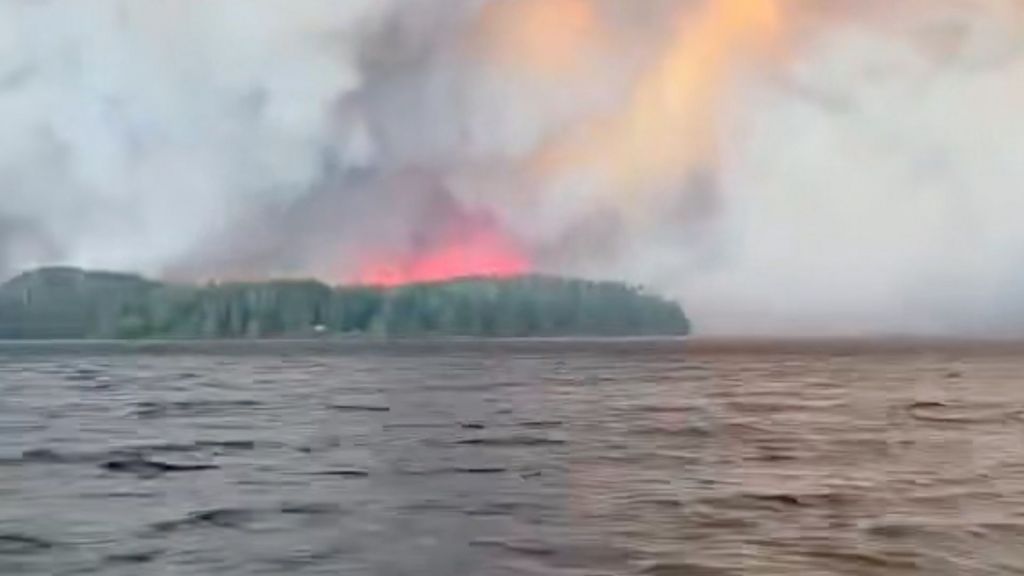
Watch: Residents flee massive Canadian wildfire by boat
As wildfire conditions continue to escalate across Canada, authorities have confirmed that more than 850 blazes are currently burning uncontrolled across the country, with dozens of new fire outbreaks detected in just a single 24-hour period.
The scale of the 2024 Canadian wildfire season has already outpaced many early projections, leaving emergency management teams stretched thin as they respond to blazes that span from British Columbia to the Atlantic coast. On Thursday alone, officials recorded 23 new active fires, adding to an already overwhelming number of burning zones that have consumed millions of hectares of forest and grassland.
In hard-hit communities surrounded by advancing flames, traditional land-based evacuation routes have been cut off, forcing hundreds of residents to flee to safety via boat along coastal waterways and inland lakes. Dramatic footage captured from affected regions shows columns of thick, gray smoke rising into the sky, obscuring the sun and turning daytime skies an ominous orange, as evacuation vessels carry families, pets and essential belongings away from danger.
Canadian Interagency Forest Fire Centre officials warn that unseasonably high temperatures and persistent dry conditions have created extreme fire risk across most of the country, with more new outbreaks expected in the coming weeks. The ongoing crisis has also drawn international attention, as smoke from the wildfires has previously drifted across North America, triggering air quality alerts as far south as the United States’ Gulf Coast.
Emergency response teams from multiple countries have already deployed to Canada to assist with fire suppression and evacuation efforts, as authorities urge residents in high-risk zones to remain alert and follow evacuation orders immediately when issued.
-
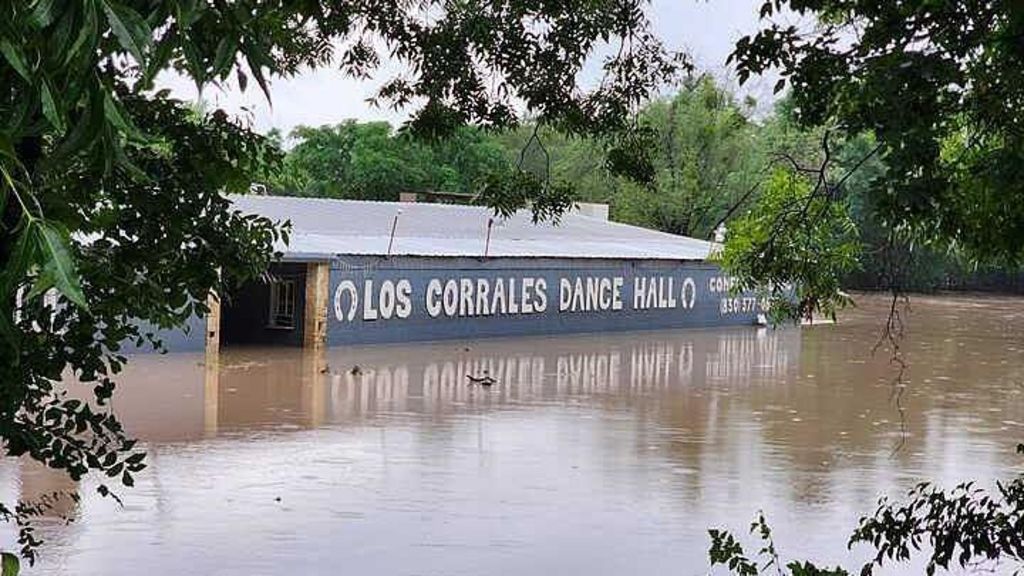
Rising Texas river threatens same region where campers died in flooding
One year after a catastrophic flash flood event along the Guadalupe River in South Texas killed more than 130 people, the same region is once again grappling with life-threatening surging floodwaters triggered by days of unrelenting torrential rainfall.
The National Weather Service (NWS) office in San Antonio issued an urgent warning Thursday, alerting residents that large, destructive flood waves were advancing down the Guadalupe River — the same waterway that spawned last summer’s deadly disaster. By early Thursday, local emergency management officials had already begun urging at-risk residents across multiple Hill Country counties to evacuate their homes immediately to avoid rising waters.
In an urgent social media post on X published at 9:39 a.m. EST, the NWS San Antonio emphasized the severity of the situation: “CATASTROPHIC flooding is occurring. Move to higher ground now! Guadalupe River is rapidly rising and will continue!”
According to local reporting from the Texas Tribune, the Guadalupe River swelled an extraordinary 32 feet (9.75 meters) in just four hours as runoff from the heavy rainstorms poured into the basin. The flooding has impacted a broad swath of South Texas, spanning multiple counties including Uvalde, Kerr, and Kendall. Dramatic imagery from Comfort, Texas, shows floodwaters completely submerging the popular local venue Rodeo Los Corrales Dance Hall as waters continue to climb.
By Thursday morning, first responders had already launched multiple rescue operations, pulling dozens of residents stranded by rising floodwaters to safety, per reporting from the Associated Press.
The disaster comes as a devastating echo of last year’s Fourth of July holiday flood, which claimed 131 lives across the Hill Country. Among the victims were 25 young campers and two adult counselors at Camp Mystic, an all-girls Christian summer camp located along the Guadalupe River near Kerrville. During the 2025 disaster, the river rose 26 feet (8 meters) in just 45 minutes, catching the camp off guard and sweeping many campers away in powerful, fast-moving currents.
In the wake of that devastating tragedy, Camp Mystic announced it would not reopen for the 2026 summer season and filed for bankruptcy protection earlier this year. Local leaders and emergency management teams are now working around the clock to prevent a repeat of last year’s mass casualty event, urging all residents in flood zones to comply with evacuation orders immediately as the flood crisis continues to unfold.
-
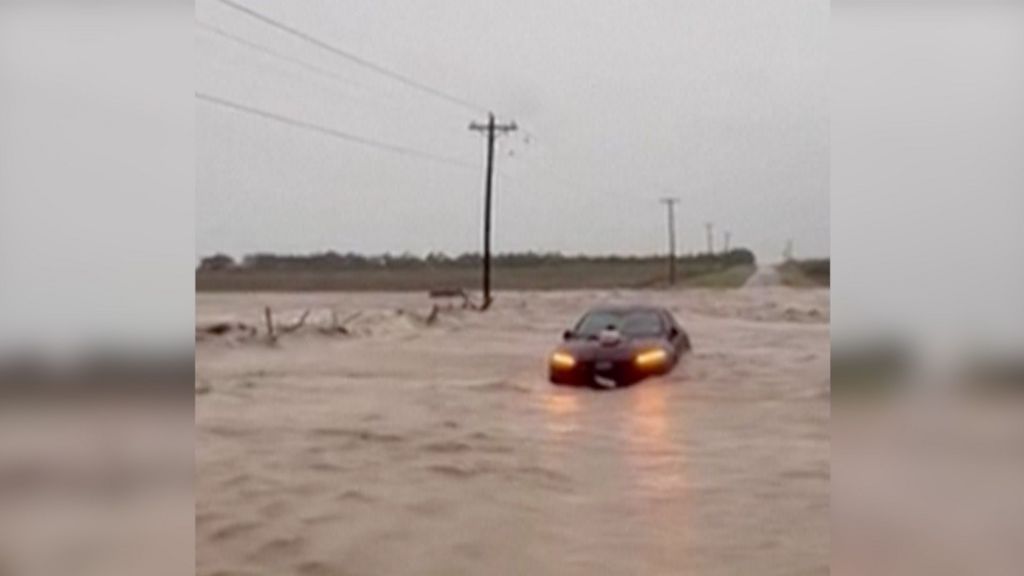
Watch: Flood waters surge in Texas after huge rainstorms
A devastating new round of intense rainstorms has swept through parts of Texas, unleashing catastrophic floodwaters that have forced emergency responders to launch large-scale evacuation operations and dozens of urgent water rescues across the affected region.
The disaster is unfolding in the same geographic area that bore witness to one of Texas’s deadliest flood tragedies in recent memory: the 2025 Camp Mystic flood that claimed the lives of 25 children and two camp counselors. The rapid rise of floodwaters caught many local residents off guard this time around, with first responders working around the clock to reach people trapped in submerged homes, vehicles, and low-lying communities.
Local emergency management officials have issued repeated urgent warnings, urging residents in high-risk zones to heed evacuation orders immediately as swollen rivers and creeks continue to rise amid lingering unstable weather conditions. Many residents in the area still carry lasting trauma from the 2025 disaster, and the sudden return of life-threatening flooding has compounded anxiety across the impacted region.
-

Weekly quiz: What name did scientists give this $50m dinosaur?
As the week drew to a close, three major storylines dominated mainstream news cycles, while a curated current events quiz invited readers to test how closely they had followed global developments over the previous seven days.
First, in UK domestic politics, Sir Keir Starmer participated in his final session of Prime Minister’s Questions this week, marking a historic transition of power as he prepares to take up residence at 10 Downing Street, the official residence and workplace of Britain’s head of government.
Across the Atlantic and in the Middle East, escalating tensions between the United States and Iran continued to roil international security: the two nations exchanged sharp verbal attacks in addition to targeted military strikes, leaving global observers watching closely for further escalation.
In the world of arts and culture, the newly released film *The Odyssey* has earned overwhelming critical acclaim, with reviewers across the industry praising the project and generating substantial buzz among moviegoers.
Beyond these three major headlines, the quiz compiled by journalist Ben Fell challenges readers to recall what other major and minor stories unfolded across the globe in the last seven days. For readers eager to test their knowledge further, additional quizzes are available, including the previous week’s challenge and a range of older quizzes archived on the platform. This week’s quiz includes categories covering dinosaurs, fossils, and the United States, offering a diverse range of topics to test readers’ news literacy.
-
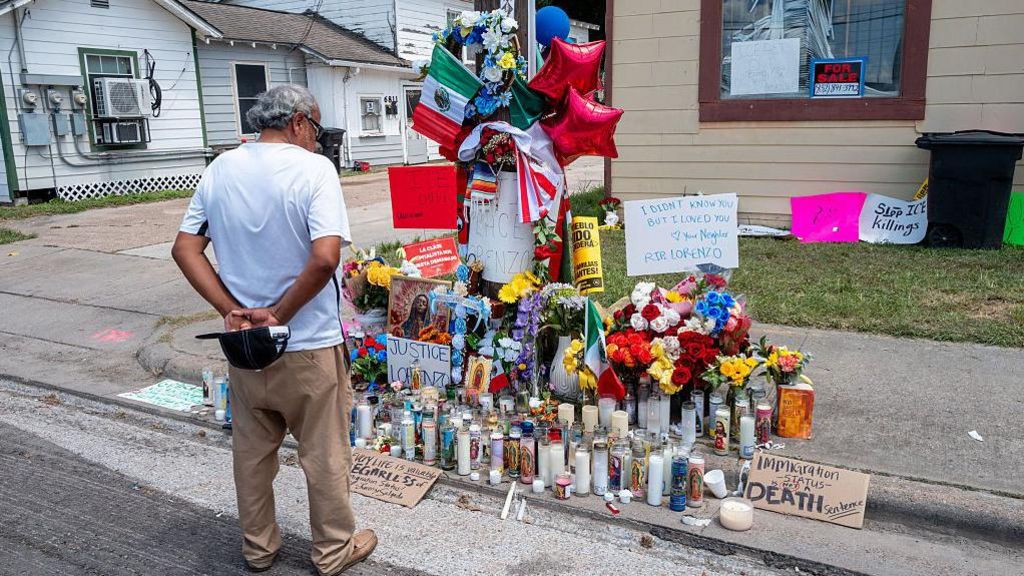
Texas will investigate ICE’s fatal shooting of man in Houston, governor says
A fatal shooting of a 52-year-old Mexican man by U.S. federal immigration agents in Texas has sparked widespread public demands for transparency, prompting state officials to launch an independent investigation into the incident that has reignited national debates over immigration enforcement tactics.
Governor Greg Abbott announced Wednesday that the Texas Rangers, the state’s elite law enforcement unit, will partner with federal investigators to uncover the full circumstances surrounding the July 7 shooting death of Lorenzo Salgado Araujo, a resident of nearly 35 years who was en route to his job when agents pulled him over. Speaking to reporters, Abbott emphasized that effective border control and immigration enforcement do not require the use of lethal force.
“It is fully possible to enforce immigration laws and stem the flow of unauthorized crossing at our southern border without resorting to shooting people,” Abbott stated.
Initial details released by U.S. Immigration and Customs Enforcement (ICE) have already shifted and drawn sharp pushback from Salgado Araujo’s family and local elected officials. ICE first claimed agents opened fire in self-defense after Salgado Araujo “weaponized his vehicle” against officers. The Department of Homeland Security later corrected the account, confirming Salgado Araujo was never the intended target of the operation – agents stopped his white van simply because he matched the general description of the planned suspect.
Critical gaps in official documentation have further fueled calls for an outside probe. Representative Silvia Garcia, the Democratic congresswoman representing the Houston-area district where the shooting occurred, confirmed that none of the ICE agents involved were wearing body cameras during the stop, and no publicly available video footage of the shooting has emerged to date.
For the Salgado Araujo family, the official narrative does not align with what they know of the father of three, who had been in the process of securing legal permanent residency before his death. Ronaldo Salgado, one of his sons, told reporters he first learned of the shooting from graphic social media footage of the aftermath, identifying his father by his desperate cries for help as he lay wounded on the street, rather than by his physical appearance. He received confirmation of his father’s death from subsequent news reports. Three companions who were traveling with Salgado Araujo, including his uncle, were taken into immigration custody immediately following the shooting, the family confirmed.
This incident is not the first time ICE’s use of force accounts have been called into question amid former President Donald Trump’s hardline crackdown on unauthorized immigration. Earlier this year, the fatal shootings of Renee Good and Alex Pretti in Minneapolis by ICE agents saw official agency claims contradicted by eyewitness testimony and existing video evidence.
Federal authorities have already launched internal probes: the Department of Homeland Security’s Office of Inspector General, the agency’s internal watchdog, is leading an internal review, while the FBI’s Houston division is investigating potential assault claims against the involved officers. But local leaders have rejected internal federal investigations as insufficiently impartial. Houston Mayor John Whitmire joined growing calls for an independent probe, directing the Houston Police Department to formally request the Texas Rangers lead the state-level investigation.
The Texas shooting came on the heels of a second fatal ICE shooting that has added fuel to public outrage. Just days after Salgado Araujo’s death, ICE agents fatally shot 26-year-old Colombian national Joan Sebastián Durán Guerrero in Maine, prompting mass protests across the northeastern state.
These back-to-back lethal incidents have reignited a long-simmering national debate over ICE’s widespread use of traffic stops as a core enforcement tactic – a strategy that has drawn criticism for targeting immigrant communities and leading to unnecessary civilian deaths. After the shootings, White House border czar Tom Homan suggested the agency would temporarily suspend the practice, but Trump confirmed Tuesday that traffic stops would remain a central tool of his administration’s immigration enforcement agenda.
Salgado Araujo’s killing has become a flashpoint for critics who argue that current ICE use-of-force policies lack accountability, especially when investigations are limited to internal federal review. With the launch of the Texas Rangers probe, state officials have moved to meet growing public demands for a full and impartial accounting of the shooting.
-
How bad are Canadian and US wildfires, and what is the air quality risk?
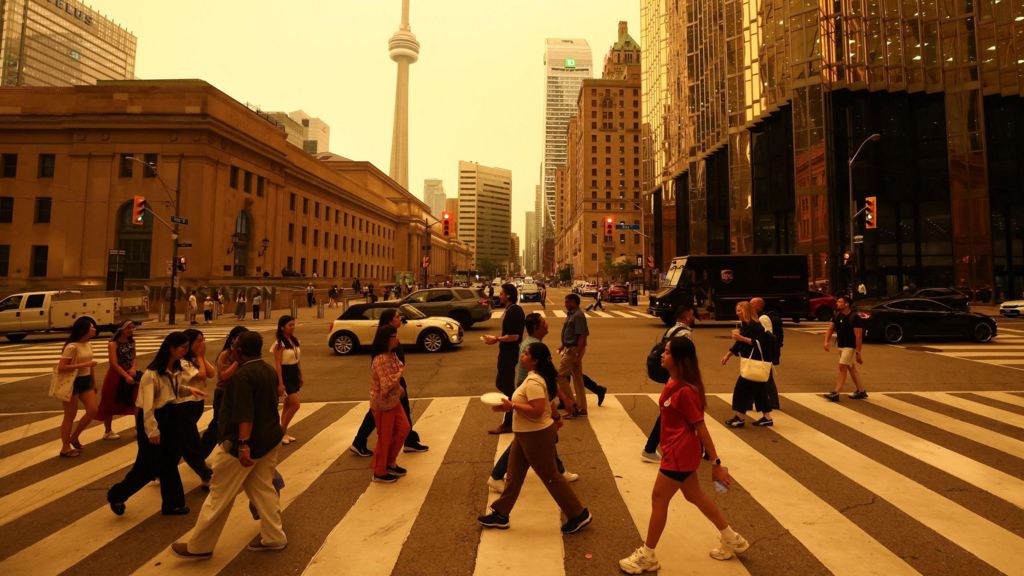
A sprawling wave of hazardous wildfire smoke originating from hundreds of active blazes across northern Canada and the upper U.S. Midwest is set to degrade air quality across major Northeast North American cities for the entirety of this week, forcing public health warnings, community evacuations and emergency response mobilization. As of the latest update from the Canadian Interagency Forest Fire Centre, 850+ wildfires are burning actively across Canada, with nearly 200 of these concentrated in the province of Ontario. In neighboring northern Minnesota, 17 uncontained blazes have prompted a state emergency declaration to speed up fire suppression resources.
Most of Ontario’s wildfires are burning in remote, forested regions north of Lake Superior, overlapping with protected national park lands and Indigenous First Nation territories. Six Ontario communities are currently under mandatory evacuation orders, with confirmed property damage reported. Grand Council Chief Linda Debassige confirmed in a Wednesday statement that the remote Namaygoosisagagun First Nation has been left devastated by a fast-moving, unanticipated wildfire that destroyed multiple residential homes and key community infrastructure.
While seasonal wildfires are a regular occurrence in Canada’s boreal forest ecosystems, the sharp spike in active outbreaks over recent weeks is being driven by extreme weather conditions linked to a stationary heat dome over the region. Climate experts from the U.S. National Interagency Fire Centre and Natural Resources Canada confirm that sustained record-breaking heat in late June, paired with rainfall well below the 30-year average, created tinder-dry conditions primed for rapid fire spread. The heat dome, a stagnant mass of high pressure that traps warm air and smoke close to the ground, pulls excess moisture from soil and vegetation, turning plant matter into ready fuel for blazes. Periodic instability within the heat dome also triggers thunderstorms that generate strong gusty winds, which fan fire expansion and push smoke plumes across vast distances.
Satellite imagery from the past three days shows prevailing wind patterns carrying smoke primarily southeast from Ontario’s fire zones, blanketing Toronto, upstate New York, and reaching as far east as Boston. Global air quality tracker IQAir has currently ranked Detroit, Toronto, and Minneapolis among the three cities with the worst air pollution levels on Earth. Wildfire smoke carries a toxic mix of fine particulate matter (PM2.5), nitrogen dioxide and other pollutants that pose severe risks to human health. New York State Department of Health Commissioner Jim McDonald explained in a public social media briefing that these microscopic particles penetrate deep into the lungs’ smallest airways, triggering harmful systemic inflammation. The World Health Organization notes that smoke exposure worsens pre-existing respiratory conditions, heart disease, kidney disorders and eye irritation. Emergency workers, children, people with chronic illnesses and elderly residents are the most vulnerable to adverse health impacts, as children face additional risk from smoke that settles closer to ground level.
Local governments across the affected region have issued orange air quality alerts, advising residents to avoid strenuous outdoor activity, stay indoors with closed windows, and wear properly fitted, government-certified N95 or KN95 masks when going outside. These masks can filter up to 95% of fine particulate matter, though health officials warn the public to avoid uncertified counterfeit masks widely sold online. Many municipalities have activated full air quality emergency protocols and set up free mask distribution sites at local community centers.
Forecasters project that shifting wind currents will push the smoke plume further south into Virginia and portions of North Carolina, with air quality worsening in those regions by Friday. A second, separate smoke plume is forecast to reach New York City and Boston by late Thursday. New York State Department of Environmental Conservation Commissioner Amanda Lefton warned that visible smoke will cover most of the state, with impacts likely lasting for multiple days and potentially bringing even worse air quality than current levels. There is growing concern that smoke may still linger in the New Jersey region by Sunday, when the FIFA World Cup final is scheduled to take place at open-air MetLife Stadium.
By Monday, a forecast shift in wind direction is expected to bring partial relief to most affected U.S. cities. However, long-term seasonal outlooks warn that elevated wildfire risk will persist through July and August across Ontario, Quebec and Canada’s Northwest Territories.
Wildfire experts note that while blazes are a natural part of boreal forest ecology, their frequency and severity have grown dramatically in recent years, a trend tied directly to human-caused climate change. The 2023 Canadian wildfire season burned 15 million hectares — an area larger than the entire country of England — while the 2025 season scorched 8.3 million hectares, making it one of the worst on record. Approximately half of all Canadian wildfires are ignited by lightning, with the remainder caused by human activity, but drier conditions driven by rising global temperatures amplify fire risk. Milder winter temperatures linked to climate change also reduce snow cover, which normally reflects solar radiation to cool the landscape; less snow leads to warmer spring temperatures, earlier plant growth, and more dry fuel available for wildfires once summer begins.
Residents can check the latest local air quality alerts through official government portals for Canada and the United States.
-
Watch: Pittsburgh bridge demolished in dramatic explosion
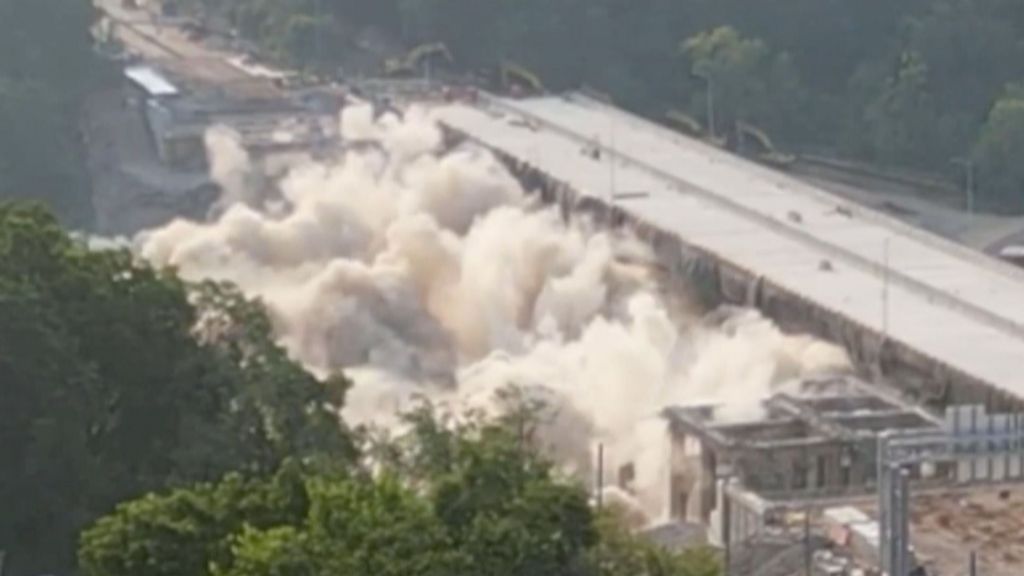
Onlookers gathered and cameras rolled as a decades-old bridge in Pittsburgh fell to the ground in a carefully orchestrated controlled explosion this week, marking a major milestone in a transformative infrastructure improvement project for the region.
The dramatic implosion, which was planned for months to minimize disruption to surrounding communities, brought the aging span down safely in a matter of seconds. Local transportation authorities have confirmed that the existing structure was reaching the end of its service life, with escalating maintenance costs and growing safety concerns justifying its full replacement rather than incremental repairs.
What makes this replacement project particularly notable is the innovative construction method that crews will deploy next. Rather than engaging in a years-long on-site build that would keep the corridor closed to traffic for an extended period, project managers have already constructed an entirely new span off-site. This prefabricated structure will be slid into the place of the old bridge in what officials are calling the largest lateral bridge slide project ever undertaken in the state of Pennsylvania.
The lateral slide technique is designed to drastically cut down on construction-related delays for commuters and local businesses. Unlike traditional bridge replacements that can close key transportation routes for months, this method will see the entire new span moved into position over a matter of days, allowing the corridor to reopen to traffic much faster than conventional approaches. Transportation department representatives note that the project is designed to improve connectivity, boost safety for the thousands of vehicles that use the crossing daily, and support long-term economic activity in the Pittsburgh area.
Local residents who gathered to watch the demolition expressed a mix of nostalgia for the old bridge and excitement about the improved infrastructure that will soon serve their community, with many documenting the explosive event on personal devices to share with friends and family online.
-

Watch: Hegseth announces testosterone deficiency screening for troops
In a sweeping policy shift aimed at addressing long-overlooked health concerns among active-duty service members, U.S. Secretary of Defense Pete Hegseth has formally announced a new mandatory screening program that will require all active-duty and reserve troops to undergo routine testing for testosterone deficiency. The rollout of the new initiative comes alongside a reaffirmation of the U.S. military’s longstanding ban on non-medical testosterone use, a rule that has been enforced for decades to maintain fair competition, preserve force readiness, and mitigate the serious long-term health risks associated with unsupervised hormone supplementation. Military health officials have noted that undiagnosed low testosterone has been linked to a range of performance and health issues that can directly impact troop readiness, including persistent fatigue, reduced muscle mass, impaired cognitive function, and poorer mental health outcomes. By introducing routine population-level screening, defense leaders hope to identify at-risk service members early, provide evidence-based medical treatment to those with clinically confirmed deficiency, and preserve the overall fighting capacity of the U.S. armed forces. The policy clarifies that only service members who receive a formal diagnosis from a military medical provider will be cleared to receive testosterone therapy, with strict monitoring protocols in place to ensure compliance with medical guidelines. Any service member found to be using testosterone without a valid medical authorization will face disciplinary action under the Uniform Code of Military Justice, consistent with existing regulations governing performance-enhancing drug use. Defense analysts say the new screening program represents a growing recognition of the impact of hormonal health on force readiness, marking a key update to the U.S. military’s preventive health framework.
-
More than 800 Canadian wildfires burning as air quality alerts extend to US
A historic outbreak of extreme wildfire activity across Canada has sent thick plumes of toxic smoke south into the United States, triggering widespread air quality emergencies across more than a dozen states and disrupting daily life for millions of people. As of Thursday, data from the Canadian Interagency Forest Fire Centre confirms 857 active blazes are burning across the country, with 23 new ignitions recorded in just 24 hours. The Canadian Wildland Fire Information System reports that the overwhelming majority of these fires remain completely out of control, leaving firefighting crews stretched thin across vast swathes of forested land.
The worst cluster of blazes is concentrated in northwestern Ontario, where raging flames have already disrupted regional transportation and forced emergency responses. On Wednesday, dramatic footage captured a freight train operated by Canadian National Rail completely surrounded by fast-spreading wildfire near the small northern town of Armstrong, prompting an urgent rescue call for the crew on board. In a follow-up statement, the railway confirmed all workers were evacuated safely, but rail operations through the affected region have been paused indefinitely to avoid further risk to staff.
Smoke from these Ontario blazes has drifted hundreds of miles south, creating dangerous air conditions that stretch from the Upper Midwest through the Great Lakes and into the Northeast U.S. The U.S. National Oceanic and Atmospheric Administration (NOAA) issued updated air quality alerts Thursday covering thousands of square miles across this entire corridor. The U.S. Air Quality Index has classified conditions in large parts of Michigan, Minnesota, and the Minneapolis-St. Paul metropolitan area as “hazardous,” the most severe rating on the scale. Official guidance urges all residents in these zones to limit outdoor activity and keep windows closed, with sensitive groups including children, the elderly, and people with respiratory conditions advised to remain indoors entirely.
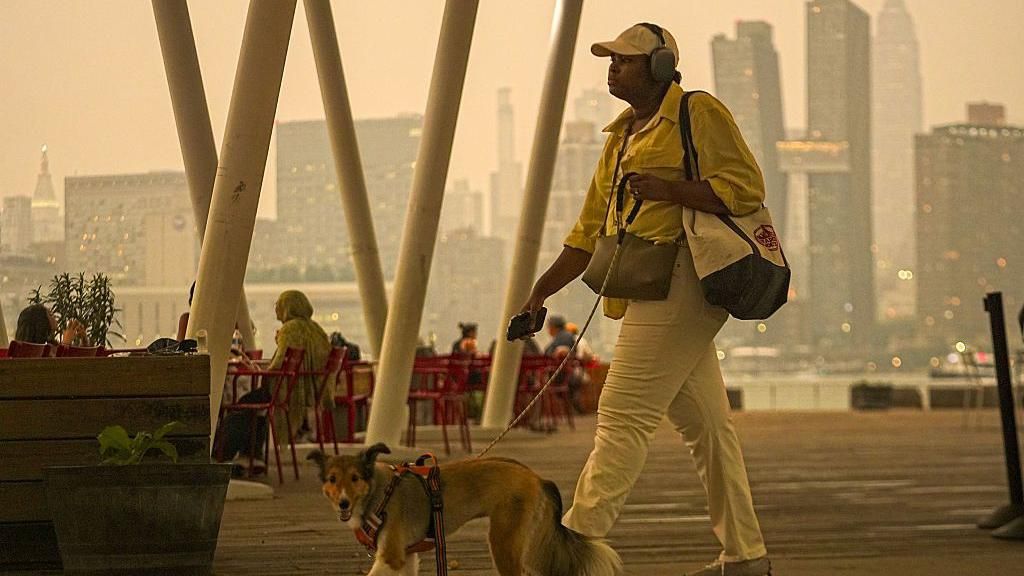
Independent air quality monitoring group IQAir currently ranks Detroit, Michigan as the city with the worst air pollution on Earth, with Minneapolis and Toronto claiming the second and third spots respectively. In New York City, cameras captured hazy, orange-tinged skies on Wednesday as lower concentrations of smoke settled into the upper atmosphere. The smoke has also altered natural light conditions, bringing vivid red sunrises and darker orange sunsets to cities across the Northeast and Great Lakes.
Meteorologists forecast that northwesterly wind patterns will continue pushing smoke south into U.S. states through the end of the week and into the weekend, raising concerns that poor air quality could reach New Jersey, the host location of Sunday’s World Cup final. While widespread thunderstorms are forecast for Ontario over the next several days, NOAA analysts note that the projected rainfall is unlikely to be heavy enough to fully extinguish the deep-rooted wildfires. A projected shift in wind direction by early Monday is expected to steer smoke plumes east toward Quebec, which should bring gradual improvement to air quality across the affected U.S. regions.