标签: North America

北美洲

  • Nationwide internet blackout reported in Iran as protests persist

    Nationwide internet blackout reported in Iran as protests persist

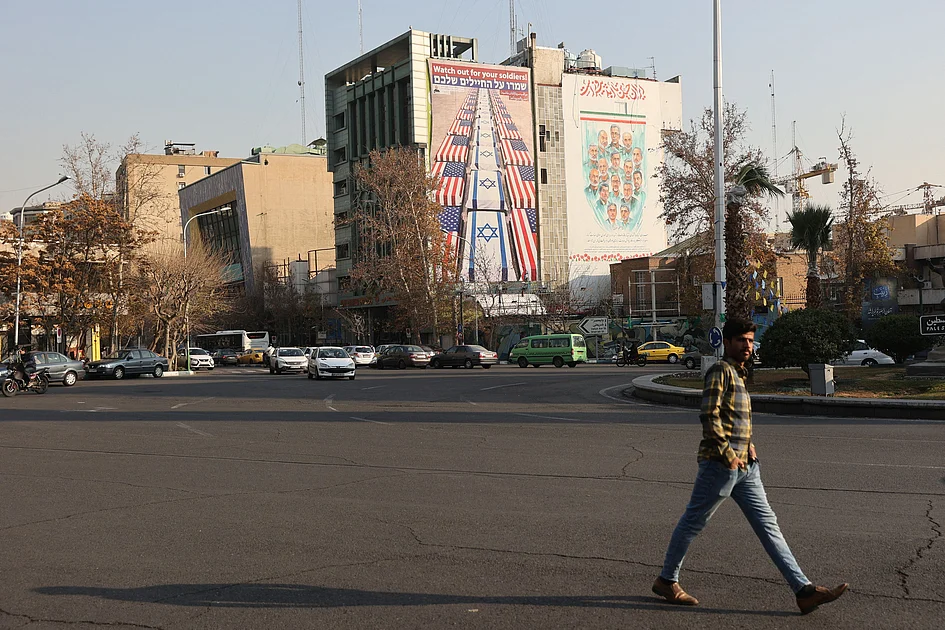
    Iran experienced a comprehensive internet shutdown on Thursday as widespread protests over economic hardships intensified across the nation. Internet monitoring organization NetBlocks confirmed the nationwide blackout, though specific details regarding the outage’s technical aspects remained unavailable.

    In Tehran, Mashhad, and Isfahan, witnesses reported continued demonstrations with protesters voicing opposition to the country’s clerical leadership. The unrest represents the most significant wave of dissent witnessed in Iran over the past three years, initially triggered by currency devaluation concerns among Tehran’s merchant community before expanding nationwide.

    The protests have emerged against a backdrop of severe economic challenges, including hyperinflation attributed to both domestic mismanagement and international sanctions. Social media posts, which Reuters could not independently verify, indicated some demonstrators expressed support for Reza Pahlavi, the exiled son of Iran’s former Shah, who had previously called for intensified protests through digital channels.

    Iranian state media presented a contrasting narrative, maintaining that cities throughout the country remained calm. Meanwhile, President Masoud Pezeshkian addressed the economic concerns by warning suppliers against hoarding and price manipulation, emphasizing the government’s commitment to ensuring adequate goods distribution.

    The situation develops under substantial international scrutiny, with former U.S. President Donald Trump threatening intervention should security forces employ violence against protesters. This occurs seven months following joint Israeli-American airstrikes targeting Iranian nuclear facilities, further complicating the geopolitical landscape.


  • UN report forecasts global economic output to grow 2.7 percent in 2026

    UN report forecasts global economic output to grow 2.7 percent in 2026

    The United Nations has projected a global economic expansion of 2.7 percent for 2026, according to its World Economic Situation and Prospects 2026 report released Thursday. This figure represents a marginal deceleration from the 2.8 percent growth estimated for 2025 and remains substantially below the pre-pandemic average of 3.2 percent, indicating a prolonged period of moderated economic performance worldwide.

    Regional economic trajectories reveal significant variations. The United States is anticipated to maintain relative stability with 2 percent growth in 2026, slightly improving from 1.9 percent in 2025, bolstered by monetary and fiscal easing measures. Conversely, the European Union faces a downturn to 1.3 percent growth in 2026 from 1.5 percent, constrained by elevated U.S. tariffs and persistent geopolitical uncertainties affecting export performance.

    East Asia demonstrates resilient yet slowing expansion at 4.4 percent for 2026, down from 4.9 percent, as the temporary stimulus from front-loaded exports diminishes. Japan’s economy is expected to grow modestly at 0.9 percent. South Asia maintains robust growth at 5.6 percent, primarily driven by India’s strong 6.6 percent expansion, though this represents a slight easing from regional performance in 2025.

    Notable improvements are forecast for Western Asia, with GDP growth accelerating to 4.1 percent from 3.4 percent. Africa projects a marginal uptick to 4 percent growth despite confronting substantial challenges including high debt burdens and climate-related disruptions. Latin America and the Caribbean anticipate moderate growth of 2.3 percent, slightly down from 2.4 percent, supported by steady consumer demand and gradual investment recovery.

    The Commonwealth of Independent States and Georgia demonstrate remarkable stability with 2.1 percent growth projected for 2026, maintaining pace despite ongoing macroeconomic pressures from the Ukraine crisis.

    Global trade exhibited unexpected resilience in 2025, expanding 3.8 percent despite policy uncertainties and rising protectionist measures, fueled by early-year shipment surges and vigorous services trade. However, this momentum is expected to moderate significantly to 2.2 percent growth in 2026, reflecting broader economic headwinds.

  • Two wounded in shooting involving federal agents in Portland

    Two wounded in shooting involving federal agents in Portland

    A contentious shooting incident involving federal agents has intensified the political climate in Portland, Oregon, leaving two individuals wounded and sparking demands for the suspension of federal immigration operations. According to the Department of Homeland Security (DHS), the altercation occurred during a traffic stop targeting a Venezuelan national allegedly affiliated with the transnational Tren de Aragua criminal network. DHS claims the individual attempted to use his vehicle as a weapon against agents, prompting one officer to fire a defensive shot. The wounded driver and passenger fled the scene but were later discovered several blocks away by Portland Police, who administered emergency medical aid before transporting them to the hospital. Their current conditions remain undisclosed. Media sources indicate the victims are a married couple. This event follows closely on the heels of a fatal shooting by federal agents in Minneapolis, which has ignited nationwide protests against aggressive federal law enforcement tactics. In response, Portland Mayor Keith Wilson, a Democrat, has publicly called for Immigration and Customs Enforcement (ICE) to cease all operations within the city pending a full investigation. He accused the federal administration of attempting to ‘divide us and pit communities against each other.’ The FBI has assumed control of the investigation, a move that has raised concerns about transparency and impartiality among local leaders. Democratic State Senator Lew Frederick emphasized that without local oversight, the community is unlikely to trust the investigation’s outcomes. The incident underscores the escalating tensions between local governments and federal agencies, reflecting broader national debates over immigration enforcement and police accountability.

  • US Senate advances resolution to limit Trump’s war powers following Venezuela strike

    US Senate advances resolution to limit Trump’s war powers following Venezuela strike

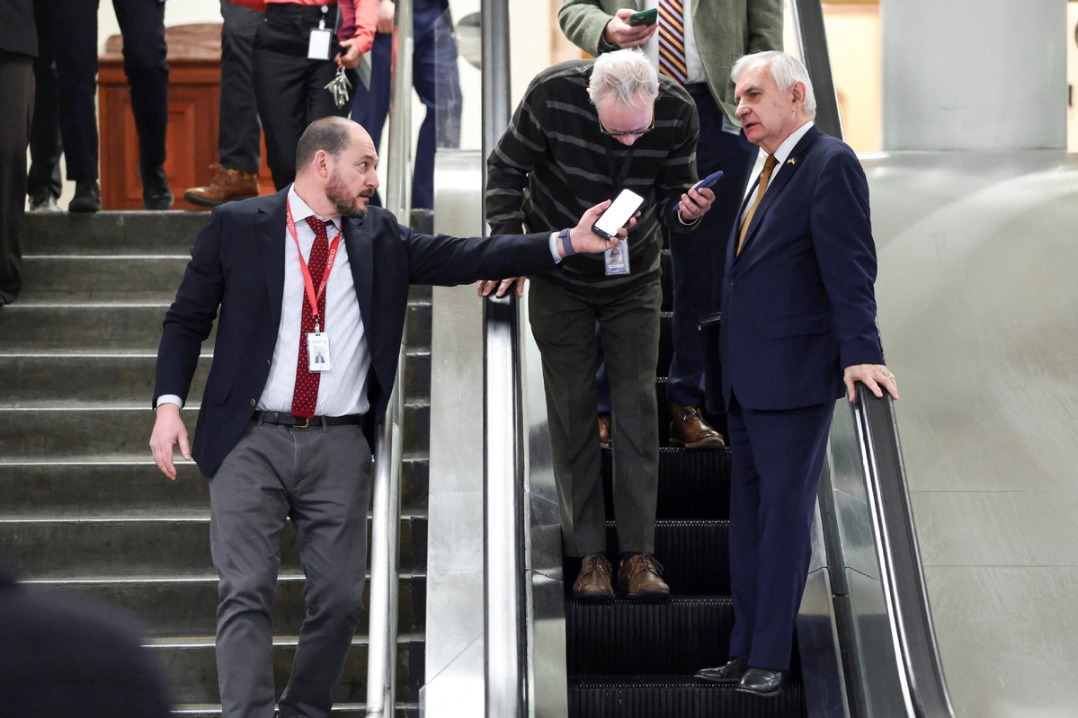
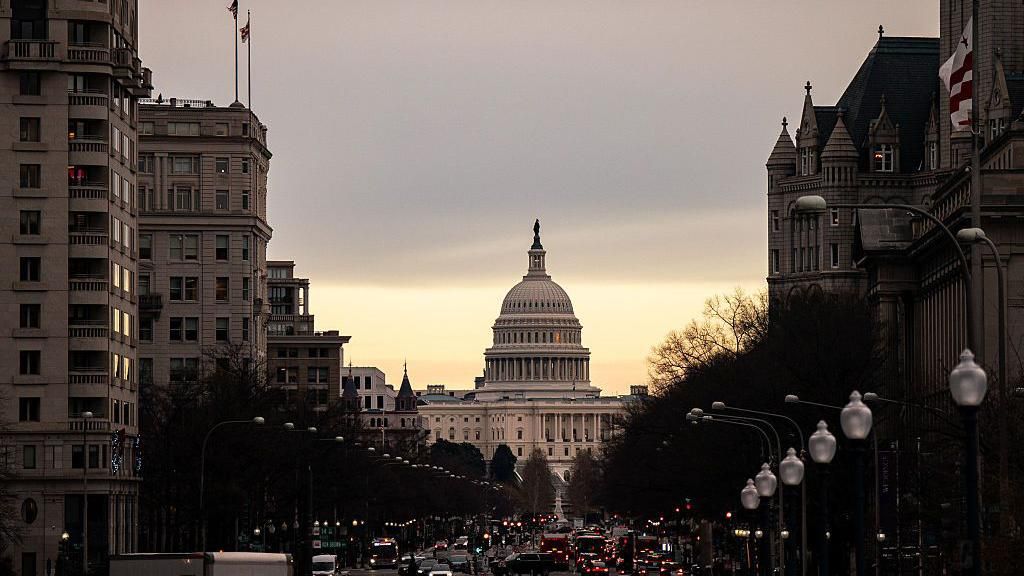
    The United States Senate has taken decisive steps to constrain presidential military authority following recent strikes in Venezuela. On Thursday, legislators advanced a significant resolution designed to limit President Donald Trump’s capacity to initiate further armed engagement against the South American nation without explicit congressional approval.

    The legislative action emerged as a direct response to military operations authorized by the administration, signaling growing congressional concern over executive branch war powers. The resolution, spearheaded by Senator Jack Reed (D-RI), represents a notable assertion of legislative authority in matters of military engagement and foreign policy.

    Following the Senate vote, Senator Reed addressed reporters on Capitol Hill, emphasizing the constitutional responsibility of Congress to oversee military commitments. “This measure reaffirms the fundamental principle that decisions of war and peace must reflect the collective judgment of the representatives of the American people,” Reed stated.

    The resolution development follows reports of significant casualties from recent military actions in Venezuela, with the country’s interior ministry claiming approximately 100 fatalities resulting from US operations. These events have intensified existing tensions between the two nations and prompted renewed scrutiny of presidential war powers.

    The legislative measure continues a longstanding tension between executive and legislative branches regarding military authorization that has persisted across multiple administrations. The resolution’s advancement suggests a reassertion of congressional authority in security matters that could establish significant precedents for future military engagements.

    International observers have closely monitored the development, with several European allies expressing concern over escalating tensions in Venezuela and the broader implications for regional stability in Latin America. The Senate’s action demonstrates increasing congressional willingness to shape foreign policy direction through legislative mechanisms.

  • Significant number of Venezuelan, foreign prisoners to be freed, says top lawmaker

    Significant number of Venezuelan, foreign prisoners to be freed, says top lawmaker

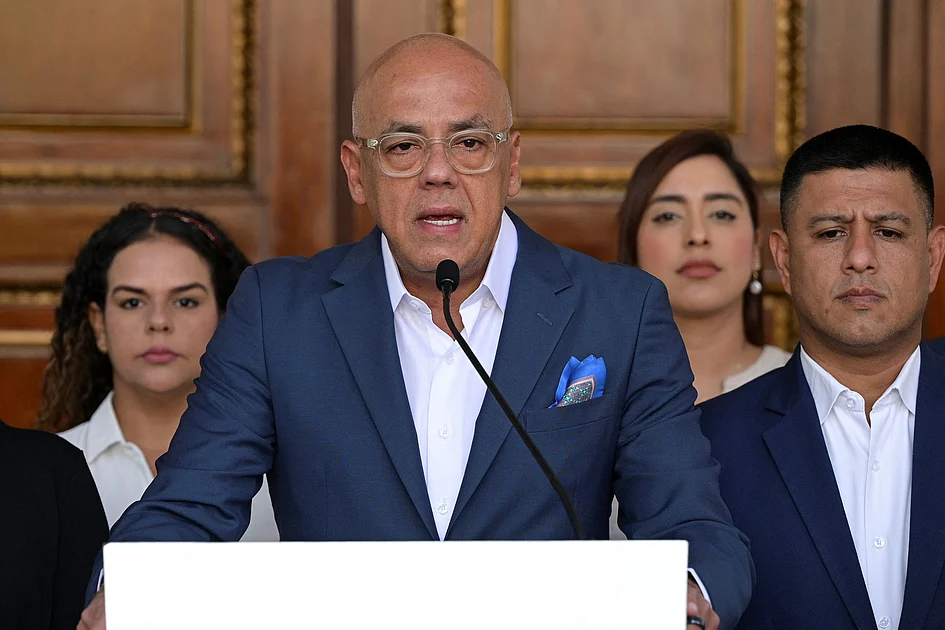
    In a significant political development, Venezuela’s National Assembly President Jorge Rodriguez declared on Thursday that authorities would imminently release a substantial number of detainees, including both Venezuelan nationals and foreign citizens. The announcement marks a notable concession to opposition demands and represents what Rodriguez characterized as a unilateral peace initiative by the Bolivarian government.

    Rodriguez emphasized that this prisoner release operation was already underway during his Thursday announcement, describing it as a sovereign decision made independently without negotiations or agreements with external parties. The move addresses longstanding calls from Venezuela’s political opposition for prisoner releases, though Rodriguez did not specify the exact number of individuals to be freed or provide detailed identification of those included in the amnesty.

    This development occurs within Venezuela’s complex political landscape, where prisoner releases have frequently served as both confidence-building measures and bargaining chips in past political dialogues. The inclusion of foreign nationals suggests potential diplomatic dimensions to the decision, possibly affecting Venezuela’s international relations amid ongoing economic challenges and political tensions.

    The government’s framing of this action as a ‘gesture of peace’ indicates a possible strategic shift in its approach to domestic opposition and international observers, though the ultimate impact and motivations behind this unilateral move remain to be fully assessed as implementation proceeds.

  • Minneapolis ICE shooting: FBI, DOJ exit cooperation on probe, says state crime bureau

    Minneapolis ICE shooting: FBI, DOJ exit cooperation on probe, says state crime bureau

    In a significant development for a high-profile law enforcement case, the Minnesota Bureau of Criminal Apprehension (BCA) announced on Thursday, January 8, 2026, that it has been compelled to withdraw from its investigation into a fatal shooting involving a federal immigration agent. The decision came after the Federal Bureau of Investigation (FBI) and the U.S. Department of Justice (DOJ) abruptly terminated their cooperative agreement with the state-level agency.

    The case centers on the death of a 37-year-old woman in Minneapolis, who was fatally shot by an agent from U.S. Immigration and Customs Enforcement (ICE). The BCA, which had been leading the probe, stated that the federal withdrawal of support created an insurmountable obstacle. The federal agencies’ exit means the BCA no longer has access to critical evidence, witness testimonies, and case information gathered under the federal purview.

    In an official statement, the BCA expressed profound frustration with the turn of events, emphasizing that its standards for a transparent and thorough investigation, as mandated by Minnesota state law and public expectation, could no longer be met. ‘Without complete access to the evidence, witnesses, and information collected, we cannot proceed,’ the Bureau stated, characterizing its withdrawal as ‘reluctant.’ This move halts the state’s independent inquiry and casts serious doubt on the future of accountability in the case, effectively leaving the investigation in the hands of the federal agencies that were subjects of the probe. The incident raises urgent questions about jurisdictional conflicts and oversight in cases involving federal law enforcement officers.

  • Chief Trump ideologue Miller, an unabashed meanie from the get-go

    Chief Trump ideologue Miller, an unabashed meanie from the get-go

    Stephen Miller, the White House deputy chief of staff and one of President Trump’s most enduring advisers, has articulated a radical foreign policy doctrine centered on raw power dynamics during a recent CNN interview. Speaking with Jake Tapper, Miller asserted that the United States would embrace its superpower status under Trump’s leadership, explicitly framing international relations through the lens of strength and force rather than diplomatic conventions.

    The interview notably addressed the administration’s controversial aspirations regarding Greenland, with Miller dismissing “international niceties” in favor of realpolitik considerations. This worldview aligns with Miller’s decades-long advocacy for extreme policies, tracing back to his teenage years in California where he first expressed contentious views about immigration and multiculturalism.

    Miller’s influence has expanded significantly from his initial role as speechwriter to becoming a key policy interpreter and executor for Trump. He maintains daily coordination with the president and chief of staff Susie Wiles, while also serving as a critical liaison between the White House and Capitol Hill.

    His ideological development reveals consistent extremism: from criticizing Hispanic classmates’ language skills in high school, to attacking multiculturalism at Duke University, to developing the Trump administration’s most severe immigration policies including family separation—a practice condemned internationally as cruel. In Trump’s second term, Miller continues pushing radical initiatives including ending birthright citizenship and challenging constitutional norms regarding habeas corpus and judicial oversight.

    The Millers have become increasingly prominent, with wife Katie Miller generating controversy through social media posts about Greenland acquisition and hosting a podcast platforming administration officials. Their growing visibility presents both an asset for mobilizing Trump’s base and a liability for appealing to independent voters, with critics like California Governor Gavin Newsom comparing Miller to the villain Voldemort from Harry Potter.

    As the administration continues implementing its “America First” agenda, Miller’s philosophy of might-makes-right governance appears positioned to shape U.S. foreign and domestic policy fundamentally, despite concerns about its constitutional implications and electoral consequences.

  • US House expands healthcare subsidies but bill faces battle in Senate

    US House expands healthcare subsidies but bill faces battle in Senate

    In a significant legislative maneuver, a coalition of seventeen moderate Republicans joined unanimous Democratic members in the U.S. House of Representatives to pass a bill extending crucial healthcare subsidies for millions of Americans. The measure cleared the lower chamber with a 230-196 vote, representing a notable rebuke to House Speaker Mike Johnson and Republican leadership who had opposed renewal of the pandemic-era tax credits.

    The legislation aims to reinstate Affordable Care Act subsidies that expired at the end of last year, potentially providing three additional years of financial relief for approximately 20 million Americans who have faced premium increases exceeding 100% since the benefits lapsed. These tax credits, originally established under President Barack Obama’s signature healthcare legislation in 2014 and expanded during the COVID-19 pandemic, have become essential for making health insurance affordable through ACA marketplaces.

    The bill’s passage was forced through an unusual procedural tactic known as a discharge petition, initiated last month when four Republican members crossed party lines to demand a floor vote. This legislative strategy circumvented traditional leadership channels and demonstrated growing dissent within the Republican ranks regarding healthcare policy.

    Despite its House success, the legislation faces substantial obstacles in the Senate, where it currently lacks the necessary 60 votes for passage. Senate leaders have indicated they are developing their own bipartisan compromise, with legislative text expected to be released next week. The House vote, while largely symbolic given Senate opposition, strategically positions healthcare affordability as a central issue ahead of November’s midterm elections.

  • Astronaut’s ‘serious medical condition’ forces Nasa to end space station mission early

    Astronaut’s ‘serious medical condition’ forces Nasa to end space station mission early

    NASA has initiated an unprecedented early return of four International Space Station crew members, shortening their mission by approximately one month due to an undisclosed medical condition affecting one astronaut. The decision marks the first medical-related early evacuation in both the 24-year continuous habitation of the ISS and NASA’s 65-year human spaceflight history.

    The affected crew member, whose identity remains protected under medical privacy laws, is reported to be in stable condition. NASA officials emphasized this does not constitute an emergency evacuation, with Administrator Jared Isaacman stating, ‘We always prioritize astronaut health and safety above mission duration.’

    Crew-11 comprises NASA astronauts Zena Cardman (commander) and Mike Fincke (pilot), alongside mission specialists Kimiya Yui from Japan’s JAXA space agency and Russian cosmonaut Oleg Platonov. The team launched aboard a SpaceX Crew Dragon in August 2025 for what was intended to be a standard six-month orbital mission.

    Medical officer Dr. James Polk clarified the condition is unrelated to space operations or injury, though specifics remain confidential. The ISS’s onboard medical capabilities, including secure Earth-communication systems and basic treatment equipment, have facilitated remote consultation with ground-based physicians.

    While one American astronaut and two Russian cosmonauts will maintain station operations, space scientist Dr. Simeon Barber notes the reduced crew may delay scientific experiments and require focus on essential maintenance until replacement Crew-12 arrives next month. NASA expects to provide updated return timeline details within 48 hours.

  • Minnesota officials say FBI blocked their access to ICE shooting probe

    Minnesota officials say FBI blocked their access to ICE shooting probe

    A deepening jurisdictional conflict has emerged between Minnesota state authorities and federal agencies regarding the investigation into the fatal shooting of 37-year-old Renee Good by a U.S. Immigration and Customs Enforcement (ICE) agent. The incident, which occurred Wednesday in Minneapolis, has sparked public outrage and street protests while exposing significant tensions between state and federal governance.

    Minnesota’s Bureau of Criminal Apprehension (BCA) announced it has ‘reluctantly withdrawn’ from the investigation after the FBI reversed an initial agreement for joint cooperation and denied state officials access to critical evidence and case materials. This development came despite earlier assurances of collaborative oversight between federal and state law enforcement agencies.

    At the heart of the controversy are conflicting narratives about the circumstances leading to Good’s death. The Trump administration, through Homeland Security Secretary Kristi Noem, maintains the ICE agent acted in self-defense, claiming Good attempted to run over the officer with her vehicle. Conversely, local officials assert that the woman posed no credible threat to the armed federal agents.

    Minnesota Governor Tim Walz expressed profound concerns about the integrity of the investigation, stating that the federal government’s exclusion of state authorities undermines the possibility of an unbiased outcome. ‘It feels now that Minnesota has been taken out of the investigation,’ Walz commented during a Thursday news conference. ‘It feels very, very difficult that we will get a fair outcome.’

    Vice President JD Vance countered these concerns by characterizing the investigation as exclusively federal matter, arguing that local involvement would contradict established legal precedents for cases involving federal officers.

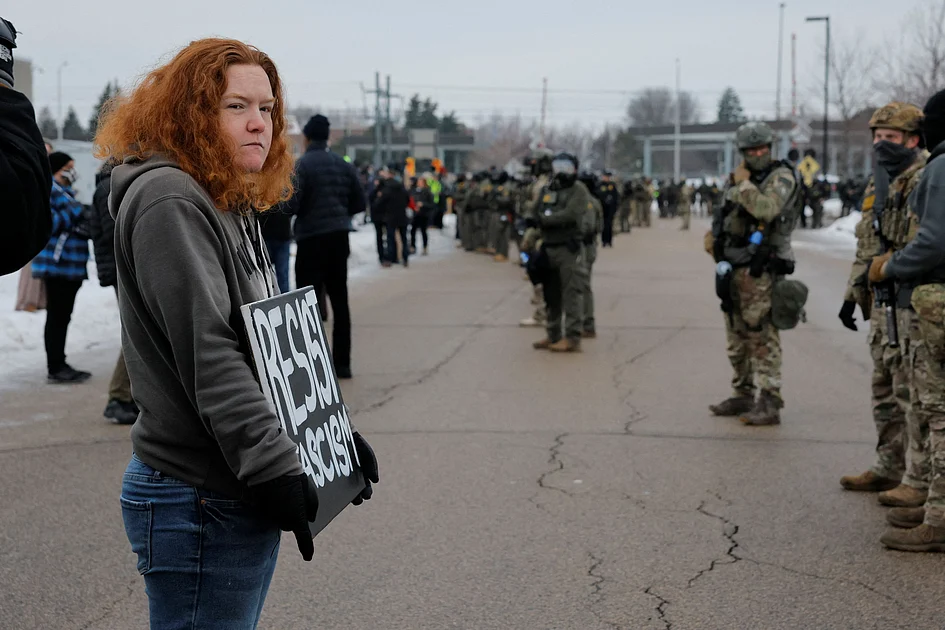
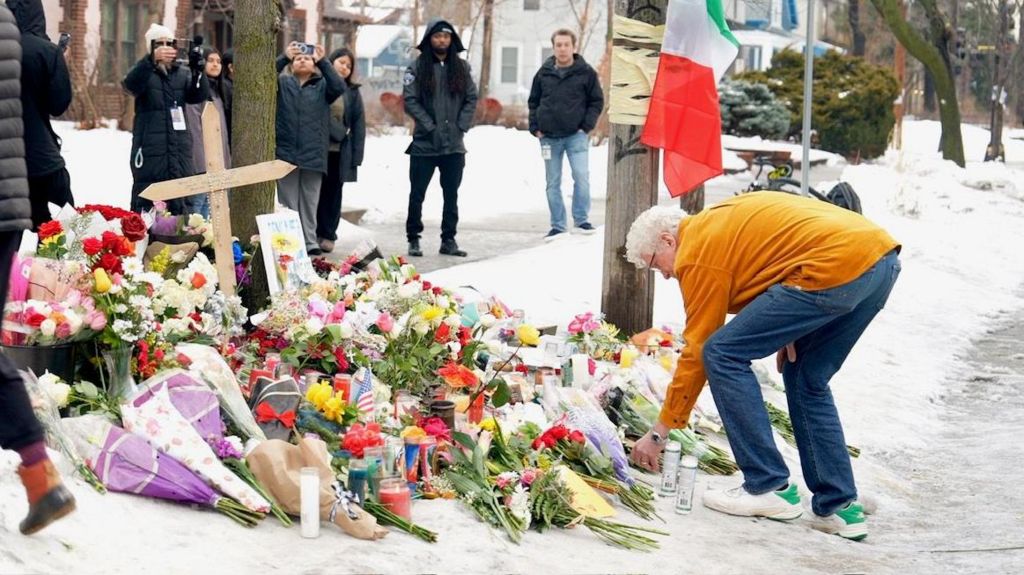
    Community response has been immediate and emotional. Hundreds of demonstrators gathered at the shooting site and federal buildings in Minneapolis, creating memorials with candles and roses while demanding accountability. Those who knew Good described her as a compassionate poet and musician who had recently moved to Minneapolis. Her mother, Donna Ganger, told local media her daughter was ‘probably terrified’ during the fatal confrontation.

    Criminologist Edward Maguire of Arizona State University noted that the jurisdictional dispute likely reflects political efforts to control the investigation’s narrative rather than purely legal considerations. Legal experts suggest Minnesota could still pursue criminal charges against the federal officer once the FBI completes its investigation.

    The case continues to develop amid growing tensions between state and federal authorities, with community members maintaining vigil at the shooting site and promising continued protests until justice is served.