标签: North America

北美洲

  • Trump slams NATO again for being unhelpful for US

    Trump slams NATO again for being unhelpful for US

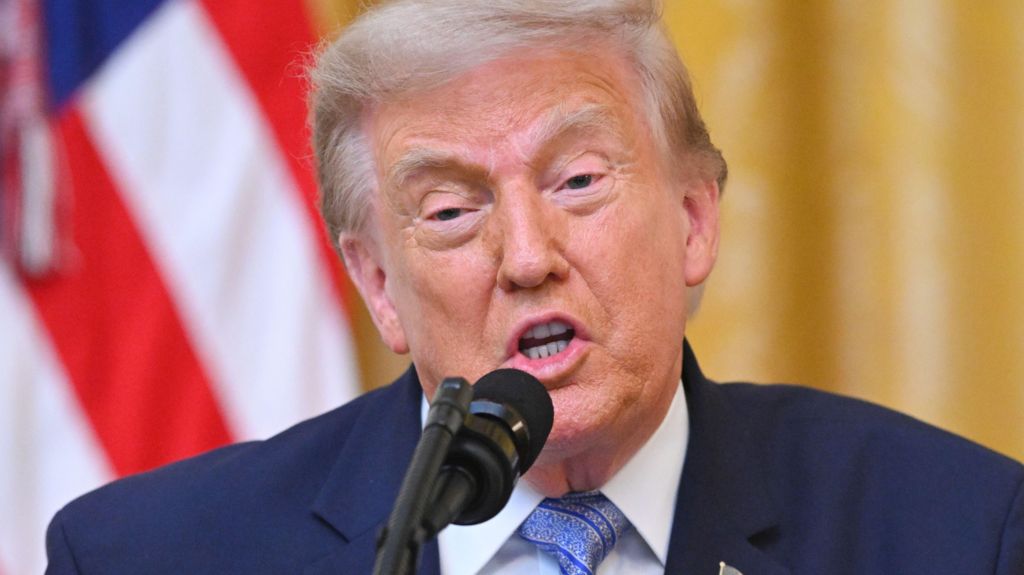
    Tensions between the United States and its transatlantic NATO allies have reached a new boiling point, after U.S. President Donald Trump launched another sharp public rebuke of the alliance on Wednesday, accusing member states of failing to come to Washington’s aid during the ongoing conflict with Iran. The attack came the same day NATO Secretary General Mark Rutte arrived in Washington on a high-stakes trip designed to mend fraying ties between the two sides that have deteriorated sharply during Trump’s second term in office.

    Trump’s criticism came after closed-door talks with Rutte at the White House, which the NATO chief later described as unflinchingly candid. In a post on his Truth Social platform following the meeting, Trump doubled down on his grievances, claiming “NATO wasn’t there when we needed them, and they won’t be there if we need them again.” He also invoked an earlier point of contention with European allies, referencing Greenland as “that big, poorly run, piece of ice” — a nod to his previous push for the U.S. to acquire the autonomous Danish territory, which drew widespread backlash across Europe.

    Rutte acknowledged the depth of U.S. frustration in comments to CNN, confirming that “Trump is clearly disappointed with many NATO allies” and reiterating that the conversation had been “very frank, very open.”

    The current rift stems directly from the outbreak of the Iran war earlier this year. After Trump called on NATO allies to join U.S. operations to reopen the Strait of Hormuz, which has been closed during the conflict, the alliance rejected the request. The anger deepened when several European nations, including Spain and Italy, refused U.S. requests to use their national airspace for military operations tied to the Iran campaign, a decision that left Trump publicly enraged.

    Over the past month, Trump has stepped up his repeated attacks on NATO, repeatedly slamming the alliance for its lack of support for the U.S. war effort and issuing open threats to withdraw the U.S. from the decades-long collective defense treaty. This latest public criticism signals that even direct diplomatic outreach from the new NATO leadership has failed to ease the standoff. Longstanding tensions over defense spending, trade policy, and Trump’s unilateral approach to foreign policy have already strained transatlantic ties, and the combination of the Iran war and the Greenland dispute has widened the split to its widest point in decades.

    Citing unnamed senior U.S. officials, The Wall Street Journal reported on Wednesday that the Trump administration is actively drafting a punitive plan to retaliate against NATO allies that have refused to back the 39-day U.S.-Israeli campaign against Iran. According to the report, the proposal has been circulating among senior administration officials for weeks and has gained tangible support from top Trump advisers.

    Under the draft plan, the U.S. Department of Defense would reposition American troops currently stationed across NATO member states that Washington deems unhelpful, relocating these forces to European nations that have shown clear support for the U.S. position in the Iran war. The proposal also includes the potential permanent closure of at least one major U.S. military base in Europe, with Spain and Germany named as the most likely candidates for base closures. The Journal reported that nations widely viewed as supportive of the U.S. campaign — including Poland, Romania, Lithuania and Greece — would receive the relocated U.S. forces under the plan.

  • White House’s tough rhetoric puts US people on edge

    White House’s tough rhetoric puts US people on edge

    On the eve of a self-imposed deadline that brought the United States and Iran to the brink of open conflict, a last-minute 14-day ceasefire brokered by Pakistani Prime Minister Shehbaz Sharif has averted immediate escalation, but widespread anger and anxiety over US President Donald Trump’s incendiary rhetoric continues to ripple across the US and the international community.

    Trump announced the breakthrough on his social media platform Tuesday, just hours after he issued a shocking warning that “a whole civilization will die tonight” if Iran refused to reopen the strategically critical Strait of Hormuz and meet his demands for a new agreement. Under the terms of the deal, Iran confirmed it will enter two weeks of negotiations with US negotiators in the Pakistani capital of Islamabad, with formal talks set to kick off this Friday.

    The 11th-hour U-turn capped a day of soaring tension that left ordinary American citizens, sitting lawmakers, and United Nations officials reeling from the president’s unprecedentedly harsh language. Just one day earlier, Trump had already threatened to annihilate all of Iran’s civilian infrastructure, promising to destroy “every bridge” and power plant across the country if his deadline was not met. Tuesday morning, he doubled down on the threat with the apocalyptic warning that an entire civilization would be erased if no deal was reached.

    That aggressive rhetoric left many US residents deeply shaken. In New York City, 54-year-old Adam Turner told reporters he was reduced to tears by the persistent stress of Trump’s confrontational approach to Iran, a policy that reversed the 2015 nuclear deal struck under former president Barack Obama that Turner described as effective. “It is without respect. It is without intelligence, without dignity. And the fact that we are represented by that is a crime,” Turner said. “It makes me sad because I don’t think the Iranian people deserve it. He got rid of Obama’s Iran deal. We had a deal in place that was effective.”

    Criticism of the president’s threats extended far beyond liberal opponents of Trump. Even Marjorie Taylor Greene, a long-time loyal ally of the president from his own Republican Party, condemned the rhetoric in a post on X, writing: “We cannot kill an entire civilization. This is evil and madness.”

    Top Democratic leaders went further, calling on congressional Republicans to break with the president and intervene to stop the drift toward war. House Minority Leader Hakeem Jeffries, a Democrat representing New York, urged GOP lawmakers to put national interest above partisan loyalty. “Congress must immediately end this reckless war of choice in Iran before Donald Trump plunges us into World War III,” Jeffries wrote on X. “It’s time for every single Republican to put patriotic duty over party and stop the madness. Enough.”

    A 66-year-old Manhattan resident, Lewis Fox, echoed that frustration, arguing that Trump’s bellicose language has redefined the US’s global role from a global protector to a global bully. “I think he doesn’t have a clue what he’s doing. He has converted the United States into the bully of the world versus the savior of the world. And therefore, he definitely shouldn’t be talking like that,” Fox said.

    The United Nations also joined the chorus of concern, with a spokesperson for Secretary-General António Guterres saying the UN chief was “deeply troubled” by statements that put civilian lives at risk of catastrophic harm from military action.

    Protests also sprung up near the White House this week, with demonstrators gathering in Lafayette Square to condemn joint US-Israeli strikes on Iran and push for de-escalation. While the ceasefire has pulled the region back from the immediate brink of all-out war, the crisis triggered by Trump’s rhetoric has left deep divisions in the US and renewed global worries over the stability of the Middle East.

  • Young HK musicians link cultures on US tour

    Young HK musicians link cultures on US tour

    A dynamic ensemble of emerging young musicians from Hong Kong has embarked on a landmark West Coast tour of the United States, leveraging the universal language of music to build cross-community connections and deepen mutual cultural understanding between East and West.

    Organized by the Hong Kong Academy for Performing Arts (HKAPA), the HKAPA Nexus Ensemble brings together a select group of the institution’s most outstanding current music students and accomplished alumni. This multi-faceted U.S. tour blends formal public performances with immersive educational exchanges at leading higher education institutions, including the University of San Francisco and Los Angeles’ prestigious Colburn School.

    Composer Karry Li, part of the touring group, explained the dual mission driving the project: “We hope to bring our music to both American and Chinese-American audiences across the West Coast, while also giving our young musicians the opportunity to visit leading conservatories and universities for interactive learning and peer-to-peer exchange.”

    Beyond formal recitals, collaborative rehearsals, skill-building workshops and informal personal interactions have allowed young musicians from Hong Kong and the U.S. to discover shared passions and common ground that extends far beyond the concert stage. Claire Wong, a violist performing with the ensemble, noted that the time spent co-rehearsing with American music students evolved into a transformative cultural exchange experience.

    “During those collaborative moments, we shared our diverse perspectives on music education, cultural traditions and everyday life. That open dialogue really helped us understand each other on a much deeper level,” Wong said.

    On Monday, the ensemble headlined the Hong Kong Cultural Evening hosted at Los Angeles’ Chinese American Museum, where they presented a carefully curated program that seamlessly wove together canonical Western classical works and original compositions rooted in Hong Kong’s unique cultural identity. Standout pieces included *Over the Harbour*, a contemporary work inspired by the iconic, ever-shifting vistas of Victoria Harbour, alongside beloved Hong Kong classic *Below the Lion Rock*.

    The tour also shone a spotlight on the longstanding, multifaceted ties between Hong Kong and the U.S. state of California. D.C. Cheung, director of the Hong Kong Economic and Trade Office in San Francisco, used the event to share updates on Hong Kong’s evolving economic outlook while emphasizing how people-to-people cultural exchange lays the groundwork for broader cooperation.

    “There is no surplus or deficit in sharing music — the more we share, the more we have,” Cheung said. “One small step in cultural exchange here in Los Angeles could lead to much larger cooperation in other fields down the line.”

    For Los Angeles’ cultural institutions, the ensemble’s visit aligns with ongoing efforts to connect younger generations across borders through shared cultural heritage and global perspectives. Gay Yuen, board chair of the Friends of the Chinese American Museum, underscored the long-term value of cross-cultural youth exchanges like this tour.

    “We are rooted in Chinese culture, and it’s important for young people to understand both their history and what is happening in the wider world,” Yuen said.

  • Artemis crew returning to Earth with ‘all the good stuff’ from Moon discoveries

    Artemis crew returning to Earth with ‘all the good stuff’ from Moon discoveries

    In a historic live virtual press conference from deep space, the four-person Artemis II crew aboard NASA’s Orion capsule spoke with reporters Wednesday, just days ahead of their scheduled return to Earth following a groundbreaking lunar flyby mission. This marked the first public update from the crew since they completed their pass around the Moon’s far side, a journey that pushed them farther from Earth than any humans in recorded history.

    On Monday, the Orion spacecraft officially claimed a new spaceflight record at 1:56 p.m. EDT, surpassing the 248,655-mile distance mark set by the Apollo 13 mission in 1970. Unlike Apollo-era landing missions, Artemis II was designed solely to conduct a full flyby of the Moon’s far side — the hemisphere permanently turned away from Earth. While robotic satellites have mapped this region before, this mission marked the first time human astronauts have directly observed sections of its rugged terrain, including massive impact craters and ancient lava plains with their own eyes.

    Speaking from the capsule as the crew made their return journey, mission pilot Victor Glover shared that the team is holding a wealth of new content and scientific data that has yet to be released to the public. “We have to get back. There’s so much data that you’ve already seen, but all the good stuff is coming back with us,” Glover said. “There’s so many more pictures, so many more stories.” Glover added that the full magnitude of their historic journey has yet to fully sink in for the crew, and that the experience will stay with him for the rest of his life. “I’m going to be thinking about and talking about all of these things for the rest of my life,” he noted.

    During the conference, reporters asked the crew about the 40-minute period of communication blackout when Orion traveled behind the Moon, cutting off all contact with mission control on Earth. Commander Reid Wiseman explained that the window was far from unproductive: the crew used the time to complete high-priority lunar observation work for NASA’s geology team. Still, the team carved out a small moment to pause and reflect on their unique position, sharing maple cookies that crew member Jeremy Hansen brought along for the trip.

    For different crew members, the mission’s most meaningful moments varied widely. Glover described seeing a lunar eclipse from beyond the Moon’s far side as the “greatest gift” of the entire journey. For Wiseman, the emotional pinnacle came when the crew formally named a previously unlabeled lunar crater after his late wife Carroll, who passed away from cancer in 2020. “I think when Jeremy spelled Carol’s name …. I think for me that is when I was overwhelmed with emotion and I looked over and Christina was crying,” Wiseman recalled. “Just for me personally, that was kind of the pinnacle moment of the mission for me.”

    When asked by BBC News Science Editor Rebecca Morelle what part of spaceflight the crew will miss most after returning, mission specialist Christina Koch highlighted the close bond the team has formed during the flight. “I will miss the camaraderie,” she said. When pressed on what she will not miss, Koch said there was nothing that felt like an unacceptable tradeoff for the chance to push human exploration forward. “We can’t explore deeper unless we are doing a few things that are inconvenient, unless we’re making a few sacrifices, unless we’re taking a few risks. And those things are all worth it,” she explained.

    The crew added that their primary source of public reaction to the mission has been updates from family members back on Earth, who Wiseman joked are “obviously all biased” in their support of the team. In the coming days, the crew will conduct routine system checks and final scientific experiments before their high-stakes re-entry. Orion is scheduled to slam through Earth’s atmosphere at nearly 25,000 mph, relying on its heatshield to withstand extreme temperatures before deploying parachutes for a splashdown in the Pacific Ocean off the coast of San Diego. The landing, set for approximately 8 p.m. U.S. Eastern Time Friday (00:00 GMT Saturday), will test the capsule’s new heatshield and recovery systems ahead of future planned Artemis landing missions to the lunar surface. Following the lunar flyby, former U.S. President Donald Trump spoke with the crew to congratulate them on their historic achievement, saying “Today, you’ve made history and made all America really proud, incredibly proud.”

  • Watch: BBC asks Artemis II crew a question in space

    Watch: BBC asks Artemis II crew a question in space

    In a groundbreaking moment connecting space exploration and terrestrial journalism, the four-member crew of NASA’s Artemis II mission has fielded a question from the British Broadcasting Corporation while positioned inside their deep-space capsule, marking a rare interaction between a major media outlet and astronauts ahead of their mission’s conclusion.

  • Jim Whittaker, first American to summit Mount Everest, dies aged 97

    Jim Whittaker, first American to summit Mount Everest, dies aged 97

    Legendary American mountaineer Jim Whittaker, who carved his name into global exploration history as the first person from the United States to reach the summit of Mount Everest, has passed away at the age of 97. His death was confirmed by his youngest son Leif Whittaker, who shared that Whittaker died on a Tuesday at his longtime home in Port Townsend, Washington, surrounded by close family and loved ones.

    Born in Seattle, Washington, in February 1929, Whittaker — widely known by the nickname “Big Jim” — first fell in love with climbing as a Boy Scout in the 1940s, alongside his identical twin brother Lou. By the age of 16, the pair had already summited Mount Olympus, the 7,965-foot highest peak in Washington’s Olympic Mountains, marking the start of a decades-long career that would redefine American mountaineering.

    Whittaker’s most groundbreaking achievement came on May 1, 1963, a full decade after Sir Edmund Hillary and Tenzing Norgay completed the first confirmed ascent of Everest. Alongside his Sherpa climbing partner Nawang Gombu, Whittaker reached the 29,032-foot summit of the world’s highest peak, which sits on the border between Nepal and China. That iconic moment was captured by Gombu in what remains one of the most famous photographs in mountaineering history. For the historic feat, then-U.S. President John F. Kennedy awarded Whittaker the prestigious Hubbard Medal, the highest honor bestowed by the National Geographic Society for exploration.

    Reflecting on the lessons he learned from high-altitude climbing later in life, Whittaker told the BBC that conquering a peak as challenging as Everest teaches humility. “You learn, when you climb a difficult mountain, you leave your ego behind and learn that you’re just a little micro-speck in this life. You learn your weaknesses and have a little broader perspective,” he said.

    Fifty years after his record-breaking ascent, at the age of 83, Whittaker returned to Everest alongside his son Leif, a professional high-altitude climbing coach, to revisit the peak that made him a household name. He chronicled his decades of adventures and insights in his memoir, *A Life on the Edge*, and remained an active leader in the global climbing community for his entire life, serving in leadership roles for more than 50 years with The Mountaineers, a historic Washington-based alpine organization founded in 1906.

    Beyond his mountaineering achievements, Whittaker left an indelible mark on the outdoor industry and environmental conservation. In 1955, he became the first full-time paid employee of outdoor retail cooperative Recreational Equipment Inc. (REI), and went on to serve as the company’s second president and CEO from 1971 to 1979. In a statement following his death, REI honored Whittaker as “a true trailblazer and generous leader” and one of the most influential figures in both the company’s history and the broader global outdoor community. “Jim showed the world what’s possible when courage is grounded in purpose,” the company said, adding that “he expanded our sense of what exploration can be.”

    Whittaker was also a prominent advocate for public land protection. In 1968, he testified before the U.S. Congress to push for the creation of protected wilderness areas; his advocacy was instrumental in establishing North Cascades National Park and the Pasayten Wilderness in his home state of Washington, as well as California’s Redwood National Park, preserved wild spaces that millions of visitors enjoy today.

    A close friend of the Kennedy family, Whittaker served as Washington state chairman for Robert F. Kennedy’s 1968 presidential campaign. He also shared a historic climbing trip with Kennedy, ascending a 14,000-foot un-named peak in Canada that was later renamed Mount Kennedy in honor of the assassinated presidential candidate.

    Whittaker died in his home, in a bed that overlooked the rugged landscape he cherished: the Olympic Mountains, Port Townsend Bay, and the Strait of Juan de Fuca, his son shared in the family’s official obituary. In a statement published to X, Washington Governor Bob Ferguson paid tribute to the mountaineer, calling him “one of the great Washingtonians” who “inspired many generations of mountaineers to explore the outdoors, including me. I’m grateful for the time I spent with him over the years,” Ferguson wrote.

    His family’s obituary remembered Whittaker as an American folk hero who built a life rooted in “devoted to adventure, stewardship, service, and family.” Per REI’s reflection, throughout his 97 years, Whittaker measured success not by his own iconic summits, but by the community he built, the commitment to conservation he modeled, and the countless people he encouraged to step outside and explore something greater than themselves.

  • US Coast Guard opens criminal investigation into Michigan woman’s disappearance in Bahamas

    US Coast Guard opens criminal investigation into Michigan woman’s disappearance in Bahamas

    A high-stakes missing person case unfolding in the Caribbean has taken a major turn, with the United States Coast Guard confirming Wednesday it has opened a formal criminal investigation into the disappearance of 59-year-old American traveler Lynette Hooker, who vanished after reportedly falling overboard from a small recreational vessel during a vacation with her husband.

    According to statements Brian Hooker gave to Bahamian law enforcement, the couple set out from the popular resort community of Hope Town on Abaco Island Saturday evening, heading toward nearby Elbow Cay aboard their 8-foot hard-bottomed dinghy. During the trip, Lynette fell overboard into rough, choppy waters, Brian told authorities, and was quickly pulled away from the boat by powerful ocean currents. In a chaotic turn of events, the vessel’s ignition keys went overboard with Lynette, leaving Brian unable to motor the craft back toward his wife. After struggling against the rough conditions, he eventually paddled the empty dinghy to shore, reaching the Marsh Harbour Boat Yard just before 4 a.m. local time Sunday. He alerted a dock worker, who contacted local authorities to launch an initial search.

    In a public statement shared with CBS News Wednesday, Brian Hooker expressed profound grief over the incident, saying he is devastated by the loss of his wife and remains focused on the ongoing search effort. “I am heartbroken over the recent boat accident in unpredictable seas and high winds that caused my beloved Lynette to fall from our small dinghy near Elbow Cay in the Bahamas,” he said. “Despite desperate attempts to reach her, the winds and currents drove us further apart. We continue to search for her and that is my sole focus.” He also thanked responding agencies and civilian volunteers for their work in the ongoing search.

    But the case has raised unsettling questions from Lynette’s immediate family, who point to her decades of experience on the water to cast doubt on the official account provided so far. Lynette’s daughter, Karli Aylesworth, told CBS News Wednesday that her mother has been an active sailor for more than 10 years and is a skilled, experienced swimmer. Aylesworth said she cannot reconcile her mother’s background with how the incident is described, and has called for a full, exhaustive investigation into what led to her mother’s disappearance.

    Coast Guard officials confirmed to the BBC Wednesday that the criminal probe is now active, but declined to share any further details about the scope of the investigation, including whether any persons of interest have been identified or what specific lines of inquiry investigators are pursuing. The Royal Bahamas Police Force, which initially announced the investigation and multi-agency search in a social media post Tuesday, did not immediately respond to the BBC’s request for additional comment on the new criminal investigation. The U.S. Coast Guard joins multiple Bahamian agencies in the ongoing search and investigation effort, more than five days after Lynette Hooker was first reported missing.

  • BBC reports from court as ‘Ketamine Queen’ sentenced

    BBC reports from court as ‘Ketamine Queen’ sentenced

    In a high-profile court hearing covered extensively by the BBC, Jasveen Sangha, a drug trafficker widely known as the ‘Ketamine Queen’, has been handed a 15-year prison sentence. Her conviction links directly to the sale of illicit ketamine that ultimately contributed to the 2023 death of beloved *Friends* actor Matthew Perry.

    The case has captured global public attention, not only because of Perry’s decades of fame as one of the stars of one of the most popular television sitcoms in history, but also because it has thrown a spotlight on the deadly consequences of unregulated recreational drug supply. Sangha was found guilty of facilitating the distribution of the ketamine that was identified as a primary cause of Perry’s death, which shocked fans around the world when it was announced last year.

    Court proceedings laid out how Sangha operated as a key figure in the illegal ketamine trade, supplying the drug that ended up in Perry’s system before his sudden passing. The sentence handed down by the judge reflects the severity of her crimes, particularly given the fatal outcome of her illegal activities. Legal observers note that the case serves as a stark reminder of the lethal risks posed by the black market drug trade, which continues to claim lives of both high-profile individuals and ordinary people across the globe.

  • Prosecutors seek Woods’ prescription drug records after Florida arrest

    Prosecutors seek Woods’ prescription drug records after Florida arrest

    Golf legend Tiger Woods is facing renewed legal scrutiny following his recent driving under the influence arrest in Florida, with prosecutors formally moving to obtain complete documentation of all his prescription medications, including detailed dosage information and driving-related warning labels listed on pill containers, newly unsealed court records confirm.

    The legal action stems from a single-car crash that unfolded in the Sunshine State last month, where Woods was taken into custody and directly charged with DUI. The 15-time major champion has formally entered a not guilty plea to the allegations against him.

    According to a court filing submitted Tuesday, the subpoena demanding the sensitive medical records — which prosecutors have framed as critical to building their criminal case against the golfer — is scheduled to be officially issued on April 22. Legal representatives for Woods have not yet issued a public response to the latest development, after being contacted for comment by the BBC.

    Court rules give Woods’ legal team a 10-day window to file a formal objection to the subpoena, which would allow them to challenge the legal order’s validity and block the release of the private medical information. If no objection is submitted within that period, the subpoena will proceed as scheduled, per the filing.

    Earlier this month, law enforcement released full body camera footage documenting the immediate aftermath of the crash, which occurred when Woods’ vehicle struck a parked truck before rolling over. In the raw footage, Woods appears calm as he kneels on one knee beside the wreckage, telling responding officers, “I looked down at my phone, and all of a sudden, boom.”

    No other people were injured in the incident, though Woods was forced to escape the flipped vehicle by crawling out through the passenger side door. Martin County Sheriff John Budensiek confirmed that Woods passed a standard breathalyzer test for alcohol, but declined to complete a urinalysis screening that would detect the presence of other controlled substances.

    Woods told officers he had not consumed any alcohol that day. When pressed about whether he was taking any prescription medications, he replied that “I take a few,” adding that he had taken his scheduled doses earlier that morning. He then went on to list the specific medications he was using, but that portion of the body camera footage has been redacted from public release.

    Responding officers told Woods they suspected his “normal faculties” were impaired by an “unknown substance” at the time of the crash. Investigators later found two small white pills in his pocket, which were subsequently identified as hydrocodone, a powerful opioid typically prescribed to manage moderate to severe chronic pain.

    Shortly after the crash, Woods released a public statement on his social media platform X addressing the incident. “I know and understand the seriousness of the situation I find myself in today,” he wrote. “I am stepping away for a period of time to seek treatment and focus on my health. This is necessary in order for me to prioritise my wellbeing and work toward lasting recovery.”

    This latest arrest is not the first time Woods has faced DUI-related allegations: this incident marks his second arrest on suspicion of driving under the influence. His first came in 2017, when police found him asleep behind the wheel of a badly parked car roughly 15 miles from his Florida home. A toxicology report from that arrest found five different prescription medications in his system, including a mix of powerful painkillers and sleep aids. He was not arrested for DUI in a 2009 single-car crash, but toxicology tests from that incident also detected sleeping medications in his system.

  • JD Vance to lead US team in talks with Iran in Pakistan

    JD Vance to lead US team in talks with Iran in Pakistan

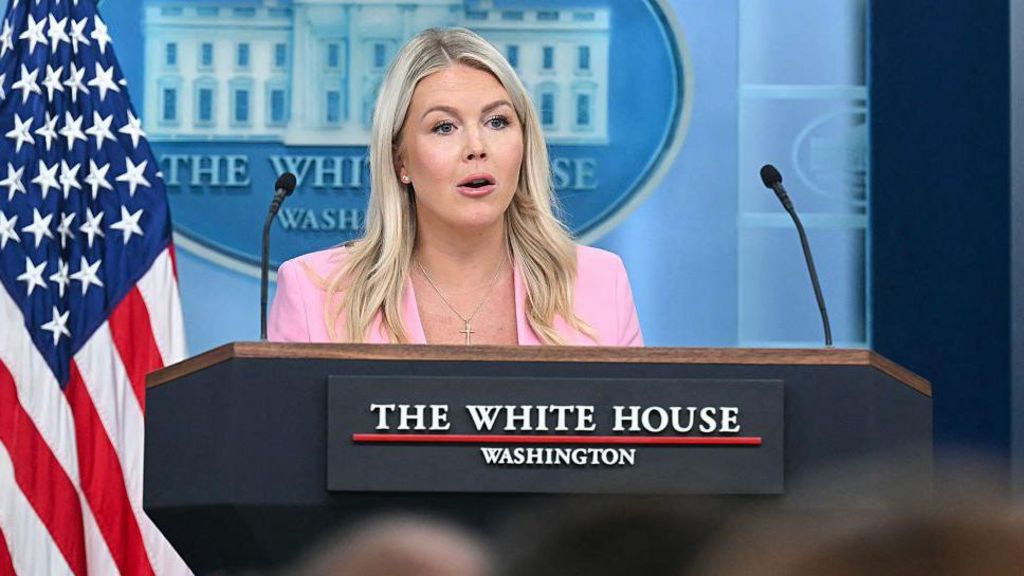
    The White House has officially announced that U.S. Vice President JD Vance will lead a high-profile American delegation to face-to-face negotiations with Iranian representatives in Pakistan, with talks set to kick off on April 11. The announcement comes in the wake of a newly implemented ceasefire between the two nations, which White House Press Secretary Karoline Leavitt says has created a rare diplomatic opening that could pave the way for long-term stability across the Middle East.

    Despite this optimistic framing, key details surrounding the negotiation agenda, specific peace proposals, and the current status of maritime traffic through the strategically critical Strait of Hormuz remain shrouded in uncertainty. Just days before the ceasefire, Iranian military officials issued stark public warnings that any vessel attempting to traverse the strait without explicit Tehran authorization would be targeted and destroyed. Leavitt pushed back on this public posture, however, noting that Iran’s private diplomatic messaging differs significantly from its public rhetoric.

    During Wednesday’s White House press briefing, Leavitt declared that the U.S. had secured its core military objectives in what Washington has dubbed Operation Epic Fury. She confirmed that the operation, which preceded the ceasefire, successfully dismantled Iran’s naval forces, unmanned aerial vehicle program, and ballistic missile infrastructure, meeting the campaign’s primary goals. Joining Vance on the U.S. negotiating team will be special envoy Steve Witkoff and Jared Kushner, who will meet their Iranian counterparts in Islamabad on Saturday.

    Leavitt dismissed widespread media reports of a 10-point peace proposal put forward by Iran as inaccurate, revealing that an initial Iranian proposal was rejected out of hand for being “fundamentally unserious.” According to Leavitt, Tehran submitted a revised offer only after President Donald Trump issued an extraordinary threat that “a whole civilization will die” if no acceptable deal was reached. She emphasized that the Trump administration would never accept a deal that simply codified Iran’s existing policy demands, calling that outcome unthinkable.

    Contrary to Iran’s public warnings to shipping, Leavitt confirmed that Tehran has privately agreed to reopen the Strait of Hormuz, a chokepoint through which roughly 20% of the world’s daily oil supplies pass. When pressed on the clear disconnect between the White House’s positive framing and Iran’s public threats to shipping, Leavitt said Trump remains committed to holding Iran accountable for its commitments and expects the strait to be opened “quickly and safely.”

    Trump’s pre-ceasefire threat, posted on his social platform Truth Social, drew widespread backlash from across the U.S. political spectrum, with critics raising urgent concerns about the humanitarian fallout of expanded U.S. strikes on Iranian civilian and military infrastructure. Leavitt defended the president’s blunt language, arguing that his uncompromising negotiating style and tough rhetoric are directly responsible for bringing Iran to the negotiating table. She added that Trump retains the moral high ground in the standoff against what the White House calls Iran’s “rogue regime.”

    Later Wednesday, Trump is scheduled to hold a meeting with NATO Secretary-General Mark Rutte that Leavitt described as “very frank and candid.” The meeting comes amid escalating friction between the alliance and the U.S., its largest military and political contributor. Trump has repeatedly criticized NATO for failing to support the U.S. during the Iran conflict and for not assisting in efforts to reopen the Strait of Hormuz. Leavitt directly quoted a letter from Trump in which the president stated, “NATO was tested and they failed.”

    She also confirmed that Trump has discussed the possibility of the U.S. withdrawing from the 75-year-old security alliance, though she offered no additional details on the scope or timeline of any potential exit. Tensions between Trump and NATO predate the Iran conflict, rooted in long-running disagreements over defense spending and, more recently, Trump’s public interest in acquiring Greenland, an autonomous Danish territory. European NATO allies have repeatedly rejected any possibility of a transfer of sovereignty over the island, deepening the rift between Washington and the alliance.