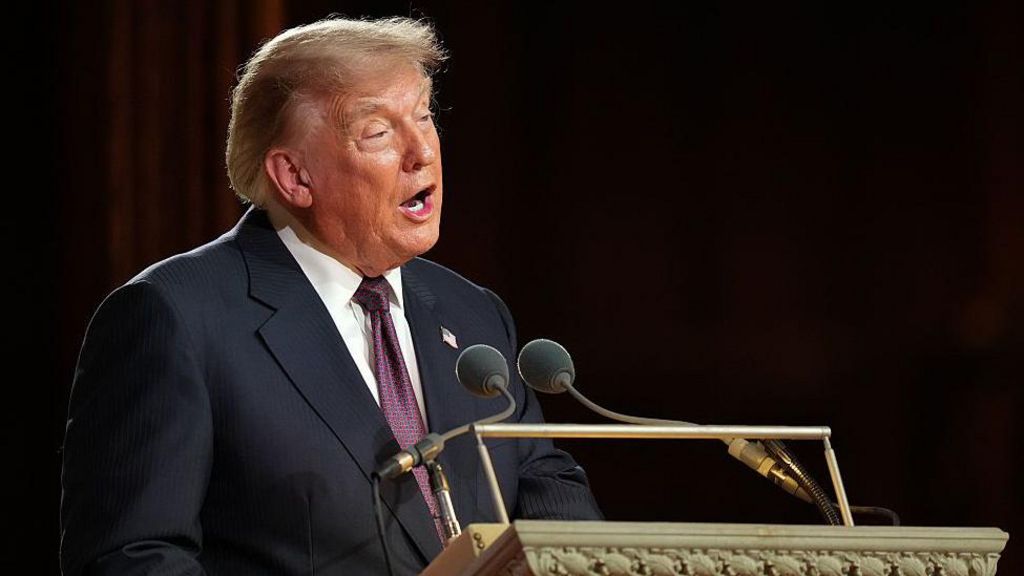
A high-profile state funeral for late United States Senator Lindsey Graham drew global attention this week, as former U.S. President Donald Trump stepped to the podium to deliver a commemorative eulogy celebrating Graham’s decades of public service. In his remarks, Trump lauded the departed lawmaker as a “true American original”, highlighting Graham’s unique political style, decades of legislative work, and lasting influence on American political life. The service, held at a prominent venue in Washington D.C., brought together a host of domestic political figures as well as two of the most watched global leaders: Israeli Prime Minister Benjamin Netanyahu and Ukrainian President Volodymyr Zelenskyy. Both leaders traveled to the U.S. capital to pay their respects to Graham, who had long advocated for strong U.S. alliances with both Israel and Ukraine throughout his tenure in Congress. Graham, who served in the Senate for over 27 years, built a reputation as a dealmaker who crossed party lines on key issues, while also becoming one of the most recognizable Republican voices on foreign policy and national security. His death earlier this month prompted tributes from across the political spectrum, with lawmakers from both major parties noting his outsized impact on Capitol Hill. Monday’s funeral service brought together competing political factions for a moment of shared mourning, with attendees from all walks of American political life gathering to honor Graham’s legacy before the ceremony concluded.
标签: North America
北美洲
-

eBay agrees $56m settlement with bloggers over harassment case
Five years after a brazen, coordinated campaign of retaliatory harassment against a married couple who ran an independent online publication critical of eBay’s business practices, the e-commerce giant and its former top executives have agreed to pay $56 million in civil damages to close the high-profile case.
The victims, David and Ina Steiner, founded and operated EcommerceBytes, a website and industry newsletter that regularly published coverage scrutinizing eBay’s policies and corporate decisions. In 2019, that critical coverage drew a aggressive, unacceptable response from a cohort of then-current eBay executives, who orchestrated a months-long pattern of intimidation designed to silence the couple’s reporting.
Court records and federal investigation documents detail a series of disturbing, threatening acts carried out against the Steiners, who reside in Massachusetts. The group sent the couple unwanted, menacing packages: a costume mask coated in pig’s blood, a funeral wreath left at their home, and a copy of a book about coping with the death of a spouse, messages clearly intended to frighten the pair by implying harm could be coming. Beyond sending disturbing parcels, executives sent repeated harassing messages to the couple via the social media platform X, then known as Twitter. In one of the most alarming breaches, multiple members of the group traveled to the Steiners’ home and attempted to place a tracking device on their personal vehicle to monitor their movements.
Between 2022 and 2024, all seven former eBay executives implicated in the scheme pleaded guilty to federal criminal charges connected to the harassment, following an investigation by the U.S. Department of Justice and the FBI. In 2024, one lead FBI investigator on the case described the operation as an “unprecedented, relentless, and over-the-top harassment campaign,” a characterization that underscored the severity and audacity of the corporate-led intimidation. eBay itself was also criminally charged in the scheme, and reached a deferred prosecution agreement with the DOJ that required the company to pay a $3 million criminal fine.
The newly announced $56 million civil settlement resolves the separate civil suit the Steiners brought against eBay and the involved executives. Under the terms of the agreement, the bulk of the payment comes from eBay, which has also committed $6 million of the total sum to go to various nonprofit organizations. Former eBay CEO Devin Wenig, who stepped down from the company the same year the harassment took place, will personally contribute $1 million to the settlement. Court records show that in 2019, Wenig sent a text message to the company’s top communications executive that read “Take her down,” in reference to Ina Steiner.
A representative for Wenig clarified this week that earlier legal proceedings had established the text was meant to reference a public relations strategy to counter what the company claimed were factual errors in Ina Steiner’s reporting, not a directive for harassment. “No one should ever have been subjected to what the Steiners endured in 2019, and I’m saddened by it, especially because it occurred during my time as CEO of eBay. The harassment was deliberately done in secret,” Wenig said in a statement this week. According to the Steiners’ legal team, Wenig’s $1 million personal contribution will be donated to an unnamed nonprofit that works to protect First Amendment rights to free speech, and will be gifted in Ina Steiner’s name. The U.S. Constitution’s First Amendment, which protects free expression, is a central issue in the case, as the harassment was carried out to punish the couple for critical speech.
Christopher Murphy, lead counsel for the Steiners at Scalli Murphy Law PC, celebrated the settlement as a landmark moment for accountability. “We believe this resolution sends a clear message that corporations and their executives cannot engage in this type of misconduct without facing significant consequences,” Murphy said in a statement Tuesday.
eBay also issued an official acknowledgement of wrongdoing as part of the settlement announcement. “What the Steiners were subjected to by former eBay employees in 2019 was wrong, reprehensible and should never have happened,” the company said. eBay formally condemned the former employees who pleaded guilty to criminal charges that prompted the civil suit, and admitted that internal communications between Wenig and other former executives carried an “unprofessional tone.” The company added: “This agreement is consistent with our commitment to fairly compensate the Steiners and fulfills our efforts to make things right.”
-
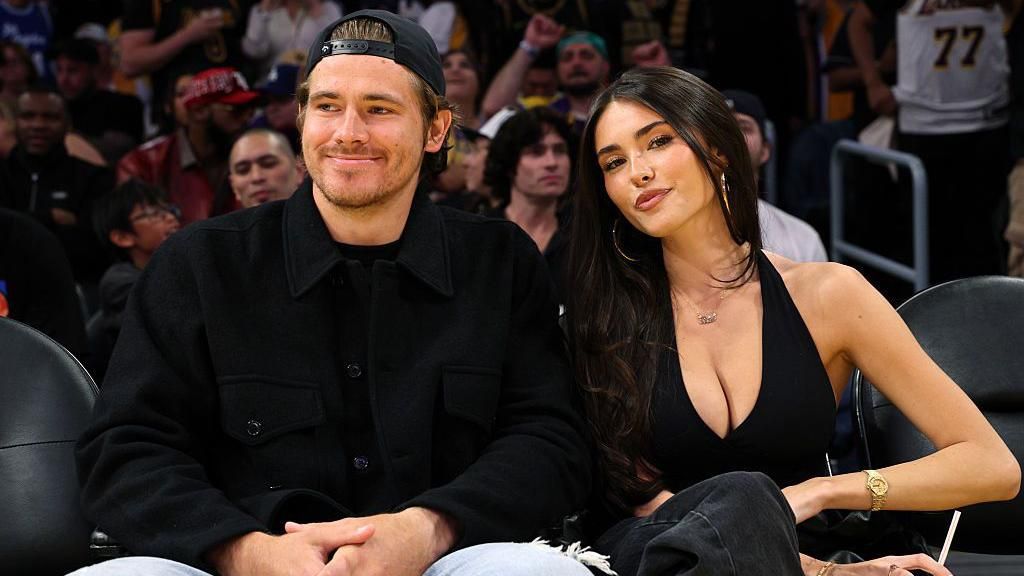
Pop star Madison Beer and NFL player Justin Herbert announce engagement
One of pop music’s most followed rising stars and one of the NFL’s top young quarterbacks have made a joyful, headline-making announcement: 27-year-old Grammy-nominated singer-songwriter Madison Beer and 28-year-old Los Angeles Chargers starting quarterback Justin Herbert are officially engaged.
The couple shared the exciting news with fans across social media platforms this Tuesday, posting candid photos from the romantic proposal that captured the intimate moment. In the shared shots, Herbert is shown dropping to one knee while holding out an open ring box, with a grinning Beer crouching in front of him, visibly overjoyed by the surprise. The couple’s joint public post was capped with a simple, affectionate caption: “meet my fiancé”.
Romance rumors linking the two public figures first began circulating in August 2025, when they were photographed together publicly for the first time. In the months that followed, Beer became a regular presence on the sidelines at Chargers home games throughout the 2025 NFL season, and the pair were often spotted out together at Los Angeles sporting events, including frequent outings to watch the Dodgers play MLB and the Lakers compete in the NBA.
The engagement announcement comes at a particularly notable time for Herbert, who is scheduled to report to Chargers training camp this Wednesday to kick off his seventh season with the franchise. The Pro Bowl quarterback has yet to claim a Super Bowl championship ring with the team, leading to playful social media commentary that he is now heading into camp with a very different, equally meaningful ring to mark a major life milestone.
Both the Los Angeles Chargers organization and the official NFL account shared public congratulations to the couple shortly after their announcement. “JH+MB 4EV,” the Chargers wrote in their celebratory social media post, while the NFL’s official account posted a simple note on X reading: “Congrats to Justin Herbert and Madison Beer on their engagement.”
For Beer, the engagement is the latest chapter in a career that first launched into the public eye more than a decade ago. Back in 2012, when Beer was just 13 years old, global pop superstar Justin Bieber shared a viral video of Beer singing a cover of Etta James’ iconic classic *At Last*, catapulting her to overnight fame. She released her debut official single the following year, with Bieber even making a cameo appearance in the track’s accompanying music video. Earlier this year, Herbert returned the favor in a sense, stepping in front of the camera to make a guest appearance in Beer’s music video for her single *lovergirl*. The clip showed the couple sharing soft, affectionate moments, embracing and strolling along a sunlit California beach.
-

Bystander video shows teen lifeguard’s dramatic ocean rescue
On a sun-soaked Southern California beach, what started as a routine day of recreation quickly turned into a life-or-death emergency, when a 10-year-old child was pulled out to sea by a powerful rip current. In a remarkable display of quick thinking and courage, 16-year-old local lifeguard Jaxson Meeks sprang into action, launching an immediate ocean rescue that has since been immortalized in raw bystander footage shared across social media.
Rip currents are a persistent, dangerous hazard at many California coastal destinations, capable of dragging even experienced swimmers far from shore in minutes. On the day of the incident, the young victim had been wading in shallow water with family when the unexpected current pulled him offshore. Witnesses on the beach reported panicked screams from the child’s relatives, drawing immediate attention to the struggling 10-year-old.
Meeks, who had completed advanced lifeguard training just six months prior, did not hesitate. He grabbed his rescue buoy, sprinted into the surf, and swam out against the strong current to reach the child before he could be swept further into open ocean. The bystander video, filmed by a beachgoer waiting on the sand, captures the tense moments of the rescue: Meeks pulling the panicking child onto the buoy, then battling the pull of the current to bring both of them safely back to shallow water. Once on shore, the child was checked by waiting emergency medical personnel and found to be unharmed, aside from minor shock.
Local lifeguard services have praised Meeks for his calm response and adherence to safety protocols, noting that his quick action likely prevented a tragic outcome. The video of the rescue has circulated widely online, with thousands of viewers celebrating the teen lifeguard’s heroism. Coastal safety officials have also used the incident as a reminder to beachgoers of the importance of swimming near lifeguard stations and heeding current safety warnings.
-
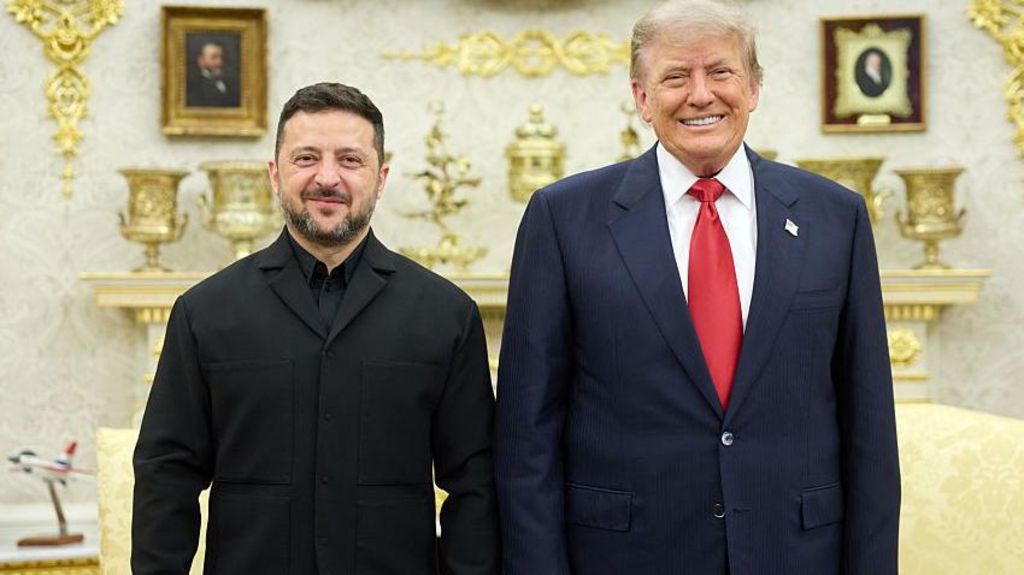
Zelensky and Netanyahu meet Trump as wars in Ukraine and Iran drag on
Two key Middle Eastern and European leaders traveled to Washington D.C. in late July 2026 for back-to-back closed-door meetings with U.S. President Donald Trump, held on the sidelines of the funeral of longtime Republican Senator Lindsey Graham, a prominent cross-partisan advocate for both Israeli security and U.S. military assistance to Ukraine who passed away earlier that month.
Ukrainian President Volodymyr Zelensky used his high-profile White House meeting to press the Trump administration for progress on a longstanding Ukrainian defense priority: securing U.S. approval to domestically produce American-made Patriot air defense interceptors, a capability Kyiv says is critical to countering intensifying Russian aerial assaults on Ukrainian civilian and infrastructure targets. Zelensky noted ahead of the meeting that Trump had previously raised the possibility of granting production licensing at the recent NATO summit, and Ukrainian officials have repeatedly emphasized that expanding domestic access to the advanced interceptor systems would drastically improve Ukraine’s ability to shield its population from Russian drone, cruise missile, and ballistic missile attacks that have ramped up in recent months.
Following the closed-door discussion, no formal binding commitment on the Patriot license or new U.S. military assistance packages was announced by either side. Still, Zelensky struck a constructive tone in a public post on the social platform X, thanking Trump for ongoing U.S. support and confirming that the pair had addressed the Patriot licensing request alongside other bilateral defense and diplomatic priorities. He added that the two leaders agreed on the need to reinvigorate diplomatic efforts to end the full-scale Russian invasion of Ukraine.
Beyond his talks with Trump, Zelensky also held a separate meeting with executives from Lockheed Martin, the U.S. defense prime contractor that manufactures the Patriot system, to outline a path forward for deepening bilateral defense industrial cooperation. In a follow-up post, Zelensky noted that discussions covered joint production capabilities for Patriots and other air defense systems, with working-level teams already advancing concrete proposals to speed up the launch of co-production and expand Ukraine’s air defense capacity.
The Ukrainian leader also planned to meet with a bipartisan group of U.S. Senators advancing new legislation that would impose harsh secondary sanctions on buyers of Russian oil and natural gas, a measure designed to increase economic pressure on Moscow for its ongoing invasion.
Shortly after Zelensky concluded his White House visit, Israeli Prime Minister Benjamin Netanyahu arrived for his own one-on-one meeting with Trump, at a moment when U.S.-Israel relations have been strained by growing disagreements over policy toward Iran and ongoing cross-border conflict between Israel and Lebanese militant group Hezbollah. In recent months, Trump has publicly criticized Netanyahu for refusing to pursue a ceasefire in Lebanon and for expanding Israeli strikes that risk triggering a broader regional conflict.
After their closed-door discussion, Netanyahu told Israeli reporters that the meeting produced aligned outcomes on core shared priorities, most notably preventing Iran from acquiring a nuclear weapons capability. He described the conversation as one of the most productive he has ever held with President Trump, and an official photograph released from the meeting showed the two leaders smiling together in the Oval Office, signaling at least a public reset of their previously tense relationship. The White House characterized both back-to-back meetings with Zelensky and Netanyahu as “positive and productive” in an official readout released after the sessions concluded.
-
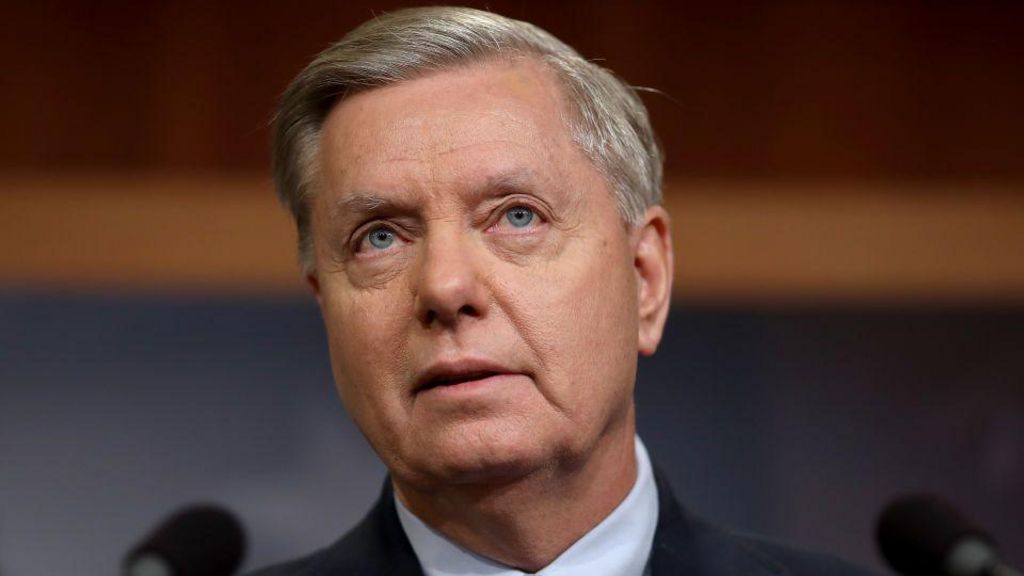
Lindsey Graham remembered by Trump as ‘giant of the US Senate’ at funeral
A state funeral service for sitting US Senator Lindsey Graham of South Carolina, who passed away unexpectedly earlier this month at age 71 from an aortic dissection, was held Tuesday at Washington National Cathedral, drawing an extraordinary cross-section of domestic and international leaders to honor the outspoken foreign policy hawk. The South Carolina Republican died just days after returning from a diplomatic trip to Kyiv, where he met with Ukrainian President Volodymyr Zelensky – fitting, in the words of former President Donald Trump, who delivered the keynote eulogy, that Graham “died doing the work he was born to do.”
In his 15-minute address to mourners gathered in the cathedral’s nave, Trump remembered Graham as a “giant of the United States Senate” and a “true American original” who left the nation far too soon. Trump reflected on the unlikely evolution of their relationship: the pair traded bitter public attacks during the 2016 Republican presidential primary, when both sought the party’s nomination, but Graham ultimately emerged as one of Trump’s most loyal congressional allies after Trump’s election victory. Trump recalled a viral 2015 incident where he shared Graham’s personal phone number with a rally crowd in retaliation for a profane insult Graham had leveled at him, joking that the senator’s device “exploded” – but quipped that Graham had the last laugh. “While I blew up his phone for one day, we became great friends and Lindsey did not stop calling me for the next 10 years,” Trump told the crowd, eliciting chuckles from assembled mourners. He added that no major global development occurred without Graham weighing in with a clear stance.
Notably, the funeral drew heads of state from two nations Graham championed fiercely throughout his career: Israeli Prime Minister Benjamin Netanyahu and Ukrainian President Volodymyr Zelensky both attended the service to pay their respects. Throughout his four years in the Senate, Graham staked out a reputation as one of Washington’s most unapologetic foreign policy hawks: he was a leading advocate for robust US military aid to Ukraine amid Russia’s ongoing invasion, even as congressional Republicans remained deeply divided over the scale of American intervention in global conflicts. He was also one of Israel’s most outspoken supporters in Congress, and pushed publicly for US military action against Iran in his final years in office.
Vice President JD Vance, along with multiple senior officials from the Trump administration, also attended the service, and offered his own tribute that wove personal anecdotes with a summary of Graham’s career. Vance highlighted the pair’s shared love of golf, Graham’s relentless dedication to foreign policy work, and his famously magnetic personality, marked by consistent “vim and vigour.” Fox News host Sean Hannity, another featured speaker, called Graham a “force of nature” and a “true original,” addressing his remarks directly to Graham’s sister Darline Graham, who was appointed by state officials to fill her brother’s remaining Senate term shortly after his death. “You were his life,” Hannity told Darline, who sat in the front pew for the service. The pair shared a decades-long close bond after losing both parents by the time Darline was a teenager; Lindsey Graham, then a young adult, formally adopted his sister to raise her himself.
Washington National Cathedral, the site of many of America’s most high-profile state memorials, has hosted funeral services for sitting senators and former presidents alike. Most recently, former President Jimmy Carter’s memorial service at the cathedral drew all five living former and sitting US presidents last year. In 2018, the cathedral hosted the memorial for John McCain, the late Arizona senator who was one of Lindsey Graham’s closest friends in Congress. While Tuesday’s service was more intimate than the packed funerals for former presidents, the breadth of attendees – ranging from sitting US leaders to foreign heads of state – underscores the outsize influence Graham wielded in Washington despite his relatively short tenure in the Senate. He won his first Senate election in 2022, and represented South Carolina until his unexpected death earlier this month.
-
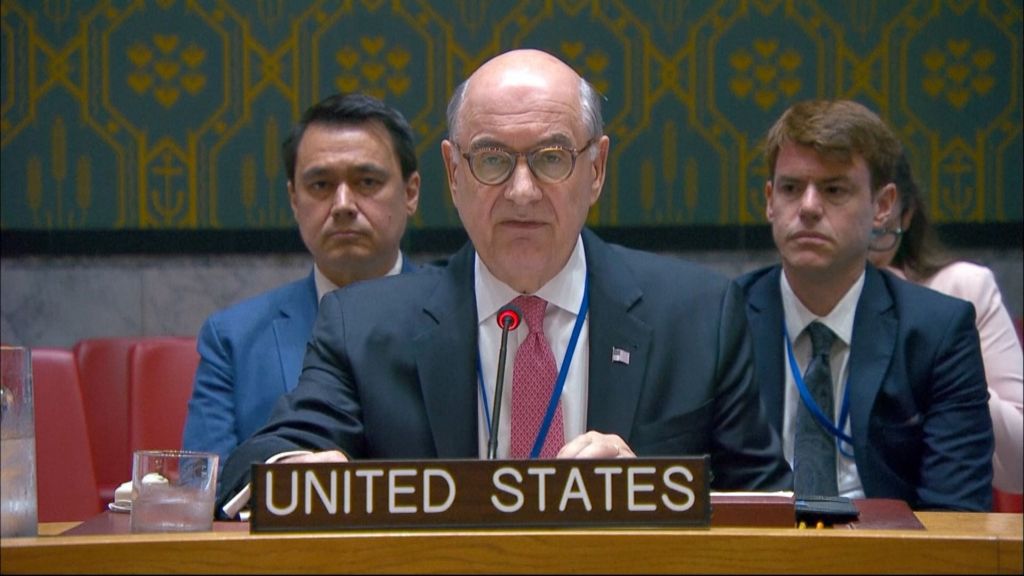
US accuses France of ‘disingenuous grandstanding’ at UN
A sharp diplomatic clash has erupted between two long-time Western allies at the United Nations, after the United States publicly rebuked France for controversial comments comparing U.S. human rights voting behavior at the global body to that of authoritarian nations. The verbal sparring, which underscores growing rifts over human rights policy between the two major powers, was initiated when French representatives made the unflinching comparison during UN proceedings. The U.S. delegation did not hold back in its response, launching a forceful pushback that labeled France’s statements as nothing more than disingenuous performance politics designed to garner global attention rather than advance constructive dialogue on human rights. This public confrontation is unusual for two close NATO partners, highlighting underlying disagreements over how global human rights issues should be framed and addressed within multilateral institutions. While neither side has yet announced further diplomatic action following the exchange, the public rebuke signals that tensions over human rights diplomacy are now spilling out into the open at the UN.
-

Drone footage shows Wisconsin tornado damage
Recently, a powerful EF-2 tornado tore through multiple communities in Wisconsin, leaving a trail of damaged infrastructure and disrupted lives in its wake. Dramatic drone footage, captured in the immediate aftermath of the storm, offers a sweeping bird’s-eye view of the destruction, showing uprooted trees, damaged residential structures, and debris scattered across large swathes of the affected Midwest region. Emergency management teams have already deployed to the hardest-hit areas to conduct preliminary damage assessments and support local residents whose properties have been impacted. As of the latest updates from state emergency officials, there have been no immediate reports of fatalities or injuries connected to the twister, a outcome that has brought relief to response coordinators and local communities bracing for potential loss of life. Crews are now working around the clock to clear roadways, restore essential utilities, and begin the long process of rebuilding for affected households.
-
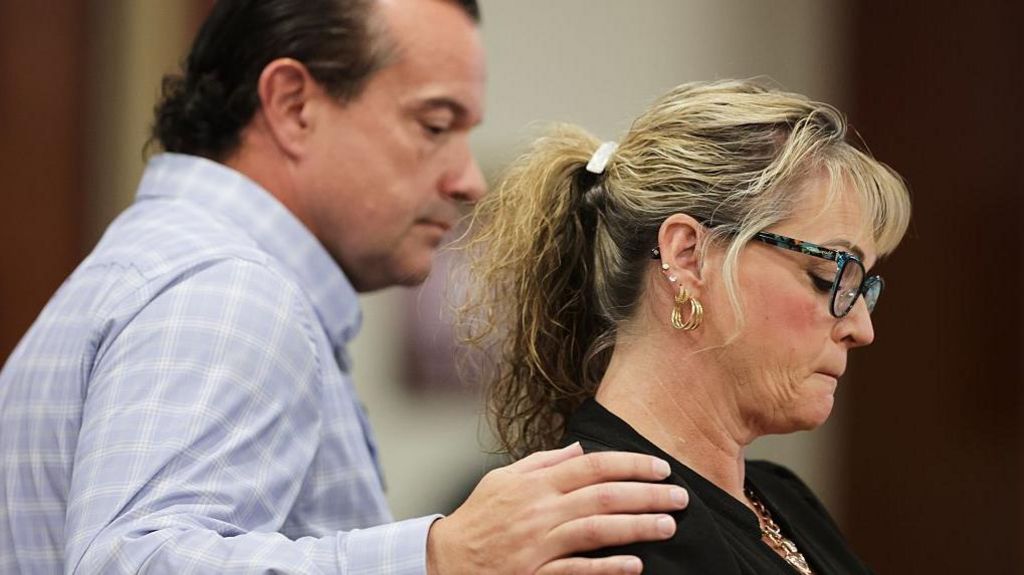
‘A narcissist’: Family hit out at Bryan Kohberger for challenging murder conviction
More than three years after four University of Idaho students were brutally stabbed to death in their off-campus Moscow home, a shocking new development has reignited agony for the victims’ loved ones. Bryan Kohberger, the former criminology PhD student from Washington State University who was sentenced to four consecutive life terms last year for the November 2022 killings, has announced he is withdrawing his guilty plea – a deal he originally accepted to escape the possibility of capital punishment. In an exclusive interview with *The New York Times*, Kohberger claimed his original 2023 plea was based on “false promises and blatant disinformation” from his legal team, and he now intends to enter a plea of not guilty. He even went so far as to say prosecutors are welcome to pursue the death penalty against him again if they wish. For the family of Kaylee Goncalves, one of the four young victims killed in the attack, Kohberger’s latest move is nothing more than the manipulative act of a narcissist who is once again stealing the spotlight from the people whose lives he cut short. In a scathing public statement, the Goncalves family pointed out that Kohberger voluntarily made the choice to forego a jury trial, turning over control of his fate and the presentation of the case’s facts to the court. They emphasized that in the two years preceding his sentencing, Kohberger and his legal team had full access to all discovery materials, reviewing every piece of evidence compiled in the case. At no point prior to the sentencing did he raise objections to the process, claim he was pressured or misinformed, or challenge the evidence shared with his defense. “The real tragedy,” the family wrote, “is that Kohberger continues to receive an outsize amount of public attention, all at the expense of the four victims who can no longer speak for themselves.” The 2022 murders sent shockwaves through the tight-knit college community of Moscow, Idaho, and dominated national news headlines for nearly two months before Kohberger’s arrest in December 2022. To this day, investigators have not identified a clear motive for the attack: Kohberger had no documented connection to any of the four victims, and he has never publicly explained why he drove across state lines to the University of Idaho campus to carry out the brutal stabbing. While prosecutors never established a personal link between Kohberger and the victims, they did present overwhelming forensic and circumstantial evidence that placed him at the off-campus home where the killings took place, leading to his conviction. Idaho Attorney General Raúl Labrador has expressed solidarity with the grieving families, acknowledging that they have already “endured unimaginable loss” and now must grapple with fresh, devastating pain from Kohberger’s decision to reverse his plea. “My office stands ready to do whatever is necessary to ensure justice is fully carried out,” Labrador said in a formal statement reaffirming the state’s commitment to upholding the original conviction. Separately, one of the victims’ aunts has made public a surprising personal revelation, saying she has already forgiven Kohberger for the killing of her niece – a stance that has added another layer of complexity to a case that continues to grip the American public.
-
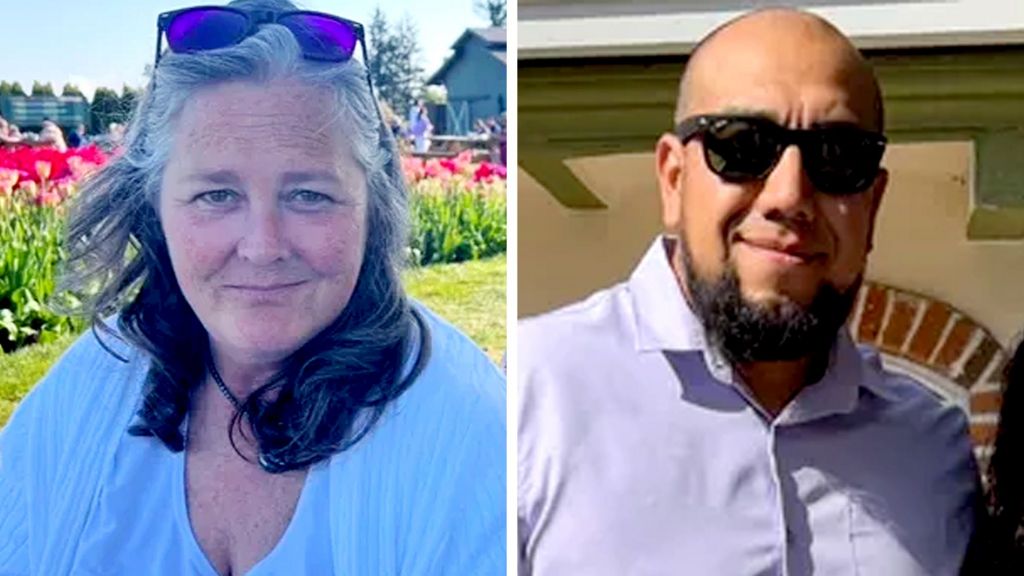
Seattle pays tribute to food festival shooting victims
On Sunday, a sudden and deadly street gunfight shattered the final day of Seattle’s iconic annual Bite of Seattle food festival, a beloved three-day free community event that draws more than 350,000 attendees each year, held just steps from the city’s famous Space Needle. By the time the gunfire ceased, three people were left dead and four others wounded, sending shockwaves across the Pacific Northwest community that left local leaders and residents grappling with senseless loss.
The following Monday, the entire city of Seattle entered a collective period of mourning as residents gathered to honor the three lives cut short by the violence. A candlelight vigil at a downtown fountain drew dozens of attendees, including Seattle Mayor Katie Wilson and the city’s police chief, where participants laid down flowers, lit candles in memory of the victims, and observed a moment of collective silence to process their grief.
The three victims have been identified as 19-year-old Junior Cee Niko Semo, 44-year-old Carlos Israel Sanchez Villalba, and 56-year-old Ashley Whitehead. According to law enforcement investigations, Semo, the youngest victim, is suspected to have been one of the active participants in the gunfight. To date, one additional suspect has been taken into police custody, while a third remains at large, with ongoing investigations continuing to unfold.
For the two innocent bystander victims, community members have stepped forward to support their grieving families through online crowdfunding campaigns, which have already raised tens of thousands of dollars in donations from across the country. A GoFundMe page set up for Villalba paints a portrait of a kind, generous man deeply devoted to his family. “He was a devoted husband, loving father of three, and a loyal friend who would do anything for anyone,” the page reads. “His kindness and generosity touched countless lives, and everyone who knew him remembers his gentle spirit and willingness to help others. His sudden passing has left his family heartbroken and facing an uncertain future.” All funds raised through the campaign will go toward covering Villalba’s funeral costs and supporting his wife and three children as they adjust to life without him.
Whitehead, the second innocent bystander killed in the attack, had only recently relocated from Alabama to the West Coast to be closer to her eldest daughter, Zoie. She was standing in line with Zoie waiting to buy cotton candy when the gunfire broke out, cutting her life short. After being hit, Whitehead managed to exchange heartfelt “I love you”s with her daughter before being rushed to the hospital, where she died during emergency surgery. Her family described her as a passionate lover of life, art, and above all else, family, noting that family had always been the center of her world.
Local and state leaders have joined residents in condemning the senseless violence that disrupted a landmark community celebration. “This is not acceptable,” Mayor Wilson told the gathered crowd at the vigil. “No father, no parent should have to bury their child.” Washington state Governor Bob Ferguson echoed that sentiment in a social media post Monday, writing that the entire community was reeling from the shock of the attack. “We are struggling to make sense of how an iconic community celebration could end in gunfire,” Ferguson wrote.