标签: North America

北美洲

  • Watch: Black bear caught in net after falling from tree

    Watch: Black bear caught in net after falling from tree

    A unexpected urban wildlife encounter unfolded this week in a quiet residential neighborhood of Albany, New York, when a wild black bear wandered into the populated area and climbed a tall tree in the community. The sighting of the large wild animal in a populated neighborhood quickly prompted local residents to alert authorities, who assembled a joint response team made up of state wildlife officials and local law enforcement officers to manage the situation.

    To ensure the safety of both nearby residents and the animal itself, the response team made the decision to use a tranquillizer dart to sedate the black bear. Crews stretched a large safety net beneath the tree to catch the bear once it became unconscious, avoiding a dangerous fall that could have seriously injured the animal or damaged surrounding property. After the sedative took effect, the bear lost its grip and dropped safely into the waiting net, with no injuries reported to either the bear or any members of the public or response team.

    Wildlife officials noted that encounters like this have become more common in recent years as black bear habitats overlap increasingly with expanding residential development. They reminded local residents to secure food sources such as garbage cans and bird feeders that can attract wild bears into urban and suburban areas, and to contact authorities immediately rather than approach the animal if a bear is spotted nearby.

  • Los Angeles becomes first major US school district to limit classroom screen time

    Los Angeles becomes first major US school district to limit classroom screen time

    In a landmark move that sets a new precedent for K-12 education across the United States, the Los Angeles Unified School District Board of Education has voted to enact sweeping limits on student screen time in classrooms, making it the first large-scale U.S. school system to adopt such comprehensive, developmentally aligned restrictions.

    The newly approved resolution mandates that district educators draft grade-specific screen time policies, with an absolute ban on personal and classroom device use for all first-grade students and younger children. District leaders framed the policy as a long-overdue correction to the rapid, pandemic-driven expansion of digital learning tools that became ubiquitous across campuses after 2020. Serving roughly 500,000 students across the nation’s second-largest school district, the system began re-evaluating its heavy reliance on tablets and laptops in recent years, as growing research raised red flags about excessive digital exposure for young learners.

    Nick Melvoin, the board member who sponsored the resolution, noted that student devices functioned as a critical lifeline for disconnected learners when Covid-19 forced campuses to close in 2020. But years into the return to in-person learning, Melvoin argued that a systemic reset is long overdue. “We have the opportunity to lead the nation, to establish comprehensive, developmentally grounded screen-time limits that puts students before screens,” Melvoin told attendees at Tuesday’s board meeting. “This is not about going backwards. This is about rethinking screen time in schools to make sure we are doing what actually helps students learn best.”

    Slated to take effect at the start of the next academic year, the new restrictions include a ban on YouTube and other video-streaming services on all district-issued student devices. The policy also grants parents the right to opt their children out of using specific digital learning tools for classroom instruction, giving families greater autonomy over their children’s digital exposure.

    The resolution draws on a growing body of public health research linking excessive screen time to negative developmental and health outcomes for children. The policy cites peer-reviewed data showing that children aged 8 to 11 who exceed national screen time guidelines face higher rates of obesity, increased risk of depressive symptoms, and lower performance on cognitive skills assessments than peers with limited screen exposure. The vote builds on a 2024 district measure that banned personal cell phone use and social media access during instructional hours, part of a broader district push to reduce unnecessary digital distraction in classrooms.

    Board member Kelly Gonez emphasized that the new limits are not a rejection of educational technology, but a targeted effort to center student well-being alongside digital innovation. “Technology can be a powerful tool, but too much screen time has real harmful effects on our students,” Gonez said. “This resolution will ensure we are prioritising important skills and learning experiences for students, while protecting their childhoods and well-being by setting research-based screen time limits.”

    Advocacy groups that have pushed for campus screen time reform hailed the vote as a turning point for educational culture across the country. Anya Meksin, deputy director of parent advocacy organization Schools Beyond Screens, called the board’s decision a historic shift in how U.S. schools approach educational technology. “This move marks a big cultural shift into how schools approach technology,” Meksin told NBC News. “This is an historic reform that we hope will trickle down to the rest of the country very, very quickly.”

  • Apple’s Tim Cook to step down as CEO

    Apple’s Tim Cook to step down as CEO

    SAN FRANCISCO — One of the most consequential leadership transitions in modern tech history is set to unfold at Apple this year: long-serving chief executive Tim Cook will step down from his top role this September, passing the reins to 22-year company veteran John Ternus as the Silicon Valley giant navigates a rapidly shifting global technology landscape reshaped by the artificial intelligence boom.

    The 65-year-old Cook, who has steered Apple for 15 years after taking over from the company’s iconic co-founder Steve Jobs following Jobs’ health departure in 2011, will transition into the role of executive chairman of Apple’s board of directors after his exit from the CEO post. The long-awaited announcement, made public this Monday, puts to rest years of market and industry speculation about who would inherit the leadership of the world’s most valuable company.

    Cook first joined Apple back in 1998, working his way up through the executive ranks to become chief operating officer, where he oversaw the iPhone maker’s famously complex global supply chain and laid the operational groundwork for Apple’s explosive growth in the 2000s. When he stepped into the CEO role in 2011, Cook inherited a company at the peak of its early success, and over his 15-year tenure, he delivered transformative growth: he expanded Apple’s product portfolio far beyond its core iPhone line, and guided the company to a staggering market valuation of roughly $4 trillion in current share price terms.

    “It has been the greatest privilege of my life to be the CEO of Apple and to have been trusted to lead such an extraordinary company,” Cook said in an official statement announcing the transition.

    Arthur Levinson, Apple’s outgoing board chairman, lauded Cook’s unprecedented tenure at the company’s helm, noting that “Tim’s unprecedented and outstanding leadership has transformed Apple into the world’s best company. His integrity and values are infused into everything Apple does.”

    Ternus, the incoming CEO, first joined Apple’s product design team back in 2001, working his way up to senior vice president of hardware engineering over the course of more than two decades at the company. He has been a core contributor to nearly all of Apple’s flagship product launches over that period, playing key roles in the development of iPhones, iPads, Apple Watch, and the modern line of Mac personal computers.

    For Ternus, the opportunity to lead Apple comes after a career shaped by the company’s two most recent leaders: “Having spent almost my entire career at Apple, I have been lucky to have worked under Steve Jobs and to have had Tim Cook as my mentor,” he said in the official announcement.

    The leadership transition comes at a pivotal moment for Apple, as the global tech industry races to integrate generative artificial intelligence into consumer products and services, putting new competitive pressure on established players to innovate or risk falling behind to faster-moving rivals. Ternus’ deep background in hardware development also signals that Apple will continue to tie its AI innovation to its core integrated product ecosystem, a strategy that has defined the company’s success for decades.

  • Corn is back on the menu for US exporters: Report

    Corn is back on the menu for US exporters: Report

    After years of trailing Brazil as the top corn supplier to China, the United States has clawed back lost market share in the world’s largest agricultural commodities market, marking a much-needed win for American growers navigating ongoing financial headwinds, according to a new analysis from Breakwave Advisors.

    The New York-based commodity trading advisor drew on shipping and trade data from the Signal Ocean Platform to track recent export flows. The analysis confirmed that while Brazil dominated Chinese corn imports throughout 2025, the United States overtook its South American rival to claim the top supplier position by the end of late March. This reversal in market standing aligns with on-the-ground observations from agricultural economists, who note US corn shipments have been unusually strong across the opening weeks of the year.

    William W. Wilson, an agribusiness and applied economics professor at North Dakota State University, told China Daily two key global trends are driving the unexpected uptick in demand. “Number one, we’re seeing pretty robust overall demand in the international marketplace, and on top of that, international demand for corn for biofuel production has grown substantially,” Wilson explained.

    International exports have long been a backbone of the US corn industry, with regional trade pacts underpinning decades of steady growth. USDA data shows Mexico, Japan, South Korea and Colombia collectively purchase two-thirds of all US corn exports, with Mexico alone absorbing 40 percent of total outbound shipments. The United States also sends 35 percent of its total ethanol exports to northern neighbor Canada, with the entire North American trade relationship governed by the US-Mexico-Canada Agreement (USMCA), which entered into force on July 1, 2020. The three partner nations are scheduled to hold a joint review of the deal in July ahead of a planned 16-year extension.

    For the broader US economy, the corn sector is an underrecognized engine of growth and employment. Industry group the National Corn Growers Association, which advocates for reduced trade barriers and expanded global market access for American producers, reports that corn farming generated more than $151 billion in total national economic output in 2023, while directly and indirectly supporting at least 600,000 domestic jobs. USDA figures add that nearly a third of all income for US corn producers comes from export sales, highlighting how critical foreign market access is to the sector’s long-term stability.

    That importance is reflected in the USDA’s latest 2025-26 marketing year projections, released in April, which forecast total US corn exports will reach approximately 3.3 billion bushels (116 million cubic meters) – an all-time record for the industry.

    Veteran agricultural experts emphasize that consistent, predictable access to global markets is the single most important factor supporting American corn growers’ long-term prosperity. Bob Nielsen, an emeritus agronomy professor at Purdue University who grew up on a corn farm in Nebraska and has spent more than four decades studying corn crop management, stressed that stable trade relationships remove much of the uncertainty that plagues farming operations.

    “The more that we can maintain good trade relations with major markets like China and Mexico, and stabilize export demand to keep it consistent year in and year out, the better off US farmers will be,” Nielsen said. He added that farming is inherently a volatile business, with growers constantly at the mercy of shifting global market demands for corn, which is used for everything from human consumption to biofuel production and animal feed. “That uncertainty has always been the core frustration and biggest challenge for corn growers across the country,” he noted.

    In response to the shifting market dynamics, US farm groups and corn producers have called on the Trump administration to prioritize agricultural trade issues during President Donald Trump’s upcoming visit to China. While the recent gain in Chinese market share is a positive development, analysts warn that the US corn sector still faces significant headwinds that could erode competitiveness. Tariffs on agricultural goods and intensifying global competition from rival producing nations continue to raise operational costs and put pressure on American export prices.

    Wilson noted that the United States faces intense competition from other major corn exporting nations, specifically pointing to Brazil, Ukraine and Argentina as key rivals. “For our growers, getting trade policy sorted out to make sure we aren’t put at an unfair disadvantage is absolutely critical right now as we work to hold onto these recent market gains,” he said.

  • US charges anti-extremism group over payments to informants in hate groups

    US charges anti-extremism group over payments to informants in hate groups

    On Tuesday, Acting United States Attorney General Todd Blanche made a landmark announcement of federal criminal charges against the Southern Poverty Law Center (SPLC), a decades-old civil rights organization long known for its work tracking extremist movements and leading high-profile campaigns against the Ku Klux Klan. The charges mark a dramatic escalation of long-running tensions between the SPLC and the current Trump-aligned administration, laying out a series of serious fraud and money laundering allegations against the non-profit group.

    The 11-count indictment handed down by the Department of Justice (DOJ) includes six charges of wire fraud, four counts of bank fraud, and one count of conspiracy to commit money laundering. At the core of the government’s case is the accusation that the SPLC deceived its donors by funnelling millions of dollars in charitable contributions to paid informants embedded within the very extremist groups the organization claims to oppose—going so far as to enable the extremism it says it fights. According to the indictment, between 2014 and 2023 alone, the SPLC directed more than $3 million to individuals with ties to violent extremist organizations, including the Ku Klux Klan, neo-Nazi group National Alliance, and the National Socialist Movement. One prominent case cited in the charging document details more than $1 million paid over nine years to an informant who stole 25 boxes of internal documents from the National Alliance’s headquarters. In another, the SPLC transferred over $270,000 to an individual who helped plan and attended the deadly 2017 Unite the Right white nationalist rally in Charlottesville, Virginia; the indictment does not clarify what work the payment was for.

    Blanche laid out the government’s position during Tuesday’s press conference, arguing that the SPLC had betrayed public trust. “The SPLC is a non-profit entity that purports to fight white supremacy and racial hatred by reporting on extremist groups and conducting research to inform law enforcement groups with the goal of dismantling these groups,” Blanche said. “The SPLC was not dismantling these groups. It was instead manufacturing the extremism it purports to oppose by paying sources to stoke racial hatred.”

    Leadership of the Montgomery, Alabama-based organization has pushed back forcefully against the charges, framing the indictment as a politically motivated attack by an administration that has long targeted the SPLC for its work. Interim SPLC leader Bryan Fair released a pre-emptive video statement ahead of the official announcement of charges, noting the group’s 55-year history of combating white supremacy and systemic injustice. “We are therefore unsurprised to be the latest organisation targeted by this administration,” Fair said. He defended the group’s past use of paid informants, arguing the practice was a necessary safety measure given the long history of violence and threats against the organization. Fair pointed to the 1983 firebomb attack on the SPLC’s former office as evidence of the persistent danger the group faces, adding that the organization historically shared all intelligence gathered by informants with law enforcement partners including the FBI. “These individuals risked their lives to infiltrate and inform on the activities of our nation’s most radical and violent extremist groups,” he said. Fair also confirmed the SPLC no longer works with paid informants, and accused prosecutors of weaponizing the federal justice system to target a political opponent. “Today, the federal government has been weaponised to dismantle the rights of our nation’s most vulnerable people, and any organization like ours that stands in the breach,” he said. The group’s president has also reaffirmed the organization’s commitment to mounting a vigorous legal defense of its work, staff, and mission.

    Tensions between the SPLC and the Trump administration predate the current charges, with the FBI formally cutting ties with the group last October after labeling it a “partisan smear machine.” For years, conservative Republicans have also criticized the SPLC for what they call unfair targeting of right-leaning organizations, including Turning Point USA, the Family Research Council, and Moms for Liberty, as well as former officials aligned with the Trump administration.

  • Trump threatens to bomb Iran again after announcing ceasefire extension

    Trump threatens to bomb Iran again after announcing ceasefire extension

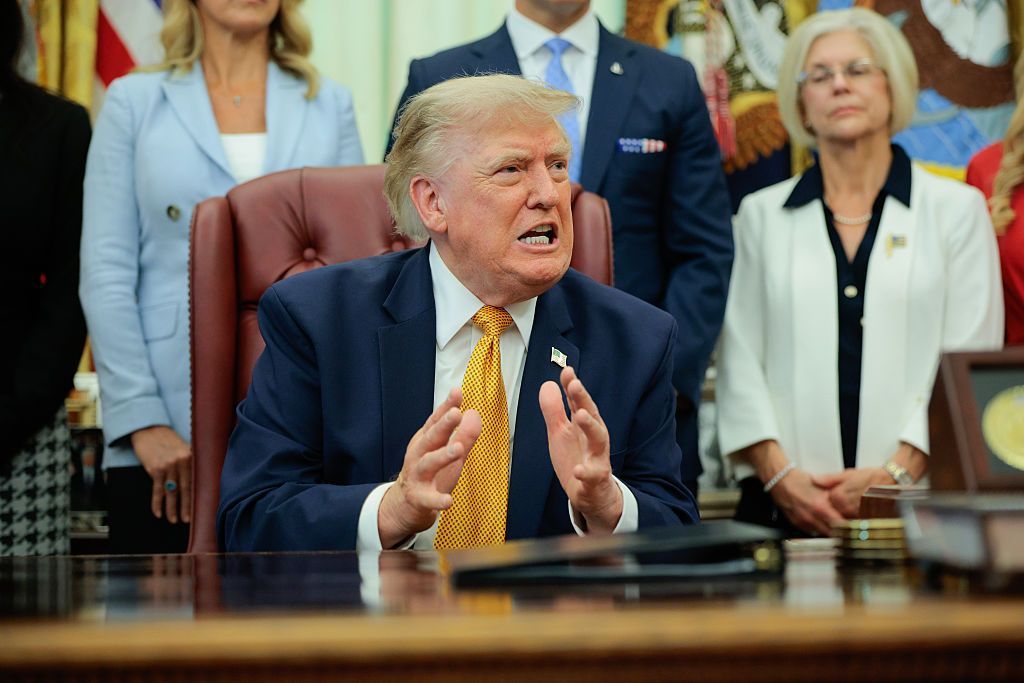
    WASHINGTON, April 22 – In a contradictory series of announcements that have amplified tensions in the already volatile Persian Gulf, US President Donald Trump has extended a fragile two-week ceasefire with Iran even as he issued a stark new threat to launch devastating bombing strikes on Iranian territory, including targeting the country’s top leadership.

    The current temporary truce between the two nations was scheduled to expire at the end of Wednesday. Early on Tuesday, Trump confirmed that the ceasefire would remain in place for an additional period, a move that briefly raised hopes for de-escalation in the standoff centered on the strategic Strait of Hormuz, through which nearly a fifth of global oil supplies pass daily.

    However, just hours after announcing the ceasefire extension, the US president took to his Truth Social platform to deliver a bellicose warning that undercuts any prospects for diplomatic negotiation between the two countries. Trump claimed that any US action to reopen the Strait of Hormuz – a key shipping chokepoint that has been a flashpoint in US-Iran tensions for decades – would rule out any future diplomatic agreement with Tehran.

    “An agreement would be impossible unless we blow up the rest of their country,” Trump wrote in the social media post. He added that Iranian national leaders are explicitly “included” in the targets of any potential new bombing campaign.

    The dual announcements have drawn international attention, as the global community has repeatedly called for restraint to prevent a full-scale conflict from breaking out in the Middle East. The United Nations recently publicly voiced hope that talks between the US and Iran could be resumed to resolve outstanding differences through diplomatic channels, but Trump’s latest threat casts significant doubt on the prospects for any near-term diplomatic breakthrough.

  • Mexico officials say Teotihuacán gunman carried material related to US mass shooting

    Mexico officials say Teotihuacán gunman carried material related to US mass shooting

    On April 21, 2026, a premeditated shooting at one of Mexico’s most iconic tourist landmarks, the ancient Pyramid of the Moon in the Teotihuacán archaeological complex, left one person dead and 13 others injured, prompting a swift response from national authorities who have moved to reassure the public ahead of this summer’s FIFA World Cup.

    According to official details released by Mexican leadership at a Tuesday press briefing, the attacker was 27-year-old Mexican national Julio César Jasso Ramírez. When he carried out the attack, he brought a loaded handgun, dozens of extra ammunition cartridges, a knife, and printed materials referencing notorious violent incidents that have occurred around the world. Top law enforcement officials confirmed that Jasso Ramírez planned and executed the attack entirely on his own, with no connections to larger extremist groups or organized criminal networks. After a standoff with responding law enforcement, the attacker ultimately died by suicide on the site.

    The dead victim of the attack was identified as a 32-year-old Canadian tourist. Thirteen other people ranging in age from 6 to 61 were injured in the shooting; seven of those injured suffered gunshot wounds, including two minor tourists from Colombia and Brazil. Responding officers included a member of Mexico’s National Guard and a local municipal police officer, who scaled the steep steps of the ancient pyramid to corner the attacker. The National Guard member shot Jasso Ramírez in the leg in an attempt to disable him before the attacker turned the gun on himself.

    Mexican President Claudia Sheinbaum told reporters that preliminary investigations show the attacker displayed clear signs of unaddressed psychological distress and had been radicalized by prior high-profile mass shootings carried out abroad. State of Mexico Attorney General José Luis Cervantes Martínez confirmed that among the attacker’s belongings, investigators found documents, imagery and written materials referencing the 1999 Columbine High School massacre in the United States. One eyewitness tourist told Reuters that Jasso Ramírez explicitly referenced the Columbine attack during the shooting, which took place exactly 27 years to the day after the 1999 massacre.

    Investigators added that the attack was far from impulsive. Jasso Ramírez had made repeated trips to the Teotihuacán complex, located roughly 50 kilometers (31 miles) northwest of Mexico City, in advance of the attack, and arrived at the site shortly before noon local time on Monday. Witness cell phone footage captured from the scene captured the chaos of the incident: visitors can be seen scrambling for cover as multiple gunshots ring out, while Jasso Ramírez can be heard making threats against crowds of tourists.

    In the aftermath of the attack, the entire Teotihuacán archaeological site — a UNESCO World Heritage Site that draws roughly 1.8 million visitors annually — was closed to allow for forensic investigation and security adjustments. President Sheinbaum announced the site will reopen to visitors on Wednesday with newly implemented enhanced security protocols. The president also acknowledged that prior to the attack, most Mexican archaeological sites including Teotihuacán did not have entrance security checkpoints in place. In response, she has ordered immediate security upgrades at all tourist and archaeological sites across the country, including the installation of permanent metal detectors at Teotihuacán and other high-traffic landmarks.

    With less than two months to go before the 2026 FIFA World Cup kicks off in Mexico City on June 11, President Sheinbaum moved quickly to reassure domestic and international audiences that security for the global tournament will be fully guaranteed. The president noted that she has already held in-depth talks with FIFA organizers to review logistics and security planning for the tournament. She emphasized that Mexico remains a safe destination for travelers, pointing to the 16 million international visitors that entered the country between January and February of 2026 as evidence of the country’s ongoing ability to welcome tourists safely.

  • ICE detains wife of US Army soldier at immigration appointment

    ICE detains wife of US Army soldier at immigration appointment

    A controversial incident playing out in El Paso, Texas has thrown a harsh spotlight on the overlapping tensions between US immigration enforcement policy and the treatment of military families, as an active-duty Army sergeant’s spouse has been taken into federal immigration custody — the second such case involving a service member’s family member this month alone.

    On April 14, Deisy Rivera Ortega, the wife of 28-year Army veteran Sergeant First Class Jose Serrano, was arrested by US Immigration and Customs Enforcement (ICE) agents after the couple attended a scheduled interview for a parole-in-place program, a federal initiative designed specifically to let immediate family members of US military personnel remain in the country while their immigration applications are processed. What was supposed to be a routine step toward legal permanent residency turned into a chaotic separation that has left Serrano distraught and searching for answers.

    “They just took my wife away,” Serrano shared in an interview with the BBC, describing the disorienting moments after the arrest. The long-serving soldier, who completed a deployment to Afghanistan and was born a US citizen in Puerto Rico, said he has been unable to settle since the detention, alternating between frantic online research for legal resources and anxious, aimless drives to cope with the stress. “I’m searching on the internet how I can help my wife. If not, I’m walking in the house back and forth. Or jumping in my car and just driving for four hours.”

    According to Department of Homeland Security (DHS) records, Rivera Ortega is currently being held at an El Paso-area detention facility. DHS has characterized her as a “criminal illegal alien” from El Salvador, citing her 2016 illegal entry into the US as a federal offense. But her attorney, Matthew James Kozik, and court documents paint a more nuanced picture of her immigration history. After crossing the Rio Grande Valley border in 2016, Rivera Ortega filed a formal asylum claim, court records show. While an immigration judge ordered her removal to El Salvador in December 2019, the same ruling granted her withholding of removal under the UN Convention Against Torture, a protection that barred the government from sending her back to El Salvador on the grounds that she would face significant physical harm there. The ruling also explicitly granted her legal permission to reside in the US while waiting for long-term relief.

    Under the second Trump administration, DHS has expanded a policy of “third-country removals,” which allows the agency to deport undocumented individuals to countries other than their nation of origin. Kozik told reporters that ICE has notified the legal team it intends to deport Rivera Ortega to Mexico, a move Kozik calls completely unlawful and unjust. “She was following the prescribed law of what someone is supposed to do,” he said, arguing that her arrest is “arbitrary and capricious.”

    The couple’s official marriage certificate, provided by Kozik, confirms they were married in June 2022 in Westbury, New York, making Rivera Ortega the immediate family member of an active-duty service member — a status that should have qualified her for the parole-in-place program she was applying for when she was detained. Serrano recalled that the couple was told the meeting was a routine interview with US Citizenship and Immigration Services (USCIS), the agency that handles parole applications. After officials flagged an unspecified issue with the filing, the couple was escorted down a hallway, where ICE agents were waiting to take Rivera Ortega into custody as Serrano watched.

    “It took me a minute, two minutes to react,” he recalled. “And then I started to ask, ‘what is going on, what happened, where are they taking her?’” That encounter was the last time Serrano has seen his wife, and as of this report, the next legal steps for the couple remain unclear. Despite the trauma of his wife’s detention, Serrano says he still retains pride in his nearly 28 years of military service, even as he acknowledges the Army has no control over the immigration agency’s actions. “I love the Army,” he said. “If I had to do it again…I’d go in and do it again.”

    This incident marks at least the second time ICE has detained a military spouse in the month of April. Earlier this month, the agency detained 22-year-old Annie Ramos, the newly married wife of Army Sergeant Matthew Blank. Ramos, an undocumented Honduran immigrant who was brought to the US as a child, was held for five days before ICE released her to her husband. The back-to-back cases have sparked renewed criticism of immigration enforcement policies that separate active-duty military families, who are already tasked with defending US national security.

  • Virginia approves redistricting, giving Democrats edge in midterms

    Virginia approves redistricting, giving Democrats edge in midterms

    The national partisan fight over congressional redistricting reached a pivotal turning point in Virginia, where voters have greenlit a Democratic-backed ballot amendment that threatens to upend the fragile balance of power in the U.S. House of Representatives ahead of November’s midterm elections.

    The vote comes in the wake of a years-long nationwide push by former President Donald Trump and national Republicans to aggressively redraw district lines across the country, a strategic move designed to lock in conservative control of the chamber through partisan gerrymandering. The first major shake-up of this effort came when Texas became the first state to implement a mid-decade redistricting shift under pressure from Trump, a change that projected to hand Republicans a structural advantage in five additional congressional seats.

    In response to the Republican power grab, Democratic leaders in blue states launched countermeasures to adjust their own maps to balance out the partisan skew. Last year, California voters backed a campaign led by Governor Gavin Newsom to abandon the state’s previously independent district lines in what Newsom framed as a necessary “fight fire with fire” move. That referendum, approved by California voters in November, delivered Democrats a competitive edge in five new districts, directly countering the gains Republicans secured in Texas.

    Now, Virginia’s approval of its own redistricting amendment has the potential to flip the partisan balance of congressional power on a national scale. Currently, Democrats hold 6 of the state’s 11 House seats, and the new redrawn map is projected to flip as many as four currently Republican-held seats, potentially pushing the state’s Democratic delegation to as many as 10 out of 11 total seats.

    Notably, the referendum has made history in Virginia: according to data from the nonpartisan Virginia Public Access Project, it is by far the most expensive ballot measure in the state’s history, with both proponents and opponents raising a combined total of more than $80 million (£59 million) as of earlier this month, reflecting how high the stakes of the national redistricting battle have become.

    In his first public remarks on the outcome of Virginia’s vote, Trump sounded the alarm on Monday, arguing that a Democratic takeover of the House majority in the midterms would “be a disaster” for the country. In a striking reversal of his own party’s aggressive gerrymandering efforts across the country, Trump added, “I don’t know if you know what gerrymandering is, but it’s not good.”

    Under standard U.S. redistricting rules, states redraw their congressional maps once every 10 years following the release of updated decennial U.S. Census population data. However, Trump’s push for mid-decade adjustments upended this longstanding norm, triggering a tit-for-tat cycle of map changes from both major parties as they fight to gain every possible advantage ahead of the 2024 midterms. Republicans currently hold a narrow, razor-thin majority in the House, and historical trends consistently favor the opposition party — in this case, Democrats — during midterm election cycles, making every competitive district a critical prize for both sides.

    Under current U.S. law, partisan gerrymandering — the practice of shaping district boundaries to intentionally favor one political party — is only illegal when it is drawn along discriminatory racial lines, leaving the current tit-for-tat partisan map changes largely unchallenged in courts.

  • Trump buys time for Iran deal after frantic day of diplomacy

    Trump buys time for Iran deal after frantic day of diplomacy

    What began as a chaotic, high-stakes day of diplomatic activity in Washington on Tuesday ended with a last-minute shakeup to U.S.-Iran peace negotiations, as President Donald Trump announced an indefinite extension of the existing ceasefire between the two nations and scrapped a planned trip by Vice President JD Vance to Islamabad for talks.

    Earlier in the day, Air Force Two had been prepped and ready to fly Vance to the Pakistani capital, where Islamabad was set to host a second round of negotiations aimed at de-escalating the two-month-old conflict between Washington and Tehran. But the trip never moved forward: Vance never formally announced the visit, and Iranian officials never publicly committed to sending a delegation to the table, leaving the White House in an uncertain position about whether to send the vice president without a solid guarantee of Iranian participation.

    As hours ticked by, clues of a postponement mounted. Top members of the U.S. negotiating team – special envoy Steve Witkoff and Trump’s senior adviser and son-in-law Jared Kushner – returned to Washington from Miami rather than proceeding directly to Pakistan as planned. Vance, meanwhile, traveled to the White House for closed-door policy discussions with the president and his inner circle to weigh next steps.

    By the end of the day, Trump made the official announcement via Truth Social, the social platform he has relied on to share updates on the conflict that began in late February. The president explained the decision came at the request of Pakistan, which has served as the neutral mediator for bilateral talks between the U.S. and Iran, to give Tehran additional time to draft a unified negotiating proposal to end the hostilities.

    “We have been asked to hold our Attack on the Country of Iran until such time as their leaders and representatives can come up with a unified proposal,” Trump wrote in his post.

    This marks the second time in as many weeks that Trump has stepped back from a threat to escalate military action, extending a truce that was originally scheduled to expire Wednesday evening. Unlike the first ceasefire, implemented earlier this month with a clear two-week deadline, Trump offered no timeline for how long the new extension will last. The first ceasefire came after mixed messaging from the president: he acknowledged talks were progressing while simultaneously warning he would resume military operations if Iran refused to engage in good faith negotiations.

    Experts note that Trump’s softer, open-ended approach on Tuesday represents a noticeable shift from his earlier harsh social media rhetoric targeting Iran, a shift that many analysts read as a signal of the president’s growing desire to end the conflict. The war has already caused widespread disruption to global energy markets, roiling the international economy, and has faced pushback from Trump’s own core base of anti-interventionist MAGA supporters.

    “This is a pragmatic decision based on what are quite obvious fractures in the current leadership of the Iranian government,” explained Brian Katulis, a senior fellow at the Middle East Institute. Yet Katulis cautioned that the indefinite extension also creates new layers of uncertainty around the conflict’s trajectory.

    “This move begs the question though for Trump about how he can deal with the economic pain that Americans are experiencing and the political pain he’s experiencing from his base,” Katulis said. “He hasn’t answered the questions that are still driving this crisis.”

    James Jeffrey, a former U.S. ambassador to Iraq and Turkey, told the BBC that Trump’s balancing act – pairing open threats of military escalation with on-again off-again negotiations – is a tactic with precedent among previous U.S. commanders-in-chief. “There is no clear formula for ending wars,” Jeffrey noted, adding that Trump is not the first president to “threaten significant military escalation while also putting a good deal on the table.”

    While the extended ceasefire buys both sides additional time to work toward a durable peace agreement, major sticking points that have blocked progress remain fully unresolved. Iran has repeatedly called the U.S. blockade of the Strait of Hormuz an act of war, and Trump gave no indication Tuesday that he is prepared to lift the blockade – a measure Washington implemented to pressure Tehran into concessions that has so far failed to force Iranian backing down.

    Tehran, for its part, has also shown no willingness to compromise on two core non-negotiable demands Trump laid out for any final deal: ending Iran’s nuclear program and cutting support for proxy militant groups across the Middle East. Though Trump has gained extra time for diplomacy, a quick, lasting resolution to the conflict remains as out of reach as ever. Even as Pakistani officials finished preparations in Islamabad, where digital screens displayed welcome messages for the delegations, the planned talks will now wait for another day.