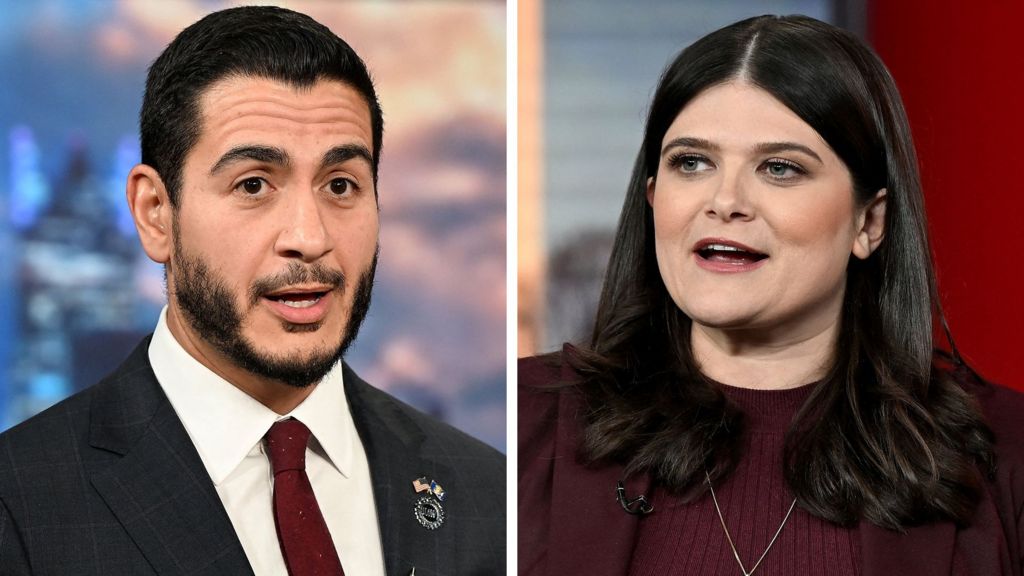
A surprise political shift is reshaping the 2026 midterm election landscape in Michigan, where left-wing progressive outsider Abdul El-Sayed has been projected to claim the Democratic Party’s U.S. Senate nomination, capping off a brutal primary race that laid bare deep ideological fractures within the national Democratic Party.
According to projections from CBS News, the BBC’s U.S. news partnership, the former public health official is on track to defeat four-term moderate Democratic incumbent congresswoman Haley Stevens in the state’s competitive primary. If the result is officially confirmed, El-Sayed will face off against former Republican congressman Mike Rogers, a close ally of former President (and current President, as of 2025) Donald Trump, in the critical November general election.
A son of Egyptian immigrants, El-Sayed would make history as the first Muslim U.S. senator if he secures victory in November. His campaign has centered on a slate of bold progressive policy priorities: he has pushed for the implementation of universal single-payer healthcare (branded as Medicare for All), called for the abolition of U.S. Immigration and Customs Enforcement, and broken with centrist party orthodoxy by demanding an end to unconditional U.S. military aid to Israel. He earned high-profile endorsements from leading progressive figures, including Vermont Senator Bernie Sanders and New York Congresswoman Alexandria Ocasio-Cortez, building a grassroots movement focused on reducing the influence of corporate money in politics.
In remarks to supporters on Wednesday, El-Sayed framed his campaign as part of a growing national movement for economic and social change. “The movement to get money out of politics, put money in your pocket, and pass Medicare for All is a big movement,” he said, echoing a core message he repeated throughout the primary campaign. Stretching a hand to unify the state’s Democratic electorate ahead of the general election, he added that he would represent all Michigan constituents, regardless of whether they supported him in the primary or backed Kamala Harris or Donald Trump in the 2024 presidential election.
Stevens, the 43-year-old moderate candidate who positioned herself as a centrist alternative capable of winning over swing voters in November, quickly conceded and pledged her full support to El-Sayed. “I want to congratulate Abdul El-Sayed on winning the Democratic nomination for US Senate,” Stevens said in an official statement. “He is a doctor, a community health official, a Rhodes Scholar, and a dedicated Michigander. I am proud to offer my support as he takes on Mike Rogers in the general election.” Stevens ran on a platform focused on protecting Michigan’s manufacturing jobs, and counted endorsements from high-profile state Democrats including Governor Gretchen Whitmer and outgoing Democratic Senator Gary Peters, whose retirement opened up the Senate seat up for grabs.
The two candidates offered starkly different visions for the party and the country, with their opposing stances on U.S. policy toward Israel emerging as the most prominent dividing line of the campaign. While El-Sayed has criticized longstanding U.S. military involvement in the Middle East and called for reining in aid to Israel, Stevens has maintained a staunchly pro-Israel position, supporting the continuation of unconditional American military assistance.
For Trump and national Republicans, the primary result was met with open celebration. Trump declared the Michigan outcome “Great news for the Republican Party” in a post on his Truth Social platform, doubling down on his familiar attacks on Democrats by mislabeling the party the “Dumocrats” and claiming that their “crazy policies will only get worse!”
Even before the final projection was confirmed, El-Sayed had signaled his priority of uniting the Democratic base to block Rogers from winning the seat in November. “Whatever happens tonight, we have a responsibility to ensure that we unite, unite to make sure that [Republican] Mike Rogers never sees the inside of the US Senate,” he told supporters Tuesday night as votes were still being counted.
Tuesday’s primary voting also included contests for U.S. House seats across Michigan, Virginia, and Washington state, where Democratic voters selected their general election candidates. The open Michigan Senate seat has not been won by a Republican candidate since 1994, but the state remains one of the most critical swing states in national presidential politics: Michigan backed Democrat Joe Biden in 2020, but flipped to support Trump in his successful 2024 presidential run.
The November 2026 midterm elections will decide partisan control of both chambers of Congress for the final two years of Trump’s second presidential term, making every competitive Senate race a high-stakes contest for both parties.