标签: North America

北美洲

  • US aircraft carrier to sail to Crete for repairs after fire on board

    US aircraft carrier to sail to Crete for repairs after fire on board

    The USS Gerald R. Ford, the US Navy’s premier nuclear-powered aircraft carrier, is being rerouted to Crete for extensive repairs following a significant onboard fire that injured personnel and caused substantial damage. According to US officials, the vessel will proceed to Naval Support Activity Souda Bay for pierside restoration after a blaze erupted in its laundry facility last week, requiring several hours to fully extinguish.

    This incident represents the latest in a series of operational challenges for the world’s largest warship during its prolonged Middle Eastern deployment. More than 200 crew members required medical assessment for smoke inhalation, with one sailor medically evacuated in stable condition and two others treated for minor injuries. The fire triggered a major damage control response as personnel worked to contain the blaze and prevent its spread throughout the vessel.

    Substantial smoke damage has rendered over 100 sleeping quarters unusable, necessitating the provision of replacement cots, mattresses, and clothing after the destruction of laundry facilities. Despite these setbacks, a US Fifth Fleet spokesperson confirmed the ship remains operationally capable while investigations into the fire’s cause continue.

    The $13 billion vessel’s deployment has drawn congressional scrutiny regarding its extended duration. Senator Mark Warner, vice chair of the Senate Intelligence Committee, criticized the extended mission, stating the carrier and its crew have been ‘pushed to the brink after nearly a year at sea.’ The New York Times reports the Ford is expected to be relieved by the USS George H.W. Bush following repairs expected to exceed one week.

    The Ford’s deployment, initially focused on Caribbean operations amid tensions with Venezuela before redirecting to the Middle East in February, has included participation in US-Israeli military actions against Iran. The carrier previously experienced technical difficulties with its toilet system in January, requiring ongoing maintenance interventions. If the deployment continues beyond mid-April, it would exceed the post-Vietnam War record for US aircraft carrier deployment duration set by the USS Abraham Lincoln in 2020.

  • Alberta seeks to set limits on use of medically assisted dying

    Alberta seeks to set limits on use of medically assisted dying

    The provincial government of Alberta has introduced groundbreaking legislation aiming to significantly restrict access to medically assisted dying (MAID) within its jurisdiction. The proposed bill would limit the procedure exclusively to individuals facing imminent end-of-life circumstances, marking the first time a Canadian province has independently moved to impose stricter limitations than federal regulations allow.

    Premier Danielle Smith articulated the government’s position during a Wednesday news conference, stating that MAID should remain an option solely for those without any prospect of recovery. “This legislation strengthens safeguards and restores clear limits on eligibility to protect vulnerable Albertans facing mental illness or living with disabilities,” Smith emphasized. “Those struggling with severe mental health challenges need treatment, compassion and support, not a path to end their life at what may be their lowest moment.”

    The comprehensive proposal includes multiple protective measures: prohibiting physicians from unilaterally raising MAID as an option with patients, banning public advertising of the service in healthcare facilities, and formally protecting healthcare professionals’ rights to conscientious objection. This legislative initiative comes as Canada prepares to expand MAID access to individuals whose sole condition is mental illness in 2025—an expansion that has already been postponed twice amid ongoing debates about implementation safeguards.

    Canada’s journey with medically assisted dying began in 2016 following legalization for terminal illness cases, with subsequent expansions to include those with serious and chronic physical conditions after a landmark Quebec court case. According to federal data, medically assisted deaths currently account for approximately 5% of all Canadian deaths, with the overwhelming majority (around 96% in 2024) involving patients whose death was deemed “reasonably foreseeable” due to conditions like cancer.

    The proposed legislation has generated polarized reactions across the healthcare and advocacy communities. Moira Wilson of Inclusion Canada welcomed Alberta’s initiative, stating it “demonstrates that governments can strengthen laws and better protect people whose lives are not nearing an end.” Similarly, Mara Grunau of the Canadian Mental Health Association’s Alberta division endorsed the measures, emphasizing that “recovery from mental illness and suicidality is possible, expected even.”

    Conversely, advocates for expanded access have strongly criticized the proposal. Helen Long of Dying with Dignity Canada condemned the legislation as a “direct attempt to circumvent the constitutional criminal law authority” that unjustly limits patient autonomy. She expressed concern that the bill would create “additional barriers for individuals who are suffering and who wish to exercise choice.”

    The ongoing national debate reflects broader tensions between provincial healthcare authority and federal eligibility standards, with Alberta’s move potentially establishing a precedent for other provinces considering similar restrictions. As Canada continues to navigate this complex ethical landscape, Alberta’s proposed legislation represents a significant development in the evolving conversation about end-of-life choices and protections for vulnerable populations.

  • US intelligence chief says Iran’s regime ‘intact’ but ‘degraded’

    US intelligence chief says Iran’s regime ‘intact’ but ‘degraded’

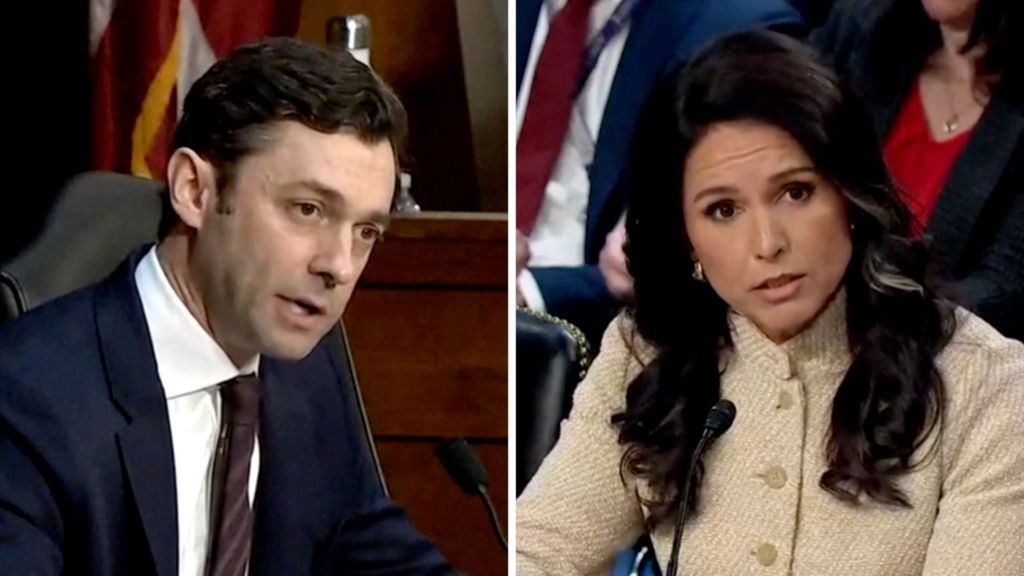
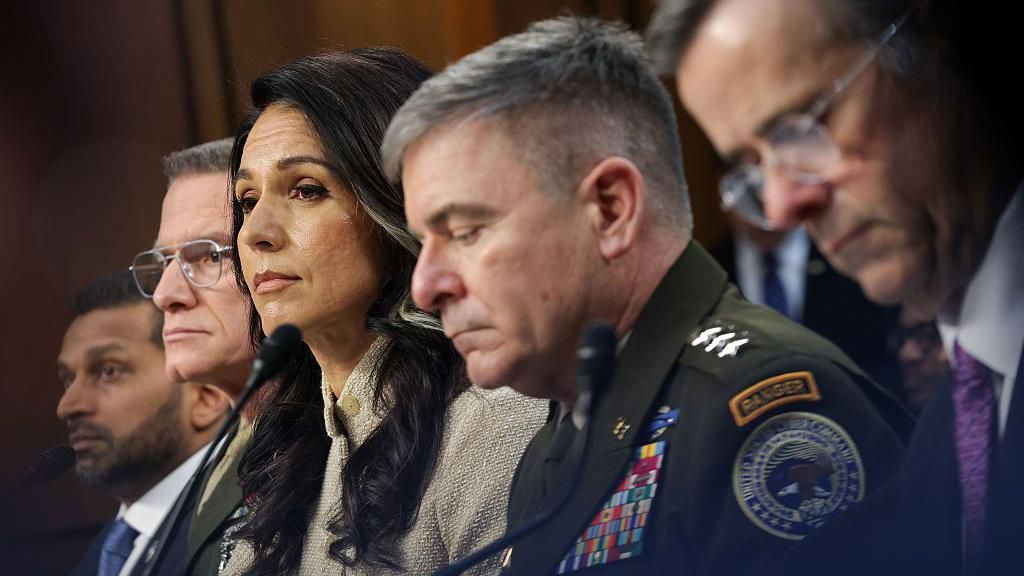
    In a significant congressional hearing on global threats, US Director of National Intelligence Tulsi Gabbard characterized Iran’s regime as structurally “intact” but operationally “largely degraded” following military strikes targeting its leadership and defense capabilities. The Wednesday testimony before Congress marked the first public intelligence briefing since the outbreak of the 12-Day War in February 2025 and featured unprecedented scrutiny of the administration’s justification for military action.

    The hearing gained particular significance following Tuesday’s resignation of National Counterterrorism Center Director Joe Kent, who publicly contradicted the administration’s position by stating Iran posed “no imminent threat” to the United States. This divergence highlighted deepening institutional tensions within the intelligence community regarding the justification for military engagement.

    When pressed by Democratic Senator Jon Ossoff regarding whether she personally assessed Iran as an imminent threat, Gabbard deferred executive authority, stating: “The only person who can determine what is and is not an imminent threat is the president.” This response sparked further questioning about the intelligence community’s role in the decision-making process that led to the June 2025 military campaign jointly conducted with Israel.

    CIA Director John Ratcliffe presented a contrasting view to Kent’s assessment, testifying that “Iran has been a constant threat to the United States for an extended period of time, and posed an immediate threat at this time.” The divergence underscored the complex and sometimes contradictory intelligence assessments surrounding Iranian capabilities and intentions.

    Gabbard revealed that intelligence agencies had long anticipated potential Iranian aggression in the Strait of Hormuz, a critical global shipping channel that Iran has effectively shut down since hostilities began. She noted the Defense Department implemented “pre-emptive planning measures” based on intelligence assessments predicting Iran “would likely hold the Strait of Hormuz” during conflict.

    The hearing also uncovered notable omissions in Gabbard’s public testimony compared to her prepared written remarks. While her submitted testimony asserted US-Israeli attacks had “obliterated” Iran’s nuclear enrichment program with “no efforts” to rebuild, these claims were omitted from her oral presentation. When questioned by Democratic Senator Mark Warner about this discrepancy, Gabbard cited time constraints, prompting Warner to suggest she had selectively omitted information contradicting the president’s narrative.

    Lawmakers further probed the intelligence community’s involvement in presidential decision-making, with Senator Angus King questioning whether intelligence officials were present during final deliberations on military action. Ratcliffe acknowledged participating in “dozens and dozens” of meetings with the president but could not identify a specific decision-making moment.

    The extensive hearing illuminated ongoing tensions between legislative oversight and executive authority while revealing substantive disagreements within the intelligence establishment regarding the characterization of threats posed by Iran.

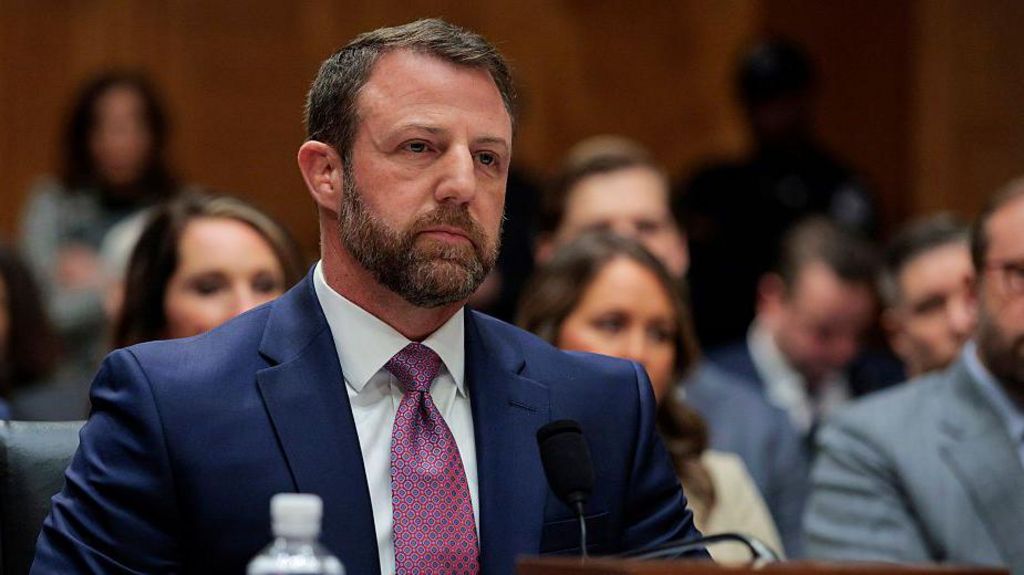
  • Five takeaways from Markwayne Mullin’s Homeland Security confirmation hearing

    Five takeaways from Markwayne Mullin’s Homeland Security confirmation hearing

    In a politically charged confirmation hearing, Oklahoma Senator Markwayne Mullin faced rigorous questioning from Senate colleagues regarding his nomination to lead the Department of Homeland Security. The hearing occurred amid a partial government shutdown that has left DHS without funding for five weeks, affecting approximately 280,000 employees who continue working without pay.

    Mullin, known for his combative rhetorical style, promised a transformed approach to immigration enforcement while committing to protect all Americans regardless of political differences. ‘I can have different opinions with everybody in this room, but as Secretary of Homeland Security, I’ll be protecting everybody,’ Mullin stated during the three-hour proceedings.

    The nomination hearing revealed deep partisan divisions, with Republicans criticizing Democrats for the funding impasse while Democrats pressed Mullin on Immigration and Customs Enforcement (ICE) practices. Several Democratic senators questioned Mullin about his previous controversial comments, including his remarks about Alex Pretti, a 37-year-old man fatally shot by federal immigration officials in Minneapolis. While expressing regret for his characterization of Pretti as ‘deranged,’ Mullin declined to apologize to the family pending investigation completion.

    Judicial warrants emerged as a significant point of contention, with Senator Richard Blumenthal (D-Connecticut) raising concerns about ICE agents allegedly being instructed to break into homes without proper authorization. Mullin committed to requiring judicial warrants for property entries unless agents are actively pursuing someone inside.

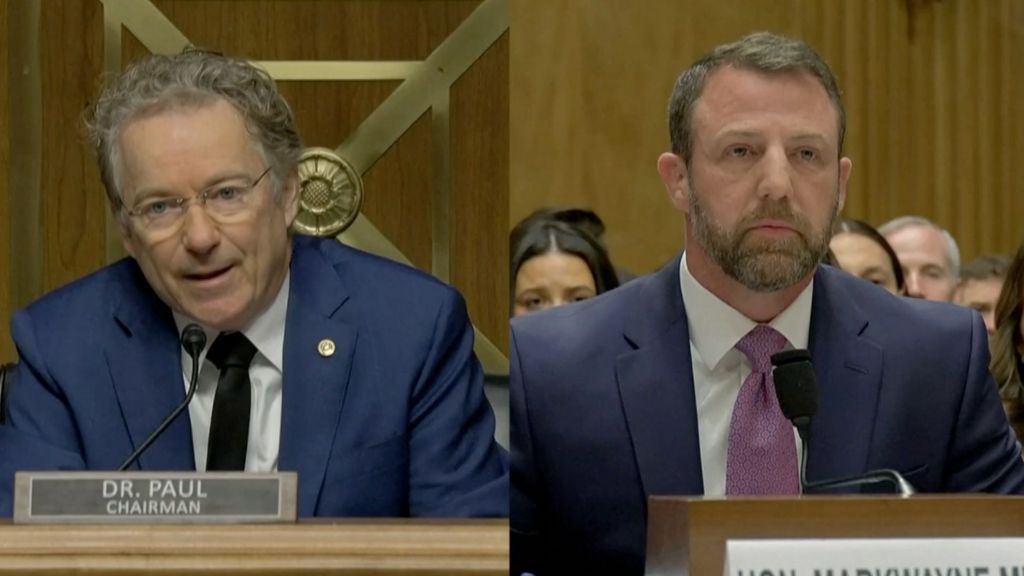
    The hearing took a dramatic turn when Senator Rand Paul (R-Kentucky), the committee chair, confronted Mullin about his past comments seemingly endorsing political violence. Paul referenced his own 2017 assault where he suffered six broken ribs, noting Mullin had previously stated he understood why the attack occurred. Despite this contentious exchange, Mullin’s nomination appears likely to advance with expected support from Senator John Fetterman (D-Pennsylvania).

    In an unexpected display of reconciliation, Sean O’Brien, president of the International Brotherhood of Teamsters, appeared in the front row. O’Brien had verbally attacked Mullin during a 2023 hearing, leading to a near-physical altercation that went viral. The two men have since reconciled, with Mullin shaking only O’Brien’s hand as he approached the dais, demonstrating an unexpected political détente.

  • Watch: Gabbard faces scrutiny over Iran nuclear intelligence claims

    Watch: Gabbard faces scrutiny over Iran nuclear intelligence claims

    United States Director of National Intelligence Tulsi Gabbard encountered intense congressional scrutiny during a recent oversight hearing, with Democratic lawmakers demanding explanations for apparent contradictions between intelligence community assessments and White House statements regarding Iran’s nuclear capabilities.

    The confrontation centered on what legislators characterized as significant discrepancies in how intelligence findings about Iran’s nuclear program have been presented by different branches of the administration. Committee members pressed the nation’s top intelligence official to clarify whether the White House had accurately represented the intelligence community’s analysis or potentially mischaracterized findings for political purposes.

    Gabbard, appearing before the House Intelligence Committee, defended the integrity of the intelligence process while acknowledging the complex nature of nuclear threat assessment. She emphasized that intelligence analyses often contain nuanced findings that can be subject to varying interpretations, but maintained that all official statements had remained consistent with the underlying intelligence.

    The hearing highlighted ongoing tensions between the legislative and executive branches regarding transparency in national security matters, particularly concerning sensitive intelligence on adversarial nations’ weapons programs. Lawmakers from both parties expressed concerns about maintaining clear distinctions between objective intelligence assessments and policy positions, especially regarding matters with significant geopolitical implications.

    This congressional examination occurs amid heightened global attention on non-proliferation efforts and follows recent international negotiations aimed at addressing Iran’s nuclear ambitions. The intelligence community’s assessments on this matter carry substantial weight in shaping both domestic policy decisions and international diplomatic strategies.

  • US holds interest rates as Iran war triggers oil shock

    US holds interest rates as Iran war triggers oil shock

    The United States Federal Reserve has unanimously decided to maintain current interest rates, marking another period of monetary policy stability as geopolitical tensions with Iran introduce significant economic complications. The central bank’s benchmark rate remains anchored at 3.5%-3.75%, unchanged since December, reflecting a cautious approach by policymakers navigating turbulent economic waters.

    The recent military engagement between the US-Israel coalition and Iran has triggered a substantial surge in global oil prices, creating fresh concerns about inflationary pressures that had previously shown signs of moderation. This development has introduced unexpected challenges for monetary authorities who must now balance multiple economic indicators pointing in different directions.

    Despite explicit pressure from the White House, where President Donald Trump has advocated for aggressive rate reductions to stimulate borrowing and economic activity, Federal Reserve officials have maintained their measured stance. The complexity of current economic conditions – characterized by persistent inflation concerns alongside ambiguous employment data – has reinforced the institution’s commitment to data-driven decision-making rather than political considerations.

    Financial analysts now anticipate that the combination of energy market volatility and ongoing military conflict has substantially diminished the likelihood of near-term rate cuts. Market expectations have consequently shifted, with most economists projecting no policy easing until at least the final quarter of this year, representing a significant departure from earlier forecasts that suggested mid-year reductions.

    The Federal Reserve’s decision-making process appears increasingly influenced by external factors beyond traditional domestic economic metrics, underscoring how global geopolitical events can directly impact monetary policy trajectories in the world’s largest economy.

  • Famous Iditarod dog sled race ends in repeat win for Jessie Holmes

    Famous Iditarod dog sled race ends in repeat win for Jessie Holmes

    In a stunning display of endurance and human-canine partnership, musher Jessie Holmes has secured his second consecutive championship in Alaska’s legendary Iditarod Trail Sled Dog Race. The former reality television personality, featured on National Geographic’s ‘Life Below Zero,’ masterfully guided his team across the race’s formidable 1,000-mile (1,609-kilometer) Arctic course.

    The victory was cemented after a relentless nine days, seven hours, and 32 minutes of navigating some of the planet’s most treacherous and isolated terrain. Holmes’s triumph underscores a remarkable transition from television fame to elite athletic prowess in the world’s most prestigious sled dog competition. The race, which commemorates the 1925 serum run to Nome, tests competitors against sub-zero temperatures, whiteout conditions, and unpredictable wildlife.

    This repeat win solidifies Holmes’s status not merely as a popular figure but as a formidable force in mushing history, demonstrating strategic planning, profound resilience, and an unparalleled bond with his canine athletes. The achievement places him among an elite group of mushers who have captured consecutive titles in the event’s demanding history.

  • Sony removes 135,000 ‘deepfakes’ of its artists’ music

    Sony removes 135,000 ‘deepfakes’ of its artists’ music

    Sony Music has initiated a massive takedown campaign targeting over 135,000 AI-generated deepfake songs fraudulently impersonating its top artists on streaming platforms. The music conglomerate revealed that sophisticated generative AI technology has been weaponized to create counterfeit tracks featuring unauthorized vocal clones of global superstars including Beyoncé, Harry Styles, Queen, Bad Bunny, Miley Cyrus, and Mark Ronson.

    According to Dennis Kooker, President of Sony’s Global Digital Business, these AI forgeries represent a calculated commercial threat that directly harms legitimate artists—particularly during critical album promotion cycles. “In the worst cases, they potentially damage a release campaign or tarnish the artist’s reputation,” Kooker stated, emphasizing that deepfakes exploit artist-driven demand while undermining their creative objectives.

    The scale of this deception is accelerating alongside increasingly accessible AI tools. Sony’s identified 135,000 fraudulent tracks likely represent merely a fraction of the total infiltration across streaming services, with 60,000 detected since March 2025 alone.

    This revelation emerged during Wednesday’s launch of the IFPI’s Global Music Report in London, which highlighted the industry’s paradoxical success amid technological threats. Recorded music revenues grew 6.4% in 2025 to $31.7 billion—marking the eleventh consecutive year of growth largely driven by streaming subscriptions. Taylor Swift dominated as the year’s top artist with her album ‘The Life Of A Showgirl’, while structural market shifts saw China surpass Germany as the world’s fourth-largest music market.

    The event coincided with the UK government’s pivotal decision to abandon plans allowing AI firms to train algorithms on copyrighted material without permission—a move welcomed by IFPI CEO Victoria Oakley as evidence of governments “grappling with squaring creativity protection with innovation encouragement.”

    Beyond deepfakes, the industry confronts streaming manipulation schemes where artificially boosted play counts divert royalties from legitimate artists. IFPI estimates up to 10% of streaming content may be fraudulent, with AI technology having “supercharged” these practices.

    Oakley urged streaming platforms to implement AI-detection tools, citing French service Deezer’s existing system that identifies 34% of submissions as AI-generated. Kooker emphasized that transparency in content origins is essential: “Without proper identification, fans can’t distinguish genuine human creativity from unauthorized AI content, undermining trust and user experience.”

  • Rand Paul presses Mullin on past assault remarks

    Rand Paul presses Mullin on past assault remarks

    In a striking Capitol Hill exchange, Senator Rand Paul (R-KY) publicly challenged Senator Markwayne Mullin (R-OK) regarding past remarks that appeared to trivialize political violence. The confrontation emerged during a Senate committee hearing focused on domestic security threats.

    The Kentucky lawmaker referenced his own traumatic experience in November 2017, when a neighbor tackled him in his Bowling Green yard, resulting in multiple broken ribs and life-threatening pneumonia. Paul emphasized the seriousness of physical assault, stating that ‘violence against political figures creates dangerous precedents that undermine our democratic foundations.’

    The discussion gained additional significance given Mullin’s previous comments before a 2022 Oklahoma debate, where the former mixed martial artist stated he wouldn’t ‘rule out’ physically confronting his opponent if provoked. Paul’s remarks served as both a personal testimony and a broader warning about normalizing political violence in increasingly polarized times.

    Security experts testified that rhetoric minimizing physical confrontations contributes to heightened risks for public officials. The hearing occurred amid ongoing concerns about the safety of elected representatives and their families, with congressional security officials reporting increased threats in recent years.

  • Juliana Stratton wins Illinois Democratic primary for US Senate

    Juliana Stratton wins Illinois Democratic primary for US Senate

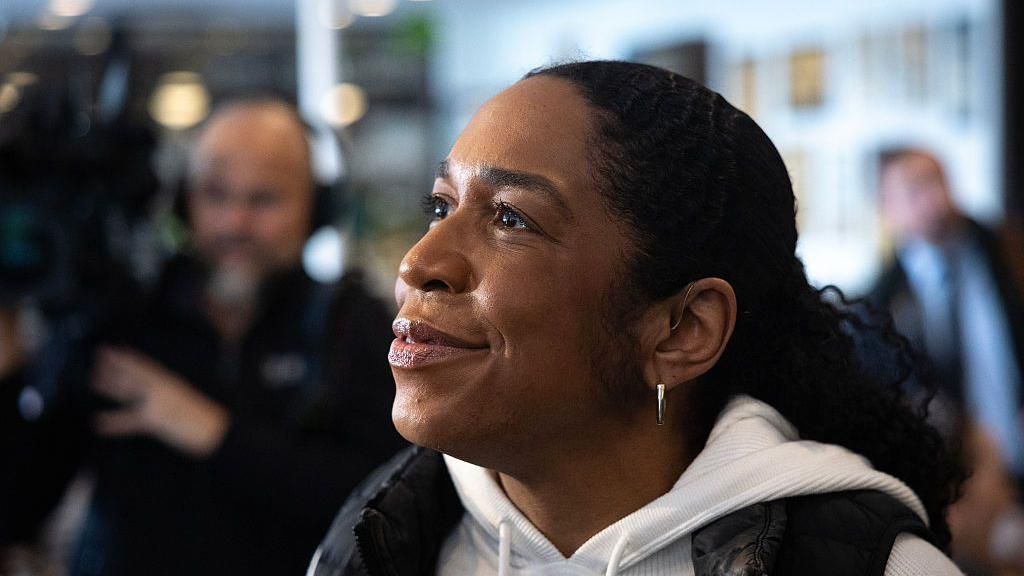
    In a dramatic political turnaround, Illinois Lieutenant Governor Juliana Stratton has secured the Democratic nomination for U.S. Senate after mounting a remarkable comeback in the final stages of a fiercely contested primary race. With approximately 90% of votes counted Tuesday night, Stratton outpaced her main rival, U.S. Representative Raja Krishnamoorthi, according to Associated Press projections.

    The victory marks a significant shift in political momentum for Stratton, who had trailed in polls for months before receiving a decisive endorsement and substantial financial backing—reportedly totaling $12 million—from Illinois billionaire Governor JB Pritzker. This support enabled her to launch a powerful late-stage campaign that resonated with Democratic voters.

    Stratton’s campaign gained traction through her strong stance on immigration reform, particularly her direct call to abolish Immigration and Customs Enforcement (ICE)—a position that distinguished her from Krishnamoorthi’s more moderate approach of targeting “Trump’s ICE” rather than the entire agency.

    Addressing supporters in Chicago during her victory speech, Stratton declared: “Courage inspired me to run. Courage powered this campaign and courage will bring this fight straight to Donald Trump’s front door.”

    The primary witnessed unusually high voter engagement for a non-presidential election year, with over 1.1 million ballots cast in the Democratic contest—potentially exceeding the record turnout from the 2004 primary when Barack Obama sought the Senate seat.

    Should Stratton prevail in November’s general election against her Republican opponent, she would make history as the sixth Black woman to serve in the U.S. Senate since its establishment 237 years ago. Her election would also mark the first time three Black women—Stratton joining Senators Angela Alsobrooks and Lisa Rochester—simultaneously serve in the upper chamber. The seat is currently held by retiring five-term Senator Dick Durbin, 81, who will conclude his service next year.