标签: North America

北美洲

  • Apple hails ‘extraordinary’ iPhone demand as boss Tim Cook heads out

    Apple hails ‘extraordinary’ iPhone demand as boss Tim Cook heads out

    On Thursday, three major U.S. tech firms unveiled their first-quarter financial results, revealing a mixed picture of performance across the consumer technology and social platform sectors, alongside key updates on leadership transitions and artificial intelligence strategy.

    Leading the pack was Apple, which delivered blowout growth driven by unprecedented demand for its flagship iPhone line. For the three months ending March 31, the Cupertino-based giant reported total revenue climbed 17% year-over-year to $111 billion (£81 billion), with Chinese market sales outpacing all other regions, surging 28% from the same period last year. Outgoing Chief Executive Tim Cook called recent consumer demand for the iPhone “extraordinary,” noting that the iPhone 17 launch marked the most popular new iPhone release in the company’s history.

    While iPhone momentum remained strong, sales of other Apple product lines, including Mac desktop and notebook computers and wearable devices such as the Apple Watch, held relatively flat over the quarter. Even so, Cook highlighted that the newly launched lower-priced MacBook Neo has seen “off the charts” consumer interest, helping the company hit an all-time record for first-time Mac buyers during the quarter.

    Looking ahead to the second half of 2025, Apple plans to roll out a major update to its Apple Intelligence AI system that will integrate the technology natively into its Siri voice assistant. Cook emphasized that Apple’s approach to AI differs sharply from many of its industry peers: instead of launching a standalone AI feature, the technology will be woven into the core functionality of all Apple devices, with a core focus on protecting user privacy that Cook says makes Apple platforms the best environment for AI experiences. Unlike competitors that have poured hundreds of billions of dollars into developing proprietary large language models from scratch, Apple has opted to partner with established AI leaders including OpenAI and Google to power select features. While critics have labeled Apple a late mover in the current generative AI boom, the partnership strategy also leaves Apple far less exposed to financial risk if industry AI expectations fail to materialize.

    The earnings call also marked one of Cook’s final public appearances as CEO, ahead of his planned transition to chairman of the board effective September 1. Cook used the occasion to praise incoming CEO John Ternus, a long-time Apple hardware executive who will take the top leadership role. “I know he will push us to go further than we think is possible in order to deliver products for our users,” Cook said. In his first public comments to analysts as incoming CEO, Ternus confirmed he would maintain Apple’s longstanding tradition of financial discipline and teased a robust pipeline of upcoming products, saying “We have an incredible roadmap ahead…suffice it to say this is the most exciting time in my career at Apple to be building products and services.”

    Also releasing quarterly results Thursday was social discussion platform Reddit, which reported explosive 69% year-over-year revenue growth to $663 million for the first quarter. CEO Ladd Huffman told analysts that weekly active users in the U.S. now hit 200 million—more than half of the country’s total population—and the company’s next major growth goal is to convert that weekly audience into daily active users, with a long-term target of 1 billion daily active users globally. “Daily active users is both our mission and also fuel for the business,” Huffman explained.

    A growing, high-margin revenue stream for Reddit is licensing its user-generated discussion data to AI developers that use the content to train large language models. Huffman noted that existing data licensing deals with OpenAI and Google have already proven valuable, and will become even more critical as the broader internet becomes increasingly “optimized for AI” rather than authentic human conversation. “At the end of the day, there is no artificial intelligence without actual intelligence,” he said.

    Not all big tech earnings were positive Thursday: after releasing its quarterly results, youth-focused gaming platform Roblox saw its share price drop 20% in after-hours trading. While the company reported growth in both total users and revenue over the quarter, CEO David Baszucki told investors that user growth came in well below internal projections, a slowdown he attributed to the recent rollout of stricter age verification checks on the platform. The new protocol restricted communication for users who had not completed age verification and altered the experience for verified users, leading to slower new user acquisition than expected. Investors also reacted negatively to the company’s revised full-year revenue forecast, which came in lower than earlier projections. Roblox, which has been publicly traded since 2021, has yet to report a single profitable quarter since its IPO.

  • Has the royal state visit saved the special relationship?

    Has the royal state visit saved the special relationship?

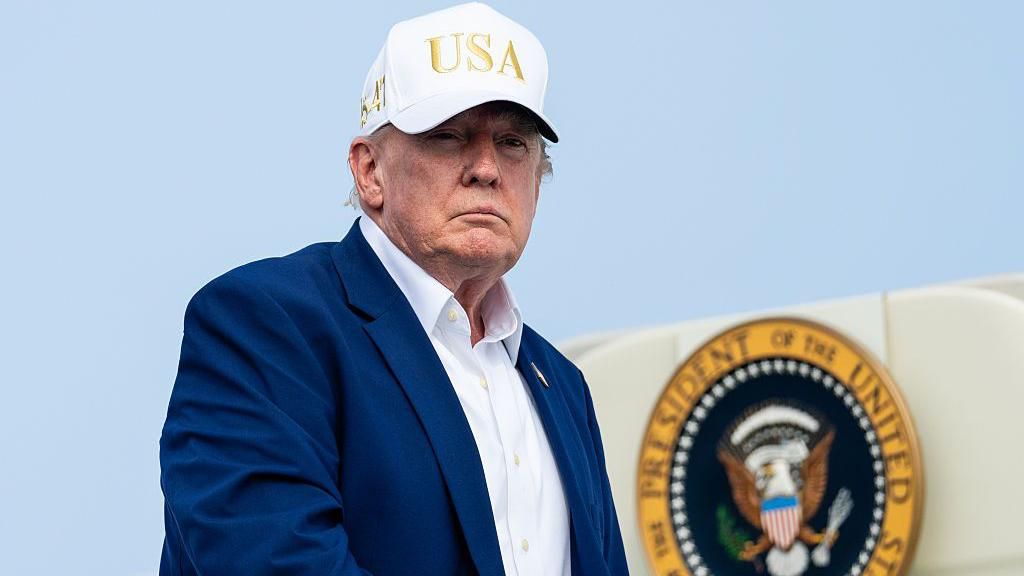
    For decades, the so-called “special relationship” between the United States and the United Kingdom has been a cornerstone of transatlantic diplomacy, but it has faced growing strains in recent years amid shifting policy priorities and changing leadership on both sides of the Atlantic. Now, a key question is circulating in diplomatic circles: could King Charles III’s recent high-profile royal state encounter with former U.S. President Donald Trump breathe new life into this long-standing alliance?

    Sarah Smith, senior political correspondent for the BBC, has examined whether the British monarch’s deliberate diplomatic outreach to Trump produced any tangible shift in the trajectory of U.S.-UK ties. The interaction, framed as a charm offensive by observers, saw King Charles lean into his decades of diplomatic experience to engage the former president in discussions covering shared global priorities, from transatlantic security to economic cooperation.

    The special relationship has long been defined by more than just formal policy alignment; it rests on shared cultural values, historical ties, and coordinated action on the world stage. In recent years, however, changing leadership in both capitals has led to questions about whether the bond has weakened, with disagreements over trade policy, climate action, and international security creating occasional rifts between the two allies.

    Smith’s analysis centers on whether the monarch’s soft power diplomacy, built on personal engagement and symbolic connection, can help bridge divides and shore up the relationship, regardless of ongoing shifts in elected leadership on both sides. While the meeting itself was largely symbolic, experts note that high-profile royal engagements have long played a quiet role in smoothing diplomatic tensions and keeping bilateral channels open.

  • Britney Spears charged in California with driving under influence

    Britney Spears charged in California with driving under influence

    Nearly two months after pop star Britney Spears was taken into custody on suspicion of impaired driving in Southern California, Ventura County prosecutors have formally filed a criminal misdemeanor charge against the 44-year-old entertainer.

    The charge accuses Spears of operating a motor vehicle while under the influence of alcohol or drugs, a offense classified as a low-level misdemeanor under California state law. The incident that led to the charge dates back to March 4, when law enforcement pulled Spears over on a Southern California highway. Authorities confirmed at the time that officers observed her BMW moving erratically at excessive speeds before initiating the traffic stop that ended in her arrest.

    In the wake of the arrest, multiple reports confirmed that Spears voluntarily admitted herself to a rehabilitation facility to seek treatment. Representatives for the singer quickly issued a statement acknowledging the seriousness of the incident, calling the star’s decision to drive while impaired “completely inexcusable.”

    Prosecutors officially lodged the single charge with the court on Thursday this week. Spears’ first court appearance, an arraignment, has been scheduled for next Monday morning. Because the offense is categorized as a minor misdemeanor, California court rules do not require Spears to attend the hearing in person. A spokesperson for the Ventura County District Attorney’s Office noted that any decision about whether Spears will appear in court will be a private matter between the singer and her legal counsel.

    The case marks the latest high-profile legal entanglement for the pop star, who has been open in the past about her struggles with personal well-being and public scrutiny in the years following her widely publicized conservatorship battle.

  • King and Queen end US state visit with trip to small-town America

    King and Queen end US state visit with trip to small-town America

    After four days of high-stakes diplomatic engagement across Washington D.C. that marked the first full state visit of King Charles III’s reign to the United States, the British monarch and Queen Camilla closed out their trip with a laid-back, crowd-pleasing stop in the small Virginia town of Front Royal, capping an unexpectedly successful tour focused on mending cross-Atlantic relations.

    The final day of the visit marked the royal couple’s first unfiltered interaction with ordinary American people, after earlier official engagements were confined to tightly secured security perimeters that limited public access. Though heavy security measures remained in place for the royal visit, a large share of Front Royal’s 15,000 residents turned out to line the parade route and greet the pair, greeting their arrival with loud cheers under warm Appalachian sunshine.

    Hosted as part of Front Royal’s community block party, held to celebrate the 250th anniversary of U.S. independence, the event offered a stark contrast to the formal receptions and policy-focused meetings of the couple’s time in the nation’s capital. The town square echoed with bluegrass and country rock, as the royal couple watched a lineup of local entertainment: a marching band performance, a procession of classic cars, performances by cheerleaders and young local baseball players, and a demonstration of traditional Appalachian clog dancing that the pair watched with keen interest. The event also featured appearances by local military veterans, adding a note of shared respect for military service to the day’s activities.

    Long known for a 1948 fundraising performance by legendary crooner Bing Crosby that stands as one of the town’s most high-profile past events, locals said the royal visit is likely to eclipse that 76-year-old milestone as Front Royal’s most iconic visitor moment. For the royal couple, the small-town stop provided a welcome break from the formality of diplomatic protocol, after days of high-level meetings. They took part in a public walkabout to shake hands with attendees – a first for their entire U.S. trip – to the delight of gathered crowds.

    Before traveling to Virginia’s Shenandoah Valley for the closing event, the pair wrapped up their official diplomatic schedule with a formal farewell at the White House, where they met with U.S. President Donald Trump and First Lady Melania Trump. Following the White House meeting, they paid tribute to fallen service members at Arlington National Cemetery, laying a ceremonial wreath at the Tomb of the Unknown Soldier and receiving an official gun salute.

    The entire four-day visit was capped by the warm welcome in Front Royal, with the King’s address to the U.S. Congress already drawing broad bipartisan applause earlier in the tour. As the royal motorcade flashed lights and blared sirens rolling out of the small town, the visit ended on a high note: the trip’s core goal of rebuilding warm relations between the U.K. and U.S. had already exceeded low expectations, leaving a notably positive impression on both U.S. political leaders and the general public who turned out to greet the royals.

  • Trump pulls surgeon general pick after nomination stalls

    Trump pulls surgeon general pick after nomination stalls

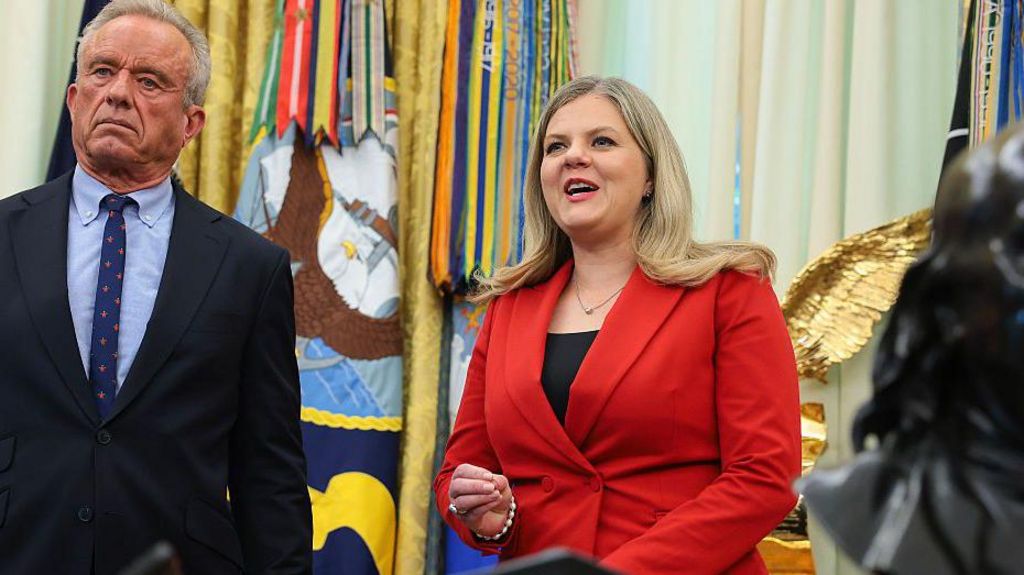
    In a development that roils Washington’s latest health leadership nomination fight, former President Donald Trump has pulled the nomination of Casey Means for U.S. Surgeon General after the controversial pick failed to secure the minimum Senate support required for confirmation.

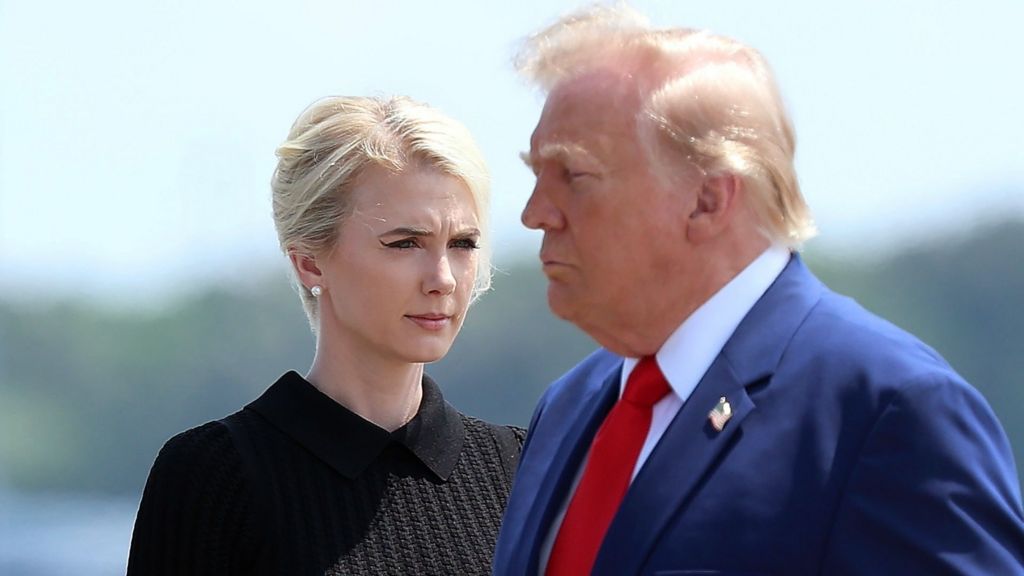
    Trump made the announcement of the withdrawal Thursday via his social media platform Truth Social, adding that he would instead nominate Nicole Saphier, a cancer radiologist and regular contributor to conservative media outlet Fox News, for the role that leads the U.S. Public Health Service.

    Means, a Stanford-trained physician, entrepreneur and prominent online health influencer, faced fierce cross-partisan skepticism from lawmakers throughout the nomination process largely over her history of controversial statements on vaccine safety. Critically, Means does not hold an active medical license to practice in any U.S. state, a detail that amplified concerns about her suitability to lead the nation’s top public health agency.

    Means’ nomination stalled out immediately after her February Senate confirmation hearing, where she declined to answer a direct question on whether infants should receive routine childhood vaccines, and refused to reject the long-debunked conspiracy theory that links routine childhood vaccines to autism. While she told lawmakers at the hearing that she agrees “vaccines save lives” and are a core component of infectious disease public health strategy, she repeatedly emphasized prioritizing patient autonomy over public health guidelines throughout her testimony.

    Policy analysts also connected Means’ nomination to the wider vaccine skepticism that has gained traction in conservative politics, noting that Means was widely viewed as an ideological ally of Health Secretary Robert Kennedy Jr., who has faced widespread alarm from lawmakers across both parties over his own long history of anti-vaccine activism.

    In his Thursday Truth Social post, Trump did not blame his own party’s internal divisions for the failed nomination, and instead placed full blame on Louisiana Republican Senator Bill Cassidy, a trained physician who led opposition to Means’ confirmation. Trump lambasted Cassidy for what he called “intransigence and political games” that blocked Means’ path to confirmation, and explicitly called on Louisiana voters to remove Cassidy from office in the next election cycle.

    Turning to his new pick, Trump offered glowing praise for Saphier, framing her as a highly qualified, public-facing leader on cancer care. “She is a STAR physician who has spent her career guiding women facing breast cancer through their diagnosis and treatment while tirelessly advocating to increase early cancer detection and prevention, while at the same time working with men and women on all other forms of cancer diagnoses and treatments,” Trump wrote. He added that Saphier is “also an INCREDIBLE COMMUNICATOR, who makes complicated health issues more easily understood by all Americans.”

    Saphier currently practices radiology at Memorial Sloan Kettering Cancer Center Monmouth. Beyond her clinical work, she has a high public profile: she published the 2020 book *Make America Healthy Again: How Bad Behavior and Big Government Caused a Trillion-Dollar Crisis*, and hosts a popular wellness-focused podcast titled *Wellness Unmasked*.

    This nomination marks the third time Trump has put forward a candidate for surgeon general, the top role overseeing the 6,000-person U.S. Public Health Service. His first pick, Janette Nesheiwat, another former Fox News contributor and physician, withdrew from consideration after facing criticism from a senior Trump administration adviser over her public positions on COVID-19 policy and questions raised about her professional credentials.

  • US House votes to end government shutdown over immigration operations

    US House votes to end government shutdown over immigration operations

    After more than two months of disrupted federal operations tied to a bitter partisan standoff over immigration policy, U.S. lawmakers have passed a funding package for the Department of Homeland Security, bringing an end to the longest partial government shutdown in the agency’s 20-year history.

    The House of Representatives signed off on the Senate-approved bipartisan measure via a voice vote on Wednesday, immediately restoring operating funds to most DHS components after the 76-day funding lapse that impacted millions of federal workers and critical border and security operations. President Donald Trump has publicly backed the legislation, which now heads straight to the Oval Office for his final signature before it takes effect.

    Notably, the stop-and-go funding package does not allocate new money for two of DHS’s highest-profile immigration enforcement arms: Immigration and Customs Enforcement (ICE) and the U.S. Border Patrol. The omission comes after months of fierce pushback from congressional Democrats, who have demanded sweeping changes to the Biden (correction: Trump-era) immigration enforcement policies before approving additional funding for the agencies. Republican leadership has already signaled that it will pursue standalone funding legislation for ICE and Border Patrol in the coming weeks, separating that contentious fight from the broader DHS funding deal to end the shutdown.

    This is an ongoing developing breaking news story. Additional details on the legislative timeline for separate immigration enforcement funding and the implementation of the DHS funding package will be added as they become available. Readers can refresh this page for the full updated version, or access real-time breaking news alerts through the BBC News mobile app, or by following @BBCBreaking on the X platform.

  • Mills quits Maine Senate race leaving Democrat novice in running

    Mills quits Maine Senate race leaving Democrat novice in running

    In a surprise but widely foreshadowed development, 78-year-old Maine Governor Janet Mills announced Thursday morning she is withdrawing from the 2026 Democratic Senate primary, ending national Democrats’ high-stakes bid to unseat incumbent Republican Susan Collins with a tested, well-known statewide leader.

    Mills, a two-term popular governor with a decades-long career in Maine politics, was handpicked by national Democratic establishment figures, including Senate Majority Leader Chuck Schumer, who actively recruited her to run. Party leaders viewed Maine’s open-seat contest ( framed as Collins’ final campaign ) as one of their best chances to flip a Republican-held seat and retake control of the U.S. Senate in this year’s midterm elections. But from the early stages of her campaign, structural and demographic headwinds undermined her bid.

    In an official statement announcing her exit, Mills framed her decision as rooted in a modern political reality: “While I have the drive and passion, the commitment and experience, and above all else – the fight – to continue on, I very simply do not have the one thing that political campaigns unfortunately require today: the financial resources.”

    Mills’ exit clears a nearly unobstructed path to the Democratic nomination for 41-year-old Graham Platner, a first-time candidate, Marine Corps veteran, and small-business oyster farmer who has upended Maine’s Democratic primary in recent months. When Platner launched his grassroots campaign last August, he quickly tapped into a nationwide hunger for new working-class progressive leadership, raising $3 million in just his first seven weeks in the race. He has earned high-profile endorsements from across the Democratic ideological spectrum, including progressive standouts Senators Bernie Sanders of Vermont and Elizabeth Warren of Massachusetts, as well as centrist Arizona Senator Ruben Gallego, alongside widespread backing from national progressive activist groups and major trade unions.

    Platner’s populist message, which blames billionaires and entrenched corrupt politicians for eroding working-class living standards and damaging the environment, has resonated deeply with primary voters, even amid high-profile controversy. Critics have unearthed old social media posts they call homophobic and misogynistic, and revealed that Platner previously had a skull tattoo, since covered, that resembles the Nazi SS Totenkopf insignia. Platner has forcefully disavowed his past comments, explaining the tattoo was chosen impulsively during a night of drinking with fellow Marines while deployed to Croatia, and he had no knowledge of its white supremacist history at the time. Voters have largely shrugged off the scandals, leaving Platner’s polling lead intact.

    Long before her exit, Mills had been dogged by questions about her age that set up a stark generational contrast with her much younger challenger. If elected, Mills would have become the oldest first-term senator in U.S. history, and her age became a unavoidable political liability coming on the heels of 82-year-old President Joe Biden’s 2025 decision to abandon his re-election bid and the recent deaths of several senior Democratic members of Congress. Local political observers also noted that even voters who approved of Mills’ tenure as governor largely expressed a desire for new generational leadership in the Senate race.

    “ I’ve been struck by how many voters I’ve talked to who really liked Janet Mills, who think she’s been a great governor, but think it’s time for some new voices, ” Josh Keefe, political reporter for *The Maine Monitor*, told BBC’s *Americast*. “ They think it’s time to sort of turn it over to the younger generation. ” Keefe added that Mills also misread the mood of the primary electorate, running a campaign centered heavily on opposition to Donald Trump, while Maine Democratic voters were seeking a broader, forward-looking vision for the party’s future. By contrast, Keefe noted, Platner’s message addresses the root economic grievances that have fueled the rise of Trumpism, rather than just focusing on opposition to the former president.

    Mills’ exit now sets up a general election showdown between Platner and three-term incumbent Susan Collins, the only remaining Republican member of Congress representing a New England state. Collins, first elected to the Senate in 1996, has already proven notoriously difficult for Democrats to unseat, holding her seat in 2020 by a 9-point margin. At 73, Collins has confirmed this will be her final campaign, and a pro- Collins political group has already launched a $2 million advertising assault on Platner, kicking off what is projected to be one of the most expensive Senate races of the 2026 cycle.

    For national Democrats, the stakes could not be higher: the party needs to flip four Republican-held seats to retake Senate control, and Maine remains one of their most competitive pickup opportunities. Early head-to-head polling shows Platner holding a narrow lead over Collins, but local observers warn that Collins remains a formidable political force in Maine, while Platner is a completely untested outsider who presents a new kind of challenge for the long-serving incumbent. “ Susan Collins is kind of a juggernaut in Maine, ” Keefe said. “ Platner is just a complete anomaly in Maine politics, however, and certainly she’s never faced anyone like him. ”

  • Twitch streamer hit by car live on camera – ‘It felt like slow motion’

    Twitch streamer hit by car live on camera – ‘It felt like slow motion’

    A 27-year-old American Twitch creator who captured a shocking car accident on his live stream has opened up about the surreal, life-altering moment to the BBC, revealing he remains determined to complete his ambitious charity trek despite the terrifying collision.

    Known online by his handle “Humblezayy,” Isaiah Thomas launched the cross-country walking challenge with a heartfelt mission: to trek more than 3,000 miles from Philadelphia to Southern California, with every dollar raised going toward building a trade school for young people who cannot pursue traditional college education. The project has already struck a chord with donors, pulling in more than $50,000 in contributions by the time the accident happened.

    The incident unfolded on Day 34 of Thomas’s journey, as he traveled along Route 40 in Richmond, Indiana. Normally, Thomas follows strict safety protocols: he walks facing oncoming traffic, wears high-visibility reflective gear, and moves with a support cart ahead of him. On this particular day, however, a local fan who follows his stream offered to serve as a rear escort, driving behind Thomas with hazard lights active to warn approaching vehicles. After checking with local law enforcement and receiving official approval, Thomas began his day’s walk as planned.

    Tragedy struck mid-route when a car crashed into the escort vehicle traveling behind Thomas, sending the vehicle careening into the streamer from his right side. Recalling the split-second collision, Thomas described the experience as surreal. “It was so fast, but it felt like it was in slow motion; it was like I was just gliding in the air – it was crazy,” he told the BBC. In the moments immediately after impact, a flood of worries raced through his mind: “I’m like, I hope this isn’t over. I hope that my injuries aren’t too bad.”

    For Thomas, this close call carried extra weight: he had already survived a serious car accident just six months prior, and had spent months in intensive therapy just to relearn how to walk well enough to undertake his fundraising challenge.

    After the crash, Thomas was able to stand up and survey the damage. Both the escort vehicle and the car that caused the collision were completely totaled, though remarkably, neither driver suffered life-threatening injuries. When first responders arrived at the scene, Thomas was able to share footage of the exact moment of impact, pulled directly from his live stream by one of his content moderators. It was only when he rewatched the clip himself that he fully grasped the force of the collision. “When I watched the video, that’s when I was surprised, like, wow, this car really hit me that hard,” he said. “That’s when I realised the impact.”

    Thomas was transported to a local hospital for evaluation, and walked away with only minor injuries: sprained ankles and small soft tissue damage, a outcome he called pure luck. In the days since the accident, despite the lingering shock of the event, Thomas has reaffirmed his commitment to finishing the trek, saying he only plans to take a short recovery break before hitting the road again.

    “For the next three to four days, I’m going to be taking ice baths and really just putting my body through a lot just to get back to where I was,” he said. With roughly 2,000 miles still left to cover and three months to complete the journey, Thomas shows no sign of abandoning the cause that pushed him to take on the challenge in the first place.

  • ‘It’s just ridiculous’: Michigan residents react to gas prices

    ‘It’s just ridiculous’: Michigan residents react to gas prices

    In the region just north of Detroit, the beating heart of America’s automotive sector, local residents are growing increasingly frustrated with sky-high gasoline prices that are squeezing household budgets across the state. As the auto industry remains the primary engine of Michigan’s economy, most workers and families rely heavily on personal vehicles to commute to jobs, shuttle kids to school, and carry out daily tasks – leaving them disproportionately vulnerable to sudden spikes at the pump. What was already a tight financial situation for many working-class households has been made even worse by the unrelenting rise in fuel costs, prompting sharp pushback from community members. Many locals are describing the current price levels as simply unjustifiable, with one resident summing up the widespread frustration by calling the situation “just ridiculous”. The growing discontent among Michigan residents highlights how fuel price inflation hits regions built around auto manufacturing particularly hard, where car ownership is not a luxury but an absolute necessity for everyday life.

  • Massive sea lion makes rare appearance in San Francisco

    Massive sea lion makes rare appearance in San Francisco

    On a surprising day along the Northern California coast, wildlife enthusiasts and beachgoers in San Francisco were treated to an extraordinary, once-in-a-blue-moon encounter: a massive Steller sea lion, a species rarely spotted this far south of its typical range, made an unexpected appearance in local waters.

    Native to the frigid, nutrient-rich waters stretching from Alaska down through the Pacific Northwest, Steller sea lions rarely venture as far south as the San Francisco Bay Area. Their natural habitat centers on colder coastal ecosystems, where abundant fish populations support their large size—adult males can grow up to 11 feet long and weigh more than 2,500 pounds, making them one of the largest sea lion species on Earth.

    Local marine biologists note that while individual Steller sea lions have been recorded occasionally wandering south for extended foraging trips, confirmed sightings of large adults in the Bay Area remain incredibly uncommon. The unexpected visitor has drawn crowds of curious onlookers, who have kept a respectful distance per local wildlife guidelines to avoid disturbing the animal during its stay. For many residents and visitors alike, the rare sighting offers a unique reminder of the diverse marine life that inhabits California’s coastlines, even in more populated urban areas.