标签: North America

北美洲

  • Oscars 2026: Nominees list in full

    Oscars 2026: Nominees list in full

    The Academy of Motion Picture Arts and Sciences has unveiled its nominations for the 98th Academy Awards, setting the stage for Hollywood’s most anticipated night on March 15th. In a historic achievement, the musical drama ‘Sinners’ dominated the field with an unprecedented 16 nominations, breaking the long-standing record previously held by ‘All About Eve’ (1950), ‘Titanic’ (1997), and ‘La La Land’ (2016).

    The epic war drama ‘One Battle After Another’ followed closely with 13 nominations, while ‘Marty Supreme,’ ‘Frankenstein,’ and ‘Sentimental Value’ each secured nine nods. The Shakespearean adaptation ‘Hamnet’ rounded out the top contenders with eight nominations.

    Notable acting categories feature intense competition. The Best Actor race includes Timothée Chalamet for ‘Marty Supreme,’ Leonardo DiCaprio for ‘One Battle After Another,’ and Michael B. Jordan for ‘Sinners.’ The Best Actress category showcases Jessie Buckley (‘Hamnet’), Rose Byrne (‘If I Had Legs I’d Kick You’), and Emma Stone (‘Bugonia’).

    Behind the camera, directing honors will be contested among Paul Thomas Anderson (‘One Battle After Another’), Ryan Coogler (‘Sinners’), and Chloé Zhao (‘Hamnet’), among others. The international feature category includes powerful entries like ‘The Voice of Hind Rajab’ and ‘Sirât,’ while animation contenders range from ‘Zootopia 2’ to ‘KPop Demon Hunters.’

    Comedian Conan O’Brien will host the ceremony, which promises to celebrate a diverse year in cinema spanning blockbuster franchises, intimate dramas, and groundbreaking international productions. The nominations reflect both commercial successes and critical darlings, with technical categories highlighting achievements in visual effects, sound design, and production across various genres.

  • Trump drops tariff threat on EU countries after striking framework for a deal over Greenland in Davos

    Trump drops tariff threat on EU countries after striking framework for a deal over Greenland in Davos

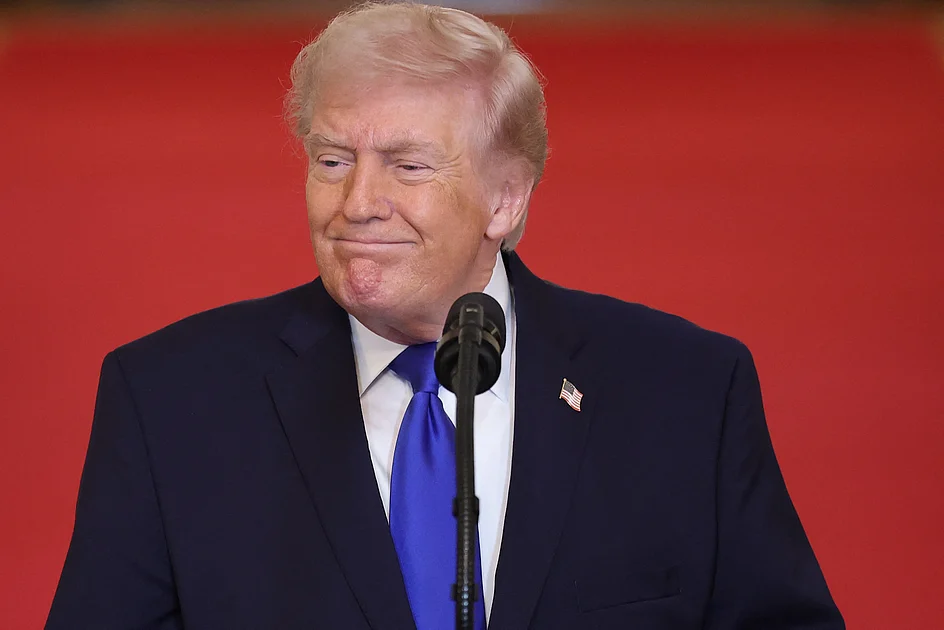
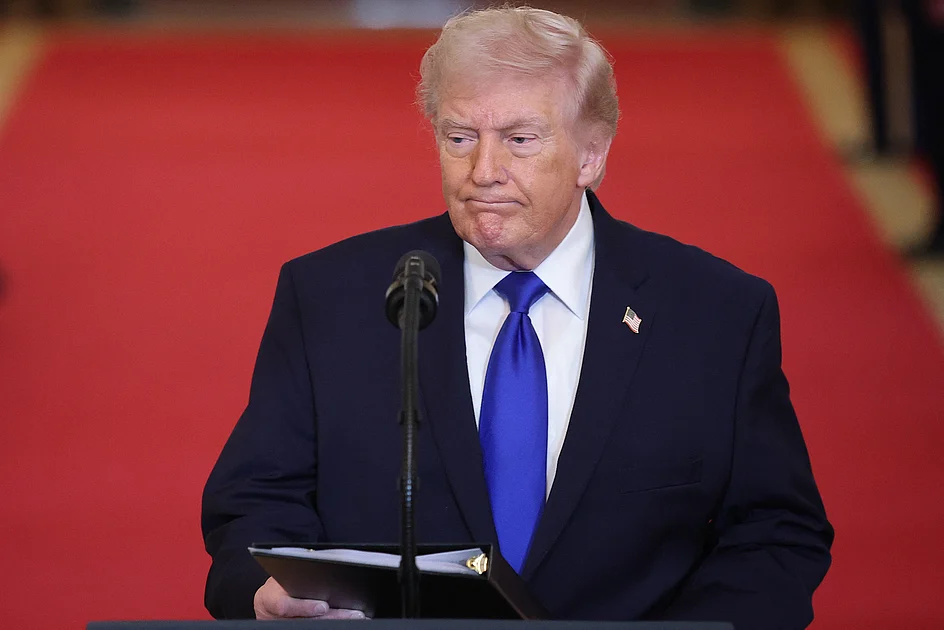
    In a significant diplomatic development at the World Economic Forum in Davos, President Donald Trump announced the suspension of threatened tariffs against eight European nations following the establishment of a preliminary agreement concerning Greenland and Arctic security. The breakthrough came during bilateral discussions with NATO Secretary General Mark Rutte on January 21, 2026.

    The agreement, described by Trump as ‘the ultimate long-term deal,’ effectively cancels planned 10% tariffs on goods from the United Kingdom, Denmark, Norway, Sweden, France, Germany, Netherlands, and Finland that were scheduled to commence February 1. Additionally, the administration withdrew the threat of escalating these tariffs to 25% beginning June 1.

    While specific details remain limited, the framework reportedly addresses US strategic interests in the Arctic region, including enhanced military presence opportunities and mineral resource access. Trump characterized the arrangement as providing the United States with ‘everything it wanted’ regarding Greenland while creating benefits for all NATO member nations.

    Political science expert Professor Michael A. Allen of Boise State University noted the agreement would enable the US to ‘increase its military presence in Greenland and work with NATO partners to achieve its goals.’

    European leaders expressed relief at the de-escalation of tensions. Danish Foreign Minister Lars Lokke Rasmussen stated, ‘The day is ending on a better note than it began,’ emphasizing the importance of addressing American security concerns while respecting Denmark’s territorial integrity.

    The negotiation process will be overseen by US Secretary of State Marco Rubio and Special Envoy Steve Witkoff, who will report directly to the president. Preliminary discussions suggest the possibility of limited territorial concessions for military infrastructure, though no official confirmation has been provided.

    Notably, President Trump explicitly ruled out military force to acquire Greenland during his Davos address, stating: ‘I don’t have to use force. I don’t want to use force. I won’t use force.’

  • US forces seize 7th oil tanker in Caribbean

    US forces seize 7th oil tanker in Caribbean

    The United States Southern Command has conducted its seventh interception of a Venezuela-associated oil tanker in the Caribbean Sea, escalating its month-long maritime enforcement operation. The motor vessel Sagitta was apprehended without resistance on Tuesday as part of Washington’s comprehensive strategy to control Venezuela’s petroleum exports.

    This latest seizure occurs within the framework of President Donald Trump’s December-declared ‘total and complete blockade’ targeting sanctioned vessels transiting to and from Venezuelan waters. The Southern Command affirmed its determination to ensure that “the only oil leaving Venezuela will be oil that is coordinated properly and lawfully.”

    The geopolitical confrontation intensified significantly following a January 3rd military operation where US forces attempted to capture Venezuelan President Nicolas Maduro and his wife. This unprecedented action drew widespread international criticism regarding violations of national sovereignty.

    Concurrently, Acting Venezuelan President Delcy Rodriguez announced receipt of $300 million from US-controlled sales of Venezuelan crude oil, representing a portion of an estimated $500 million total revenue. Rodriguez stated these funds would be channeled through public and private banking institutions, in coordination with the Central Bank of Venezuela, to stabilize foreign exchange markets.

    Despite Trump’s assertion that the US has extracted 50 million barrels of Venezuelan oil, maritime transport records indicate these volumes have not yet been exported. The administration simultaneously contemplates a $100 billion reconstruction plan for Venezuela’s deteriorated oil infrastructure.

    Tensions further escalated when Venezuela’s Ministry of the Interior denounced an artificially generated map circulating on Trump’s social media that depicted Venezuela, Canada, and Greenland as US territories. The ministry vehemently reaffirmed the nation’s sovereignty as the Bolivarian Republic of Venezuela.

    Adding another dimension to the complex situation, Trump revealed potential involvement for Venezuelan opposition figure Maria Corina Machado, though specific responsibilities remain undefined. This development follows Machado’s presentation of her Nobel Peace Prize to the US president during their recent meeting.

  • China seeks support to fight crimes against humanity

    China seeks support to fight crimes against humanity

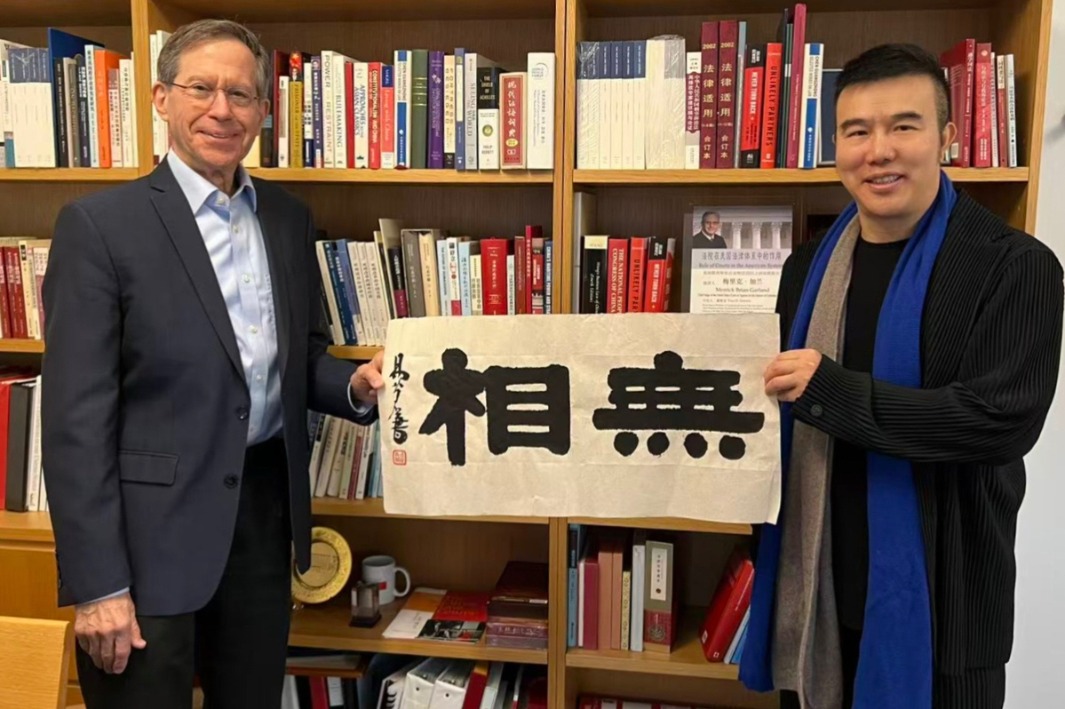
    At the inaugural session of the UN Preparatory Committee for the Conference on Crimes Against Humanity, Chinese envoy Sun Lei delivered a powerful address calling for enhanced international collaboration to prevent and penalize atrocities constituting crimes against humanity. The senior diplomat, serving as charge d’affaires of China’s permanent mission to the UN, emphasized the critical importance of upholding international legal standards and preserving historical justice during Monday’s proceedings.

    The committee’s establishment follows UN General Assembly Resolution 79/122 adopted in 2024, which initiated the process toward drafting a comprehensive global convention addressing these severe offenses. Sun characterized crimes against humanity as grave violations that fundamentally threaten international peace and security, tracing their legal conceptualization to the post-World War II Nuremberg and Tokyo tribunals.

    Speaking on the 80th anniversary of the International Military Tribunal for the Far East, Sun highlighted how Japanese militarism inflicted profound suffering across China, Asia, and the global community. He described the Tokyo trials as historically irrefutable evidence of Japan’s aggression crimes, noting their pioneering role in developing international criminal jurisprudence while serving as a enduring clarion call for peace.

    The diplomat urged the international community to collectively safeguard the outcomes of WWII victory, maintain the international legal order, and prevent the resurgence of militarism. His remarks emerged amid escalating Sino-Japanese tensions following controversial November statements by Japanese Prime Minister Sanae Takaichi regarding potential intervention in Taiwan Strait scenarios, which China has vehemently opposed through formal diplomatic channels.

    Sun emphasized that in today’s complex global landscape marked by regional conflicts and geopolitical turbulence, strengthening mechanisms against crimes against humanity carries particular urgency and significance. China has consistently supported lawful punishment of such crimes and constructively participated in UN Sixth Committee discussions, submitting official government comments in late 2023.

    The Chinese representative concluded that combating these crimes must strictly adhere to the UN Charter and universally recognized international law principles, warning against recent politicization of humanitarian issues where certain states allegedly manipulate concepts of criminal accountability and human rights protection to interfere in sovereign nations’ internal affairs and justify armed aggression.

  • US hard-line stance sowing divisions

    US hard-line stance sowing divisions

    As the Trump administration marked its first anniversary of the second term, its assertive “America First” doctrine has generated significant international friction and raised concerns about global stability. During a comprehensive White House briefing, President Trump showcased what he described as 365 accomplishments since his January 20 inauguration, while simultaneously advancing controversial policies that have strained traditional alliances.

    The administration’s approach has particularly manifested in two contentious areas: immigration enforcement and territorial ambitions. Trump devoted substantial attention to immigration issues, publicly displaying mugshots of undocumented immigrants arrested in Minnesota and praising ICE agents. More remarkably, the president reaffirmed his interest in acquiring Greenland from Denmark, suggesting potential negotiations that would satisfy both NATO and U.S. interests without elaborating on specifics.

    European leaders have responded with firm resistance. European Commission President Ursula von der Leyen condemned newly announced tariffs targeting eight European nations supporting Denmark’s position on Greenland as a “mistake” that questions Washington’s reliability. French President Emmanuel Macron threatened retaliatory measures using the EU’s powerful economic tools, colloquially termed a “trade bazooka.”

    International relations experts warn that these policies represent a fundamental shift in global dynamics. According to Chen Hong of East China Normal University, the administration appears to be constructing a new form of hegemonic politics that challenges post-World War II international norms and sovereignty principles. The Chicago Council on Global Affairs has identified the U.S. as potentially “the primary driver of global disruption” due to its unpredictable alliance management.

    The administration’s withdrawal from key international agreements—including the Paris Climate Accord and World Health Organization—combined with its use of tariffs as foreign policy instruments, threatens to undermine multilateral frameworks. Researchers like He Yun of Tsinghua University predict these actions will accelerate regionalization trends as nations seek to reduce dependence on Washington and strengthen alternative security arrangements.

    Analysts from Pakistan’s Global Silk Route Research Alliance note that the preference for coercion over diplomacy violates UN Charter principles and jeopardizes international stability. As nations increasingly consider bloc formation and regional cooperation mechanisms, the international order faces potential restructuring toward transactional power dynamics rather than collective multilateral governance.

  • Trump announces Greenland ‘framework,’ backs off 8-nation tariffs

    Trump announces Greenland ‘framework,’ backs off 8-nation tariffs

    In a significant diplomatic development, former President Donald Trump revealed through social media on Wednesday that he has established a preliminary agreement framework with NATO Secretary General Mark Rutte concerning Greenland and broader Arctic regional interests. The announcement followed Trump’s address at the World Economic Forum in Switzerland where he emphasized Greenland’s strategic importance while explicitly dismissing military intervention as an option.

    The proposed arrangement, described by Trump as “the ultimate long-term deal,” would reportedly address multiple strategic concerns including regional security and mineral resource access. As an immediate consequence of this diplomatic progress, Trump declared the suspension of previously threatened tariffs against several European nations including Denmark, Finland, France, Germany, and the United Kingdom.

    These tariffs, initially proposed at 10% and potentially escalating to 25% by June, were intended as leverage against countries opposing U.S. ambitions regarding Greenland. The negotiation process will now be handled by a team including Vice President JD Vance, Secretary of State Marco Rubio, and Special Envoy Steve Witkoff.

    While Trump enthusiastically promoted the arrangement as beneficial for all NATO members, he notably declined to confirm whether the framework includes U.S. sovereignty over Greenland. The proposal reportedly includes considerations for a missile defense system referred to as “The Golden Dome,” though specific details remain undisclosed pending further negotiations.

    The development follows Trump’s forum speech where he characterized Greenland as “a core national security interest” while employing ambiguous language regarding consequences for nations opposing U.S. objectives. This Arctic diplomacy occurs alongside domestic policy discussions, including Trump’s recent executive order targeting institutional investors in the housing market and proposed credit card interest rate limitations.

  • Texas jury clears police officer for Uvalde school shooting response

    Texas jury clears police officer for Uvalde school shooting response

    In a landmark legal proceeding stemming from the tragic 2022 Robb Elementary School shooting, a Texas jury has delivered a not guilty verdict for police officer Adrian Gonzales on all 29 counts of child endangerment. The decision came after approximately seven hours of deliberation on Wednesday, concluding a three-week trial that scrutinized law enforcement’s heavily criticized response to one of America’s deadliest school shootings.

    The prosecution contended that Officer Gonzales, identified as among the first responders to the May 2022 incident where an 18-year-old gunman killed 19 students and two teachers, failed to immediately confront the attacker. Special prosecutor Bill Turner emphasized during closing arguments that decisive action during the initial moments could have altered the outcome, stating: “You can’t stand by and allow it to happen.”

    Defense attorney Jason Goss countered that his client was being unfairly scapegoated for systemic failures, arguing prosecutors sought to make Gonzales “pay for the pain of that day.” This case represented an exceptionally rare instance of criminal charges being brought against a law enforcement officer for allegedly failing to protect children from harm.

    The verdict arrives amid ongoing scrutiny of the delayed police response, which a comprehensive 2024 U.S. Justice Department report described as exhibiting a “lack of urgency.” The federal investigation identified “cascading failures of leadership, decision-making, tactics, policy and training” among the nearly 400 officers who responded to the scene, with authorities taking 77 minutes to ultimately neutralize the shooter.

    In 2024, victims’ families reached a $2 million settlement with the city of Uvalde regarding the emergency response, though this criminal trial represented a separate pursuit of accountability through the judicial system.

  • France doesn’t intend to boycott World Cup over Greenland issue

    France doesn’t intend to boycott World Cup over Greenland issue

    The French government has definitively dismissed suggestions of boycotting the 2026 FIFA World Cup despite escalating diplomatic tensions with the United States over Greenland. Sports Minister Marina Ferrari explicitly stated that her ministry possesses “no desire” to withdraw from the prestigious tournament following President Donald Trump’s threats to impose tariffs on France and seven other European nations.

    The geopolitical conflict emerged from European leaders’ refusal to endorse Trump’s controversial proposal for the United States to assume control of Greenland, which the American president contends is vital for national security and NATO defense interests. Despite these mounting tensions, Minister Ferrari emphasized the importance of maintaining sports’ separation from political disputes during her Tuesday press briefing, as reported by French publication Le Monde.

    The World Cup, predominantly hosted across American cities, represents an exceptionally significant event for global sports enthusiasts according to Ferrari’s statements. Her remarks preceded Trump’s anticipated address at the World Economic Forum in Davos, Switzerland, where he was expected to intensify rhetoric regarding American intentions toward Greenland—a self-governing Danish territory.

    Meanwhile, the German government has delegated World Cup participation decisions to its national soccer administration, while FIFA President Gianni Infantino maintains cordial relations with Trump. The American president recently received FIFA’s inaugural Peace Prize during the World Cup draw ceremony in Washington D.C. on December 5th, which he described as “one of the great honors of my life.”

    In related developments, the French Football Federation confirmed the national team’s training base at Babson College in Wellesley, Massachusetts—a Boston suburb. France, competing in Group I, will conclude their round-robin stage against Norway on June 26th at Foxborough’s Gillette Stadium.

  • 19th-century slave empire plan resonates with Trump foreign policy

    19th-century slave empire plan resonates with Trump foreign policy

    As President Donald Trump completes his second year in office, his unconventional foreign policy approach has drawn striking parallels to a largely forgotten 19th century expansionist movement. The administration’s assertive stance toward neighboring nations—including controversial claims on Greenland, interventions in Venezuela, and coercive rhetoric toward Mexico and Cuba—resonates with the ambitions of the Knights of the Golden Circle, a secret society that flourished during the 1850s.

    Founded in 1854 by Virginia physician George W.L. Bickley, the Knights envisioned creating a slaveholding empire encompassing the southern United States, Mexico, Central America, the Caribbean, and northern South America. This ‘Golden Circle’ would center its operations in Havana and control global production of lucrative cash crops through enslaved labor. Historical records suggest the organization attracted prominent figures including Confederate general Nathan Bedford Forrest and Abraham Lincoln’s assassin, John Wilkes Booth.

    The Knights initially sought to annex territories to strengthen slavery’s political power before pivoting to support Southern secession as tensions escalated. Their ideology combined territorial expansion with white supremacist beliefs, viewing hemispheric dominance as America’s ‘manifest destiny.’

    Contemporary analysts note that Trump’s ‘America First’ approach—particularly his personalized ‘Donroe Doctrine’—similarly treats neighboring nations as strategic assets rather than sovereign equals. His administration’s pressure campaigns against Cuba, Venezuela, and Mexico reflect a modern iteration of hemispheric control ambitions, albeit through economic coercion and political influence rather than direct territorial conquest.

    What distinguishes Trump’s approach is its transactional rhetoric and dismissal of multilateral norms. Unlike Cold War-era interventions framed in ideological terms, current policy emphasizes tangible gains and unilateral action. This modern manifestation of expansionist thinking demonstrates how historical patterns of American imperialism have adapted to contemporary political contexts while maintaining core assumptions about geographic entitlement and hemispheric dominance.

  • Trump removes tariffs threat, agrees to ‘framework’ for Greenland deal

    Trump removes tariffs threat, agrees to ‘framework’ for Greenland deal

    In a significant diplomatic development, former U.S. President Donald Trump has retracted his threat to impose tariffs on several nations regarding their positions on Greenland. The announcement came following high-level discussions with NATO Secretary General Mark Rutte during the World Economic Forum in Davos.

    Trump revealed through his Truth Social platform that the two parties have established a preliminary framework agreement concerning Greenland’s future trajectory. While specific details of the arrangement remain undisclosed, the understanding proved sufficient for Trump to cancel previously scheduled tariffs that were set to take effect on February 1st.

    The threatened tariffs had created tension among NATO allies, with several member nations facing potential economic repercussions for their stance on Greenland’s development and international status. The breakthrough suggests a compromise has been reached that addresses Trump’s concerns about the strategic Arctic territory while maintaining alliance cohesion.

    This development represents a notable shift in Trump’s approach to international diplomacy, moving from economic coercion to negotiated settlement through established multilateral channels. The framework agreement marks a temporary resolution to what had become a contentious issue in transatlantic relations, though the specific terms and implementation details await further clarification.